
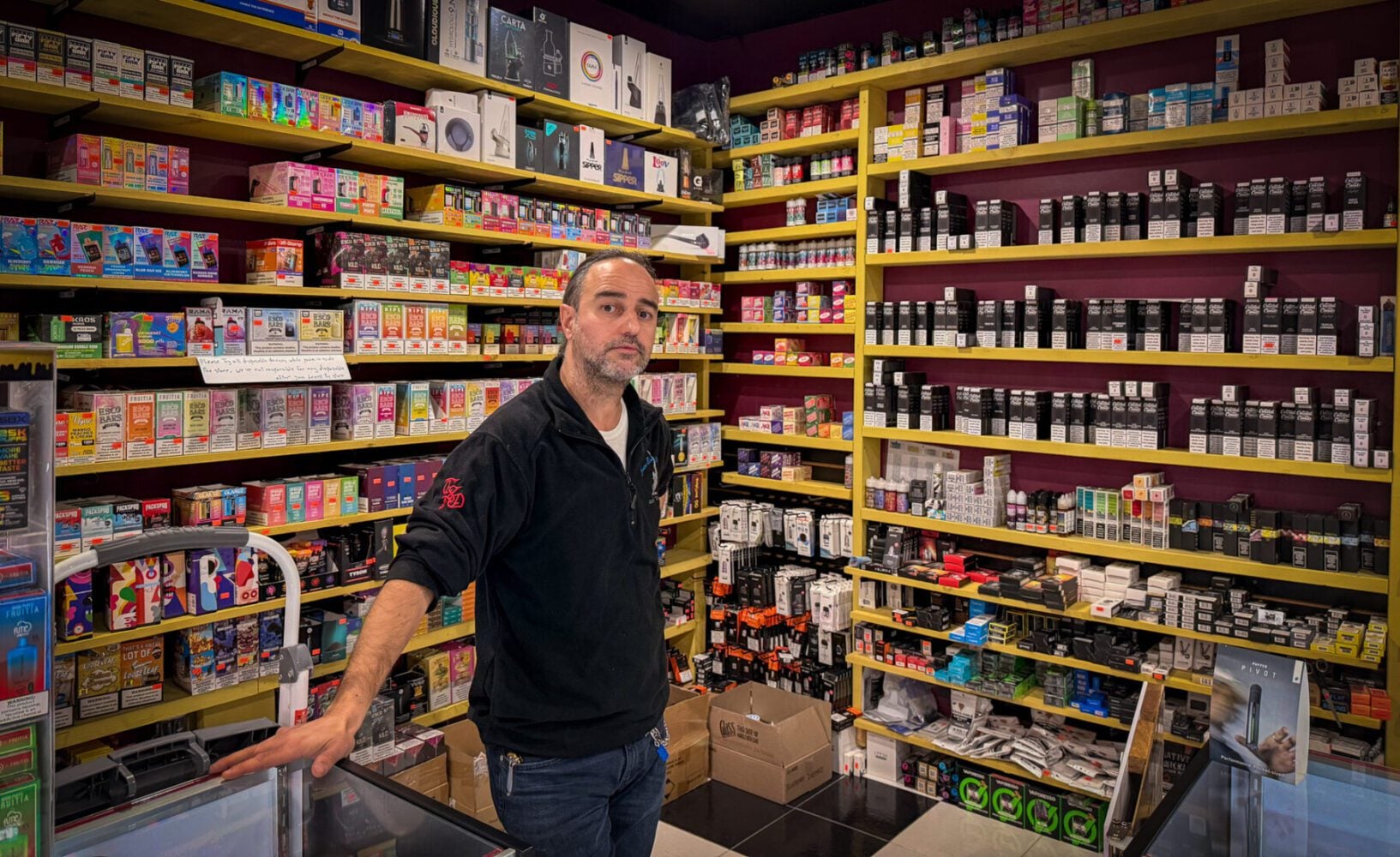
A December 31, 2025 deadline could shutter hundreds of vape shops, raising questions about consolidation, equity, and who benefits from regulation.
On December 31, most vape products currently sold in Virginia will become illegal to sell.
Under a law passed by the Virginia General Assembly and signed by Governor Glenn Youngkin, only nicotine and vape products listed on a state-maintained directory will be allowed on store shelves. In practice, that directory will include a very small number of products tied to federal authorization, leaving the vast majority of flavored and disposable vapes banned from retail sale statewide.
For shop owners like Tony Aziz, who owns Native Smoke in Richmond, the impact is existential.
“If this goes into effect the way it’s written,” Aziz said, “I don’t know how we stay open.”
Whether someone supports or opposes vape shops, the immediate fallout is not theoretical. It means broken leases, layoffs, and the closure of hundreds of small businesses across Virginia.
State records show more than 1,300 registered hemp and vape retailers statewide, with industry sources saying the true number of vape shops is likely higher due to unregistered nicotine-only and mixed retail locations. Many of these businesses are concentrated in working-class corridors and strip centers that already struggle to stay filled, raising broader questions about who absorbs the economic shock when enforcement shifts overnight.
Who Gets to Stay on the Shelf
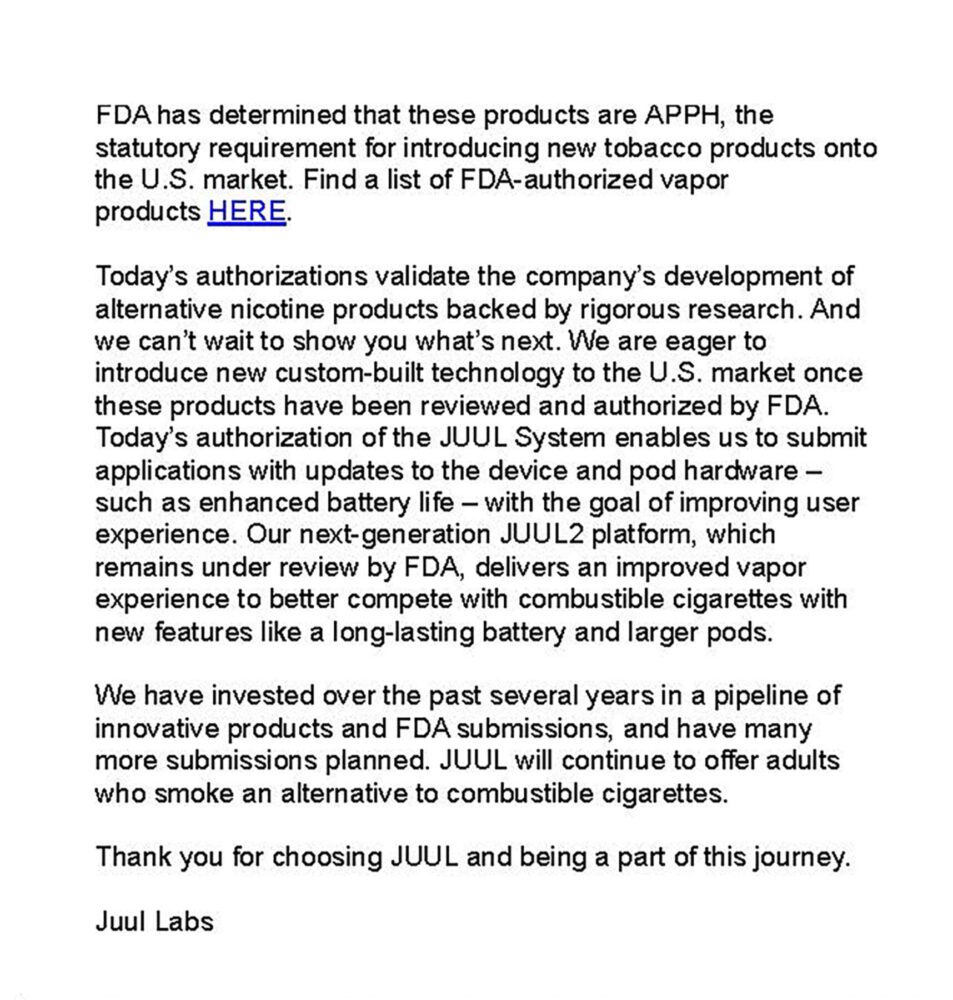
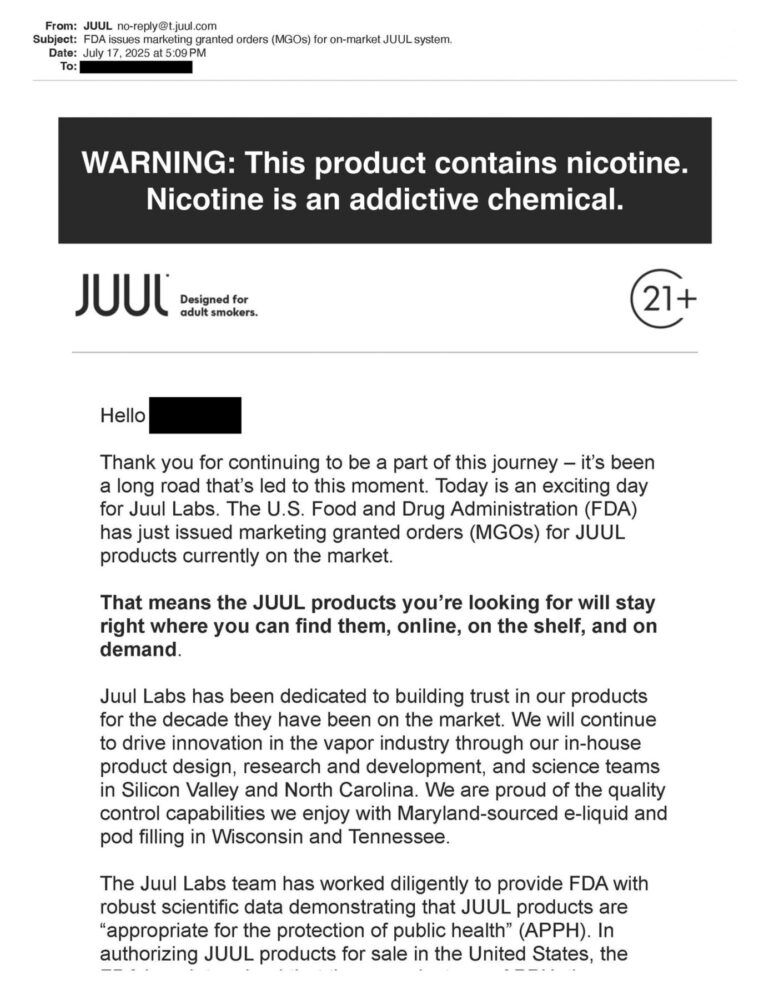
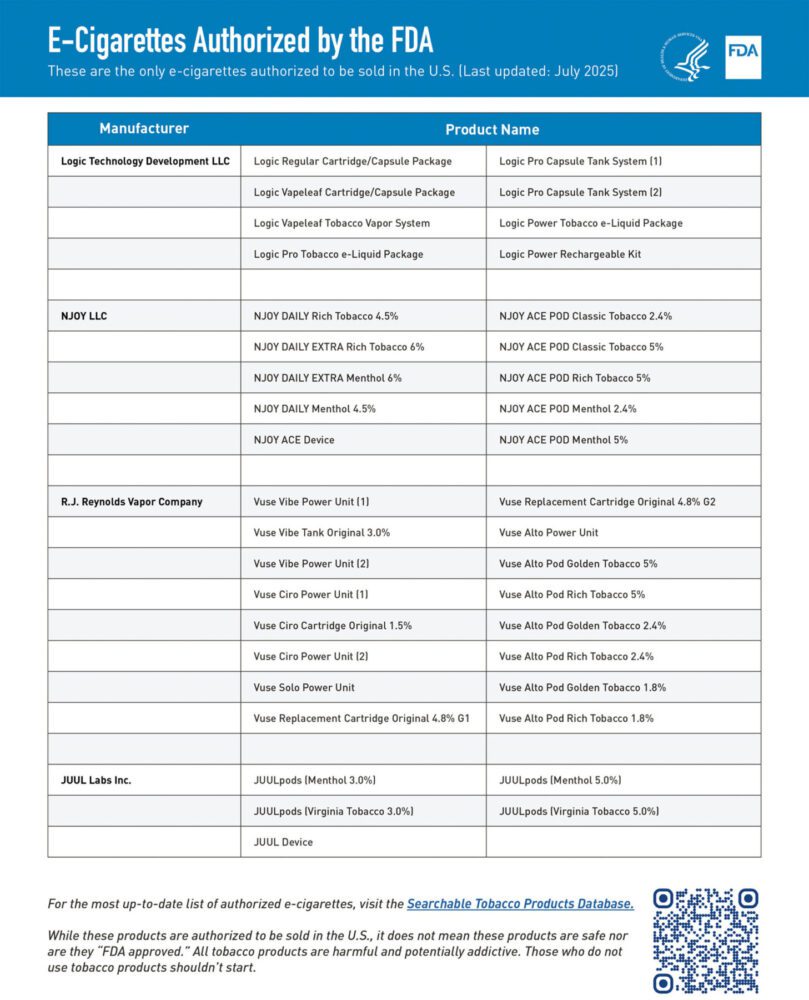
The universe of vape products that will remain legal in Virginia is remarkably small.
According to the FDA’s own list of authorized e-cigarettes, nearly all approved products belong to major tobacco companies, including JUUL, Vuse, NJOY, and Logic. Independent disposable brands and the flavored products that dominate most vape shop shelves are almost entirely absent.
In July 2025, JUUL received FDA marketing authorization, allowing its tobacco and menthol pods to remain legally available nationwide. That approval places JUUL, and by extension its corporate partners, in a privileged position just as Virginia prepares to eliminate most competing products from retail shelves.
The result is not the disappearance of nicotine, but the consolidation of its sale into fewer, increasingly corporate hands.
Regulation is not eliminating vaping but narrowing who is allowed to profit from it.
A Familiar Framework

This consolidation does not stop with nicotine.
Virginia is also preparing to launch a tightly regulated adult-use cannabis market in November 2026, built around limited licenses, high capital requirements, and extensive compliance obligations. As RVA Magazine has previously reported, that framework has sparked debate over whether the state’s emphasis on equity is being undermined by barriers that favor large, well-capitalized corporate operators.
At the same time, enforcement against vape and hemp-derived products is accelerating.
For many vape shops, CBD and other hemp-derived cannabinoid products are not a side business. They are a core part of what keeps the doors open. As those products are swept up under vape enforcement, independent retailers are being pushed out of the market entirely.
The effect is sequential.
First, vape and hemp retailers disappear. Then, when legal cannabis finally arrives, the existing network of small, decentralized cannabinoid storefronts is already gone.
What remains are industries built to survive regulatory narrowing. Big Tobacco companies with FDA-authorized nicotine products. Multi-state cannabis operators positioned to absorb licensing costs. Alcohol distributors and corporate retail chains with statewide infrastructure and political leverage. Taken together, the outcome is not prohibition. It is consolidation across adjacent markets at the same time.
For Aziz, that policy debate is inseparable from the life he spent years building under the rules as they existed.
“He Did Everything the Right Way”

The band was later documented in Heavy Metal in Baghdad by Vice Media.
For Aziz, the stakes are shaped by far more than how long it took just to stand behind his own counter.
He came to the United States as a refugee from war-torn Iraq, leaving behind a country that was no longer safe and a future that had collapsed around him. For a time, his family was stuck elsewhere in the region, eventually passing through Syria and Turkey before resettling in the United States.
“They were stuck,” Aziz said. “And I was here.” From the beginning, he was the provider. The one expected to work, send money, and keep things moving while others waited on visas, paperwork, and a way out. “There was no option to fail,” he said. “If I didn’t work, everything stopped.”
When he first arrived in the United States, stability was still far away. He bounced between cities and jobs, washing dishes, delivering food, doing whatever work he could find.
At one point in New York, he was technically employed but homeless. “I had money in my pocket,” Aziz said. “But nobody would rent to me. No credit. No history.”
So he slept where he could. “I slept in the subway,” Aziz said. “You ride the train from one end to the other. You sit. You sleep. You wake up. You do it again.
That period still shapes how he sees risk. “I wasn’t asking for help,” he said. “I was working. I just didn’t have options yet.”
Over time, he built stability the slow way. He eventually made his way to Richmond, learned the business from the ground up, and worked nine years for another shop owner, saving every dollar he could to go into business for himself. “I didn’t just wake up and open a business,” Aziz said. “I worked for years. Everything I had went into this.”
Eventually, he put his name on a lease, met and later married his wife, a VCU student, bought a house, and built a life that felt permanent.
That history is why the idea of losing his store feels devastating. “You put your sister on payroll. Your cousin works the counter. Your brother helps you open the store,” Aziz said. “This is not just a business. This is how your whole family survives.”
It’s also why his relationship to the country is deeply rooted. “I love America,” Aziz said. “I really do. I think it’s the greatest country on earth.” He points to the things he never could have done back home. “Here, if you work hard, you can buy a car. You can buy a house. You can build something,” he said. “That system gave me a chance.”
That belief makes the current moment harder to reconcile. “We did everything legal,” Aziz said. “We followed every rule they gave us.”
Now, as the rules change again, he feels the ground shifting beneath him.
“This store is my life,” he said. “I worked too hard to get here to just walk away.”
Why Enforcement Lands at the Counter
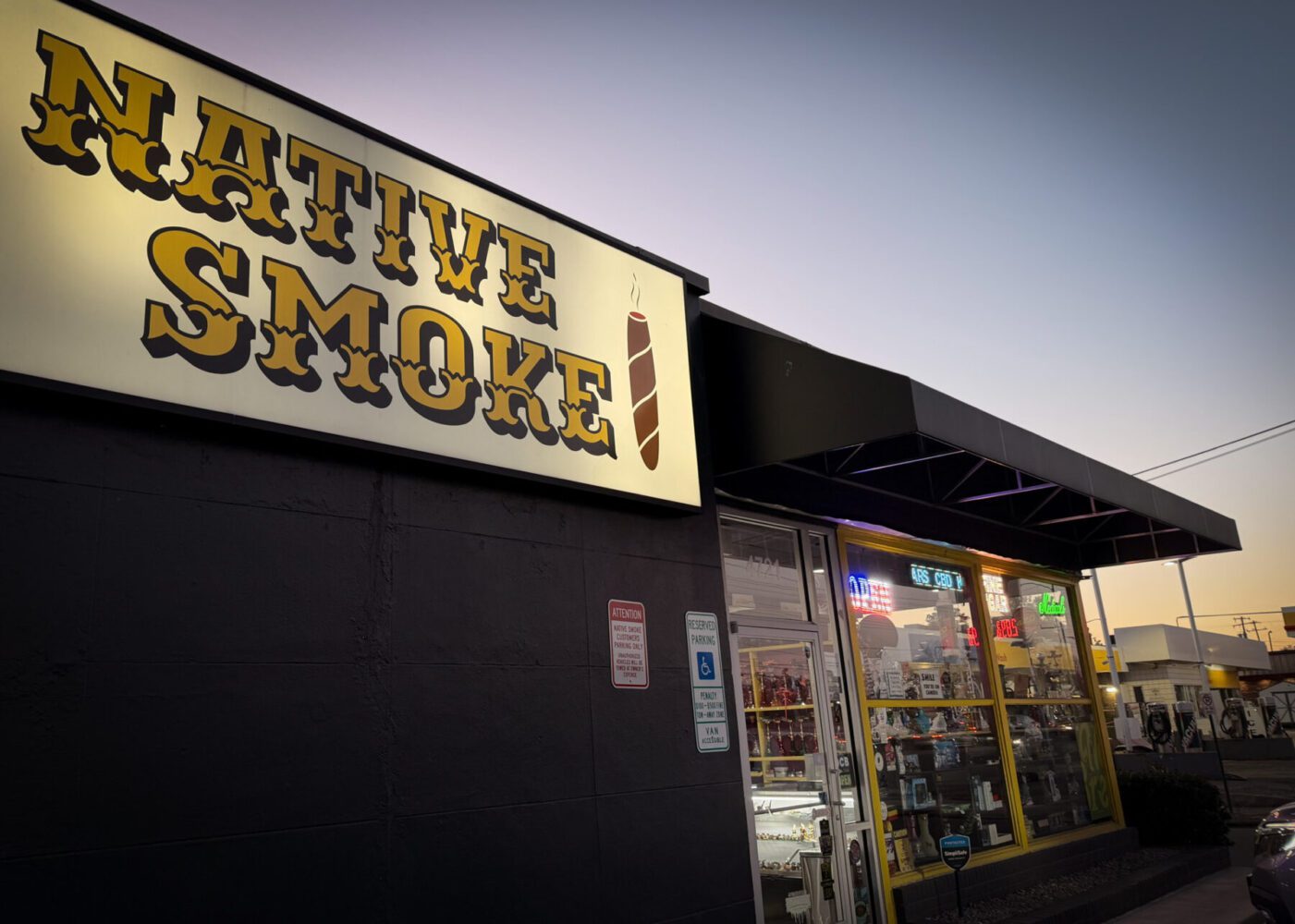
Under Virginia law, legality changes depending on where a product sits in the supply chain. For retailers like Aziz, that structure has created a moving target, where compliance is expected even as the rules themselves keep changing.
Although federal law treats most vapes as unauthorized for import or distribution, state-level enforcement in Virginia has focused almost exclusively on retailers, not distributors, a distinction repeatedly emphasized to shop owners like Aziz by state inspectors.
Aziz says that divide is at the center of the confusion and the frustration. “I’m buying from a warehouse in Virginia,” he said. “They sell it legally. But I get the ticket.” When he pressed regulators for clarity, the answer was blunt. “They told me, ‘You are direct to consumer. The warehouse is not,’” Aziz said.
What makes that harder to accept, he explained, is how often the rules shift, sometimes without clear notice, and how enforcement often comes after the fact. “They change the rules every few months,” Aziz said. “Delta-8 was legal. Then it wasn’t. Delta-10 was legal. Then they took that too.” Each time, he said, he adjusted inventory, changed suppliers, and tried to stay compliant. “We did everything they told us,” Aziz said. “Every time they changed it.”
Inspections, he said, offered little clarity. “They came in. They looked at everything,” he said. “They didn’t say anything was wrong.”
Months later, fines arrived for the same products that had already been reviewed.
One case still stands out. Native Smoke was cited for selling a CBD product that contained no THC, not because of its contents, but because of labeling and approval requirements Aziz says were never clearly communicated.
“It was just CBD,” he said. “Not even point-one THC.” The initial penalty was staggering. “Fifty thousand dollars,” Aziz said. After escalation, the fine was reduced to $1000, but the explanation he received stayed with him. “They told me it’s not their responsibility to keep us informed,” Aziz said. “It’s our responsibility to know.”
For Aziz, that response captured the imbalance built into the system. Distributors and manufacturers operate one or two layers removed from the customer. They have legal teams, compliance staff, and the ability to move inventory across state lines. Retailers do not. “The enforcement always comes to the store,” Aziz said. “Not the manufacturer. Not the warehouse.”
In practice, products can move legally through upstream channels while responsibility and risk concentrate at the retail level.
“You’re the last stop,” Aziz said. “So everything lands on you.”
“Most People Just Want to Stay Quiet”
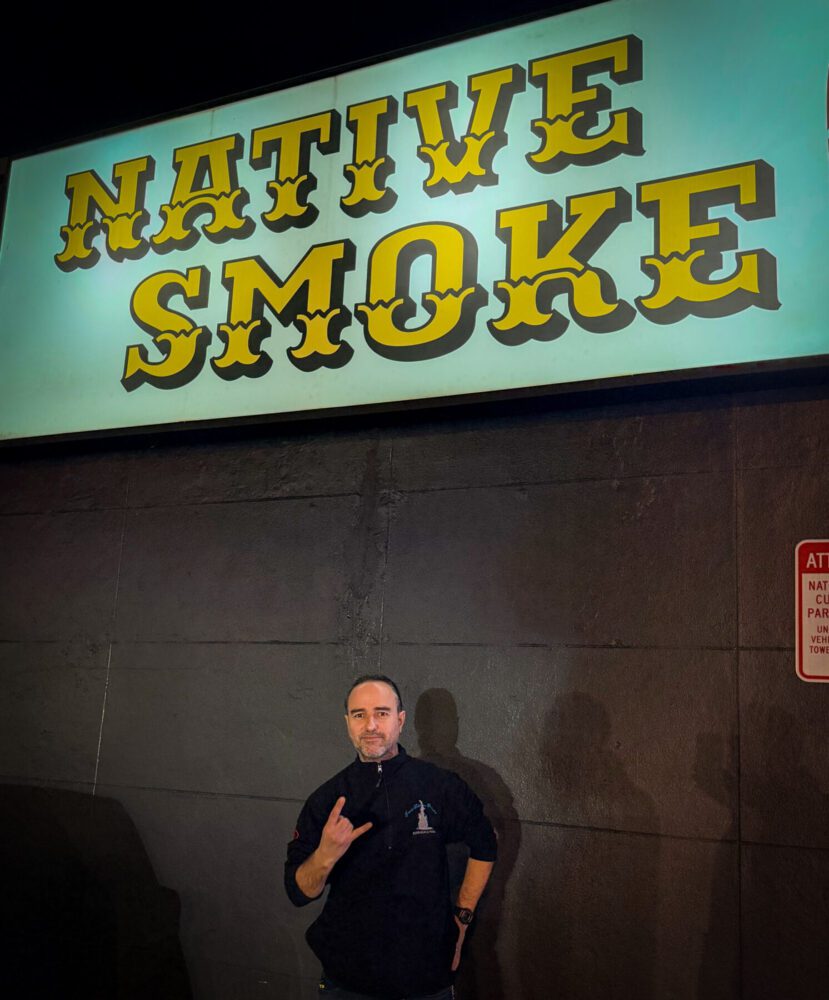
Aziz is aware that a legal challenge to Virginia’s vape restrictions is underway. A handful of distributors and retailers have sued the state, arguing the law functions as a de facto ban and unfairly advantages large manufacturers. But he does not expect most shop owners to join them.
“That lawsuit is not coming from the average store,” Aziz said. “It’s coming from people who can afford lawyers. That’s not most of us.”
In Virginia, the retail vape industry is overwhelmingly immigrant-owned. Aziz estimates that 90 to 95 percent of vape shops are owned by immigrants, many of them first-generation business owners. “The retail side is immigrants,” he said. “That’s who’s behind the counter.”
For those shop owners, the calculation is not just legal. It is personal.
Most operate on thin margins, often with spouses, siblings, or cousins on payroll and long-term leases they cannot easily walk away from. Any disruption can ripple outward immediately.
“People think if you’re legal, you shouldn’t be scared,” Aziz said. “That’s not how it works.” Fighting the state, even when owners believe the policy is unfair, feels risky. “They don’t want to be on a list,” he said. “They don’t want inspections every week. They don’t want somebody asking extra questions.”
Aziz is careful when the conversation turns to race. “I don’t want to say it’s racist,” he said. “But sometimes it feels like they know who to go after.”
His concern is not about individual inspectors, but about how enforcement functions structurally. “They don’t go after the warehouse,” he said. “They don’t go after the manufacturer. They come to the store.”
In the current political climate, that fear runs deeper. “Right now, people don’t want problems with the government,” Aziz said. “Any government.”
Even shop owners with legal status hesitate to draw attention to themselves. “Most of us came here to work, not to fight,” he said. “We followed the rules. We opened stores. We paid taxes. We did everything the right way.”
When the rules change, he said, pushing back feels dangerous.
“Now they tell you, ‘No, this is illegal,’” Aziz said. “And you’re thinking, if I fight this, what else are they going to look at?” That hesitation, he believes, is understood.
“They know most people won’t push back,” Aziz said.
What Happens When No One Pushes Back
In the absence of broad resistance, regulation begins to function as outcome. Markets consolidate.
On December 31, Virginia will eliminate the product diversity that sustains most independent vape shops.
Under the law, once the Attorney General publishes the state’s approved product directory, retailers have 60 days to sell through or remove any inventory not included on that list. After that window closes, those products cannot legally be sold.
For many shops, that inventory represents the core of their business. The law does not require stores to close. But by restricting legal sales to a narrow set of authorized products, it removes the economic foundation that makes remaining open viable.
By the time Virginia’s adult-use cannabis market opens in 2026, many small, immigrant-owned retailers that once served nicotine and hemp demand may already be gone, not by prohibition, but by attrition.
That outcome will be described as regulation, but its effects will look a lot like monopoly.
Support RVA Magazine. Support Independent Media in Richmond.
At a time when media ownership is increasingly concentrated among corporations and the wealthy, RVA Magazine has remained one of Richmond’s few independent voices. Since 2005, the magazine has provided grassroots coverage of the city’s artists, musicians, and communities, documenting the culture that defines Richmond beyond the headlines.
But we can’t do this without you. A small donation, even as little as $2, one-time or recurring, helps us continue to produce honest, local coverage free from outside interference. Every dollar makes a difference. Your support keeps us going and keeps RVA’s creative spirit alive. Thank you for standing with independent media. DONATE HERE.
We’ve got merch HERE
Subscribe to the Substack HERE
And Reddit HERE
And YouTube HERE