
by Alexis Jackson
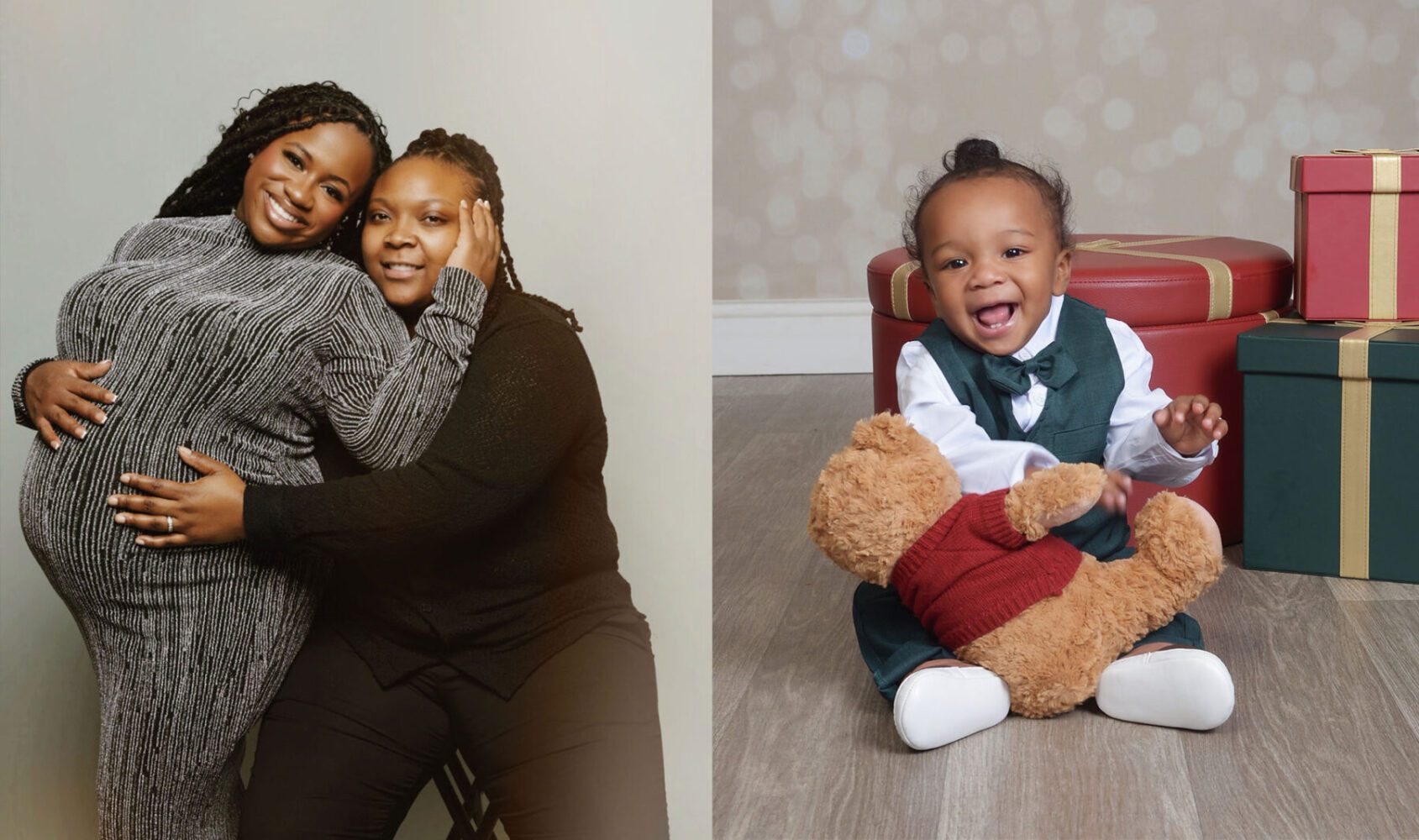
I am a Black queer woman, a wife, a mother, a licensed therapist, and a doula in Virginia. And before anything else, let me be clear: my family is not outside of the norm. Love, intention, and care are not radical ideas. They are the foundation of families. That is what my family is built on. It is what I wake up to every morning. It is what I hold in my arms at night.
What is outside the norm is how often families like mine are forced to prove our legitimacy and how reproductive freedom has become something families are asked to justify and defend against politicians’ interference. There is something deeply unsettling about having to argue for the right to build the family you prayed for.
Decisions about building a family, accessing medical care, and making choices about one’s body should remain private healthcare matters, guided by patients and providers, not politicians.
Yet families are often invisible in policy conversations until access to care is threatened, as it was when the Supreme Court overturned Roe v. Wade. Then extremely personal decisions about bodies, futures, and family building are suddenly placed under public scrutiny. For Black families like mine, we also face the burden of disproportionately high maternal mortality rates and decreased bodily autonomy. That reality is not theoretical to us. It is generational. It is historical. It is personal.
When reproductive freedom is discussed, the full range of families affected is rarely considered. The Reproductive Freedom Constitutional Amendment is on the ballot in November. I will be voting yes to protect fertility care, pregnancy care, and family building options. Without protections, families become collateral damage. This is not abstract policy. This is real life. This is my son’s life.
My wife and I always dreamed of having a family. We talked about it, prayed about it, and imagined our future children long before we knew if it would ever be possible. As a same-sex couple, every step toward parenthood required money, medical access, insurance, and a healthcare system willing to recognize our family as valid.
When we began our IVF journey, my wife went through egg retrieval while I prepared to carry our baby. It was physically exhausting, emotionally overwhelming, and profoundly sacred. Every appointment, every injection, every ultrasound felt like both a miracle and a risk. There were moments of hope so big it felt unbearable, and moments of fear we didn’t speak out loud.
But it worked. We became parents. And there are still days we look at our son and cannot believe we made it here.
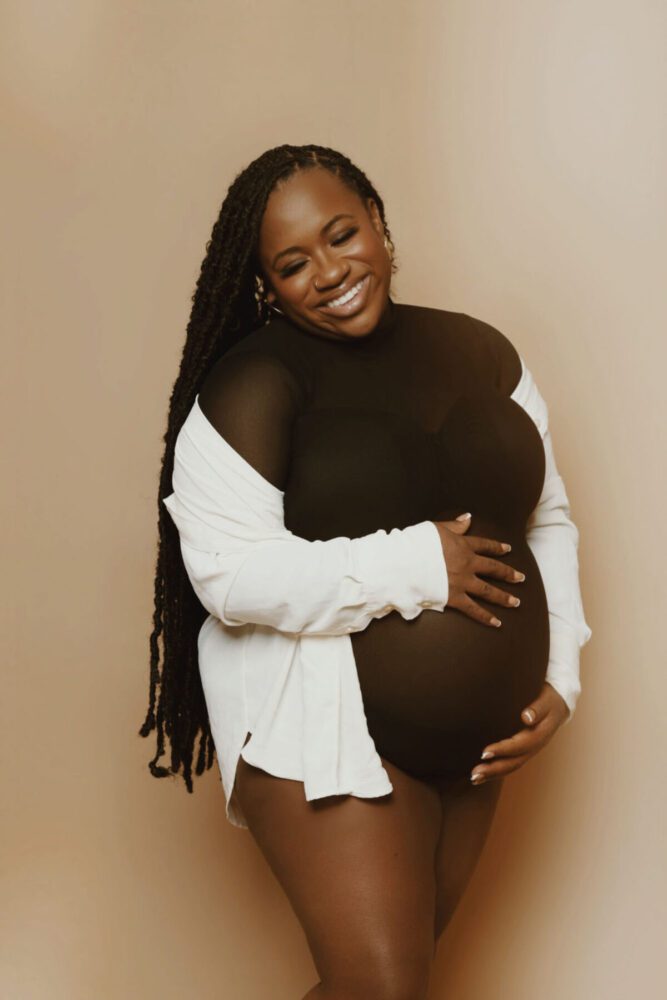
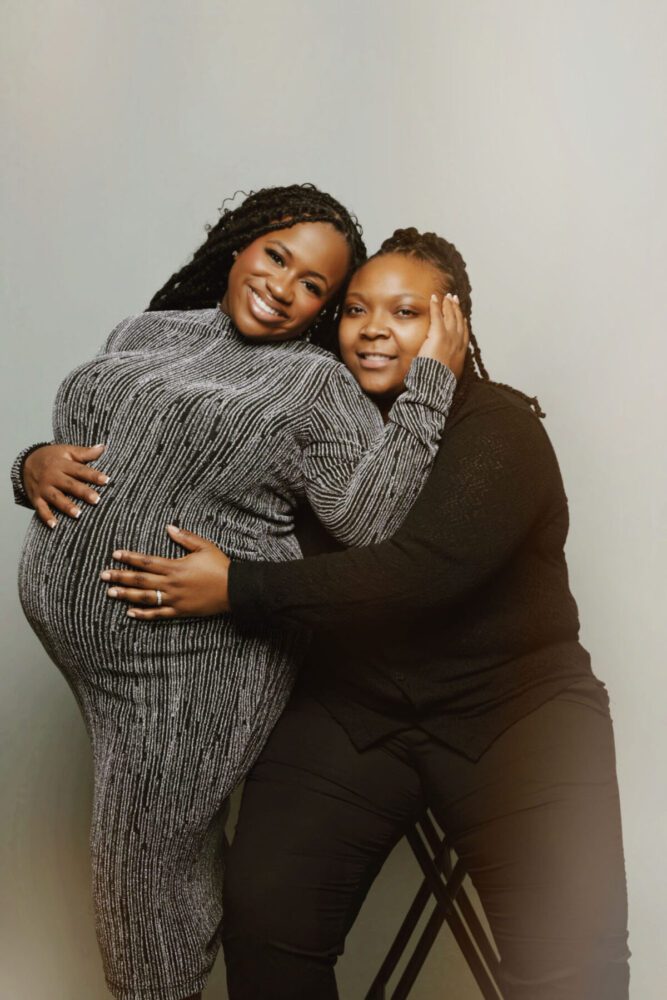
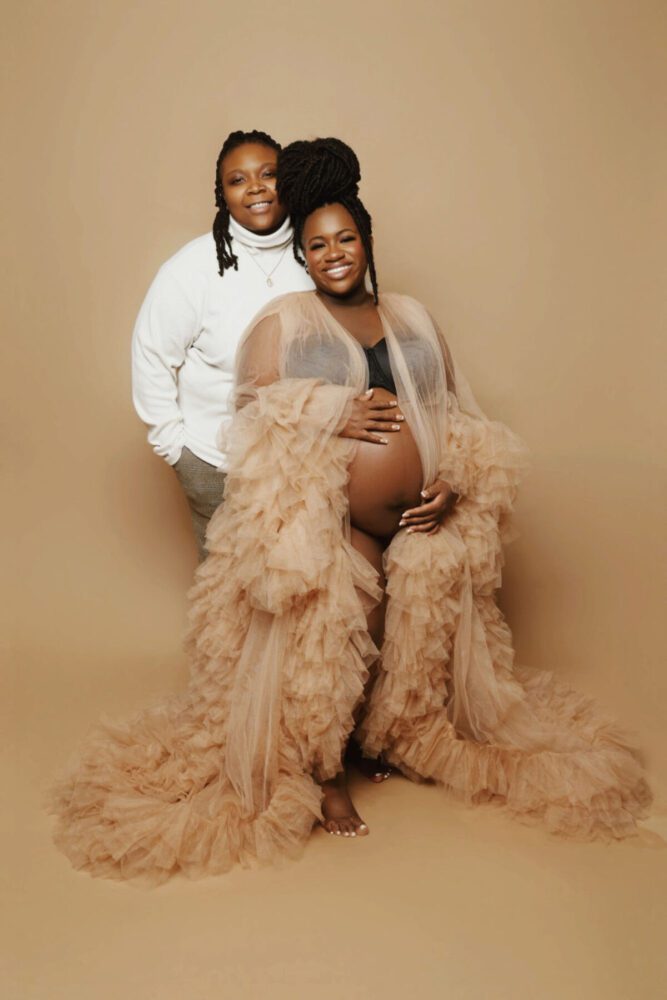
The door to parenthood did not swing open for us. It cracked open, barely. Even with protectionsin place, access is not experienced equally. For Black queer families, the door has always required pushing harder, proving more, and waiting longer. Protections alone do not erase disparity, but without them, inequity becomes enforced. That is why voting matters, not because it fixes everything overnight, but because it safeguards the ground we are still fighting to stand on.
IVF was a privilege for us. For years, the financial barrier alone stopped us. The cost can range from $5,700 to over $30,000. It wasn’t until I worked for a hospital system that covered most of the cost that the door even opened. Before that, parenthood felt indefinitely out of reach, not because we weren’t capable, but because we couldn’t afford entry. We pushed our plans back again and again, not because we weren’t ready to love a child, but because we didn’t yet have access to the care we needed. Years passed filled with waiting, hoping, and wondering if our chance would ever come.
Successfully starting a family through IVF is not just about money, medicine, insurance, and time off from work. It is also about legal protections. On top of all the financial, practical, and cultural obstacles to care faced by families like mine, we cannot also bear the risk that politicians could strip away our legal rights.
That is why we need this amendment. Love should not require this many gatekeepers.
Politicians should not have a say in who can start a family or how. Last year, the United States Congress voted against the Right to IVF Act, sending a clear message that our futures are optional, our children negotiable, and access to care can be stripped away. The Reproductive Freedom Amendment protects all of that in Virginia. Without IVF, fertility treatment, and doctors being able to practice medicine freely, our son, Braylen, would not be here today.
As a therapist, I sit with people every day who are longing for their own miracles. I hold space for grief, for pregnancy loss, for the quiet devastation of another negative test. Families navigating infertility, delayed dreams, and impossible decisions. Many are still saving, hoping, and praying. Some work multiple jobs just to afford the chance to try. Others will never have access at all.
As a doula, I see firsthand that reproductive healthcare does not stop at conception. It includes fertility care, prenatal care, childbirth, postpartum recovery, miscarriage management, abortion care, and birth control. When politicians interfere with this continuum, they are not protecting families. They are harming them.
Vote for the people who are still hoping, praying, and saving. Vote for the families facing racial, financial, and systemic barriers who haven’t even reached the starting line. These are the familiesmost harmed when reproductive health protections are rolled back, doing everything they can and still being denied the chance to build a family.
For families like mine, this is not a political debate. It is a lived reality. My child is not a hypothetical. My family is not a talking point. I do not want to live in a state where the ability to grow our family depends on who is in power. I want to live in a state where families like mine are seen, protected, and allowed to exist without condition.
Reproductive freedom protects real people, real families, and real futures. In November, we have the chance to protect that freedom for generations to come.
Stand on the right side of history. Stand with us. Protect reproductive freedom.
Alexis Jackson is a Licensed Clinical Social Worker (LCSW) and founder of Embrace Your Essence Therapy, where she supports individuals and families navigating maternal mental health, identity, and life transitions. She is also a Full Spectrum Doula with Birth in Color who brings both clinical expertise and lived experience to her work supporting families. As a Black queer woman, wife, and mother, Alexis understands firsthand the barriers many families face in accessing reproductive healthcare. Her own journey to parenthood through reciprocal IVF after years of waiting deepened her commitment to advocating for reproductive freedom and equitable care. The views expressed in this op-ed are her own.
Support RVA Magazine. Support Independent Media in Richmond.
At a time when media ownership is increasingly concentrated among corporations and the wealthy, RVA Magazine has remained one of Richmond’s few independent voices. Since 2005, the magazine has provided grassroots coverage of the city’s artists, musicians, and communities, documenting the culture that defines Richmond beyond the headlines.
But we can’t do this without you. A small donation, even as little as $2, one-time or recurring, helps us continue to produce honest, local coverage free from outside interference. Every dollar makes a difference. Your support keeps us going and keeps RVA’s creative spirit alive. Thank you for standing with independent media. DONATE HERE.
We’ve got merch HERE
Subscribe to the Substack HERE
And Reddit HERE
And YouTube HERE