
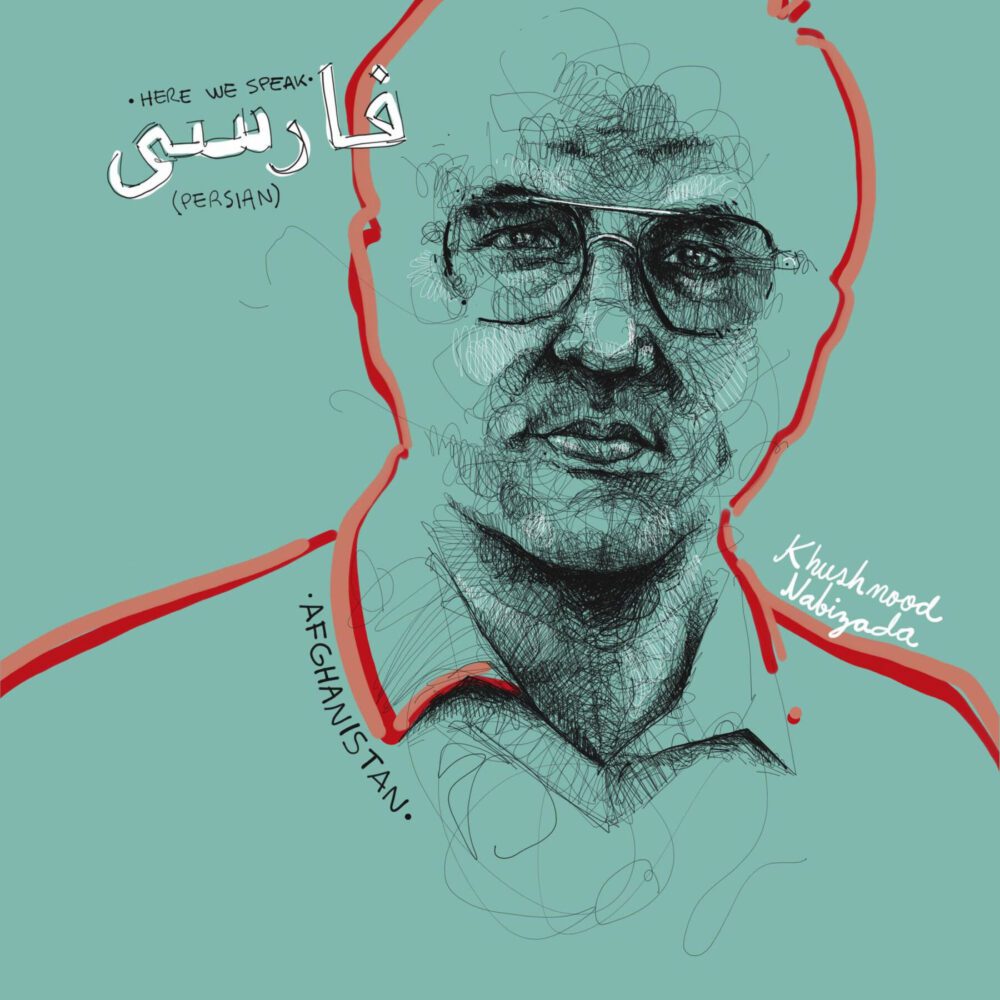
Following is an updated excerpt from the book, Portraits of Immigrant Voices, in honor of Immigrant Heritage Month, which is celebrated during the month of June throughout the United States to honor the contributions and resilience of the newcomers who have shaped our nation.
When Khushnood Nabizada looks back on August 2021, he does not only remember that time as the month when he lost the life that he knew. He also remembers it as the moment his family’s story was divided into two parts: before the fall of Kabul, when the terrorist Taliban government took over his country, and afterwards, when he and his family began their journey to becoming American.
Like thousands of Afghans whose lives were suddenly placed in danger, Khushnood fled his homeland almost overnight. There was no time for careful planning, no chance to properly say goodbye, and no guarantee of what would come next. Khushnood and his wife Razia, along with their three children, left Afghanistan with only four suitcases and a hope that somewhere beyond the fear and uncertainty, they could begin again.
For Khushnood, leaving Afghanistan was not simply a relocation. It was an emotional rupture. He had built a public life there. He had served as Chief of Staff for Afghanistan’s State Ministry for Peace, as a part of the U.S. backed government. He had founded Khaama Press, an independent news organization named after an ancient Persian word meaning “The Pen.” Through Khaama Press, he had spent years defending the value of free expression, public accountability, and independent journalism in a country long shaped by war, instability, and political uncertainty.
But after the Taliban’s return to power, journalism and free expression became dangerous.
Khushnood and his family evacuated Afghanistan through the U.S. military airlift, arriving at Fort McCoy in Wisconsin in August 2021. They stayed there for months, eventually resettling in Virginia. Like nearly all newcomers, Khushnood had to reinvent his life upon arrival in his new home. The networks and professional identity he had built in Afghanistan did not easily transfer into a new country. He applied for jobs, faced rejection, worked where he could, and carried the pressure of supporting a young family while also trying to keep Khaama Press alive from afar.
The early months were difficult. He had to adjust to a new country, a new job market, and a new reality. At one point, he worked part-time on weekends as a hotel receptionist while continuing to search for stable full-time work. His wife, Razia, balanced family responsibilities, part-time work, and English classes. Their children adapted to American schools and learned English with remarkable speed.
Yet the story of Khushnood Nabizada is not only a story of loss. It is increasingly a story of successfully rebuilding his and his family’s life.
Even with all of the changes, there was good news too: In January 2022, the Overseas Press Club awarded Khushnood a grant, which helped keep Khaama Press afloat, and he continues raising money via an online fundraising campaign in the hopes that he can keep the company going. In May of 2022, Khushnood and his wife welcomed their fourth child into the world, a son named Zubin.
In September 2023, Khushnood began working at the Virginia Department of Housing and Community Development (DHCD), a division of the Commonwealth of Virginia. He first supported the Division of Building and Fire Regulation, gaining firsthand experience in state government operations and public service. For an immigrant who had once helped support national-level public administration in Afghanistan, albeit financed by the United States government, the opportunity marked an important return to meaningful government work, this time in his adopted home.
And in January 2025, he moved internally to work in DHCD’s Office of Broadband. This agency works on one of Virginia’s most visible public priorities: expanding reliable high-speed internet access across the Commonwealth. For Khushnood, the role offers greater visibility, broader professional exposure, and new opportunities to grow in public policy, infrastructure, and community development.
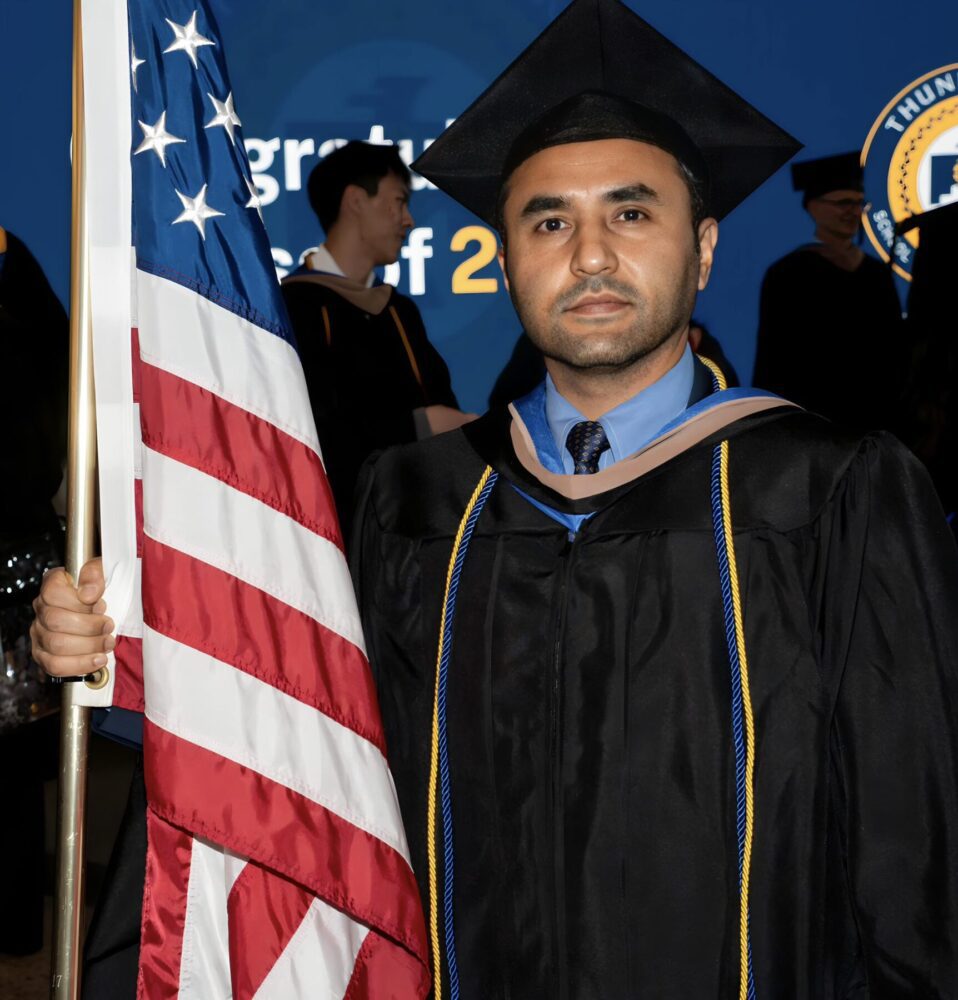
At the same time, Khushnood continued his education. In December 2024, he graduated from the Thunderbird School of Global Management at Arizona State University with a Master of Arts in Global Affairs and Management. He pursued this degree while working full-time, supporting his family, and helping sustain an independent media organization under pressure in Afghanistan. The degree represented more than an academic achievement. It marked a beginning to rebuilding his professional life in America.
Then, in December 2025, another milestone arrived: Khushnood and his family moved into their first home in the United States. For a family that had once fled Kabul, escaping the Taliban’s wrath, the home became more than a property. It became a symbol of safety, stability, and belonging. The house is located in Glen Allen, a suburban community in the greater Richmond area known for its family-friendly neighborhoods and good schools.
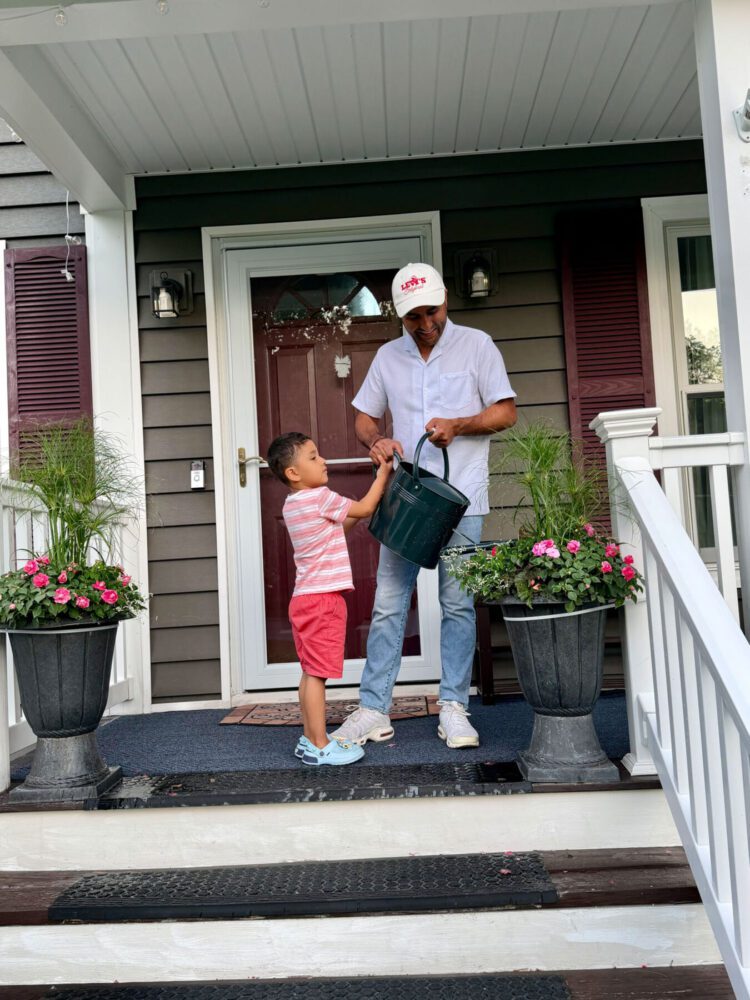
Khushnood began transforming his home and yard with his own hands. He removed 17 trees from the front and back yard. He tilled and leveled the backyard, removing old grass and debris, seeding a new lawn. Gradually, he turned the yard into a green and welcoming space for his family. Along the backyard fence, he planted crape myrtle and weeping cherry trees. In the front yard and around the house, he planted roses, azaleas, gardenias, camellias, boxwoods and other evergreens. What had once been an ordinary yard slowly became a carefully designed family landscape, reflecting both beauty and permanence. He added a decorative solar lamp post in the front yard and placed solar walkway lights along the driveway and walkway, near the azaleas and roses. These projects, completed step by step, gave their home a warmer and more finished appearance.
For Khushnood, the work represented more than landscaping. It was another form of rebuilding. After years of uncertainty, he was no longer only trying to survive in a new country. He wanted to create a place of comfort, dignity, and beauty for his family. Every tree and flowerbed planted, every light installed, became part of a larger story: an immigrant family putting down roots, literally and emotionally, in their new American home.
His wife, Razia, also evolved to life in the U.S. as a mother of four in a new country. She committed to learning English and will soon complete her English as a Second Language (ESL) program, expecting to finish by the end of 2026. For the family, this is a major achievement. Her progress represents independence, confidence, and a stronger foundation for the next chapter of their life together in America.
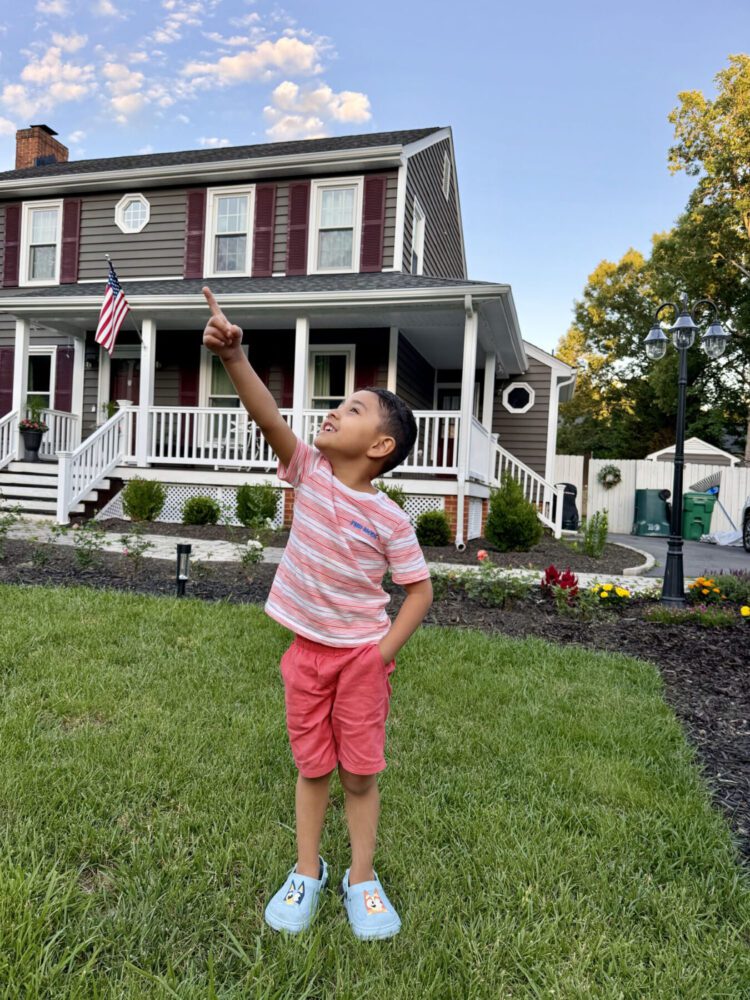
Their children, too, have adapted to their new life on the other side of the world. They entered a new school system, learned a new language exceptionally quickly, and began building friendships and futures in Virginia. Like many immigrant children, they moved between worlds, carrying their family’s history while growing into their new home. And in their free time, Khushnood’s older daughter and son both enjoy playing soccer while his younger daughter enjoys gymnastics. And his youngest son will begin kindergarten soon.
Even as he builds a stable life in Virginia, Khushnood continues to think beyond his own family’s resettlement. His professional interests still reach back toward Afghanistan and the wider region around it. He is currently a candidate for the Central Asia, Mongolia, the Caucasus and Afghanistan (CAMCA) Fellowship, a leadership program, created by the Rumsfeld Foundation, that brings emerging leaders from the region to the United States for high-level, intensive exchange experiences. If selected, Khushnood hopes to use the opportunity to deepen his work on regional connectivity, public policy, media, and dialogue between Central and South Asia. For Khushnood, his immigrant journey is not only about starting over, but also about carrying his experience forward with a sense of responsibility that he developed before leaving Afghanistan.
And from afar, Khushnood still directs Khaama Press, which operates under difficult conditions, providing news in English, Persian, and Pashto at a time when independent journalism remains deeply constrained. The work is delicate and often dangerous. Journalists in Afghanistan face censorship, intimidation, and threats from the Taliban. Yet Khushnood believes that even limited reporting is better than silence.
His life now stretches between two worlds: Afghanistan, where he built his voice, and Virginia, where he is creating his future.
What makes his story compelling is not that success came easily. It did not. It came through uncertainty, sacrifice, humility, and persistence. He went from a senior government and media role in Afghanistan to starting again in America, taking jobs that helped his family survive, applying for better opportunities, going to graduate school, entering state government, buying a home, and helping his family move forward step by step.
“I believe the United States is a place of opportunity and growth for immigrants,” Khushnoodsays. “But opportunity does not mean life becomes easy overnight. It means that if you work hard, learn the system, and keep going, there is a path forward.”
From Kabul to Fort McCoy, and then finally settling in Virginia, with four suitcases and now a first home, Khushnood Nabizada fled his country with little more than his family, his faith in hard work, and his belief in the power of the pen. And now, he is writing a new chapter of life in America.
After everything that he has endured, even an assassination attempt by the Taliban, he still carries a sense of gratitude. Not because the journey was simple, but because his family survived it. Not because he forgot what he lost, but rather because he continues to build and look forward to what comes next.
When asked “how do you stay so positive with everything you’ve been through?” He laughs and says, “It is a reflection of my name.” His first name, Khushnood, means “happy” or “pleased” in Persian.
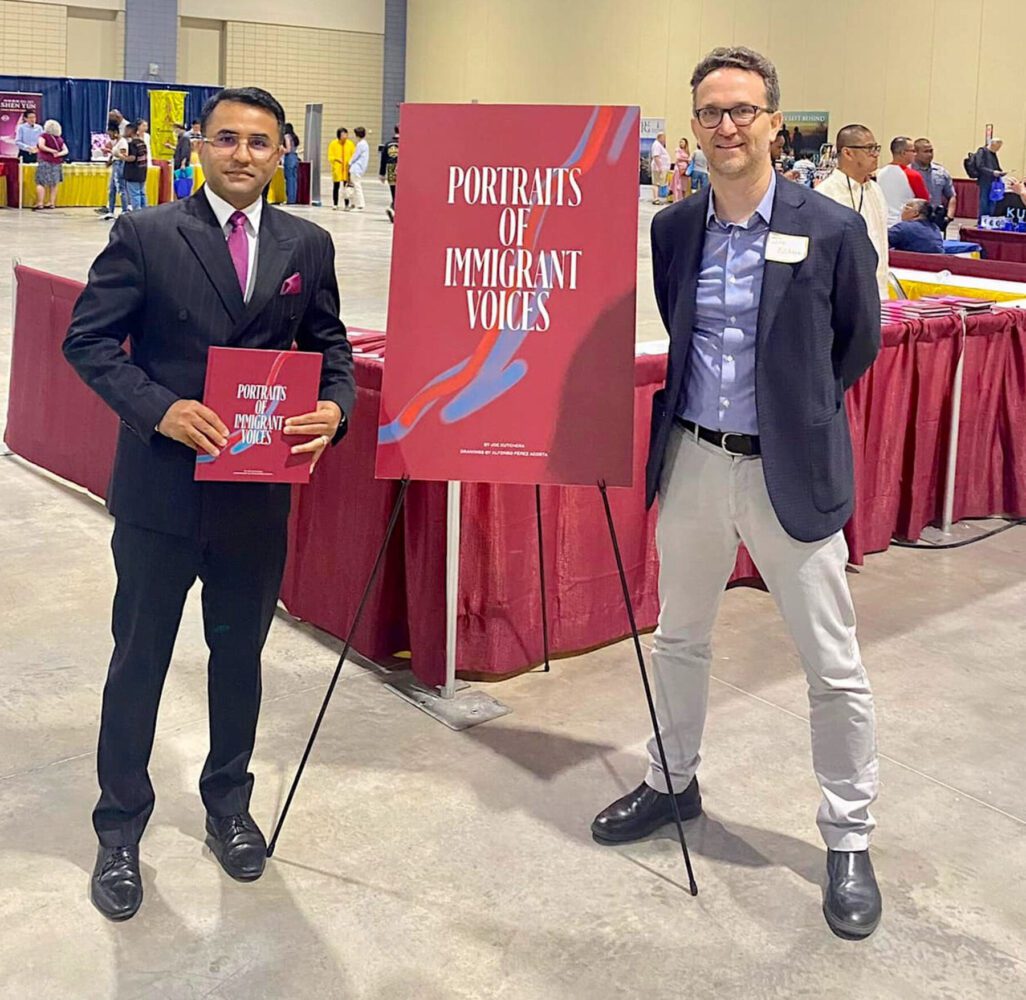
This piece is part of an ongoing series, Portraits of Immigrant Voices, written by Joe Kutchera with paintings by Alfonso Perez Acosta. Reprinted by permission.
Support RVA Magazine. Support Independent Media in Richmond.
At a time when media ownership is increasingly concentrated among corporations and the wealthy, RVA Magazine has remained one of Richmond’s few independent voices. Since 2005, the magazine has provided grassroots coverage of the city’s artists, musicians, and communities, documenting the culture that defines Richmond beyond the headlines.
But we can’t do this without you. A small donation, even as little as $2, one-time or recurring, helps us continue to produce honest, local coverage free from outside interference. Every dollar makes a difference. Your support keeps us going and keeps RVA’s creative spirit alive. Thank you for standing with independent media. DONATE HERE.
We’ve got merch HERE
Subscribe to the Substack HERE
And Reddit HERE
And YouTube HERE