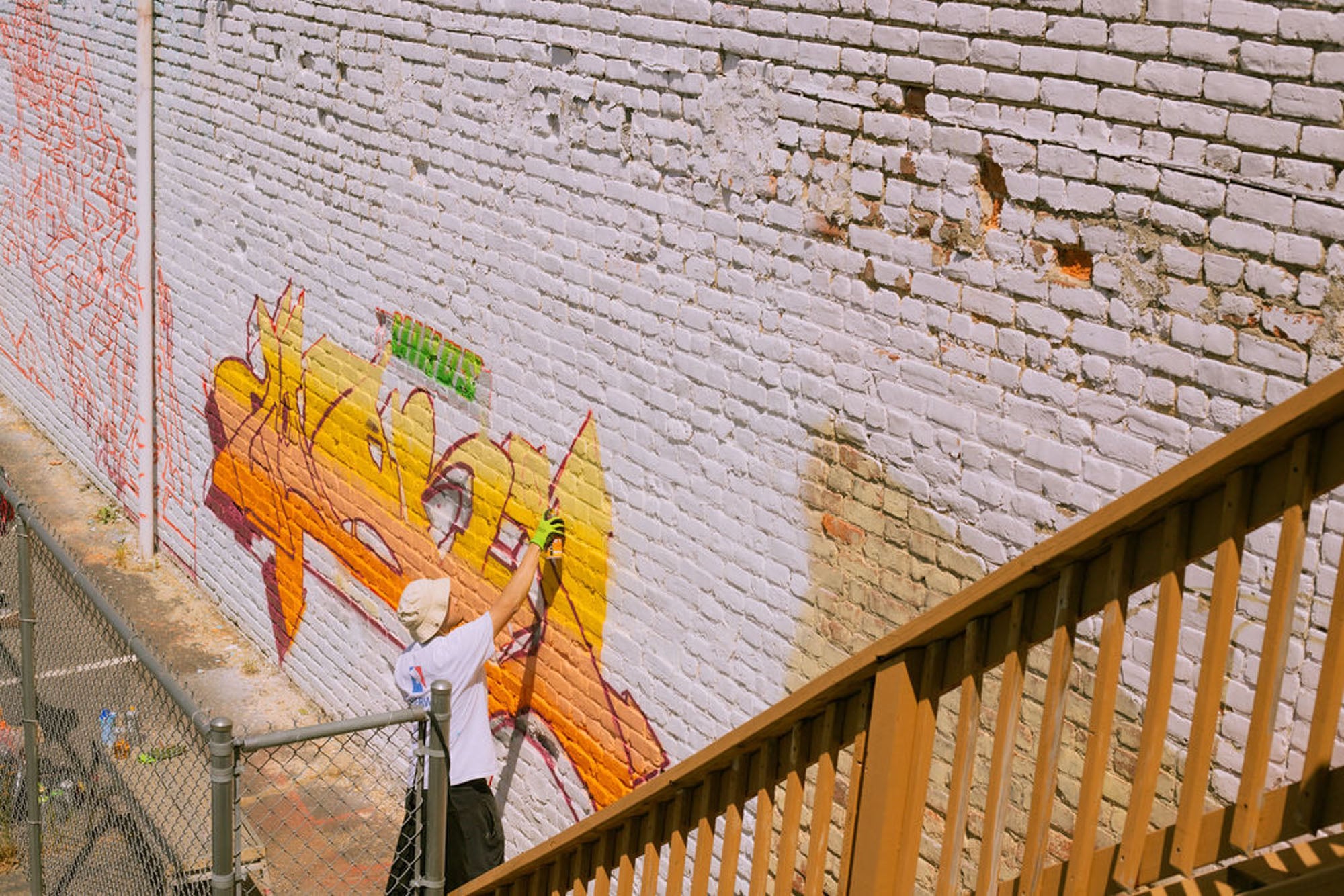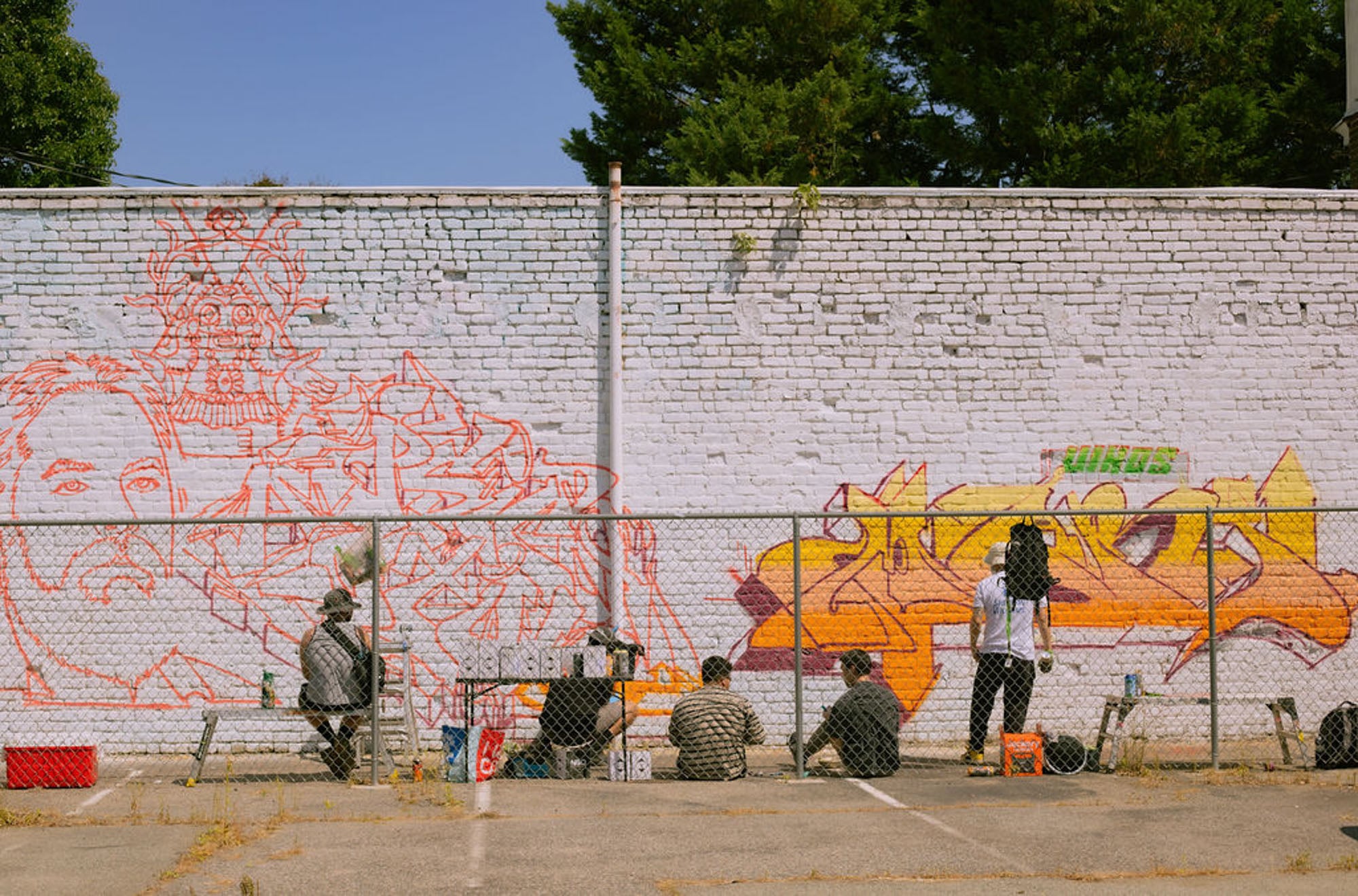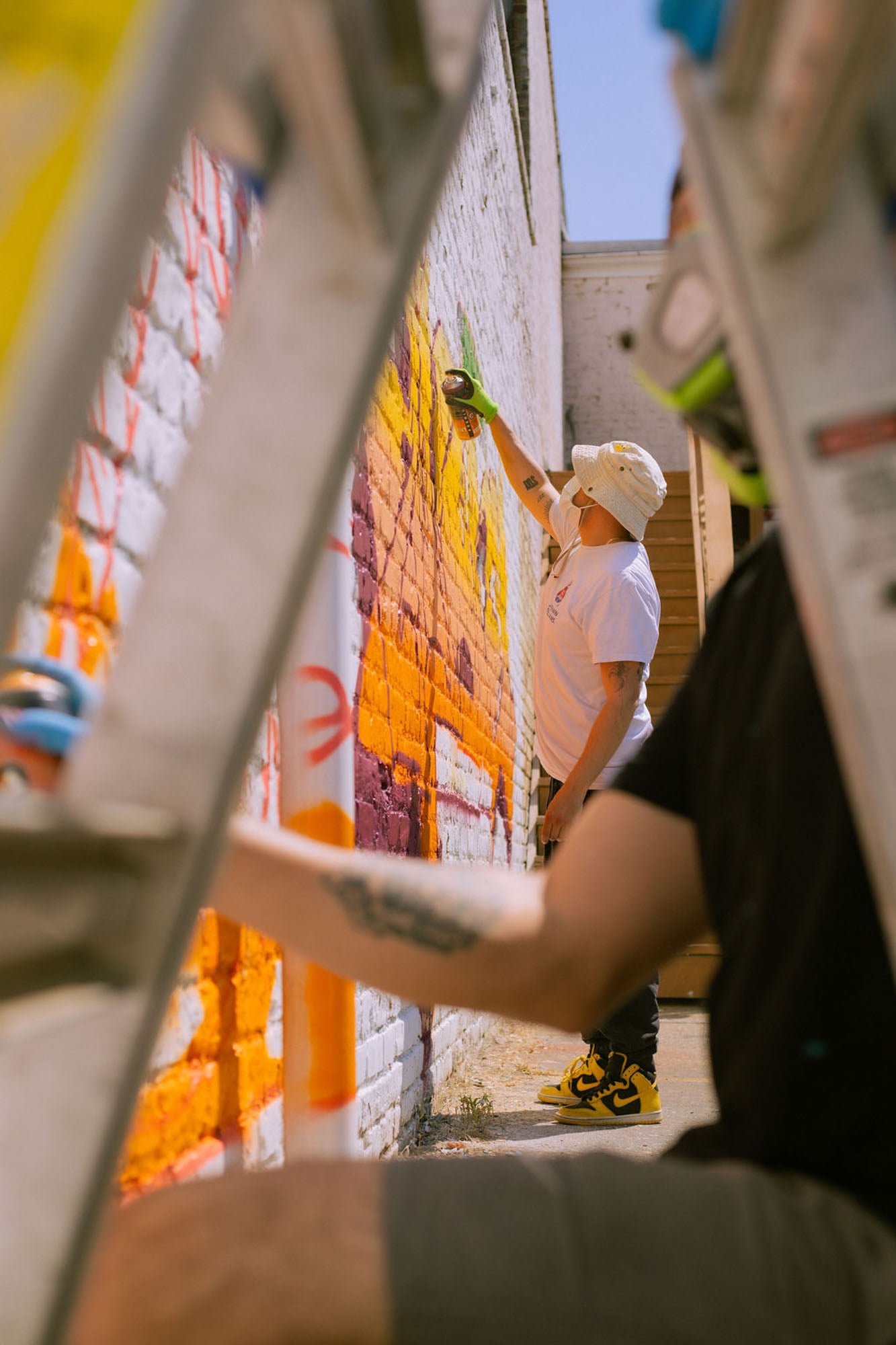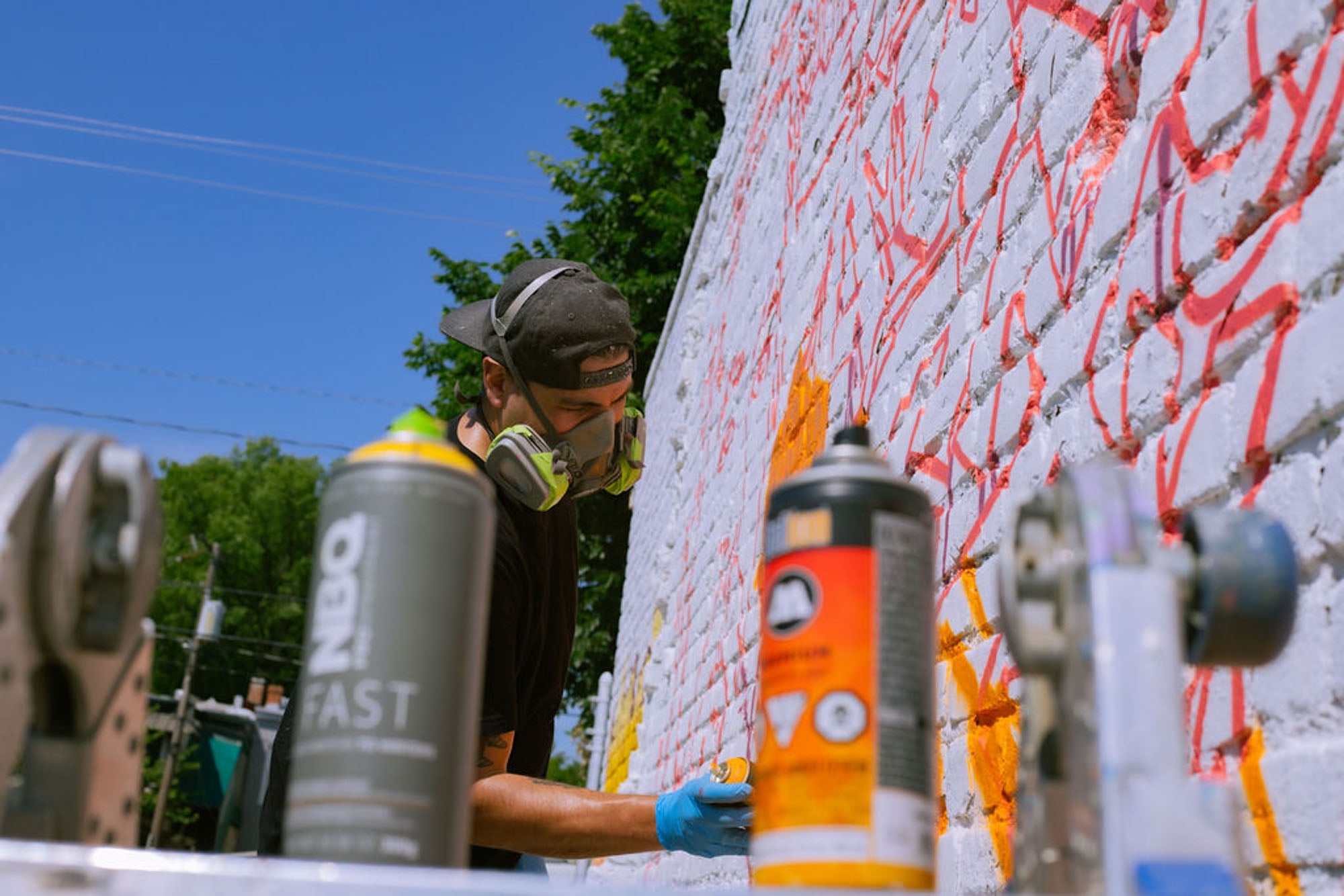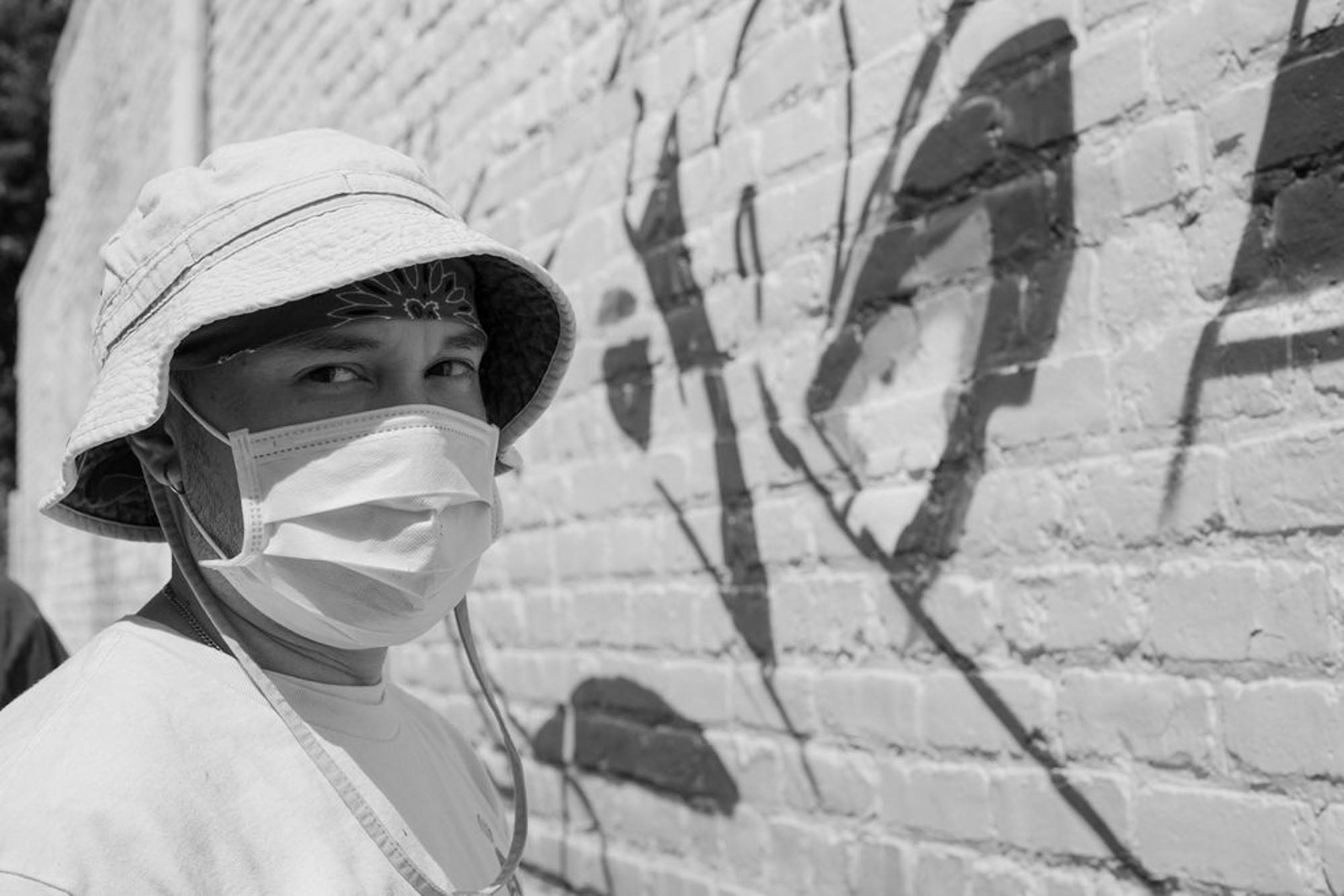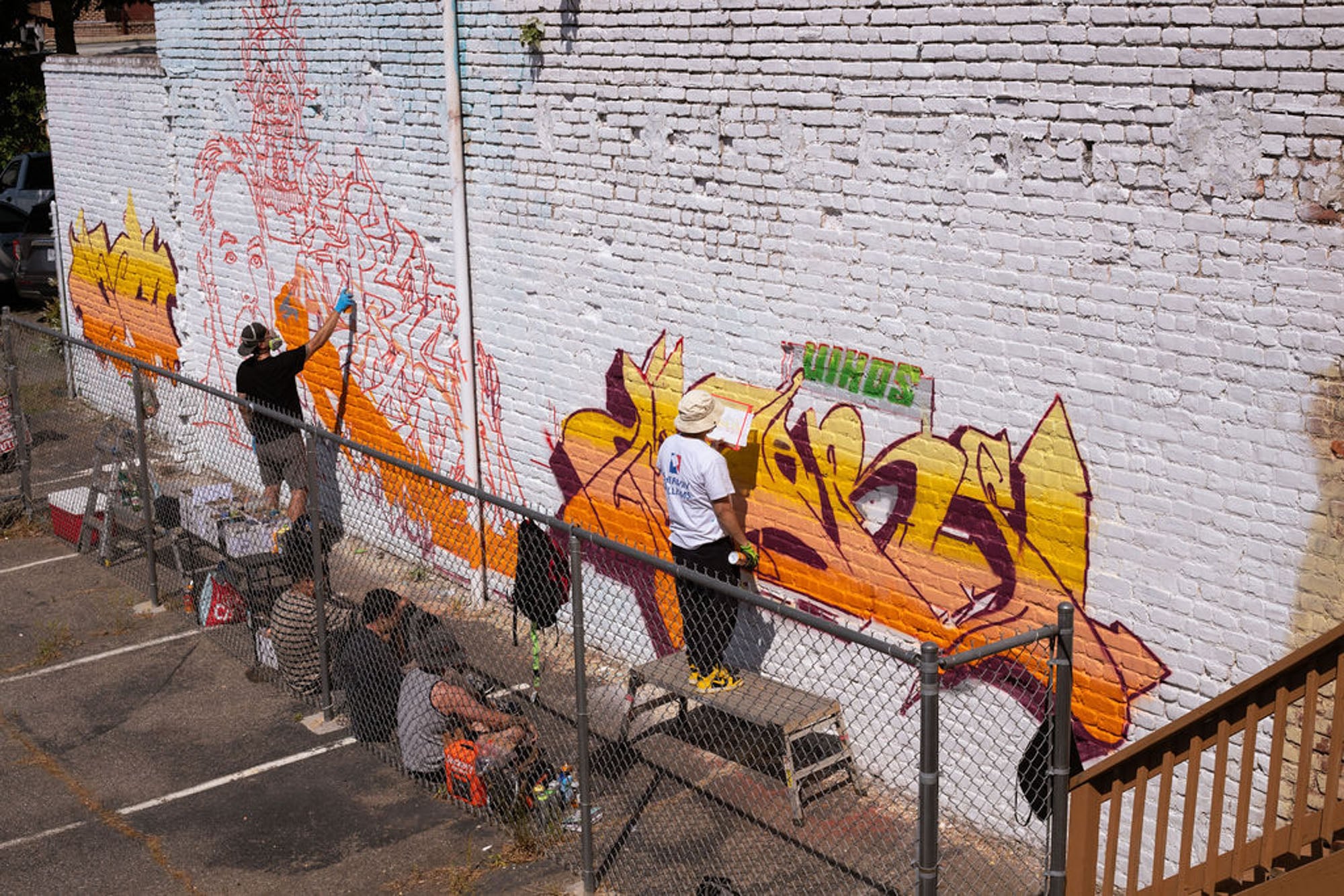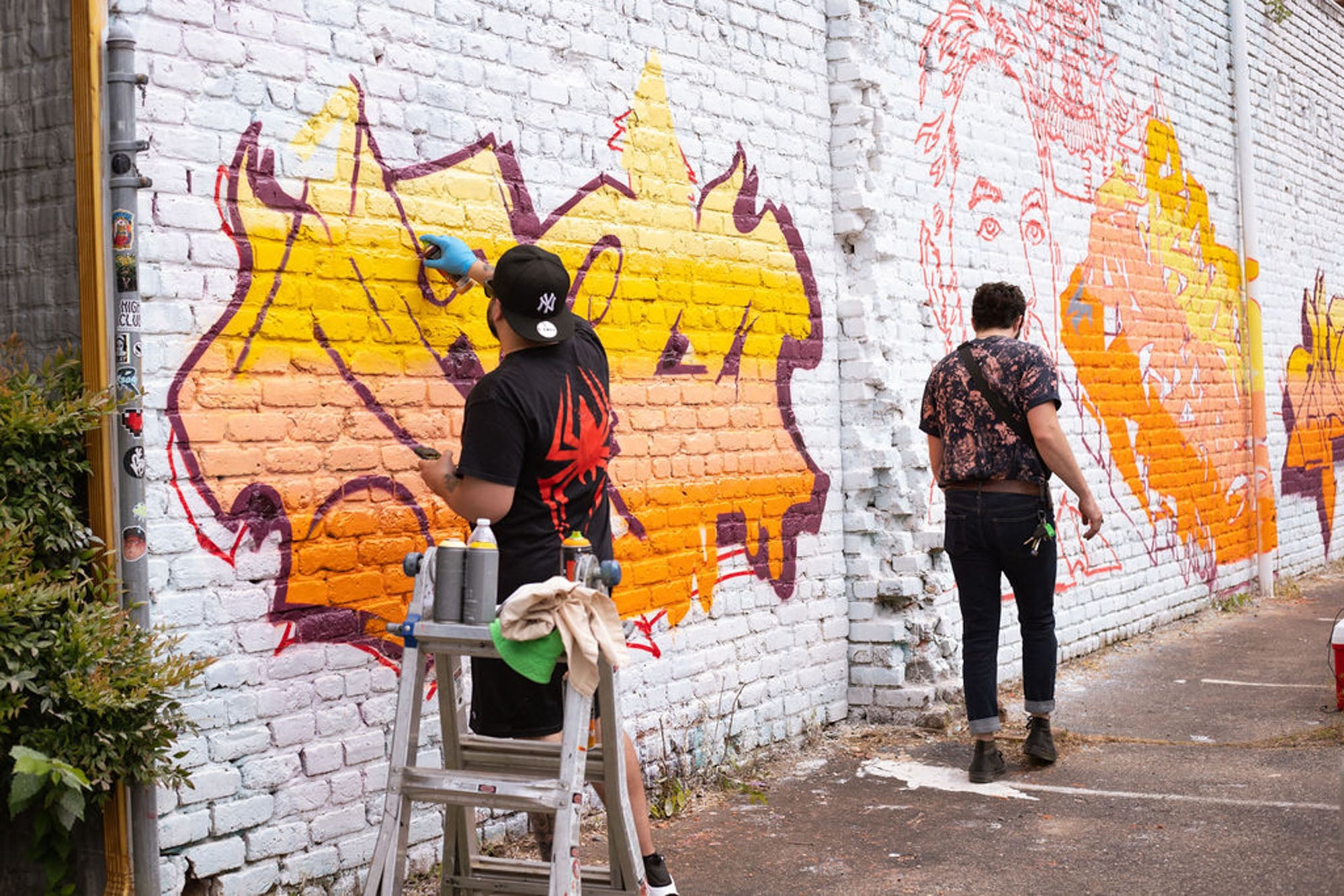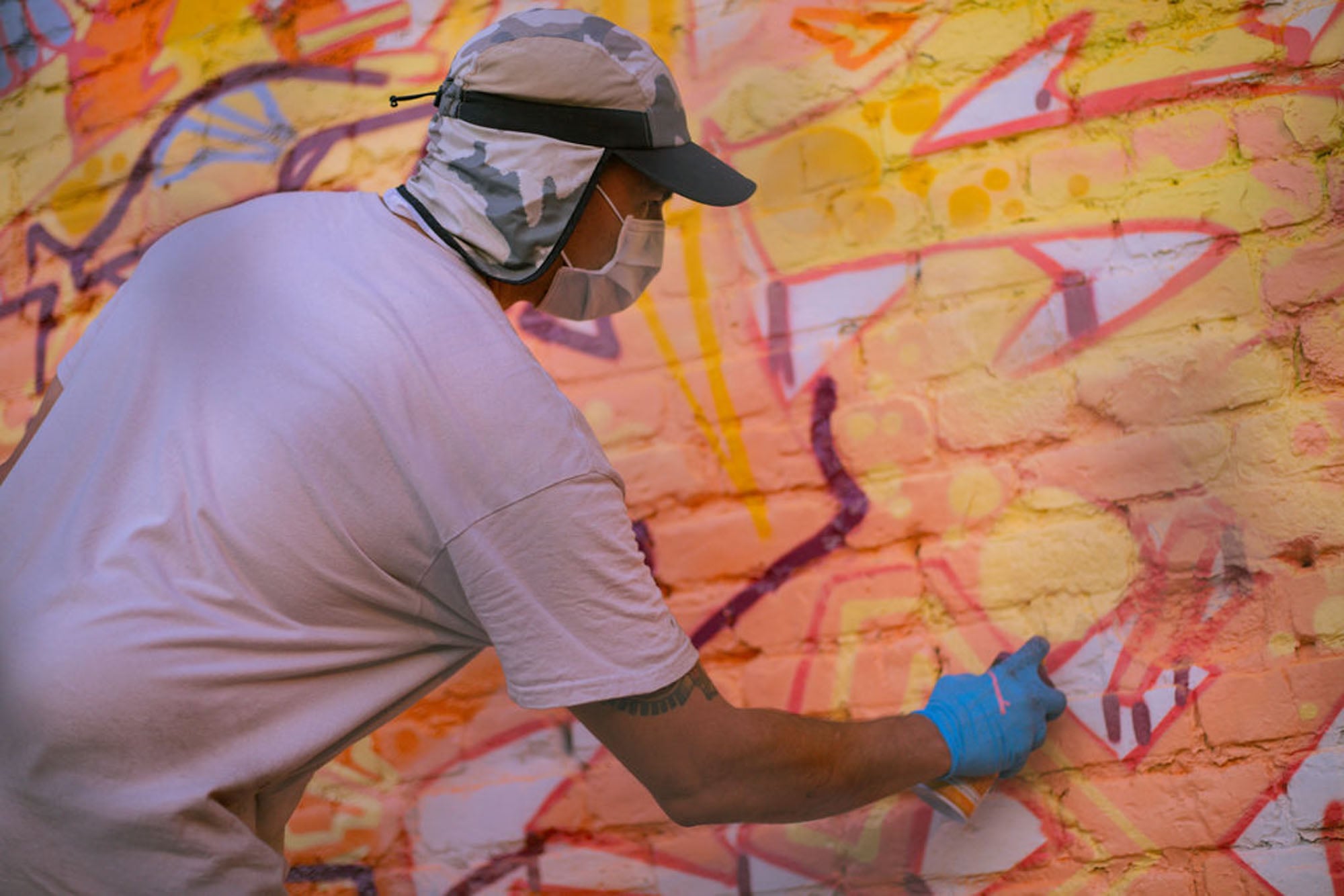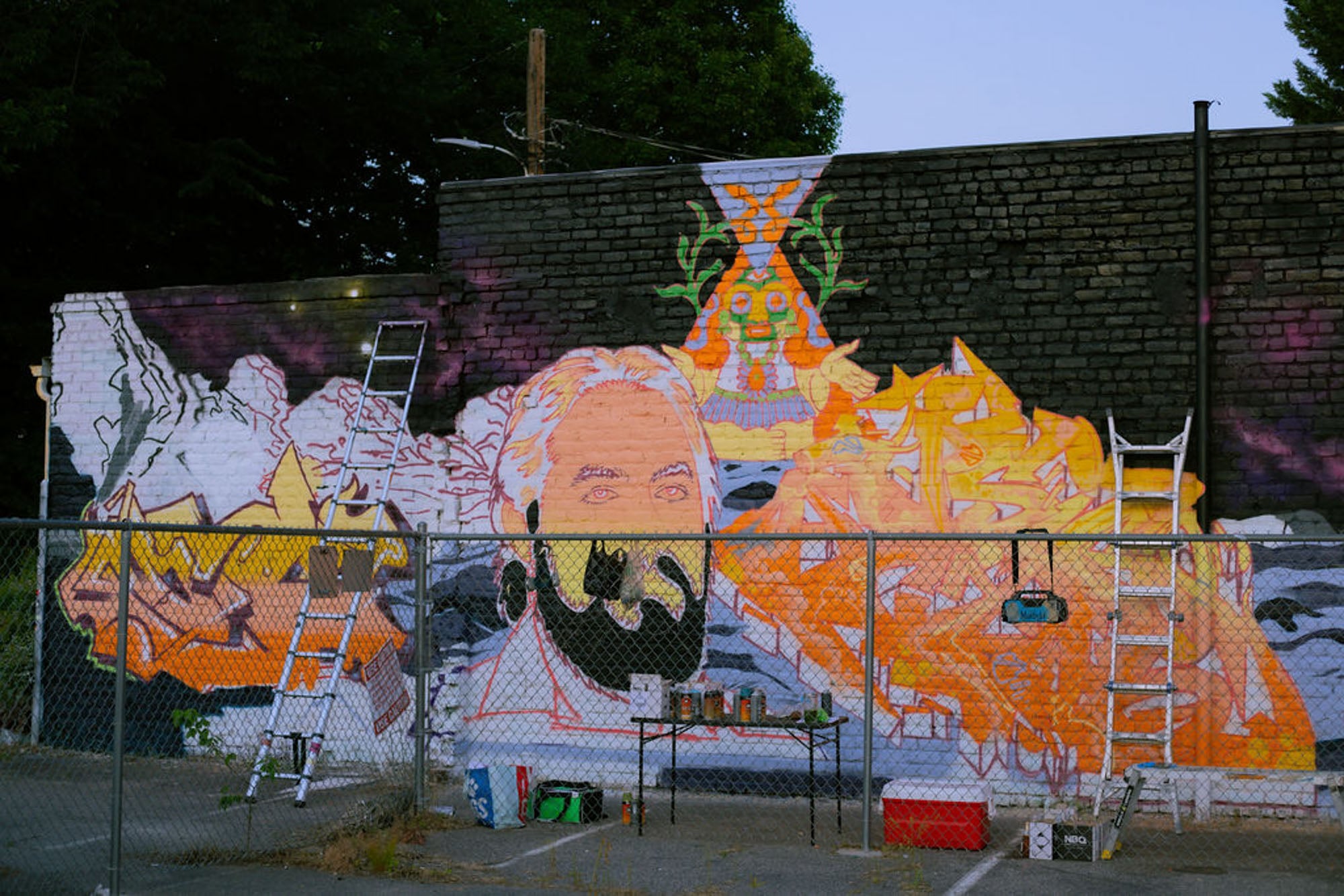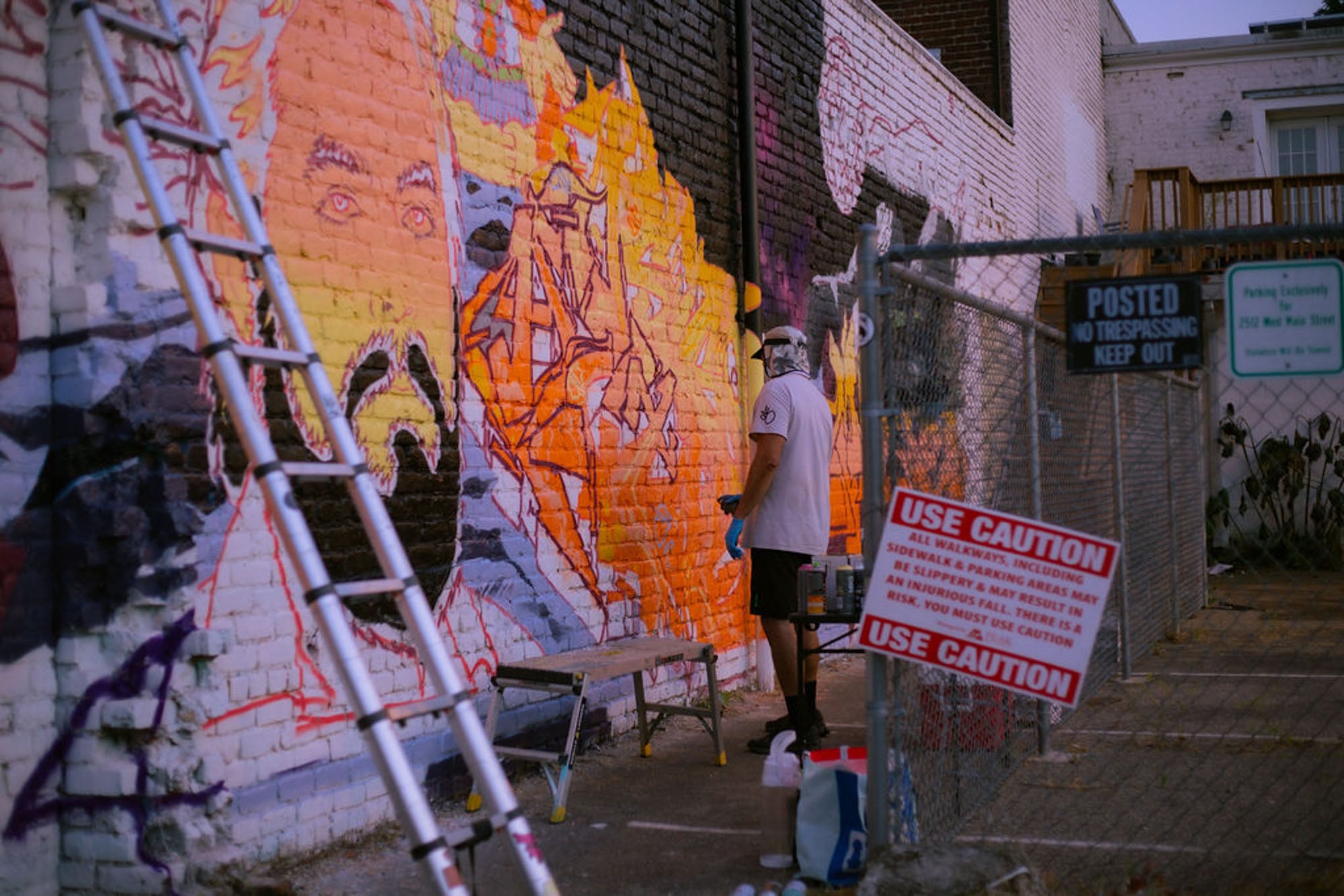
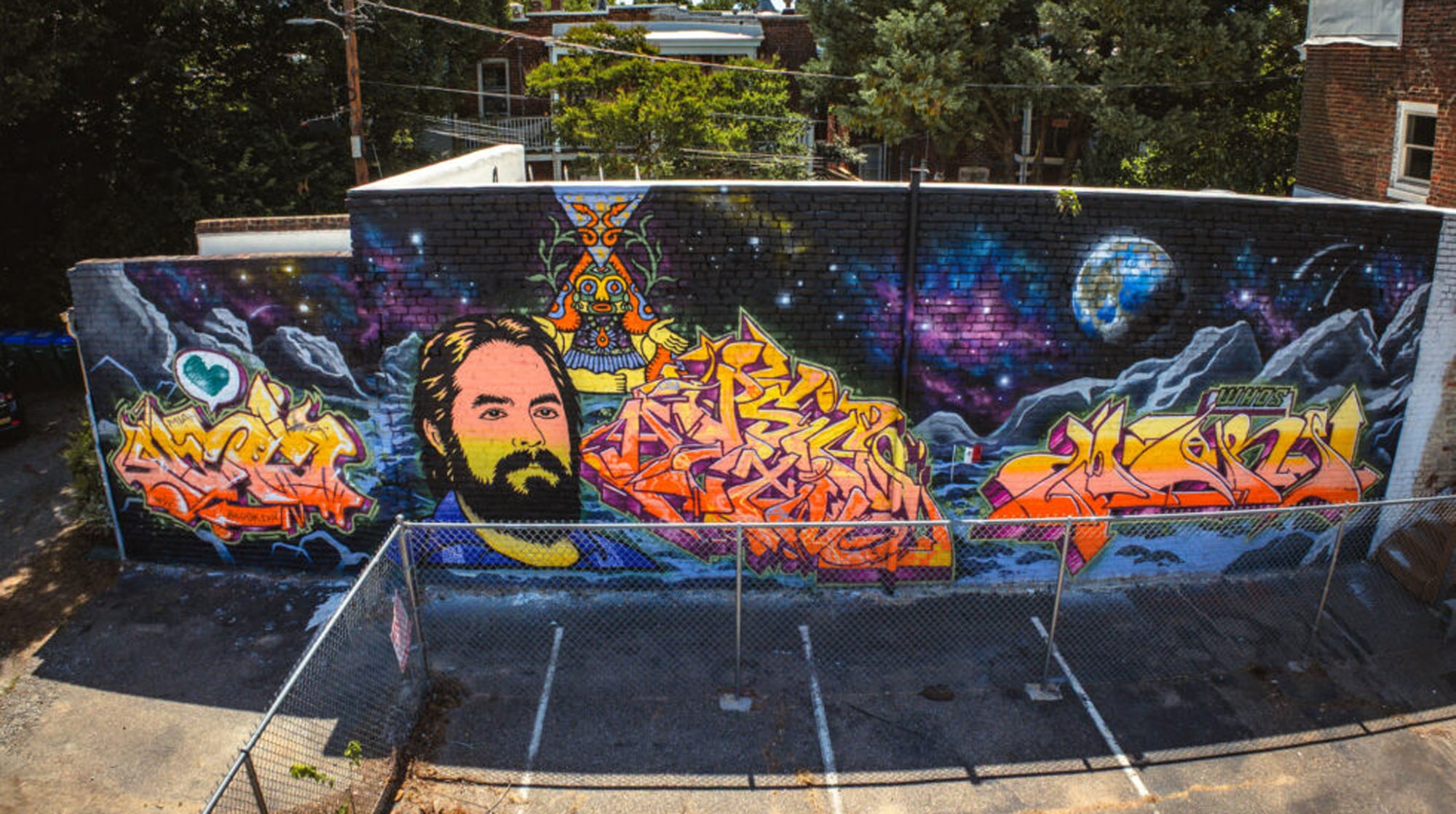
Tucked into the alley behind 2512 West Main Street, a fever dream of the cosmos has taken shape across a brick wall. The mural is the collaborative work of four Latino artists working in and around Richmond: Visibly Hidden, Monolith, Mars, and Sol.
A distant Earth floats above a mountain range and stars scatter across a deep purple sky. A Mayan shaman rises from the center of the wall, a beam blast from his third eye glowing. Graffiti lettering erupts across the brick in oranges, yellows, and pinks. At the center of it all is Mexican researcher Jacobo Grinberg, whose mysterious disappearance in 1994 has made him a figure of fascination among those interested in consciousness studies, indigenous knowledge, and the unexplained.
The mural feels part science fiction, part spiritual journey, and part graffiti jam. Viewed as a whole, it becomes a meditation on identity, belonging, and the many ways people search for meaning. Grinberg serves as a guide through the piece, an entry point into a vision of the cosmos filtered through Latino perspectives, histories, and traditions. Taken together you have a meeting place.
“This is almost like a hey, we’re here,” said Visibly Hidden, who organized the project. “This is what we bring to the table.”
The heart of Richmond is divided in ways people know instinctively.
The lines are cultural, economic, and social. They run between neighborhoods, communities, and even art scenes that can exist only a few miles apart while rarely crossing paths.
Greater Richmond has a vibrant Latino community. Drive down Midlothian Turnpike and you’ll find some of the region’s most dynamic cultural spaces. Restaurants, bakeries, grocery stores, murals, music, and small businesses have transformed parts of the corridor into one of the most visible expressions of Latino culture in Central Virginia. For many Richmonders, that’s where they encounter Latino culture most directly and where most of them live their lives.
But cities have a habit of sorting themselves into districts. People become familiar with places without necessarily becoming familiar with the people who live there. A bit like being a tourist in your own city.
Culturally, food has often been the ambassador. Most Richmonders can name a favorite taco spot before they can name a Latino artist. There is nothing wrong with that, but it does reveal something about how cultural exchange has often taken place. What has been less visible is Latino representation within Richmond’s public art conversation, particularly in the neighborhoods most associated with the city’s creative identity.
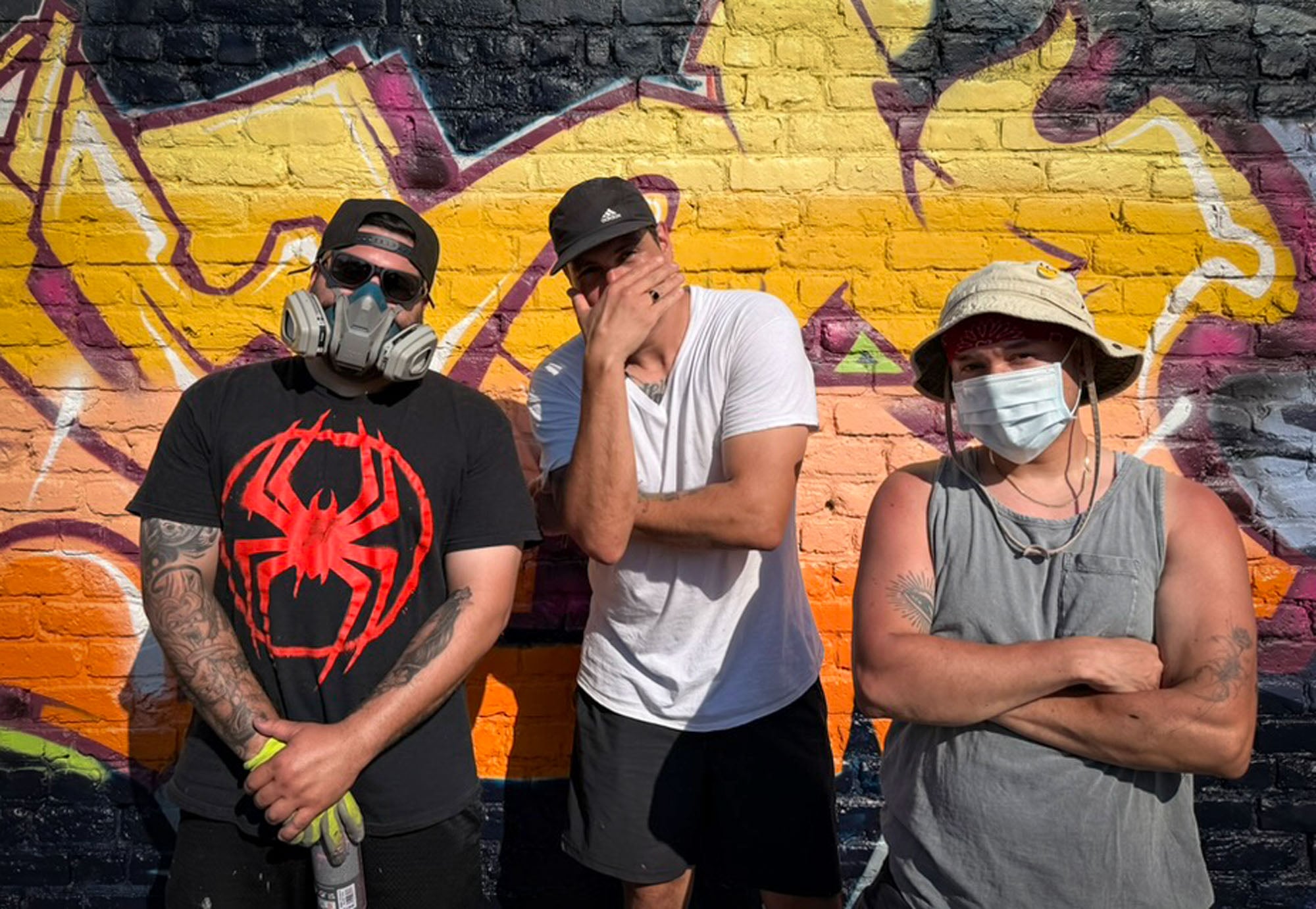
In talking with Visibly Hidden, Monolith, and Mars, two words kept coming up: local and Latino.
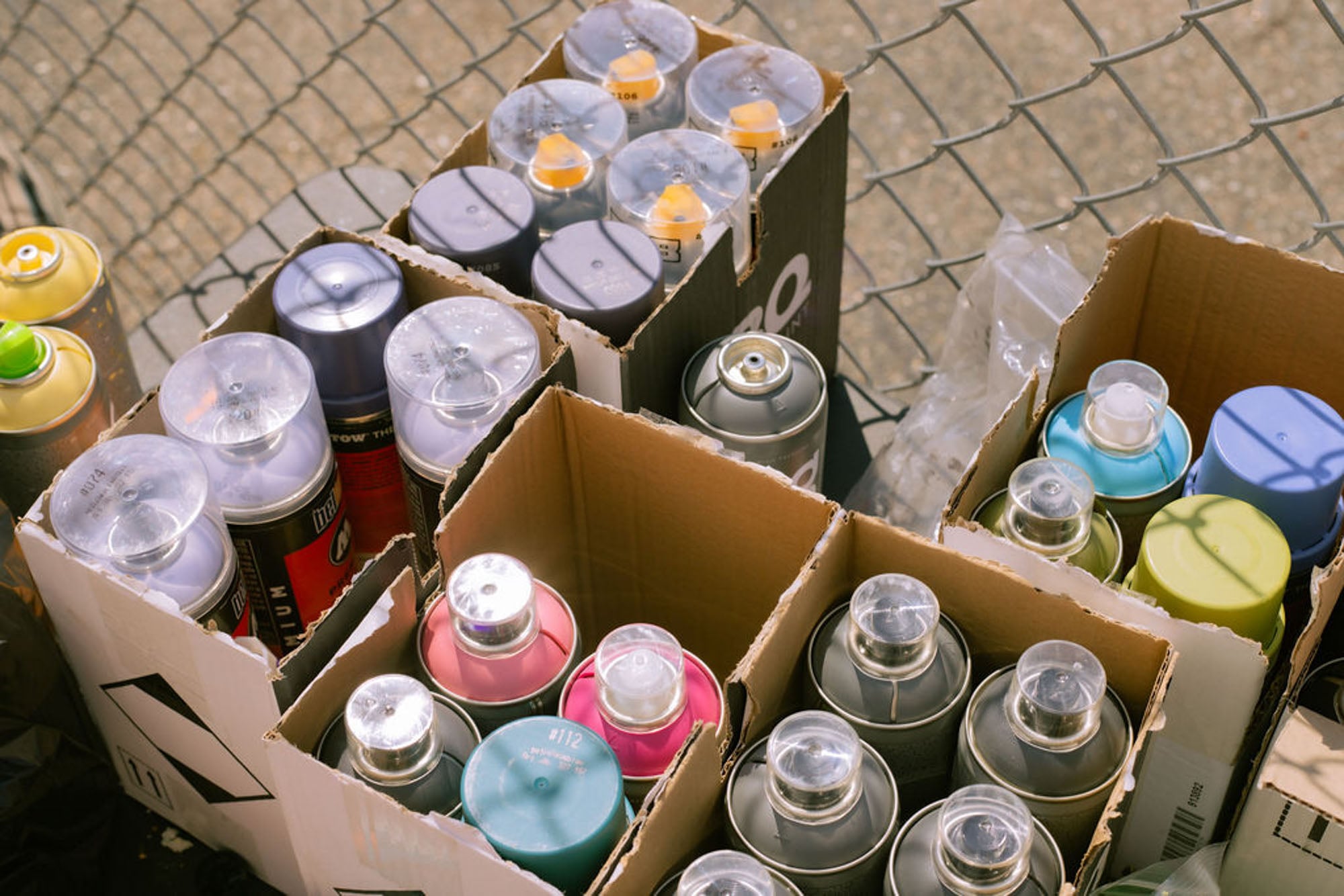
The artists weren’t brought in from New York, Miami, or Los Angeles. They already live here, buy supplies here (shoutout: Supply), and paint here. Over the years they had crossed paths on walls throughout the city, at paint jams, and collaborative projects like Richmond Art Park.
This wasn’t about importing anything but recognizing what already existed.
The conversation started late last year. Visibly Hidden had access to a large blank wall behind 2512 West Main Street and an idea. After participating on collaborative walls in South Florida, where Latino artists were a natural part of the local scene, he began wondering what a similar project might look like in Richmond.
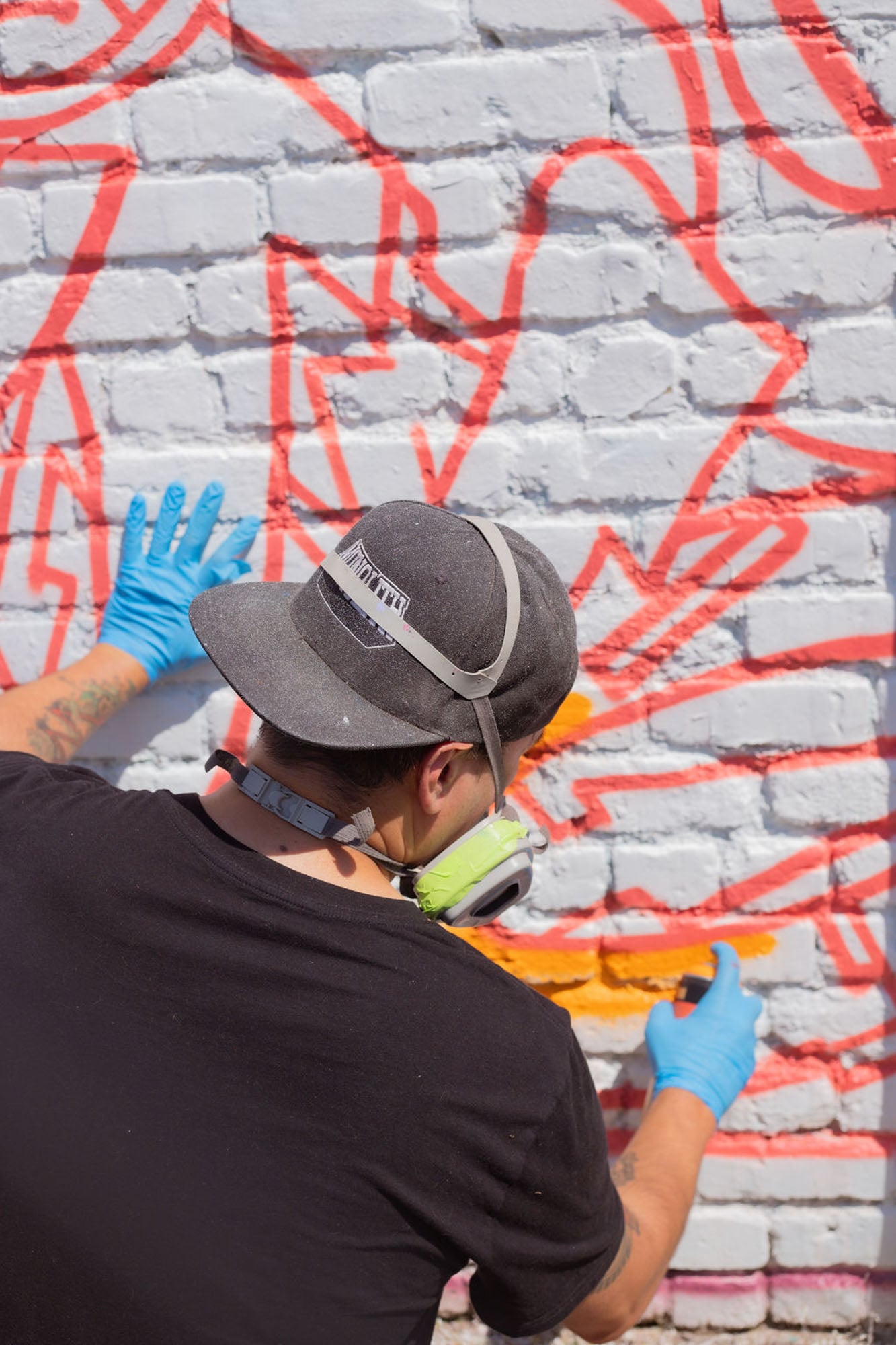
So he started making calls and a group chat formed. The artists met, prepped the wall, discussed themes, and slowly began building what would become the next collaborative Latino art project in the city.
Off the jump, the appeal was immediate for Monolith. “It was just like a convergence of people kind of having the same mentality of like let’s connect,” he said. “We already all make art independently and have different things that we like to focus on with our art, but it’d be cool being an artist, mural artist, graffiti artist in Richmond to have some representation as Latinos.”
“Richmond is so cool because it has so many murals, and that’s what kind of brought us together on different projects. But yeah, let’s do something as Latinos. Whatever it ends up being, as Latino artists, it’s a representation.”
“It’s kind of a small group of Latino muralists that are working in town. Representing them. Just seeing who’s doing it and connecting on that tip, trying to come together and create some representation through murals.”
Mars saw the project through a similar lens. “I feel like Richmond has a lot of Latinos here, but I just feel like we’re not stepping out of our shell,” he said. “I feel like there’s a lot of hidden talent within the Latino community. Recently, I’ve been seeing a lot more things happening within our community. There’s projects like this, there’s pop-up shows, there’s even run clubs now. I think it’s all happening as a collective.”
The imagery that emerged from those conversations reflects the different perspectives each artist brought to the wall.
Visibly Hidden’s section traces the influences that shaped him, from Brooklyn to Richmond, blending his Dominican heritage with the visual language of street art and graffiti.
Monolith drew inspiration from indigenous knowledge systems, Latin American mysticism, and Mexican intellectual traditions.
His contribution centers around Mexican researcher Jacobo Grinberg, a neurophysiologist whose work explored consciousness, indigenous healing traditions, and shamanic practices before his mysterious disappearance in 1994.
Through a podcast from Tijuana called Psicoactivo Podcast, Monolith became fascinated with Grinberg’s attempts to bridge scientific inquiry with indigenous knowledge systems.
“A lot of his work was rooted in studying the history and culture of shamanism in Mexico,” Monolith said. “He became less of a skeptic and more of a believer just from actually spending time and doing research and witnessing and writing. There’s that connection between indigenous cultures from North and South America. The understanding that we are connected to everything, to nature and to the cosmos.”
“I thought it’d be interesting to bring attention to this person,” he said. “Different ways of connecting us to indigenous understanding of things that we might not have been as critical of before our countries were colonized.”
“There’s some wordplay there, alien, illegal alien,” Visibly Hidden said. “A lot of us have similar stories that feel kind of distant. Where do we belong here? Where do we fit here?”
Even his chosen moniker, Visibly Hidden, speaks to that tension. The community has always been here, helping shape the city in ways both visible and invisible. Yet despite the cultural specificity of the project, the artists repeatedly returned to the same idea: connection.
“I’m trying to create a bridge,” Visibly Hidden said. “Like in New York we have Dominican parades and Puerto Rican Day parades. Those are days where we celebrate our culture, but it’s not like we’re trying to separate ourselves.”
Mars put it simply. “I hope it inspires others,” he said. “I wanted to inspire other people. When people see this wall, I hope it inspires others to make moves, to not be afraid to do what it is that they want to do, and not be afraid to represent their culture.”
“Not only Latinos. Everybody.”
Main photo by Take One Aerial
Support RVA Magazine. Support Independent Media in Richmond.
At a time when media ownership is increasingly concentrated among corporations and the wealthy, RVA Magazine has remained one of Richmond’s few independent voices. Since 2005, the magazine has provided grassroots coverage of the city’s artists, musicians, and communities, documenting the culture that defines Richmond beyond the headlines.
But we can’t do this without you. A small donation, even as little as $2, one-time or recurring, helps us continue to produce honest, local coverage free from outside interference. Every dollar makes a difference. Your support keeps us going and keeps RVA’s creative spirit alive. Thank you for standing with independent media. DONATE HERE.
We’ve got merch HERE
Subscribe to the Substack HERE
And Reddit HERE
And YouTube HERE
Photos by @crtveambvrt