
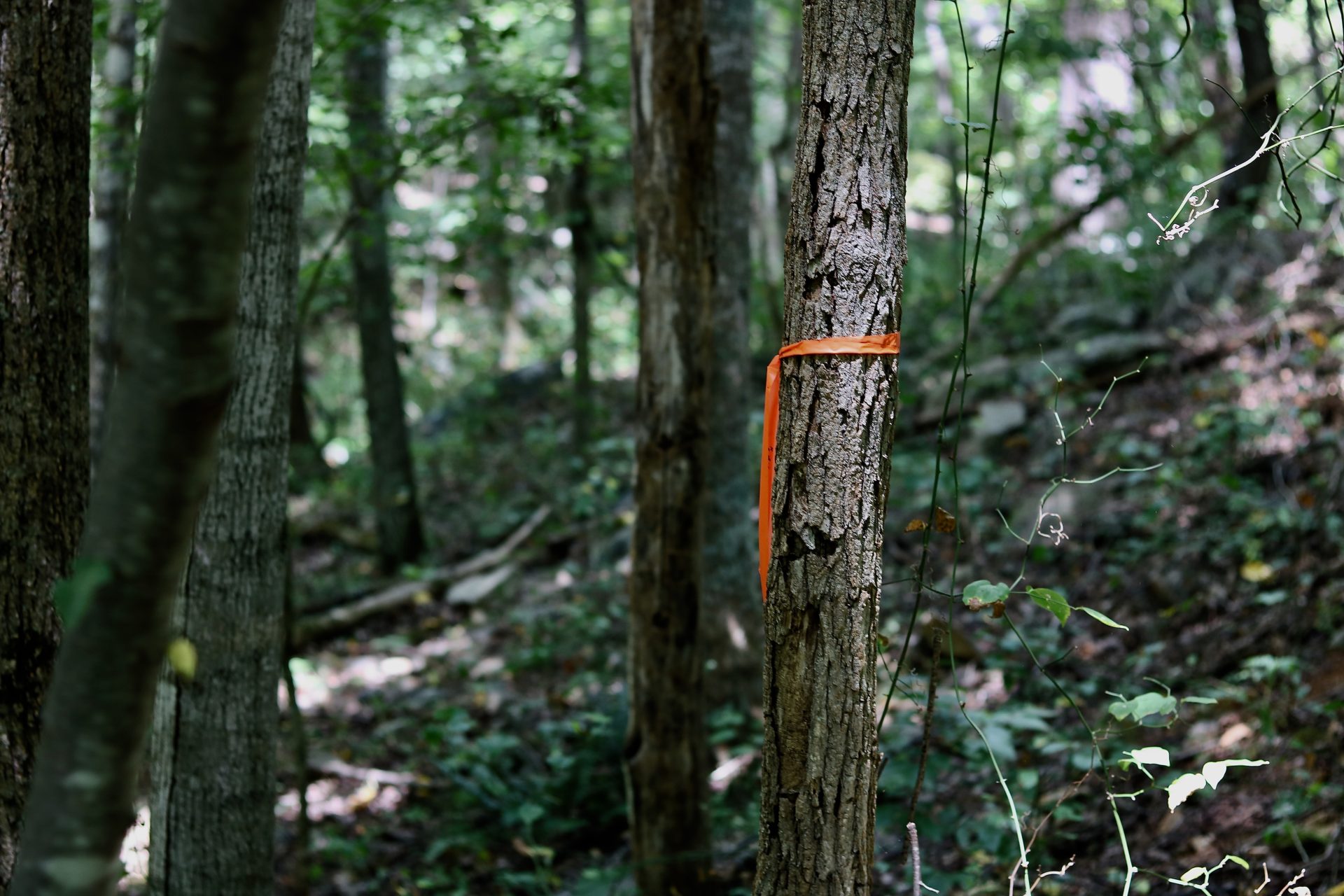
Dominion Energy has begun felling trees in West Virginia and Virginia along the proposed path of the Atlantic Coast Pipeline (ACP).
After the Federal Energy Regulation Committee (FERC) approved a Limited Notice to Proceed last Friday to begin felling trees along the proposed path of the ACP, Dominion Energy wasted no time in beginning the process.
“This work will only be done on properties where we’ve reached agreements with landowners,” said Dominion Energy spokesperson Aaron Ruby in a statement. “None of the work will be done in wetlands, near water bodies, or in other areas that require additional federal and state permits. We will, of course, notify all landowners before beginning activity on their property.”

Along the ACP. Photo by Landon Shroder
Although FERC has determined Dominion may begin cutting, any felled trees or vegetation debris will be left in place until further authorization for any ‘earth-disturbing’ activities is granted by FERC.
“Trees and vegetation may be felled at or above ground level, and must use methods that will not rut soils or damage root systems, and be felled in a way that avoids obstruction of flow, rutting, and sedimentation of wetlands and waterbodies,” Dave Swearingen, FERC Branch Chief, wrote in a letter to Dominion executives.
Dominion will be unable to begin cutting trees and vegetation in North Carolina after the state gave Dominion a qualified disapproval of the erosion and sedimentation control permit. The North Carolina Department of Environmental Quality (DEQ) decided the pipeline project did not meet the state’s standards for erosion control, a concern that persists among Virginia landowners.
“I think it’s an incredibly stupid decision by FERC, because it sets you up for them to do damage to the environment that is difficult to undo, but it is legal at this point,” Richard Averitt said, a landowner and business owner in Nelson County. Tree cutting has not yet begun in Nelson due to the very few number of easements ACP has gained in Nelson County, according to Averitt.
Landowners have struggled with fighting pipeline projects for several years, including the Mountain Valley Pipeline (MVP), which is still in the legal process of obtaining easements from over 300 landowners through eminent domain in Virginia and West Virginia.
“This is a fairly limited action in a fairly limited number of places,” Averitt said. “There are a number of major lawsuits that are being filed that could have effect on this, but at this point, they’re really just cutting down the line of growth on places where people have negotiated and received payment.”

Richard Averitt
Averitt notes that the next step in stopping tree felling will be to fight any cases where ACP is attempting to use the ‘quick-take’ action within eminent domain, which would allow Dominion to cut trees on properties of people who have not settled with Dominion prior to all permits being finalized.
“I feel confident they will not get any of that done,” Averitt said.
Landowners and their lawyers argued against the constitutionality of eminent domain in a hearing last week, a power that is usually reserved only for the federal government and not a private company for private gain. MVP wishes to begin their tree felling by Feb. 1.
While MVP landowners asked for a rehearing, FERC instead issued a tolling order, meaning they will delay a final decision in court while allowing pipeline construction to move forward.
“Dominion is way behind schedule,” Averitt said. “There are a lot of things threatening the pipeline in general, and they’re doing everything in their power to hurry because the legal processes all have the opportunity of killing the project. They know that the more they get done, the easier they have this mysterious argument that, ‘Oh hey we’ve already done all of this work, surely we should be able to continue…’ They’re trying to put on the artifice that it’s all a done deal, which they believe could cause other people to sign easements, to give up, to stop fighting, and sort of saps the will of the people. They’re wrong. We’ve got a strong resistance to stop these pipelines.”