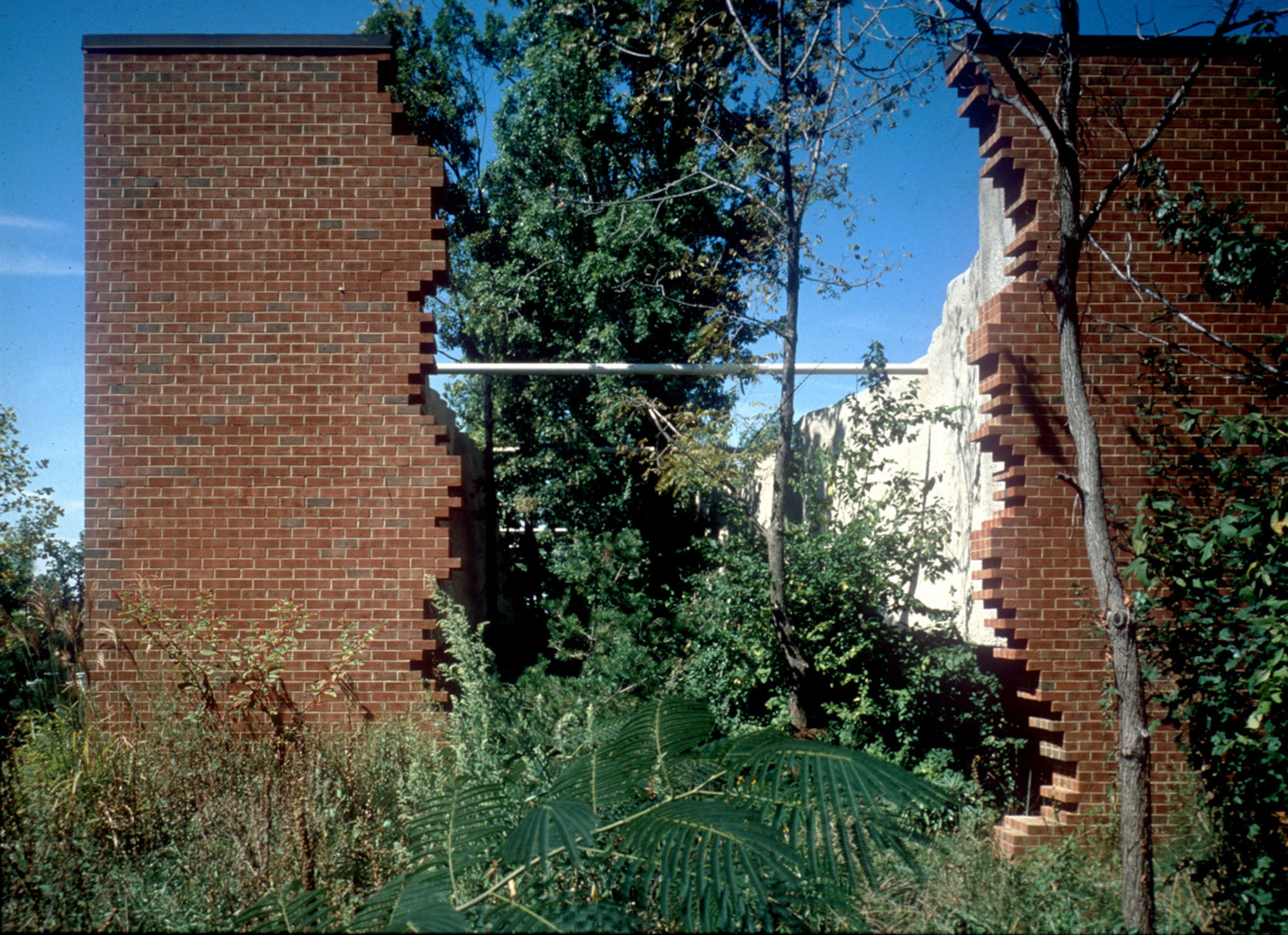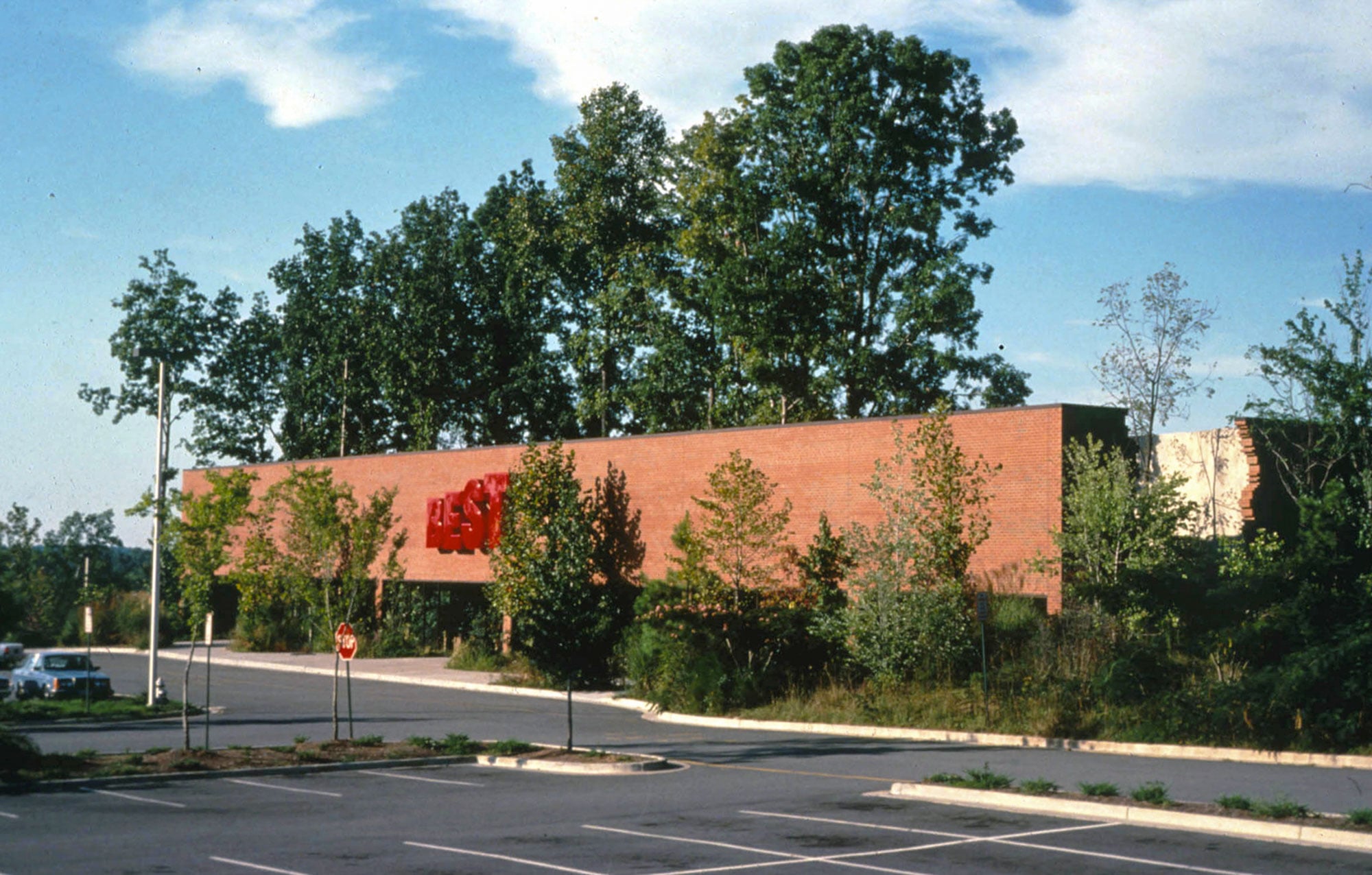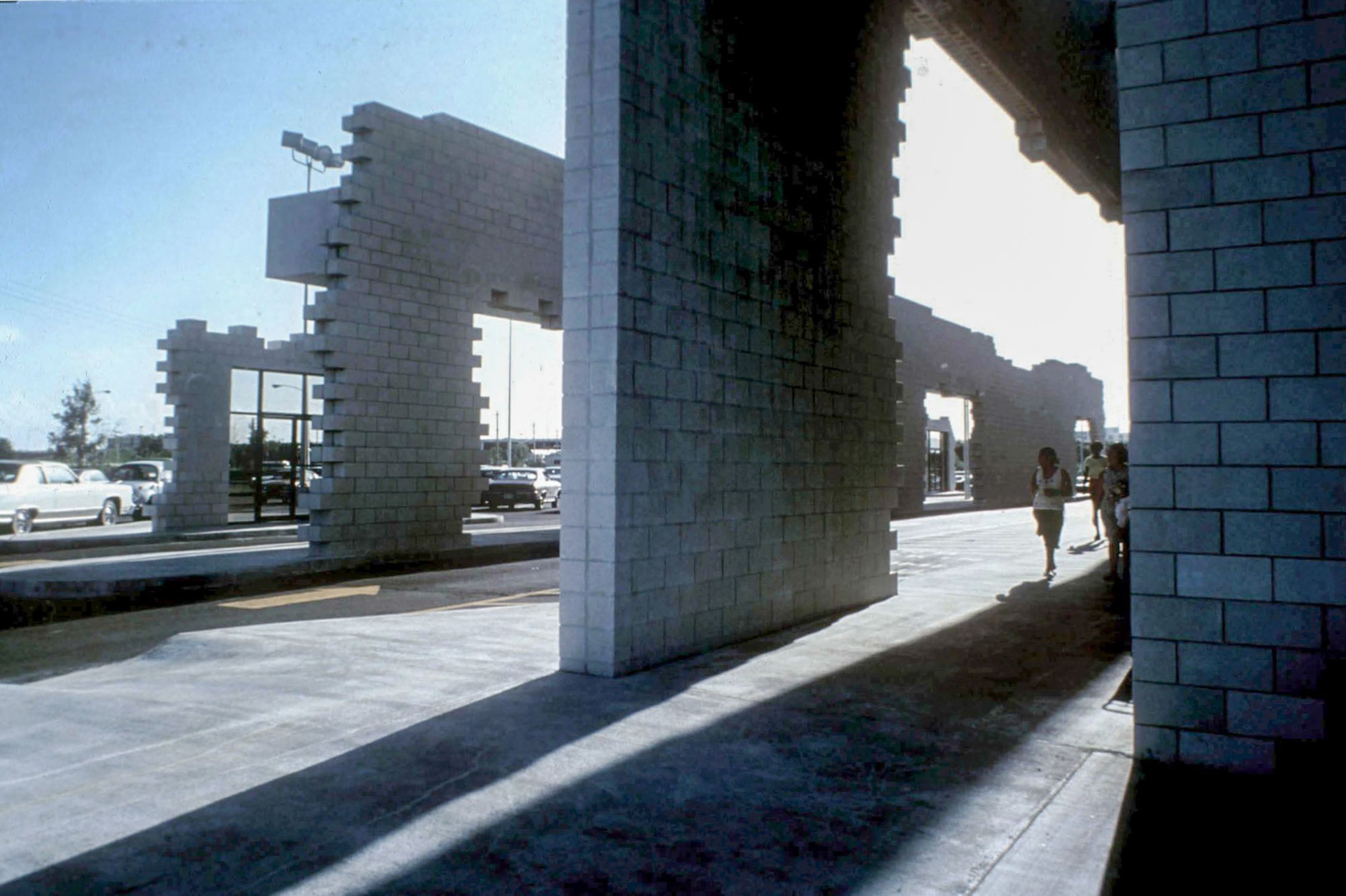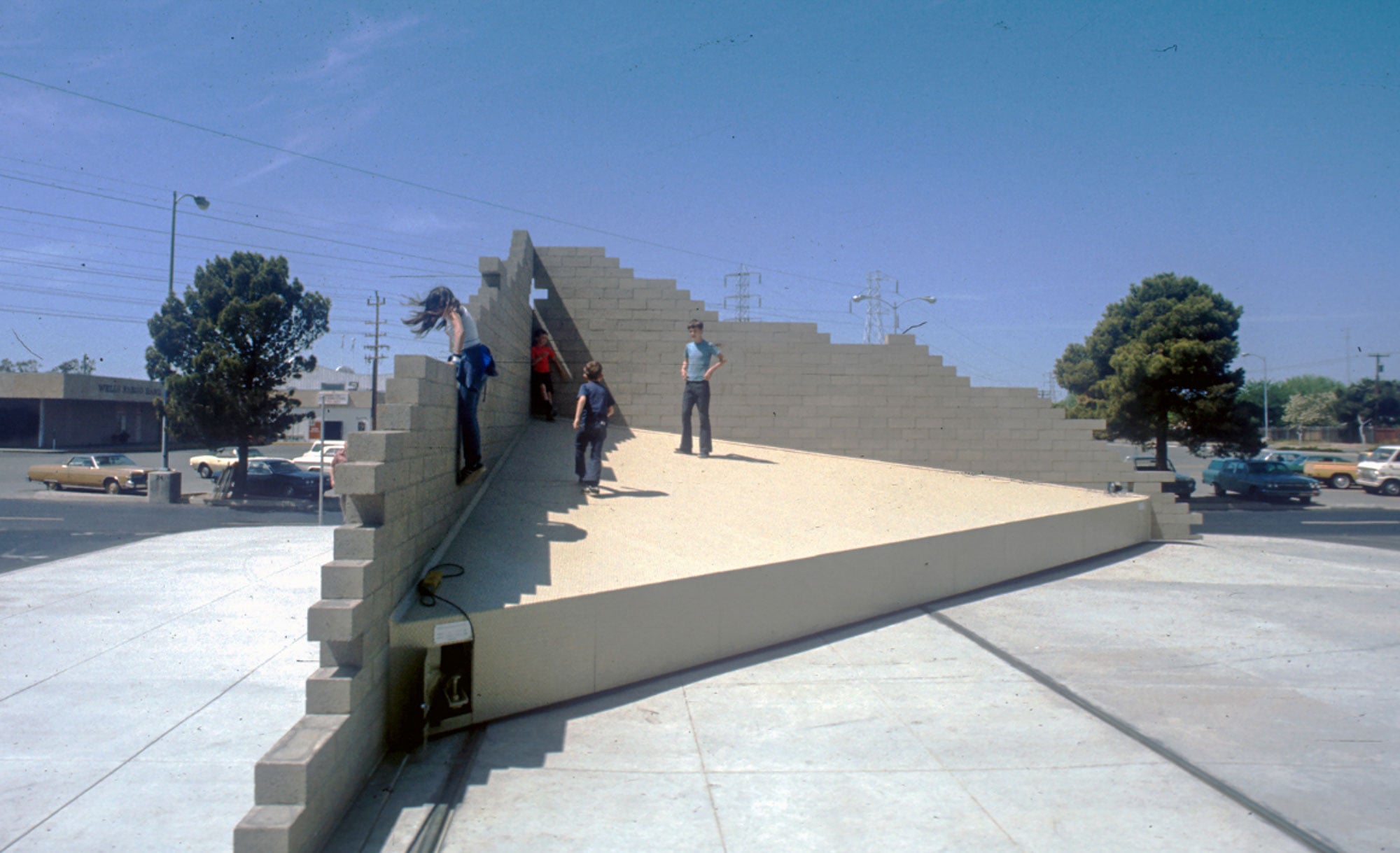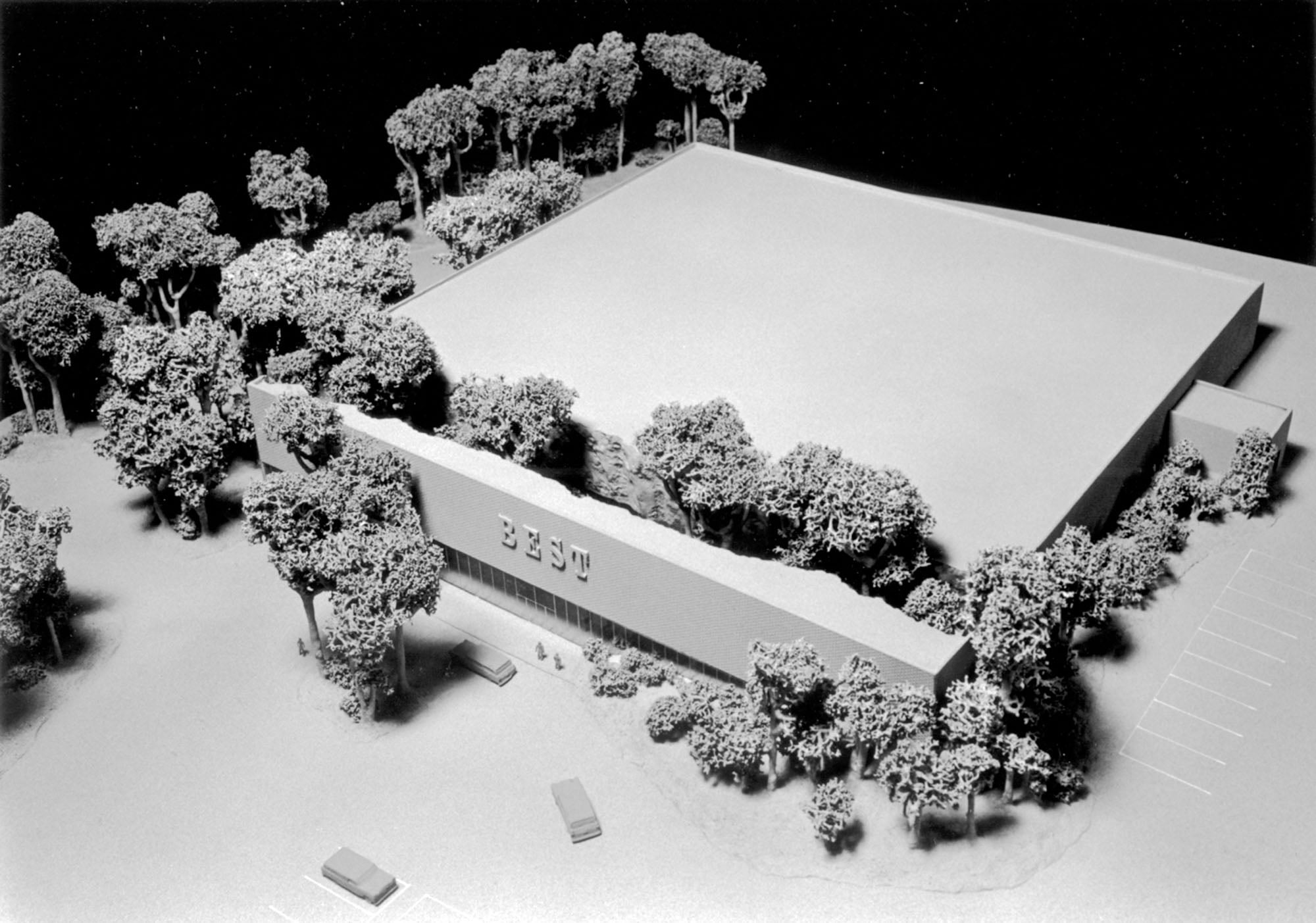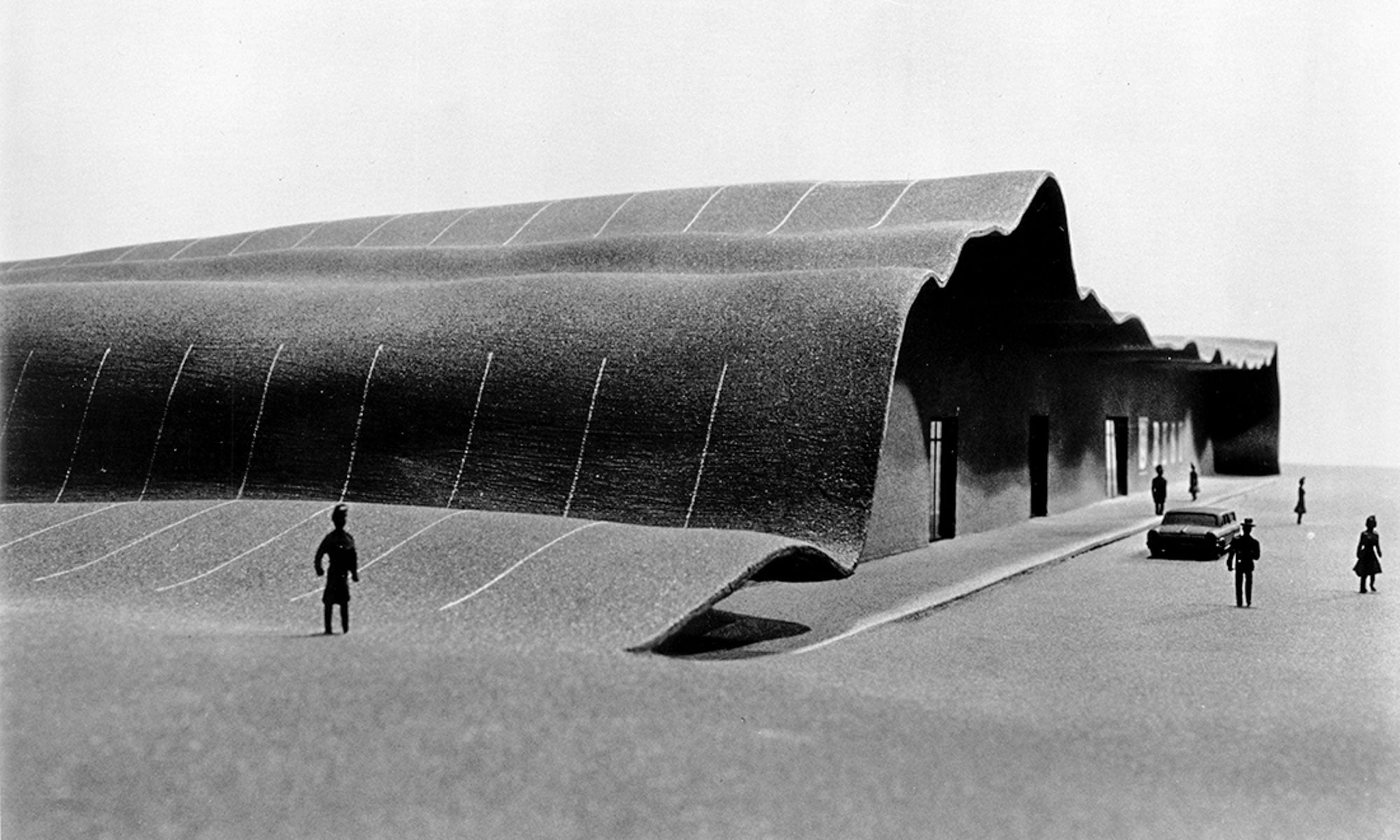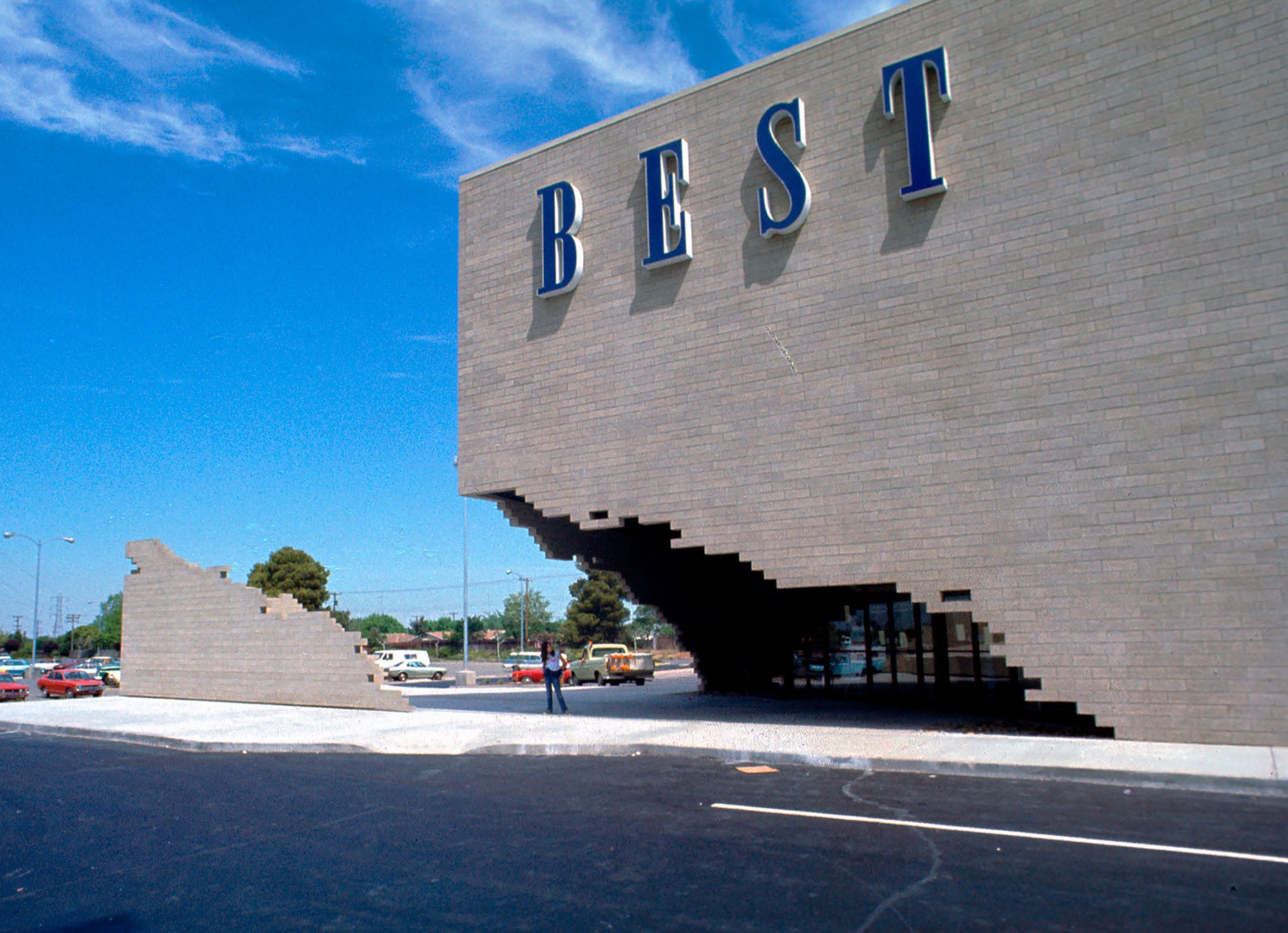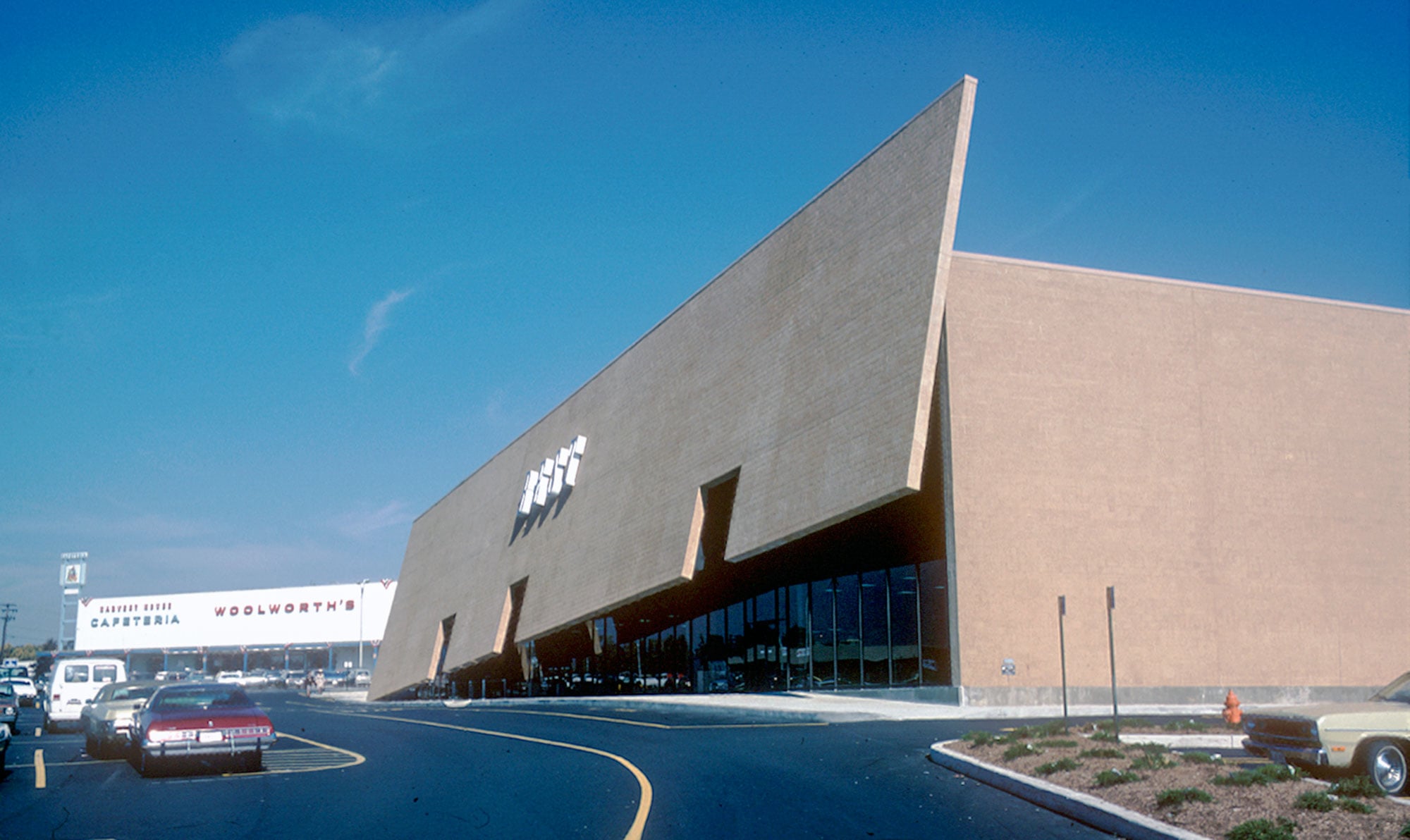
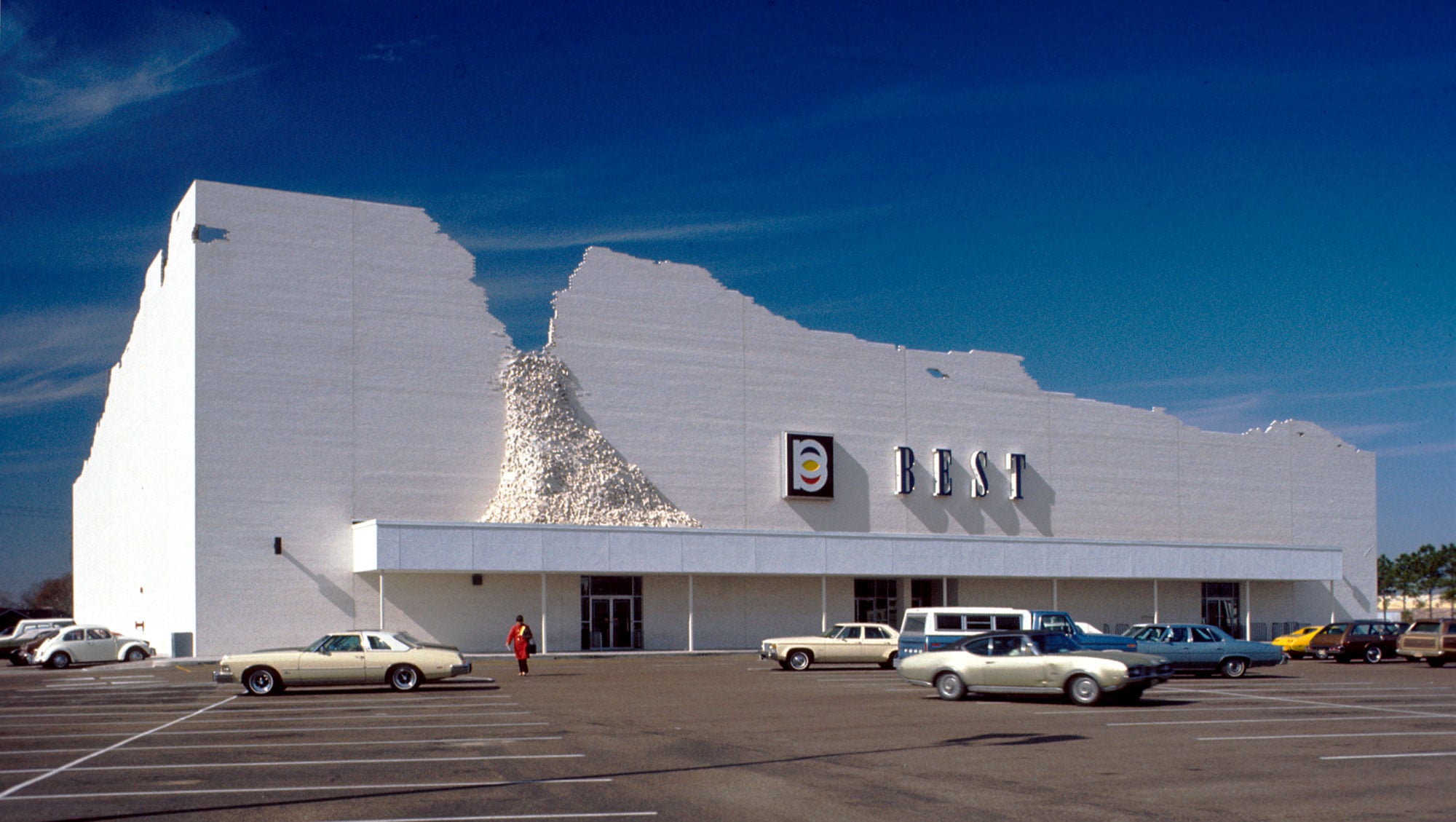
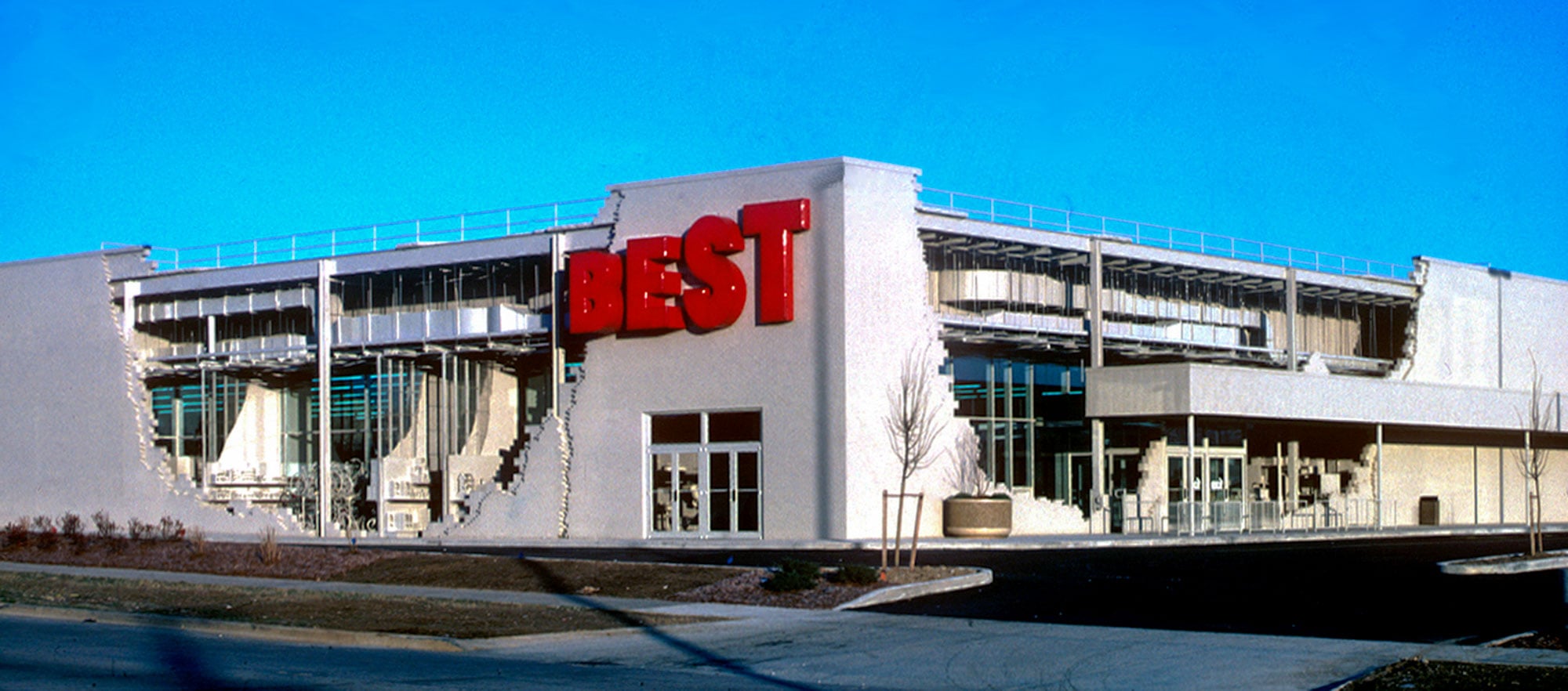
Imagine pulling into a suburban shopping center to buy a toaster and finding a department store that appeared to be falling apart with corners breaking away, walls peeling open like a giant cardboard box, or facades seemingly collapsing under their own weight.
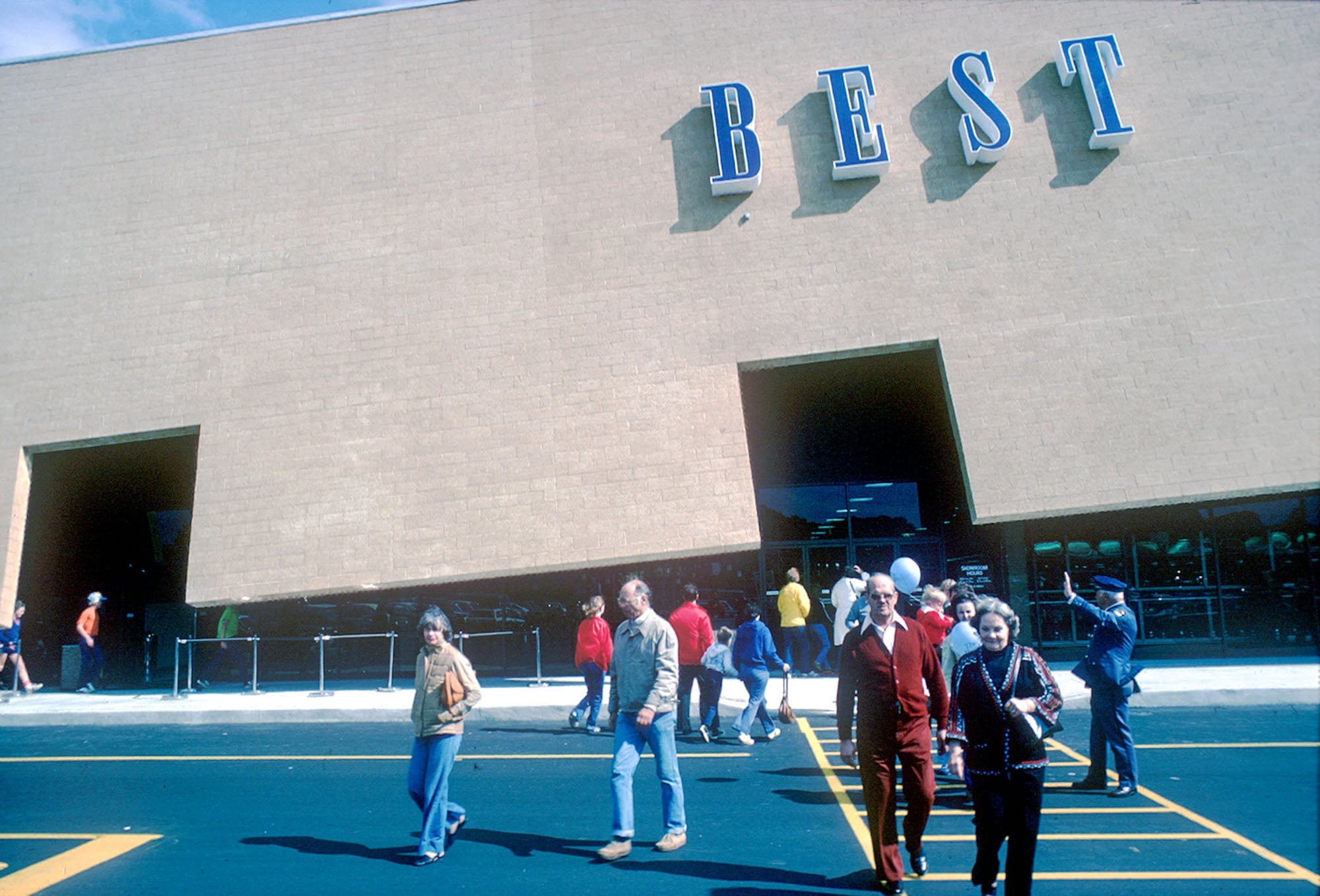
For thousands of shoppers in the 1970s and 1980s, it was simply a trip to Best Products. It was where you went to buy a microwave, a television, a piece of jewelry, or sure, a toaster.
What they didn’t realize was that they were walking through one of the most ambitious experiments in contemporary art and architecture ever undertaken by an American retailer. The project began in Richmond, where Sydney and Frances Lewis transformed their growing catalog showroom business into an unlikely platform for some of the most influential architects and designers of the twentieth century.
The result was what may have been the most important contemporary art project in Richmond history, built not in a museum, but in a parking lot.
Now, as Imagining Best Products enters its final weekend at the Branch Museum of Design, the exhibition offers a chance to revisit one of Richmond’s most unique cultural stories and the people who made it possible.
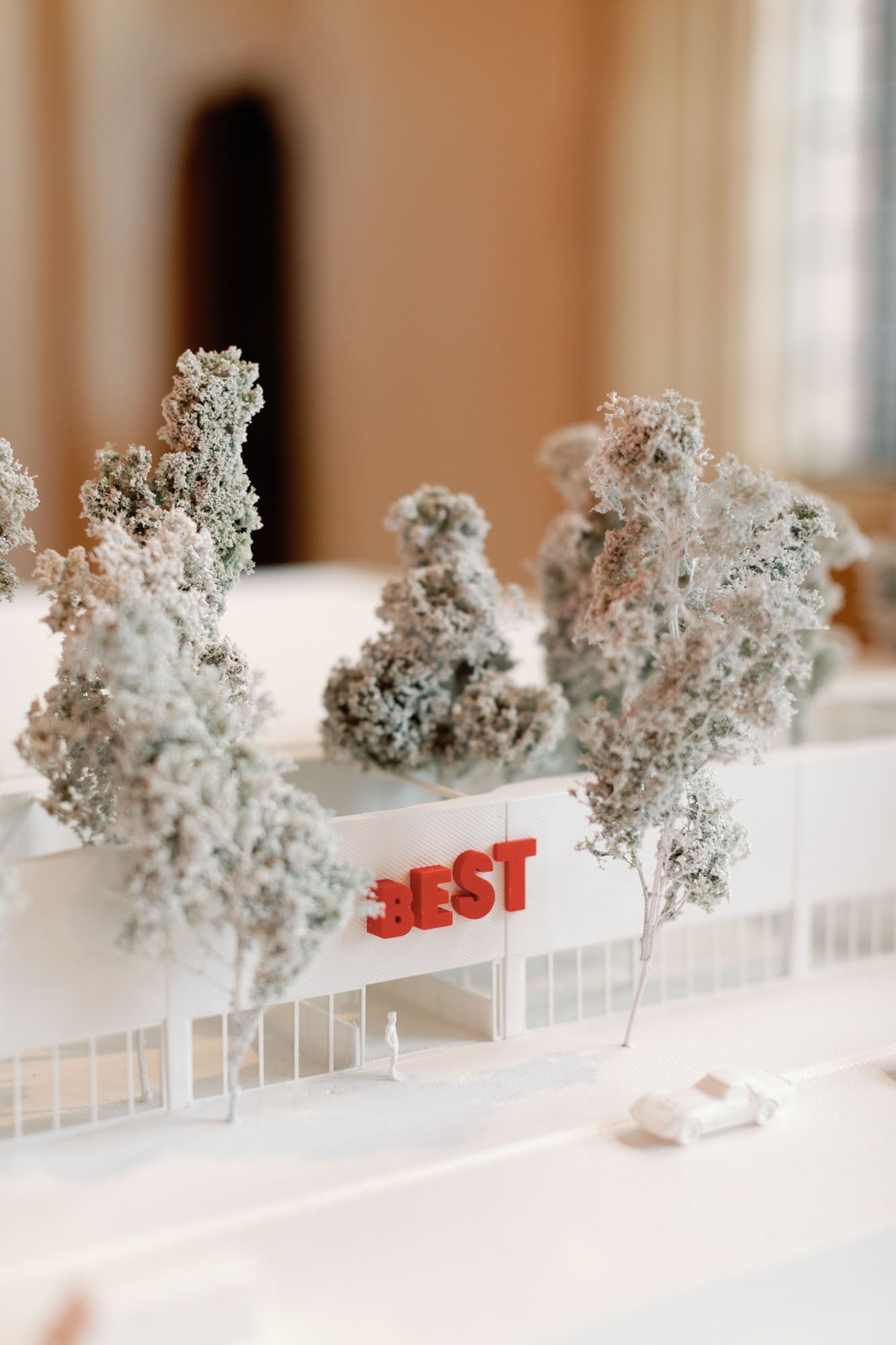
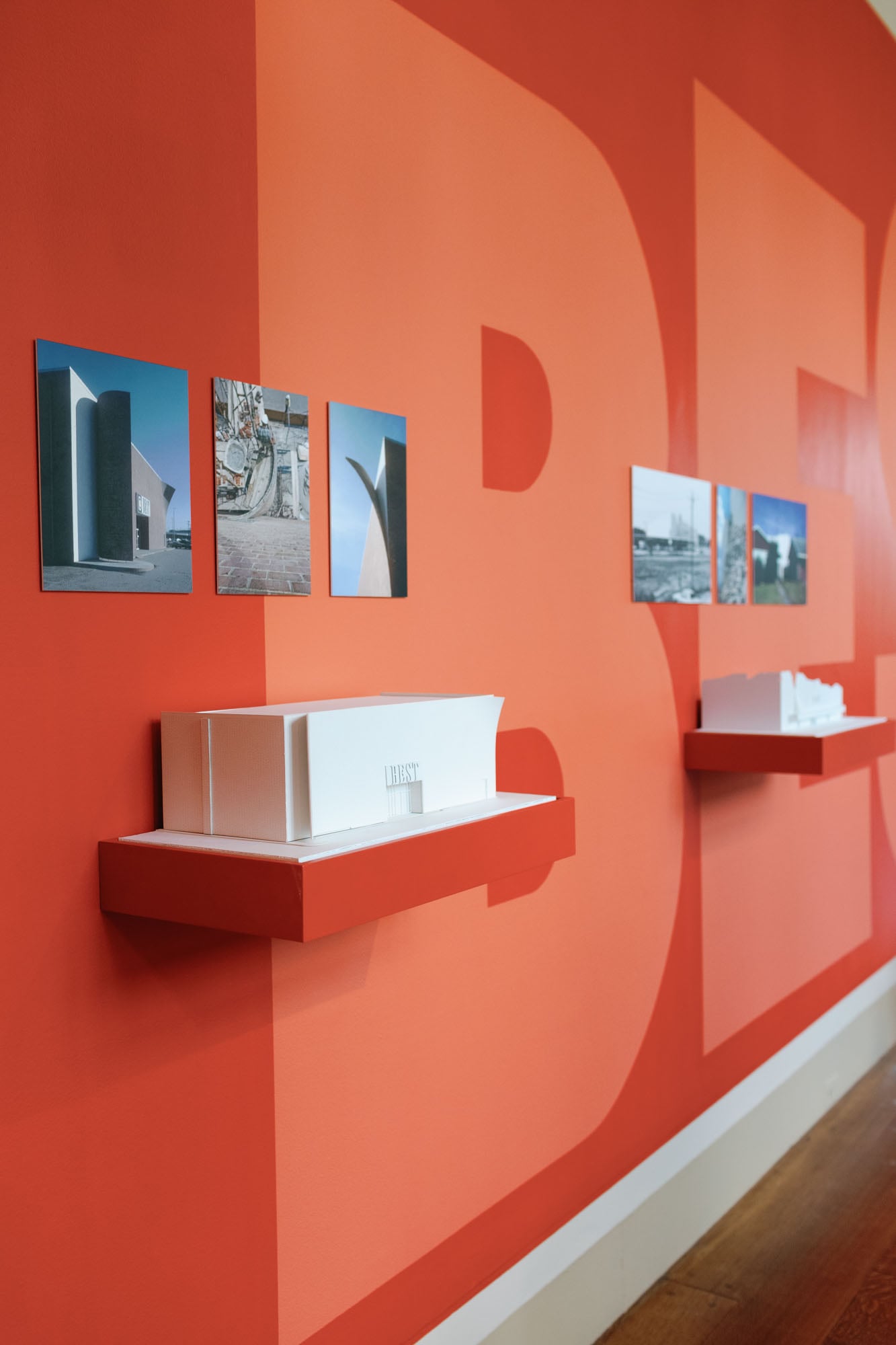
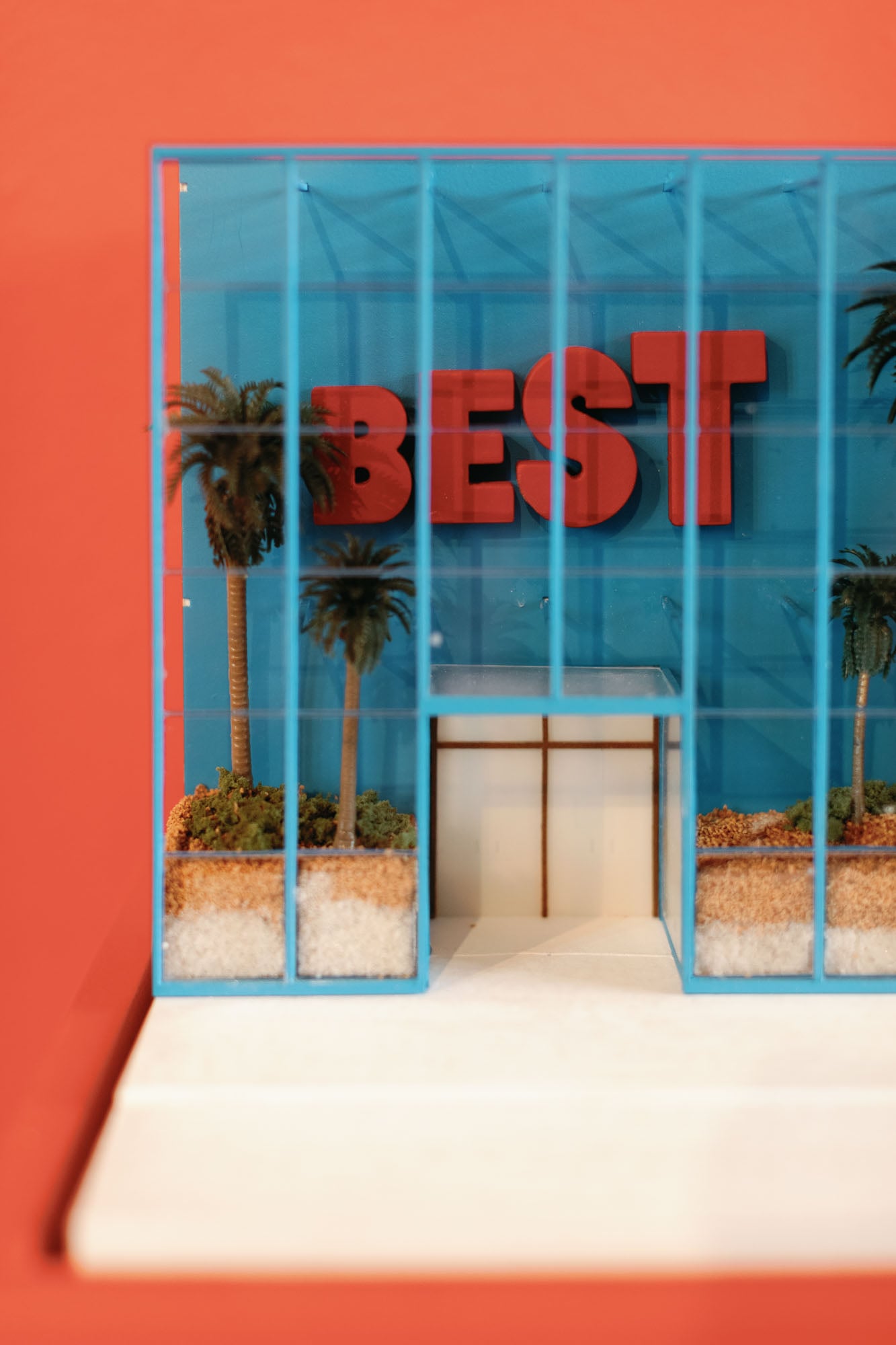
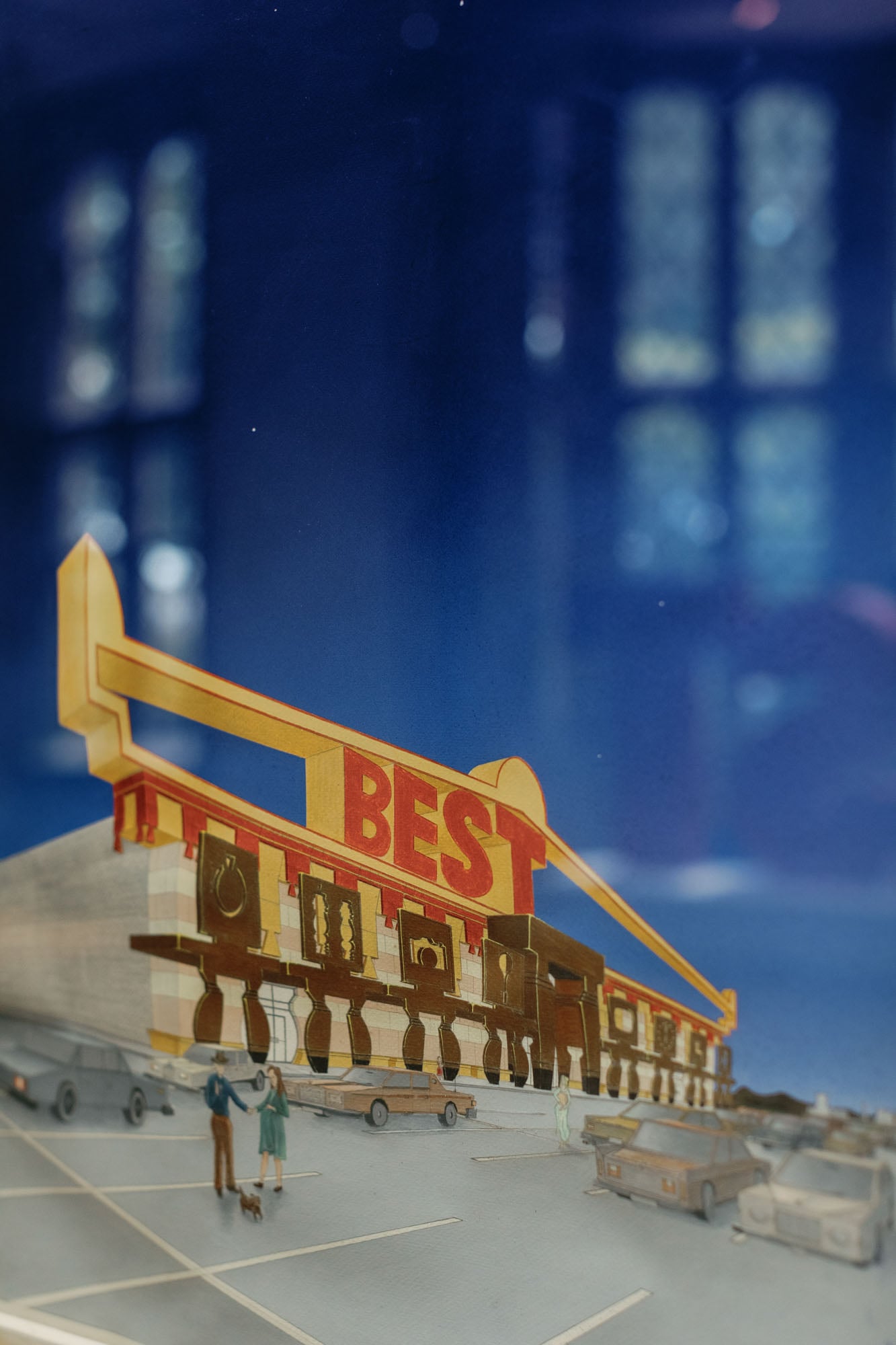
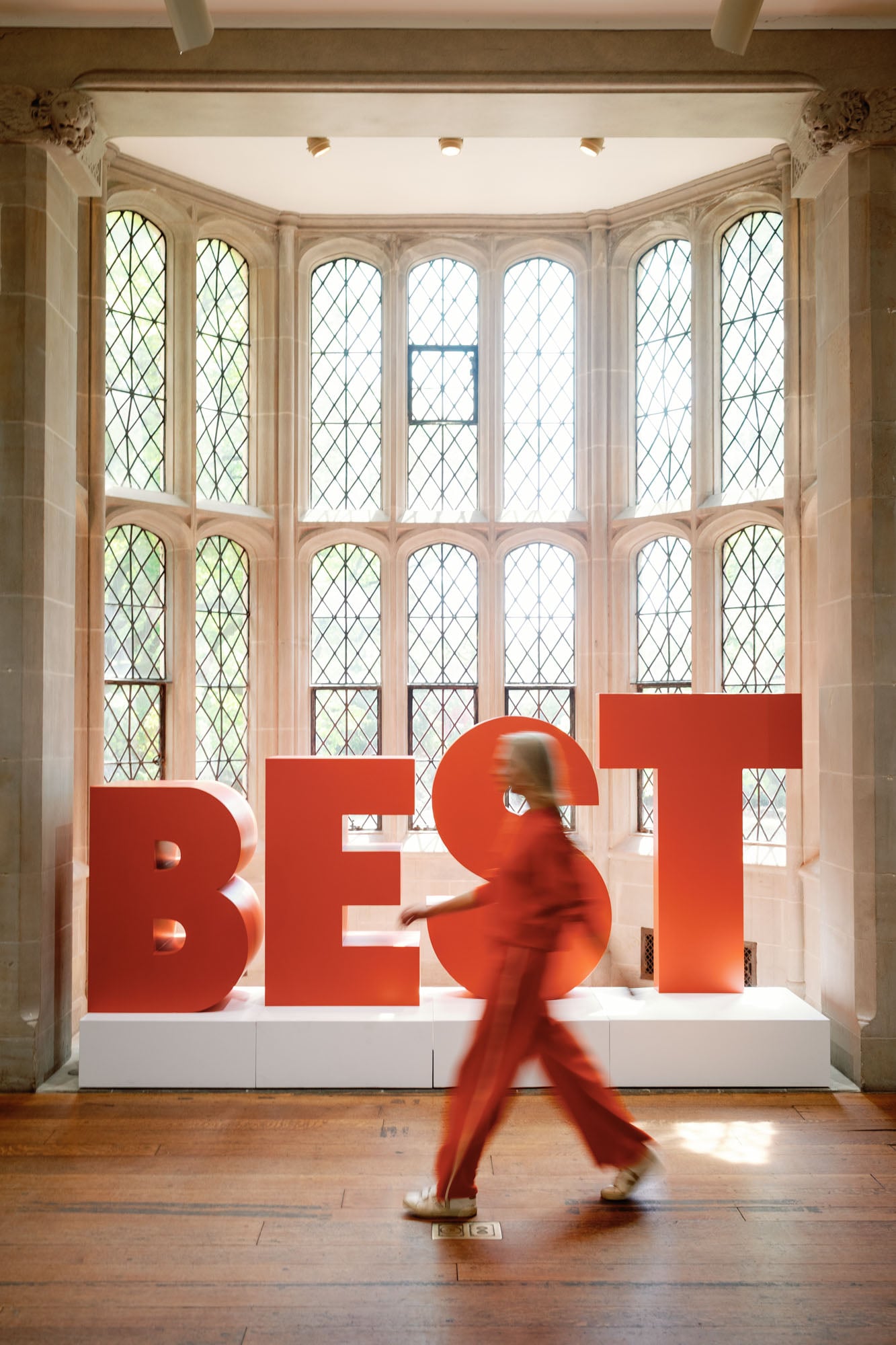
Photos by Anna-Louise Cecil
The exhibition itself grew out of conversations between Don O’Keefe and the late Richmond architecture critic Ed Slipek, who worked for Best Products during the company’s heyday and spent decades documenting Richmond’s built environment.
“Best is a Richmond story, but it connects to much bigger currents in the history of art and design,” said O’Keefe, the exhibition’s curator and co-founder of Architecture Richmond. “These buildings are studied in schools and museums around the world, and it all started here with Sydney and Frances Lewis. This exhibition brings that story home and makes the whole narrative visible in a new way.”
For O’Keefe, the significance of the buildings extends far beyond Richmond. As an architect himself, he said the Best stores were already part of the landscape of architectural education by the time he encountered them. “I feel like I’ve known about them for so long that I’m not sure I remember when I first heard about them,” he said. “They emerge very early in architectural education.”
Even after many of the buildings were demolished, their influence endured. O’Keefe points to architecture schools, design history books, exhibitions, podcasts, and online publications as evidence of their unusually long afterlife. “They’re kind of in the ether in a way that a lot of other buildings from that era are not,” he said.
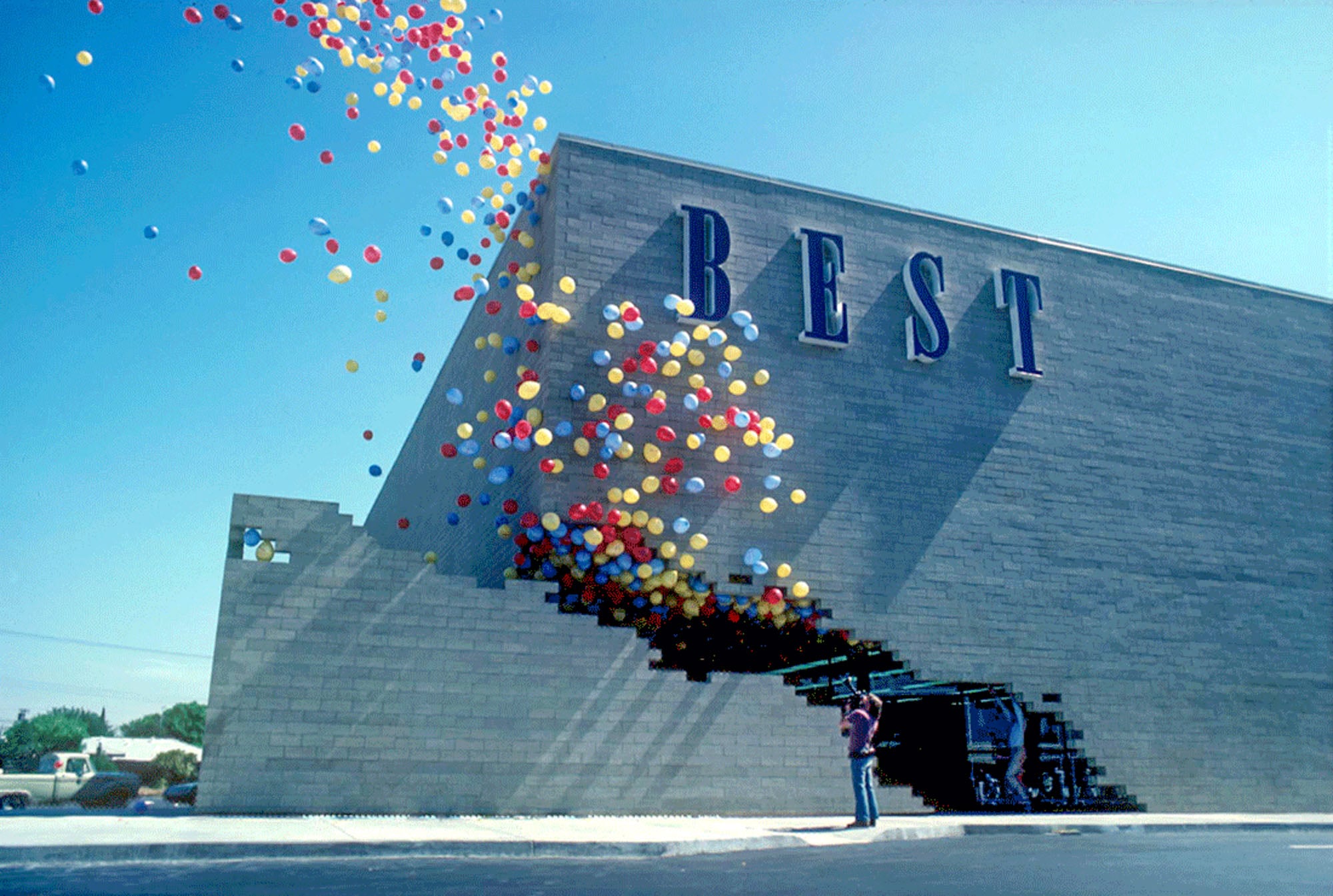
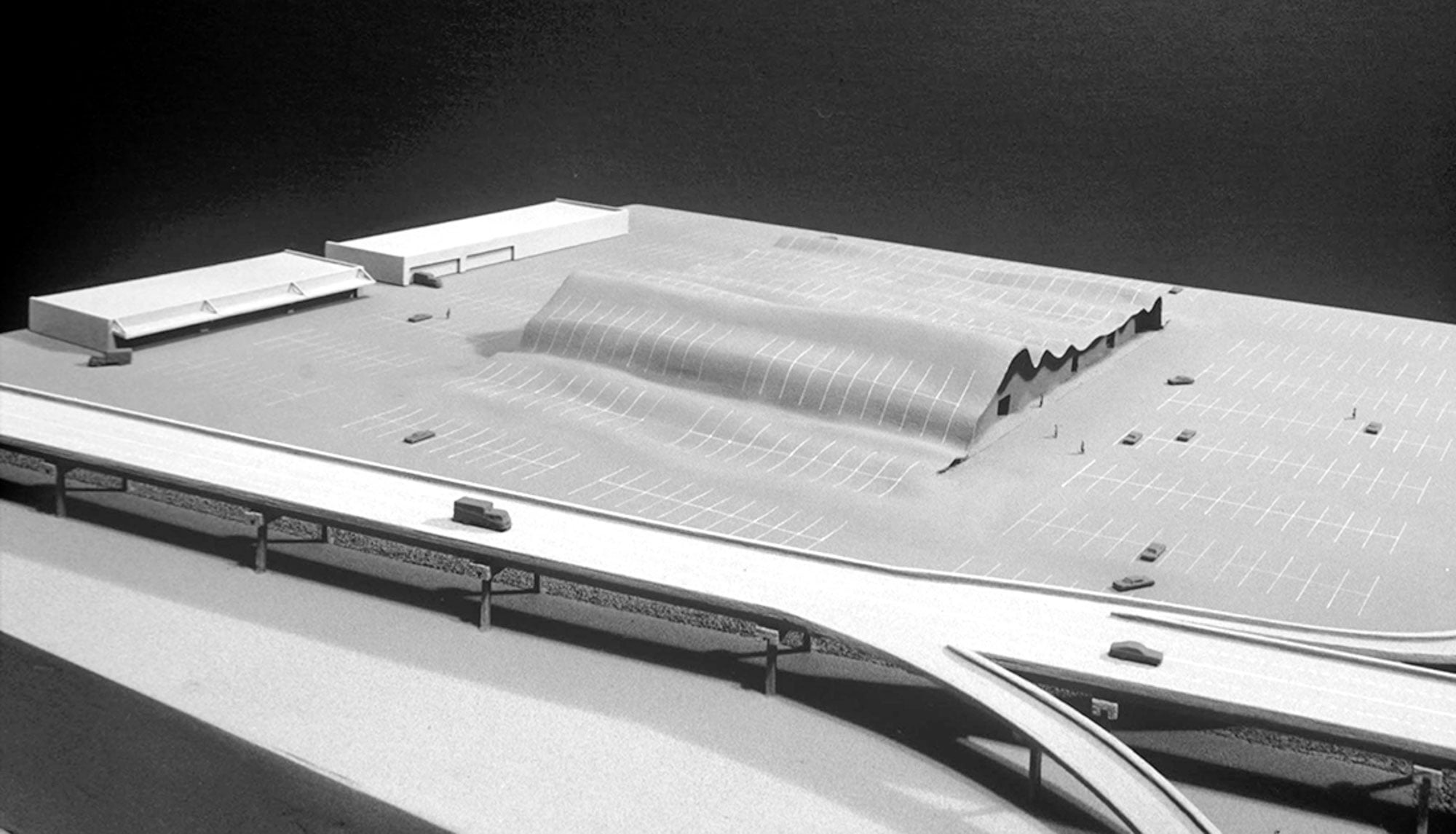
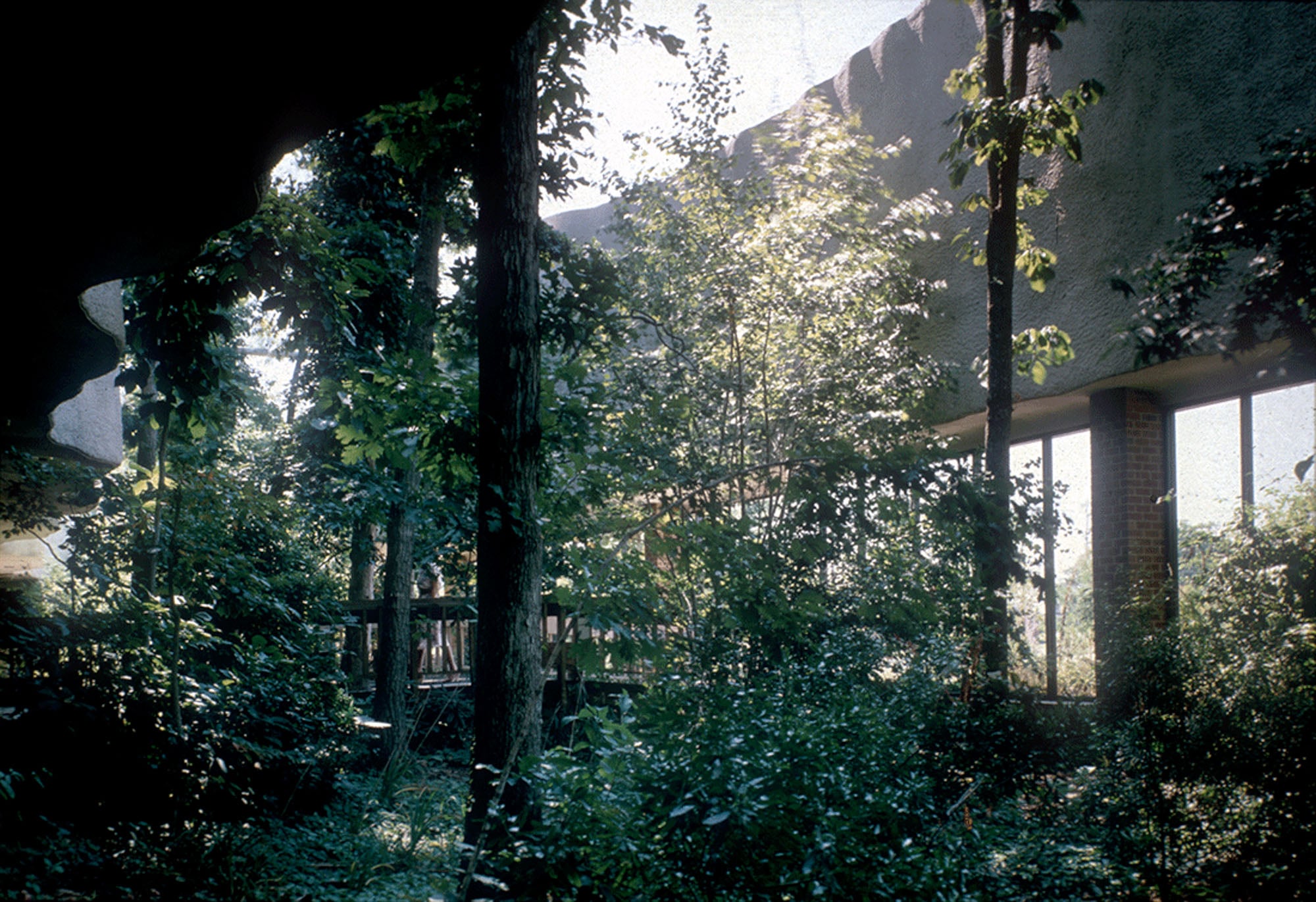
At a time when most department stores were little more than anonymous brick boxes, Sydney and Frances Lewis saw an opportunity to bring contemporary art and design into everyday life. They commissioned some of the most influential architects and designers of the twentieth century, including James Wines and SITE, Robert Venturi, Denise Scott Brown, Malcolm Holzman, and graphic designer Tom Geismar, and gave them permission to rethink what a retail building could be.
In a suburban landscape increasingly defined by uniformity, Best stores stood out as strange, playful, and disorienting landmarks. “They made a huge splash as soon as they were completed,” O’Keefe said. “When the first one was completed in Southside Richmond on Midlothian Turnpike, no one had ever really seen a store that looked like that before. The idea of inviting an experimental artist slash architect to redesign an innocuous brick box retail building was not something that had really occurred to anyone else.”
O’Keefe credits Sydney and Frances Lewis for taking that risk. “Once the first one was completed, it was kind of like the cat was out of the bag,” he said. “They decided to do more in a series, and it really picked up a lot of media attention, not only in design publications, but in general interest magazines and newspapers. They became a kind of media sensation all throughout the 1970s.”
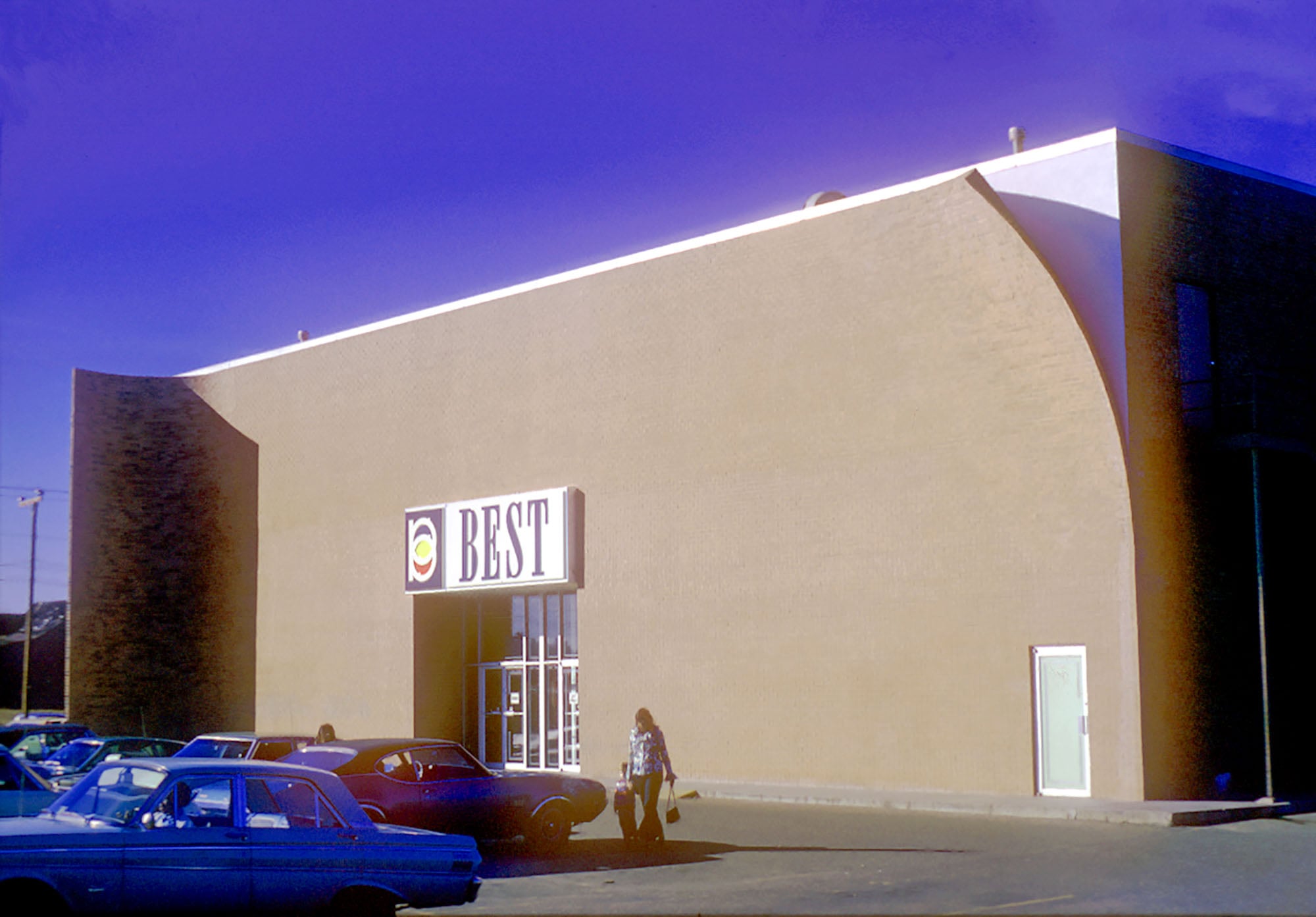
The designs were controversial, with some architects dismissing them as gimmicks or sculptures masquerading as buildings. Others saw them as groundbreaking examples of postmodern architecture challenging the rigid conventions of modernism.
“That’s partly what got them so much attention,” O’Keefe said. “It wasn’t just controversy from the general public. Some of the old guard architectural establishment thought, ‘This isn’t really architecture. This isn’t really what we do.’ There was a lot of pushback from certain corners of the design world. I think that kind of paradoxically drove the buildings to become more and more well known, and more and more well remembered in historical terms as well.”
And the public simply couldn’t stop talking about them. Soon the buildings were appearing in magazines, newspapers, exhibitions, and architecture schools around the world. In 1979, the Museum of Modern Art presented Buildings for Best Products, cementing the project’s place in design history.
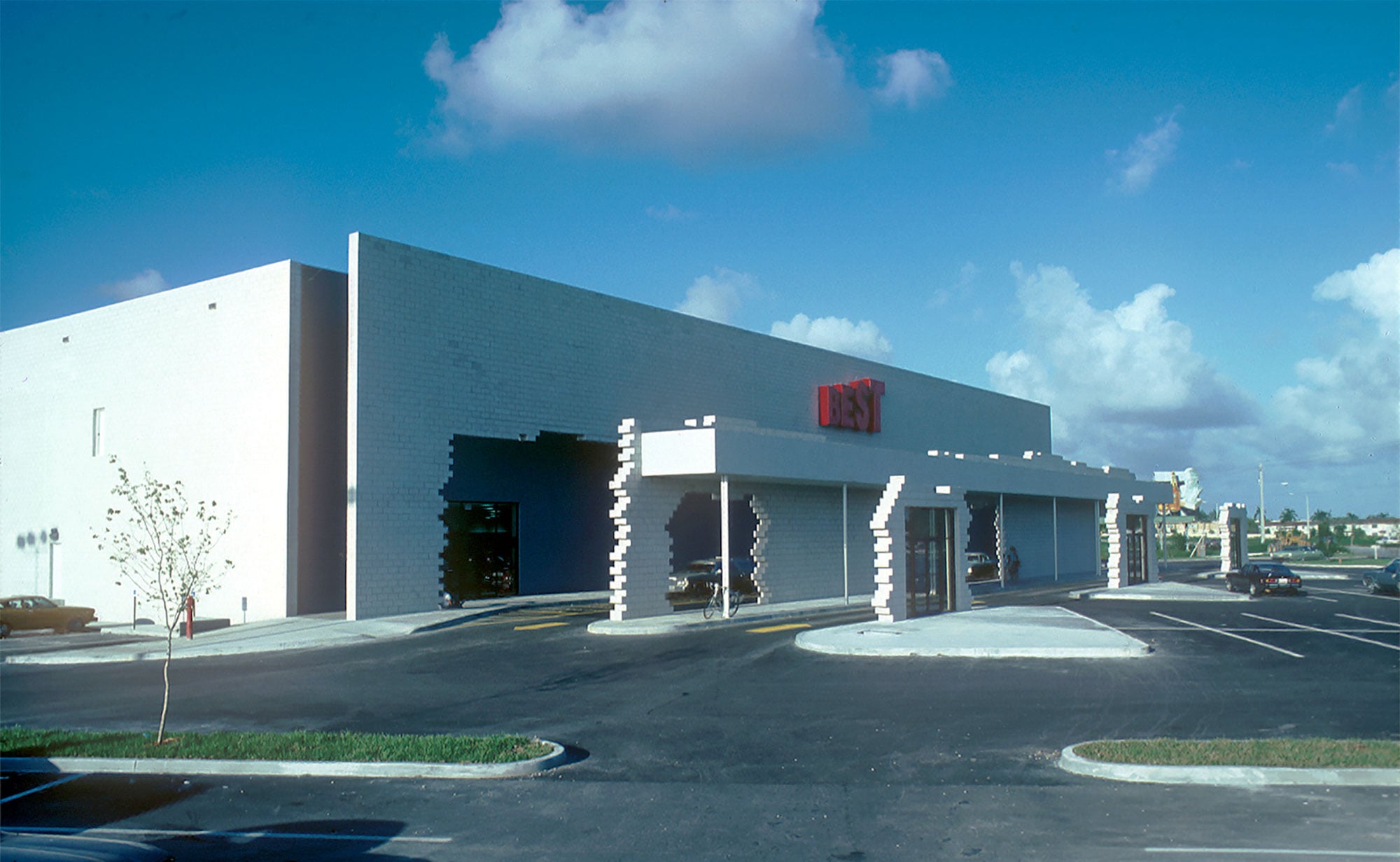
Back then, retail architecture had largely become an exercise in efficiency. National chains prioritized consistency, speed, and cost control. The idea that a major retailer would commission experimental architects to create buildings that intentionally challenged customers’ expectations seemed almost impossible to imagine.
Yet that willingness to take risks is precisely what made the Lewis family’s influence so important. The strange department stores were only one expression of a much larger idea that contemporary art should be accessible to ordinary people willing to walk through the front door.
“They were willing to put contemporary art into everyday life,” O’Keefe said. “They were asking why a shopping center couldn’t also be a place for experimentation.”
The timing wasn’t accidental. The Best buildings emerged during a period when Richmond was beginning to develop many of the cultural institutions that would eventually define the city.
While the Lewises were commissioning experimental architecture for suburban department stores, they were also building a contemporary art collection that would help transform the Virginia Museum of Fine Arts.
Across town, VCU’s art program was growing into what would eventually become one of the most respected art schools in the country.
None of these developments happened in isolation. Together they created an ecosystem in the city where contemporary art wasn’t treated as a niche interest but as something worthy of investment, discussion, and public engagement. The Best buildings embodied that philosophy by placing contemporary design directly in the path of everyday people.
Today, Richmond regularly attracts major exhibitions and has become a destination for arts and artists. The foundations for much of that growth were laid by people willing to champion contemporary art before there was a broad audience for it.
One of the goals of Imagining Best Products is to bring that history back into focus. The exhibition combines architectural models, original drawings, photographs, films, graphics, and archival materials to tell the story of a company that believed commerce and creativity could coexist. It also highlights the people behind the project, from internationally recognized architects to local contractors and craftsmen who transformed seemingly impossible concepts into reality.
O’Keefe said one of the most surprising aspects of the exhibition has been seeing who has come through the doors. “We’ve had architects come out of the woodwork and people come down from other cities and states but more than that, a lot of the people attending have some connection to Best Products. It could just be a memory of shopping there, or a friend or relative who worked there. There are a lot of people in Greater Richmond that were touched in some direct way by Best Products. Some of them even worked on the buildings. Everyone was kind of pleased to be part of the Best Products story somehow.”
For visitors who remember shopping at Best, the exhibition offers a wave of nostalgia. For younger audiences, it presents a reminder that Richmond once sat at the center of an international conversation about art, architecture, and design.
And more importantly, it asks visitors to reconsider how that happened in the first place.
Long before Richmond became the arts destination it is today, Sydney and Frances Lewis were already imagining it.
Imagining Best Products remains on view at the Branch Museum of Design through June 21. A closing-day program will feature Jay Barrows, longtime advisor and curator to the Lewis family, discussing their relationships with artists and their lasting impact on American art collecting.
Best Products: A Brief Timeline
1950s The Swiss Style of graphic design emerges, helping shape the modern visual language that would later influence corporate identities across America.
1964 Designer Tom Geismar helps create Mobil Oil’s iconic corporate identity, establishing the approach to branding that would later influence Best Products.
1970 James Wines and the interdisciplinary design group SITE are founded in New York, combining art, architecture, and public space.
1972 SITE’s first Peeling Building for Best Products opens on Midlothian Turnpike in Richmond, transforming a department store into a work of architecture.
1980 Best Products opens its award-winning headquarters in Henrico County, designed by Hardy Holzman Pfeiffer Associates.
1985 The Virginia Museum of Fine Arts opens its West Wing, housing the collections of Sydney and Frances Lewis. The architects are Hardy Holzman Pfeiffer Associates, the same firm behind Best’s headquarters.
1987 Andrew Lewis resigns from Best Products, marking the first time the company is no longer under Lewis family leadership.
1998 Best Products closes after years of financial struggles. Most of its landmark showroom buildings are eventually demolished.
1999-2026 Sidney Lewis dies in 1999. Frances Lewis continues her philanthropic work until her death in 2026 at age 103.
Legacy The Lewis collection helps establish the VMFA as a leading museum for modern and contemporary art, while the Best buildings remain some of the most influential examples of postmodern commercial architecture ever constructed.
Main image of Tilt Building in Towson, Maryland. Photo by SITE
Support RVA Magazine. Support Independent Media in Richmond.
At a time when media ownership is increasingly concentrated among corporations and the wealthy, RVA Magazine has remained one of Richmond’s few independent voices. Since 2005, the magazine has provided grassroots coverage of the city’s artists, musicians, and communities, documenting the culture that defines Richmond beyond the headlines.
But we can’t do this without you. A small donation, even as little as $2, one-time or recurring, helps us continue to produce honest, local coverage free from outside interference. Every dollar makes a difference. Your support keeps us going and keeps RVA’s creative spirit alive. Thank you for standing with independent media. DONATE HERE.
We’ve got merch HERE
Subscribe to the Substack HERE
And Reddit HERE
And YouTube HERE