
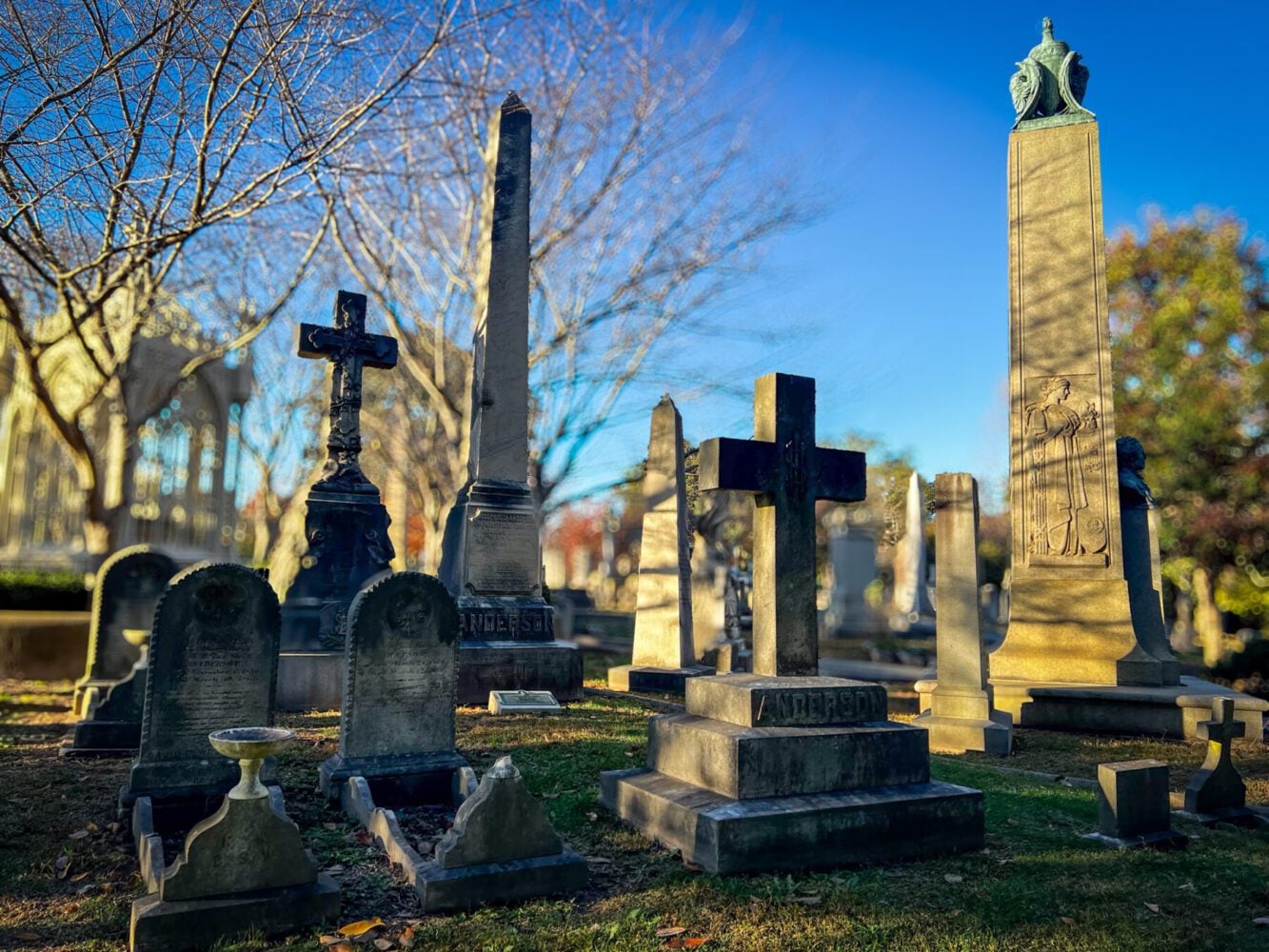
In this city of the dead, I felt the weight of history bearing down upon me, the accumulated whispers of the past echoing through the hollows of my ears like a mournful sigh. No one needs teachings to realize that this ancient place wields some mystery. The James River, a lifeblood of sorts, flowed quietly in the distance, but my immediate atmosphere was one of silence, constantly reminding me of those who rested beneath the grounds I was casually walking.
I’m talking about Richmond’s Hollywood Cemetery. Named after the holly trees that surround the area, it’s the second most visited cemetery in the country. It’s also the final resting place for United States Presidents James Monroe and John Tyler, as well as the Confederate States President Jefferson Davis, thousands of Confederate soldiers, and numerous notable individuals—including William Pool, the Richmond Vampire.
History of Hollywood Cemetery
The cemetery was designed in 1847 and opened in 1849, twelve years before the Civil War. The four-year conflict, motivated by the Confederacy’s desire to keep slavery legal, would eventually provide the cemetery with an ample supply of residents.
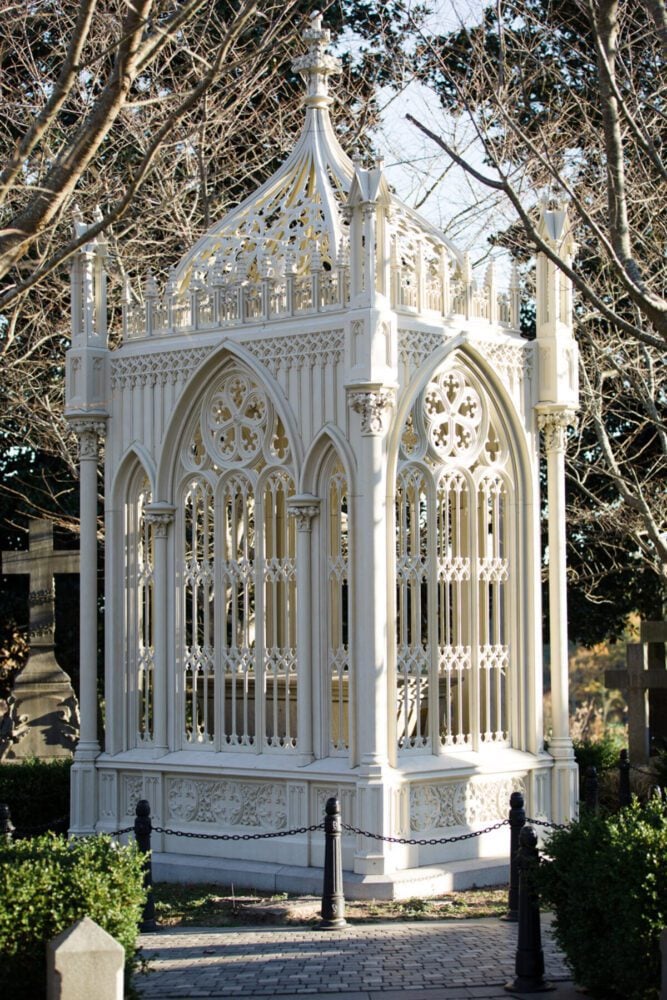
The Presidents’ Circle
The 135 acres of garden-style grounds serve as the burial place of two U.S. Presidents, James Monroe and John Tyler. Confederate President Jefferson Davis is also interred here.
John Tyler’s death is the only presidential death not recognized by Washington, D.C., and that’s because he gave his allegiance to the Confederacy. James Monroe is buried in a sarcophagus, and locally, his grave is known as “The Bird Cage.”
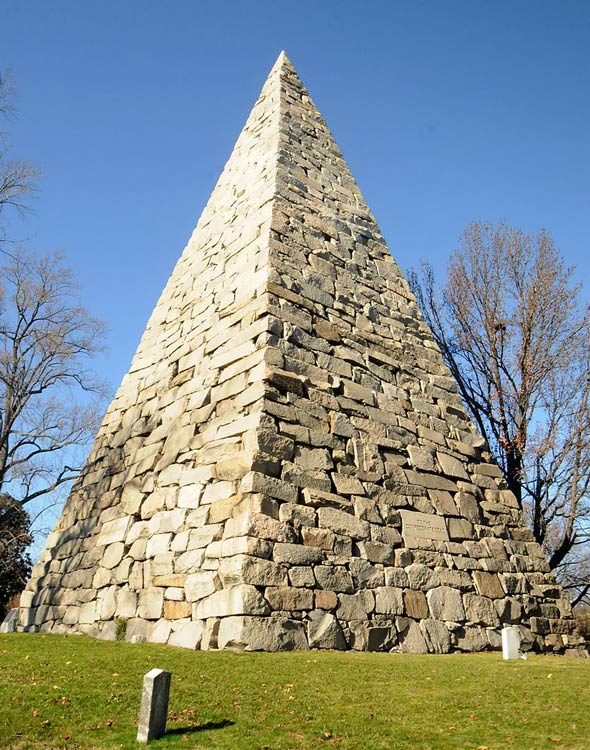
The Confederate Pyramid
A memorial in the shape of a 90-foot stone pyramid looms over the graves of more than 18,000 enlisted Confederate soldiers—11,000 of whom remain unidentified. Confederate Generals J.E.B. Stuart and George Pickett, along with 26 others, are buried nearby.
In 1867, the Ladies of Richmond raised $18,000 to fund the construction of this monument. Charles Dimmock, a former Confederate engineer, designed the pyramid using local stone and no mortar.
According to local legend, the capstone was nearly impossible to place. Thomas Stanley, a convict, was chosen to assist. He used water to shrink the ropes holding the stone, making it possible to position it correctly. A crowd watched as Stanley accomplished the feat, and he was reportedly freed afterward. For many years, young men would emulate Stanley by scaling the monument on Memorial Day to hang wreaths from the top—a tradition that is now discouraged.
There have been countless reports of cold bursts of air around the pyramid’s rear wall. Disembodied voices and moans are said to echo near the monument around dawn and dusk—believed to be the restless spirits of the unidentified soldiers, crying out into the unknown, hoping someone might recognize their call.
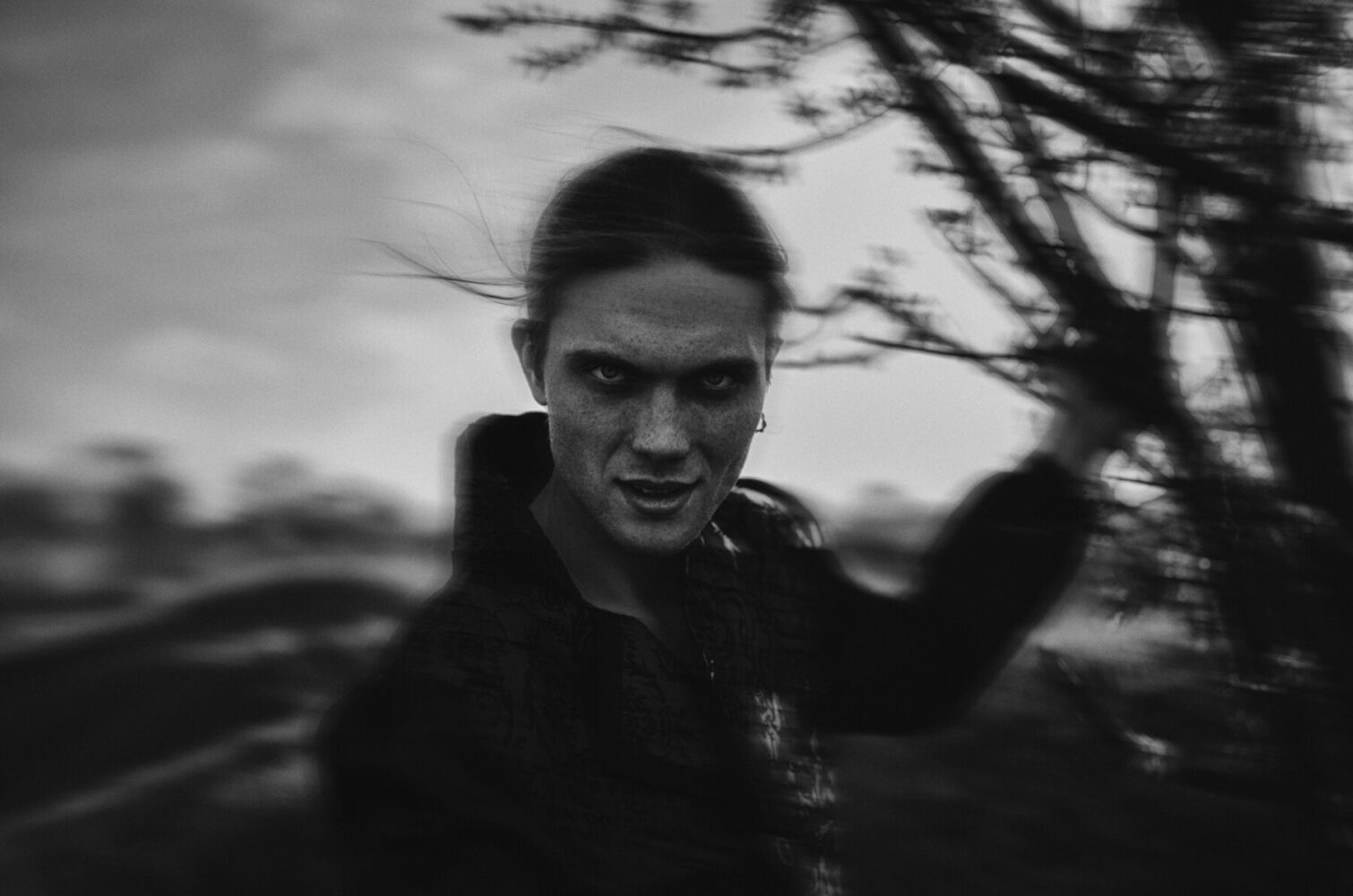
The Legend of the Richmond Vampire
As night settles over these tales, one myth creeps out from its crypt—the cemetery’s most infamous phantom: the Richmond Vampire.
The Tunnel Collapse
The legend of the Richmond Vampire began on October 2nd, 1925, when the Chesapeake and Ohio Railroad Company (C&O) decided to enlarge and reconstruct the Church Hill Tunnel. Locomotive Engine 231 was awaiting construction workers to load their debris into the steam train’s flatcars while stationed inside the tunnel. Originally built in 1875, the tunnel had fallen into disrepair and was undergoing renovations when the roof suddenly collapsed on Engine 231 and its crew of 200 workers.
A low hum of panic stirred within the darkness of the tunnel as workers rushed toward the exit, stumbling over railway sleepers and one another in their desperate flight.
Workers near the entrance managed to escape — covered in mud, blood, and injuries, and still horrified by what had just happened.
Then, just in the midst of all this chaos, there it was:
From the tunnel’s throat came a staggering abomination — a man-like being with blood streaming down its face and pooling at the corners of its gaping, fang-filled mouth. Flaps of dead skin fluttered over sinew and muscle, as if reluctant to stay tethered to the corpse beneath. The figure then quickly raced toward the James River. When pursued, it escaped to Hollywood Cemetery and disappeared into the mausoleum of William Pool.
Now, like every story ever reported, there are bound to be separate versions, different theories, additions, and subtractions—all very fascinating Richmond legends to share. But what actually happened there?
Reframed by fact, the so-called Richmond Vampire was likely Benjamin Mosby, a fireman working shirtless in the furnace’s heat. When the tunnel collapsed, a steam explosion ripped through the train, flaying his skin and breaking his teeth as it hurled him into the dark.

Who Was William Wortham Pool, Really?
William Wortham Pool was a bookkeeper for the Bryan estate. He lived with his family at 721 28th Street in Woodland Heights. He built a tomb in Hollywood Cemetery for his wife, Alice, who died “after an illness of several weeks,” according to her Times-Dispatch obituary from February 6, 1913.
He himself passed away at the age of 75 from pneumonia.
So why is a man with a peaceful, slightly successful, but normal life involved in vampire lore?
For one, his mausoleum mysteriously only lists the year 1913 alongside his initials W.W. Pool. The double W’s have been interpreted as fangs. The absence of a death year hints at immortality. The architecture itself is strange both Masonic and Egyptian in design.
Then there’s the stranger part: the mausoleum once featured a carving of a lamb and a boy, accompanied by a quote from the Bible (Isaiah 11:6). The slab bearing the quote has since fallen off, leaving only the figures behind—now cryptic, almost surreal.
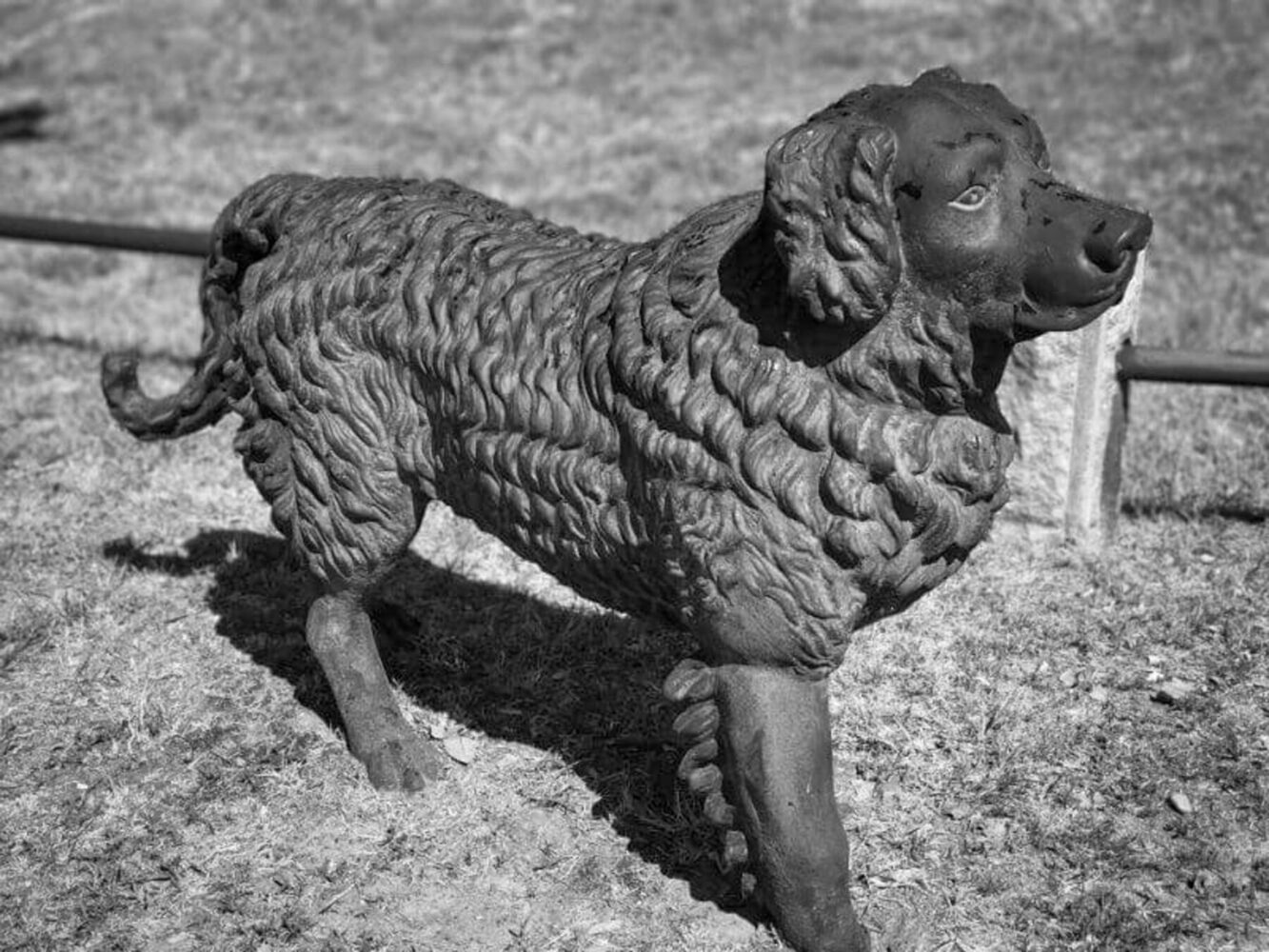
The Iron Dog and the Young Girl
A black cast iron dog stands at the grave of a young girl who died in 1862 from scarlet fever. It’s believed her family placed the dog there to prevent it from being melted down for bullets during the Civil War.
Her name was Florence. The engravings on her grave have worn down over the years, but her initials—“F.B.R.”—can still be seen on the smaller of the two stones.
Florence was buried in a cradle grave, a popular style for children that’s often filled with flowers or shrubs.
The legend is that the dog protects the little girl and watches over her grave. Many people have said they’ve seen the dog’s eyes follow them as they get closer to the site. Some have even claimed it changes position. A few have reported hearing it bark at night or seeing it walk around the cemetery. Perhaps all of these stories are true—or maybe they’re just elaborate tales meant to further protect the little girl’s grave.

Final Thoughts
Hollywood Cemetery isn’t just a burial ground. It’s a layered map of American contradictions presidents and rebels, tragedy and folklore, the known and the unknowable. Whether you’re there for the monuments, the views, or the myths, it reminds you that even in death, some stories never rest.
Summited and written by Samuel Peters
Main phot by R. Anthony Harris
Support RVA Magazine. Support independent media in Richmond.
In a world where corporations and wealthy individuals now shape much of our media landscape, RVA Magazine remains fiercely independent, amplifying the voices of Richmond’s artists, musicians, and community. Since 2005, we’ve been dedicated to authentic, grassroots storytelling that highlights the people and culture shaping our city.
But we can’t do this without you. A small donation, even as little as $2 – one-time or recurring – helps us continue to produce honest, local coverage free from outside interference. Every dollar makes a difference. Your support keeps us going and keeps RVA’s creative spirit alive. Thank you for standing with independent media. DONATE HERE.
You can also show your support by purchasing our merch HERE.