
Editor’s note: In December 2025, the The Joint Commission on the Future of Cannabis Sales wrapped its final public meeting on the future marketplace. This interview with Eric Spencer happened at a CSBA meetup at Bingo Beer Co. in Richmond.
Eric Spencer said it plainly.
“And you are meeting, for probably the first time in your life, somebody who was in the War on Drugs,” he said. “Lived it. Survived it. There was hell to pay. I am the War on Drugs.”
Not as a slogan but as a statement of fact.
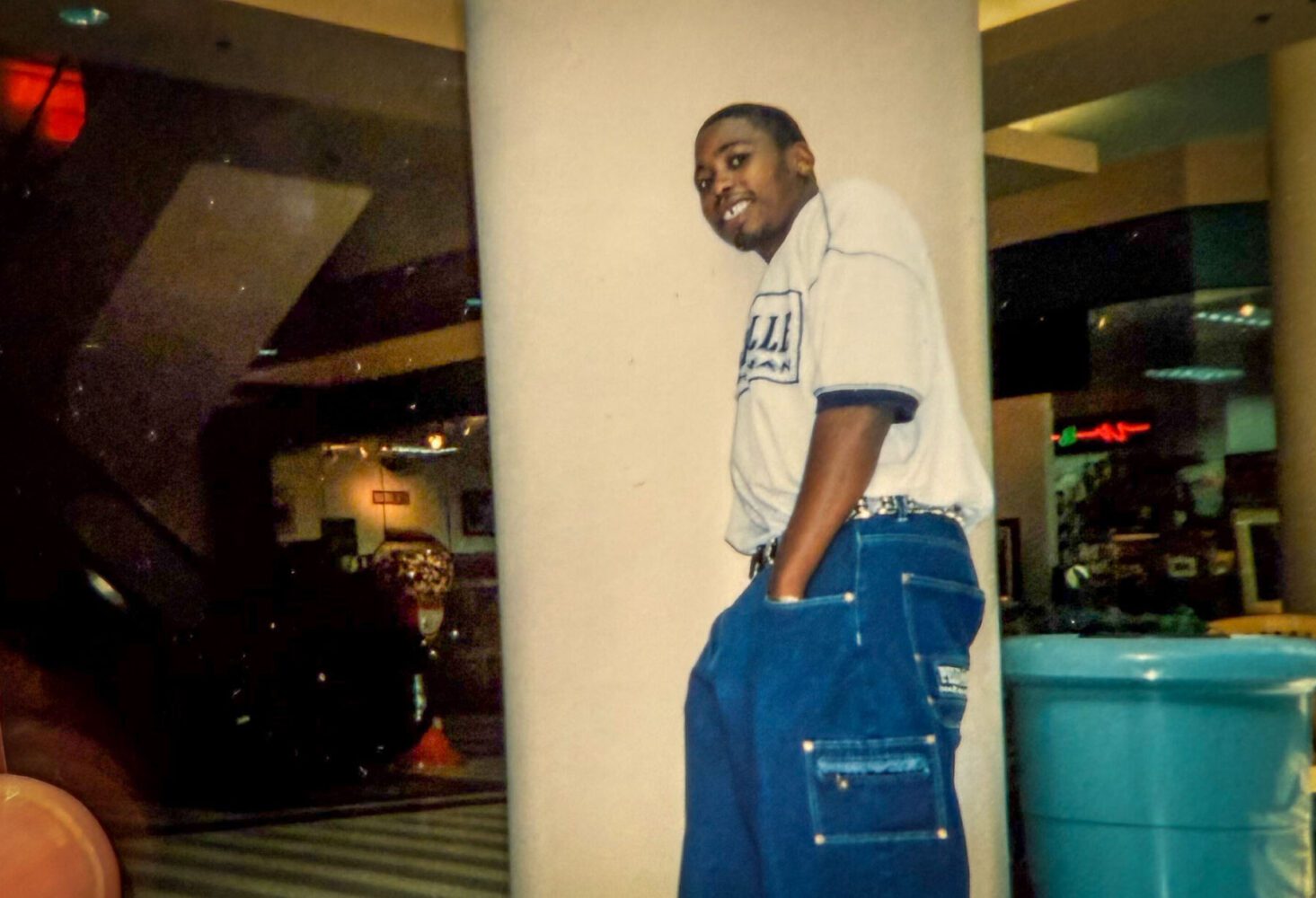
Weeks later, that line still stuck with me. After our conversation, Spencer sent over a photo from the late 1990s. In it, he is barely more than a kid. In 1999, that kid was arrested and later sentenced to 22 years in federal prison for nonviolent drug offenses as a first-time offender, charges that included marijuana. He would serve 13 of them.
No change in the law returns that time.
Those years swallowed his twenties whole. When Spencer came home in 2011, he was already in his early thirties, stepping back into a world that had kept moving without him. While he was inside, the drug that helped put him away was inching toward legitimacy.
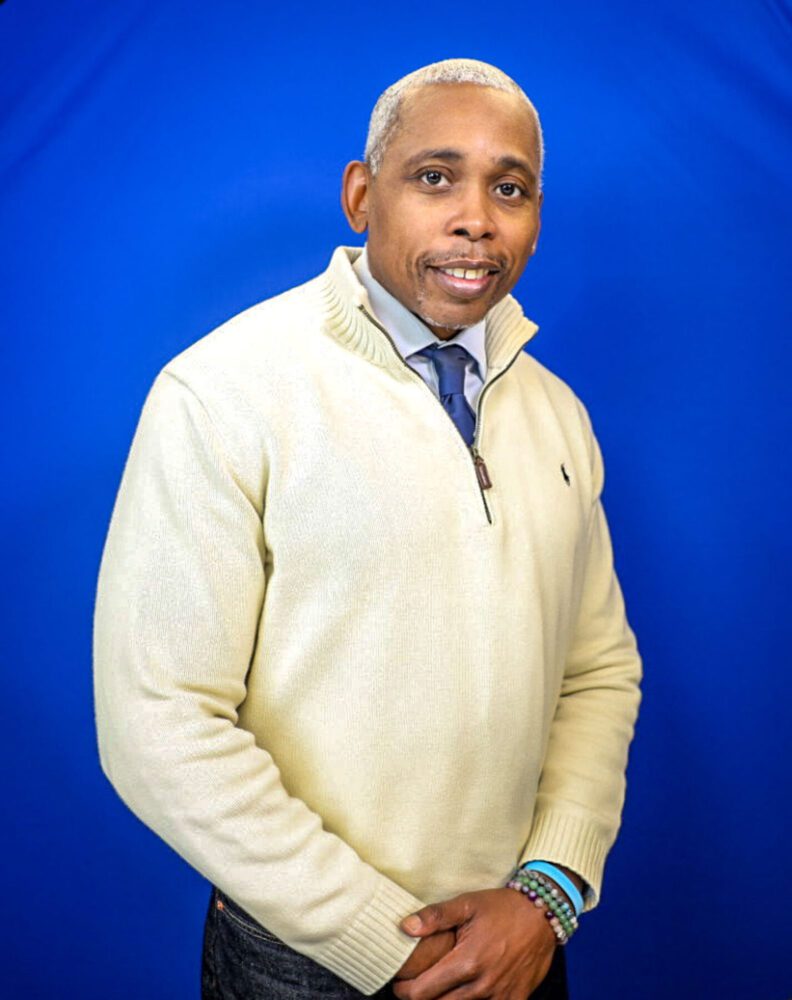
Spencer did not come out empty-handed. He read constantly. Law. Policy. Court decisions. The systems that locked him up became the systems he learned to navigate.
“I’ve been reading law since 1998,” he told me. “I can read through this stuff and see who’s had their hands on it.”
Today, Spencer holds cannabis licenses in New York and Minnesota, both issued through equity programs. He is also a full-time advocate, traveling state to state, testifying, lobbying, and pushing lawmakers to confront the gap between what cannabis laws say and what they actually do.
That gap is where Spencer lives.
In theory, legalization is supposed to repair harm. In practice, Spencer argues, it often recreates the same exclusions under a different name. States tout equity, then structure their markets so that the people most harmed by prohibition are still third in line. First come the pharmaceutical and multi-state operators. Then the well-capitalized incumbents. Impacted people are left waiting, again.
“You locked me up for it,” Spencer said. “Now you’re selling it. When you look at medical marijuana programs, the first thing they tell you is if you got a felony, you can’t participate. So I couldn’t participate then. Now it’s recreational, and I’m still in the back of the line. It’s bittersweet for me.”
Virginia, he acknowledges, is trying. The public meetings. The willingness to listen. Those things matter, especially to people who were never allowed in the room before. But timelines and tiers tell a different story. A recreational market that does not open until November 2026 assumes people can simply wait. Spencer knows that is not how it works.
Finding real estate. Securing capital. Hiring staff. Navigating federal illegality. Those hurdles are survivable if you already have money and infrastructure. They are crushing if you are starting from scratch after incarceration.
“The only people up and running like that,” he said, “are the big companies.”
Spencer has seen alternatives. New York, for all its flaws, allowed equity license holders to sell first. Minnesota adopted safeguards around “true parties of interest” to prevent moneyed partners from pushing impacted people out once licenses were secured. Those policies did not eliminate capitalism. They simply stopped pretending the market alone would correct decades of targeted enforcement.
What frustrates Spencer most is not competition. He welcomes it.
“We live in a capitalistic country,” he said. “Competition is competition. Where I come from, he’s a drug dealer and I’m a drug dealer. The best man wins. You still got to sell the product.”
What he rejects is regulatory capture disguised as fairness. Barriers built through law instead of force. Lawyers replacing guns. Paperwork replacing patrol cars.
This is not abstract for him. Spencer learned his mother died while he was incarcerated.
“I didn’t get to go see her,” he said. “I didn’t get to bury her. That’s the debt we paid.”
He has seen men sentenced to decades over marijuana. He remembers Philando Castile, killed during a traffic stop after an officer claimed he feared for his life because he smelled marijuana.
“That was before George Floyd,” Spencer said. “People forget that.”
“Now it’s legal,” he said. “Now y’all selling it out the front door. But the people you locked up for it, we’re still here explaining ourselves.”
For Spencer, the harm was never theoretical.
“This wasn’t harmless,” he said. “I’ve seen guys get 16 years for a phone call. I’ve seen 30 years for missing sandwich bags.”
“These aren’t hypotheticals,” he said. “This is what the War on Drugs looked like.”
Since coming home, Spencer has worked steadily. Paid taxes. He now inspects federal prisons for Washington, D.C., including facilities where he was once incarcerated.
“There’s places I was locked up at that I inspect now,” he said. “That’s what I do for a living.”
He has not reoffended. By every metric the system claims to value, he has done exactly what was asked of him.
And still, he is asked to wait.
That is the central contradiction Spencer keeps returning to. Legalization without repair is not justice. Equity delayed is equity denied. States cannot build medical programs that exclude formerly incarcerated people, then act surprised when recreational markets struggle to include them later.
“You can’t lock us out at the beginning,” he said. “Then you come back and try to fix it, but you already got people who spent a lot of money. They’re entrenched. And I get it. I’d feel a certain way too.”
Spencer does not claim to have all the answers. He is realistic about compromise.
“You’re not going to get everything you want,” he said.
But he insists on one baseline. Do not shut the door before people even get inside.
When lawmakers talk about the War on Drugs in the past tense, Spencer is sitting right there. Living proof that its consequences did not end when the laws changed.
“I survived it,” he said. “You’re looking at somebody who lived it. When I hear people talk about equity and I don’t see it, I don’t care who it is. I’m going to say something.”
And that is why the line still echoes.
“I am the War on Drugs.”
Main photo: Eric Spencer from 1998
RELATED COVERAGE FROM RVA MAGAZINE
- Equity vs. Access: Explaining Virginia’s New Cannabis Framework
- “I Don’t Know How We Stay Open”: A Virginia Vape Shop Owner on the New Ban
- Equity vs. Access: Explaining Virginia’s New Cannabis Framework
- Virginia’s Hemp Industry Faces New Threat from McConnell’s Amendment
- So You Want a Virginia Cannabis License? Read This First
- The Last of the Virginia Hemp Farmers
- Who Benefits from Virginia’s Cannabis Chaos? Small Businesses Want Answers
- Virginia’s Cannabis Battlefield: Big Players, Small Shops, and a Fight Over the Future
- 160 Years for Cannabis and Mushrooms: What Message Does Virginia Want to Send?
- How the Equity Fund Could Help More People Cultivate and Sell Cannabis
- Virginia Republicans Vote Against Bill to Establish Recreational Cannabis Retail Market
Support RVA Magazine. Support Independent Media in Richmond.
At a time when media ownership is increasingly concentrated among corporations and the wealthy, RVA Magazine has remained one of Richmond’s few independent voices. Since 2005, the magazine has provided grassroots coverage of the city’s artists, musicians, and communities, documenting the culture that defines Richmond beyond the headlines.
But we can’t do this without you. A small donation, even as little as $2, one-time or recurring, helps us continue to produce honest, local coverage free from outside interference. Every dollar makes a difference. Your support keeps us going and keeps RVA’s creative spirit alive. Thank you for standing with independent media. DONATE HERE.
We’ve got merch HERE
Subscribe to the Substack HERE
And Reddit HERE
And YouTube HERE