The ceilings were all collapsing. The moldering roof was seeping through to the drywall and paint inside. What was once a small emerald speck of mold above the shower had turned into a fuzzy kaleidoscope of blacks and pinks and grays and greens that coated the entire top of the room and filled it with a smell so pungent that I couldn’t spend more than a few moments in there at a time. A sharp smell. A smell that made it hard to breathe.
We couldn’t shower. The ceiling over my roommate’s bed fell onto him in the middle of the night. My closet floor was littered with paint that had peeled off and landed on the hardwood in flakes.
I had to leave for my parents’ house. My immense privilege to even be able to do so was not lost on me, but I was twenty eight. I didn’t want to live with my parents again. I wanted to have a home of my own where I could feel comfortable, a home that could withstand basic weather-based assaults and keep me safe and clean.
My parents’ home did the latter, and I could at least shower again, but there were all sorts of reminders that it was their home, not mine, not anymore. It was not set up for my wants or needs.
I was also out of money. I didn’t work much over the winter and lived off savings while I made a movie with my friends, assuming I would make it up again come spring as I had in the year before.
But I hadn’t. The money wasn’t flowing.
I worked harder than ever, sore nearly every day, never enough time to see friends or family, but my wallet was unlined and dusty. Worse, work was beginning to feel like wasted time, a job I worked so hard to get, devoted so much time to, desperately loved, was losing its luster.
When I read older American literature, I was always struck by the ease of it all.
Nick Carraway was able to find a good enough job to have a whole house and servant to himself, without any professional connections, in New York City. This is wholly laughable now as a concept. He knew the Buchanans, to be sure, but Tom never offered him anything in the way of a job, or even seems like he has those connections. He doesn’t seem to care about work in the slightest. He hardly speaks on it.
No one in the book really does except for when it’s glamorous, like Jordan playing professional tennis. Tom and Daisy and her may have all been rich, but Nick certainly wasn’t.
And then Sal Paradise could just coast across the whole country, twenty to thirty years later, with drifter Dean Moriarty (sometimes) by his side and nothing else, picking up random odd jobs, stealing cars and hopping trains, going where they pleased, somehow surviving.
There was little concern in the novel where their next meal would come from, not in the looming sense that I worry too many of us feel today. It’s as if they fully trusted their society to assist them to eat and sleep, if nothing else.
Even in Bukowski’s scathingly critical Post Office, the specter of poverty was still at arm’s length. Money was an issue he talked about quite freely, complaining that the job didn’t pay enough, but not in an all-consuming manner.
Really, there was a looming specter of boredom, a lack of fulfillment, the unnecessary pressures of authoritarian workplaces, and of being generally unrecognized and overworked, much as we also see in movies like Fight Club and Office Space.
No, much of the American art I had engaged with had painted a picture of stressful but livable existence in a capitalist America. This I did not find to be true in my own life.
My own existence at this point seemed best reflected in Steinbeck’s Grapes of Wrath, with one caveat.
In my mind, that novel was one of dust and broken wood. It all felt hopeless by the end, as a surprising amount of Steinbeck’s works do, but what held the family together was an ideal, that mythologized West that they were fleeing to, a flash of hope beyond the horizon.
To get there, they had to travel across most of the country, as was a reality for many families during the Great Depression. The hope for a better life in California was so real that it motivated people to get up and see it for themselves.
But in the Trumpist epoch, we didn’t have a California, almost literally: it was burning to the ground, then flooding, then burning again.
The whole West was descending into a painful and circular path of something that was hardly recognizable as capitalism, something beyond it.
Cronyism, corporatism, oligarchy, tyranny—whatever Plato said about how democracy inevitably devolves into tyranny rang scarily prescient to me at that time. But we hardly had democracy in the first place, with the ineptitude of the electoral college, the gerrymandering, the lack of choices, the fearmongering forcing people to vote with their emotions.
But then that would mean we had lost even a glimmer of the promises our society made us, that it was at least a republic.
For me, the wizard behind the curtain had been revealed.
There was nowhere to flee within the country. There was no escaping the unaffordability of a Starbucks drink. Across the country, a black grande cold brew would run you about four to five dollars, if not more in areas with higher costs of living like most major cities.
Four dollars is over half of our minimum hourly wage. For a cup of coffee.
That barista who served your drink, who couldn’t get a retirement plan or health insurance because the company keeps them scheduled just under forty hours a week, could probably buy forty of those drinks a week. That may sound like a lot at first, more than anyone would need, but one must realize that that is all of their money, and that effectively one drink is worth half an hour of their time, of their labor, of their life, if not worth more.
Assuming this barista worked thirty hours a week, that would net them just under two hundred and twenty dollars for the week before taxes. Let’s say the state and federal taxes were, realistically, quite brutal and left them with one hundred sixty or so, and multiply that by four to guesstimate the monthly income, getting us to six hundred and forty dollars.
But my rent alone, which again I split with a roommate, is seven hundred and fifty five dollars.
So this barista could afford forty coffees a week, but not even a month of stable housing, really no matter how hard they tried. Especially because, as anyone who has worked in retail or food service or really any hourly job for a large company should know, that company would never give them enough time to qualify for benefits. You would always be kept under forty hours, and forget about overtime.
Then I had to suppose the question would be, “Are these loopholes the problem?”
If the employer had to provide retirement and insurance at, say, twenty hours, would that resolve all of this, give it to people almost guaranteed even if they only work part time?
But the answer is that they will always find the loophole. They would start to call everyone contractors or some other bullshit.
They are not operating under a humanist apparatus. It is never about what is best for the people, neither for the workers nor the customers, nor is it about the company itself, but what is best for the insulated elite at the top, the stockholders and CEOs and their ilk.
They did not care. They had not been motivated to care for decades.
They would find a way to undercut anything and everything they could just for a boost in their own bonuses and payouts. Your death would be nothing but a statistic to them.
The death of a company itself had become acceptable if a few people could walk away from it with a bigger number in their bank account, as we saw with the collapse of Jo-Ann Fabrics and many others.
Clearly, the public sector should deal with this. Health and pensions have no good reason to be tied to anything profit-driven. Doctors should not want to have more customers to make more money, and no one at all should make a dime off of people’s retirement. Otherwise, what the hell was the point?
These things inherently shouldn’t make money because their purpose has never been to generate revenue but to generate security, to build a healthy and functional society we could rely on.
Regardless, we didn’t abuse our home. We didn’t allow the humidity to reach a high point that would bring about the mold or the peeling ceiling. We didn’t climb up on the roof and damage it. We did nothing beyond lighting candles and taking showers, both of which a normal building should have been able to withstand.
When I thought of damaging actions, I thought of BoJack Horseman, when he drove his new Tesla through his giant floor-to-ceiling window and into his pool (built into his deck), destroying the car and sending glass everywhere. I thought of him burning his ottoman with Sarah Lynn without another thought.
I thought of a fully disposable mentality, where everything was replaceable and there was no reason to keep anything in good quality beyond vanity. BoJack could always call in a repair crew immediately after any destructive incident and have the money to pay whatever they demanded for the job.
And our landlord could have done the same when we sent the first pictures of the collapsing ceilings. But when it came to the rich, they could always find the time and money to fix their own problems, but never those of the people they profit off of.
When I thought of the show BoJack Horseman in such a context, I also thought of Diane later on in the show, before she moves to Chicago but after she divorces Mr. Peanutbutter. She moves out of his spacious home and into her own apartment in a seedy neighborhood.
It was also collapsing.
There is a moment when a painting she had hung up behind her couch falls down and the glass of the frame shatters when it hits the ground. There were leaks. It was tiny. It was overpriced. In her own words, it was somehow two hours from everything.
It was the least desirable residence shown in the whole show.
And why did she end up there? Why did one of the main characters end up relegated to such squalor?
Because she was never a true part of the elite.
Peanutbutter, BoJack, and others around her were all famous or wealthy in their own right, but Diane was still trying to establish herself as a writer. No one recognized her on the street.
I had to assume she was there to reflect the audience, wherein those watching the show would have grown up with a show like Horsin’ Around and would likewise be star-struck by the celebrities that they grew up with.
They had also strived to carve out their own success in America, maybe even ending up in the orbit of the famed and wealthy like Diane, but there were always the nagging reminders that they could crash back down to the low, proletarian person they always were, always have been, and always will be.
Clearly, there was no difference between all of us beyond class, as this show plainly displayed that those of us who must sell our labor just to subsist in that lower class can only ever get a taste of the upper crust.
There are some exceptions—Mr. Peanutbutter himself was a nobody when he moved to L.A. But he got discovered by luck. Diane had no such luck. She only worked, and worked, and worked.
Even when she was married to PB, she didn’t stop working just because she bagged a celebrity; if anything, she networked and used his fame to get herself better gigs. But even after that height, she ended up coming back down to that one-room shitter in a terrifying neighborhood, with no real prospects.
And there I was in a similar position.
I returned to the day I was in a tiny bungalow in Beverly Hills, looking down on the sprawling city, surrounded by people with more money than I could even wrap my head around. I myself had brushed shoulders with a few of the elite and I still had my ceilings collapsing.
I couldn’t afford a pack a day. I couldn’t afford coffee. I couldn’t afford lunch.
A famous rapper once poured me a shot after his show and clinked glasses with me, and yet I couldn’t even sleep in my own home, run out by mold and leaking water.
It’s because we weren’t a someone, Diane and I.
We didn’t have a name that could turn heads and command respect (and I write this all in the past tense, hoping someday it’ll change, but it hardly seems likely). We did not have fame or wealth to fall back on to support our behaviors, much less any capital-driven endeavors.
When we called a repairman or our landlord, they would never be moved nor intimidated by our needs or demands.
What are we to do, tell our hundreds of followers on social media that we got fucked over and hope it goes viral and it reaches someone who is a someone?
We may have done some important works in our lives—at least, important to us—but it was all in the background. I was not on stage with that rapper. Diane was not in Secretariat.
When you are in the background, you are expendable and forgettable, and our society will never let us forget that.
All that to say, this is not the nation I was promised in my youth.
When I was in grade school, I was promised that capitalism breeds innovation through competition. Yet my 2013 Windows phone worked phenomenally better than the iPhone I transitioned to, and Windows doesn’t even make phones anymore.
I was promised that because I lived in the country with the highest GDP in the world, that the wealth would lift me up, trickle down, and boost my own living experience.
I was promised fulfillment.
I remember specifically being told when I was around seven years old that China boasted about having full employment but would really have a handful of depressed people working as janitors when one would do, just to distort the numbers, leaving the underworked people broken and apathetic and unable to go home happy because the work is so unrewarding.
Yet what is the difference between that story and the reality of most office jobs these days, made up of inconsequential meetings and ramblings, absurd bureaucracy, where most people don’t care at all about what they do?
Is that not the opening hook for Fight Club (again, more so the movie than the book, though it is still present in the novel)?
If I bring up Fight Club yet again, I would have to admit that we saw this coming for a while, especially if we loop Office Space back into the conversation. Both are movies contingent on the relatable idea about how unfulfilling the American existence had become back in the nineties, a decade now that many people who were alive for it look back fondly on.
What could be said about it at this juncture? And why weren’t we saying it? Why was Diane’s poverty just a footnote in the BoJack Horseman story?
We were told to look up to the successful. We wanted to look at the wealthy. We were conditioned to imagine we’re on some island, even Epstein’s island, anywhere where the rich and powerful were, to feel we had made it into the ranks of the bourgeoisie, the only class capable of revolution according to Guy Debord in Society of the Spectacle, and also the only class capable of true relaxation.
We got drunk on the excesses of these idols. That’s why we kept up with the Kardashians, why we watched MTV Cribs, why people bought Gucci bags. It’s as if our poverty had to become an undercurrent in the media lest it reminded us of what we should be fighting for.
Like the character Frank Reynolds asserts in It’s Always Sunny in Philadelphia, “I was on the sex island, but only for the snorkeling.” And that the allure of someone like Epstein, it wasn’t just the kids. For some, even most, the sex crimes were certainly alluring, but for others it was simply the fact that all the wealthy, “intelligent,” and powerful people were there, that it was basically a private resort with only those perceived as the crème de la crème of Western society.
To vacation and network at once must have been a no-brainer. Why worry about the sex crimes when you can build your success and line your own pocket, right?
Besides, you didn’t fuck a kid. You wouldn’t do all those horrible things. You were just snorkeling, right? It was all somebody else’s fault. You were only there to get Stephen Hawking to give an endorsement of your book.
Not to accuse you, dear reader. I worry I am getting carried away.
I was to inherit a capitalist nation. I was to inherit the grand suburban sprawl of central Virginia. I wasn’t to move mountains but to settle in the Piedmont amongst the rolling hills and have the funds and time to settle into a career, find a spouse, raise a family.
The American ideal.
But there are no jobs that pay enough to start a business or even get a mortgage anymore, not on your own. And there is no time in this gig economy to find a partner to spend your life with.
And even if you have these things, I am sure you are still wanting. I know people who have been working steady for years, with stable relationships, who still cannot afford a home, who yearn for one they can call their own. I know people who have that home but hardly a friend in town and a job that sucks the life out of them.
I was to inherit a nation of peace and prosperity built on the back of John Locke’s philosophy, but we are perpetually at war, the bullies of the world, and the philosophy has been twisted.
I read some of his writings in college, hardly caring for it, but clearly the founders of our country believed in it almost as one believes in religion. Yet where are the things it promises?
Where is my life, liberty, and property, Locke?
I am only free to do as I please so long as I sell my labor to another man. My time will always be cut up by that interlocutor who inserts themselves into my free time with the premise that it is okay because of the goddamn paycheck.
I will never accrue the capital needed to buy into the big gambling game that is the United States of America, and the only time I will have is what I have not already given away.
So then where is the time for free enterprise? Ignore the financial insufficiencies. If capitalism is to raise the common man out of poverty, how can it do so when none of them can rise up to create their own business, to contribute to the economy and community, in this current system?
I could create an LLC and take out a loan if my credit was good enough, I suppose, but I cannot find a way to balance it time-wise with my current work schedule. When they have us constantly laboring away, there is no chance of us rising up to meet the oligarchs that hold the capital, whether our intent is to shake hands or lop off heads.
We cannot continue to call this country capitalist. It is empirically a corporatist oligarchy at this point. Really, it was always oligarchical, but the mask has come off.
Everyone can tell, can feel it in their soul, that there is no chance for the proletariat to assert itself in this nation any longer. Many would argue that this is the natural end of capitalism, calling it “late stage,” as if it were a disease, but the difference is too great and the risks are too low for the bourgeois elite.
Socialism is a scary word for so many, but without a strong welfare inspired by its teachings, there will be no room for competition, only for the preestablished monopolies. (And here, a friend told me I was dangerously close to claiming that “Socialism is when the government does stuff,” which is not what I’m trying to argue here; rather, in my mind, the government’s whole purpose of existing is to provide as much for the people as possible—as much in security as in welfare—and stop harmful practices with laws.
Further, Debord opines quite effectively in chapter four of Society of the Spectacle that the Soviets and Chinese practiced state-run capitalism and not true socialism, which he does much better at arguing than I.)
And when there is no competition in capitalism, when everyone buys the same phones and streams the same media from the same sources from the same companies, even down to the tickets for concerts all across the country, something that we are barreling toward faster and faster with each new merger of multibillion-dollar companies, this will homogenize us, blurring our identities so that all workers are the same dull, blank slate, like the damn Lego Movie.
And maybe worse for some of you, there will be no inhibitors to prices. They will skyrocket until they can squeeze everything out of you.
Monopolies may be a consequence of capitalism itself, but we must recognize that they cannot exist if we want to continue to have a functioning economy or society.
Thus, I say that we have become corporatist, because we only serve the corporations, not even capital anymore. Trump and Musk could both lose millions in their operations yet still maintain their wealth because they are simply part of the elite that control the corps that control us all.
It is not about innovation or competition for them. It is about domination.
Some would argue that this, too, has always been a part of capitalism, maybe go on about social Darwinism even, but no. Domination is imperialism. Corporatism is imperialism in a fresh coat of paint.
And it is here. And it will work you to death and think nothing of it.
Capitalism, in America, is dead. Cronyistic, fascistic corporatism is the future unless we pull together and strengthen the community forces we have. I was to inherit a capitalist nation, but that was always a façade, just like the suburban sprawl. There were holes in my ceiling. There were no pollinators in Midlothian, Virginia—only grass and the spiny holly. We are on a path of destruction. But we can redirect. The only way out is through, but we must lift each other up to make it there.
Together.
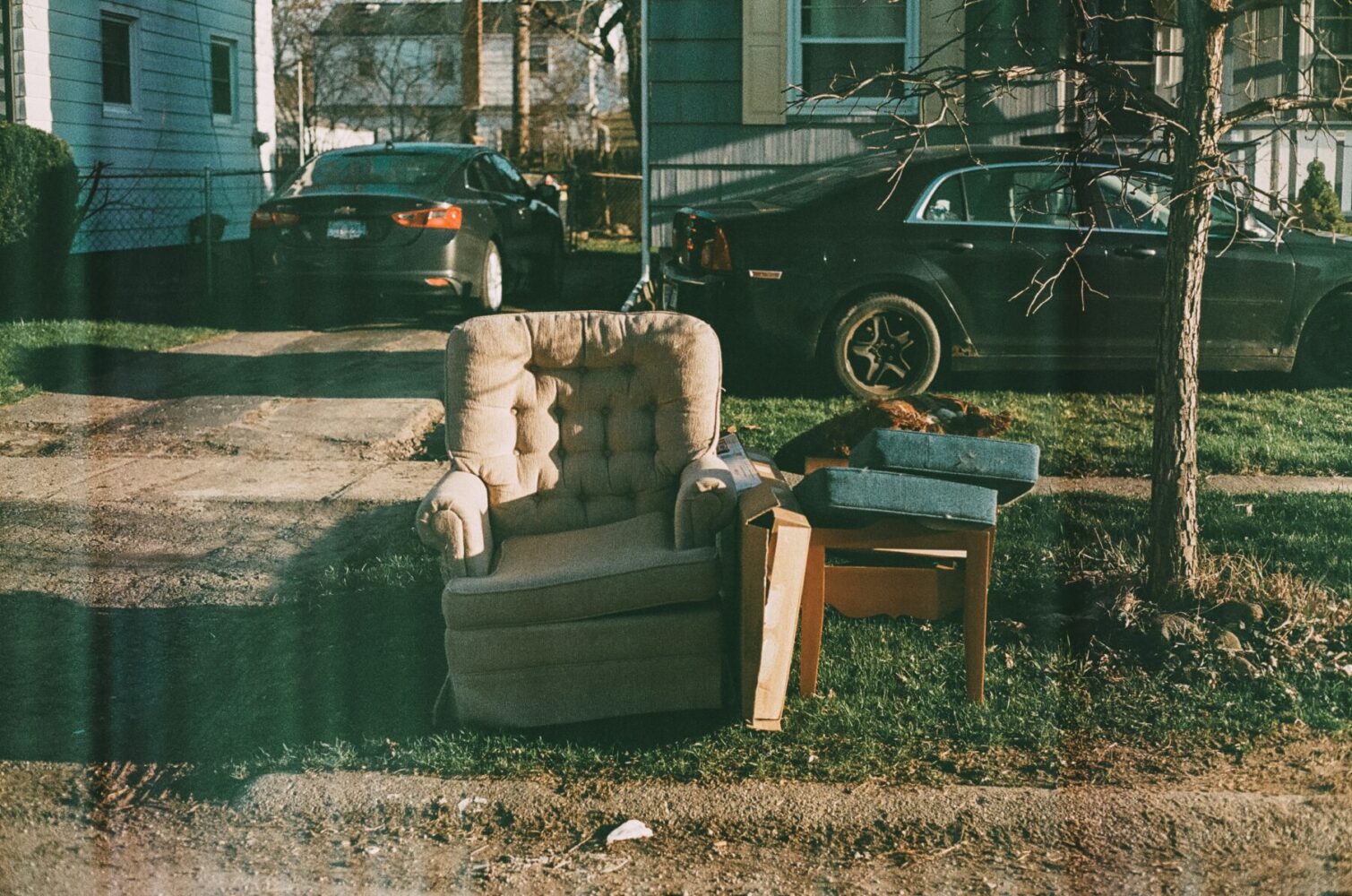
Photo by Bruno Guerrero
Support RVA Magazine. Support Independent Media in Richmond.
At a time when media ownership is increasingly concentrated among corporations and the uber wealthy, RVA Magazine has remained one of Richmond’s few independent voices. Since 2005, the magazine has provided grassroots coverage of the city’s artists, musicians, and communities, documenting the culture that defines Richmond beyond the headlines.
But we can’t do this without you. A small donation, even as little as $2, one-time or recurring, helps us continue to produce honest, local coverage free from outside interference. Every dollar makes a difference. Your support keeps us going and keeps RVA’s creative spirit alive. Thank you for standing with independent media. DONATE HERE.
We’ve got merch HERE
Subscribe to the Substack HERE
And Reddit HERE
And YouTube HERE