
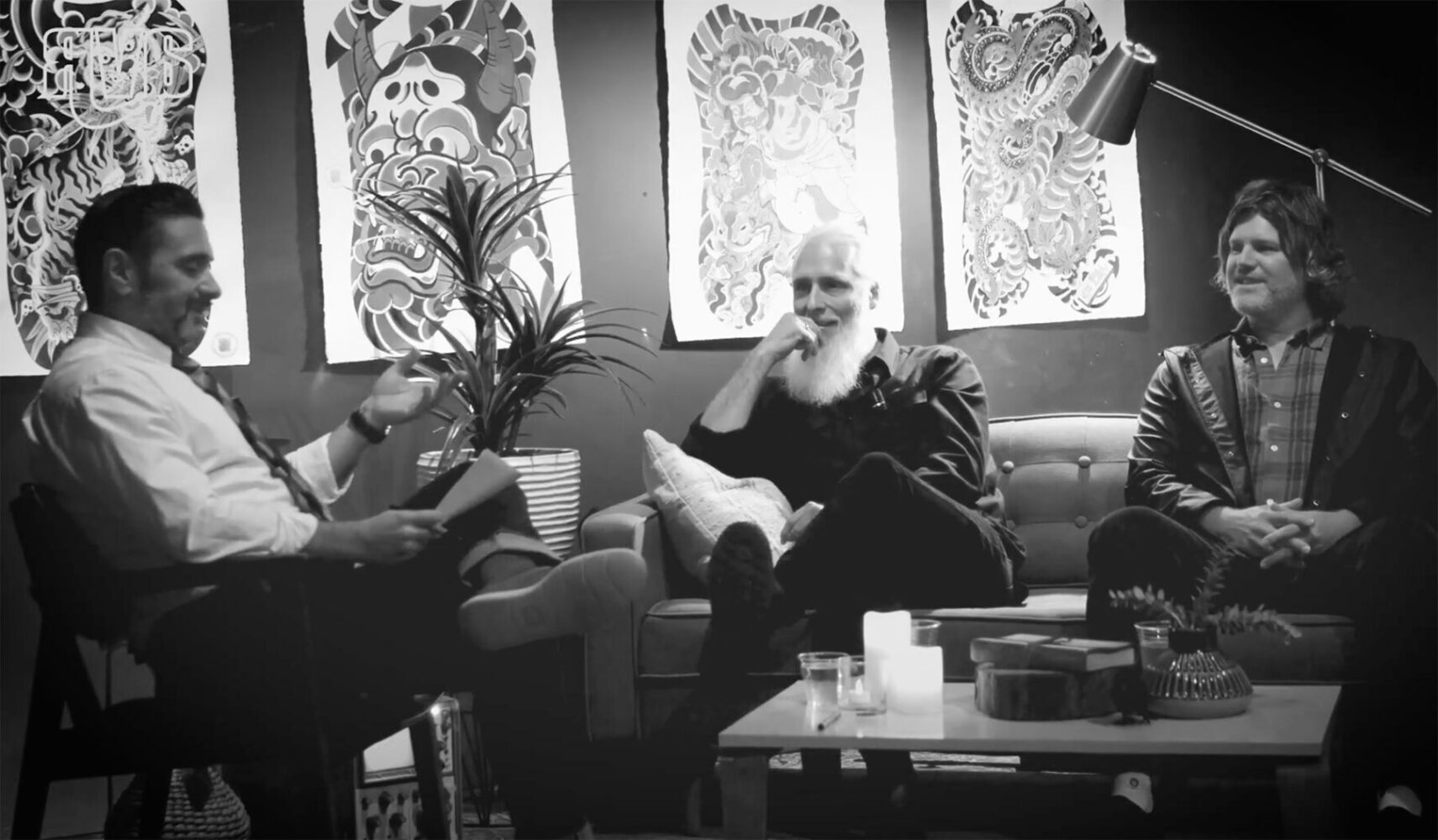
A Night at Black Iris with John Campbell and Tyler Williams hosted by Landon Shroder, co-publisher, RVA Magazine. Presented in partnership with MSE Properties, Plan 9 Music and Medora Laser.
Last Thursday night’s Salon de Résistance: The Shape of Music to Come at Black Iris took on a question that has gone from hypothetical to philosophical to entierly unavoidable: what happens to music when technology stops being just a tool, and starts becoming it’s own creator?
Richmond has always built its musical identity on DIY impulses, sweaty rooms, small studios, and community-run creative spaces, not on industry machinery. But AI-generated music is no longer a distant concept. It’s charting. It’s getting playlisted. And it’s being streamed tens of millions of times by listeners who often don’t know (or care) whether the song they’re listening to is human or machine. For a city like Richmond, where engineers, producers, designers, and working musicians depend on a real ecosystem to survive, the stakes now feel different.
So we brought together two platinum selling musicians to unravel this conversation, both of whom have lived through their share of industry disruption: John Campbell, co-founder and bassist of Lamb of God, and Tyler Williams, drummer and co-founder of The Head and The Heart. They came at the topic from different genres and experiences, metal and indie folk, but their lived experience gave the room something you don’t always get from think pieces or tech panels, the actual perspective of artists who’ve been in mixing rooms, studios, and on tour for decades.
The Richmond Connection: Who Was on Stage
John Campbell: A founding member of the Grammy-nominated Lamb of God, Campbell helped shape one of the most influential metal bands of the modern era. Formed at VCU in 1994, Lamb of God defined the New Wave of American Heavy Metal through albums like As the Palaces Burn, Ashes of the Wake, and Sacrament, releases that reoriented heavy music globally. With 11 studio albums, countless tours, and a legacy that spans nearly 30 years, Campbell brings the perspective of an artist who’s survived piracy, digital sales collapses, the streaming revolution, and every odd industry shift in between.
Tyler Williams: Williams came up in Richmond’s mid-2000s indie scene, playing in local mainstays like Prabir and The Substitutes before helping form The Head and The Heart in Seattle. Their Sub Pop debut went platinum, launching a touring and recording career that has made them one of American indie folk’s defining acts. Since returning to Richmond in 2011, Williams has remained deeply connected to the local scene, supporting rising artists like Lucy Dacus and Illiterate Light. The band’s latest record, Aperture, arrived this May.
Our goal was to have working musicians shaped by Richmond, speaking directly to a Richmond audience about a major technological revolution that will disrupt all aspects of the creative industry.
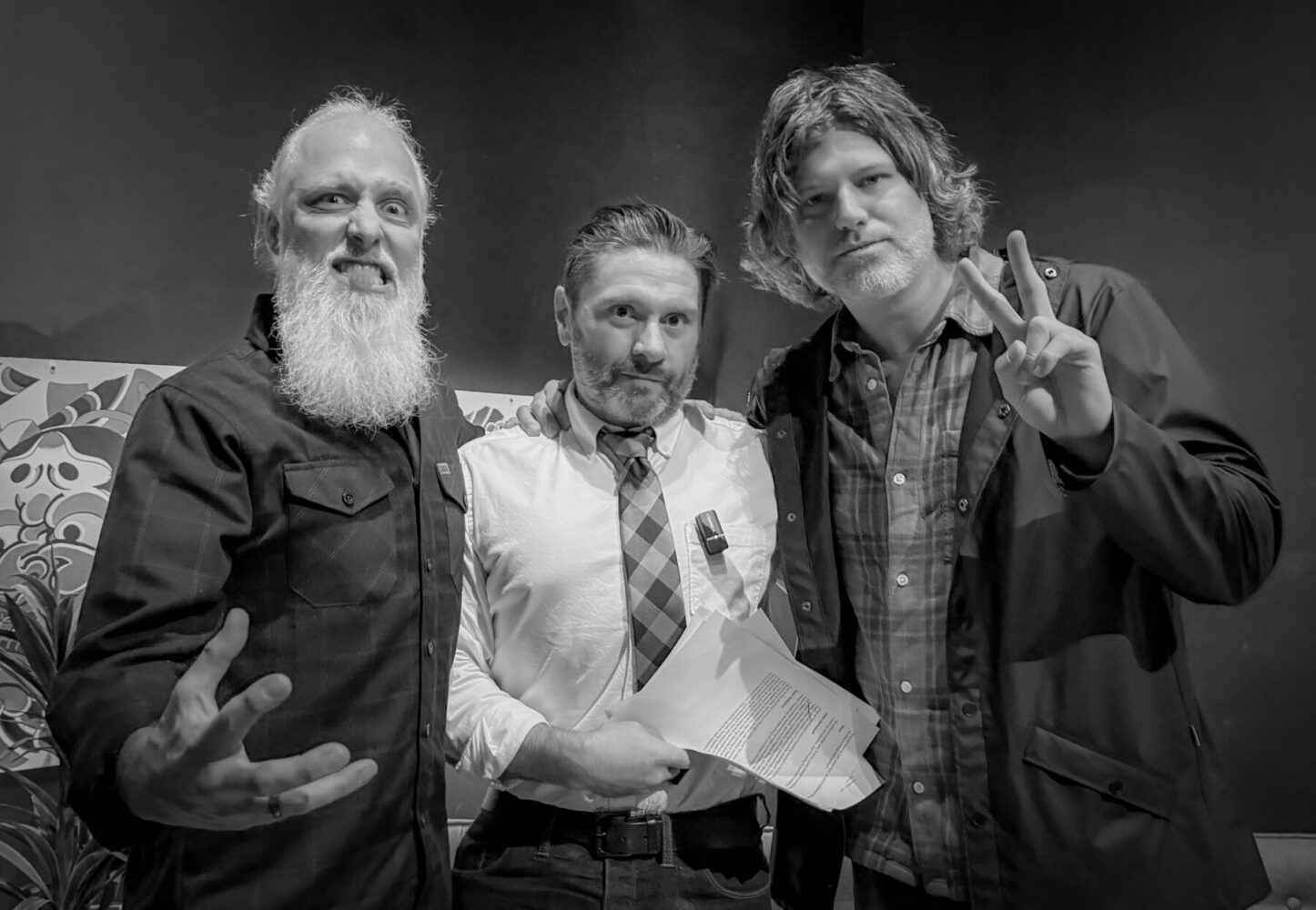
Artists Who’ve Seen Multiple Revolutions, and Aren’t Panicked
What struck the room first was how little fear either musician expressed over the introduction of AI generated music.
Campbell and Williams weren’t dismissive, just seasoned experts. They’ve already lived through seismic industry shifts: Napster, the MP3 era, iTunes, piracy, Spotify, the social-media-algorithm era. And they’re still here; still thriving.
Campbell put it plainly: “Artists are always going to make art. Kids are going to figure it out.”
Williams framed it even more directly: “Artists have never really controlled where the industry goes. We’ve always had to ride whatever wave is next.”
Their point wasn’t that AI is harmless. It’s that the history of music is already a history of disruption, and musicians have always adapted, because they don’t really have a choice.
The AI Playlist Experiment: Musicians Hear What the Algorithm Can’t Fake
The real turning point of the night came during the “AI or Not” listening test. Four tracks. Four genres. Forty-five seconds each. All AI. The audience hesitated. Campbell and Williams didn’t. Both musicians called each track AI, and then immediately explained why.
These weren’t guesses. These were diagnoses from subject matter experts who’ve spent half their lives in studios and on stages.
They heard things most listeners don’t catch:
- Timing too perfect — no micro-human drift, no tension.
- Vocals too clean — polished in ways no singer actually breathes.
- Instruments not interacting — parts sat side-by-side instead of responding to each other like real players do.
- Mix too “mathematical” — stacked frequencies instead of intentional arrangement.
- No personality in the performance — the emotional “accidents” that define human music were missing.
Williams pointed out the locked-in drum accents instantly: “If it sits that tight without a click, it’s AI. No one plays like that.”
Campbell noted how melodic choices felt like composites, “borrowed” from dozens of places but belonging to none.
And track after track, the same thing came up: AI can imitate emotion, but it can’t generate intent.
The room learned something in real time: musicians with deep studio mileage can spot AI immediately, not because it sounds robotic, but because it sounds perfect in the wrong ways.
The Real Threat Isn’t the Art, It’s the Infrastructure Around It
Both musicians made it clear they’re not worried about being replaced. They’re worried about everything around them being hollowed out:
- Small studios
- Independent engineers
- Production houses
- Behind-the-scenes creative workers
- The fans who might be hit by job loss long before musicians are
Williams hit it hard: “If people can’t afford their lives, they’re not going to shows. That’s the real threat.”
Campbell added that record labels and tech platforms have never prioritized artists. If AI is cheaper, the platforms will push AI. And in cities like Richmond, where the music economy relies on small businesses and independent creatives, those consequences are concrete, not theoretical.
The Human Dimension: Collaboration, Conflict, Community
Audience questions pulled the conversation into the deeper emotional territory:
- Can AI “evolve” creatively the way human artists do?
- What does imperfection mean in an era obsessed with the grid?
- How does fan-to-artist connection survive automation?
- And how much of music is about making it vs. listening to it?
Campbell talked about the joy of discovering a sound with other people in a tiny practice room, an experience that’s impossible for a machine to recreate.
Williams grounded it even further: “We talk to our management about fans. We don’t talk to them about AI.”
No matter how good the models get, no algorithm can replicate what happens between bandmates writing together, or between artists and the people who show up night after night.
That part of the culture is still untouched.
Will Music Survive ARTIFICIAL Intelligence?
By the end of the night, the original question felt almost too narrow. Music survives because people survive. Because people need it, make it, share it, fight over it.
Williams predicted a split future:
- AI music for the background noise economy—ads, playlists, filler.
- Human-made music for meaning, community, connection.
Campbell boiled it down to something Richmond understands instinctively: “If music doesn’t survive, we’re not here. People are always going to make noise.”
And that’s the point.In a small room at Black Iris, surrounded by artists, engineers, producers, and fans, you could feel exactly why AI won’t replace music: Because music isn’t just what we listen to. It’s what we do together.
We will be taking a break from the series for the rest of the year as we plan our next set for 2026. Thank you to everyone who has supported the series and the magazine by reading, sharing and attending.
Thank you
Salon de Résistance will reconvene on January 29, 2026 at Black Iris. Stay tuned in the coming week’s for next year’s programming on all of RVA Magazine’s channels. In the meantime, we’d like to thank this year’s sponsors: MSE Properties, Medora Laser, and Plan 9 for their commitment to facilitating the kinds of conversations and dialogue, which are needed now more than ever.
Support RVA Magazine. Support Independent Media in Richmond.
At a time when media ownership is increasingly concentrated among corporations and the wealthy, RVA Magazine has remained one of Richmond’s few independent voices. Since 2005, the magazine has provided grassroots coverage of the city’s artists, musicians, and communities, documenting the culture that defines Richmond beyond the headlines.
But we can’t do this without you. A small donation, even as little as $2, one-time or recurring, helps us continue to produce honest, local coverage free from outside interference. Every dollar makes a difference. Your support keeps us going and keeps RVA’s creative spirit alive. Thank you for standing with independent media. DONATE HERE.
We’ve got merch HERE
Subscribe to the Substack HERE
And Reddit HERE
And YouTube HERE