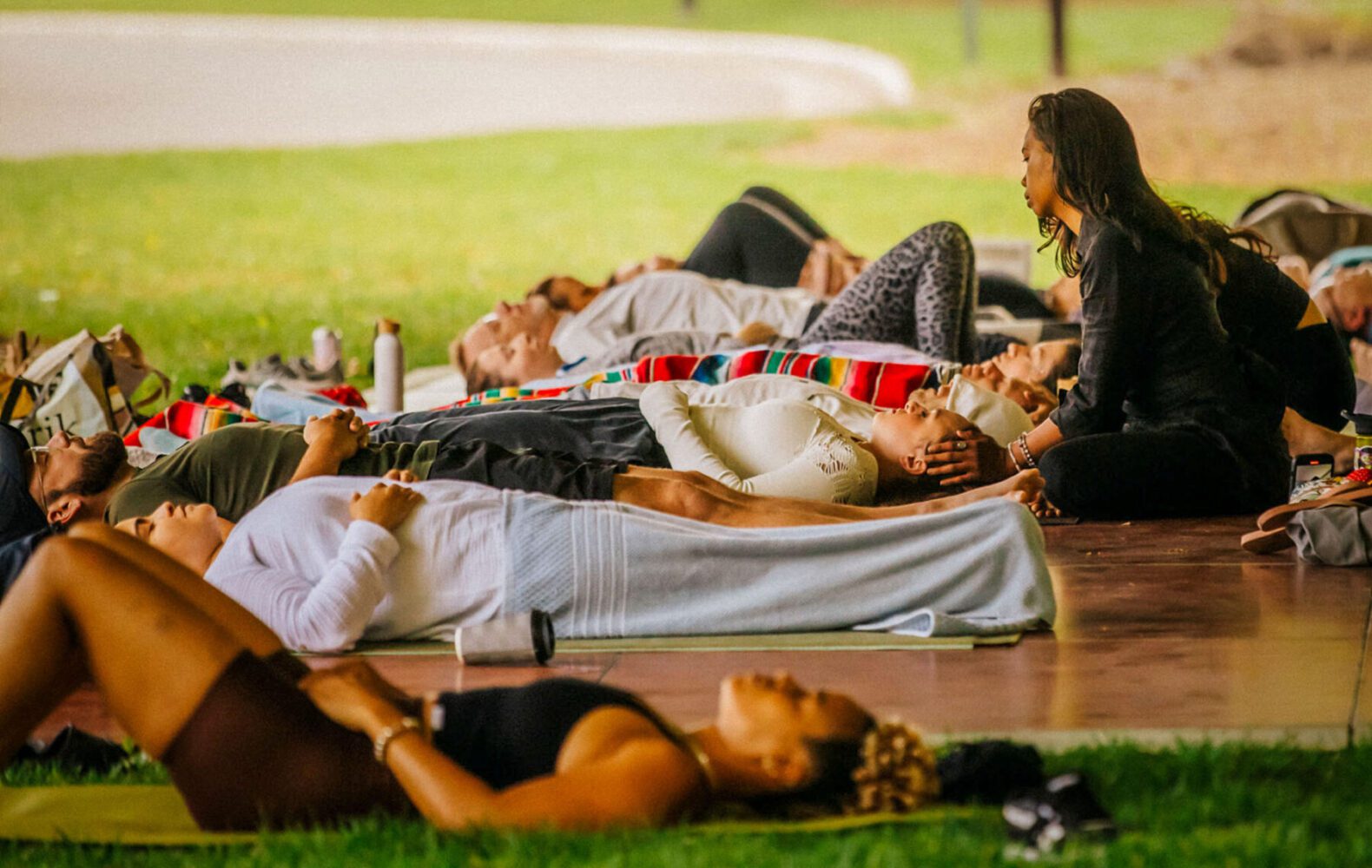
In 2009, I went to three different GameStops trying to find a Wii Fit Balance Board, and getting one started my path toward having yoga in my life. After two years of doing virtual yoga on a game system, I was challenged by a student to seek out meditation and yoga more formally through an Iyengar yoga class at Yoga Source in Carytown.
All of this changed my life and my art in deep and meaningful ways. Recovery and wellness became more than just words. They evolved into work and a daily practice, changing my posture when taking photos, deepening my care for my mind and body, and opening a pathway to movement and dance.
I’m excited to see how the community, while always changing, is still growing here in Richmond. I’m also looking forward to talking with the team behind this weekend’s Rest Fest, Rick Plautz and Lindsay Hess, to see what they have in store to help restore our energy and set us on more stable footing as we navigate stressful times.
T-Rav: Now in its third year, was there a moment early on where you realized Richmond collectively needed a nap?
Rick: There’s an important distinction between rest and fatigue. I think most of us, not just Richmonders but people in general, spend a lot of time fatigued, overstimulated, distracted, and stuck in a stress response. We never fully cross over from fatigue into actual rest. That’s something I’ve experienced personally, and I think it’s something worth helping people understand and feel for themselves.
T-Rav: Have you seen positive changes in the Richmond community from the first year to now?
Rick: Definitely. When I first started getting involved in the community, the classes people were offering were really amazing, but they might draw five or six people. Now those same classes are selling out. People are coming back multiple times. It tells me there’s a real hunger for this kind of experience, and it’s more than wellness. It’s becoming its own social culture, one that’s healthy and sustainable.
A lot of what we have socially right now revolves around alcohol. That’s not inherently a bad thing, but people have started wanting more varied experiences, and I think COVID accelerated that. It made people reflect on the patterns they’d built up and whether they actually wanted to keep them. So on top of this desire to pivot away from alcohol-centered social experiences, COVID ignited an interest in healthier wellness experiences, and now those things are coming together. It’s clear there’s a huge demand for this type of offering.
Humans are social animals. We’re always looking for new ways to connect and build community. There’s also something genuinely addictive about feeling good, in a healthy way. A sound bath or a yoga class becomes a self-care routine you do in community. Once you have a good experience, you want to come back. You want to bring your friends. It’s a sustainable, healthy social practice. You can’t really overdose on a sound bath, and you don’t get hungover from a yoga session.
Lindsay: I was an attendee at the first festival, so I’ve been able to experience it from both sides. I’ve seen a huge growth in demand overall, with more people interested in wellness and taking care of themselves. The offerings around the city, from weekly sound baths to pop-up breathwork classes at kombucha shops, are a testament to the fact that Richmonders want wellness here.
I attribute a lot of it to people moving away from an alcohol-centric culture and simply needing something else to fill their time. Younger people aren’t spending their money at bars the same way, and older folks are being influenced by that shift. It’s a real change in culture.
T-Rav: What’s the opposite of a traditional festival scenario? If this were a metal festival, I might ask about a mosh pit, or a dance tent at a music festival. What’s the version of that for Rest Fest?
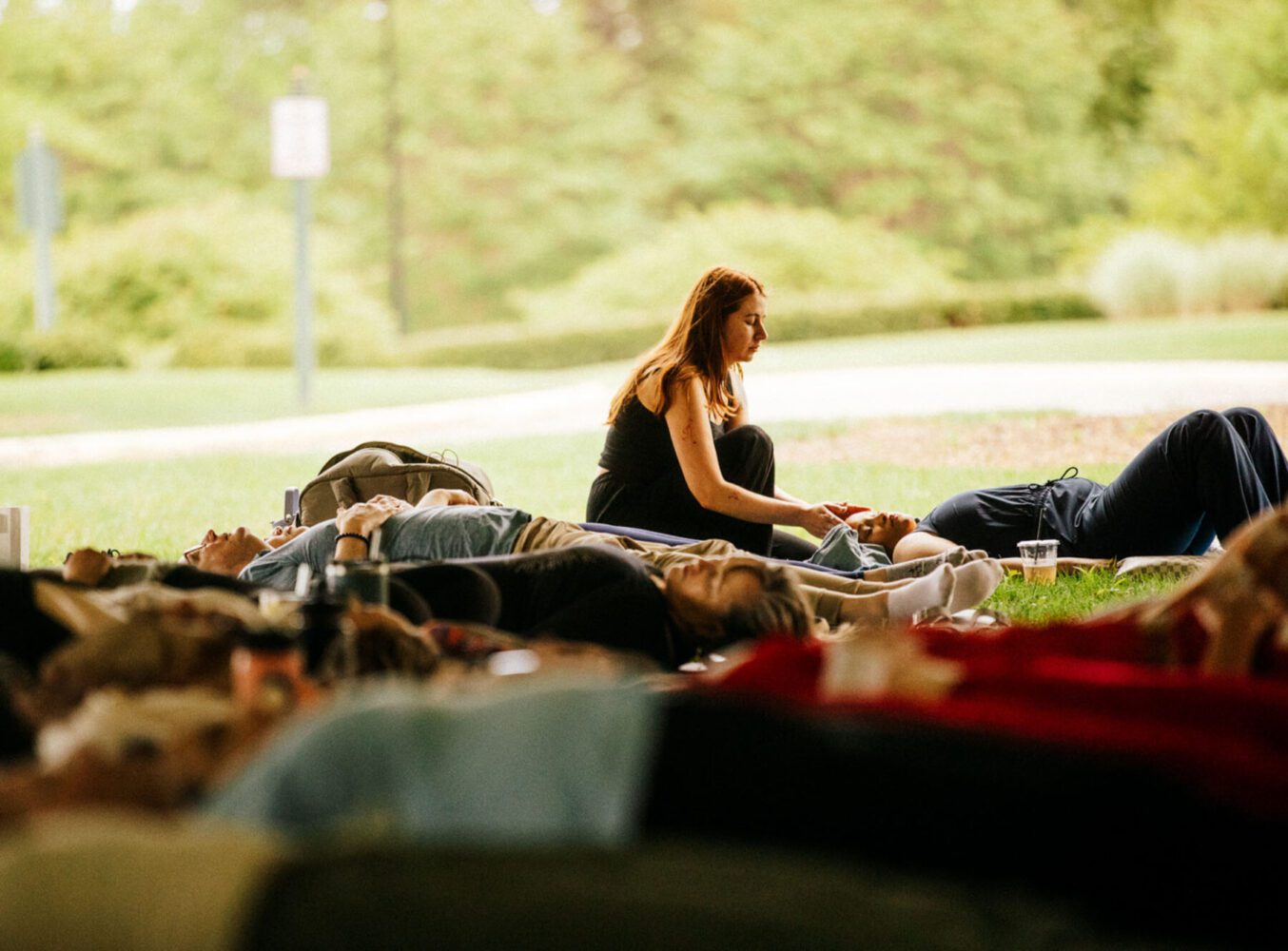
Rick: I want to say the mosh pit is a cuddle puddle, but that’s not quite right either. The mosh pit at Rest Fest is a place where, similar to an actual mosh pit, people share in a powerful emotional experience together. It doesn’t involve throwing elbows, but it does involve connecting as a community in a really peaceful, restorative way.
But honestly, Rest Fest isn’t offering just one kind of mosh pit. We want it to be a collage of experiences. People who really connect over yoga can have that experience. People who connect over breathwork, or dance, or a sound bath where they’re singing together, all of those are different expressions of wellness in community. We want a lot of different types of “mosh pits,” because different ones will resonate with different people.
T-Rav: Walk us through the lineup. What does each act bring to the experience?
Rick: The way I thought about the lineup was, how do we create a showcase of opportunities for release? Whatever avenue someone might resonate with, there’s a door open for them, because not everybody’s door is the same.
We start the morning with Shanna Latia and Parham Neal-Pishko, back to back, yoga into a movement session. That’s a really beautiful way to open the day because it’s focused on somatic, physical release, getting the body moving and then settling it into stillness.
Then Brandon Holloman-Lovee brings poetry, his own reflections on catharsis through spoken word. Through his artistic style, it’s another opportunity for release, a resonance with everyone there. I think it’s going to be really beautiful.
Prabir Mehta is a local legend. He’s performing his own album, India-inspired meditation music he calls ragas, music that’s been around for centuries. That’s going to be something special.
After that, Kelly Cummings, a death doula and owner of the Conscious Dying Institute, is leading a meditation on death. And I want to be clear, it’s not morbid. Death is the final rest. If we can really sit with the fact that we’re all going to die someday, it actually helps us live more fully. That opportunity, through meditation, is going to be really powerful.
Then we have Nickolas Samuels leading a song circle, medicine music in that South American ceremonial style used in healing contexts around the world. He’s bringing other artists from the city into it.
The one I think is going to hit hardest is the breathwork session with Ari Khan and Liz Bowden. I’ve been to their classes many times, and I love the way they gently guide you into this really powerful release, which usually ends with screaming as loud as you can, as a group, together. Where else in our lives are we invited to yell like that? Not from stress, not from overwhelm, just as an open invitation to let it out. It’s really beautiful.
Then I’m leading a group toning sound bath alongside Julian Desta, Shanna Latia, Elise Kindya, and the Bell Garden Choir. What’s unique about this year is that instead of being on a stage, the choir is going to be out in the crowd. Because it’s not really singing, it’s toning. One consistent note, no words, no melody. You don’t have to be a good singer. You just have to find the note that resonates in your body and let it harmonize with everyone around you. And the choir is there so you’re not doing it alone, so you can latch onto someone who’s already practiced it and let that carry you in.
The goal is to lead the biggest group toning sound bath Richmond has ever seen. Picture the whole amphitheater humming together. You can be sitting or lying down, just moving your voice up and down until you find that resonant note that vibrates through you and feels harmonious with the room. That’s it. That’s the whole thing.
Then Robot Koch and Kathi Hendrick close the journey with what they call Listening Fields. Robot Koch is his stage name, Robert is his name, and he’s an internationally touring musician who has been selling out venues on this current tour. He just moved to Richmond, and by coming to Rest Fest, he’s continuing that tour here. That’s a big deal. Kathi will be facilitating the experience in the amphitheater as he plays, so it picks up right where my sound bath leaves off and takes it somewhere else entirely. They’ve been around the world with this work, and they’re bringing it to Richmond for the first time at Rest Fest.
Then we end the night with ecstatic dance. Bert and Zac, who go by BlauDisS and Zenglish, are doing a dual DJ set. Ecstatic dance is exactly what it sounds like. It’s just dance that can be as weird as you want it to be. Move your body the way it wants to move. No choreography, no looking cool. Just a beat, your body, and permission to let go. It’s going to be really tribal, it’s going to have a beat, and it’s going to be the perfect way to end Rest Fest. It’s another opportunity to express, to have a release, to have a catharsis, a physical experience that ideally sends everyone home having given something back to themselves.
These are all people in Richmond who deserve a platform because they’re out there serving people and providing healing services and experiences all the time. This lineup is a curated list of some of the best in the city. Together, it’s an experience that builds throughout the day, starting with an easy, open morning, moving into poetry and music, and then into a gradually more intense afternoon arc of really beautiful experiences designed to provide release.
The ultimate goal of Rest Fest is that people walk away having had a release, or wanting to go back to these people and their classes around Richmond, or having met new friends throughout the day and just been able to collectively heal in community. That’s the goal of Rest Fest, and this lineup reflects that.
It’s like a choir, really, everyone singing the same song in a different tone.
T-Rav: Do you have any advice for someone reading this on their phone or at a computer to quickly lower their stress level?
Rick: Box breathing. It’s simple. It’s called “box” because every part of the breath is the same length, like the four sides of a square. Put the phone down, breathe in for four seconds, hold for four seconds, exhale for four seconds, then wait four seconds before inhaling again. Repeat for about eight minutes. Your nervous system will feel significantly more regulated, and your mind will have reset by the end of it.
Lindsay: Small, micro adjustments to your lifestyle can greatly affect your stress level. Deep breathing exercises, even for five minutes a day, can make a real difference in your everyday outlook and perspective.
T-Rav: What do you think would help us get better rest on a daily and weekly basis?
Rick: A few things we all hear but probably don’t take seriously enough. Phone screens emit blue light, which disrupts your circadian rhythm and signals your brain to stay awake. That’s what makes phones so destructive to sleep. Drinking late at night is also rough, because alcohol is high in sugar, and while you might feel tired, your body is processing that sugar while you sleep. That’s why you wake up restless at three in the morning, feeling wired.
Beyond that, think about how you transition into sleep. A lot of people go full speed until they can’t anymore and then just face-plant into bed. Even twenty minutes of a wind-down period, in bed, off your phone, with warm, low light, makes a real difference. Blue-toned, bright lights in your bedroom are basically telling your brain it’s daytime.
And honestly, just try prioritizing sleep the way you’d prioritize drinking enough water. We’ve been conditioned to run on fumes and call it normal. We build up this callus where operating on insufficient rest becomes our baseline. There’s a reason people feel human again on vacation, they’re finally resting and resetting. But you don’t need a vacation to feel that way. If you can feel the difference, even for fifteen minutes or over the course of a week, you’ll want to protect it.
Lindsay: Seeing and reframing rest as pivotal to your health, it’s just as important as that 15 to 20 minute stretch, run, or yoga routine, or whatever it is that keeps you feeling healthy. Incorporating a level of deep, conscious breathing and small movements throughout the body and day can make a significant impact on the longevity of our lives. It isn’t the big movements that make the difference. It’s the little things that save us.
T-Rav: Given the state of the world, with so many things feeling on the edge, what is radical about rest and calm?
Rick: Rest is resistance. Our phones, the news, the entire information ecosystem, it’s all designed to keep us in a stress response, because attention is the resource being mined from each of us. To even get to a place where active resistance is possible, you have to unplug first. Choosing not to give your attention and your energy to systems that only want your eyeballs, that’s an empowering act of resistance.
When we get rested, we get clear. And when we get clear, we can actually see the injustices around us and take meaningful action. Rest isn’t retreat. It’s the first step. I know it’s a privilege to be able to prioritize yourself, but that’s also why reframing rest this way helps underscore that disparity. Even if you can’t always make time for it, just thinking about it, just being aware of it, matters.
Lindsay: I’d say rest and calm are pretty unique in our world. There aren’t many places you go specifically to rest. From music festivals to sporting events, most experiences are built around constant stimulation from beginning to end. We’re always looking to be entertained.
What we’re offering is different in that way. It’s a space to go inward, but in community with others who are doing the same. The idea of gathering for a day centered on calm, that’s still pretty rare.
T-Rav: What is important about not falling into burnout? How can we rebound and be better?
Rick: Burnout is the result of being stuck in a stress response for a prolonged period of time, fight, flight, fawn, or freeze. We get caught in these responses in small ways all day long, and we’re never taught how to step back down out of them. It’s not unhealthy to enter a stress response. It’s unhealthy to stay in one. Our nervous systems were designed to help us escape a predator and then recover. Our bodies can’t tell the difference between being chased by a tiger and being cut off in traffic.
Our nervous systems are already overtaxed, and it’s not an accident. The same systems designed to keep us consuming, scrolling, and reacting are also keeping us in a chronic stress response. Burnout isn’t a personal failure, it’s structural. A population that’s burned out, distracted, and running on fumes is easier to manage, easier to extract from. Rest is a direct interruption of that. When we actually restore ourselves, we get clear. And clarity is threatening to systems that depend on our exhaustion.
The biological stakes are real. When you’re chronically in fight-or-flight, your body produces sustained high levels of cortisol, which can physically alter and damage your DNA over time, damage that can even be passed down generationally. It also impairs your DNA’s ability to repair itself. Beyond the physical, chronic stress clouds your judgment, keeps you in survival mode, and makes it nearly impossible to think about the impact of your actions on the people around you, or, on the other end, lets your inner critic take over.
Understanding that, and taking it seriously, is its own motivation to protect yourself from burnout. It’s about figuring out what combination of things you actually need to make it through a week without being ground down by it all.
Lindsay: It’s the same idea as putting on your oxygen mask first if the plane is going down. You simply can’t help someone else if you haven’t helped yourself. We have to put ourselves first to be able to take care of our village. So dig into what that is for you. What time and resources do you need to keep yourself balanced so you’re not constantly in rebound mode? You can get to a place where you’re in tune enough with yourself to know what you need, and when, and when to say no.
T-Rav: In the years since the term “self-care” started circulating more widely, and the wellness world has grown complex enough to have both a good side and a not-so-good side, what’s the importance of putting real internal energy into self-care and pushing back against self-destruction? (NIN’s “Mr. Self Destruct,” which I love, comes to mind.)
Rick: There’s a deeper question here for me. Why are we choosing self-destruction? We know self-care is important, but we still choose not to do it. Why is that? What are we running away from, and why are we running toward self-destructive behavior?
I think it’s often a numbing distraction. We pursue self-destructive habits to avoid feeling intense emotions, or to avoid facing past trauma. And we aren’t really taught sustainable ways to handle big emotions. As a society, we haven’t built much infrastructure to help people regulate themselves. Self-destructive behaviors fill that gap. They’re accessible, they’re everywhere, and they’re very effective at keeping people distracted from the deeper work.
Self-care doesn’t have to look the same for everyone, either. Nine Inch Nails or Tool can be tools for self-reflection, ways to quiet the mind and stay present. It’s about finding what actually works for you, and Rest Fest is designed to broaden those possibilities.
T-Rav: When it comes to wellness, how do you look at it as a practice rather than a luxury, a privilege, or something to be capitalized on?
Rick: You don’t need anything to have a self-care routine or to pursue wellness. You can do it on your floor, in your underwear. It doesn’t require a massive amount of capital, advertising, fancy clothes, or the best yoga mat. You can do it anywhere, with whatever you have.
The hard part is figuring out what actually works for you. It can feel overwhelming to find your thing because you’re constantly trying new approaches. What we want to do is offer people the chance to experience a range of practices, meet the people behind them, and see what resonates. You can find your community there. You can find people already doing what you’re curious about and learn from them.
And it’s up to you how far you want to take it. Once you know what works, you don’t have to keep investing money. You really can do it yourself, with whatever you have.
Like any industry, there are people who take advantage and people who are just in it for the money. So it comes down to discernment. Trusting that people have good intentions, and when they don’t, learning from it and moving on. What we want to do is highlight the people doing it with integrity, because they’re out there. Once you’re in community with people you trust, you can go as deep as you want, learn as much as you want, and ultimately take it home and make it your own.
I think wellness is a service to others. We want Rest Fest to be a showcase of people doing real service work.
Lindsay: This is exactly how we’re trying to approach Rest Fest. We want to make wellness accessible to anyone in the city who’s interested, especially for people who might need it the most but don’t know where to start. I truly believe these practices help me move through the world in a more empathetic, understanding way. What if everyone had access to that?
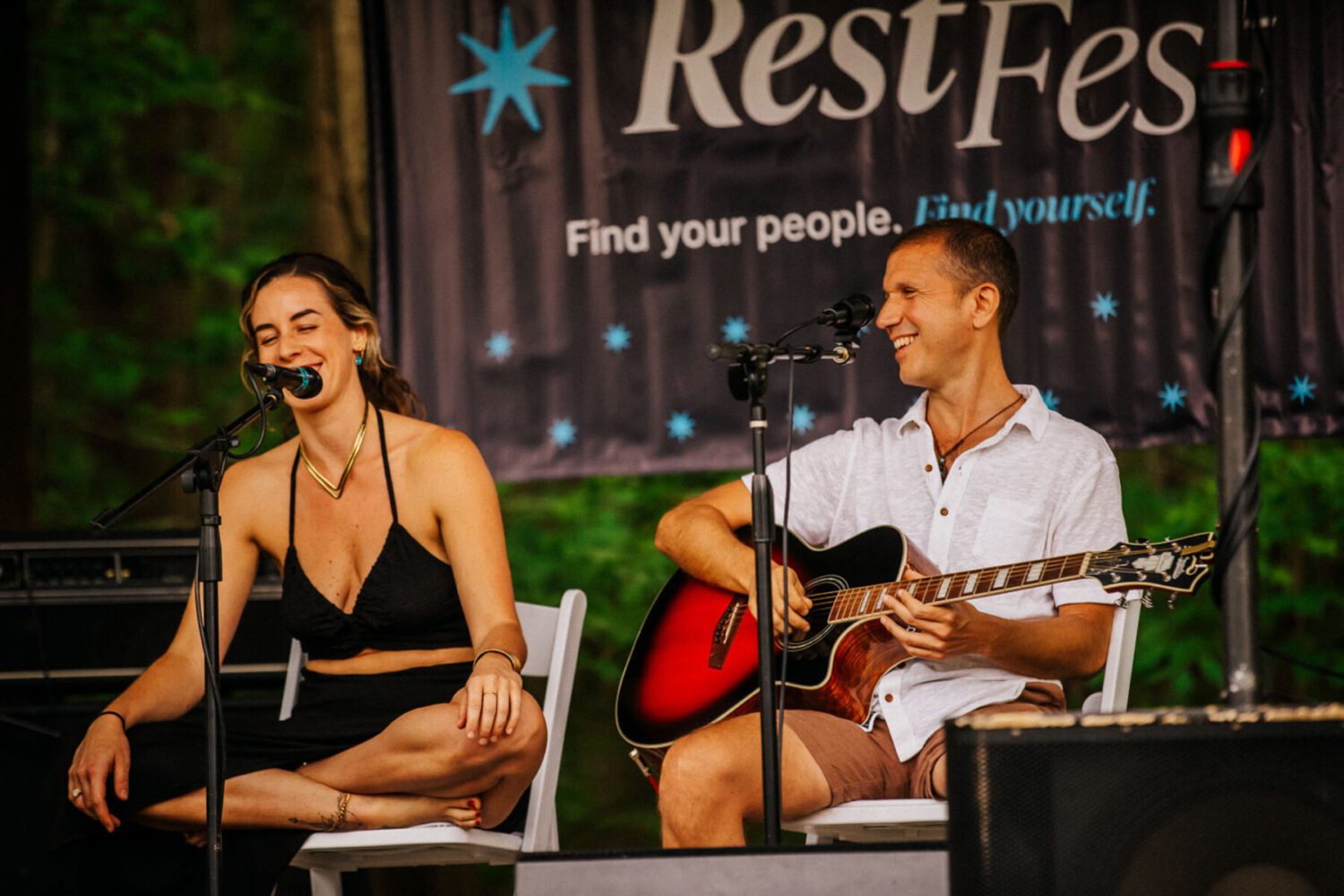
T-Rav: What’s important about relaxing with and as a community, together?
Lindsay: There’s nothing more fulfilling than being part of something larger than myself. I’ve always been someone who thrives in a team environment, and I feel the most impact when I’m doing something alongside others. I can’t think of a better way to spend a Saturday than watching hundreds of people step into something like a breathwork class together. It gives me chills.
Rick: Co-regulation. Anytime people share an experience, it creates connection. It gives you a starting point, a bridge to someone you don’t know yet. And when that shared experience is restorative, actually healing, it becomes something healthy and sustainable in a way most of our social rituals aren’t. It helps you get past that initial barrier of connecting with a stranger without needing the usual social scaffolding.
And in Richmond, that matters in a specific way. What can this place actually become? Then the work becomes figuring out how we start writing a new story. Experiences like this, done together, in community, and made accessible to anyone who wants to be part of it, can be a small step in shaping that story.
T-Rav: In event producing, we push early and late and then get stressed when things don’t go as planned. How do we create space for rest for each other?
Rick: Grace. A lot of grace for people, and a willingness to release expectations about what an event should be. As a producer, especially of an experience, you’re following a specific vision, and it almost never becomes exactly what you imagined. But it becomes something else, something its own. It’s important to acknowledge and appreciate what it turns into, to let it be what it wants to be.
The original vision is really just the catalyst. So accepting what it is, and not being too precious about that first idea, that’s how you support each other through it.
Part of that also means leaving room for synchronicity. If you’re too rigid, you miss out on the unexpected moments that make something feel alive. A good example is Robot Koch. He’s a well-respected artist who’s been based in Berlin and LA for years and just recently moved to Richmond with his partner and collaborator, Kathi Hendrick. I had no idea when I reposted one of his stories on the Rest Fest account. He reached out, we started talking, and it turned out he’d just moved here and wanted to get involved. Now he’s playing Saturday at 7 p.m., and it’s a big moment for the event. We’re lucky to have him in Richmond, and even luckier to have him as part of Rest Fest. They’ve both been great to work with.
As we get closer, I keep coming back to the idea that catharsis isn’t just for the attendees. As organizers, we have to think about what that means for us too. For me, as the founder, catharsis is simply having the event. Putting it out into the world and letting it be what it’s going to be. I won’t say I’ll be glad when it’s over, but I’ll be relieved to see it finally happen after all the months of planning. That in itself is a kind of release.
T-Rav: Anything else important to share for this upcoming festival, or is it a “restival”?
Rick: We’re really leaning into the theme of catharsis this year, that sense of collective release, of letting trapped emotion and energy move through you and out into the shared space. It’s something we built for attendees and facilitators, but it’s also something we’ve had to reflect on as organizers. For me, again, it comes back to simply presenting the event and letting it go. That’s my version of catharsis.
Lindsay: Come one, come all. This is a donation-based event, and everyone involved has been putting it together in the early mornings, nights, and weekends. If you can, please donate so we can make it happen again next year.
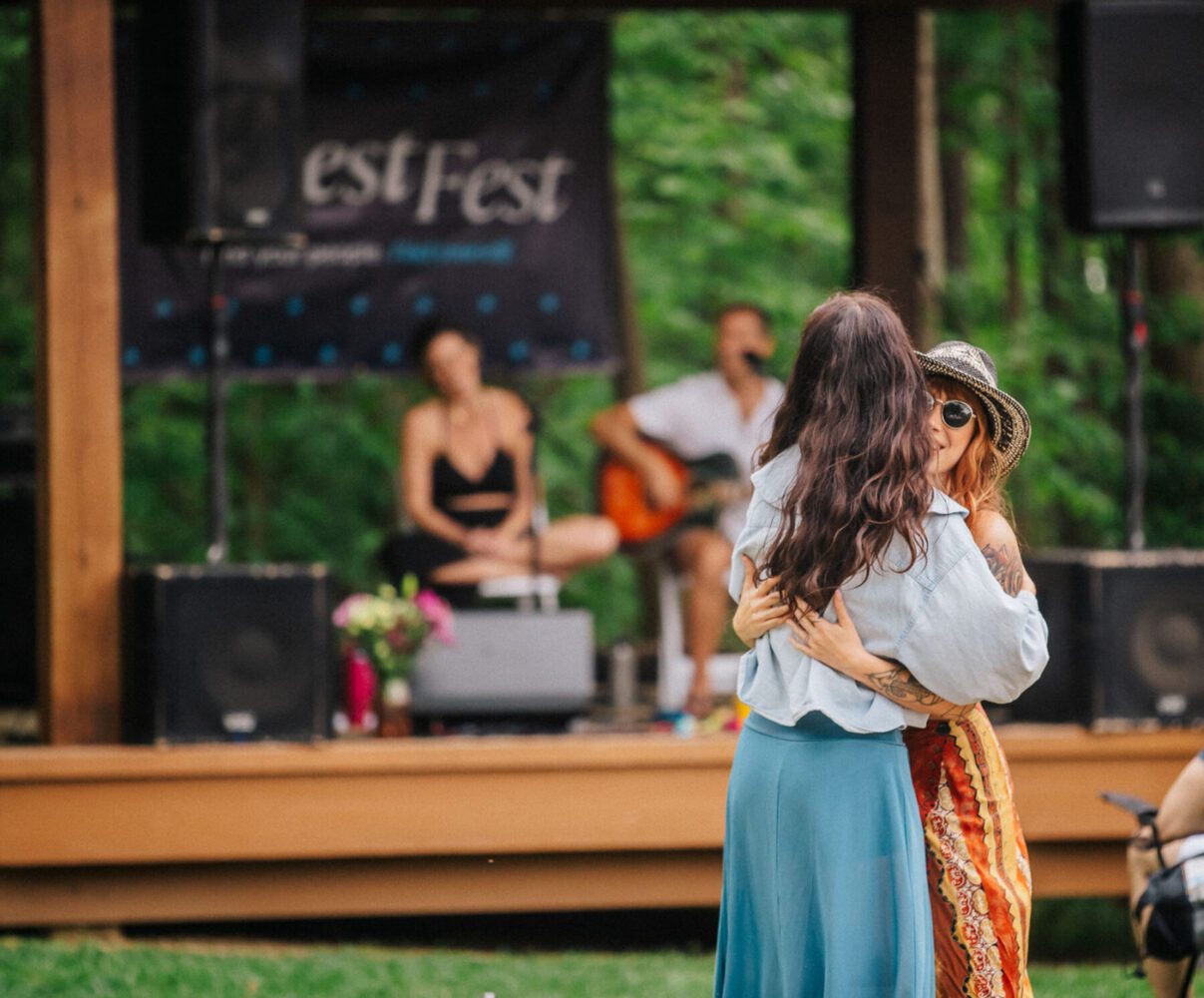
T-Rav: What are the key details, time and place, and where can people find information and show up on the day?
Rick: It’s Saturday, May 9 at Dogwood Dell on the Carillon Lawn. You can reserve tickets, check out the schedule, and learn more HERE. We’ve also made a map HERE.
Lindsay: The Keep Virginia Cozy partnership cleanup begins at 8:00 a.m., so jump in if that’s your speed. Information is on their socials and ours. Main stage programming starts at 10:00 a.m. and runs until 9:00 p.m.
We’ll also have “islands,” smaller businesses running their own programming and pricing on the Carillon Lawn, along with vendors. Take some time to walk around and check everything out.
Main photo courtesy of Rest Fest
Support RVA Magazine. Support Independent Media in Richmond.
At a time when media ownership is increasingly concentrated among corporations and the wealthy, RVA Magazine has remained one of Richmond’s few independent voices. Since 2005, the magazine has provided grassroots coverage of the city’s artists, musicians, and communities, documenting the culture that defines Richmond beyond the headlines.
But we can’t do this without you. A small donation, even as little as $2, one-time or recurring, helps us continue to produce honest, local coverage free from outside interference. Every dollar makes a difference. Your support keeps us going and keeps RVA’s creative spirit alive. Thank you for standing with independent media. DONATE HERE.
We’ve got merch HERE
Subscribe to the Substack HERE
And Reddit HERE
And YouTube HERE