

Editor’s Note: What makes D(e)ad a bit different isn’t just the story or performances, it’s the way it came together. 344% funded on Kickstarter with more than 5,000 backers, the film turned community support into momentum. After getting passed over by the big festivals, the team carved their own path, powered by the Dropout crowd that’s rewriting the rules for indie entertainment, production, and distribution while offering a playbook Richmond filmmakers should be paying attention to.
Studio Two Three hosted the screening of D(e)ad this past weekend. An indie film with equal parts heart, brains, and bile, set to the tune of grief, family, and nostalgia. It’s a comedy, if that wasn’t immediately obvious. Written by Isabella Roland (The Sex Lives of College Girls, Dimension 20, Turnt) and Directed by her Hollywood legend of a mother, Claudia Lonow (How to Live with Your Parents For the Rest of Your Life, Knots Landing, The War at Home etc), D(e)ad excels at yanking the hidden heart string while making you feel weird for laughing at the way it vibrates.
The film feels like being tricked into a trip to the vet. You’re pissed until you realize you don’t have to drag your ass across the carpet anymore to get rid of those worms. The end result is cathartic, but the journey is fraught with betrayals, fear, uncertainty, and your best friends who happen to be your family.
I got to talk to both of these creators in the midst of their rollout of the project.
Christian Detres: How do I pronounce the title of the film? You got this weird play on “Dad”, with the parentheses around an “e” turning the word into “dead”.
Isabella Roland: Dead
CD: Okay, so, just dead? not Dead Dad. Clever. I’m kinda slow. Where did this project come from? Whose mind did it spring from? How did it make its way through the family to actually become a film and not just a series of high-minded arguments?
IR: So the actual idea was my mom’s. She views life through a lens of potential projects, even while witnessing her children lose their father, haha. She sort of saw herself in this starring role where she’s confronted by the ghost of her late husband. But I was also simultaneously working on a screenplay, where I, a character version of me, find some sort of Narnia portal through my dead father’s hoarder trash. A “Narnia” where he’s still alive in another world. I was really struggling with that story. I have a tendency to write stuff that would be extremely costly, like big-budget action comedies. This doesn’t benefit me as a non-working writer who wants to be a working writer. Around the same time, I read Robert Rodriguez’s book, Rebel Without a Crew. He talks about how, as a kid, he had just this cheap little camera, and his sister. He just started making movies with her and that camera, because that was the cast and gear he had available to him. I was inspired by that. It felt like he was sort of grabbing me by the shoulders and telling me to stop complaining and use the resources that were available to me. So I used my family.
CD: Yeah, his sister was non-union too, so that helped.
IR: Yup. D(e)ad became an exercise in making something makeable. That was sort of it throughout the whole thing. As soon as we decided we were going to do it, it was like, “Okay, let’s go through the script and make it as cheap as possible,” just like slashing locations, minimizing setups and stuff like that. Whose houses can we “borrow”? What talent do we have at our discretion? When you have a really, really tight budget, you’re like, well, this is what the story has to be.
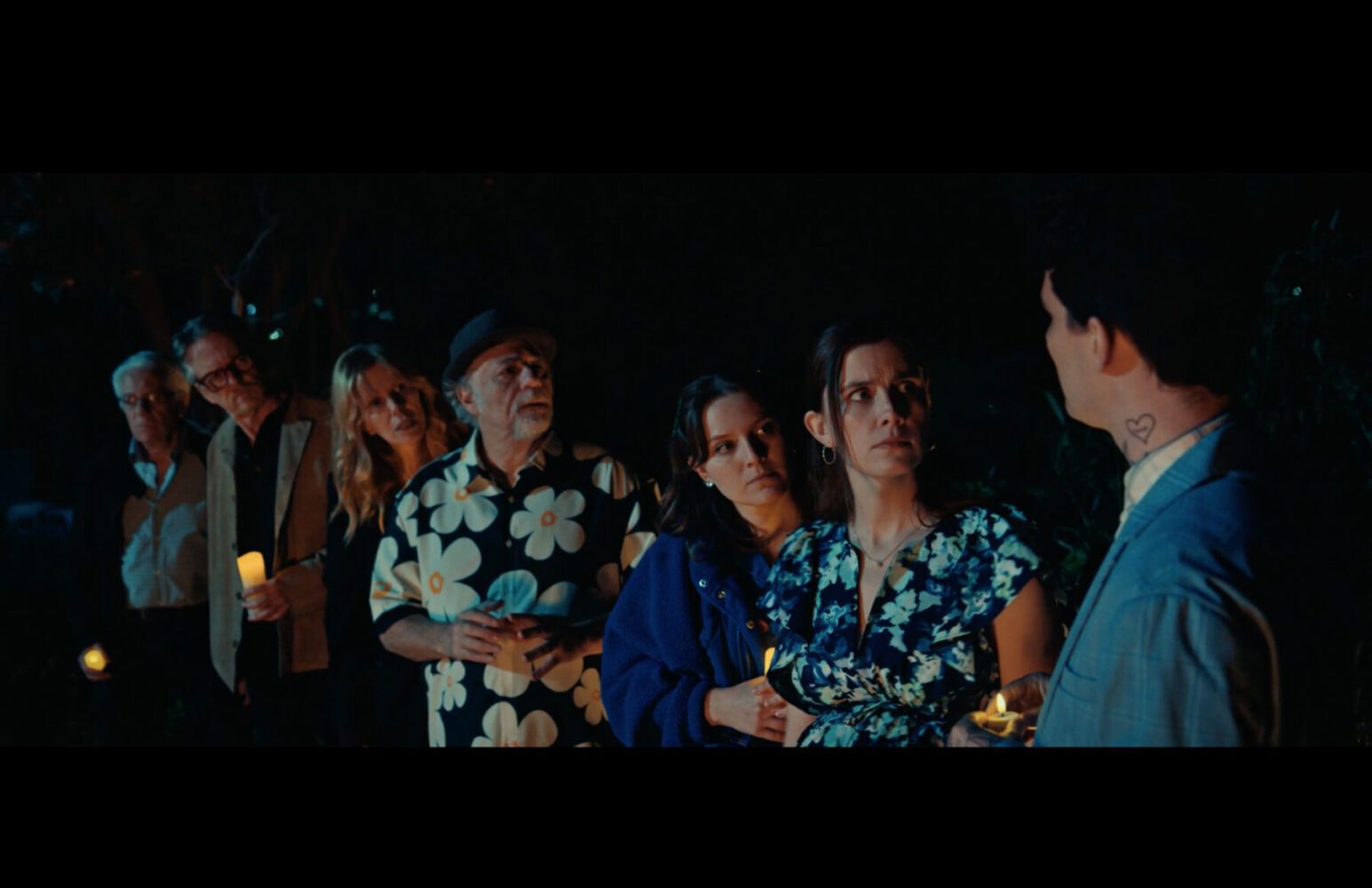
CD: The budget can be small, but the film never has to be. Your movie, D(e)ad, proves that. Part of the charm of low-budget filmmaking is shoving as much story and heart as you can into real character interactions that don’t rely on additional gear or incidental audience draws, marketing tools, and such.
IR: I prefer practical effects, even on like, a million bajillion dollar budget project. yeah. We were very inspired by, you know, like Lena Dunham’s Tiny Furniture.
CD: Ha. Funny enough, I worked with Laurie Simmons on My Art, the sequel(ish) to Tiny Furniture. I was an associate producer on it. Your dynamic that you have going on reminds me of Lena and Laurie’s work together. Laurie has her critical success that she, you know, will always have for the rest of her life. But, you know, Lena had Girls and the commercial spotlight that goes along with it. So when we were shooting My Art, we were shooting in Lena’s upstate New York House, you know, in her vineyard and whatnot. We’re shooting at her daughter’s house. Their family dynamic and dedication to each other’s strengths, gifts, and fortunes, carried that project.
We all find our senses of humor at home first. If you’re raised in the house where people think farts are funny, you know, you’re gonna think farts are funny for the rest of your life. Is there an ‘at home’ sense of humor that informs this script? Is this the way you guys talk to each other at home?
IR: You’re obviously exactly right. I come from a New York Jewish family. They met at an acting studio, doing improv and stand up. My grandma wrestled Andy Kaufman. She’s very proud of it. The sense of humor displayed in the film is our first language. Those jokes come from our living room. My mom has written almost strictly autobiographical work. That’s really where she finds inspiration. I think watching her was a very organic inspiration for me in my writing. We don’t scream at each other like in the movie in real life. We’ve gone through periods of being yellers, but not like, you know, screaming “you’re a narcissist!”. It’s really calmed down over the years. My grandpa owned the Hollywood Improv. He was referred to as “The Attack Jew”. He’s really calmed down. But the sense of humor is accurate from home to screen.
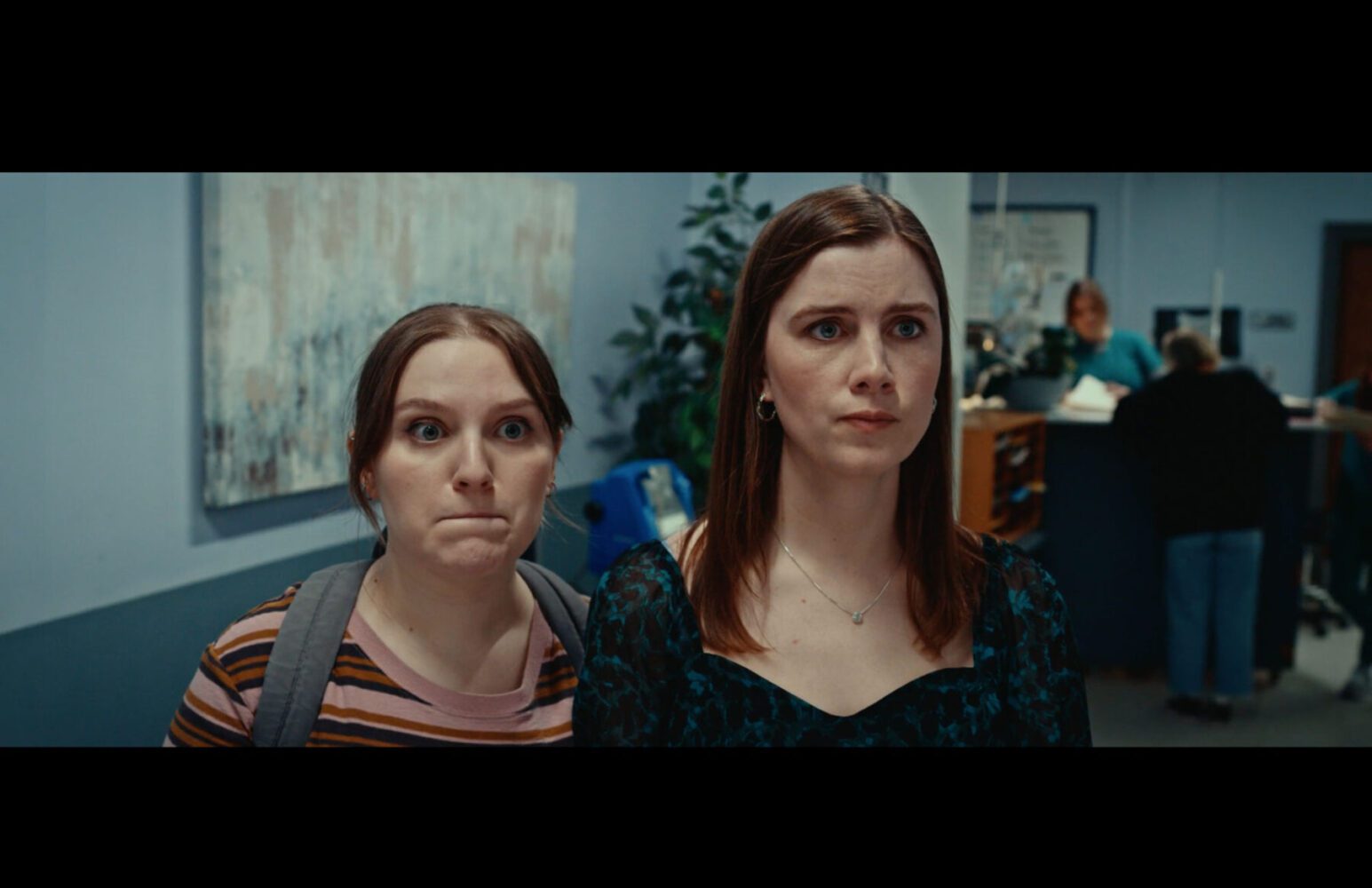
CD: This might be a weird segue, but as I was watching the film, I was aware of the conflict of trying to find grief where no grief exists, where you’re channeling a performative reaction to a tragedy.
Not to make this autobiographical, but just for context: my grandmother passed away last summer. And, granted, I feel terrible for my mom, that was her mother, right? But my grandmother was an asshole. Kind of racist, kind of just a jerk to everyone and everything. She treated my dad and his family terribly. So when she passed away, and I’m not saying I don’t have memories of her baking me cookies or spending the night at her house that weren’t awful, but I never really liked her. I don’t think she ever really liked me.
When she was on her deathbed in the hospital, I leaned over and gave her a kiss. I whispered in her ear, “I forgive you.” And there was a part of me that had to stop myself from laughing, because I knew that if she could have responded, she absolutely would’ve said, “What the hell are you talking about? You forgive me?” There was a little piece of comedy inside me that felt like this was both the nicest and the shittiest thing I could possibly say to her.
That memory caught in my throat while I was watching D(e)ad. You question yourself when you feel like you’re exhibiting a feeling that people won’t want to relate to. It’s an undercurrent that the comedy in D(e)ad skates on. Could you tell me a little bit about how that idea connects to your experience with this film, or how it factors into your ability to relate to, or build, the character?
IR: Yeah, no, that was a big factor. I was going through a sort of rainbow of reactions, a big spectrum of reactions. My parents had been separated since I was very little, but my dad had a very big part in our lives until his behavior got so bad that he was sort of banished. When he left, my grandparents and my mom were not on speaking terms with him. My grandpa had hatred for my dad. That was very real. Yeah. There were people who just didn’t give a shit that he was dead. My mom’s got these complicated feelings, because she was married to him. I wasn’t speaking to him, but then reconciled with him right before he passed. My sister was a total daddy’s girl, like, loved him. Every step was always supportive. So it was this myriad of responses. I felt in the middle. I didn’t know how to feel. It’s not something that is necessarily talked about when you think about someone dying. When you experience your first ‘big death”, it feels like a rite of passage, almost, where you go “holy shit”. Like, this is the first time I’ve ever been really affected by this. Like, I didn’t know anyone really who had died. A math teacher once, I guess.
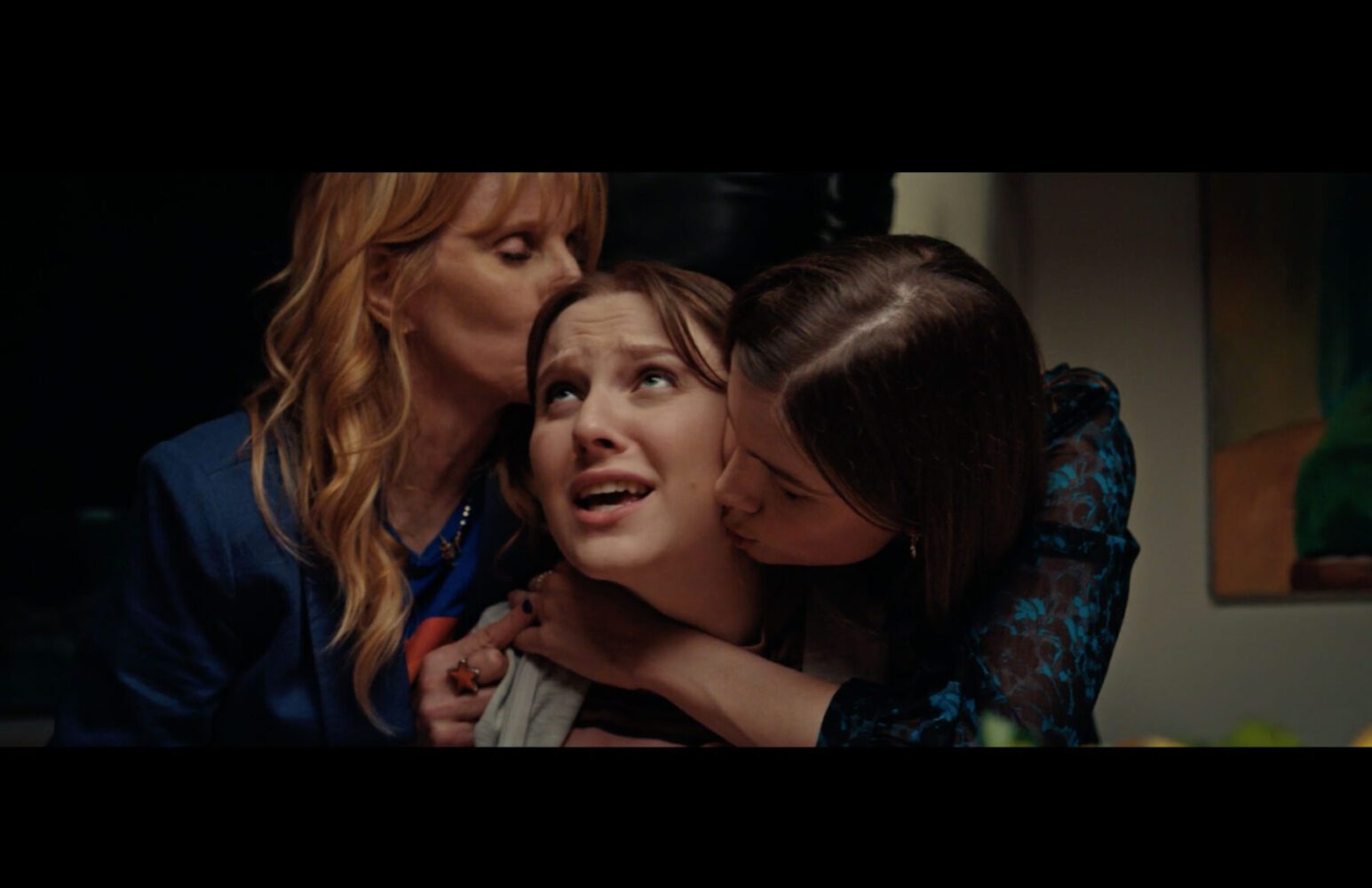
CD: It is absolutely a rite of passage. I feel like D(e)ad is a project that could only be made by people who love each other. You’ve got a whole cast of people creating something cohesive, built on mutual understanding. There’s a commitment to the living instead of a fetishization of the deceased, with no artificial dignity applied like coroner’s makeup.
I want to switch topics for a second and talk about film distribution, and how you’re making an uncommon strategy work for you. I think I’ll get to talk to your mom in a few minutes, so I don’t want to miss this point. It was very interesting to me from a professional standpoint.
There are a thousand different ways to skin a cat, or to release a film. There really shouldn’t have been that much research into cat skinning, but I digress. Instead of the festival circuit, or running directly to Netflix, or trying your luck at the roulette wheel of the cineplex, you’re putting on these one-off screenings all over the country. You’re making arrangements for the film to be seen and monetized on a case-by-case basis nationwide.
This is way outside the Producer 101 textbook. Could you describe, for all the filmmakers out there looking for new ways to get their work in front of people, how this approach has benefited you, or how it feels to do it this way?
IR: We did not know that this was the route that we were gonna go. We did submit to the big three festivals. We submitted to South by Southwest, Sundance and Tribeca. We didn’t get into any of them. We found this campaign manager named Laser Weber, without whom none of this would have happened.
CD: I wish my name were Laser.
IR: Me too, yeah. He picked a good one. He’s been a true genius about the rollout and really crafted this narrative. I’m pretty certain he’s going to be the king of Hollywood.
He just sort of, organically, cold-emailed places, galleries, indie theaters, cool spaces, etc. when we were trying to get screenings, and it wasn’t working. It was his idea for me to have a newsletter updating people about the movie. We got so many people on the list that he just wrote a post saying, “Who has connections to theaters? Do any of you work in an indie theater? Do any of you know someone who does?”
The response was overwhelming. We went from about 14 screenings to over 200, just based on goodwill and fan interest.
CD: That’s fucking brilliant. Oh, is your mom there with you? Is she on the call already? Oh, wait a minute, hey, there she is! Hey, what’s up? Awesome. Are you gonna stay with us, Izzy, or are you gonna go? Cool. Really good to meet you too. Later, Izzy! Hello, Claudia!
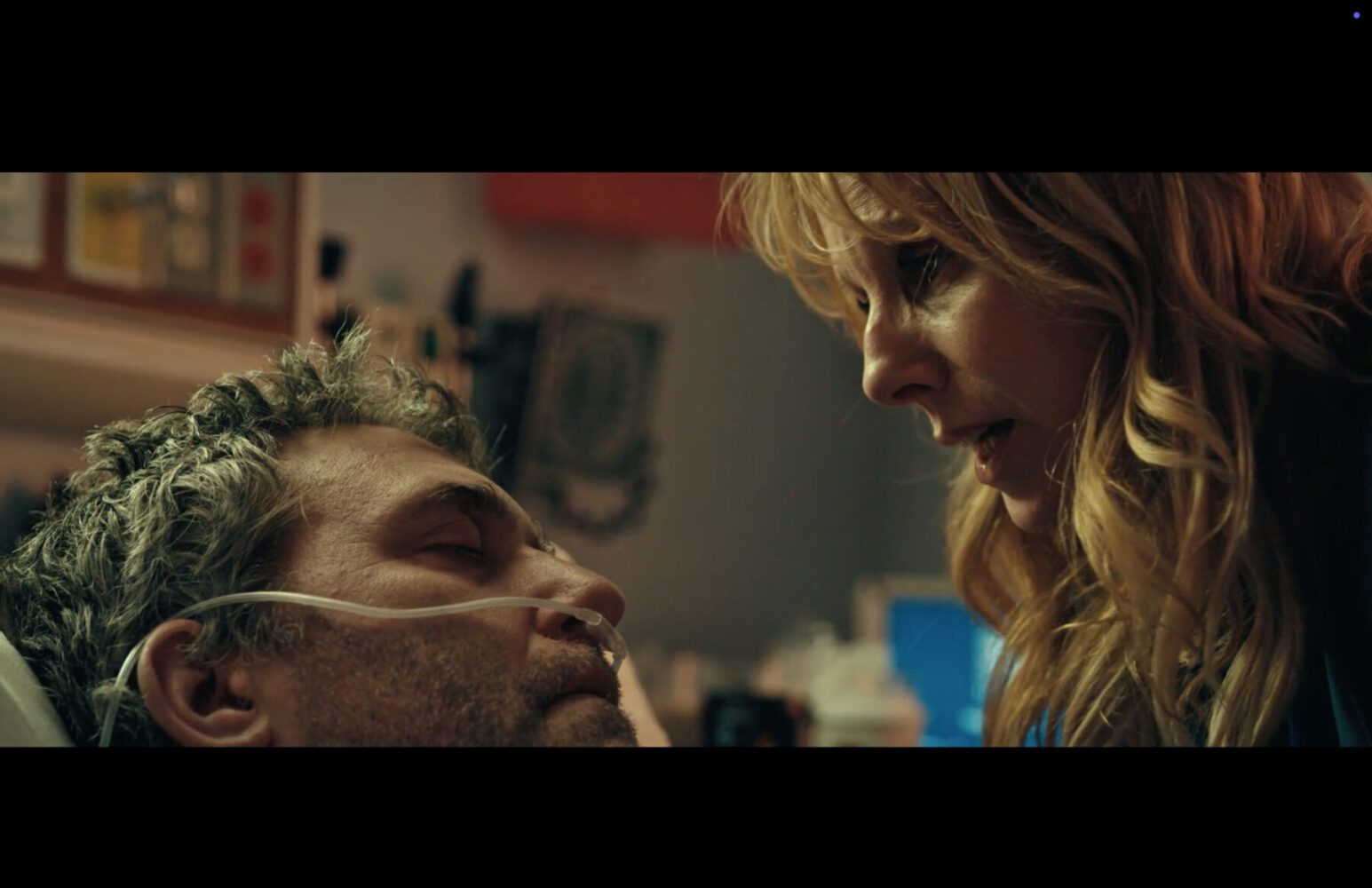
Claudia Lonow: Hi Christian. Oh, what a treat. I did not know we were on the same Zoom meeting with Izzy. It was nice to see my daughter! I was not expecting the crossover, but that works. I was just gonna, like, look at myself on camera, make sure I was okay before we started talking, but ha, here I am!
CD: How hard is it to be in a Zoom call and not just stare at yourself the whole time, making serious, very ‘interested” faces?
CL: With the effort I put into mastering the lighting and everything… oof, the pandemic was like, just me, you know, doing that, and now I’m fucking with the lights again. I’m so sorry.
CD: No, no, it’s okay. Sometimes I make sure that I don’t fuck with the lights at all, just so that I know that I’m not going to be tweaking it later, because I fidget with them constantly. And now I’m doing it too. I’m not the vainest person in the world, but I’m close. Yeah, I hate bad lighting, but it’s like, either all or nothing. I still won’t do the thing when you turn the camera off and just let the sound go and have it be like, whatever icon placeholder image. I can’t do that.
CL: Yeah, that’s reasonable.
CD: Let’s be reasonable professionals. Yeah. Well, it’s a pleasure to meet you. All the way from Knots Landing. Glad you could make it. I was talking to Izzy about your family dynamic, which is kind of hilarious, the way she describes it. But it was, she’s on the lowest position on the generational totem pole, right? It must be a very different experience being the “Claudia in the Middle” with showbiz parents, siblings, and now your own daughter in the business too. What’s it like to be you in that situation?
CL: Well, I mean, it feels, I think it was probably more natural for me, that it was developed because I grew up watching my parents in an improv group since I was a little girl. I’ve been calling out suggestions since I was five. I worked the lights at the improv for my parents. My mom went into stand-up… they’ve always put on a good show in real life. They’re just very entertaining.
As far as how that impacts us working together on D(e)ad, feeling myself become a character in my daughter’s story that she was telling was really satisfying for me. However, I’m directing the movie, and we all know how much people like it when their mother tells them what to do.
But still, it was just, wow, this is kind of what I always thought we should be doing. This is what our life is. We’re a creative family. This is our business, our job. I loved directing my parents; that was incredibly satisfying.
When I had my ABC show How to Live with Your Parents (For the Rest of Your Life), which was based on me and Izzy living with my parents, Sarah Chalke was playing me, and a little girl was playing Izzy. I had Elizabeth Perkins and Brad Garrett, and I’m going, “Well, no, do more like this” (gesticulates), trying to get them to act more like my family members. That was surreal.
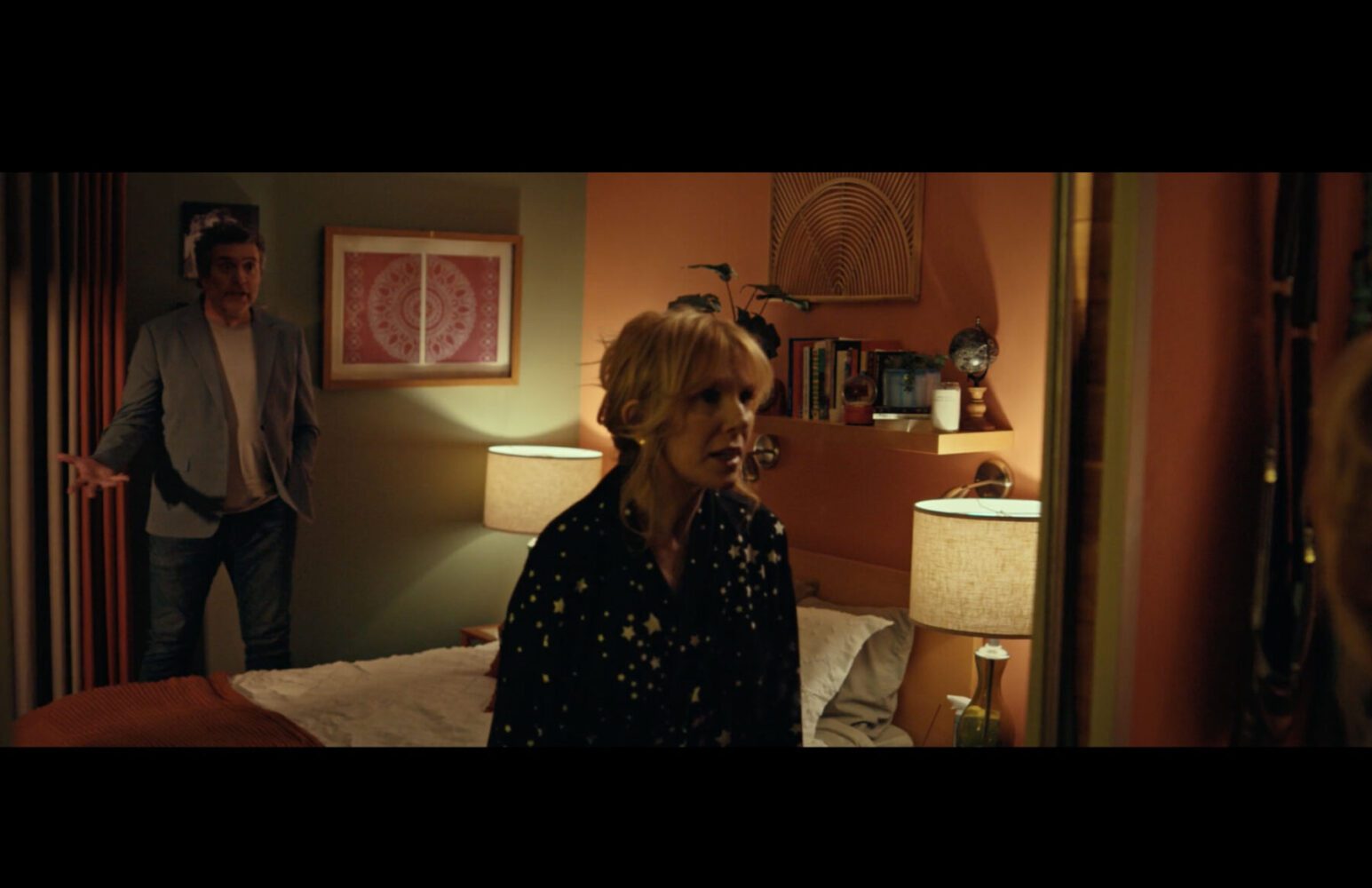
CD: I responded to the family dynamic that was there, which clearly can swing either to transcendent or maddening. A beautiful, heartfelt thing that I pulled from watching this film was that these people like each other. These people “see” each other. The dynamic was very obvious and, in my opinion, improves the film.
CL: Thank you. You know what? That’s great to hear, because when you’re making something low budget, you want to make the most of what you have. And one of the things we have is just that. During the pandemic, when we were all in a bubble, I was like, wow, it seems like my family is my main friend group. I have always felt that way, at least about my parents.
My mother left my father to move to Manhattan to become an actress. She really sold it as the greatest, most important thing anybody has ever done. That this was going to be fantastic, even though we didn’t have any money. I was like, you know, these people know how to live. Their friends are funny and fascinating. I was adult-ified. They’re just funny, interesting, vital, dynamic people. They’re still like that, even though, you know, they’re in their 80s.
CD:Izzy and I were talking about the real-world situation of losing her father, the emerging nature of grief and the many ways it can go. I saw an interesting challenge for you as the director and as the real-life ex-partner of the deceased, both in the film and in real life.
The point of view of the movie is the daughter’s (Izzy’s), and she clearly has deep anger issues toward her father. You, as the director, have to bring the father’s character into focus while holding every little tidbit of information that only gets shared within a romantic relationship.
As the director, and the character’s mother onscreen (convenient), you can connect with the empathy or sympathy the father deserves. Then, of course, there’s the converse of that, where it’s appropriate to just say, “Fuck that guy.”
CL: I mean, by the time we were actually shooting the movie, I would say that the crisis of, you know, her dad’s life and death was over. He died in 2019. It wasn’t that long ago, so I very much felt, well, listen, this is just from my point of view, sure, I felt good about passing on to Isabella the way that I process things, which is artistically. How do you move forward?
When my mom started doing stand-up, and my stepfather was, you know, co-owner of the Improv, I also started doing stand-up. We talked about people’s points of view and how to really see them.
As the eccentric type of mother that I am, and with this unique family, hopefully that’s a skill Isabella has as well. I enjoy watching other people deal with their things. I admire characters who have a sense of humor about themselves more than the ones, or the real people, who don’t.
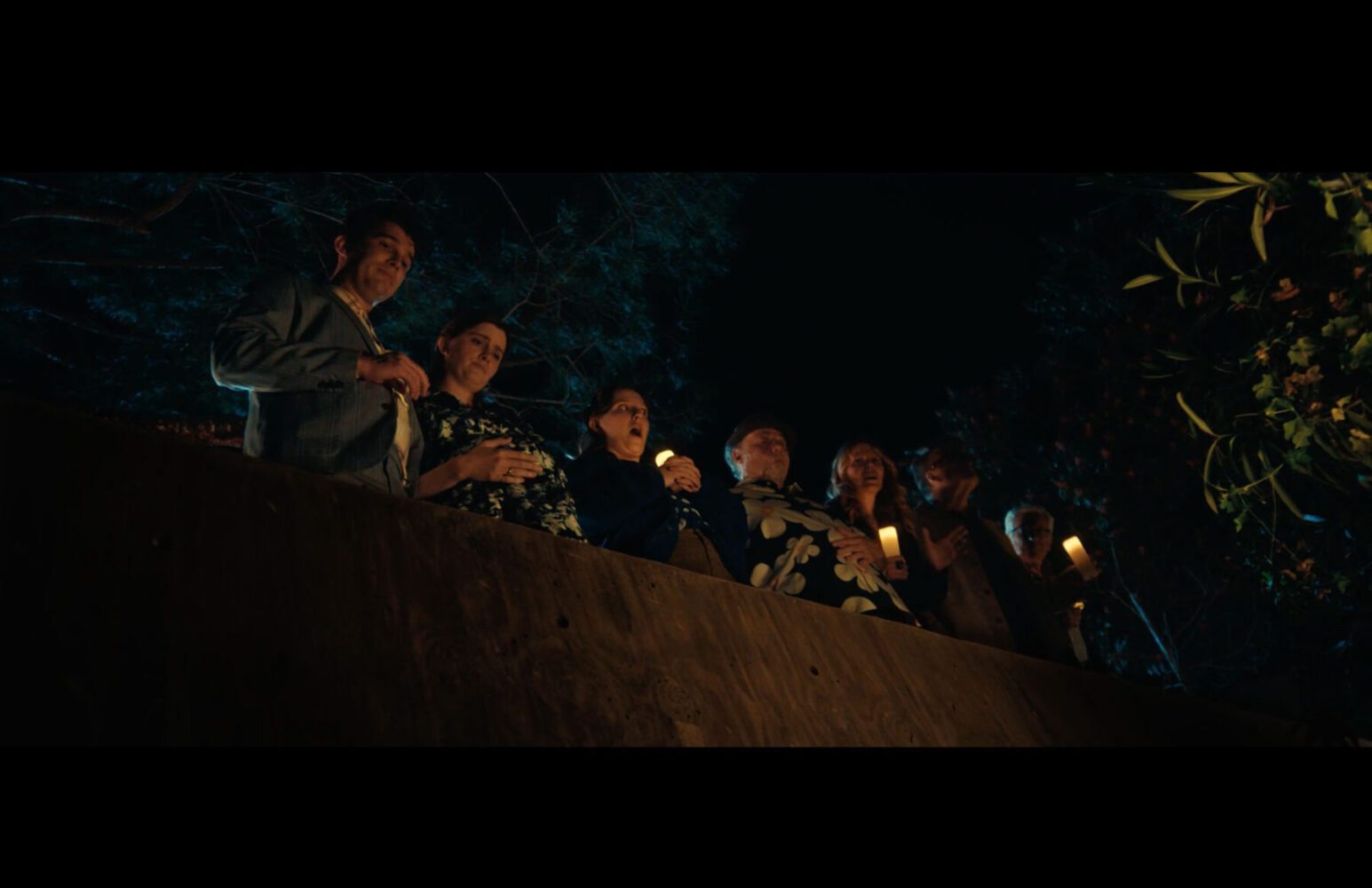
CD: Obviously, nothing’s universal, but in general, it’s safe to say that people admire others’ sense of humor against a backdrop of loss and deprivation. That seems to be the hardest thing for many people to hold on to. Once you let go of that handhold on reality, it’s a long, screaming drop down to, well, nothingness.
I think people love that about themselves the most when they have it. That’s a theme in the film that I latched onto as well. Humor was a part of that family’s life on screen, a place where they could find each other, no matter what they were arguing about. Because if you can turn your gripe into something somewhat funny, you’ve already made a lot of headway toward solving a conflict.
CL: I probably use it as a way to talk about difficult topics. Just seems helpful. It’s indicative of somebody being able to step out of the situation for a minute, get a little bit of loving detachment from the crisis that they’re in. You can try to see how this difficult experience might be useful one day, so that you’re not just in a pit the entire time.
CD: Emotional nuance sells a script to me. It just feels more like life. Not giving that light on screen tends to project falsely.
CL: I had a shrink who told me the hardest emotions to deal with are the bittersweet ones. Going through what we went through when Izzy’s dad died was “happy-sad.” That day was “happy-sad,” not happy-funny or “sad-sad,” because there were a lot of things in the moment. Yeah, the wheels fell off, and your point of view is transported, it’s sort of like, transmogrified.
I mean, listen, after Tony died, we went to this Italian restaurant. I ate, like, basically a bowl of butter. It was really delicious. Just shoveling this food into my face, and I realized, “Oh, I’ve gotta call my parents to let them know that Tony died.” They were out of town, like they always are. So I called my mother, they were at the New Orleans Jazz Festival, and I said, “I just need to tell you, Tony died.” And she so didn’t care. She said, “I’m so sorry. You know, we saw Gladys Knight last night!”
I went back to the table and told Izzy and her sister that Mark and Joanne were really excited about how great Gladys Knight is, but also send their condolences.
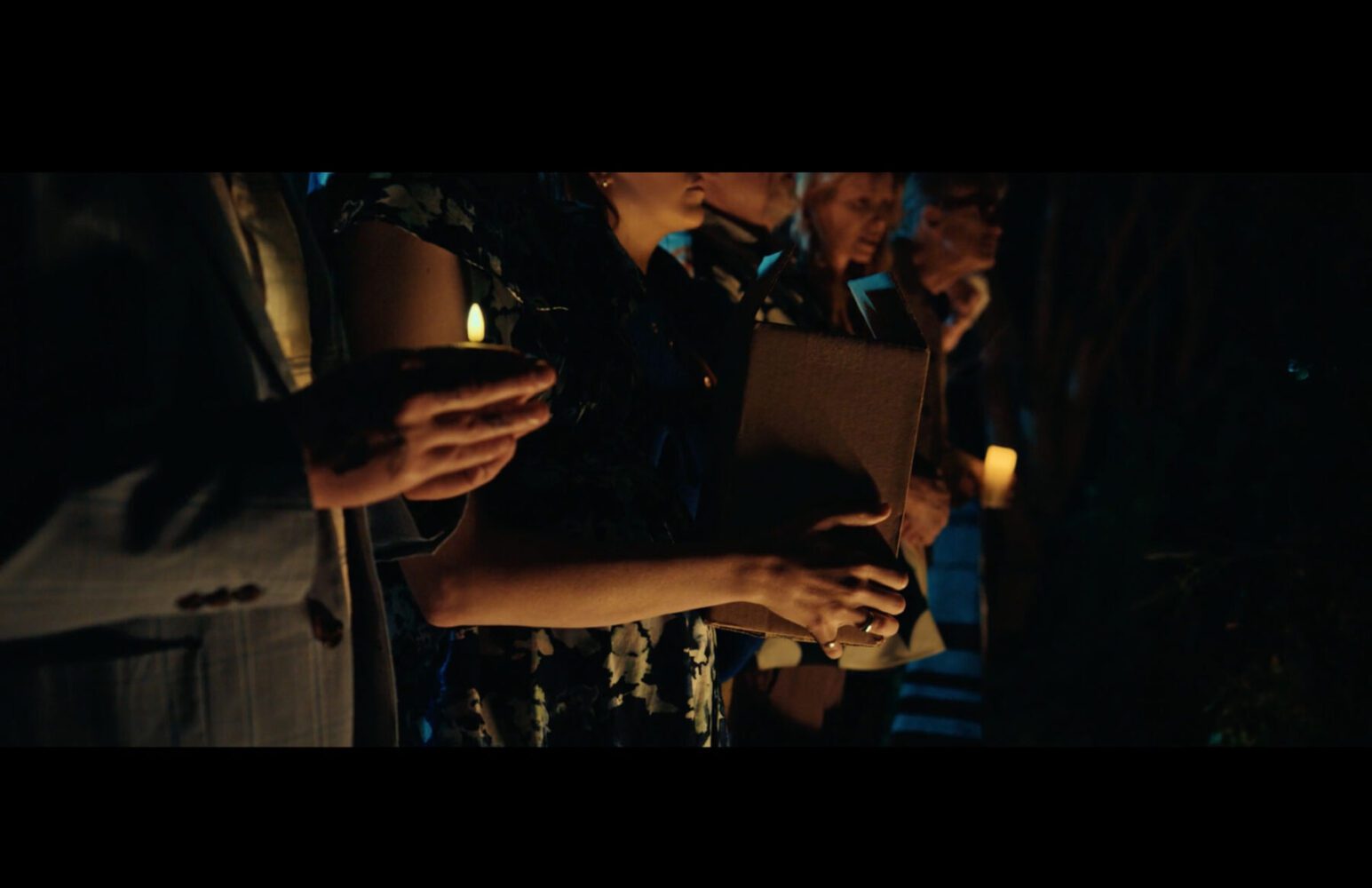
CD: What I picked up through this whole experience, in the conversation with Izzy and with you, is just, what’s normal is that we all try to keep moving on. We try to keep moving forward and and the testament to the power of being able to hold onto a sense of humor is that not everything is lost. You can lose something without losing everything. We still draw breath. Things still have colors. Flowers still smell good. Mountains are still majestic. You know, there, there’s a continuity with just experience that feels good to tap into.
CL: I 100 percent agree with you. That was what we were trying to show. When the character Tilly remembers that scene where her father walks her to school, from the beginning of the movie, that’s based on a real morning. He wasn’t always an asshole. He could be very supportive and kind. We were married. He was the father to my girls. We had moments.
And let me tell you, he was more difficult for me. You know, this is a crazy, crazy example, yeah, the craziest fucking example. There’s this scene in another movie that made me burst out into tears, and I think it’s relevant here. This is going to sound so stupid.
CD: It probably won’t. Okay, maybe. We’ll see.
CL: It was at the end of Hot Tub Time Machine.
CD: I love that movie!
CL: I love that movie too, but, at the end… I can’t even talk about it without crying. It’s so crazy at the end of the movie when Rob Cordray doesn’t want to go back to the future and admits that he really was trying to kill himself (at the beginning of the movie when he’s running the car in the garage).
CD: Yeah, yeah, I remember. I know exactly what you’re talking about.
CL: I lost my shit because I was so surprised. When he says that line, every single asshole or stupid thing he does in that film made sense.

CD: That’s not crazy to me at all. It really isn’t. I know why you think that would sound crazy, but Rob Corddry sells that character perfectly, tone, absolutely perfect. I know exactly what scene you’re talking about.
For me, it’s Clerks II, the Go-Kart scene. They’re closing the store, they’re moving, everyone is being forced to move on from their cherished routines and friendship dynamics. It’s something they used to do when they were teenagers, and it’s just like a song. Really low sun, kind of like the gloaming of youth.
They knew that was going to be the last time they’d ever be able to do that together. And they weren’t jabbing at each other or joking back and forth. It was just… ah, you know, riding around in a circle. It got me. It hit me. I love it.
To insert a moment into a script or a piece that is a surprise, where raw emotion comes out of nowhere – that’s the point of all of this. If we set it up too much, they’re gonna anticipate the slow knife. Which undermines the emotional shiv.
CL: It needs to be very subtle so it doesn’t make sense till the end.
CD: Well, that’s why you make good films. That’s the magic. It’s the “abra” in the “abracadabra.” That’s the best compliment I can give D(e)ad. It disarmed me in ways I never saw coming. I wish you all the best with it.
Support RVA Magazine. Support Independent Media in Richmond.
At a time when media ownership is increasingly concentrated among corporations and the wealthy, RVA Magazine has remained one of Richmond’s few independent voices. Since 2005, the magazine has provided grassroots coverage of the city’s artists, musicians, and communities, documenting the culture that defines Richmond beyond the headlines.
But we can’t do this without you. A small donation, even as little as $2, one-time or recurring, helps us continue to produce honest, local coverage free from outside interference. Every dollar makes a difference. Your support keeps us going and keeps RVA’s creative spirit alive. Thank you for standing with independent media. DONATE HERE.
We’ve got merch HERE
Subscribe to the Substack HERE
And Reddit HERE
And YouTube HERE