
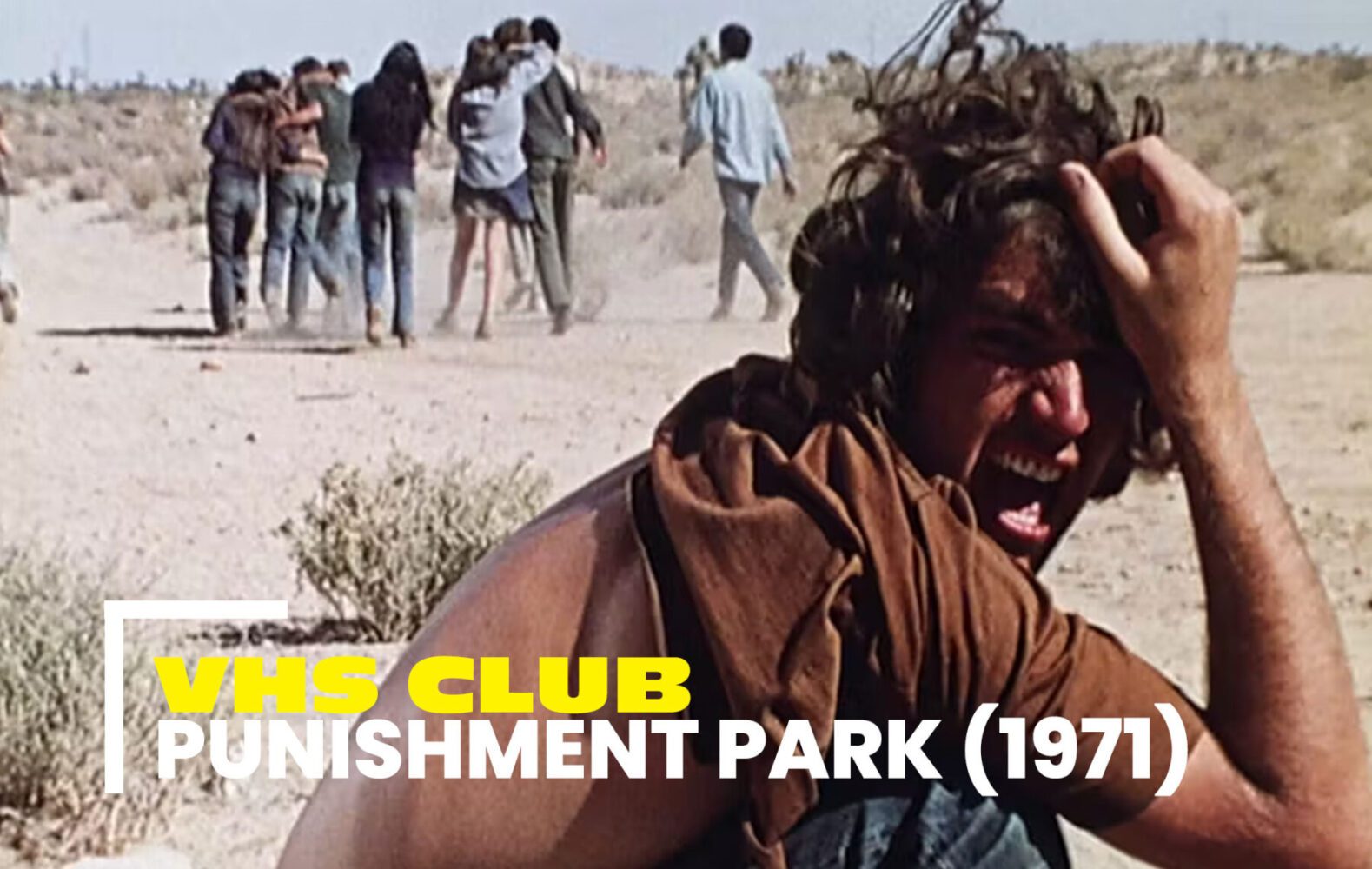
“You want me to tell you what’s immoral? War is immoral. Poverty is immoral. Racism is immoral. Police brutality is immoral.” — a defendant in Punishment Park
I read that director Peter Watkins had passed away last week and realized I’d never heard of him. As it turns out, Watkins was one of the most radical filmmakers of the twentieth century, a British director who built his career on blurring the line between fiction and documentary. His films were political, raw, and unnervingly real, so much so that they got him banned, blacklisted, and ultimately erased from the mainstream conversation.
In 1971, he released Punishment Park, at a time when the United States was already rehearsing its own future. The war was foreign, the paranoia domestic, and everyone claimed to be defending freedom by limiting someone else’s. Watkins just filmed it all and called it fiction.
The setup is simple enough to be believable. Under an emergency act, political dissidents are arrested and given a patriotic choice: serve out your sentence or take part in “Punishment Park,” a desert endurance test where prisoners run toward a U.S. flag while police hunt them for sport. Make it to the flag and you’re free. Fail, and you’re proof that freedom has rules.
Watkins shot it like a BBC news report. There’s no score, no polish, just a camera wandering through cruelty, pretending to be objective. The “reporters” interview the prisoners and the officers like both sides are equally reasonable.. The non-actors, real activists, real cops, ordinary people playing themselves, bring an authenticity that no script could produce. As The Guardian wrote decades later, the film “still grips” because it feels like news footage from a country that never stopped eating its young.
Watching it this week, it’s impossible not to think about how familiar the setup feels again. The current administration has revived the language of “law and order,” turned protest into a test of loyalty, and turned loyalty into a kind of performance. Once again, dissent is treated as a contagion and the cure is more control. When you watch officers chasing the unarmed across the sand, it’s hard not to picture drones, fences, or the bureaucratic smile of someone who swears they’re just doing their job.
In 1971, critics mostly hated it.
Artforum noted that the film was met with “irritation and contempt,” dismissed as agitprop by reviewers who couldn’t imagine that the documentary format itself could be weaponized. The film was banned or buried in several countries, labeled “anti-American,” and Watkins himself was effectively blacklisted. But as In Review Online pointed out recently, its “alternate history” was never far from the real one, only a “slightly exaggerated version of actual material reality.”
What makes Punishment Park so unnerving isn’t its violence, it’s the tone of professionalism behind it. No villains, no mustache-twirling tyrants, just paperwork and training exercises. The film understands that most cruelty arrives wearing a badge and carrying a clipboard.
That might be why it feels so current. Today, we measure dissent with algorithms, but the principle’s the same. Whether the control is digital or physical hardly matters when the end goal is compliance.
Watkins builds no suspense. There are no surprises. You know exactly how it ends because you’ve seen it before, on your feed, from multiple angles. Visually, it’s stripped to the bone; ideologically, it’s acid-sharp and honestly, it was a difficult watch. Punishment Park is a document of a country trying to argue with its conscience and losing. Watkins left us a film that refuses to age because we keep repeating the lesson.
Half a century later, it’s still running, the same desert, the same flag, the same rules.
Support RVA Magazine. Support Independent Media in Richmond.
At a time when media ownership is increasingly concentrated among corporations and the uber wealthy, RVA Magazine has remained one of Richmond’s few independent voices. Since 2005, the magazine has provided grassroots coverage of the city’s artists, musicians, and communities, documenting the culture that defines Richmond beyond the headlines.
But we can’t do this without you. A small donation, even as little as $2, one-time or recurring, helps us continue to produce honest, local coverage free from outside interference. Every dollar makes a difference. Your support keeps us going and keeps RVA’s creative spirit alive. Thank you for standing with independent media. DONATE HERE.
We’ve got merch HERE
Subscribe to the Substack HERE
And Reddit HERE
And YouTube HERE