
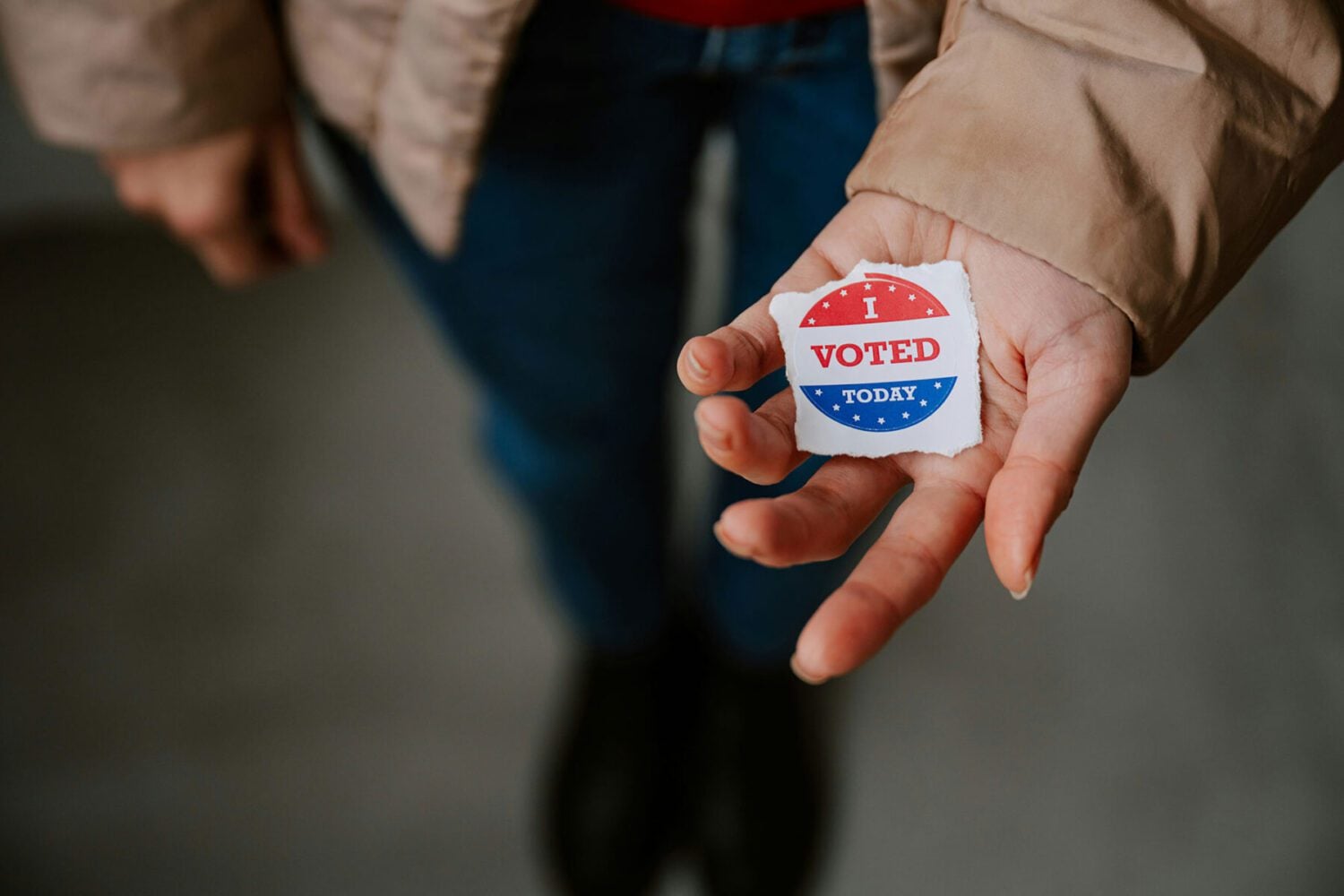
Democratic candidates across Virginia are pushing back against early involvement by the Democratic Congressional Campaign Committee (DCCC) in competitive congressional primaries, arguing that national party leaders are shaping races before voters have weighed in.
“I’m concerned that the DCCC is tilting the primary by signaling an “approved” candidate instead of trusting voters to make the best choice. In the conversations I’ve had with Democrats, they’re upset with the DCCC and elected officials for this maneuver,” said Salaam Bhatti, a Democratic candidate in Virginia’s 1st Congressional District and one of several signees to a statewide letter criticizing the move.
The dispute centers on the DCCC’s “Red to Blue” program, which identifies candidates the committee believes are best positioned to win in November. Those selected often gain early access to national fundraising networks, strategic guidance, and institutional backing months before primary ballots are finalized.
On the DCCC’s 2026 “Red to Blue” webpage, Shannon Taylor is listed as the featured candidate in Virginia’s 1st District, and Elaine Luria is listed in Virginia’s 2nd District. The page directs supporters to donate to those campaigns through the committee’s platform and highlights them as priority races for flipping the House.
Supporters argue that early consolidation prevents costly internal battles and strengthens nominees heading into competitive general elections. Critics say the timing signals to donors and voters that the outcome has already been narrowed.
In Virginia’s 1st District, Democratic candidate Elizabeth Demsey Beggs said her concern is not about flipping seats, but about how the party is pursuing that goal.
“What concerns me most is the DCCC’s recognition of the importance of flipping these seats, paired with its extreme intervention and disregard for other candidates who share the same mission,” Beggs said. “By fundraising for certain establishment picks under the guise of ‘this is who will flip the seat,’ and amplifying that message while soliciting donations from their base, they misinform voters and unintentionally lead them to believe there is no one else running.”
Beggs said early national backing shapes perceptions of viability before the field is fully set.
“A fair process would mean waiting until the primary ballot is set – filing fees paid, signatures collected, and candidates finalized – and then highlighting everyone in these key races and distributing support equally among all primary candidates working to flip those seats,” she said.
For Beggs, the issue ties directly to how Democrats frame democracy itself.
“This ties directly to the broader message of democracy: power should always rest with the people,” she said. “The Democratic Party should support primaries and educate voters on their options, not try to choose for them.”
Bhatti connected the controversy to what he sees as a broader pattern within national party strategy.
He pointed to policy priorities he believes are resonating with voters, including “taxing billionaires, fighting for Medicare for All, and removing corporate PAC and AIPAC money from politics.” He argued that national leadership often gravitates toward safer, donor-friendly positions.
“The DCCC settles for centrist priorities, failing to recognize that yesterday’s centrism led to today’s fascism,” Bhatti said.
He framed the issue as one of concentrated power.
“The party is at a crossroads in Virginia. It promotes redistricting as a way to fight fire with fire and save democracy, all while influencing the primary. We know the party is looking for fundraisers, which is why they’re supporting candidates whose policies don’t impact the donor class. The concentration of power in the donor class is one of the biggest threats to democracy,” he said. “That’s why one of our priorities is campaign finance reform and removing corporate power from what should be a republic.”
Bhatti called on the DCCC to remain neutral until voters choose a nominee.
“Commit to neutrality. Our county parties have modeled that. They’ve been responsive to every candidate,” he said. “The DCCC should take the same approach: don’t blacklist candidates, don’t play favorites, and don’t try to shape the outcome before voters have their say. We know the House is flipping Blue this year, so why put all your eggs in one basket?”
The DCCC has long maintained that its mission is to win House seats, not to serve as a neutral referee in primaries. Party officials argue that early involvement helps focus resources in districts where control of the chamber could hinge on narrow margins.
Still, the pushback from Virginia Democrats reflects a larger tension inside modern party politics: whether strategic donor coordination strengthens electoral prospects or narrows the field before voters have made their choice.
Primary voters across Virginia will ultimately decide their nominees. The debate now is over how much influence national party leadership should exert before those decisions are made.
Below is the full text of the letter released by the coalition of candidates, followed by the complete list of signees.
Full Letter: Democratic Candidates Call for Open Primaries and Voter-Led Nominations
February 24, 2026
Leaders across the country warn that state and national Democratic party intervention undermines trust, grassroots energy, and democratic legitimacy.
On February 23rd, the Democratic Party’s campaign arm — the Democratic Congressional Campaign Committee (DCCC) — announced its first wave of candidates selected for its “Red to Blue” program. According to the DCCC, these candidates will receive strategic guidance, staffing resources, training, and fundraising support to strengthen their general election prospects.
But such early institutional backing also carries significant influence in the primary process — often shaping fundraising pipelines, access, and perceived viability before voters have had the opportunity to evaluate the full field. Across the country, Democratic candidates are raising concerns about a growing pattern of early intervention in primary elections from the DCCC — a trend they say risks weakening voter trust and diminishing the role of voters in selecting their own nominees.
In multiple states and districts, party leadership has signaled preferred candidates well before voters have had the opportunity to evaluate the full field. Through early infrastructure support, fundraising advantages, and institutional backing, these actions show that outcomes are being shaped before ballots are cast.
“Primaries are not an inconvenience, they are the foundation of democratic legitimacy,” said a coalition of candidates aligned on the issue. “Constituents deserve the opportunity to compare ideas, hear open debate, and decide for themselves who will represent them rather than being told who to vote for.”
Candidates emphasize that their concern is not opposition to party infrastructure or general election strategy. Rather, they argue that legitimacy in the primary depends on fairness and openness in the months prior.
“You cannot argue that democracy is on the ballot in November while narrowing democracy in the primaries from now through August,” the coalition states. “If a candidate is strong, they should be able to earn support in open competition. Protecting them from competition is not confidence.”
Over the past decade, many Democratic voters have expressed frustration with what they perceived as insider-driven decision-making. Candidates calling for reform say restoring confidence begins with reaffirming a simple principle: trust voters.
Coalition of Candidates
Iman Bah, AZ-06
Travis Terrell, IA-01
Xavier Carrigan, IA-03
Diop Harris, MI-04
Zelda Briarwood, NC-11
Dr. Richard Hudspeth, NC-11
Paul Maddox, NC-11
Dr. Joyce E. Neal, TN-05
Dr. Jim Torino, TN-05
Elizabeth Demsey Beggs, VA-01
Salaam Bhatti, VA-01
Lewis Littlepage, VA-01
Mel Tull, VA-01
Dr. Nila Devanath, VA-02
Patrick Mosolf, VA-02
Matt Strickler, VA-02
Emily Berge, WI-03
Ericka Kopp, VA-01
Main photo by Kateryna Hliznitsova
Support RVA Magazine. Support Independent Media in Richmond.
At a time when media ownership is increasingly concentrated among corporations and the uber wealthy, RVA Magazine has remained one of Richmond’s few independent voices. Since 2005, the magazine has provided grassroots coverage of the city’s artists, musicians, and communities, documenting the culture that defines Richmond beyond the headlines.
But we can’t do this without you. A small donation, even as little as $2, one-time or recurring, helps us continue to produce honest, local coverage free from outside interference. Every dollar makes a difference. Your support keeps us going and keeps RVA’s creative spirit alive. Thank you for standing with independent media. DONATE HERE.
We’ve got merch HERE
Subscribe to the Substack HERE
And Reddit HERE
And YouTube HERE