
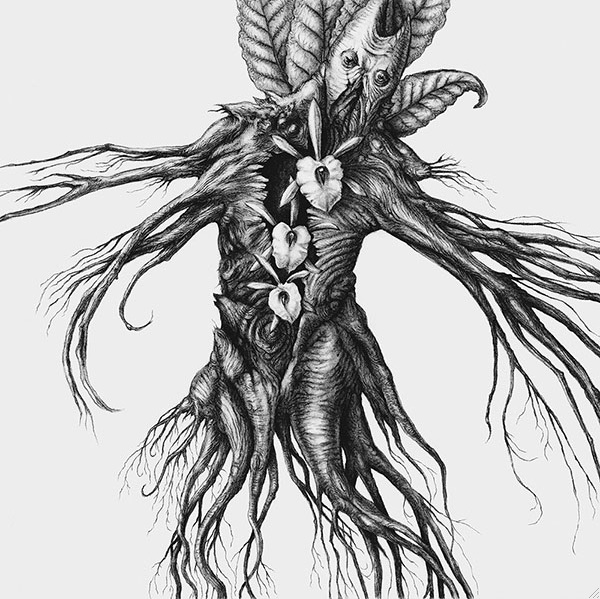
Botanist – IV: Mandragora (The Flenser Records)
When something genuinely unique comes along, especially in the relatively aesthetically conservative context of something like heavy metal, it can be easy to view it as a curiosity, an outlier. This could have been the fate that befell Botanist, a (largely) solo project that constructed an extended ecological parable based on the downfall of humanity using little more than drums, vocals, and hammered dulcimer.
Botanist – IV: Mandragora (The Flenser Records)
When something genuinely unique comes along, especially in the relatively aesthetically conservative context of something like heavy metal, it can be easy to view it as a curiosity, an outlier. This could have been the fate that befell Botanist, a (largely) solo project that constructed an extended ecological parable based on the downfall of humanity using little more than drums, vocals, and hammered dulcimer. Its link to black metal was established early on, but the music bore no real parallels to anything else within the genre and, had the vocals not been delivered in a croak-y shriek, may not have ever been associated with the style at all. This alone would be cause for attention to be paid, but not necessarily enough for sustained interest. While the project’s first two releases set the template for the whole endeavor, however, the successive releases pull the sound outwards in different directions, each time demonstrating the malleability of the approach, reinforcing the idea that it’s a fertile creative approach, one that’s single-minded without monomania.
Similar to last year’s III: Doom In Bloom, the most recent Botanist release slows down the blasting aggression of the first two albums, favoring an insistent, largely mid-tempo approach (though there are brief spurts of faster drumming) that both allows the clusters of dulcimer tones to shine through and emphasizes the songs’ eerily melodic tendencies. However, IV offers a condensed vision of this particular facet of the Botanist approach – instead of the previous album’s hour-plus running time, this barely inches past the thirty minute mark (where III was characterized primarily by extended compositions, only two songs on IV crack five minutes). Similarly, while IV possesses many of the same tuneful qualities as its predecessor, it finds the dulcimer cloaked in a distorted haze that makes for a slightly harsher final product (though not as rough-hewn as the first two releases). The exact intention behind these aesthetic alterations isn’t entirely clear, but it does help to demonstrate the extent to which Botanist seems an organic, ever-evolving endeavor, one that can alter its parameters without overstepping them.

Lyrically, IV is more in line with the larger body of Botanist releases. Juxtaposing some fairly wordy technical terminology with a continuation of the conceptual arc detailing the struggle between humanity and the environment, from which we’ve attempted to exclude ourselves (a struggle that the lyrics suggest will end in humanity’s downfall), the thematic element is decidedly an extension of that present on the earlier albums. It’s difficult to tell the extent to which the lyrics are working in support of some larger narrative, at least in any direct literal sense, as even the most straightforward passages are still fairly cryptic. But this lyrical opacity benefits the music, with its indistinct qualities helping the content to adhere to its core message without coming off as overly agenda-driven or didactic.
If it seems that IV can only be described in comparison with other Botanist albums, it’s a testament to the music’s continued refusal to sound like anything else. Though each successive album is more of an expansion and contraction of an overall mythos and worldview than a radical departure, these subtle shifts help illustrate the extent to which Botanist is no mere anomaly relying solely on its unfamiliarity, but rather a creative force that’s unfortunately rare. It’s genuinely strange and unsettling work that’s harsh enough to alienate a lot of listeners. However, it will prove a rewarding experience, one beholden to no canon, for those who can push through the sheer weirdness of it and discover the fecund vein of creativity that permeates it to its core.