
…Running will be the way your life and mine will be described
As in, “the long run”
Or as in having given someone “a run for his money”
Or as in “running out of time.”
-Gil Scott-Heron, “Running”
Eulogies and rememberances tend to be a comfortable home for overstatement. Accolades, deserved or not, can be heaped upon those who are no longer available to give them any thought, and even the most contentious would rarely be tactless enough to argue. But when somebody like Gil Scott-Heron’s time amongst us runs its course, it would be harder to understate the mark he branded upon popular music and culture at large.
There’s little doubt the “godfather of hip hop” tag will forever cling to his memory, but a listen to his actual music reveals the inadequacies of such cultural shorthand. Yes, he recited rhythmic poetry over a musical backing, but he did it with such gravitas that what came before and after were rendered almost wholly irrelevant to his art. It almost seems cruelly ironic that he had just released his finest album in decades, but even then, the news of its imminent release (his first in sixteen years) seemed puzzling. It’s hard to imagine him having gone anywhere – his music certainly didn’t, even if the man himself spent so long engaged in combat with his demons.
But any prophet will struggle under the weight of the message they seek to convey and the most remembered are the ones vindicated either by themselves or by the clarity of hindsight. It is a testament to Scott-Heron that he was able to pull himself through his darkest hours to create some of his most illuminating work, not waiting for the accolades that so often come too late. “No matter how far wrong you’ve gone,” he sang on the title song of his final album, “you can always turn around.” For a man whose work embodied a resistance to the destructive currents of society at large, such a small, personal statement rings as powerfully as the jeremiads that characterized his earliest work. He harnessed the devastating potential of language, and whether he imbued it with rage, regret, or reflection, his was a power that was unflinching and inimitable.
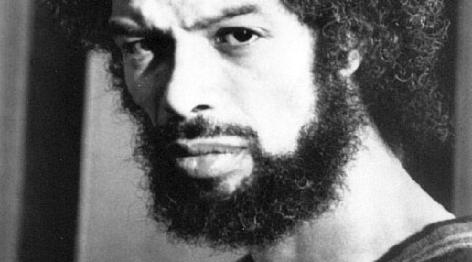
Gil Scott Heron, April 1, 1949 – May 27, 2011.
…Running will be the way your life and mine will be described
As in, “the long run”
Or as in having given someone “a run for his money”
Or as in “running out of time.”
-Gil Scott-Heron, “Running”
Eulogies and rememberances tend to be a comfortable home for overstatement. Accolades, deserved or not, can be heaped upon those who are no longer available to give them any thought, and even the most contentious would rarely be tactless enough to argue. But when somebody like Gil Scott-Heron’s time amongst us runs its course, it would be harder to understate the mark he branded upon popular music and culture at large.
There’s little doubt the “godfather of hip hop” tag will forever cling to his memory, but a listen to his actual music reveals the inadequacies of such cultural shorthand. Yes, he recited rhythmic poetry over a musical backing, but he did it with such gravitas that what came before and after were rendered almost wholly irrelevant to his art. It almost seems cruelly ironic that he had just released his finest album in decades, but even then, the news of its imminent release (his first in sixteen years) seemed puzzling. It’s hard to imagine him having gone anywhere – his music certainly didn’t, even if the man himself spent so long engaged in combat with his demons.
But any prophet will struggle under the weight of the message they seek to convey and the most remembered are the ones vindicated either by themselves or by the clarity of hindsight. It is a testament to Scott-Heron that he was able to pull himself through his darkest hours to create some of his most illuminating work, not waiting for the accolades that so often come too late. “No matter how far wrong you’ve gone,” he sang on the title song of his final album, “you can always turn around.” For a man whose work embodied a resistance to the destructive currents of society at large, such a small, personal statement rings as powerfully as the jeremiads that characterized his earliest work. He harnessed the devastating potential of language, and whether he imbued it with rage, regret, or reflection, his was a power that was unflinching and inimitable.
Gil Scott Heron, April 1, 1949 – May 27, 2011.