A conversation with Høly River and Richmond artist Sarah Aha on the making of “Day is Born”
Shortly after the year 2026 began and 5 years in the making Høly River released their new album Day is Born. I was able to sit at Earthfolk, a central point in community activation and home to celebrations of folk music and good fireside chatter, catching up with Laney and Jameson discussing their close to two decades long partnership in music and life.
We had a conversation about life cycles, grief and joy, music making and the art community, organizing and advocating. Joining in our conversation was long time friend and collaborator Sarah Aha, artist and photographer whose work is featured in the visual accompaniments for this album cycle. From our conversation excerpts have been clarified and compressed.
Trigger warning: This interview includes topics of death, loss and grief.
ON DEATH AND LIFE
T-Rav: In talking about cycles and how they show up on your new album Day is Born, I wanted to start with death. Where and how does death find its way into this story of this album?
Laney: This album is about cumulative life experience. It’s not an album that we could have written when we were 20. It took a lot of living to understand some of the concepts that we are singing about. One of the things I’ve been learning about from talking with midwives, is that birth and death are very similar, that the physical experience of birth and the physical experience of death are aligned when you’re watching them unfold.
In the last song and title track, “Day is Born”, I wrote the lyrics about giving birth to our child. After it was recorded, I would go on walks around the neighborhood and listen to the mixes to write mix notes. One day I was listening and thought, this account of the physiological experience of birth is similar to the physiological experience of death. It’s something that’s beyond you that you can’t really control, but you can work with. Ultimately, you are required to release into the experiences and participate in this universal rite of passage that all living beings are part of.
There are more explicit ways that death has entered this album. A lot of the lyrics came from Jameson’s sister, Johanna’s writings. She had a five year battle with breast cancer and documented her thoughts. Part of the writing process was me going through and pulling out pieces of beautiful moments from her writings that felt important. We’re all dying while we’re living. Some people are dying more quickly because they are ill, but we all have a finite amount of time. The pondering of our inevitable death helps us drop into the sacredness of each moment and take advantage of being alive while we are living.
Jameson: Through my experience of grief and losing a sibling, I started to realize that death doesn’t have to be this finale. People continue to live in words, in art, in these ethereal spaces. How do we keep their beingness alive? One way is by incorporating them into our art. We started to have this practice of “how do we invite the people that we wish were at this party to this party?” We make ancestor altars or friend portals. It brings that consciousness to ourselves and to our immediate community, the reminder that our beyond beloveds are always welcome, that our relationships can continue to keep living past this body container.
Laney: I think one reason people are afraid to die is because we disappear the dead. We don’t keep them involved in our everyday life. Right now, I’m sitting on my couch looking at a photo of Farid Alan Schintzius, who was an amazing teacher for me and a very important elder in the Richmond scene. He lives there on our mantel because we invite him to be here with us. Through creating cultural rituals in our community, I can teach my child how to not disappear me when I’m gone. Then I can still be here with her as a guide or confidant even if I’m not in my body. We’re going to have to teach the next generation in a new way that makes sense for our lives. I believe that we can, and I believe that it really does a disservice to each other in the community, this belief that we’re gone when we’re dead.
T-Rav: At one of the Earthfolk gatherings, there was an ancestral altar portal. I invited my mother into the space, as her passing was a transformative moment of my own understanding of this cycle. When my mother was entering hospice care, there was information provided that hadn’t been provided earlier. We don’t teach that. We don’t welcome that understanding until that moment. It shifted my understanding. After that, art and music carried different meaning. Teaching our communities and children more information is better because life is not a fast food drive through. It is a long experience, and the more we understand it, the stronger the bonds and legacy are.
How else might grief express in some of the songs?
Sarah: From something that was talked about before, because this is a feeling that is really important in my work, to hear you say that it was like “this feeling that grief brings a sense of awe”, it makes you more alive in the experience of it. And there’s a simultaneous joy-expansiveness and beauty that comes through the grief process.
Jameson: What’s coming to me right now is just seeing these things more as cycles rather than starting and ending. That’s why it was intentional to start with Horizon and then end with Day is Born.
It’s not like the sun is birthing and then dying every day. It’s in this constant rotation. Life is always life’ing and death is always death’ing. These cycles are always happening. How do we feel more alive with that knowledge? How do you feel much more gratitude for you being in your process of this cycle?
T-Rav: How else does birth show up? And how did that intersect with making the album?
Laney: Being a parent has taught me humility and grace. Giving birth and witnessing that with my body, that the millions of people with wombs that have died from giving birth because it’s such an intense physiological process, and that people choose to do it again and again. It’s wild! (Laughs)
But I get it. You get amnesia and think, that wasn’t that hard. Just the hardest thing I’ve ever done. Respect for all the people tending and raising a little person to be a bigger person. It’s not easy work, especially if you’re trying to do it intentionally and you’re not resourced. We’re resourced. We have a partnership where we hold equal amounts of work and care. The amount of deep respect I have for single parents or people who don’t have families close by, or people who are financially struggling, and trying to raise children, and have a full time job… it’s seemingly impossible. But somehow we all do it, and it’s miraculous.
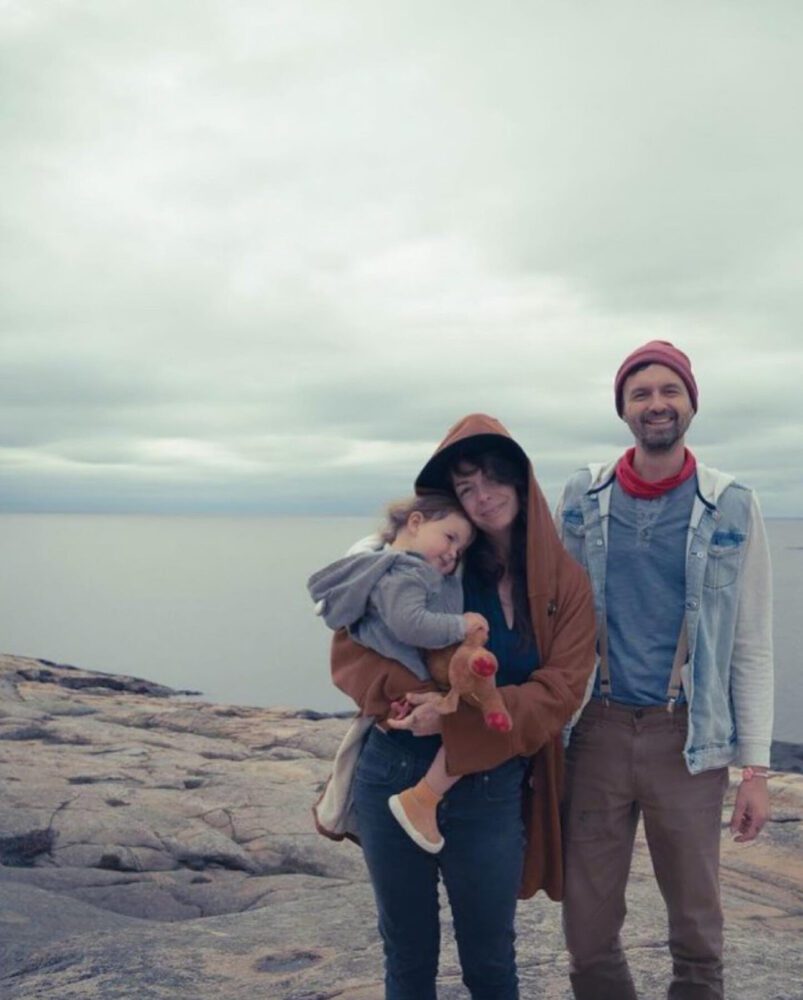
T-Rav: The respect I have for my mother since her passing in my hindsight’s clarity, it’s just awe. I don’t know how she did it. I wish I had a Time Machine and the ability to… It’s the minor things that I remember more than the major things in life. And whatever it is “Why did I have to go that way like that?” She needed that grace that I could have given in a minor sort of flare up of adolescent confusion.
We’ve talked about the horizon and the sunrise, and it ends with the sunrise again? It’s not even that it’s a sunrise to sunset cycle. It’s a sunrise to a sunrise. What, as an audience member listening, what do you think the cyclical tells are?
Laney: There’s a night in the middle of the album. We have “Eclipse Moon” in the middle. It’s thicker, politically complex, talking about extraction of fossil fuels and the destruction of the Earth and war. Then you move to “Steady” and into “Jo’Bird,” about Jameson’s sister. Then you get taken to the new sunrise of “Day is Born.” There’s a full day cycle.
Jameson: There’s hope at the beginning. Then grief. Then heavy content pointing directly at systems dismantling our ability to live with dignity and compassion. Then “Steady” which is about constantly showing up, constantly being available for the best possible outcome, naiveté aside.
Laney: It’s like, “I see that shit. I see all that shit. And I still choose. I still choose to participate at a capacity that’s healthy for me.” And with the steadiness, it’s not like I’m singing that “I’m going to participate and run myself into the ground and burn out.”
But “I’m going to find that line where I can participate in life and in a way that I feel is able to be aligned with my values and ethics, even though it’s difficult in capitalism to do that.” I’m gonna do the best I can, and I’m just going to keep on doing it and keep refining, because that becomes my life work, like those small daily rituals become what my life was composed of. Checking in with those daily rituals and being like, “am I okay with that? Is that aligned?”
T-Rav: I have this idea that just popped in my head of “quantum folk rock”.
(All Laugh)
THE ALBUM ART
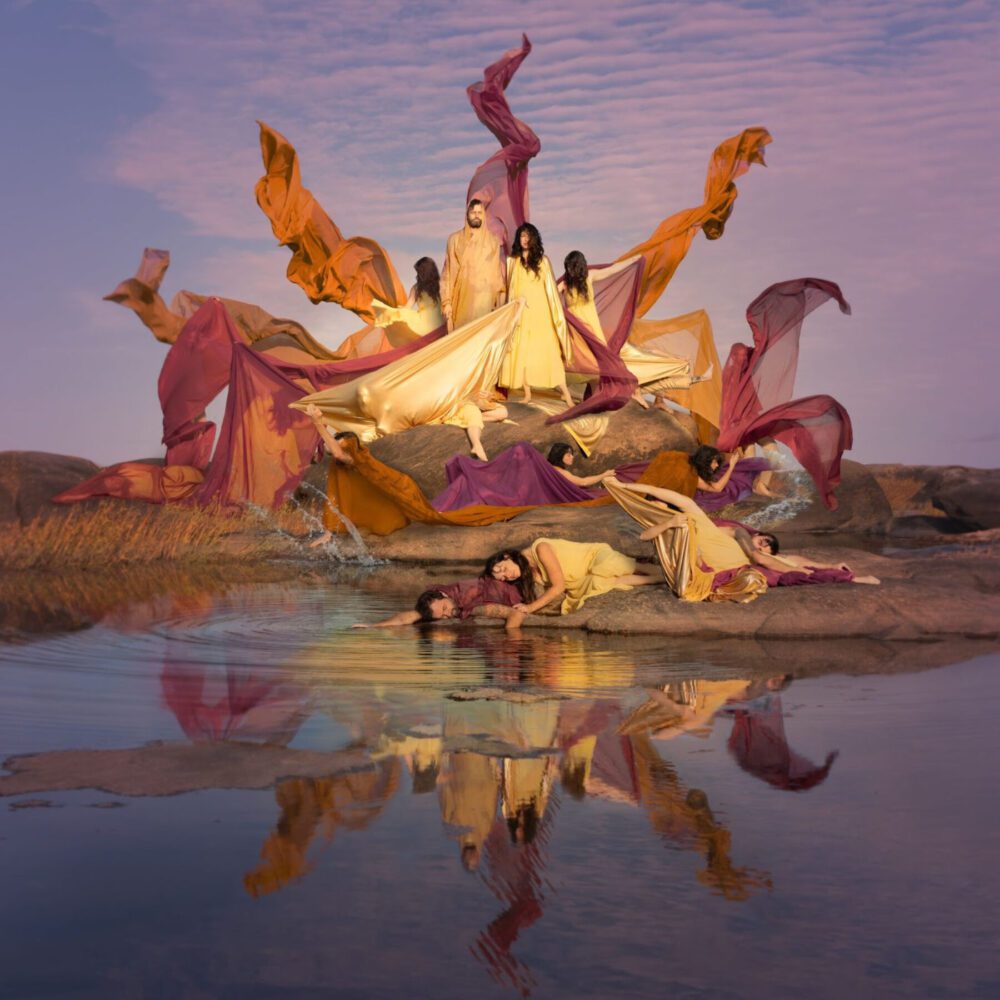
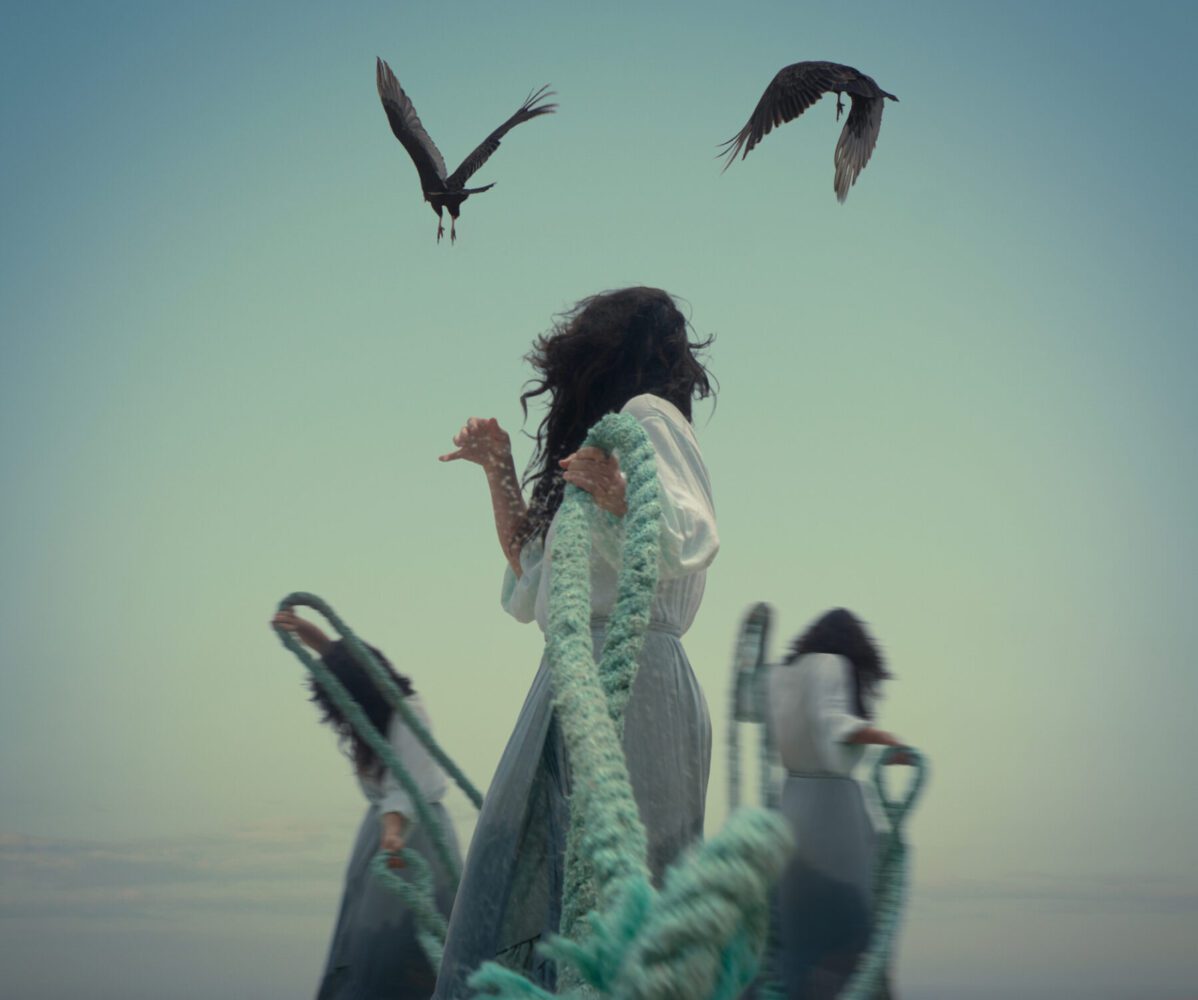
Sarah: Yeah, I was privy to early recordings. And the process, which is the benefit of being dear friends of these beautiful artists. We had collaborated on a few things before and made work just for fun and all the time we were always looking for the opportunity to make art together. I think it was Jameson’s vision for this cover, he had seen my previous work.
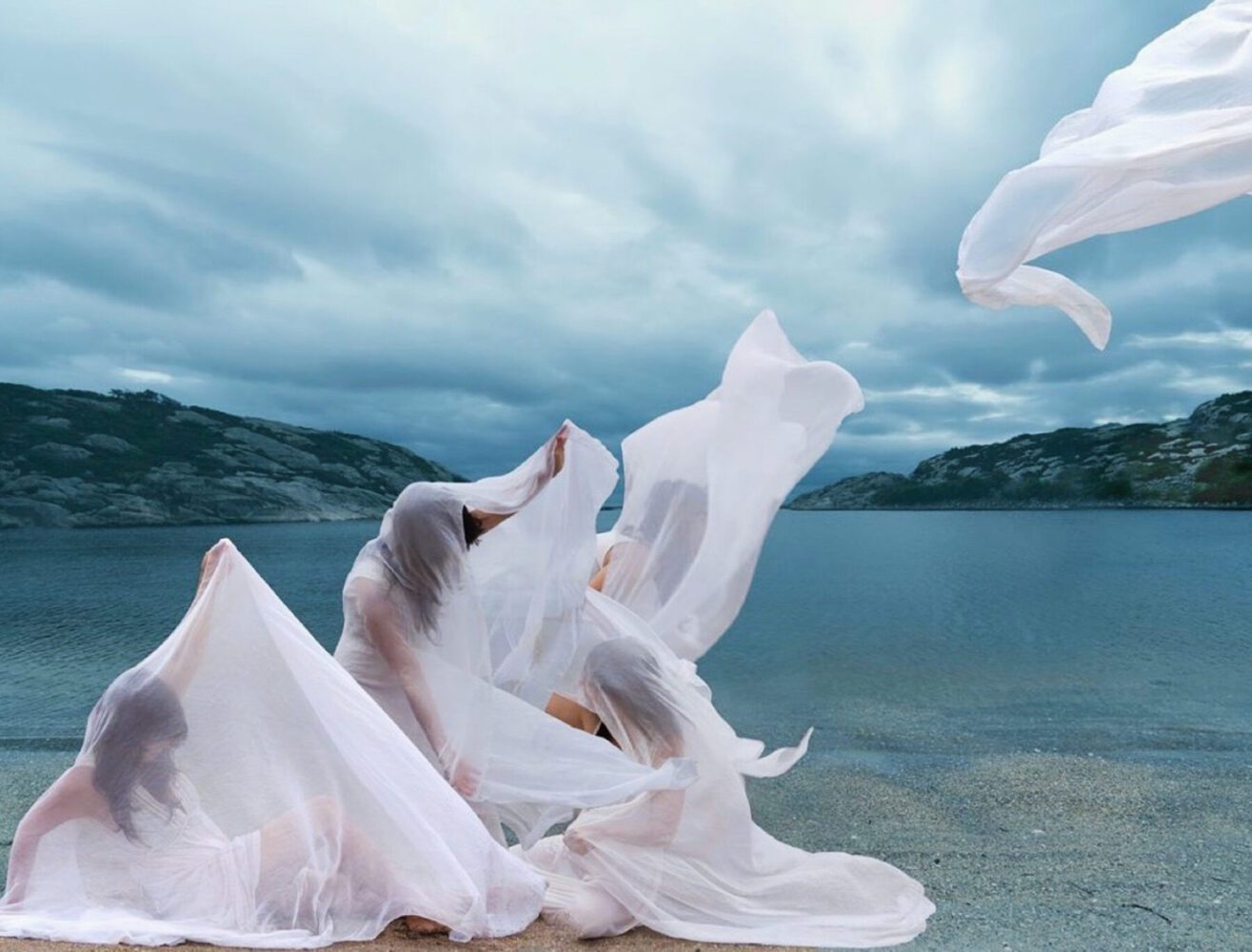
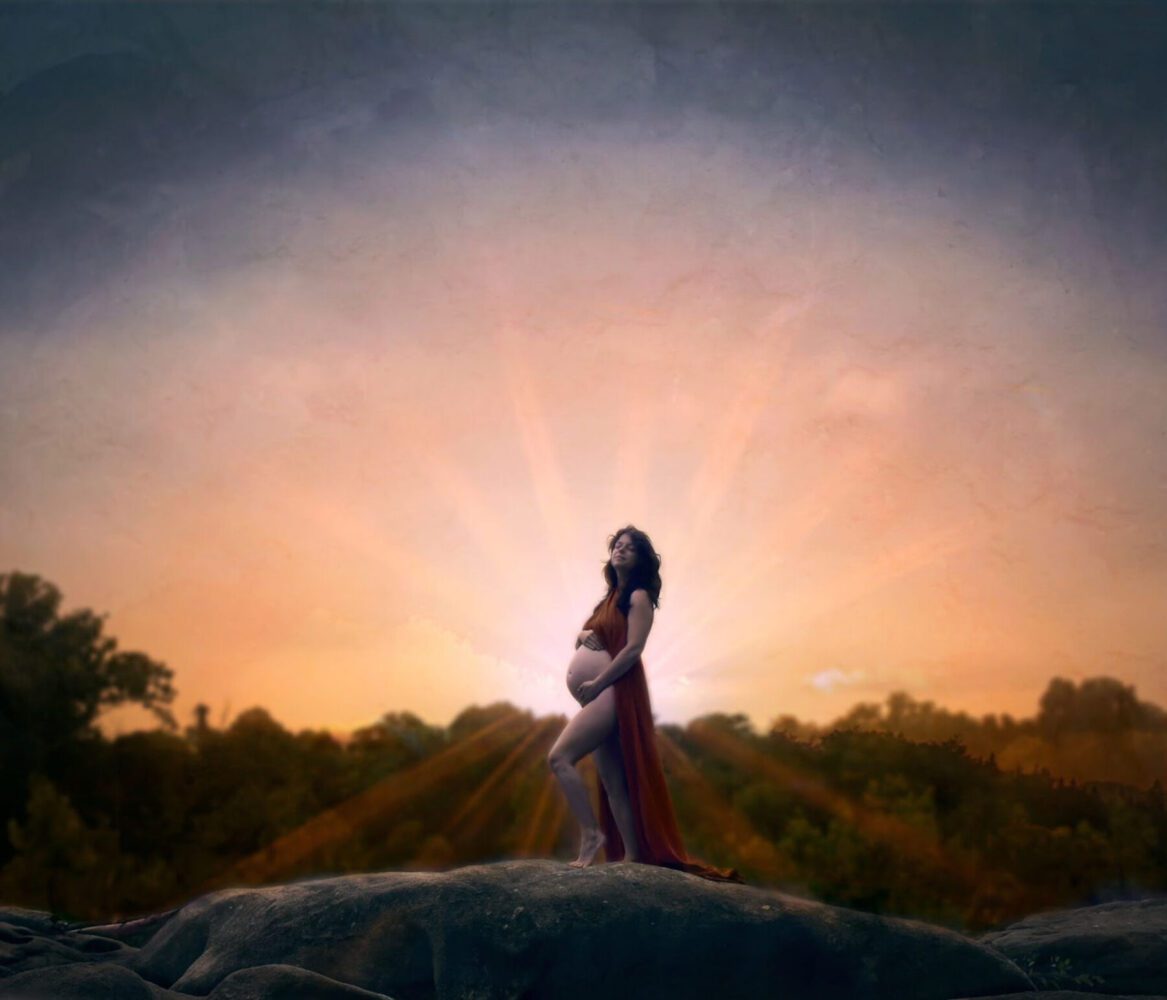
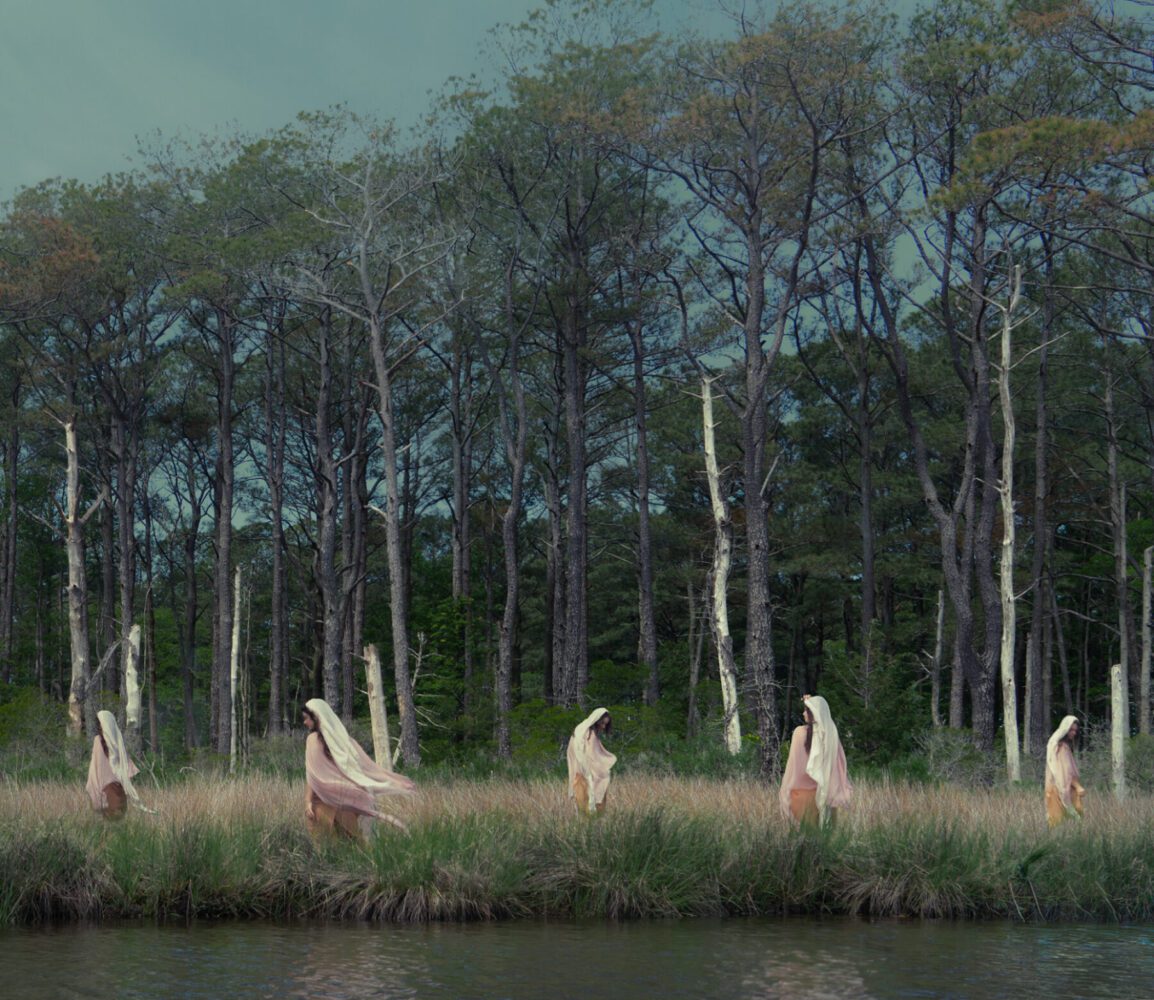
I like to use multiple photos to create, it’s not exactly collage, which is what you (Todd) do. It’s different stylistically than collage, but it is a similar process in that you’re taking pieces from different photos and putting them into one composite image. It allows me to use the same model numerous times within the same image, exploring multiplicity and complex emotional states. So we got to go out to the river and take all the photos that make up the sunrise.
When we were out there playing, we were definitely wanting to touch on the varying emotional states that are expressed in the album. The joy, the optimism, and the hope as well as some of the more internal moments and definitely their relationship in becoming parents and what they’ve been through together. I think it’s present in some of the pieces.
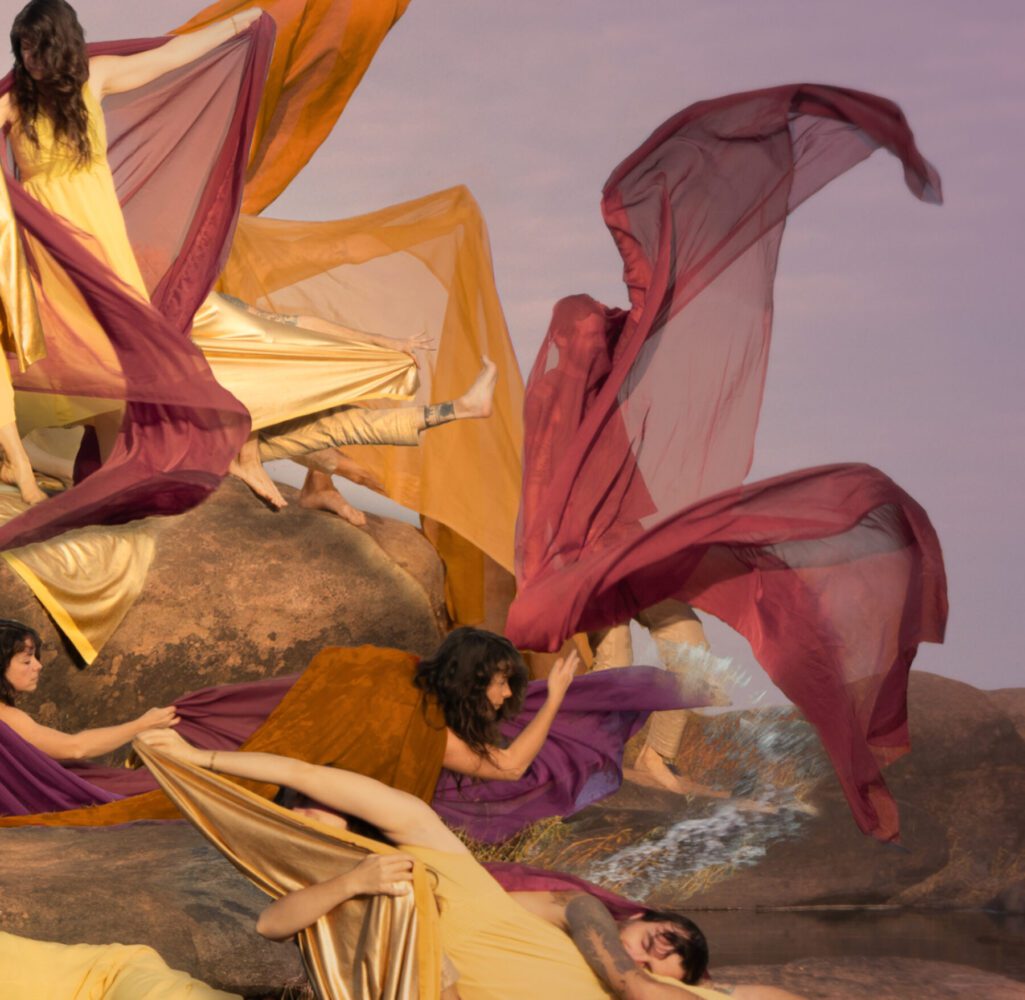
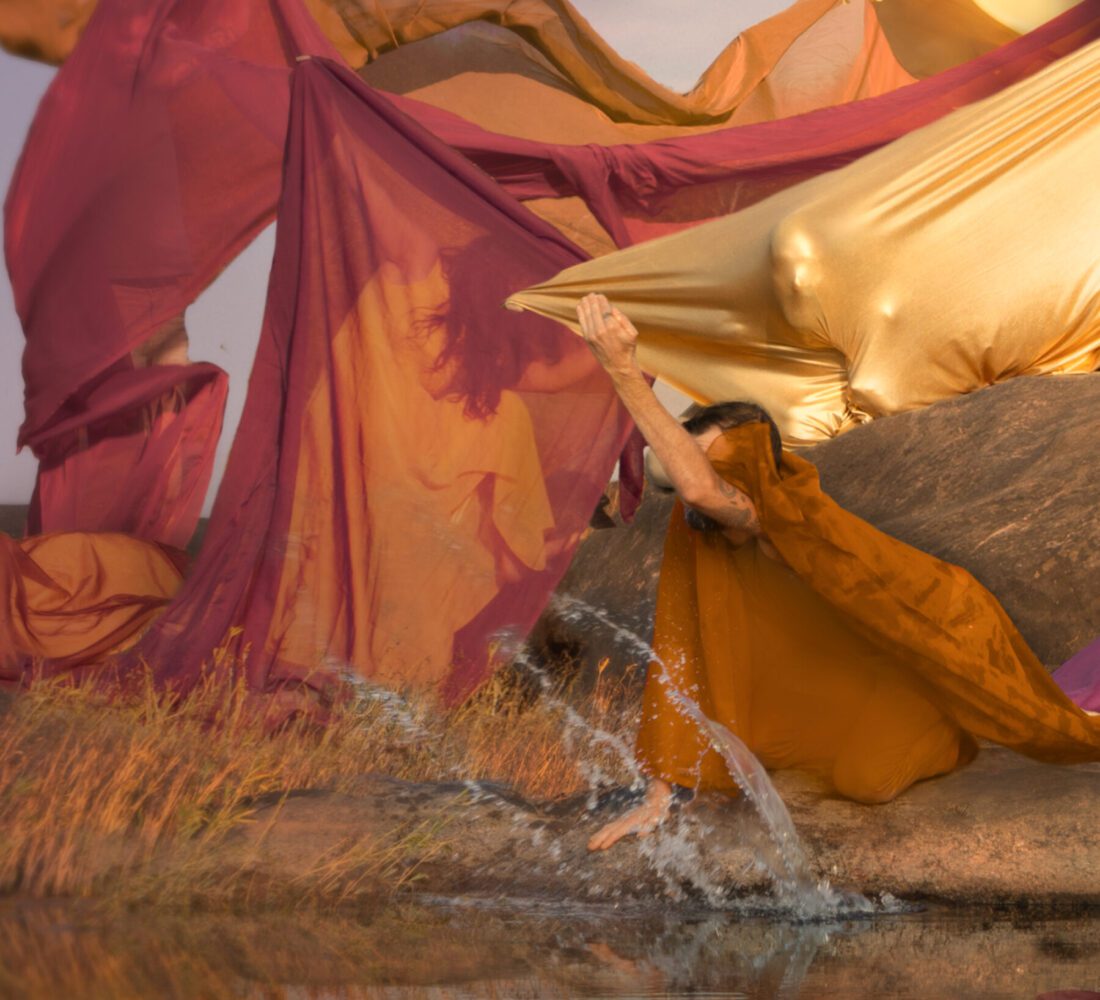
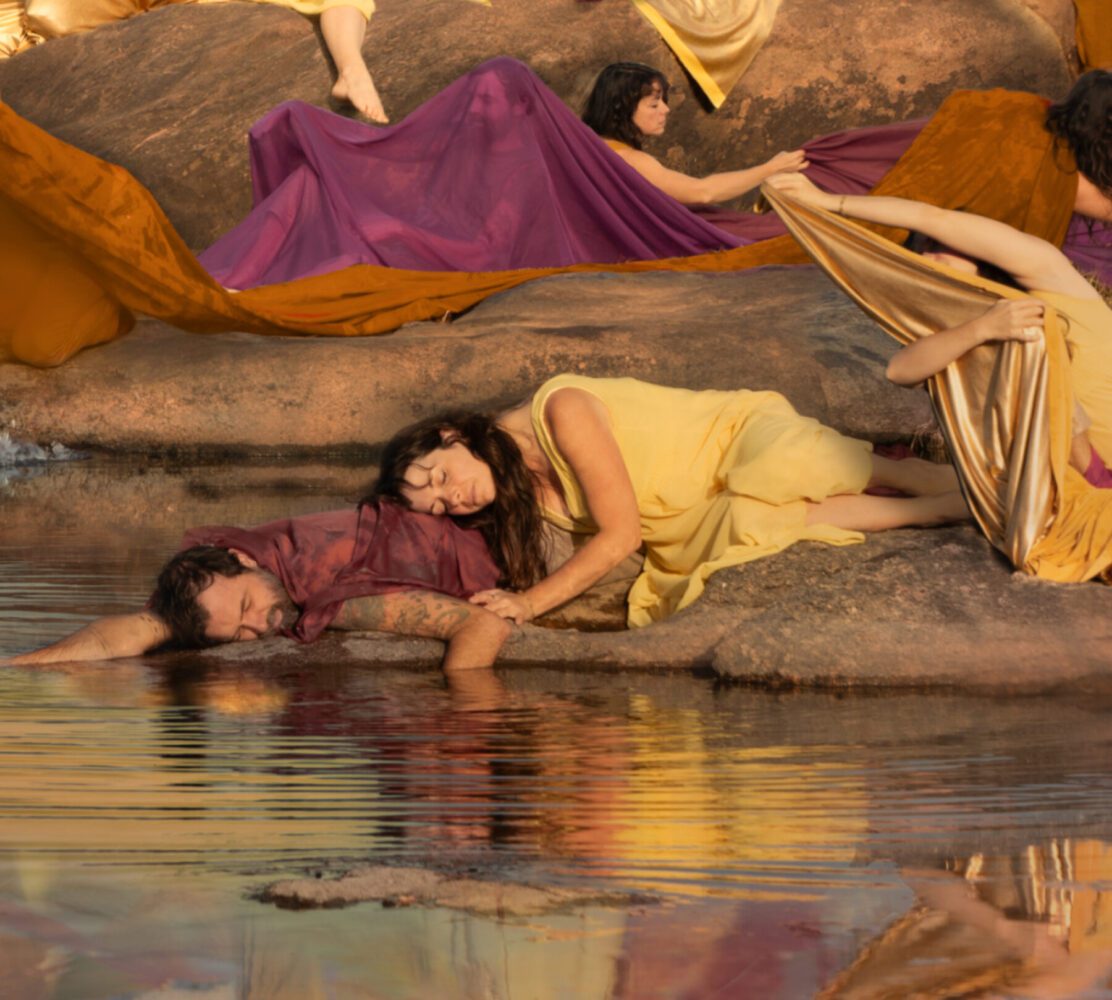
Details from the cover of Day is Born
Jameson: There’s a lot of emotion if you zoom in. It feels joyous. But you can also see grief, sorrow, fierceness. We wanted it multi-layered emotionally and visually.
Sarah: I feel very lucky to be a collaborator on music that is so beautiful and that we’re so aligned. I brought up the feeling of grief and joy kind of coexisting in the same moment and in the same song. And I feel they express that sensation so beautifully. It’s something that I’m always striving to put into my art as well. We also have similar values around wanting to always integrate humans with nature and show ourselves as part of that. Because it may seem like an odd thing to always put people in the frame when highlighting nature, it’s always in nature. Nature is the main theme, but there’s always people in it because I am trying to show and create a sense of deep relationship being a part of the landscape versus on top of it or it as a backdrop. It’s very much an integrated scene with humans and nature together. So it works and we keep making art together.
Laney: I love working with Sarah because, you know, I’m not a model. I don’t know how to strike a pose. That’s very awkward for me. But she’s like, “here, take this fabric and just throw it up in the air.” Be weird in nature, that’s all I have to do. She makes it look amazing.
Jameson: Sarah’s been helping with music videos too as a dear friend and a brilliant artist. Sarah has a camera too and we all just get shots. Laney just edited the music video for Healers and the Storms, all of our shots combined, to the point where I wouldn’t remember who shot what. We’re all just hanging out, making art.
COMMUNITY REVIEW
T-Rav: With the album rollout, y’all did a very interesting pre-release community sharing of the music. How did you feel about opening up to community album reviews?
Laney: Ten years ago, when we put out We Here the Ocean, we had our album reviewed by some fancy music blog. I remember reading it and being like, “This person has no idea who we are. They have no context for our work, our life, what our music is about. This review is all about them. It’s not about this work.” And it’s actually not doing this work any justice because they have no context.
Jameson: And it was a good review.
Laney: It was a fine review. It just didn’t make sense to me. It lacked the soul of our work. So much of our work is beyond music. It’s about the environmental activism that we participate in. It’s about Earthfolk and the community building that we do here and at the Food Forest. It’s about all these other things that we’re involved in, working to movement build and build culture.
So for the next album that we put out, Mulberry House, which was very much about that and was recorded in Earthfolk, that’s when we did our first community review. We had a fan base. We had been a band for over five years. And we were like, “Okay, we’re just going to offer to give it to the people who like our music and who know us first, and they can write the first reviews, so they have the first say.”
We did it, and it was so validating for me as the artist to hear these people who actually cared about our art respond. It meant so much more to me. I didn’t even need anything else after that because it was complete. I felt complete about the whole process. Whatever else happened after that was just a bonus.
So then we just always did community reviews. This is like our third or fourth community review album. Is that interviewer for Rolling Stone more valuable than my friend who told me that they use this work for some of the most important parts of their life? They’re equal. Everyone, every person, is just as valuable. Every person’s opinion is just as valuable as the next person’s opinion.
SCENE ELDERHOOD
T-Rav: So, out of the conversation, were there any other areas or songs that you wanted to speak to or share about?
Laney: I was excited to do this, particularly with you, because we’ve been friends for a long time. We’ve all been growing with the Richmond scene for a long time. We’ve been participating in the Richmond scene for at least 20 years and watching it grow and change and evolve. I was wanting to hold a little bit of space to reflect about that.
T-Rav: It’s all very strange. I had a moment last April 2025 when the RVA Mag and Gallery5 20th marker happened. There were large photo collages set up where the first five years, from like 2005 to 2010-ish, were all very organic. Local businesses, local events, local shows. It was all very underground.
Then the next five years were kind of corporate-sponsored, aboveground venues tapping into that spirit of whatever was happening. And then the next five years to the present were largely centered around protest, advocacy, and asserting the “we’re here,” that civil liberties and civil rights aren’t to be stripped or taken away. They’re here.
Looking at it in hindsight, these distinct moments of what was celebratory and underground and special, then being commodified but more accessible citywide, and then having to be fought for, wasn’t something I had thought of as it was happening. It was just kind of where I was and what I was doing. It’s made me feel so much sadness for young people today, that this is where they’re coming into the fight, because it is all so fragile.
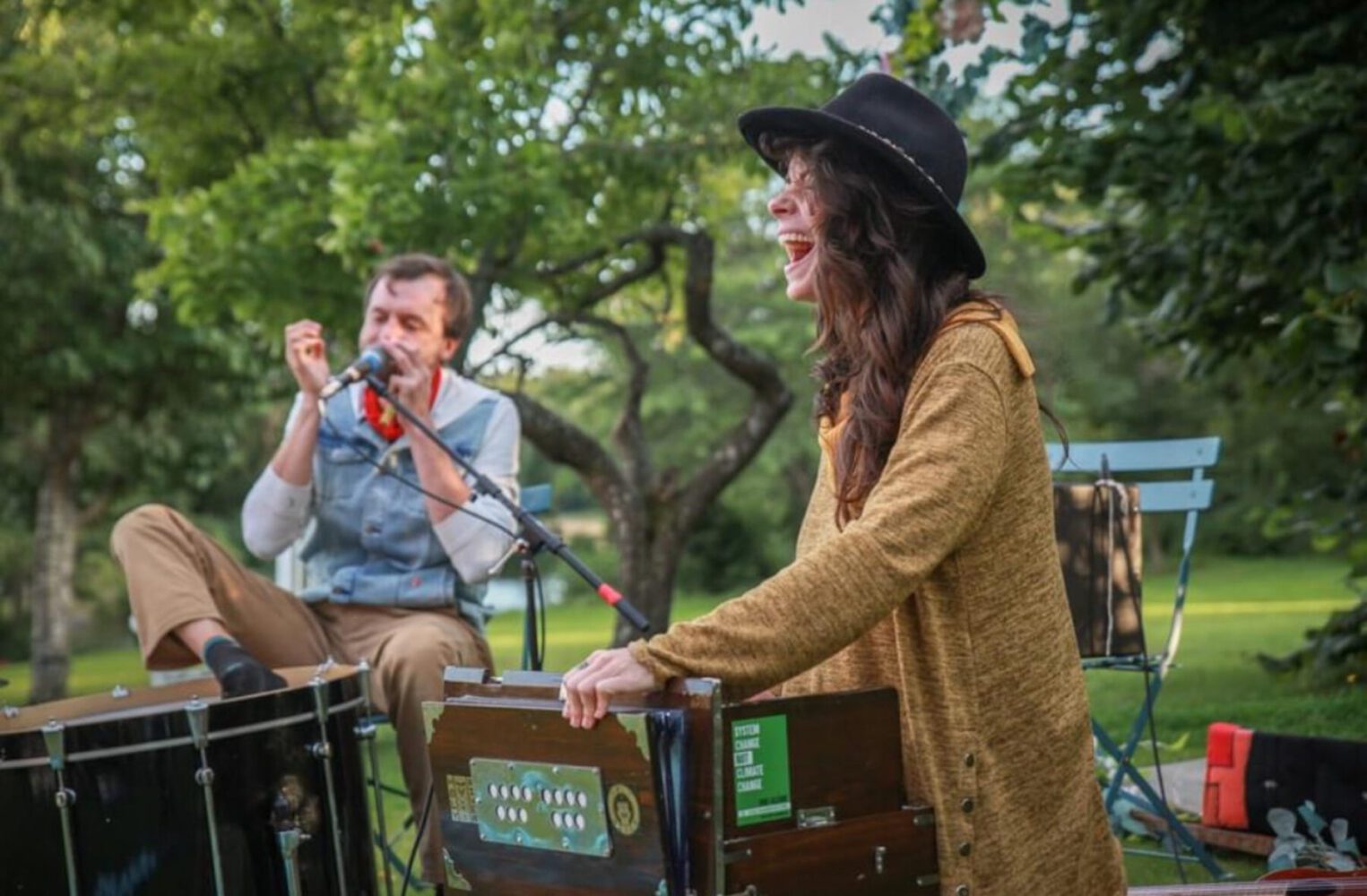
Laney: I think there is a longing for realness and authenticity now, which is good if you’ve been authentic all along. I’m grateful that my job as a performer, as a folk musician, will not be taken over by a robot during my lifetime. I don’t think there will be robots playing concerts, playing harmonium, guitar, and drums while I’m alive. Maybe.
T-Rav: What’s next? What would be even more satisfying or more robust artistically? I think the main thing is I’ve never quit. And in that never quitting, I get better and wiser. The work mutates and changes.
One of the things about when my mother was getting older, when she was unable to paint anymore, when the painting stopped, when the ability to take a photograph on her phone stopped, the things that inspired me to do what I do, there will come a time when the body won’t be able to maintain it. There will be a time when I’m not in the classroom or on a set or on location. When the time comes that I can’t make art, that’s a whole different thing, and then the being alive part is another. So may that be so far in the future that we make a lot of art on the way toward it.
Laney: And also that you’re okay with the epic amount of art that you’ve already made, and that we are all blessed to be artists who have this legacy of something tangible to leave for people. One hundred years from now, people may be able to listen to my voice singing. What a gift.
Jameson: That’s actually talking on the steadiness, because steadiness for me reads more gentle than “never quit,” right? “Never quit” has this pressure to me. Whereas steadiness, you just make it a lifestyle. You’re always showing up to that lifestyle because it’s built into your choices. That feels more sustainable than the idea of doing it to never quit. Just building it into the character of yourself.
T-Rav: I think that gets back to the recording methodology of bits, bites, and bytes that add up versus, “It’s an all-nighter at the end of this session and we’re going to have something.” It’s more like, “In this session, let’s add to the thing, or let’s strip away bits of the things that don’t need to be there.”
For my collage practice and all my art practices, the sustaining thing is that I’ve got to chip away at the process to then have something I can show someone. At some point you’ve got to go through all these hidden phases that are just part of coping, and then eventually you get to the thing. The same with film editing, video editing, or text editing an interview. There are so many outtakes and so much busted stuff that no one should ever see. But then you get to the thing where you’re like, I want to share this. I can’t wait to share this.
Thanks for sharing all of this with me today.
Main image by Sarah Aha
Support RVA Magazine. Support Independent Media in Richmond.
At a time when media ownership is increasingly concentrated among corporations and the uber wealthy, RVA Magazine has remained one of Richmond’s few independent voices. Since 2005, the magazine has provided grassroots coverage of the city’s artists, musicians, and communities, documenting the culture that defines Richmond beyond the headlines.
But we can’t do this without you. A small donation, even as little as $2, one-time or recurring, helps us continue to produce honest, local coverage free from outside interference. Every dollar makes a difference. Your support keeps us going and keeps RVA’s creative spirit alive. Thank you for standing with independent media. DONATE HERE.
We’ve got merch HERE
Subscribe to the Substack HERE
And Reddit HERE
And YouTube HERE