Advertisement

When does your face become a mask? If you could wear the same expression ceaselessly, and only change it when you want to, would you? I can't tell you what inspired Frederique Daubal in this work, but I can tell you of what it invokes in me. The idea of wearing photographs as masks is not new, but this application is. The slits cut make the work seem almost like venetian blinds to me, as both the subject matter and the model peek out towards the camera, hidden within their own visage. As the facial expression is pre-determined, everything is about body language, and makes for a very interesting study.


Italian photographer Giacomo Cosua got in touch and his personal perspective shows that things overseas are not much different than here in the states. Social commentary, friends, skate life, and street art, sounds a lot like Richmond.


You can see his full portfolio here.

Art star shoots hipster superstar. News at 11. Check out theblaaahg.com post about it here.

Farrah Fawcett reminds me of summertime. Enjoy your Memorial Day.
inspiration via inspirado

A photo show exhibiting the work of Richmond inner kids curated by photographer Lloyd Young of the Peter Paul Development Center. The work is offers a glimpse into the day of a child growing up in the projects. The show is on Thursday, June 10th at 5pm at 1719 N. 22nd St. at St. Peter's Episcopal Church.
RVA: What is the project?
Lloyd Young: Peter Paul’s Literacy through Photography program strives to improve the writing and analytical skills of the students while providing them the necessary tools to take effective photographs. The program’s main focus is on the students’ views of their environments and to capture how their communities are, make them feel and have the potential to be.
Through a series of writing exercises the students will devise a plan of action and choose something to express before going out into their communities and taking photographs. After the photographs are developed and printed the students will then analyze their own work as well as critique each other as to how successful their plans worked. The program will close with an exhibition, “Look at Me,” that will be open to the students’ families as well as the community.
This program is based on the work of Wendy Ewald, an educator as well as photographer who has worked with children all over the world. Her approach started in her photography class in Kentucky. She engaged her students in a discussion about their dreams; Could they put them into words? How would they describe them? How could they stage a scene that they could photograph? Giving the students encouragement to trust and carry out their ideas proved very effective. This approach turned into a method that took Wendy from the southern states of the U.S. to Saudi Arabia and all around the world. She has earned many awards and grants including a Fulbright Scholarship and MacArthur Fellowship.

We made a post last week when sword and sorcery illustrator Frank Frazetta passed away. Little did I know that local photographer Kim Frost was working on something that pulls inspiration from his pieces. There is an interesting story here about the models. They are married, muscled up vegans that met while playing World Of Warcraft, and these pictures are a part of their wedding set.
ed. correction- They are not married yet !! That happens next month. Congratulations, Derek and Marcella!


More information on Derek and Marcella can be found here: www.veganmuscleandfitness.blogspot.com

If it was somehow possible for me to like the president more (on a personal level, at least), here's proof.
I've found two, made by Blake Sinclair. Both of these images are everything I thought an animated GIF was not; subtle, artistic, subdued and beautiful. I can feel the breeze through the trees and grasses. These images are a double whammy for RVA, as they're a wonderful reinterpretation of a medium usually quantified as cheesy, gaudy, and anything *but* art, and they're also of fixed gear bicycles :-P


The main photo says it all. Cobra Krames brought the house down. Ridiculous.


I just found this great collection of photographs on The Photography Post, a great website. The work is on exhibit in Laurence Miller's Gallery, and Halsman's work is featured in The Smithsonian Magazine, as well, who had this to say:
Jump was born in 1952, Halsman said, after an arduous session photographing the Ford automobile family to celebrate the company’s 50th anniversary. As he relaxed with a drink offered by Mrs. Edsel Ford, the photographer was shocked to hear himself asking one of the grandest of Grosse Pointe’s grande dames if she would jump for his camera. “With my high heels?” she asked. But she gave it a try, unshod—after which her daughter-in-law, Mrs. Henry Ford II, wanted to jump too.
For the next six years, Halsman ended his portrait sessions by asking sitters to jump. It is a tribute to his powers of persuasion that Richard Nixon, the Duke and Duchess of Windsor, Judge Learned Hand (in his mid-80s at the time) and other figures not known for spontaneity could be talked into rising to the challenge of…well, rising to the challenge. He called the resulting pictures his hobby, and in Philippe Halsman’s Jump Book, a collection published in 1959, he claimed in the mock-academic text that they were studies in “jumpology.”
Portraiture is one of the greatest challenges in photography, because the human face is elusive and often mask-like, with practiced expressions for the standard range of emotions. Some photographers accept these preset expressions—think of annual-report portraits of corporate officers—and others try to eliminate expression altogether, to get a picture as neutral as a wanted poster. Halsman was determined to show his sitters with their masks off but their true selves in place.

I found Ryan's work via Rachel Hulin's photography blog. This series, aptly named photographs, caught me as out of the ordinary. Elsewhere on his site are more typical, sterile nude photographs, black and white works that while technically proficient and demonstrating an advanced grasp of studio light, these works pale in comparison to the color series shown here. Individuals and insecurities shine through the cross-processed images, often making the exposed flesh less focal and the person therein more prevalent. None of the images are static, there is movement and motion in all of them, even when McGinley's subjects are seemingly still (which is rarely the case). It seems there are two series in this one; the personal, and the distant, yet both have distinct personality.

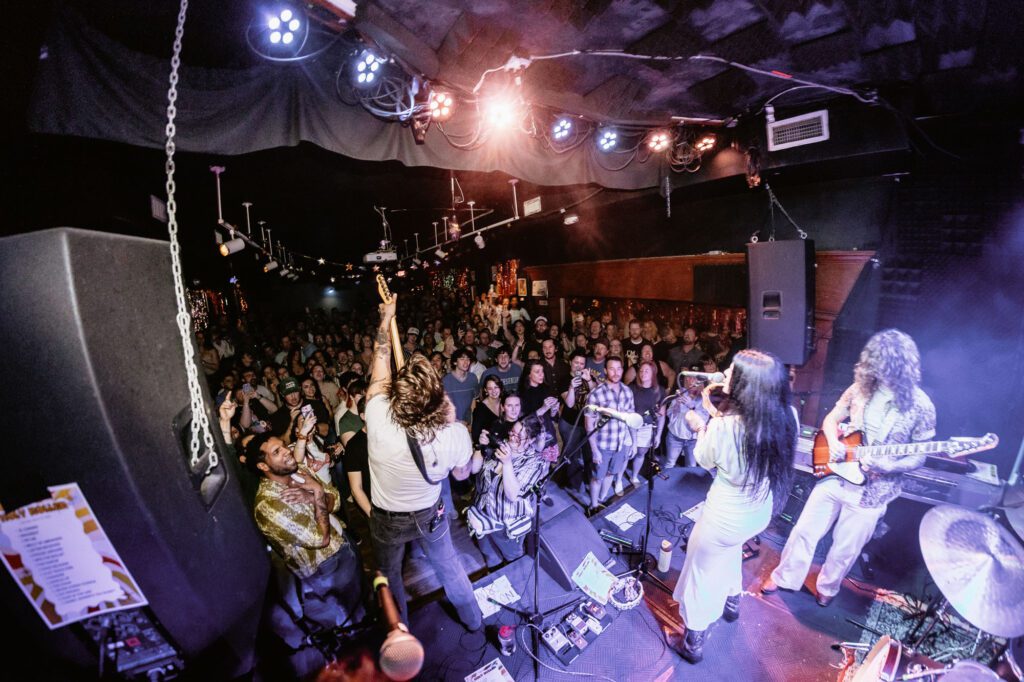
Last night was crazy. We had over 1200+ officially attend our throwdown at The Hat Factory and next week should be the biggest one yet. See you there.

Ian A. Adams has a snapshot-style of photography that belies his studio experiences. His work is definitely not casual, no matter how lazy the subject matter may seem; he finds tension in situations, capturing moments that tell the middle of a story.


Baylen Forcier, our foreign correspondent of sorts is currently in Kyrgyzstan doing documentary work. We're going to be posting images from his travels across Central Asia, all of which are via Sons of Hedin organization. Based out of Bishkek in northern Kyrgyzstan, Sons of Hedin is named after Swedish explorer and committed scholar Sven Hedin, and represents the joint work of Baylen and Dalton Bennett, with the aim of promoting awareness of Greater Central Asia.
title image:Traditional Kyrgyz fabric patterns. These blankets are made from dyed wool and many women learn how to make them at a young age.

I stumbled upon these images a few months back, but didn't really look into the gallery. Now that I'm seeing them again, it is a fascinating documentation of the last years of Czarist Russia. The image above is probably my favorite, showing classic Russian architecture alongside the beginnings of the industrial revolution, and the images I have selected to show here involve physical representations of such lines- the old and the new, the rich and the poor.
From Alex Gridenko:
Born in St. Petersburg and educated as a chemist, Prokudin-Gorskii devoted his career to the advancement of photography. In the early 1900s, he developed an ingenious technique of taking colour photographs. The same object was captured in black and white on glass plate negatives, using red, green and blue filters. He then presented these images in colour in slide lectures using a light-projection system involving the same three filters.


Thought I would pass on the fact that Red Bull Illume is happening again this year.

A roundtable with photographers Ken Howard, Ian Graham, Cameron Charles, and David Kenedy. First, I would like to thank the four very talented people that spent their afternoon talking honestly about photography with me. I had some ideas floating in my head, as to how this would go, but it's fun to be engaged within the conversation and go with it. Thank you for reading. -Anthony
Advertisement
Advertisement
Advertisement
Advertisement