

Editor’s Note: Following our recent coverage of Virginia’s cannabis market, where independent retailers face mounting pressure from enforcement and monopolistic lobbying, Max Jackson, founder of Cannabis Wise Guys and a presenter at the recent Virginia Cannabis Oversight Commission, has the following outline what new operators need to know before stepping into this volatile market.
An Operator’s Playbook by Max Jackson, Cannabis Wise Guys
As many of you on the front lines in Virginia can attest, the fight for the soul of the cannabis market is well underway. This battle isn’t being won in grow rooms or dispensaries; it’s being fought in legislative hearing rooms, lobbying meetings, and through targeted enforcement actions. For anyone hoping to enter this market, it’s critical to recognize this reality: this isn’t a gold rush. It’s a strategic fight.
Success won’t be about who gets a license first. It will be about who builds the most resilient, intelligent, and defensible business from day one.

A Masterclass in Regulatory Capture
It was disheartening to watch Virginia NORML, an organization built on decades of patient and consumer advocacy, stand shoulder to shoulder with the very multi-state operators now lobbying to monopolize the market. Whether intentional or not, their testimony provided political cover for incumbents pushing to entrench the current medical oligopoly under the guise of “consumer protection.” This was part of a larger, coordinated effort. Medical operators framed themselves as the only responsible stewards of the market, while coordinated enforcement actions target existing hemp retailers.
Much of the testimony presented wasn’t about creating sound policy; it was a clear demonstration of market engineering disguised as consumer protection. The opposition isn’t just a competitor; they are actively aiming to design a market that ties your hands before you can begin.
I’ve seen this fight play out in other states. Here is the playbook to prepare for it.
1. Protect Yourself and Know Your ‘Why’
The incumbents have a multi-million-dollar head start. Their primary tactic is to convince lawmakers that only a limited, vertically integrated system can be “safe and controlled.” This is a deliberate strategy to create a walled garden where they are the only ones allowed to operate. Thankfully, the data from every other legal state shows that their preferred model, an oligopoly, to use their own term, is less safe, fails to compete with the illicit market, and generates less tax revenue.
- Hire Your Legal & Financial Team First: Before you spend a dime on property or equipment, your first investment should be in two key partners: a qualified Virginia cannabis attorney and a cannabis-specialized CPA. A local attorney who understands Virginia’s administrative law and regulatory capture is non-negotiable. Just as critically, a seasoned cannabis CPA, even one from another state, can help you run realistic financial models that account for the brutal realities of §280E and price compression. You need both to navigate the legal tactics used to sideline new entrants and to build a financially viable plan from day one.
- Define Your ‘Why’: This industry will test you. Beyond market pressures and buyout offers from MSOs, you will face regulatory headaches, operational failures, and immense financial strain. In those moments, what is your anchor? Your “why” is more than a mission statement; it’s the operational compass for your entire business. Are you building a craft brand dedicated to unique genetics? A family business to create generational wealth? A community-focused operation to serve patients and create local jobs? Knowing your core purpose is your single greatest defense. It dictates your strategy, helps you attract the right talent, and defines what victory looks like for you, not just for an investor looking for a quick exit.
2. Lessons from a Brutal Landscape
Virginia is not the first state to walk this path. The patterns from other markets are predictable and provide a clear warning of the tactics you will face.
- The Tactic of Regulatory Whiplash: State legalization is only the first hurdle; the real fight is at the local level. In new markets, the rules can be a moving target. A municipality that seems friendly today might suddenly pass a restrictive zoning ordinance tomorrow, making your chosen location unusable. The definition of what constitutes legal packaging can be reinterpreted, or testing standards can change overnight, rendering your entire inventory non-compliant. The strategic lesson is clear: the regulatory ground can shift in an instant. Build relationships with local officials, stay vigilant, and have contingency plans for sudden policy changes. Compliance today does not guarantee safety tomorrow.
- Price Compression is a Certainty: Early operators in new markets often see wholesale prices of $3,000+ per pound. Do not build a business plan that depends on this. It is a temporary illusion. In every mature market, as supply increases, prices fall, hard. A-grade flower can eventually wholesale for under $1,000. Your business model must be profitable at that number, not the fantasy price.
- Recognize the Incumbent Playbook: Learn to recognize the tactics that will be used against you. Incumbents have a playbook to lock out competition. Watch for strategies like advocating for impossibly quick launch timelines that only they can meet (Arizona launched sales within 79 days of passage, a timeline impossible for new operators to meet), absurd canopy caps (Illinois’ statutory 210,000-sq.-ft. canopy cap per license), or creating social equity programs that are designed to fail, allowing them to acquire those licenses on the cheap. The goal is always the same: create a market with limited competition that they control.
3. Your Business Plan is Your Battle Plan
In a market dominated by MSOs, your only defensible position is to produce a higher quality product at a lower cost per pound. Your business plan is the schematic for your survival. At Cannabis Wise Guys, we use a framework called the “8-Question Reality Check” to stress-test projects and separate viable operations from expensive fantasies. It’s designed to force answers to the hard questions before you’re committed.
Realistic Budgets & Facility Design: Building a licensed facility is a complex commercial construction project, not just turning on lights in a garage. All-in costs are rarely below $250 per square foot. Your design must account for functional hallway space (8’+ wide for equipment and egress), break rooms, multiple offices for admin and compliance staff, ADA regulations, robust security, green waste storage and destruction, and more. These aren’t suggestions; they are costly requirements.
- Operational Funding (OpEx): It takes 16-20+ weeks from clone to cash. You must have at least 6 months of full operational burn in reserve. Investors love funding shiny buildings, but notoriously starve the operations inside them.
- Designing for Flow, Not Bottlenecks: Your facility’s layout dictates your efficiency. Ensure your veg rooms are sized to constantly supply your flower rooms on a perpetual harvest schedule, while accounting for loss and culling. Critically, you must be able to fit your absolute heaviest harvest into your dry room without creating a bottleneck. A world-class harvest that gets ruined in dry is worthless.
- Construction Reality Check: Permitting delays, utility capacity, and code compliance can add 20–40% to timelines. Always confirm power, egress, and HVAC loads before lease signing.
- Contingency Planning: What happens when a critical system fails or market prices drop 30%? If you don’t have a plan for failure, you are planning to fail.
4. IRS §280E
Internal Revenue Code §280E is the silent killer of cannabis businesses. It prohibits you from taking normal business deductions like rent, standard payroll, or marketing. You are taxed on your gross profit, not your net profit, leading to effective tax rates of 70% or higher. You must engage a CPA who specializes in the cannabis industry. Basic accounting is not enough; a sophisticated advisor can help structure your corporate entities and operations in a way that legally maximizes your Cost of Goods Sold (COGS) and mitigates the crushing impact of this tax code. Ignoring §280E is not an option; it is a declaration of bankruptcy.
5. The “Picks and Shovels” Strategy
The cultivation and retail licenses attract all the attention, but they also carry the highest risk and are directly in the crosshairs of §280E. The smartest play is often in ancillary services. It’s useful to think of these in two categories:
- Non-Plant-Touching Services: These businesses are not subject to §280E and are often the most stable ventures. Think about any service a normal business needs: specialized accounting, marketing, security, waste removal, or even photography—my own entry point into this industry. Operators rely heavily on these partners, and a service provider who is already fluent in the unique challenges of the cannabis industry is incredibly valuable.
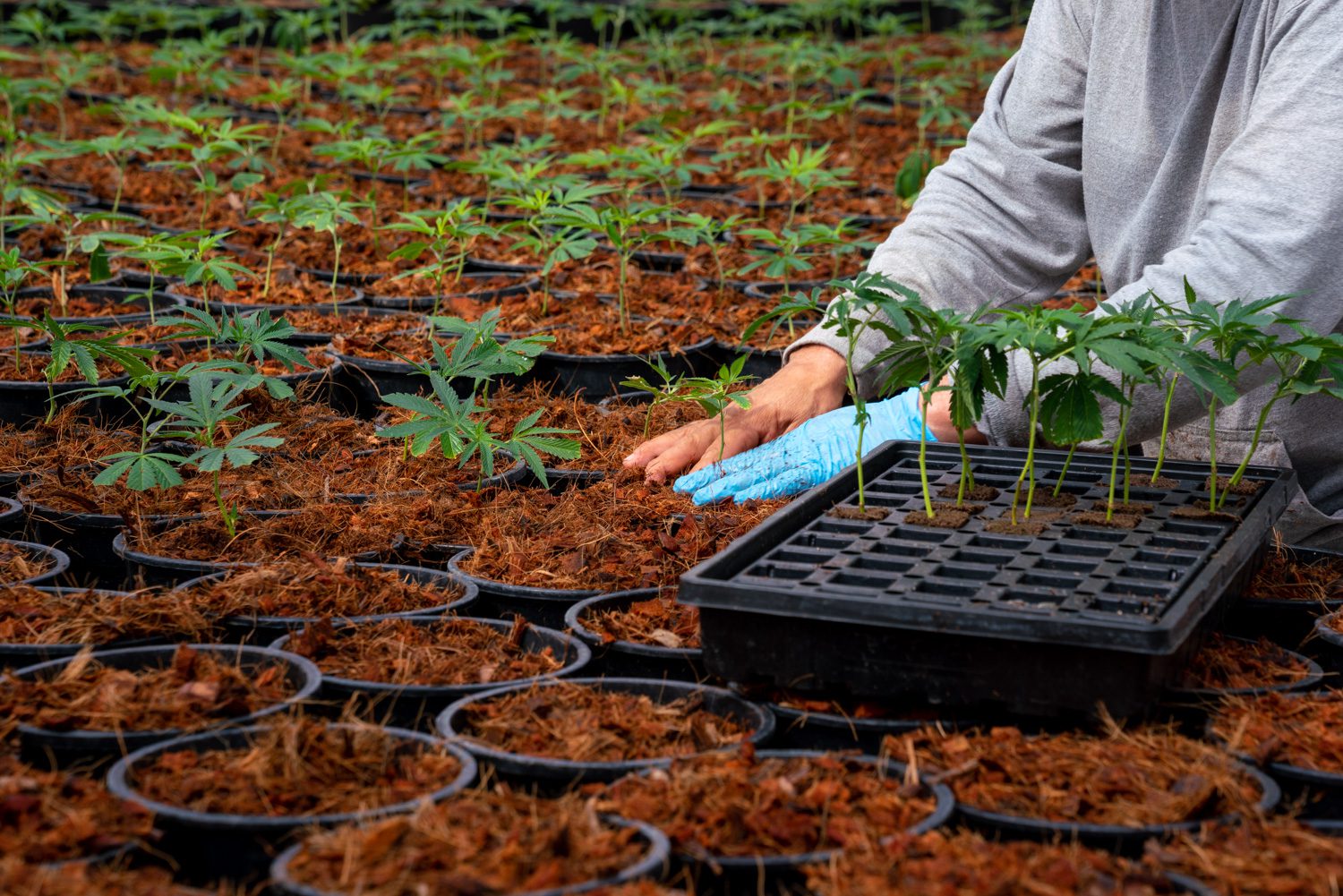
- Plant-Touching Support: While still navigating complex regulations, services like nurseries, third-party testing labs, secure transport, or a dedicated processing/packaging facility for smaller craft farms can be highly successful. These businesses fill critical infrastructure gaps in the supply chain.
Your Next 30 Days: An Action Plan
If you’re serious about entering the Virginia market, these actions start now:
- Build Your Professional Team: Your first call should be to a qualified Virginia cannabis attorney. Your second should be to a cannabis-specialized CPA. This team is foundational to navigating Virginia’s laws and the punishing realities of §280E.
- Develop a Brutally Honest Financial Model: Work with your CPA to build out realistic construction budgets (CapEx) and at least six months of operational funding (OpEx). Model your plan based on a mature market price point (under $1,000/lb), not the initial hype.
- Start Local Intelligence Gathering: Identify potential municipalities and begin researching their zoning laws, political climate, and any history with cannabis or hemp businesses. Start building relationships now.
- Draft Your Operational Blueprint: Begin outlining your facility design, considering workflow from veg to dry room. Define your competitive differentiation. Is it craft quality? Low-cost production? This ties directly back to your “why.”
- Evaluate the Ancillary Path: Seriously consider if a non-plant-touching or support business model is a better fit. The risks are lower, and the financial path can be much clearer.
The fight for Virginia’s market has begun. The operators who succeed will not be among the most optimistic, but the most prepared. Do your homework, plan for the worst, and build a business so efficient and resilient that it cannot be ignored.
Max Jackson is the founder of Cannabis Wise Guys, a cannabis consulting firm specializing in operational planning and technical due diligence. He testified before the Virginia Cannabis Oversight Commission in October 2025 on market architecture and regulatory capture. Cannabis Wise Guys provides technical due diligence, operational planning, and strategic guidance for cannabis operations and investors. We help stakeholders make informed decisions in a complex regulatory environment.
Photo Andres Gomez
Support RVA Magazine. Support Independent Media in Richmond.
At a time when media ownership is increasingly concentrated among corporations and the wealthy, RVA Magazine has remained one of Richmond’s few independent voices. Since 2005, the magazine has provided grassroots coverage of the city’s artists, musicians, and communities, documenting the culture that defines Richmond beyond the headlines.
But we can’t do this without you. A small donation, even as little as $2, one-time or recurring, helps us continue to produce honest, local coverage free from outside interference. Every dollar makes a difference. Your support keeps us going and keeps RVA’s creative spirit alive. Thank you for standing with independent media. DONATE HERE.
We’ve got merch HERE
Subscribe to the Substack HERE
And Reddit HERE
And YouTube HERE