
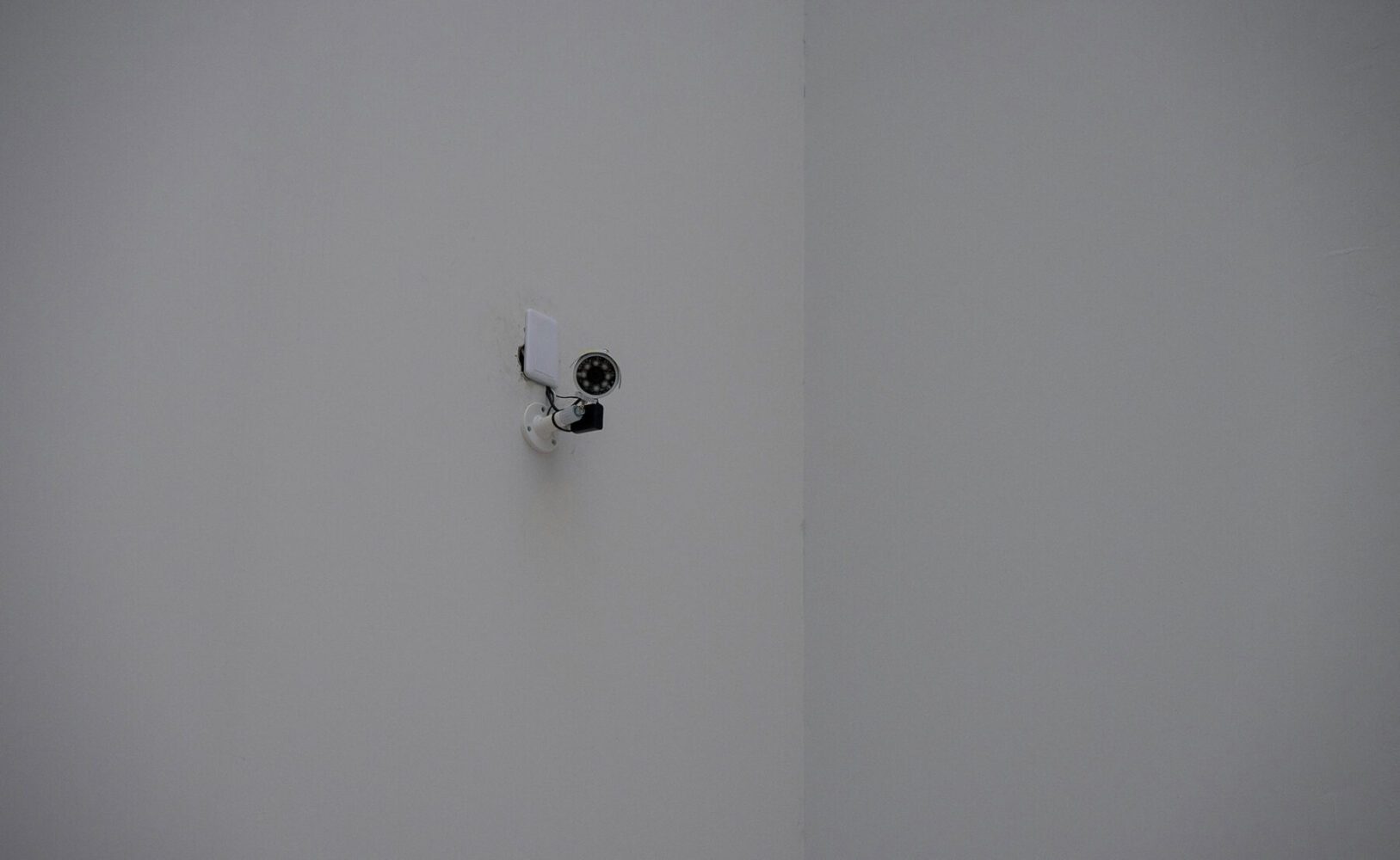
Walk through just about any neighborhood in Richmond and you’ll see them. The small blue-lit doorbells tucked into brick row houses in Church Hill. The newer setups in Manchester townhomes and Scott’s Addition apartments.
For a lot of us, buying a Ring camera was practical. Packages were disappearing, car break-ins felt closer to home. It wasn’t about building a surveillance network. It was about knowing what happened on your own front steps.
That’s why recent reporting from 404 Media lands differently.
According to leaked internal emails obtained by 404, Jamie Siminoff, founder of Ring, described the company’s AI-powered “Search Party” feature as being introduced “first for finding dogs,” with a longer-term vision of helping to “zero out crime in neighborhoods.” Search Party links nearby Ring cameras together and uses AI to scan footage for lost pets. It was marketed as a neighborly feature but after a Super Bowl ad spotlighted it, critics called it dystopian.
The language in the email is what sticks. “First for finding dogs.” That suggests something broader down the line. “Zero out crime” implies a system that does more than help someone track down a lost puppy.
At the same time, Ring has rolled out other AI-driven features like “Familiar Faces,” which uses facial recognition to identify people on a user’s camera, and “Fire Watch,” which flags potential fires. There’s also “Community Requests,” a tool that allows law enforcement agencies to ask Ring users for footage tied to specific incidents. Ring says sharing is always voluntary and that camera owners stay in control. The company also says Search Party does not process human biometrics or track people.
All of that may be accurate on a technical level. Still, when features are turned on by default and systems are designed to connect directly with public agencies, it changes how a neighborhood functions. A doorbell camera stops being just yours and starts becoming part of something larger.
For homeowners in Richmond already thinking about where safety ends and surveillance begins, those internal emails hit differently.
We already live with layers of monitoring. Police routinely ask businesses and residents for footage after major incidents. Automated license plate readers have been adopted in the region. The debate over companies like Flock Safety is playing out locally and nationally, with concerns about how long data is stored and how easily movements can be reconstructed.
So when a private company talks about “zeroing out crime” through a network of AI-linked residential cameras, it doesn’t feel abstract. It feels like another step in a direction we haven’t fully discussed as a community.
No one wants their car broken into. No one wants their packages stolen. If something serious happens, having footage can make a difference. For some neighborhoods, cameras have become part of how people cope with feeling exposed or underserved.
But there’s also a difference between using a camera as a tool and living inside an always-on mesh of searchable footage.
For immigrant families, activists, or anyone uneasy about how data can be stored, shared, or reframed later, that interconnected mesh feels heavier than it might to others. Even if you are not doing anything wrong, there’s a question about what kind of digital profile is quietly being built in the background. Not just what you did, but how your movements, associations, or patterns might be interpreted someday.
It starts to feel less like footage tied to a specific incident and more like a permanent record waiting to be repurposed. The idea of predictive or preemptive scrutiny no longer feels like Minority Report science fiction. Concepts like “pre-crime” or even “thoughtcrime” don’t seem so far removed when systems are constantly collecting and interpreting behavior.
Technology built to find a lost dog doesn’t have to change much to begin flagging “unusual behavior” or “suspicious activity.” The cameras stay where they are. The infrastructure remains intact. The software evolves, and with it, the definition of what deserves attention.
Most of us did not sit down one day and decide to trade privacy for convenience. It unfolded slowly, and we went along with it. We handed over our habits, preferences, locations, and relationships to social media platforms, which in turn refined and sold that information to retailers and marketers who can anticipate what we want almost before we do. Detailed profiles already exist.
Now layer in video footage, facial recognition, and precise home addresses, and the picture sharpens. We didn’t just join the system, we helped train it. The algorithm hums along in the background, shaping what we see, what we buy, and increasingly, how “safety” is defined.
None of it felt dramatic at the time. Better notifications, smarter AI and more seamless integration. Each upgrade sounded useful on its own. But taken together, they’ve built an ecosystem that is far more interconnected and far more aware than most of us probably intended or even aware of.
The question for Richmond isn’t whether safety matters. It does. The question is who controls the infrastructure that promises safety, how transparent it is, and how easily it expands beyond its original pitch.
Should neighborhood-linking features be opt-in instead of on by default? How long is footage retained? What guardrails exist if AI scanning broadens? How tightly can these systems connect with other surveillance tools already operating in the city?
These aren’t fringe concerns. They’re civic ones.
Richmond is in the middle of a lot of change, with new development, shifting policing strategies, and new tech layered onto old streets. If we’re going to wire our neighborhoods together, it’s worth having an honest conversation about what we’re building.
Security can bring peace of mind. Constant visibility brings a different kind of awareness, one that never quite turns off.
Sorting out where that line falls is not paranoia. It is part of deciding what kind of city we want to live in, and whether opting out is even realistic anymore. A lot of us still want the camera by the door. I do. But it’s harder not to see it differently now. Less like a neutral tool waiting for my input and more like something quietly processing and deciding in the background.
At a certain point it starts to feel less like a helpful assistant and more like HAL in 2001: A Space Odyssey, calm and confident, already a few steps ahead.
Support RVA Magazine. Support Independent Media in Richmond.
At a time when media ownership is increasingly concentrated among corporations and the uber wealthy, RVA Magazine has remained one of Richmond’s few independent voices. Since 2005, the magazine has provided grassroots coverage of the city’s artists, musicians, and communities, documenting the culture that defines Richmond beyond the headlines.
But we can’t do this without you. A small donation, even as little as $2, one-time or recurring, helps us continue to produce honest, local coverage free from outside interference. Every dollar makes a difference. Your support keeps us going and keeps RVA’s creative spirit alive. Thank you for standing with independent media. DONATE HERE.
We’ve got merch HERE
Subscribe to the Substack HERE
And Reddit HERE
And YouTube HERE