

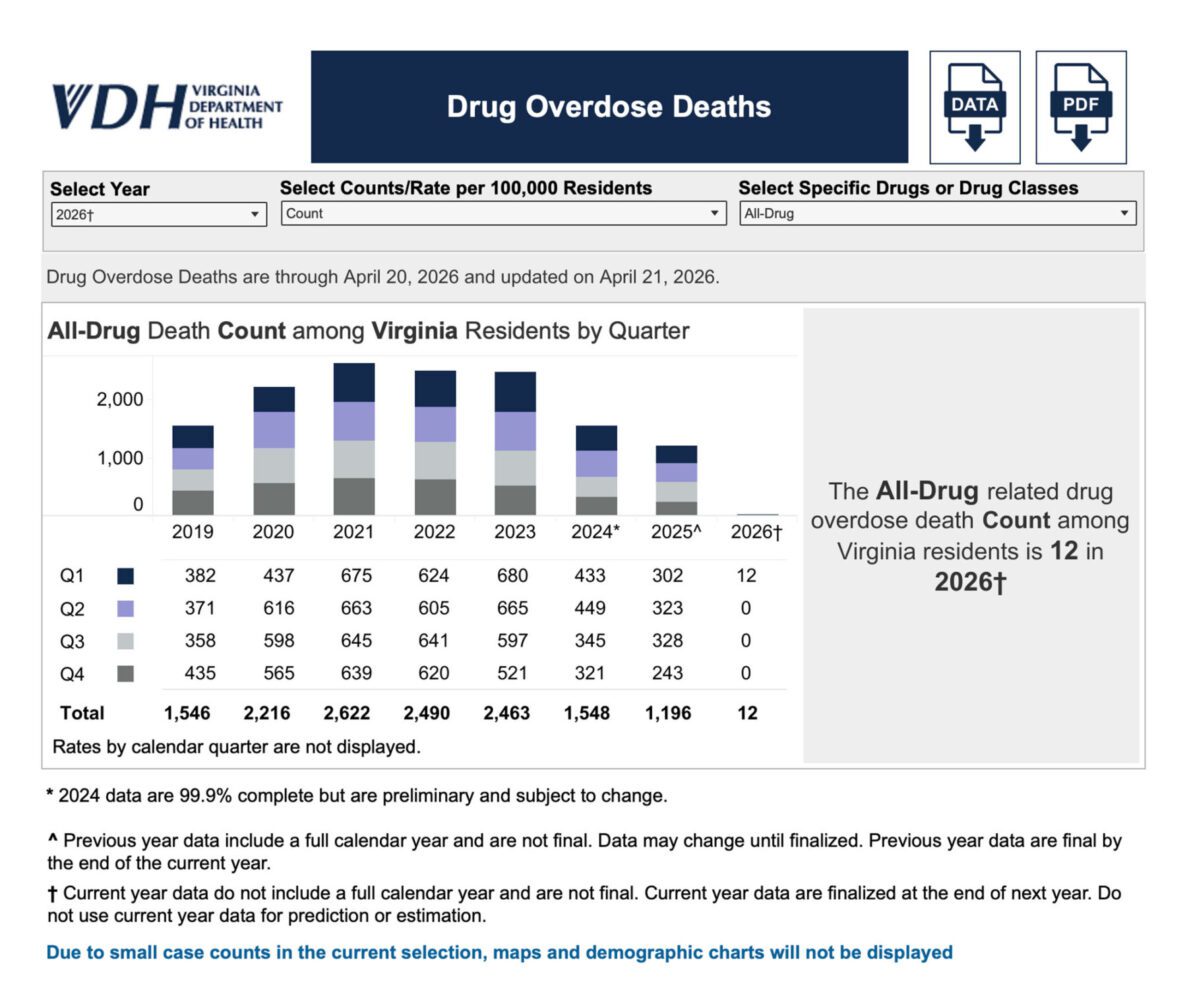
According to the Virginia Department of Health, there were 1,548 drug overdose deaths among Virginia residents in 2024, a 37% decrease from 2023. Emergency department visits for overdoses also declined, with 18,292 reported, down 16% year over year. While those numbers mark a significant drop from the peak of 2,622 deaths in 2021, the impact remains widespread across the state.
A new report ranks Virginia among the states with the lowest overall drug problems in the country, placing it 46th out of 51 nationwide. The study, released ahead of National Prevention Week May 10-16th, compares states across 20 metrics, including overdose rates, opioid prescriptions, drug arrests, and access to treatment.
But like most national rankings, the data comes with limits. Statewide averages often flatten what’s happening at the local level, and in cities like Richmond, the picture can feel very different.
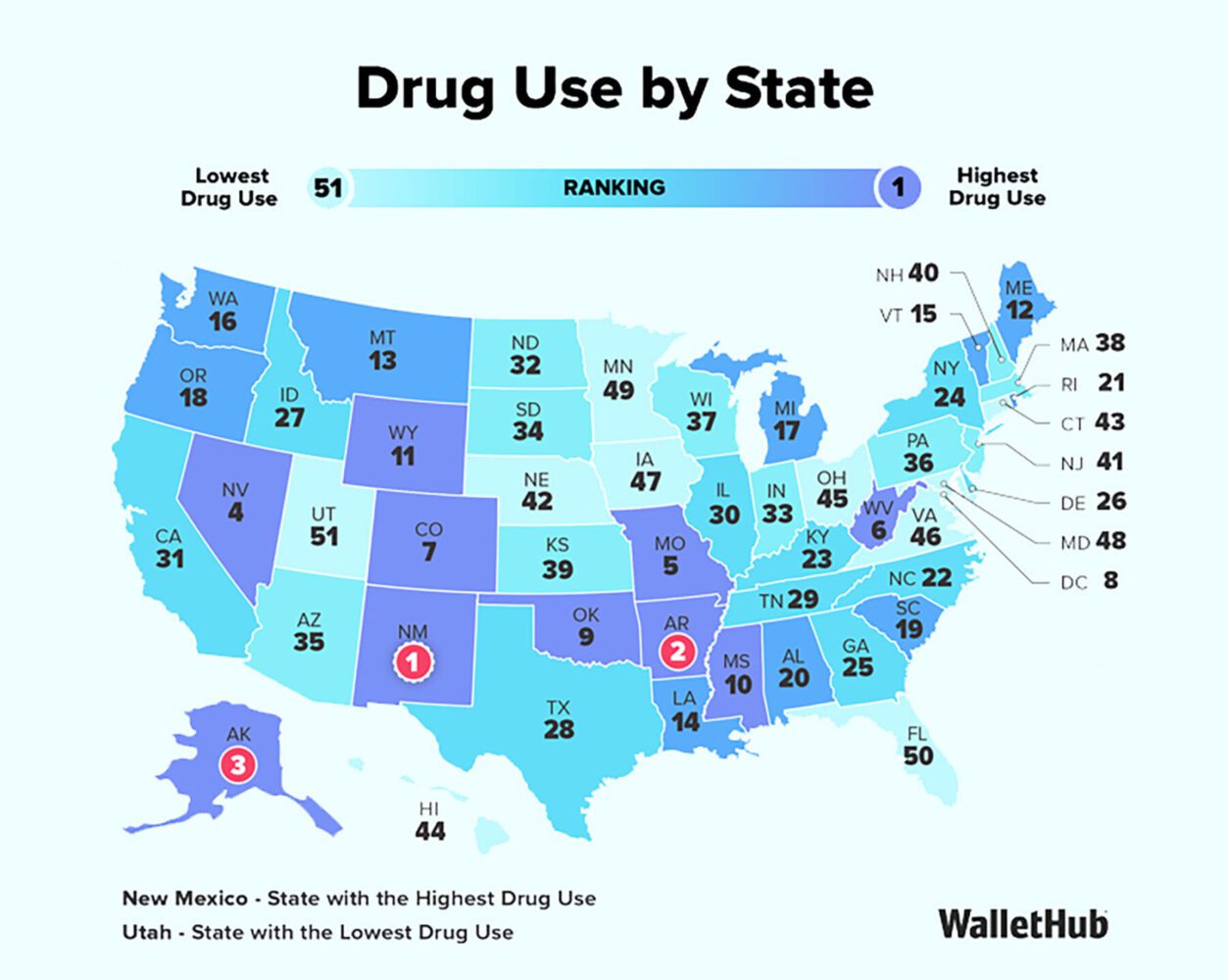
While Virginia ranks near the bottom nationally, the opioid crisis and fentanyl use remain highly visible across the region, particularly in urban areas where addiction intersects with housing instability and access to care.
In Richmond, the impact has been especially pronounced. The city reported nearly 300 overdose deaths in 2023, the majority involving opioids, reflecting the continued presence of fentanyl in the local drug supply.
That year now appears to represent a local peak. Reporting from Axios Richmond found the city had one of the highest opioid overdose death rates in Virginia in 2023, even as broader statewide numbers have declined.
Over the last several years, Richmond has expanded harm reduction efforts in a visible way. Programs across the city have increased access to naloxone, the overdose-reversal medication, along with fentanyl test strips, peer recovery outreach, and public health initiatives led by the Richmond City Health District and community partners. That includes efforts like mobile naloxone distribution through Virginia Commonwealth University’s Rams in Recovery program and publicly accessible harm-reduction vending machines.
But many of the strategies credited with reducing overdose deaths rely on consistent funding and support. Community-based providers and harm reduction programs depend on a mix of federal, state, and local resources, and any disruption to that funding could affect how services are delivered moving forward.
Local providers say those pressures are already being felt.
Health Brigade, formerly Fan Free Clinic and considered Virginia’s oldest free and charitable clinic, reports it has lost more than $1.1 million in program funding from the Virginia Department of Health over the past two years, forcing cuts to several services, including portions of its HIV/AIDS programs, case management, and harm reduction efforts.
The clinic, which serves more than 10,000 patients annually, also lost $850,000 in federal funding for facility upgrades and has had to scale back programs that connect patients to housing, food, transportation, and mental health support.
Those cuts come as demand is expected to rise. According to information provided by Health Brigade, recent policy changes and expiring federal supports could significantly increase the number of uninsured Virginians. The end of enhanced Affordable Care Act subsidies has already led to at least 44,000 Virginians losing coverage, with that number expected to grow. At the same time, potential changes to Medicaid eligibility could further reduce access to care.
For providers on the ground, that creates a dual pressure: fewer resources and more patients.
“When people lose their insurance, they delay seeking care until they are really sick,” the organization noted in a recent briefing. “They will seek emergency services and eventually find their way to a free clinic as a last resort.”
Health Brigade and similar clinics say the broader health safety net is being strained from multiple directions, as funding declines while economic pressures, housing instability, and mental health needs continue to rise. The organization also pointed to proposed federal budget cuts to the Department of Health and Human Services, which could further reduce support for programs tied to addiction treatment, harm reduction, and community health services.
RVA Magazine previously reported on Health Brigade’s growing financial struggles as demand for services continued to rise alongside the opioid crisis and broader gaps in healthcare access.
The publication also recently profiled outreach worker Edward Peters, whose work distributing naloxone and connecting with people on the street reflects the day-to-day realities behind the statistics. Efforts like his represent the often unseen infrastructure that has helped reduce overdose deaths across the region.
Taken together, providers warn that the systems helping drive recent declines in overdose deaths are not guaranteed to hold without sustained investment.
The WalletHub report itself reflects a broad snapshot, not a street-level view. A lower ranking does not mean drug use is absent, only that it may be less severe or more contained compared to other states.
Nationally, the scope of the issue remains significant. More than 68,000 people died from drug overdoses in the 12-month period ending in October 2025, underscoring the continued impact of addiction across the country.
For Virginia, the state may rank relatively low for drug problems overall, but the effects of the crisis are still being felt in communities like Richmond, where providers warn that recent progress could be difficult to sustain without consistent funding and support.
If You or Someone You Know Needs Help
Resources are available locally and statewide:
- REVIVE! Training (Virginia Department of Health): Free overdose response training and naloxone access
- Richmond City Health District: Harm reduction services, testing, and outreach programs
- SAMHSA National Helpline: 1-800-662-HELP (4357), free and confidential, available 24/7
- Virginia 988 Lifeline: Call or text 988 for mental health and substance use crisis support
Many local organizations also provide peer recovery support, treatment referrals, and harm reduction supplies throughout the Richmond area.
Main photo by Jonathan Gonzalez
Support RVA Magazine. Support Independent Media in Richmond.
At a time when media ownership is increasingly concentrated among corporations and the uber wealthy, RVA Magazine has remained one of Richmond’s few independent voices. Since 2005, the magazine has provided grassroots coverage of the city’s artists, musicians, and communities, documenting the culture that defines Richmond beyond the headlines.
But we can’t do this without you. A small donation, even as little as $2, one-time or recurring, helps us continue to produce honest, local coverage free from outside interference. Every dollar makes a difference. Your support keeps us going and keeps RVA’s creative spirit alive. Thank you for standing with independent media. DONATE HERE.
We’ve got merch HERE
Subscribe to the Substack HERE
And Reddit HERE
And YouTube HERE