
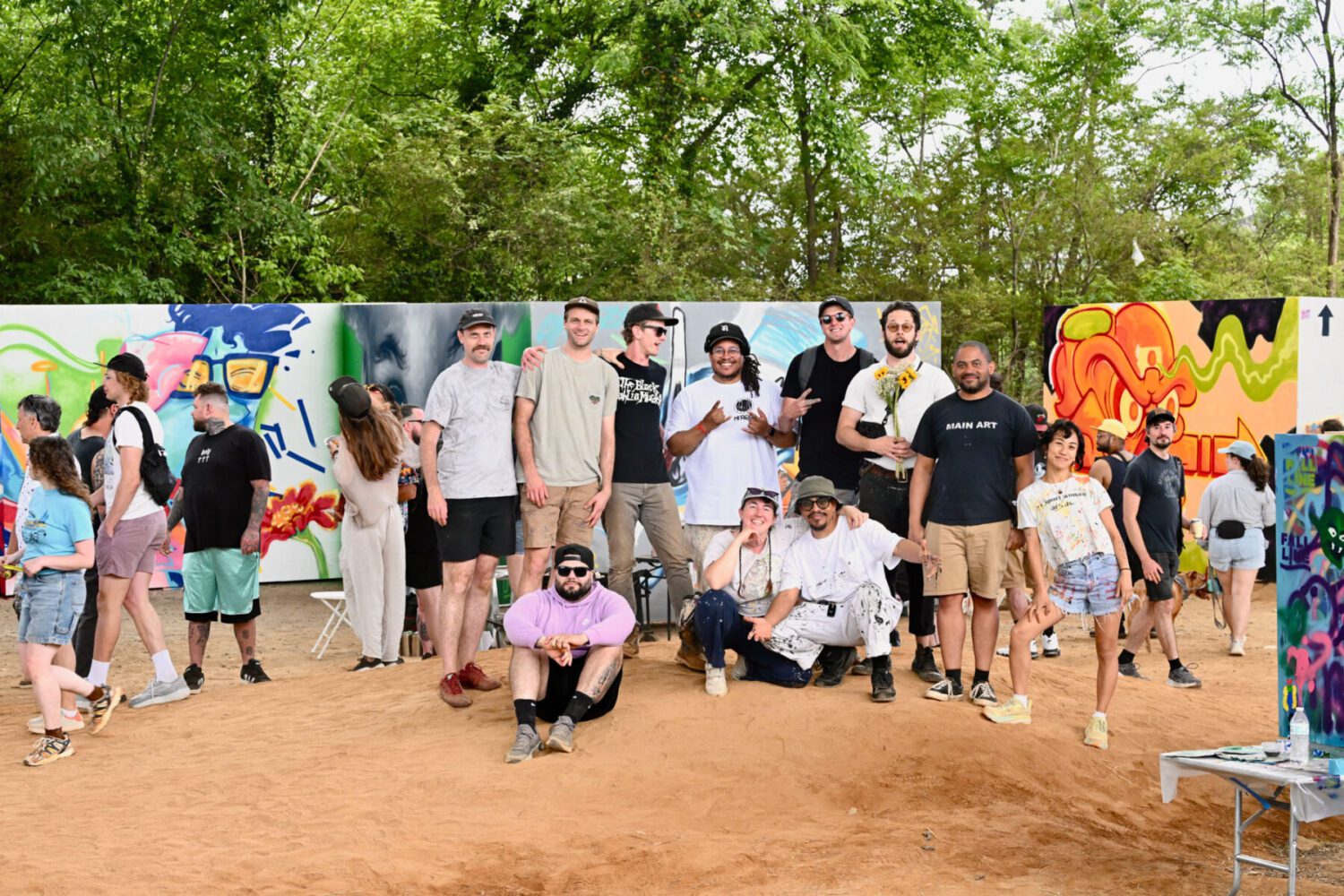
Under the Manchester Bridge, what had been an idea for years turned into something tangible, at least for a day.
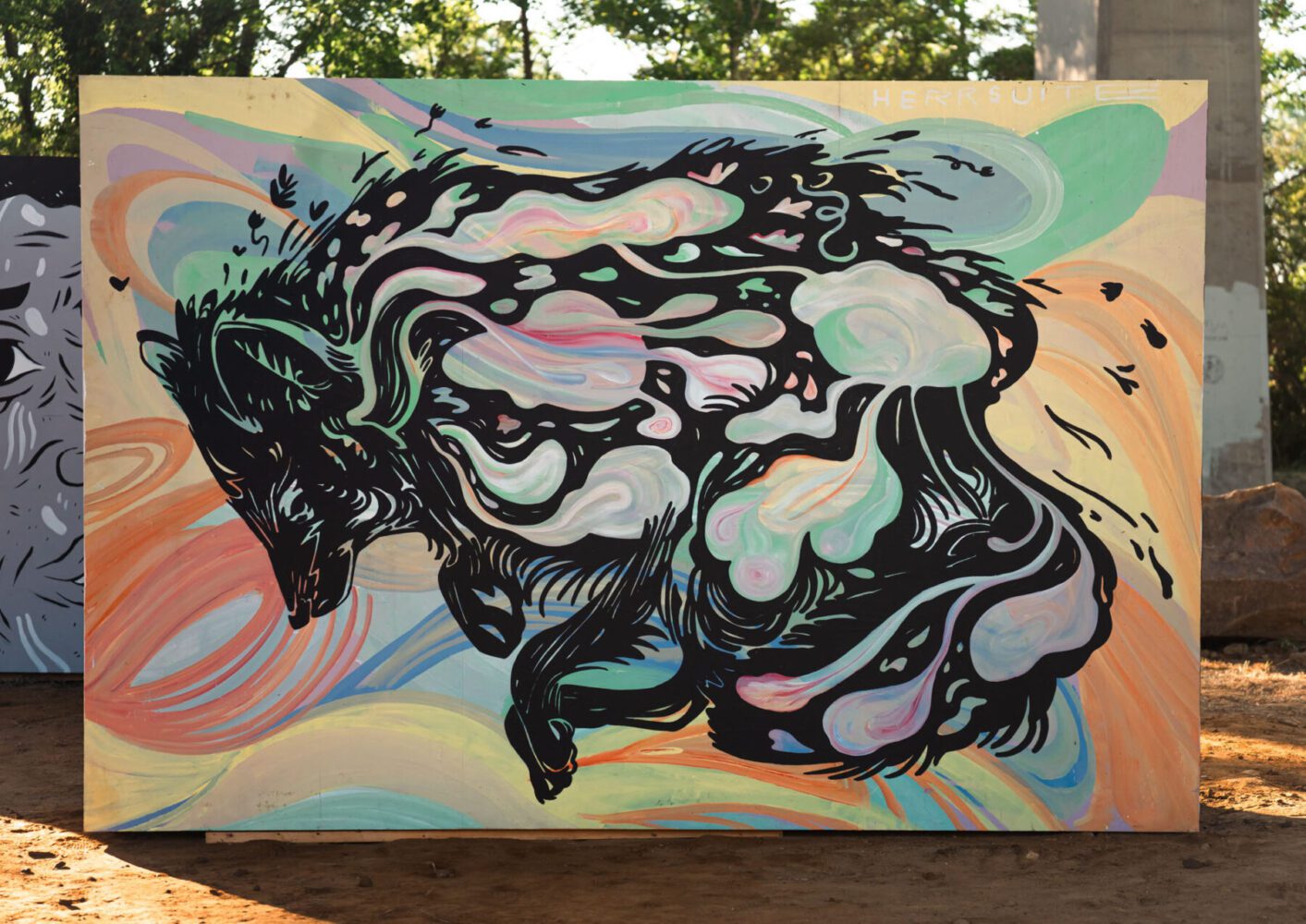
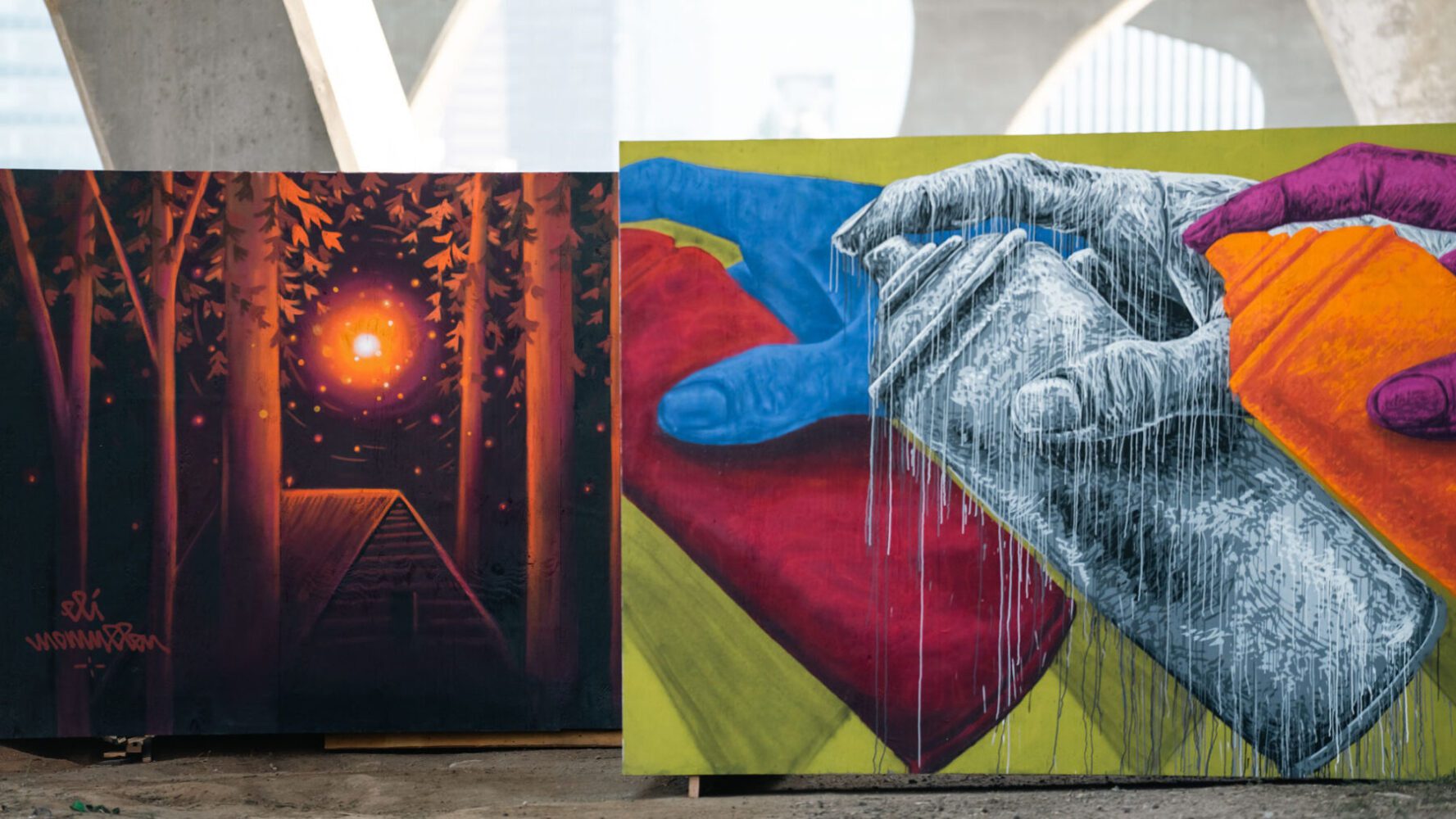
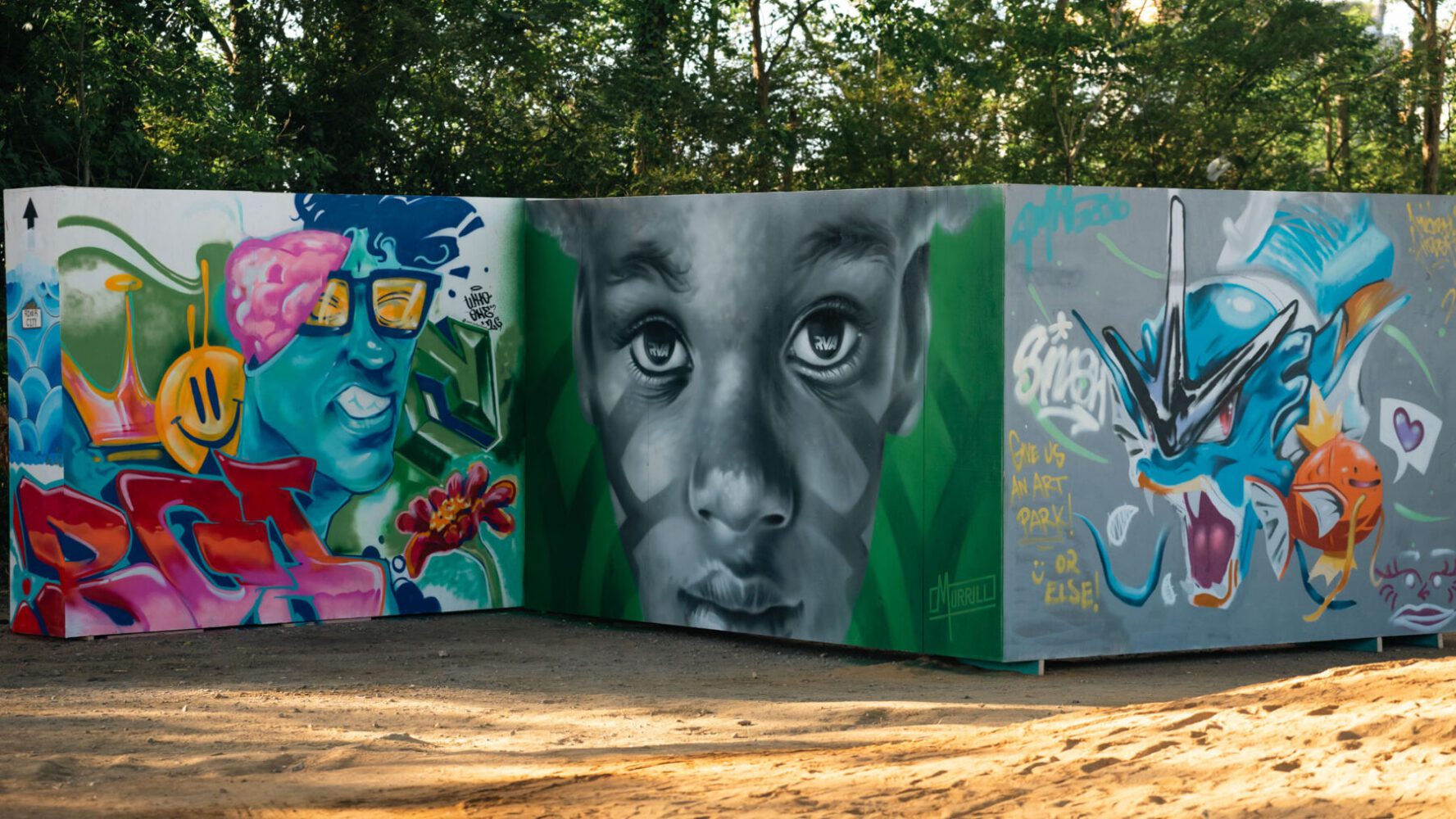
Hundreds of people moved through the space as muralists painted, DJs played, and passersby stopped mid-bike ride or walk to figure out what was going on. By the end of the afternoon, the one-day test of a proposed arts park felt less like a trial and more like a preview.
“I don’t know how it could have gone better,” said artist Ian C. Hess, an event organizer with Little Giant Society and owner of Supply Art Store. “It was crazy. People showed up from pretty much the moment it started to the moment it ended. All types of Richmond were out there.”
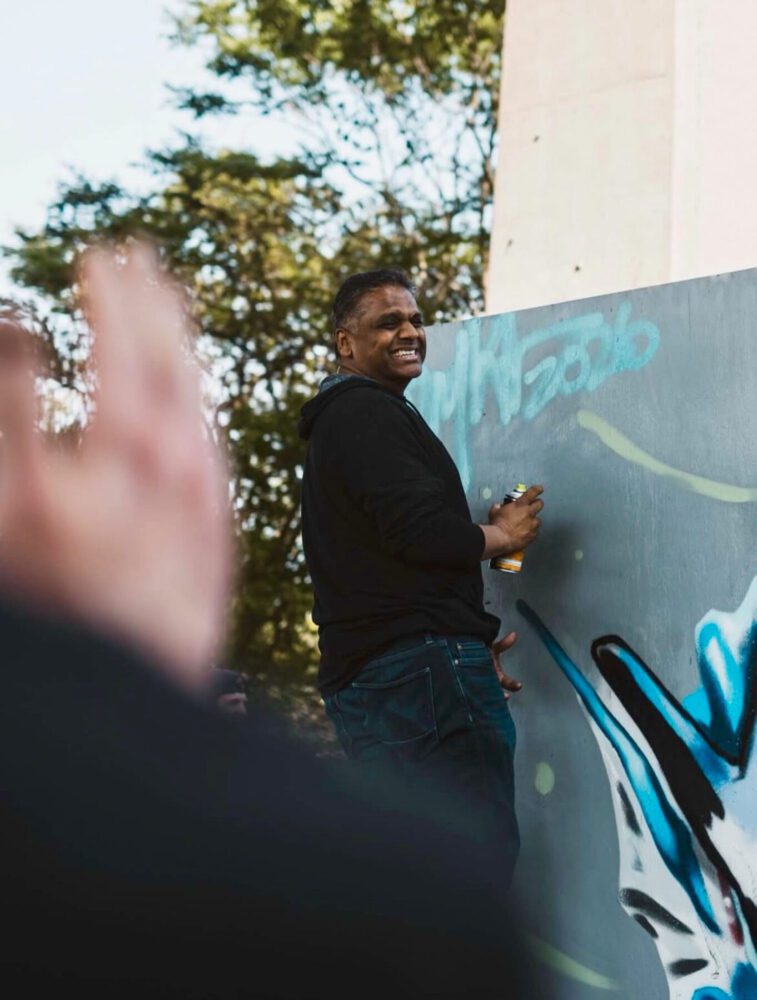
For Hess, the scale of the turnout didn’t fully register until midway through the event, when Richmond Mayor Danny Avula stepped up to paint.
“I was talking to him about the spray paint, a German brand called Molotow, telling him, ‘I swear this isn’t going to explode, you’re good,’” Hess said, laughing. “We went over to one of the walls and he agreed to throw up a tag. Then he turned to me and asked, ‘Can I get a skinny cap?’ I was like, ‘Yes, sir.’”
“I was just focused on talking to him, not really thinking about anything else,” he said. “Then I turned around, and it was just a wall of phones. I was like, ‘Oh shit.’”
“That’s when it hit me how many people were actually out there,” he said. “It kind of stuck in my brain what it is that we’re actually doing.”
The event was designed as a proof of concept for a permanent “vibrant arts park,” an open, artist-led space built around rotating mural walls and public use. After more than three years of pushing the idea forward, Hess said the response answered the central question.
“Richmond is such a colorful place,” he added. “You give people a blank canvas, and they just make it their own and go crazy with it in the most beautiful way.”
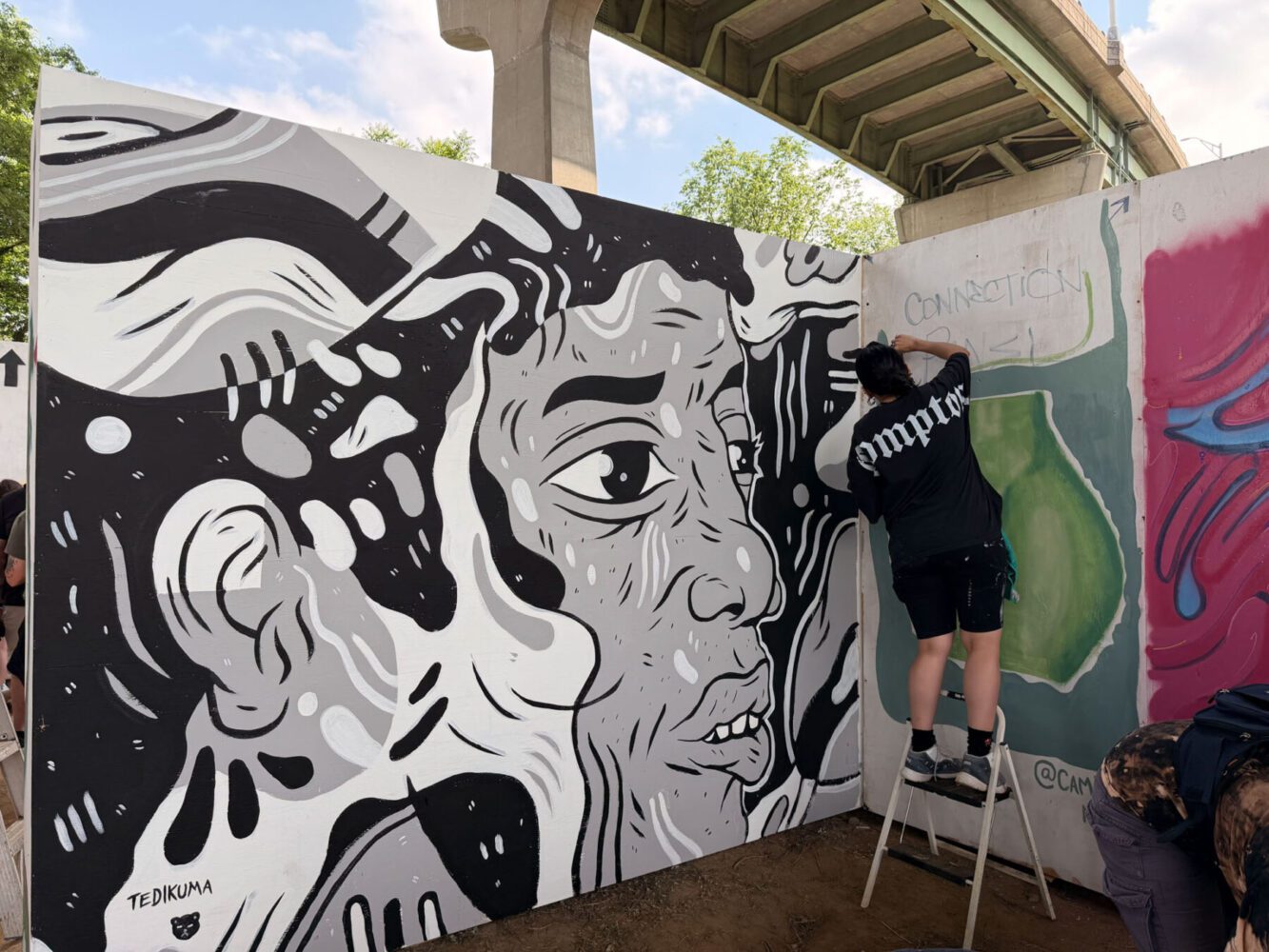
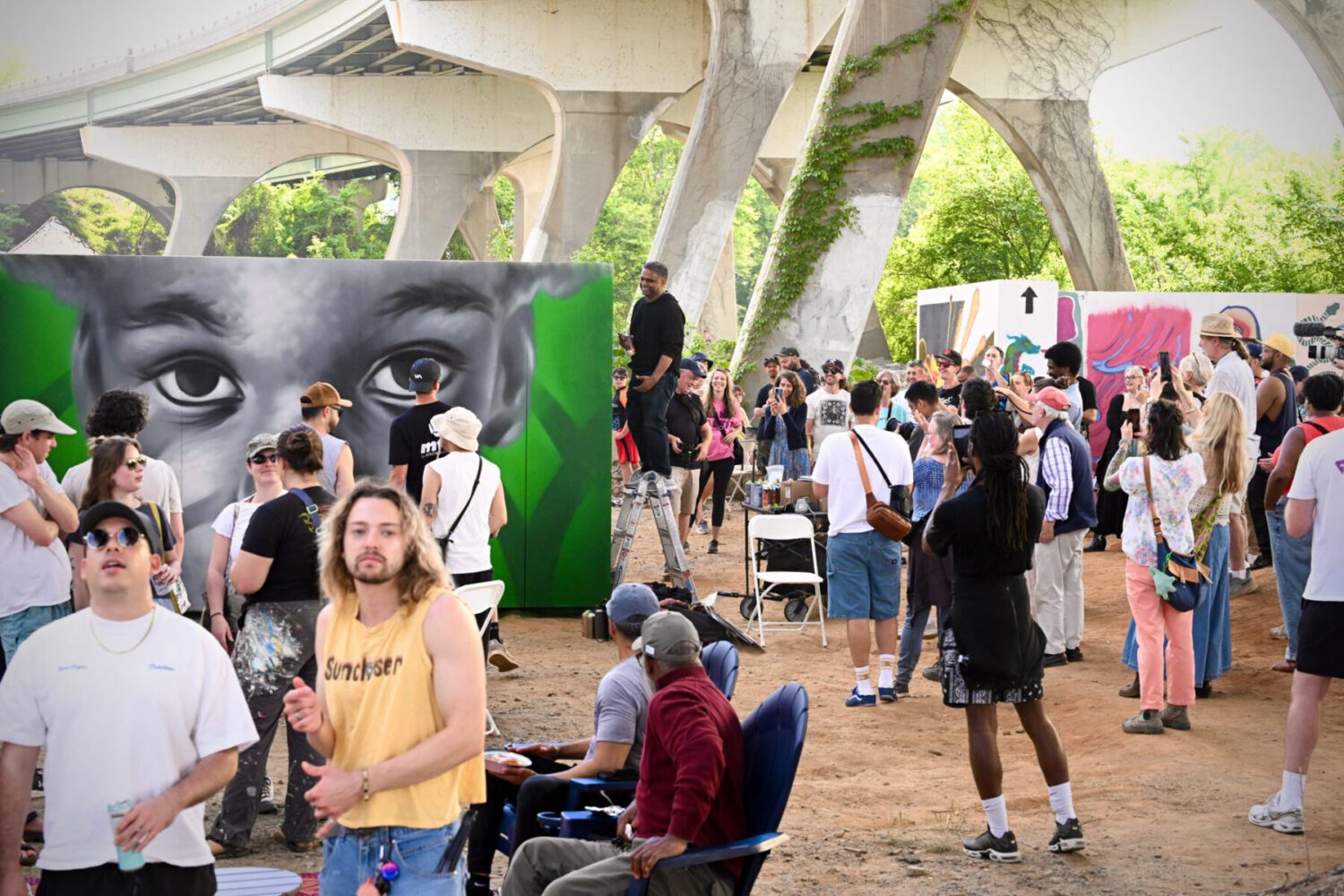
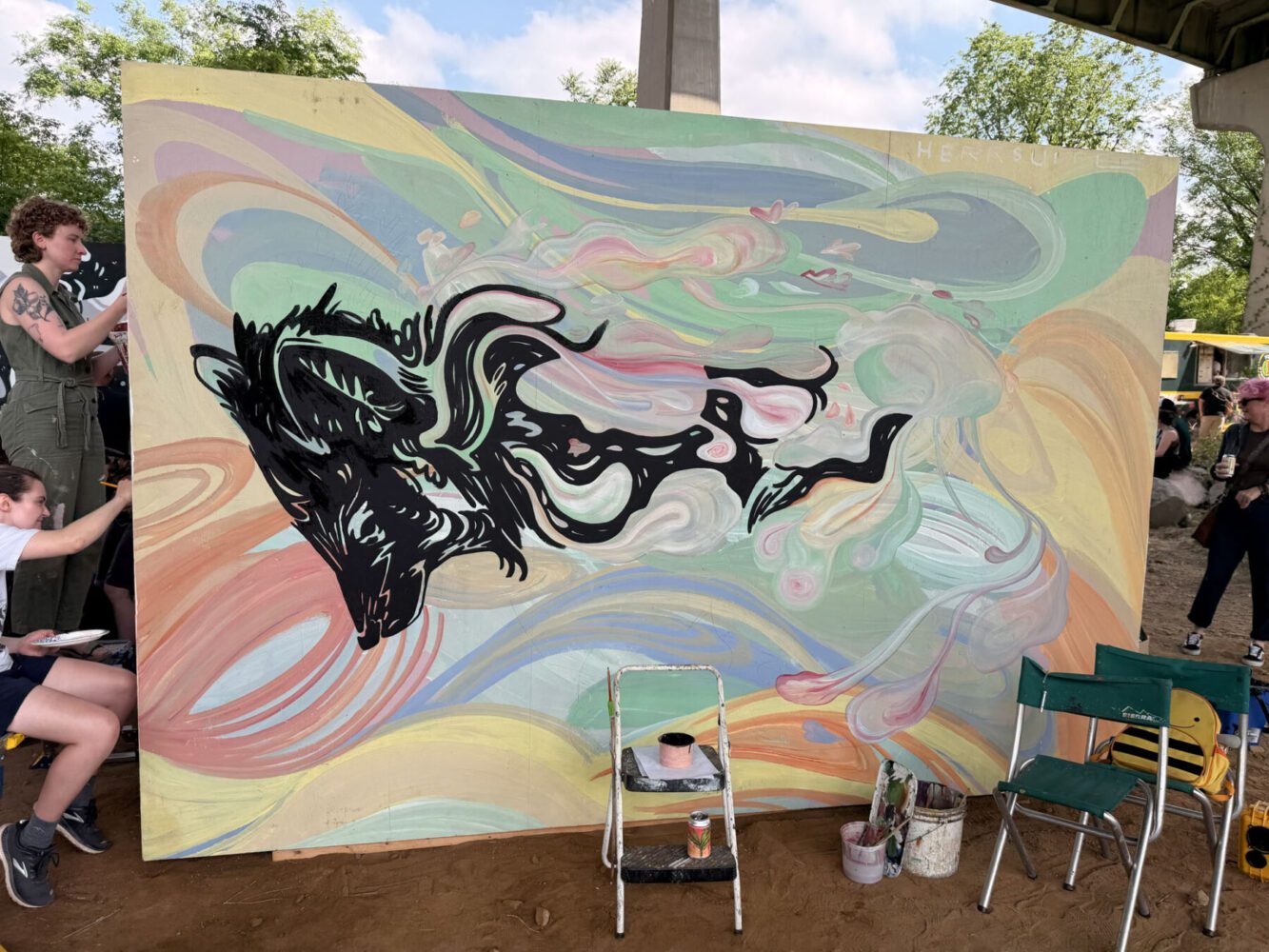
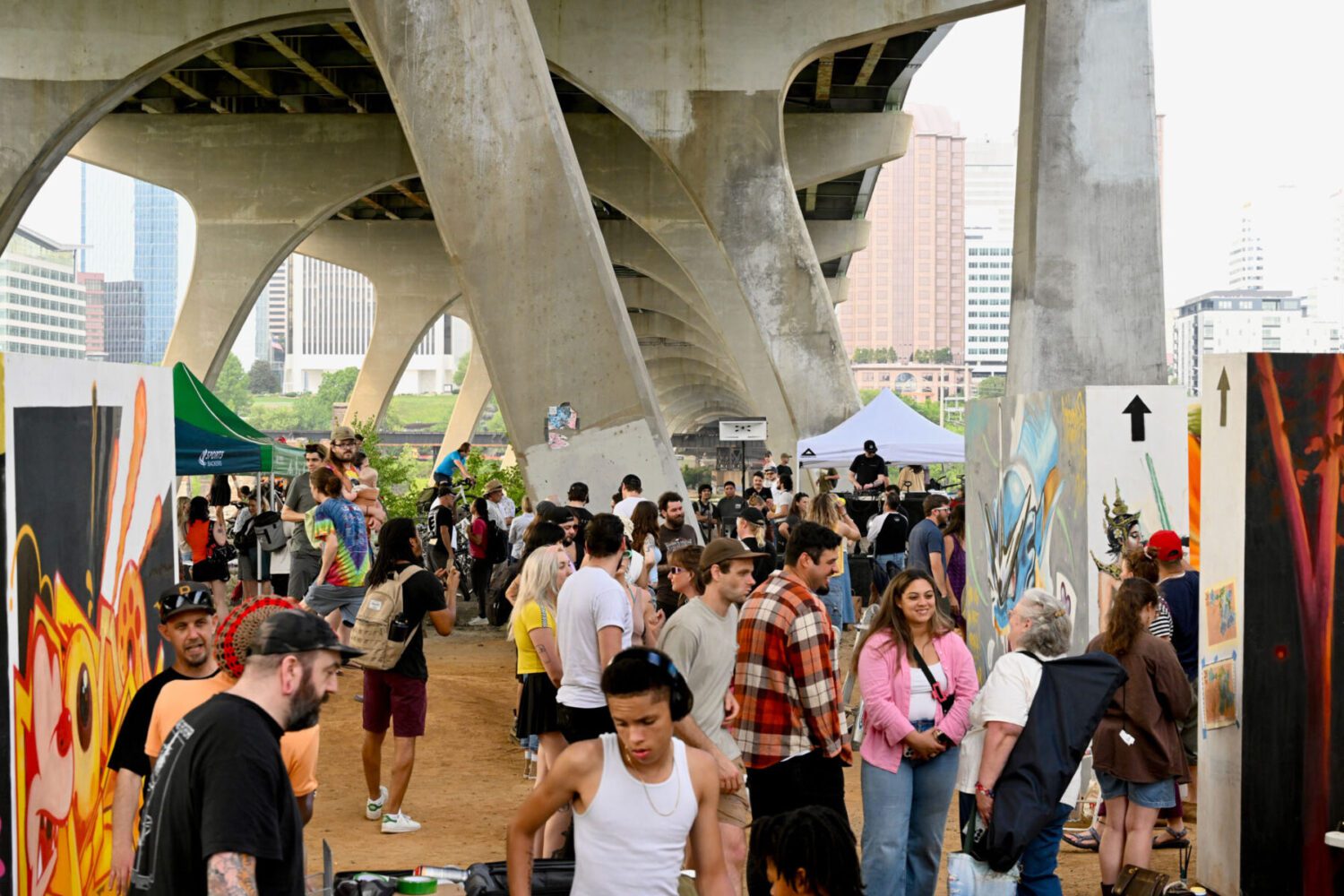
Photos by Ben White and R. Anthony Harris
The Activity Didn’t Stop
Although the event itself lasted only one afternoon, the space didn’t go quiet when it ended.
Temporary walls remained in place, and in the days that followed, artists continued to return, adding new pieces and drawing more visitors. What had been framed as a test continued to function as an active space.
“The thing about it being there a little bit longer is that it actually proves the concept works even more,” said organizer Ian Hess. “People have respected the murals. Graffiti hasn’t spread in mass to the surrounding area, which was one of the city government’s main concerns.”
Instead, he said, the activity has stayed largely contained to the walls themselves, with different types of use emerging naturally.
“I think thousands more people have come down there since,” Hess said. “The amount we’ve seen it shared and the new murals that have gone up, it’s crazy. You’ve got people spending time on big murals, and then you’ve got more community walls where people are just putting a couple things up. That separation is kind of baked in. It’s already there.”
The continued activity has also extended the reach of the project well beyond the initial crowd.
“Even after, with everything flying around on social media, people are still coming down there, seeking it out, making it a reason they love Richmond. It’s very special.”
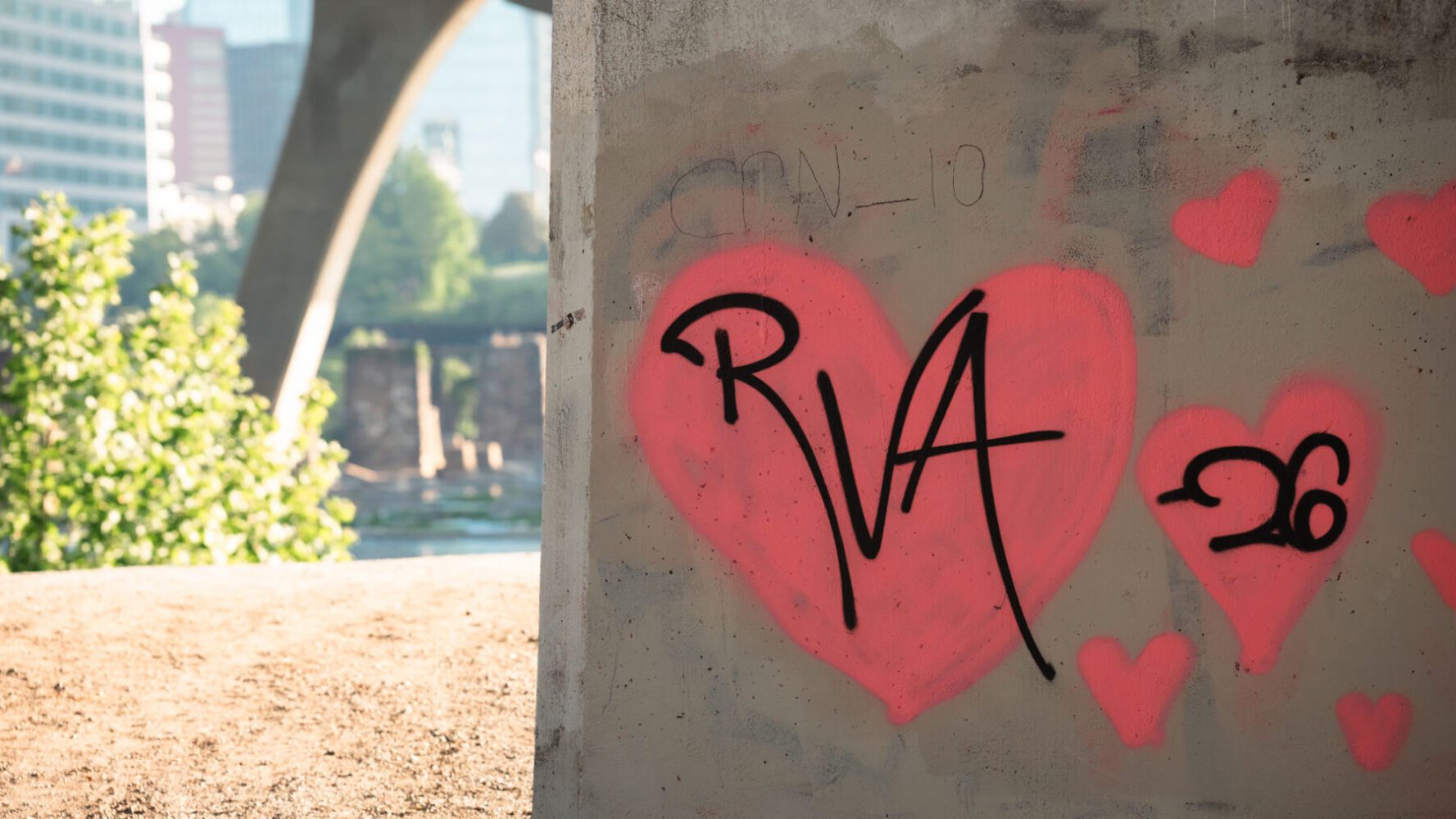


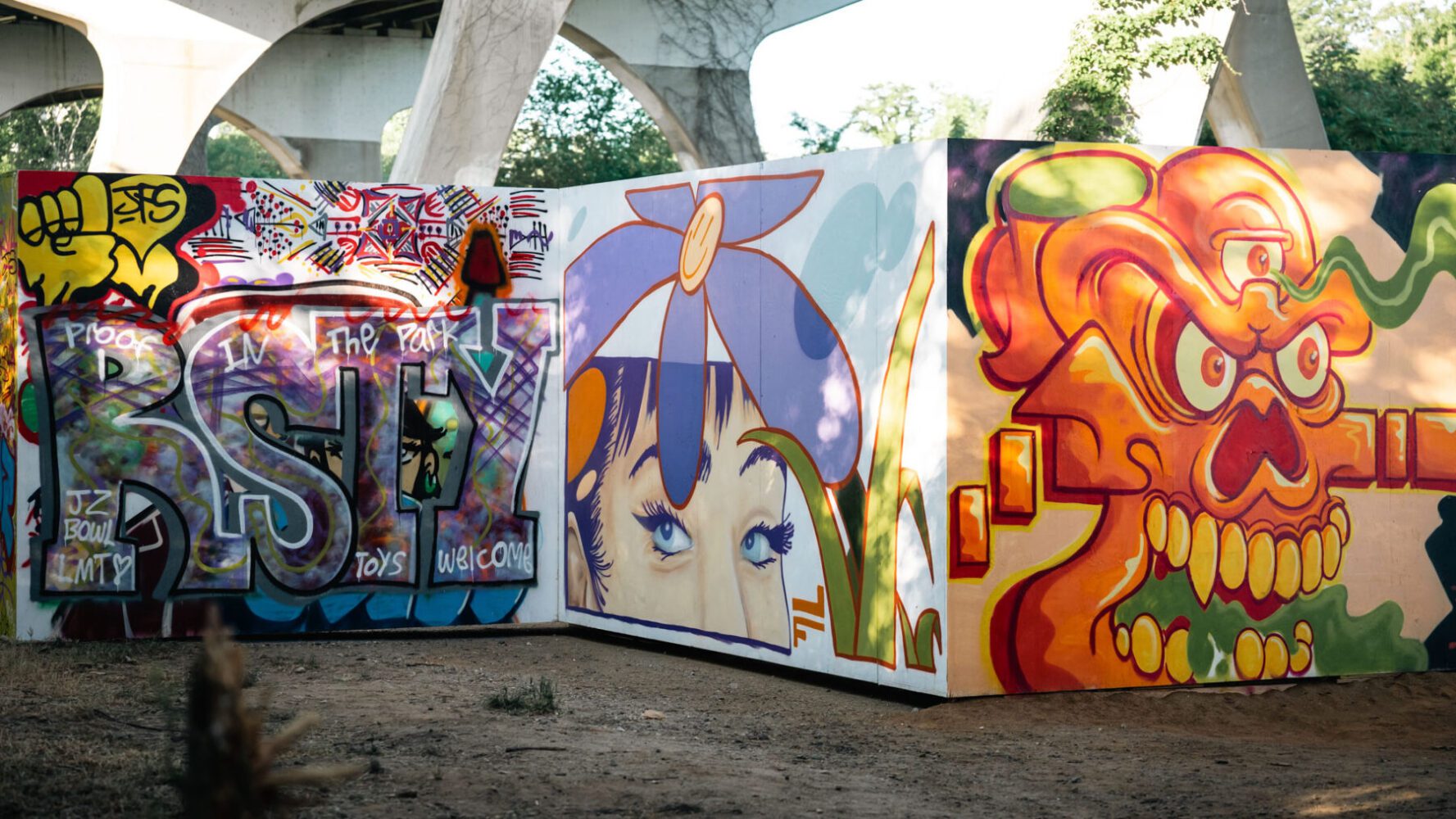



Photos by Penrose
Waiting on the City
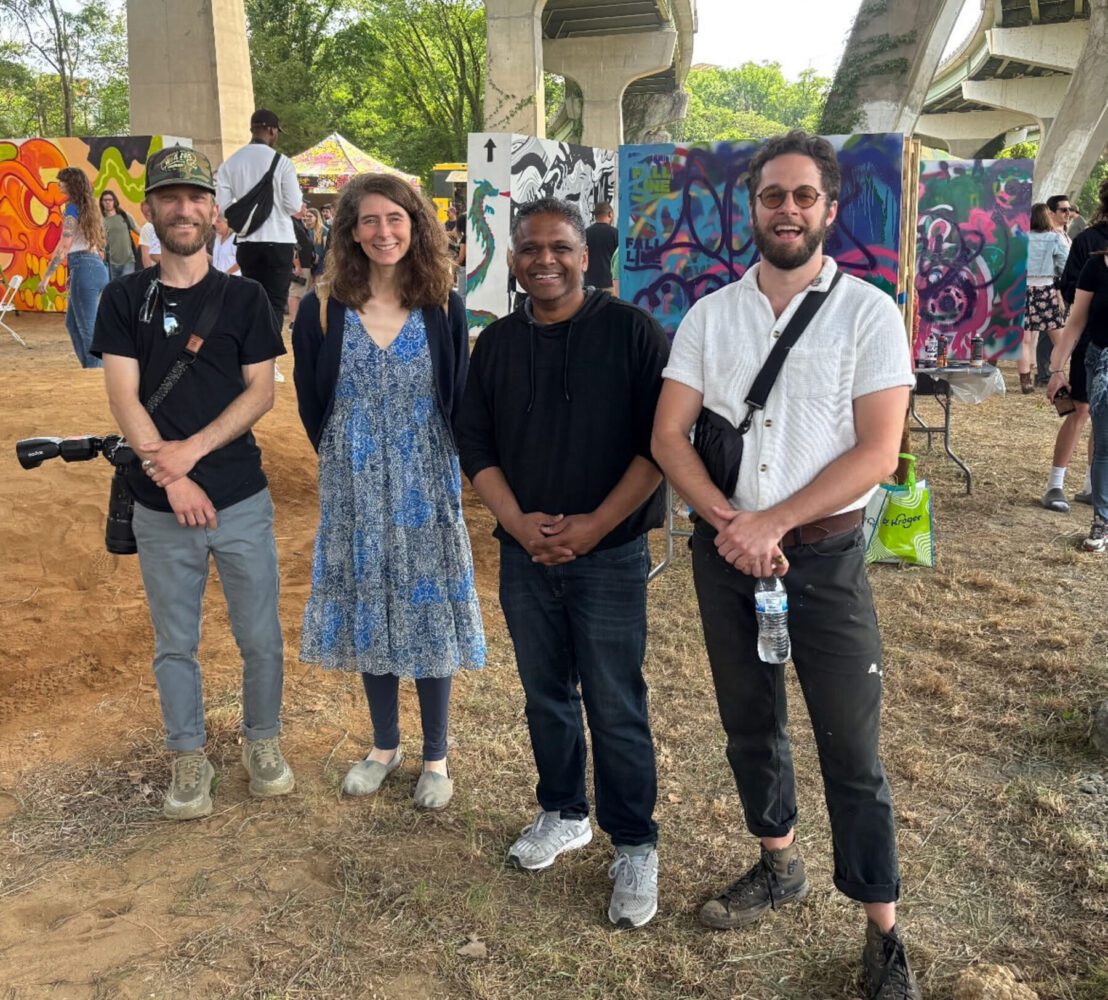
Following the event, Hess said organizers have had direct conversations with city leadership about what it would take to move forward. According to Hess, Mayor Danny Avula expressed support and asked what obstacles remain.
He said those conversations reflect an effort to keep momentum going while also giving the city something visible in the short term.
“After the mayor gave his speech, he came to us and basically said, ‘Where are the roadblocks and how do we make this happen?’” Hess said.
The remaining hurdles are largely procedural, involving coordination between departments such as Parks and Recreation and the Department of Public Works, along with formal approval to use the land for a permanent installation.
“He said he heard us and that this is something that needs to happen,” Hess said. “But we’ve gotten nothing in the black. Nothing is seemingly written down.”
That has left organizers in what he described as a holding pattern, despite what they see as a clear public response.
“We just had an overwhelmingly successful event,” he said. “The mayor came down and painted at the same time that little kids were, professionals were, and every type of artist in between. It was everyone together as a community. It’s a win for the city. It’s a win for artists. It’s a win for everyone who loves art.”
“After almost four years, I don’t believe in waiting when working with the government,” Hess added. “I just don’t know what there is to wait for. I kind of don’t know, and that’s not a great answer, and it’s not a good feeling either.”
What Happens Next
In the short term, organizers are working with the city on what to do with the temporary infrastructure used for the event. Options under discussion include donating some of the walls to the city, placing others in community spaces, or reusing them for future activations.
“I think right now we’re trying to figure out what to do with the walls,” Hess said. “One of them we want to donate to the city. Another might go to a community center through Parks and Rec, and we’re talking about possibly placing a few on Broad Street during the upcoming tourism conference.”
At the same time, interest in the concept is beginning to extend beyond Richmond.
“There’s interest in a public art park in Petersburg,” said organizer Ian Hess. “And if something like that ends up happening there before it’s built here, that would be a tragedy. We’ve been at this for three and a half years now. It would be best to start it here in Richmond,” he said.
Hess said the response to the event has only reinforced his belief that the idea has broader potential.
“Every city with a creative scene is going to recognize how good this is for artists, and for people to actually experience the arts and meet the artists,” he said. “I don’t think there’s a better way. I think it becomes something pretty regular, in the same way there’s a playground outside of a school. It kind of just works, and the ways you can use it are unlimited.”
After three and a half years of planning, the project has now moved from concept to a real-world test, with visible public participation and continued use after the event ended.
“It’s just time to build,” he said. “It’s time to build it and stop talking about it.”
Main photo by Ben White, courtesy of Little Giant Society
Support RVA Magazine. Support Independent Media in Richmond.
At a time when media ownership is increasingly concentrated among corporations and the wealthy, RVA Magazine has remained one of Richmond’s few independent voices. Since 2005, the magazine has provided grassroots coverage of the city’s artists, musicians, and communities, documenting the culture that defines Richmond beyond the headlines.
But we can’t do this without you. A small donation, even as little as $2, one-time or recurring, helps us continue to produce honest, local coverage free from outside interference. Every dollar makes a difference. Your support keeps us going and keeps RVA’s creative spirit alive. Thank you for standing with independent media. DONATE HERE.
We’ve got merch HERE
Subscribe to the Substack HERE
And Reddit HERE
And YouTube HERE