How two decades of community organizing grew into a vision for land ownership, education, and self-determination.
The first time I met Duron Chavis, he wasn’t talking about farmland. He was talking about culture.
It was the early 2000s, and Happily Natural Day was still in its infancy. Founded in 2003 at Richmond’s Black History Museum & Cultural Center of Virginia, the festival focused on natural hair, holistic health, African heritage, and community. Inspired by Black self-determination movements, it asked a simple question: What does it mean for a community to take ownership of its own health, culture, and future?
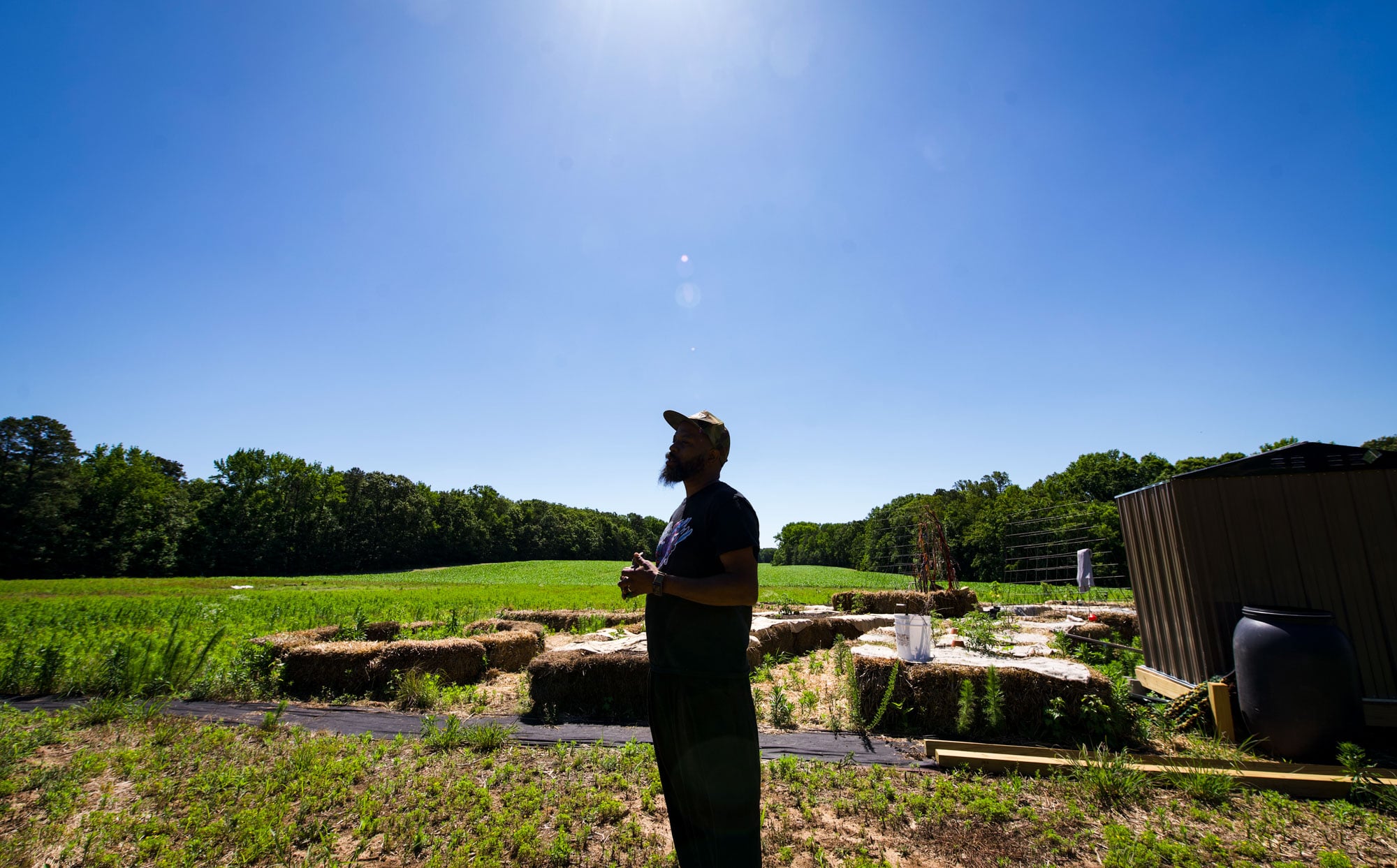
Few could have guessed that twenty years later Duron would be standing in an open field in eastern Henrico holding the deed to more than sixty acres of protected farmland.
Looking back, though, it makes perfect sense. The idea never changed, only the scale.
I’ve interviewed plenty of people with ideas but few put words into action and kept building.
Community gardens became orchards.
Orchards became urban farms.
Urban farms became training programs.
Now those training programs have somewhere permanent to grow.
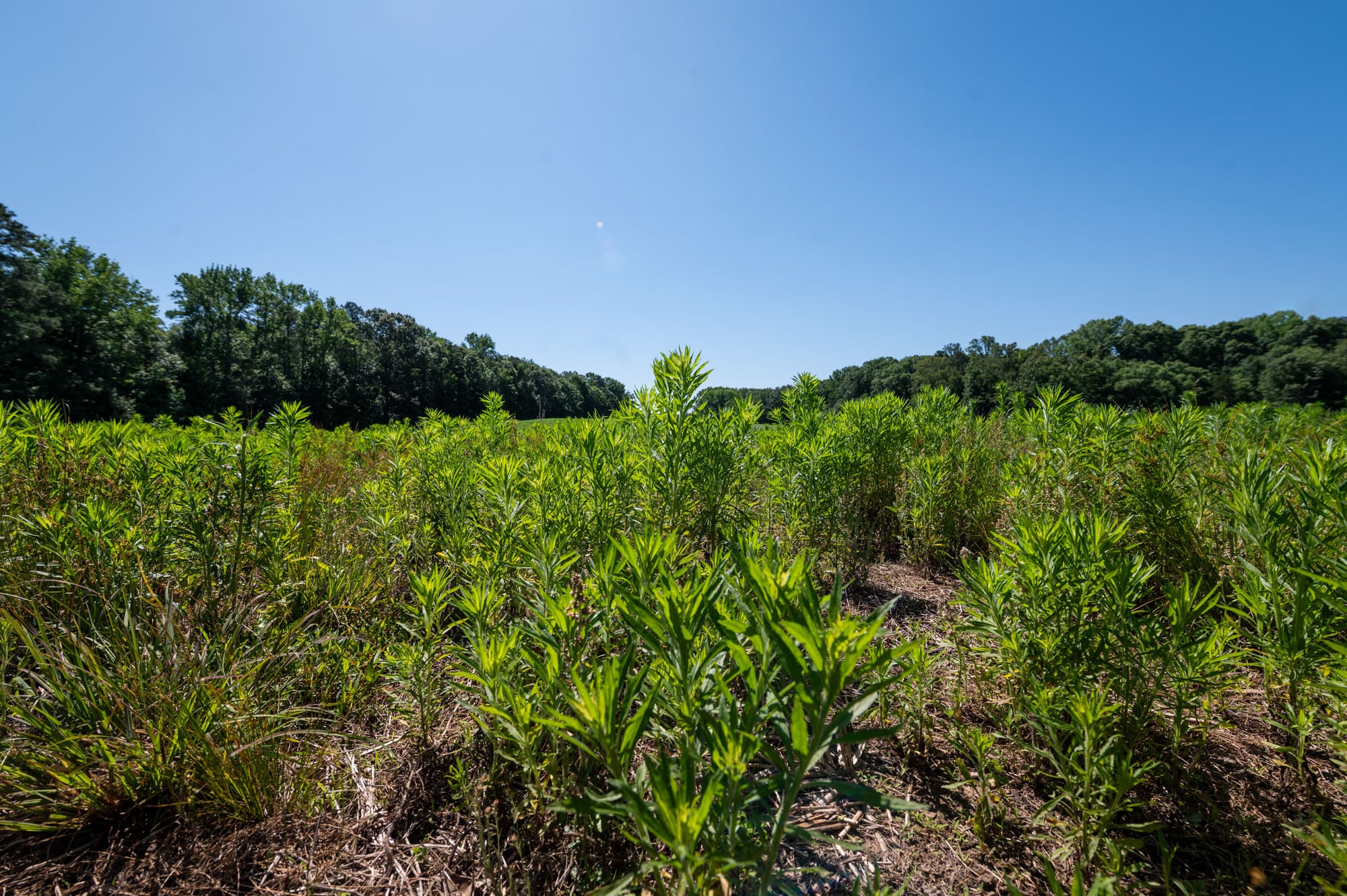
Earlier this year, the Capital Region Land Conservancy transferred sixty-one acres of farmland along New Market Road to the Central Virginia Agrarian Community Land Trust, the nonprofit Chavis chairs. Protected by a conservation easement, the property will remain farmland while providing space to train new farmers, preserve open space, and eventually interpret the history of the United States Colored Troops who fought nearby during the Civil War.
When I asked Chavis what the moment meant, he didn’t hesitate. “It is a new chapter,” he said. “When we first started, we were doing community gardens on city land… to go from less than a quarter acre to now having about 150 acres that we own is amazing.”
Twenty years ago, Duron was asking the city for permission to plant gardens on vacant lots. Today he’s training new farmers on land that belongs to the community. And for years, Chavis and his organization have taught people how to grow food through the Urban Farm Fellowship.
The challenge wasn’t finding students. It was giving them somewhere to go afterward. “We’ve been training folks for a while now,” he said. “Once people finish with the training, them having the space to actually implement what they’ve learned is a big deal.”
That became obvious when I visited the property.
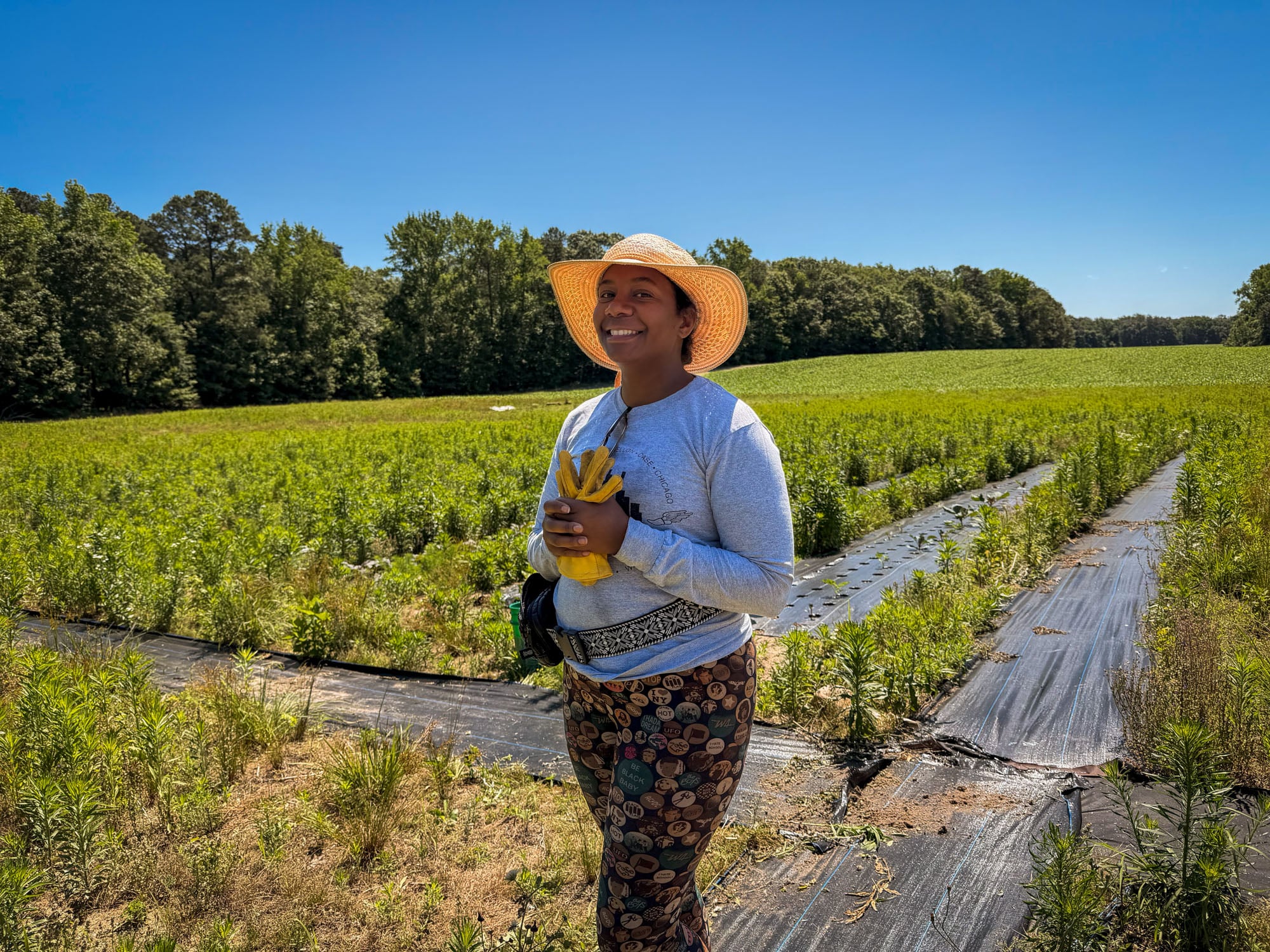
Beatrice Plaza didn’t come to the fellowship because she dreamed of becoming a commercial farmer. She came because she wanted to become, in her words, “a steward of the land.”
An educator by profession, Plaza had long been interested in food justice and the relationship between agriculture and community. The fellowship gave her the opportunity to study Virginia’s agricultural history alongside the practical work of rebuilding soil and growing crops.
Today she’s growing what she calls “storytelling crops.”
Peanuts.
Cotton.
Tobacco.
She spent time researching Virginia’s historic export crops at the Library of Virginia and hopes to work with historians to tell the stories behind them. “I would really like to create opportunities for school-aged kids to come out and learn,” she said. “To really connect that lesson we had on George Washington Carver to what peanuts look like, how they grow, how they enrich the soil through nitrogen production.”
Standing just a few miles from Shirley Plantation, one of the oldest plantations in North America, Plaza sees the surrounding landscape as a living classroom. “There’s history here,” she said. “I’m really hoping to connect schools and people and anyone interested, regardless of age, to knowing and seeing and touching these plants and hearing the stories behind it.”
Then she paused. “There’s a lot of healing and growth that can happen in education through nature.”
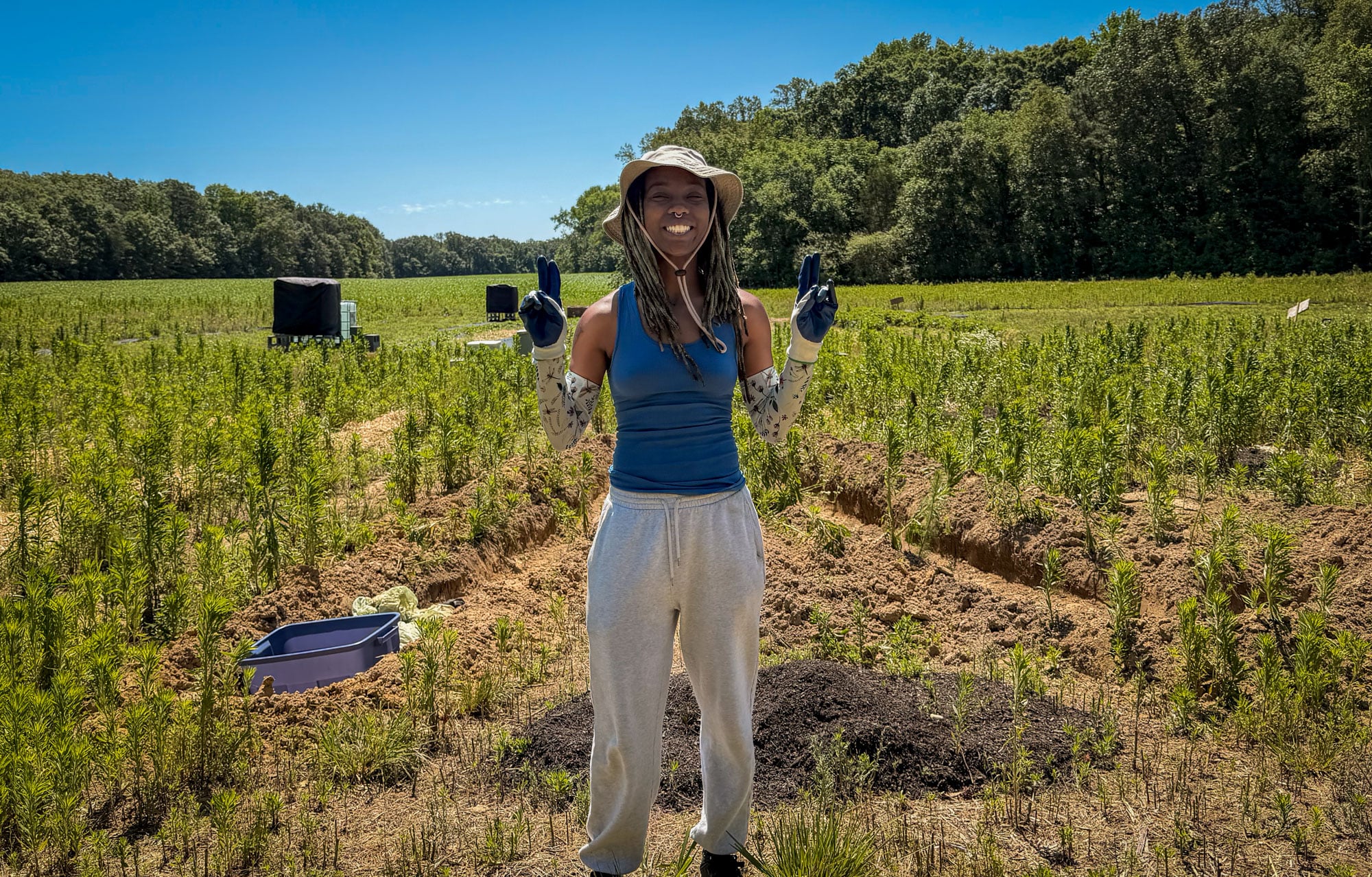
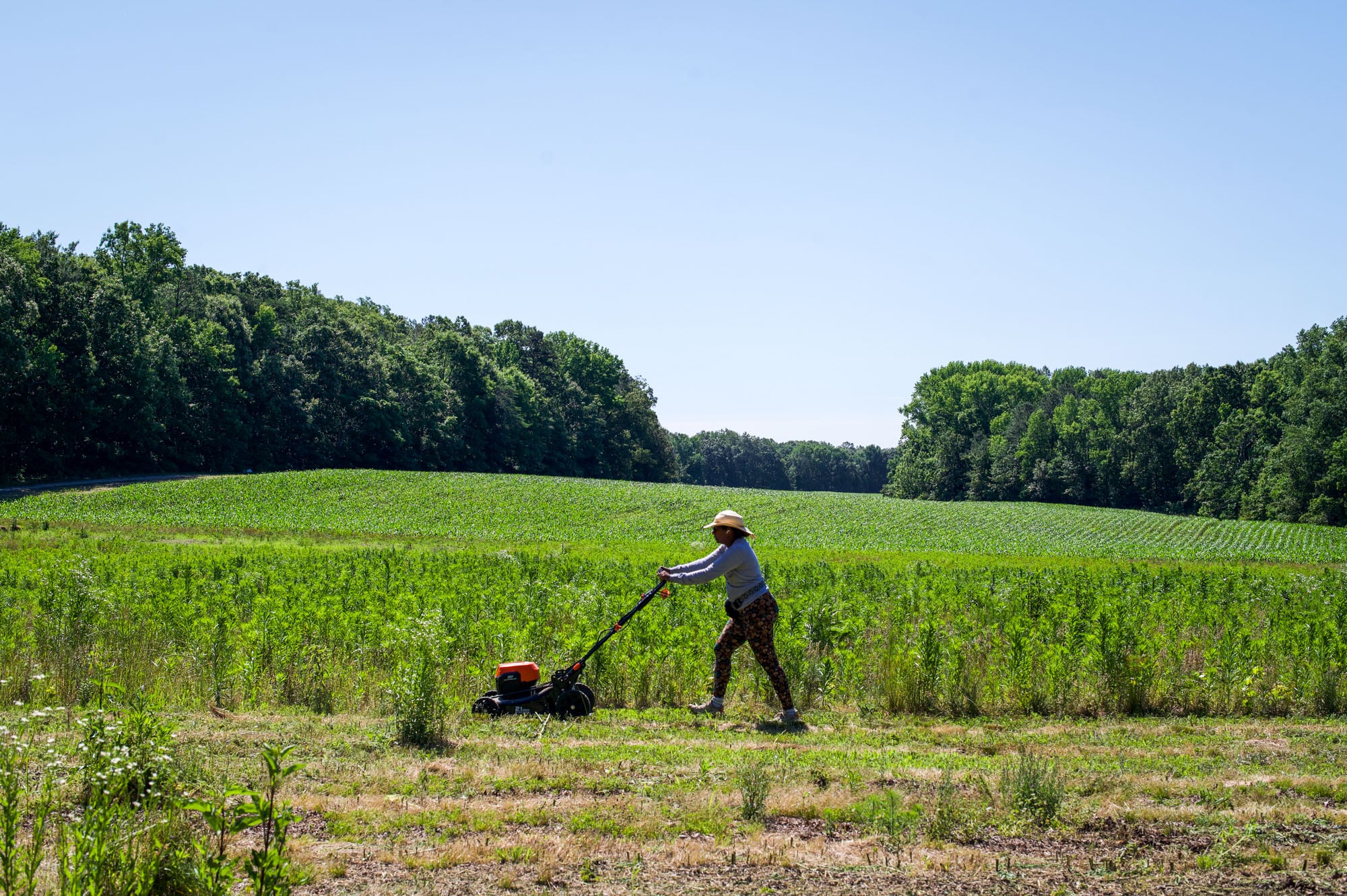
Another fellow, Odulja, isn’t growing much of anything yet, and that’s intentional. Before planting a single crop, she is rebuilding soil that had been depleted over time. “Right now I’m not growing anything,” she told me. “I’m focusing on building up the soil… I want to make sure everything is in alignment before I start putting stuff in.”
Later she will plant herbs and annuals while experimenting with cardboard and burlap as natural weed barriers.
Asked what they enjoyed most about having a plot of land, she didn’t talk about yields. “It’s freedom of expression,” she said. “If you look at it from like a drone view, you can see the different rows going inwards to make it into a heart. So I like to do a lot of art stuff, and it just gives me like a place to put all of my passions into one.”
Neither conversation revolved around profit. Both revolved around stewardship.
Parker Agelasto has watched Chavis’s work evolve almost as long as I have.
Long before becoming executive director of the Capital Region Land Conservancy, Agelasto knew Chavis from Richmond’s earliest community garden efforts. He watched those gardens become Sankofa Community Orchard, then urban farming, then farmer training.
What struck him wasn’t simply Duron’s persistence but that each step revealed the next problem to solve. “The big picture is that farmers in the United States, for the most part, don’t own their land,” Agelasto told me. “About a third of all farms are owner-operated. Most are tenants.”
He compared it to the housing insecurity many Richmond residents know all too well. Farmers invest years improving soil, installing irrigation, building hoop houses, and creating businesses, only to lose access to the land beneath them. “What we’re seeing right now is a huge real estate turnover,” he said. “More and more farmland is being converted, whether it’s for housing, solar fields, or data centers.”
For Agelasto, conserving farmland isn’t simply about preserving open space but making sure working farmers still have somewhere to work.
That’s why the relationship between the Capital Region Land Conservancy and Chavis made sense. The two had spent years talking about the same problem: how to preserve farmland while making it accessible to the people willing to farm it. When this property became available, Agelasto said, both organizations immediately recognized the opportunity.
Later, I asked Chavis about something a skeptical friend had said when I mentioned the project. “So… are you actually going to own the land,” I asked, “or is this basically sharecropping all over again?”
He laughed. “We own it,” he said. “Deed and title is in the Central Virginia Agrarian Community Land Trust.”
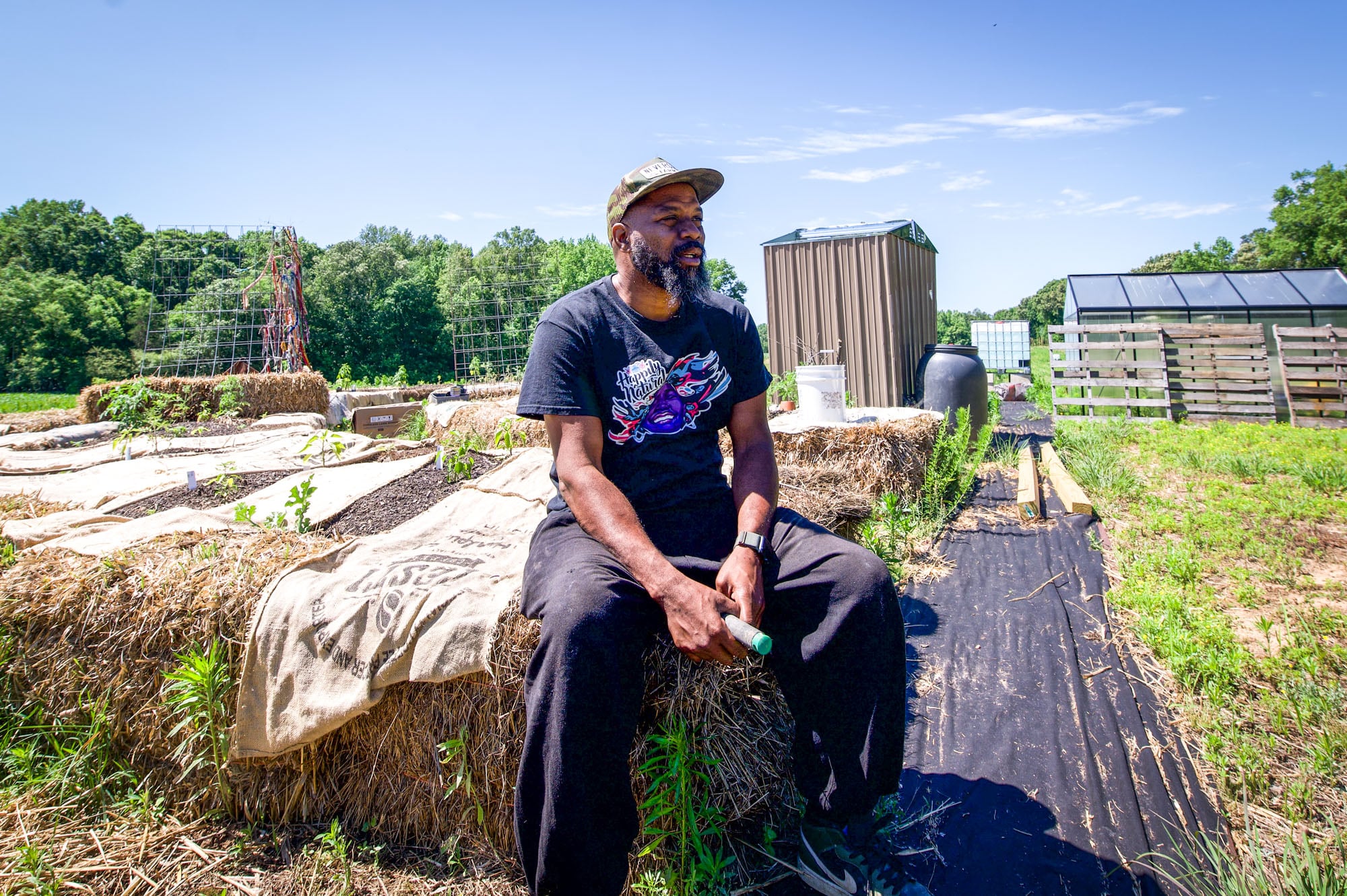
Watching Duron Chavis over the last twenty years has reminded me that meaningful change rarely happens all at once.
It starts with an idea then someone keeps showing up.
Day after day.
Year after year.
Decade after decade.
Eventually, if the work survives long enough, the idea becomes something larger than the person who started it. Standing in that field, watching new farmers prepare soil they’ll actually have the chance to keep working, it felt like I wasn’t looking at the end of Duron Chavis’s journey.
It felt like I was watching the foundation being laid for someone else’s.
Photos by R. Anthony Harris
Support RVA Magazine. Support Independent Media in Richmond.
At a time when media ownership is increasingly concentrated among corporations and the wealthy, RVA Magazine has remained one of Richmond’s few independent voices. Since 2005, the magazine has provided grassroots coverage of the city’s artists, musicians, and communities, documenting the culture that defines Richmond beyond the headlines.
But we can’t do this without you. A small donation, even as little as $2, one-time or recurring, helps us continue to produce honest, local coverage free from outside interference. Every dollar makes a difference. Your support keeps us going and keeps RVA’s creative spirit alive. Thank you for standing with independent media. SUPPORT HERE.
Subscribe to the RVA Mag Weekly Newsletter HERE
We’ve got merch HERE
Subscribe to the Substack HERE
And Reddit HERE
And YouTube HERE