
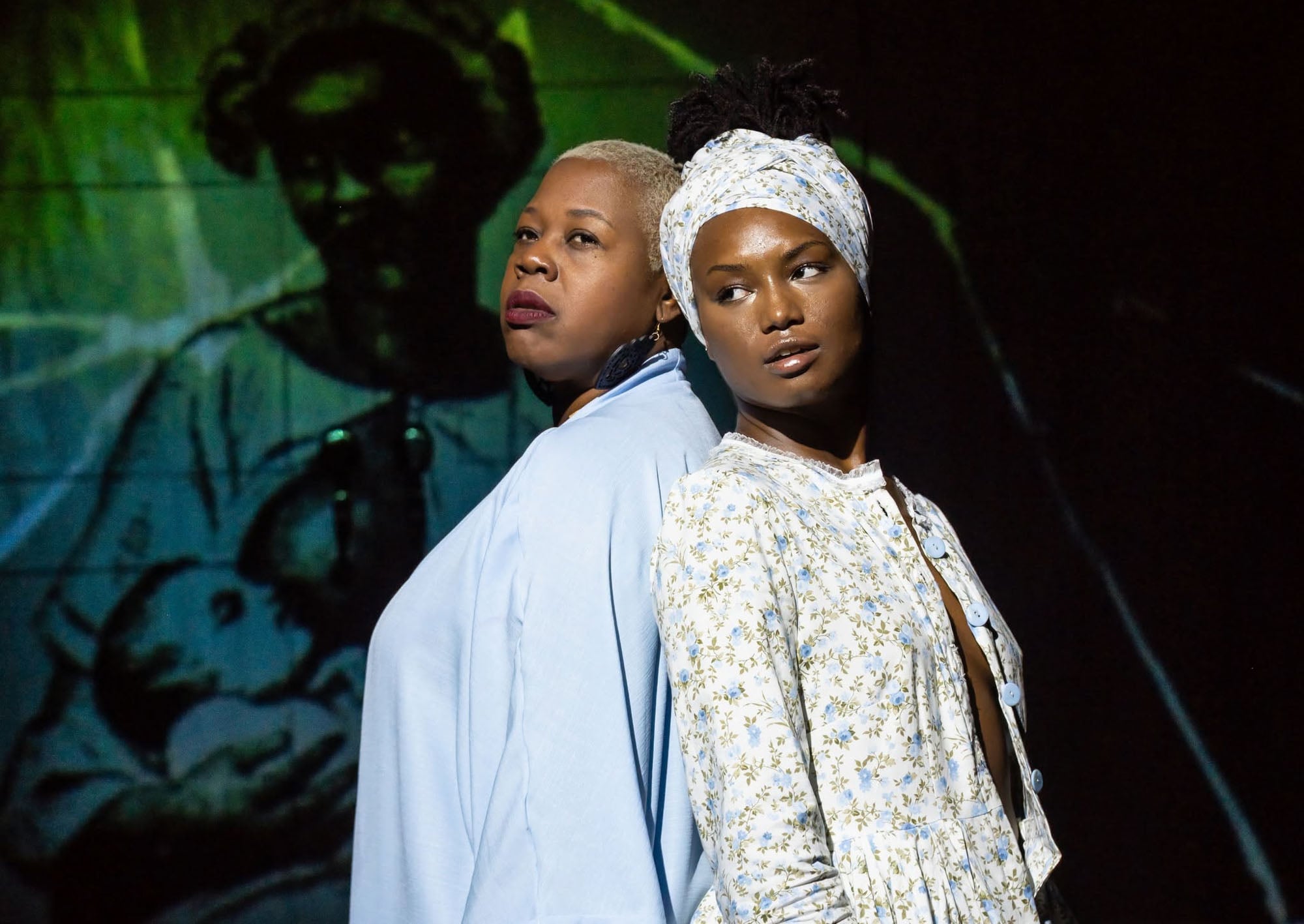
“Oh, I’m going to have a field day with this.” These were my exact words to friend and artist Kyle Epps as I got up from my seat at Firehouse Theatre Saturday night. As we shuffled out of the theatre into the lobby, I took inventory of the stack of insights Dominique Morrisseau’s Confederates made into desperate rhetorical knife fights on the oft-ignored nuances of American racism.
The brilliance of the piece doesn’t lie in its bald-faced take on the peculiar institution. If there is a badge of dishonor this country wears above all others, it is this one. We all know that. Its power lies in a deeper dissection of the beast. There are arguments within arguments, conundrums that perpetuate wrongs in service of survival. It explores how allyship is (frustratingly, to those keen to accept it) navigated with privileged ignorance at times. When your pursuit of freedom from institutional racism is a feel-good exercise for the unaffected, that journey itself can be a submission.
Dominique Morrisseau should sound familiar if you are a regular theatre-goer in Richmond. She is the Tony Award-winning playwright of nine plays that eloquently explore the inexhaustible wind tunnel of conversations surrounding racial justice. Firehouse Theatre staged her 2013 work, Detroit ’67, in 2024 to rave reviews. Confederates emerged in 2022, post-BLM/Covid/Agent Orange, and her pen surges with the anger and forfeit of patience the time inspires.
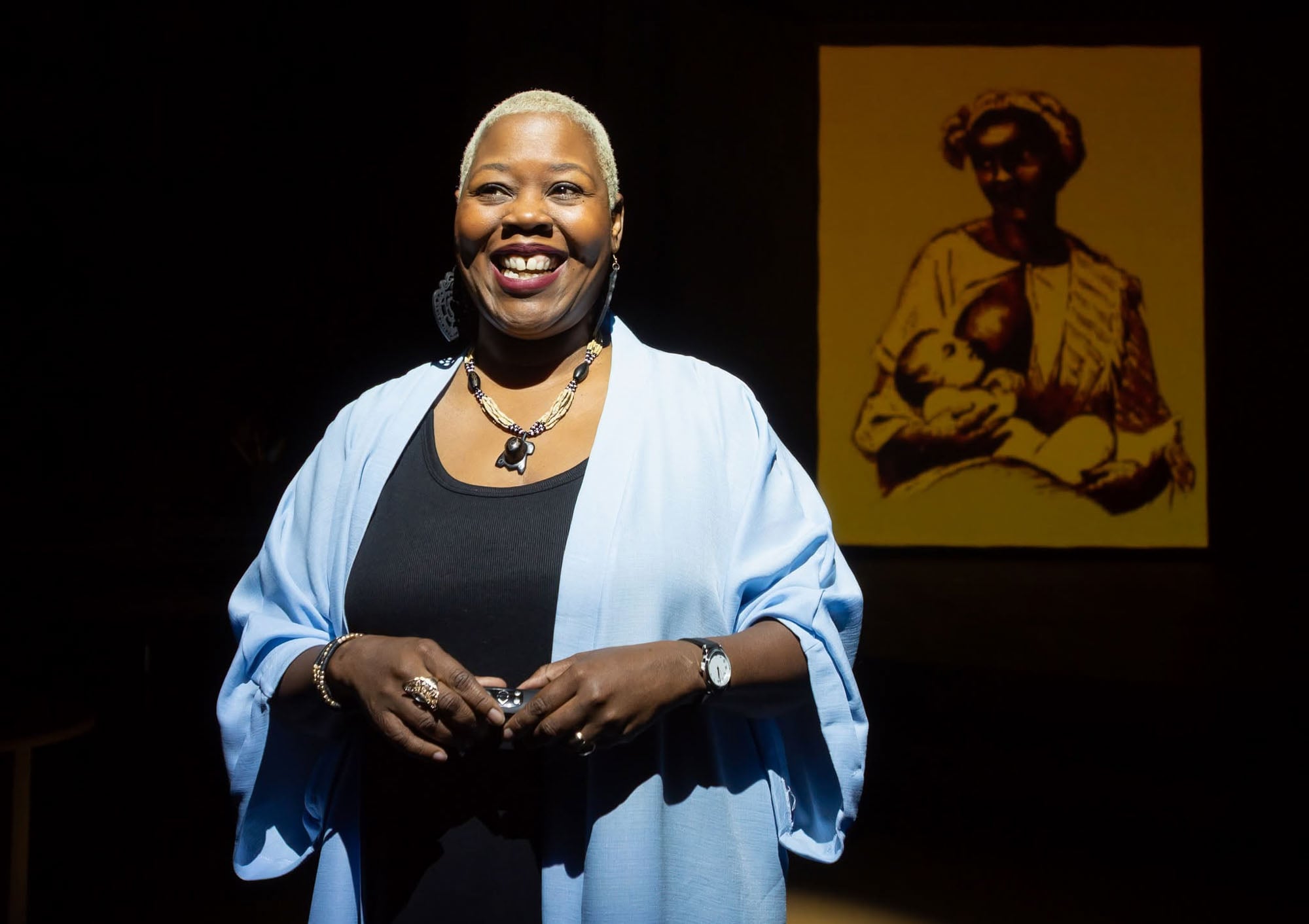
We are greeted with a monologue delivered by the wonderful Lucretia Marie as Sandra, a tenured professor at an Ivy League school. She lists all of the media she’s absorbed over the decades on the subject of slavery, from Roots to 12 Years a Slave, and makes Morrisseau’s first point. For those who look at these films as pieces of reluctant heritage, the way a medieval knights’ tale informs our allies’ and enemies’ identities, it is telling that she has to footnote that she consumed them willingly. That she had no sense of endurance a lot of others feel in front of these works.
This is not a common feeling, and I understand if you don’t live in a dark skin, you may have never considered the slog it can be. This may just be a hot take of my own, but when I watch these films, I see a media vehicle still aimed at making the European comfortable. Comfortable that this isn’t depicting them. That they’d never do such a thing. “Look how much better we are than our ancestors.” I often cannot do what Sandra claims. I don’t see healing in them. I see a placation of guilt. That’s just me. Or is it?
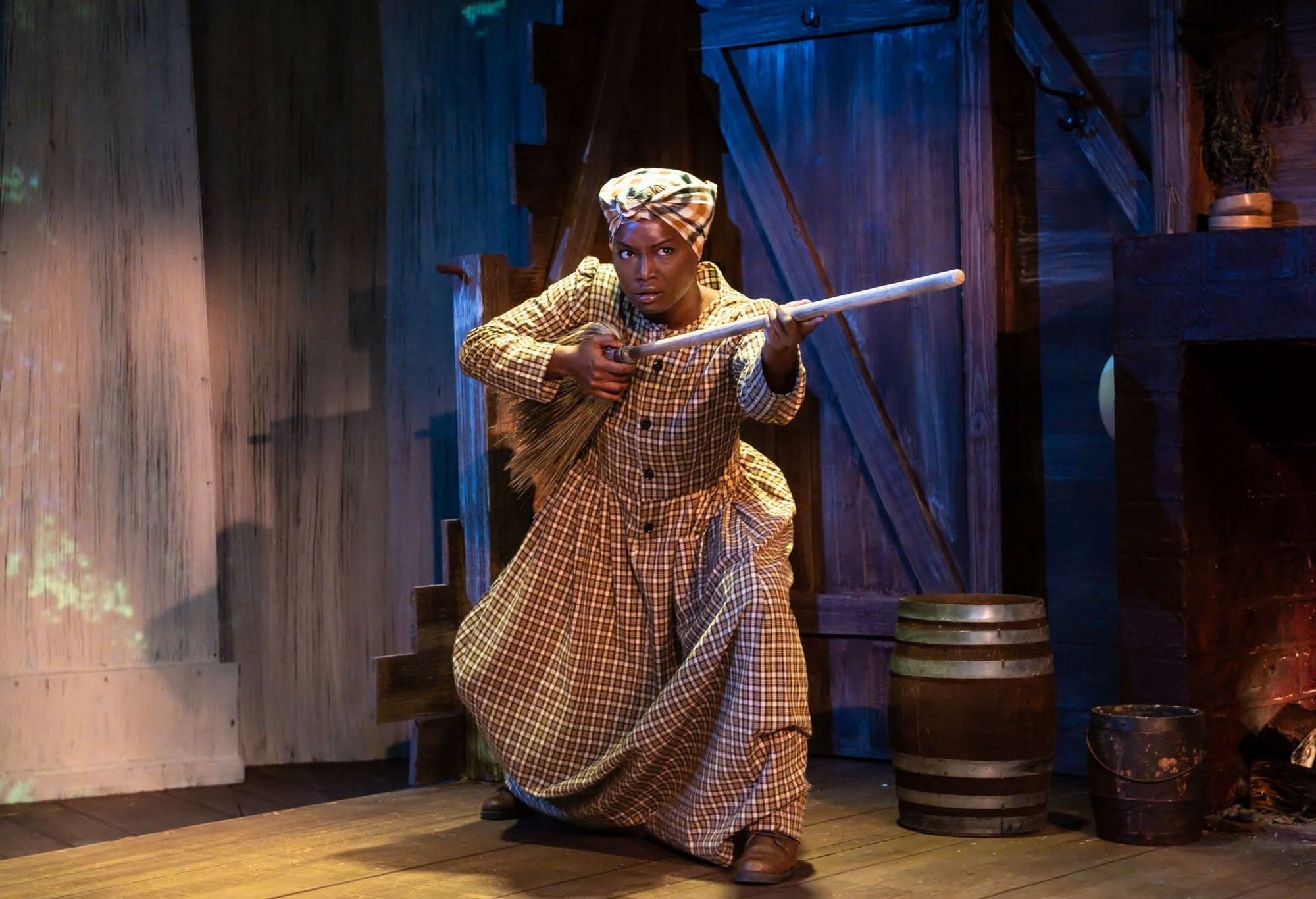
The show is bifurcated in time between her story, as she goes through a particularly bad few days as a tough and well-respected figure in African-American discourse, and the story of a young, barren, field-working slave, Sara. Sara is played by Nia Frazier, who commits to a performance dripping with sarcasm and accusation. I was reminded several times of Donald Glover’s “This Is America” and truly hoped the audience felt every single jab at their consciences she conjured. Sometimes you see an actor fall into a character with the joy of play/pretend, and sometimes they wield that thing like an AK-47. Nia makes you stare down the barrel, and she doesn’t miss.
Morrisseau plumbs the depths of the troubles white feminism struggles with around intersectionality. She puts light on the thin line between honoring Black women (and men, for that matter) and fetishizing them. She puts in order the appropriate levels of thankfulness and “it’s about fucking time, bitch” so many allies will never ever understand. She puts the booby-trapped maze of being just the right kind of “negro” that can escape criticisms from those who put them in the maze in the first place. It’s not stated with volume in the script, but if you can sense the ultrasonic pitch of colorism between the dark- and light-skinned, the dog whistle bleats clearly.
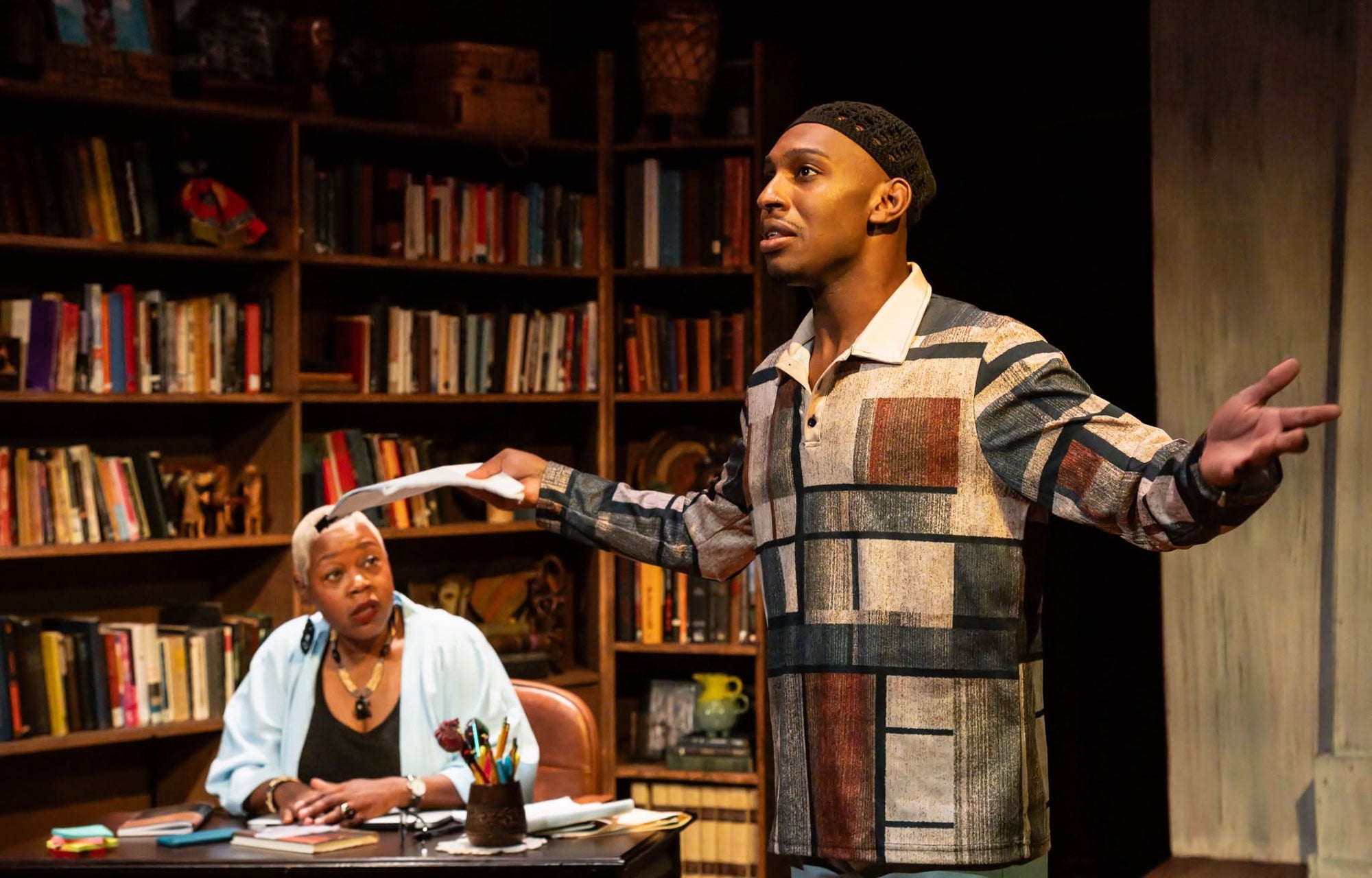
Tevin Davis’ dual duty as a runaway slave enlisted in the Union Army and a grieved student in Sandra’s class examines the struggle for dignity in your own narrative. To face suspicion in your own fight or to countenance well-meaning but misguided meritocracy tests is maddening. I’ve never seen a play take this on so deftly.
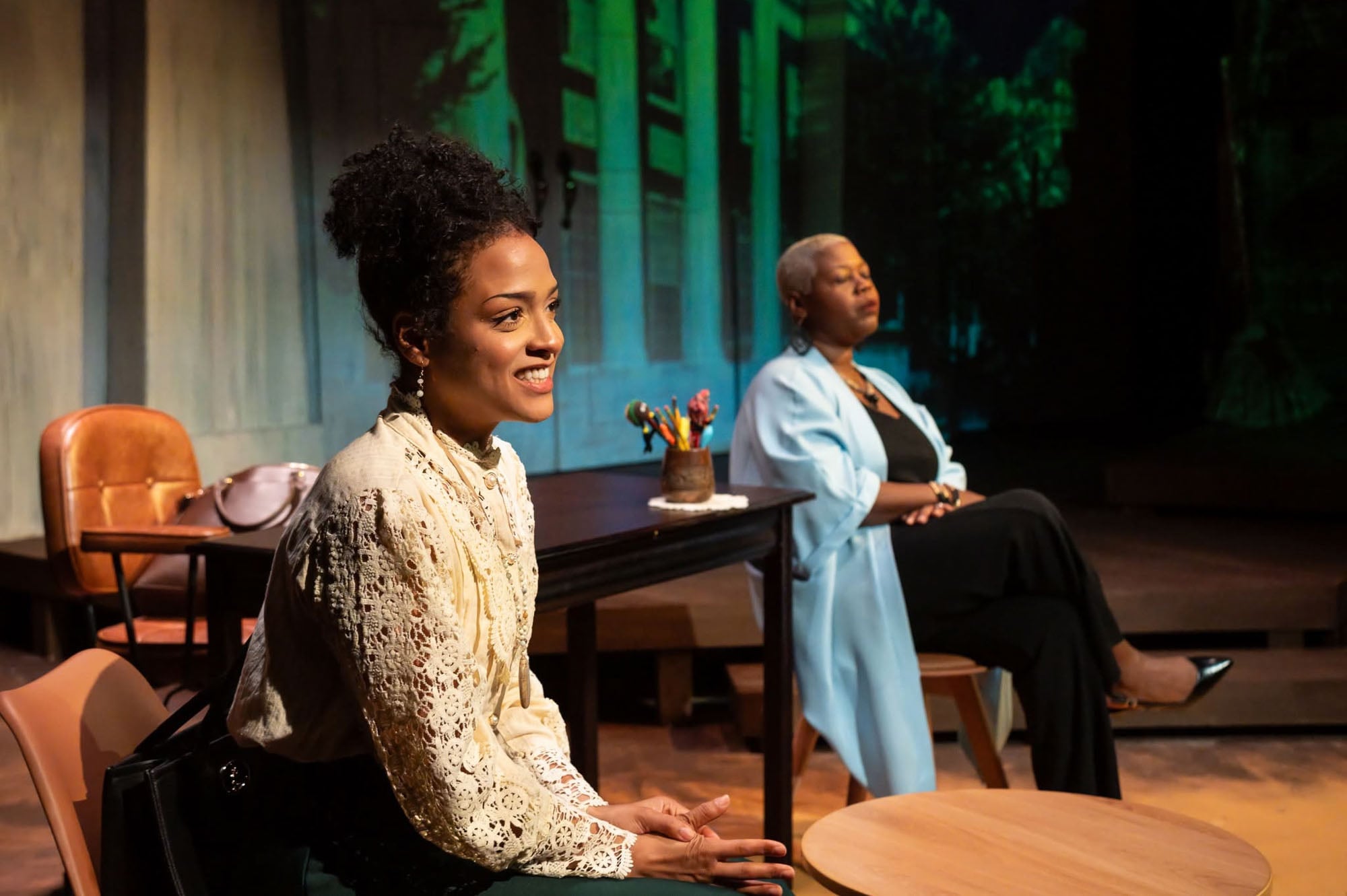
Nicole Cowans brings an understated performance that I truly enjoyed. There is not a moment when she isn’t fully in the shoes of her tenure-seeking college professor or Sara’s housegirl slave companion and “confederate,” Luann. Especially as the contemporary character Jade. She has a talent well suited to film. I sat there watching, hoping she gets a break in that direction, because she would kill it. Everyone in this play held their own admirably. Ms. Cowans, though, disappeared into Jade. I know I say this a lot, but Richmond has an embarrassment of riches in talent right now.
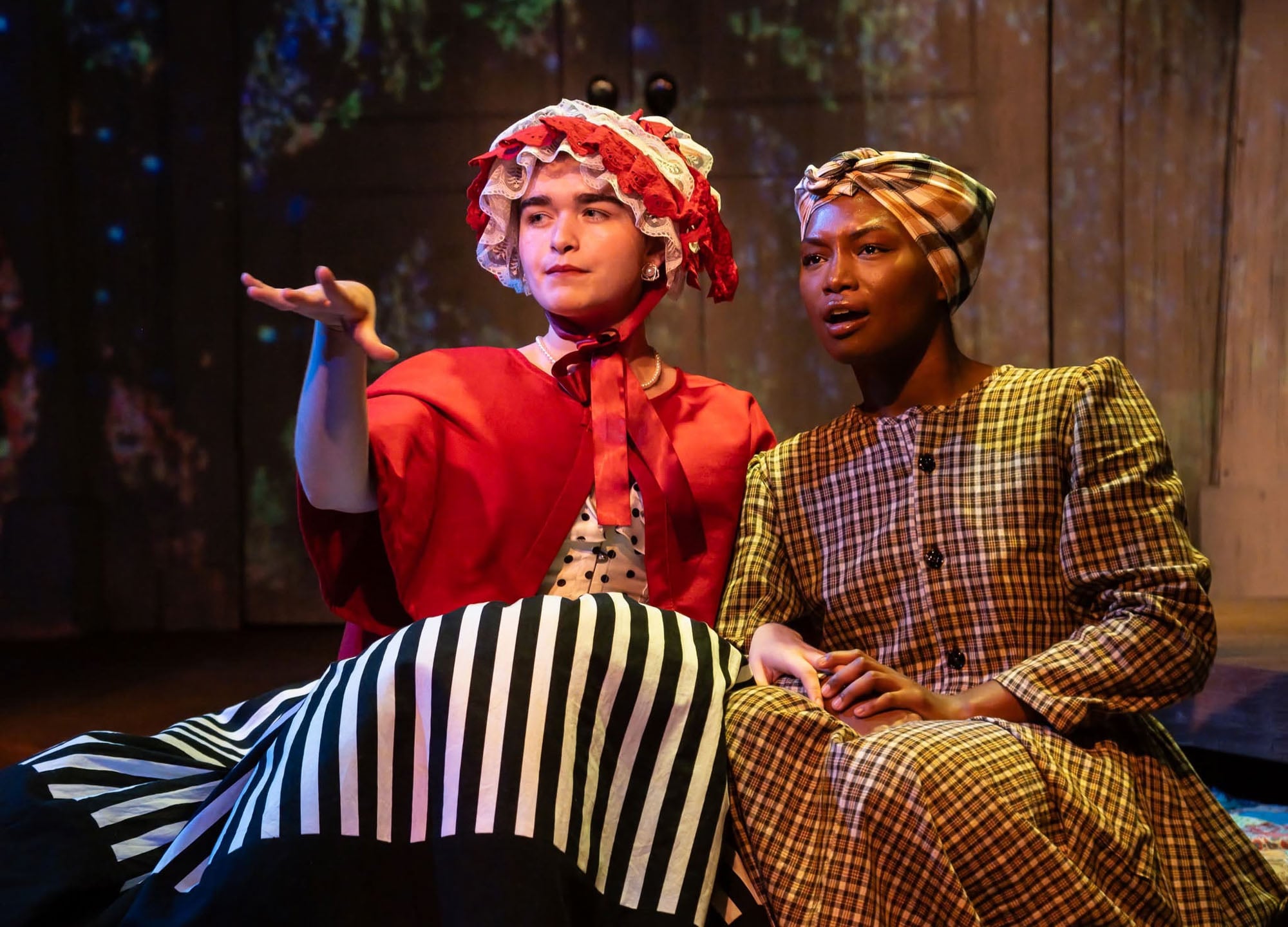
Molly Marsh approaches her antebellum guise as Missy Sue with an appropriate response to Nia’s fourth-wall-breaking Sara. A bit over-the-top, chaotic, menacingly delivering “love” and doling out hope like a personal gift deserving of obeisance. It has a bit of Good Witch Glinda in it. Her take as Sandra’s assistant in the predominantly white fictional university mirrors Missy Sue’s “divine right” to control the narrative on topics she’s better suited to taking notes on. The inedible bits of gristle she tosses into the grinder seem part social experiment, expression of latent resentment, and organic obliviousness one finds in liberal/progressive ride-alongs. She doesn’t always have a point, but you know, sometimes she does. That is frustrating in itself, but then, that is what is best about this play.
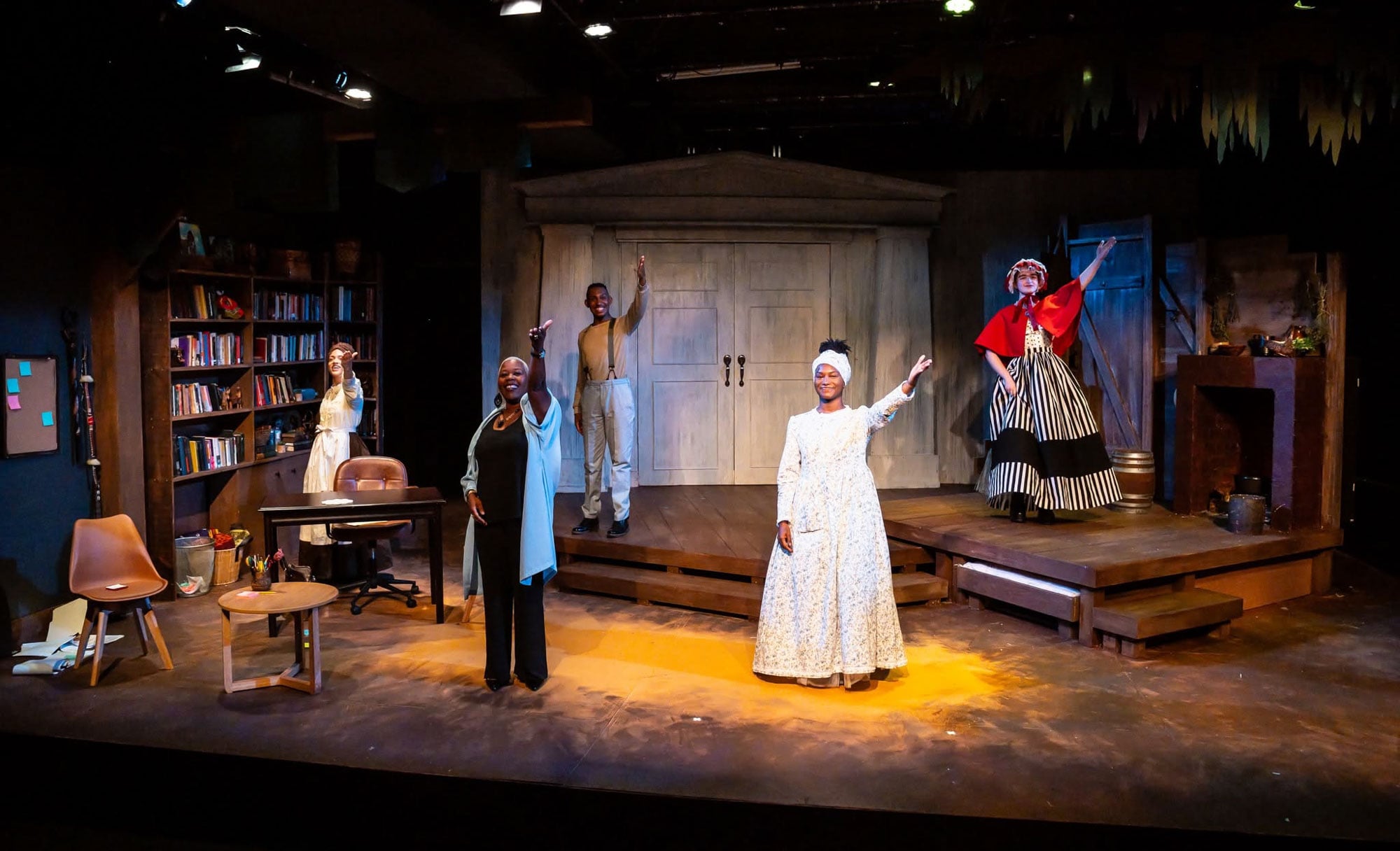
As per usual, I will not spoil the plot (any further). The play could be converted into one of the best and most intricate essays you could ever read on these subjects, but damn, if Dr. Tawnya Pettiford-Wates (Dr. T) doesn’t construct a visual feast. Her direction leaves us empathetic to each character, even Molly’s, a couple times, at least. The production quality is en pointe, as usual. Sets, use of projection mapping, and effective prop placement seem effortless in the hands of Mercedes Schaum, Dasia Gregg, and Michael Crevoisier.
This isn’t the easiest play to watch, and considering the times, it shouldn’t be. If you have an honest curiosity about the detours and pit stops in the trajectory of justice, this is the play for you. If you want to see actors at the top of their game wreck your expectations of what our national conversation is missing, holy damn, go.
Main photo by Aaron Sutten
Support RVA Magazine. Support Independent Media in Richmond.
RVA Magazine has remained one of Richmond’s few independent voices. Since 2005, we have provided grassroots coverage of our artists, musicians, and communities, marginalized or otherwise, documenting the city’s culture that lies right under the surface and beyond the headlines.
But we can’t do this without you. A small donation, even as little as $2, one-time or recurring, helps us continue to produce honest, local coverage free from outside interference. Every dollar makes a difference. Your support helps keep us going and keeps the local creative spirit alive. Thank you for standing with independent media, and thank you for reading.
Show your SUPPORT HERE
Also, subscribe to the newsletter HERE
We’ve got merch HERE
Subscribe to the Substack HERE
And Reddit HERE
And YouTube HERE