
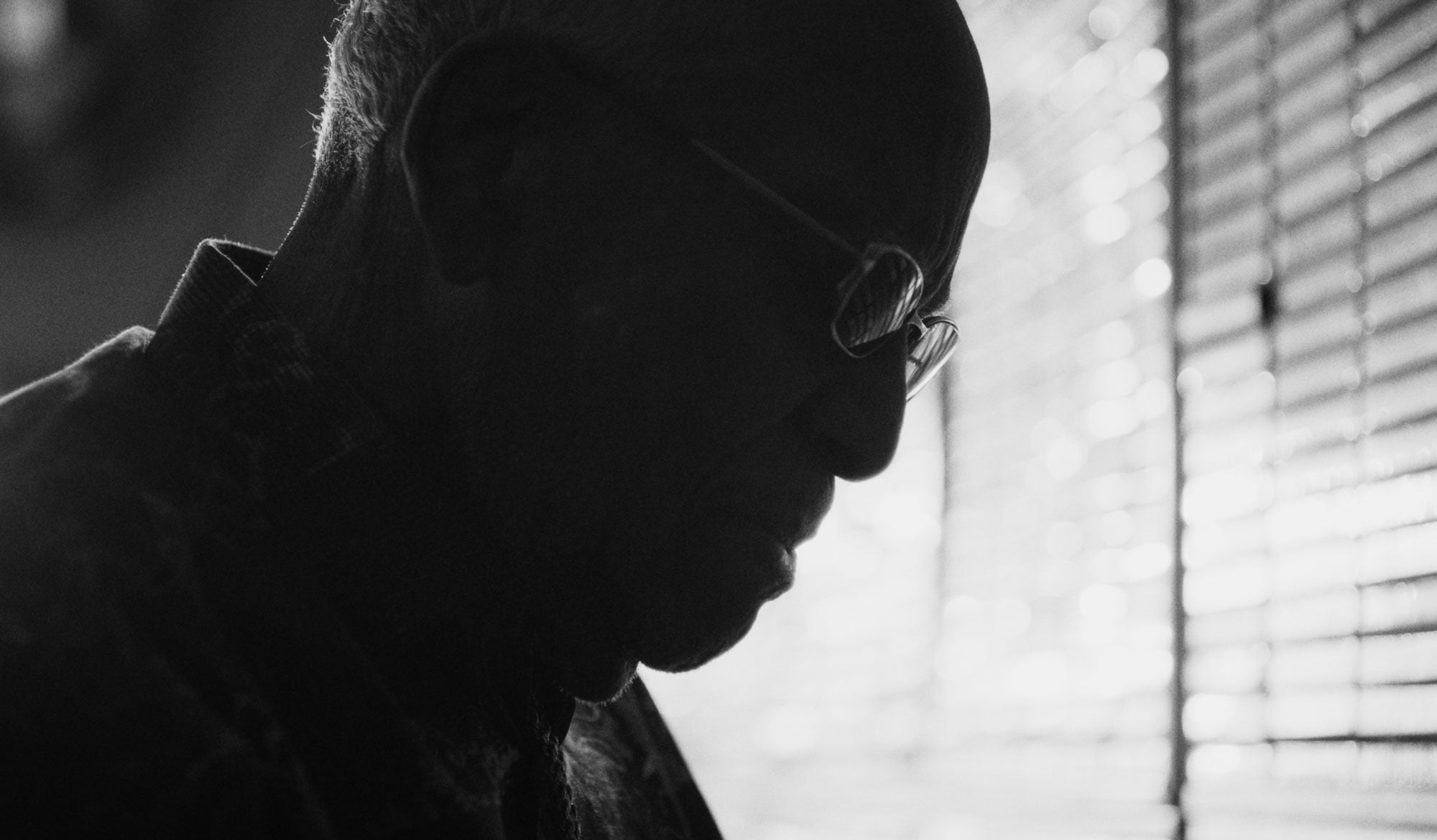
Exclusive Q&A with Lonnie Liston Smith below.
Today was a good day. This very magazine’s Landon Shroder invited me to interview one of Richmond’s real living legends, jazz impresario Lonnie Liston Smith. On September 13, they will be screening selections from the upcoming film Cosmic Echoes at the Hippodrome Theater. The event, Cosmic Echoes Live, will also feature live tribute performances from members of Butcher Brown, Virginia jazz legend Plunky, Nickelus F, Ohbliv, Ronnie Lux, and others, along with appearances by recent Grammy winners Mad Skillz, Michael Millions, and Nate Smith.
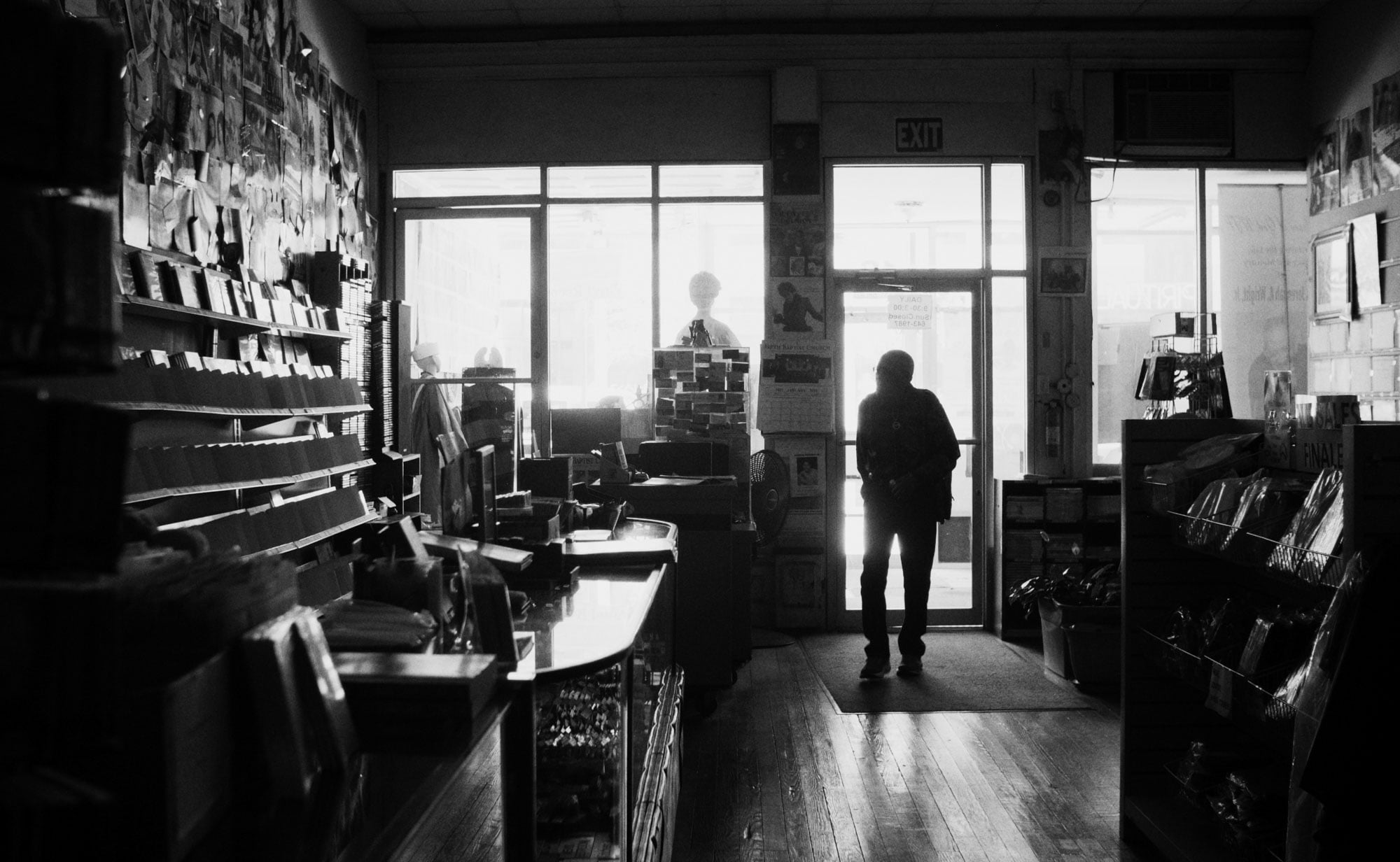
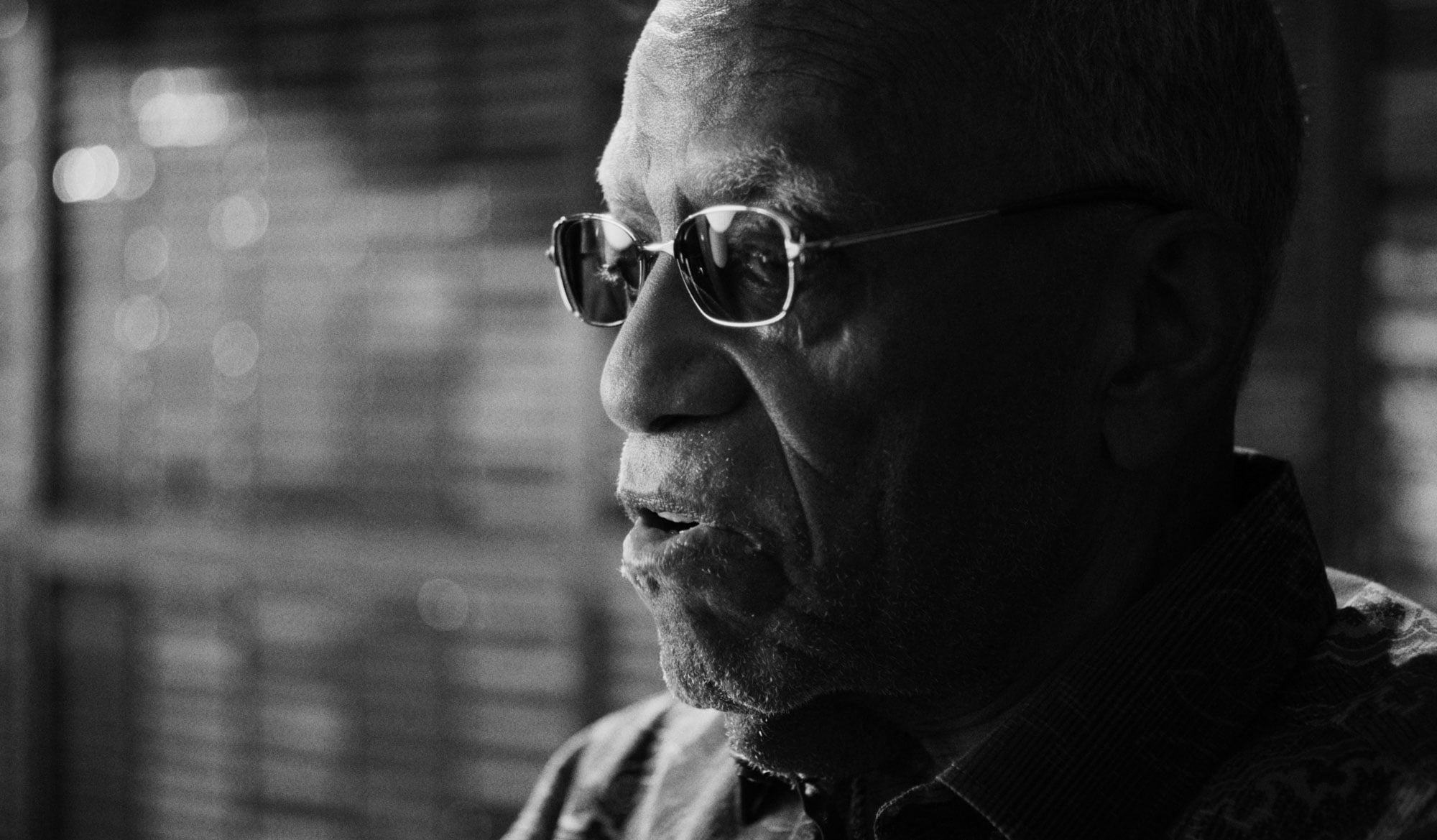
When I got to Barky’s Spiritual Store on Broad Street, I crept in as silently as I could. Cosmic Echoes producer Michael Millions and co-director Shroder were reverently engaged in an interview with Lonnie as I waited for my turn with the man. Lonnie sat on a stool, illuminated by studio lights that cast a soft silver glow across his wizened face. He seemed slight, but somehow larger than life.
Taking him in is like contemplating a tesseract. Like trying to sum up a four-dimensional object with measuring tape. Behind his thoughtful gaze, he recalls the highlights of a storied career with a mind that continues to shape popular music. He didn’t just create masterworks on wax, he created auratic movements in jazz. He is an innovator whom innovators invoke as inspiration. He’s sitting right here, once again imparting his insights and anecdotes to a generation yet to discover him. His voice, now graveled with age, betrays an undercurrent of sustained youthful curiosity about existence, transcendence, and legacy.
Lonnie Liston Smith came to my attention back in 1993, when I was milking Columbia House Records for another ten free CDs through their music subscription service. It was the closest thing to streaming we had back then. There was this featured album in their catalog that just oozed cool called Jazzmatazz Vol. 1. Labeled a fusion of hip hop and jazz and curated by Guru, the album was populated by some of the most legendary jazz greats alive and potent rappers of the moment.
When I got it, I wrestled it out of one of those cellophane cages CDs used to come in and put it on immediately. What came out of my speakers was a revelation. In that early ’90s hip hop era, when shock and disruption were at artillery volume, Jazzmatazz struck like an erudite diplomat.
It was no surprise to hear jazz hooks and samples in hip hop. That was old hat. Spoken word over jazz licks is a thing that goes back to the ’60s with Gil Scott-Heron, who was also on Lonnie’s label, Flying Dutchman. But this, this was a step above. This was a whole new thing. Branford Marsalis, Roy Ayers, Ronny Jordan, and of course Lonnie Liston Smith, among others, contributed entirely new improvisational compositions to accompany smart rhymes. It stood at the apogee of the conscious rap movement spurred by Digable Planets, De La Soul, and A Tribe Called Quest. These acts offered an answer to the pearl-clutching media’s censorious reaction to 2 Live Crew, N.W.A., and the gangsta rap of the time.
Jazzmatazz Vol. 1 and the three sequel albums it spawned introduced a new generation of music lovers to greats known largely by their grandparents and particularly knowledgeable DJs. The first one stayed in heavy rotation on my six-disc changer for a good year.
Recently, I found out Lonnie lived just a couple of miles down the road in Richmond. Then I heard that a team was producing a documentary about him called Cosmic Echoes. The film is produced and co-directed by Shroder and Michael Thibodeau from The Sunroom, including Alec and Ryan Gary, along with Michael Millions, Craig Martin from Shockoe Records, and associate producer Sofia Feliciano.
Lonnie Liston Smith was born in 1940 and grew up in Richmond in a musical household. His father was a member of the Harmonizing Four and frequently hosted touring gospel and proto-rock acts like Sister Rosetta Tharpe in their Church Hill home. He moved to Baltimore to attend Morgan State University and cut his teeth on the Baltimore club circuit as a backup singer and pianist. Upon graduation, Lonnie made his way farther up I-95 to Manhattan, where his legend would grow exponentially. He played with Art Blakey and Pharoah Sanders, which eventually earned him an invitation to join Miles Davis’ band, the mecca for up-and-coming jazz musicians in the mid-’60s. His godfather status in the ensuing acid jazz, free jazz, and fusion movements was cemented.
Then he got weird with it. The ’70s brought an expansive, trippy take on funk, soul, and jazz, and Lonnie was at the forefront of it. He formed the Cosmic Echoes, with himself as bandleader and former collaborators from his Miles Davis and Pharoah Sanders years in support. The spiritual jazz fusion and psychedelic funk arrangements of Expansions and Visions of a New World cemented his new school of musical philosophy. His deeply spiritual focus informed sonic visions of the infinite to genre-defining effect.
By the ’80s, he was a master of the form. By the ’90s, he was a legend. Through these decades, he continued to innovate on his own, but also collaborated on whatever project could snag him. He started his own record label. He filled the role Miles had in the ’60s, bringing a new generation through his own pipeline of artistic incubation. He enjoyed a renaissance of attention in the mid- and late ’90s, largely due to the popularity of sample culture and the British acid jazz scene. This led to him being name-checked by nearly every jazz-influenced hip hop musician and “quiet storm” DJ of the era.
He toured consistently but eventually eased off the throttle for the comforts of Richmond’s West End. Then, defying that trajectory, he put out another album, Jazz Is Dead 17, just three years ago.
Meeting him was not just a pleasure. It was more than an honor. This was remove-your-shoes-and-hat-and-listen time.
How would you describe the metaphysical part of your journey? How does the fact of your legendary status in a world you love so much inform who you are, with so much to look back on?
All I was ever interested in was the music. The music just made you feel so happy, and took you above all the crazy chaos. I wanted to be a musician. I heard Charlie Parker and his improvisations in Jazz, and I said to myself “I wanna learn how to do that.” Today, the young kids are discovering the recordings I made decades ago, and they’re loving it. It all still sounds fresh and new. It’s very inspirational to me.
I first heard your music on Jazzmatazz back in the 90s.
That’s a good example. Jazzmatazz was an interesting project. I’m sitting at home and I get a call from New York. This record company called and said they were working on a new concept album called Jazzmatazz. Said they’d fly me up there, get me a hotel and such, pay me money, work a deal, etc. I said, “I’m not doing anything,” so I went.
I met Guru and a bunch of other rappers who were around. They said they wanted me on this track, “Down the Backstreets.” I listened to it and they said, “Add whatever you want to it.” And I did. Everything worked out. Money worked out. I didn’t think nothing of it. Then the record comes out and MTV and the press go berserk. “Oh, this is phenomenal. Jazz meets rap,” and all. Twenty-five years later, and I’m still being interviewed off of Jazzmatazz. They say it’s a classic.
It is, haha. It is a classic. Just to segue just a little bit, because I’m curious. What was the first jazz record you picked up that you thought, “I have to do this”?
I was into a lot of jazz records. Gee, I guess I loved Charlie Parker on strings. All the keyboardists, Earl Gardner, Oscar Peterson, Art Tatum. I would listen to what they were doing. The horns always inspired me too. Miles, Coltrane. I was into all of it.
When do you feel you were the most inspired, feeling the most joy being in your shoes? When did you feel like you owned a piece of real estate in the story of Jazz?
I had already had a chance to play with Art Blakey and the Jazz Messengers and Max Roach, but I guess, you know, when I got the call from Miles Davis, that was the moment it was real. If you notice, every musician who came up through his band immediately went on to form their own group. Automatically.
And then when I did Expansions, it went big worldwide. RCA called me and said, “You gotta get a manager. You’re on the charts.” Billboard charts? I didn’t even know what they were talking about. But it was taking off. I got a manager, an agent, all that.
That’s when it starts becoming a business, huh. What artists outside of jazz have you connected with, to either inspire your later work or just brought you joy?
Oh wow, well, I used to listen to Aretha Franklin a lot. And Tupac. Yes, I heard him and thought, “Wow, he’s doing it a different way, but yeah, it’s still there.” Jimi Hendrix, of course. Oooh, and the last thing I heard, but they broke up, umm, Silk Sonic with Bruno Mars and Anderson .Paak. You gotta go get that record. I just love music.
Do you still get to go out to hear some new music?
Nah, haha. I’m all the way out in the far West End. I don’t drive anymore…
I will come pick you up. No lie. I’ll take you to it. That’s on the table. There’s a lot of good music here in Richmond.
Oh yeah, I just did something recently with Butcher Brown. They covered “Expansions”. They just said “well give you this bunch of dollars” and that was it, haha.
The experience of doing this now, this documentary, how does this project feel to you at this stage of your career?
Yeaaah, like I said, I’m so quiet and laid-back, they came to me and asked if I’d do this. Now I gotta open, you know, usually I just let the music do the talking for me. Now I gotta verbalize, and start talking, sooo… it’s interesting.
It’s like trying to describe the meaning behind your own painting to someone. Usually what they bring to it is the only explanation that’s truly meaningful. I understand the challenge.
Yeah, I guess the world is now gonna have to hear things they’ve never heard from me before. I’ve never really sat down on camera and talked about how I really feel about my music, my life.
We had a listening session when we got together. They played almost all the records I had recorded. See, I do a record and get it down, and all I got to say is, “What’s next?” I don’t really go back. So I’m hearing all this music that I haven’t listened to in 20, 25 years or more, and I say, “Whoa, this is okay.”
Do you hear it differently now? Does it hit the ear differently?
Yeah! It does. It still sounds fresh. And I said to myself, “yeah, I did something right.” This is great. I want to see the outcome of this myself.
Well I’ll be at the event at the Hippodrome in a couple weeks. I’m looking forward to seeing you again there. And I mean what I said, you want to go to a show, you call me. I’ll take you.
Hahaha, all right. We’ll see.
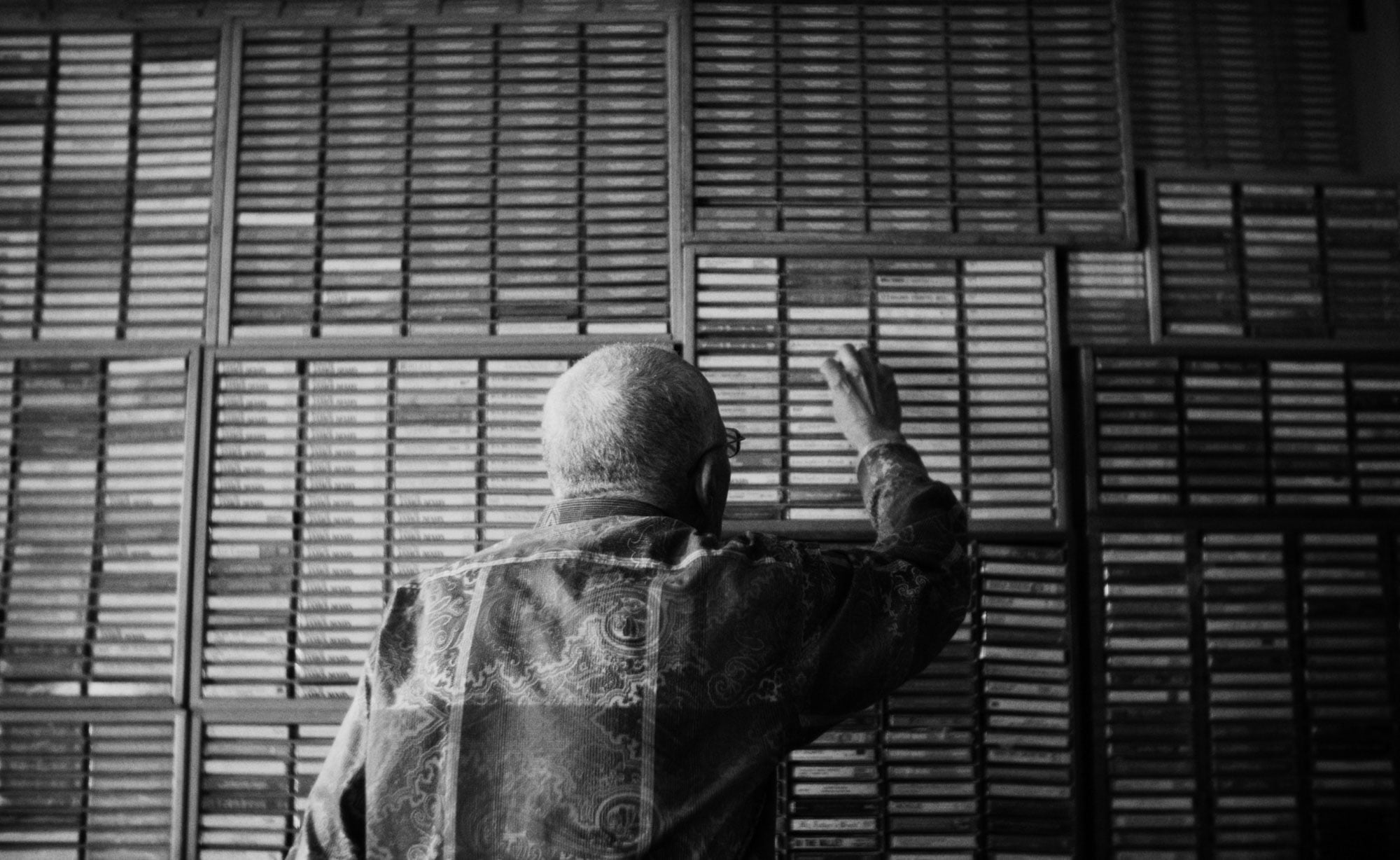
I moved on from this conversation to talk to the creative crew behind the documentary project. Catching them together is like herding very professional cats, as they all have lanes of expertise that keep them busy. Landon, co-publisher and editor-at-large of RVA Magazine, is co-directing Cosmic Echoes with Mike Thibodeau. Corey Fonville, drummer for Butcher Brown, Craig Martin of In Your Ear recording studios, and Grammy Award-winning rapper and musician Michael Millions are on the producing team.
Landon wanted to keep his voice separate from the rest of the guys, considering his editorial ties to this publication, but come see him at the event on September 13. I’m sure he won’t be quiet then.
This was an illuminating conversation, and I’m glad to share it with you. Part two of this series incoming…
Main photo courtesy of The Sunroom.
Get your tickets to Cosmic Echo Live here.
Support RVA Magazine. Support Independent Media in Richmond.
RVA Magazine has remained one of Richmond’s few independent voices. Since 2005, we have provided grassroots coverage of our artists, musicians, and communities, marginalized or otherwise, documenting the city’s culture that lies right under the surface and beyond the headlines.
But we can’t do this without you. A small donation, even as little as $2, one-time or recurring, helps us continue to produce honest, local coverage free from outside interference. Every dollar makes a difference. Your support helps keep us going and keeps the local creative spirit alive. Thank you for standing with independent media, and thank you for reading.
Show your SUPPORT HERE
Also, subscribe to the newsletter HERE
We’ve got merch HERE
Subscribe to the Substack HERE
And Reddit HERE
And YouTube HERE

