
Editor’s Note: This piece was written by a student at Randolph-Macon College as part of a feature writing course. Thank you to the students and to Professor Seth Clabough, Ph.D., for organizing the project.
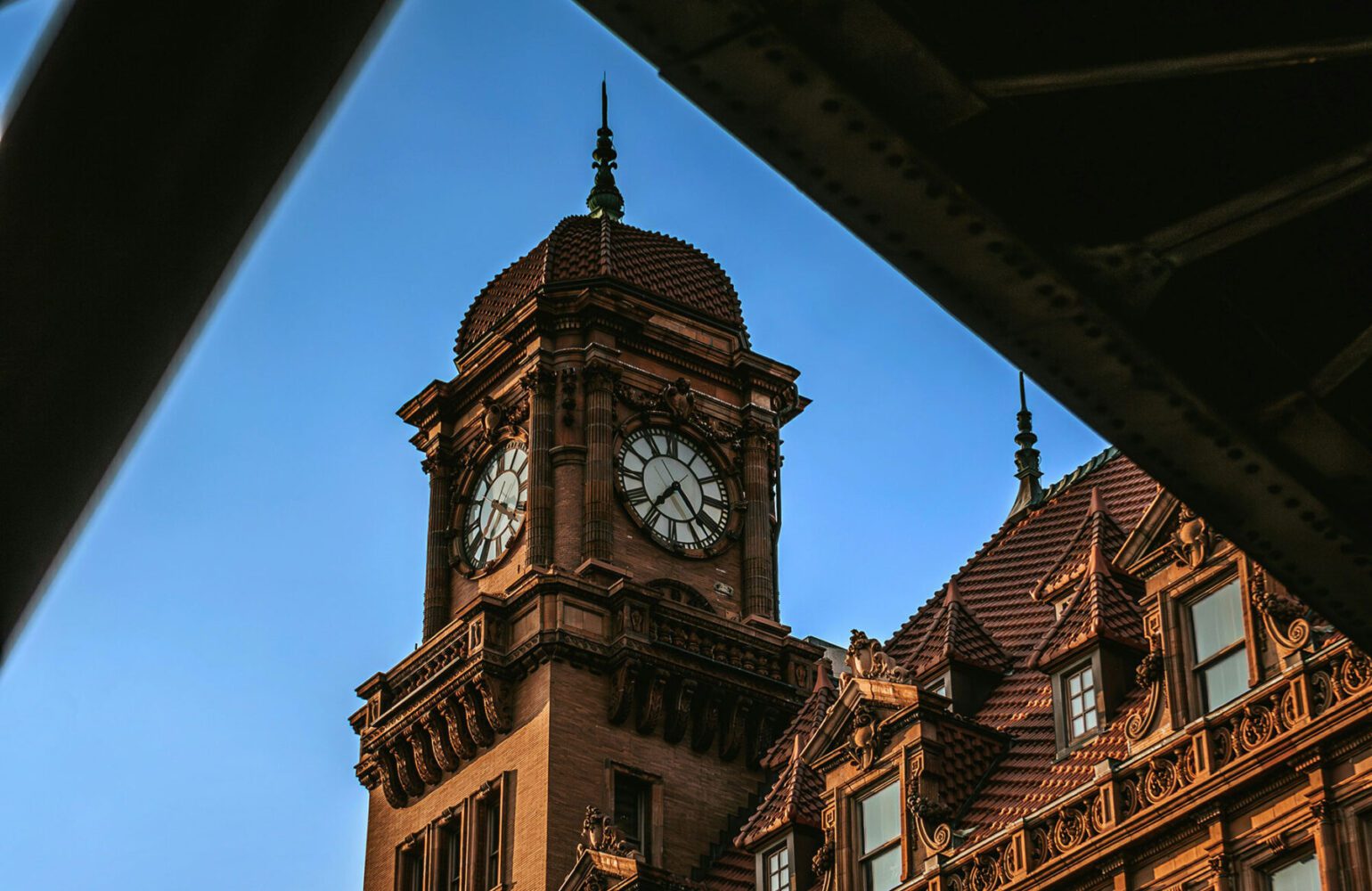
From the low rumble of the locomotive to the hustling footsteps of the passengers, whether this is their first stop or their last, Richmond’s Main Street Station (RVM) continues to stand as a testimony to the unwavering strength of the past, the pursuit of discovery in the present, and a bright promise for the future.
“This is the station’s 125th anniversary this year…which is very exciting because that coincides with the 250th anniversary of the country,” said Crystal Lowery, Program and Operations Manager at Richmond Main Street Station. “To think the station has been around for half the time the country’s been around is huge.”
THE PAST – Strength
On November 27th, 1901, Richmond celebrated the grand opening of Main Street Station. The architectural marvel of the headhouse and the engineering masterpiece of the 530ft trainshed would quickly become recognized as the landmark of the city. The station would be served by the Chesapeake and Ohio Railway (C&O), and the Seaboard Airline Railroad, seeing over 20 trains daily.
Main Street Station would continue to shine through the golden age of steam and the innovation of diesel, bringing many passengers to and from their destination. But it would also serve as the heart of the community and a gateway into the city of Richmond. “This is where the city started.” Lowery said.
But with the rise of the automobile, things would quickly take a turn. The construction of Interstate 95 in 1958 would see the interstate passing right through Shockoe Bottom and passing mere feet from the station. This would, in turn, isolate the station from not just its surroundings, but its community.
“We’ve seen the evolution of the city with the construction of the highway…and [how] that’s changed the city,” Lowery said.
But isolation wasn’t the only thing lingering on the horizon. In 1972, Hurricane Agnes would devastate much of the East Coast. Agnes would cause the James River to flood, submerging the entire first floor of the headhouse and causing damage so severe that Amtrak service was relocated to Richmond Staples Mill Station in Henrico (RVR), virtually marking what many thought was the end of the station.
The station would close following the hurricane, and it would try to be revitalized and try to find a new use for the building, with it becoming a shopping mall in the 80s, and a nightclub in the 90s. But two devastating fires would quickly derail those plans, leaving a lasting impact on the surrounding area, and what many thought was the final nail in the coffin.
“When I was a kid in the early 90s…we didn’t come downtown. We didn’t hang out downtown.” Lowery said, who grew up in Richmond. “It was seen as very dangerous; the crime rates were really high.”
THE PRESENT – Identity
Today, when it seems like everything and the bucket has been thrown at it, Richmond Main Street Station has continued to stand tall over its surroundings, shining as a pinnacle to the enduring strength of not just the physical structure, but the resilience of the community around it.
“Richmond has become a destination for people within the city and outside the city; people want to come here.” Lowery said, “I think the evolution of the building kind of shows the evolution of the city.”
Amtrak service resumed in 2003, following restoration efforts by the city and community, marking the official rebirth of Main Street Station. Renovations would continue between 2008 and 2017 with the renovation of the shed, which has been revitalized into a world-class event space. The structure stands as one of the final remaining gable-roof train sheds in the United States. Inside, soaring ceilings and massive floor-to-ceiling glass windows provide a seamless, unobstructed view of the Shockoe Bottom neighborhood and the downtown skyline.
As Main Street Station continues to maintain its status as a Multimodal hub for the city, being served by Amtrak, GRTC, Scooter & Bike rentals, and a wide variety of charter bus services such as Greyhound, it also continues to define its identity with Community, Events, History, and Art, being defining pillars for the station within the last couple of years, with the station hosting hundreds of events each year. The station is also home to a Virginia Welcome Center and “The Gallery,” which is an art gallery showcasing different pieces of art from the community.
“We are an event space, a community hub, and we’re trying to turn it into a destination for the arts. The train station is just one of the many parts of the identity of the building,” Lowery said. While it is a train station, we see 4-6 trains every day, but we host over 150 events in the building every year…giving the community a space they can celebrate, come to, learn, educate, all that fun stuff.”
THE FUTURE – Persistence
Tomorrow, when the continued exploration of the present and the scars of the past tell the story of not just a train station, but a whole community. Some things have already been set in writing, while others will have yet to be written.
“We are just excited about moving forward for the future.” Lowery said, “Transportation, eventually, the train station will get some additional trains. More events, private events, and our own events. We’re excited for the Shockoe Institute. Lots of things.
Set for a Spring 2026 debut on the station’s north end, the Shockoe Institute will represent the continued persistence to uncover the untold stories of the past, serving as a cornerstone to Richmond’s thriving urban core, and a continued push to make Main Street Station a destination for all.
More rail traffic is on the table for the future of the station, with proposals to send more trains to the station and even consideration of high-speed rail. In addition to interest in greater pedestrian access to the station and continued support for GRTC and charter bus services.
It would really be two-fold: a multimodal hub and a community space where everyone is welcome.
Photo by John Maldonado
Support RVA Magazine. Support Independent Media in Richmond.
At a time when media ownership is increasingly concentrated among corporations and the uber wealthy, RVA Magazine has remained one of Richmond’s few independent voices. Since 2005, the magazine has provided grassroots coverage of the city’s artists, musicians, and communities, documenting the culture that defines Richmond beyond the headlines.
But we can’t do this without you. A small donation, even as little as $2, one-time or recurring, helps us continue to produce honest, local coverage free from outside interference. Every dollar makes a difference. Your support keeps us going and keeps RVA’s creative spirit alive. Thank you for standing with independent media. DONATE HERE.
We’ve got merch HERE
Subscribe to the Substack HERE
And Reddit HERE
And YouTube HERE