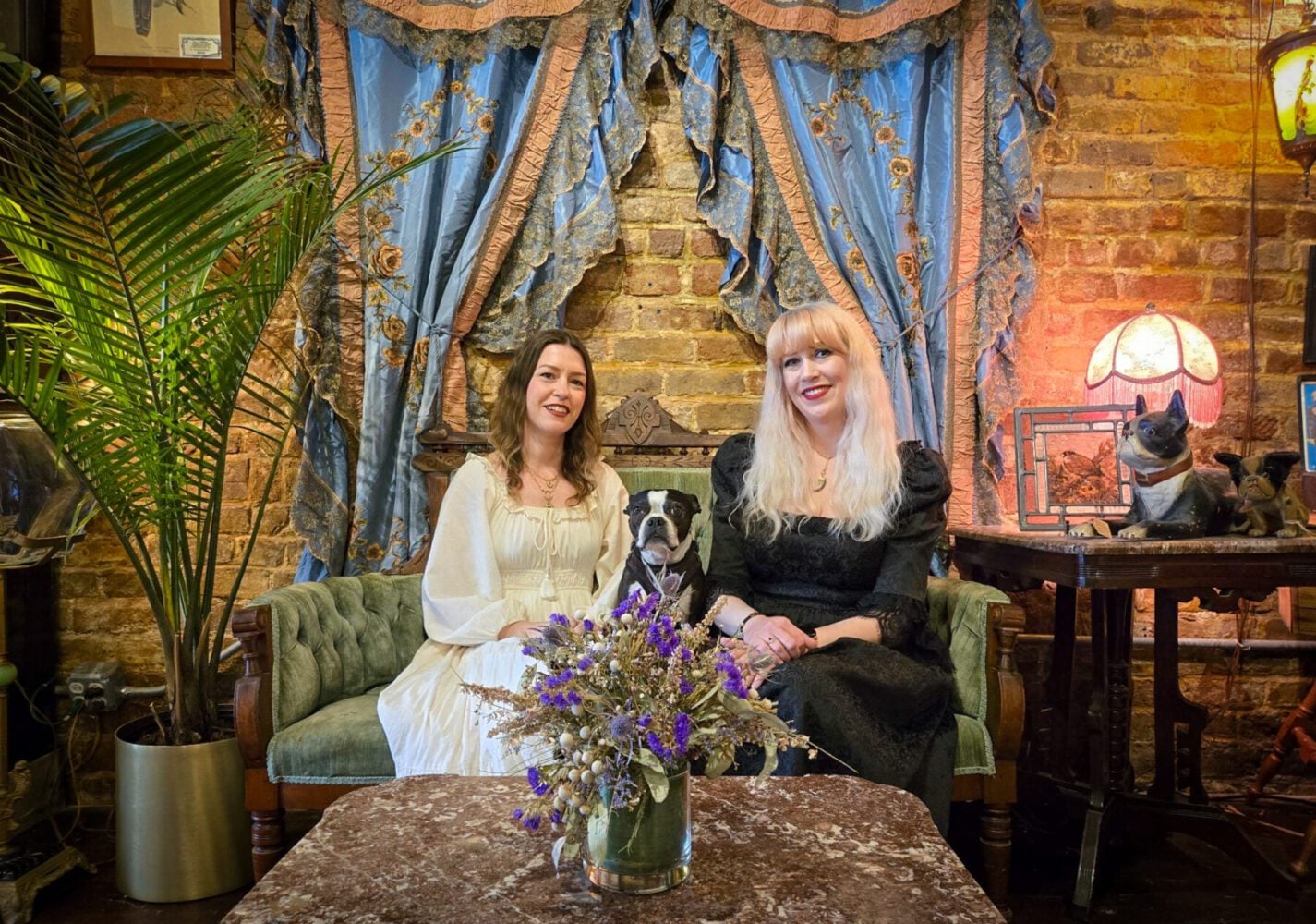
If you are in the market for a glass eye in the same shade as your lover’s, some elaborate hair jewelry, or even an electric couch to use as a Victorian cure-all, then you need to head over to The Veiled Mirror. This Victorian antique store opened downtown in January, during the great icing of RVA. Olivia Lloyd and Kath Parker have curated a reliquary of curiosities from the Georgian to the Art Deco eras (1714–1939).
I stopped by the shop to get a little tour of some of their unusual antiquities and to find out if they had anything haunted. And my ghastly lil ghouls, there are so many fascinating pieces here… and there are ghosts.
Their dance with the macabre started during the pandemic back in 2021. The two were working together at the vintage shop Bygones, and while it was closed, they decided to start selling their jewelry online, straight from their own jewelry boxes. Things took off. They called their shop The Veiled Mirror, an appropriate name for a store that loves some Victorian mourning lore.
As Parker explains, “We know the Victorians had a lot of different mourning practices, and one of the practices was that when somebody died in the house, they would immediately cover the mirrors. They were worried that your soul would get trapped in the mirrors, so they would veil them.”
Soon after launching online, they began doing shows, local markets, and eventually traveling with the Oddities and Curiosities Expo. Their collection grew, and they decided it was time to put down roots, finding their dream storefront on North 3rd Street in the Historic Arts District.
Their shop is full of history. They can tell you all kinds of insane information about each piece they sell. While walking me through the shop, Lloyd picked up an innocuous glass bottle that was lying on its side, angled at the neck, and dove right into its history.
“We refer to these as Victorian murder bottles, but they are really nursing bottles, baby bottles. It would have a long tube with a nipple attached. But because of the shape of the glass, they had a hard time cleaning them, so bacteria would build up in there, and children were dying because they were feeding their babies bacteria unknowingly because they couldn’t get in there between the tube and this angled neck.”
The fuck you say?
Then they showed me they are made of manganese glass, and they glow when you shine UV light on them. So we are talking glowing, murderous baby bottles. Every single piece has a backstory.
They didn’t study history per se, they are just really into it.
“I think it’s just about finding stuff and then being curious about it and going down rabbit holes, mostly,” Parker says.
She goes into their process. “Some things we already knew, because we are both kind of history nerds, just from reading and being obsessed with this era. So some of it we did know. But some things we find and we don’t know what it is. And we research it, and it opens up this whole new world for us. And then we’re like, ‘Oh my God, another rabbit hole,’ and then we’re going down this direction.”
“And that’s what keeps this job really interesting,” Lloyd adds. “It’s almost like, you want to say a drug. It’s an obsession. Just constantly learning and treasure hunting. I feel like I learn something new every single day.”
Looking around at all the medical, scientific, and personal artifacts, I had to ask if they thought anything was haunted. Lloyd immediately laughed.
“That is a loaded question.”
“So we don’t know particularly who’s attached to what,” Parker says, pointing to the front corner of the store where there is a display of Odd Fellows memorabilia, a secret society they are obsessed with. “We do know the Odd Fellows robe in the corner has somebody attached to it, because we put an Odd Fellows beard on that mannequin and a woman came in here and was basically pulled to her knees in front of that mannequin. She said, ‘It’s the beard. That is not his beard.’ So we immediately took that off.”
Parker lit up when I asked if she had a favorite haunted thing. “My favorite haunted thing is our building. The building ghost. We know her name. We know why she’s here. We know what she used to do. We’ve had two mediums come by, and then we had a customer come in who just, no expectations… she just walked in and she said, ‘who’s here?’ And then she was able to give us information.”
They said that even though the two mediums and the woman had never spoken to each other, they all gave them the exact same info. It was Matilda. And as two history obsessives, they did their research. They think the ghost’s name is Matilda McDowell and found out she had a millinery store there in 1908 with her mother, Victoria Thompson.
They’ve welcomed Matilda with open arms.
“We consider her like the third owner/manager because apparently she’s very bossy,” Parker recalls a conversation they had with one of the mediums. “She really wants things her way, and she really wanted us to include pinks and purples in our renovation. She also heard us talking about wanting to bring plants into the store before our medium came, and then the medium immediately said that she really likes the idea of you guys bringing plants in.”
Bossy Matilda is not the only ghost they have experienced. One of them does not sound nearly as pleasant.
Parker dives into a ghost backstory that sounds like the plot of a horror film. “The other main energy in here is our creepy doctor, who’s not really a doctor. And we think we know who he is. We know there was a doll hospital here from the 1910s up through the ’60s. His name was Hughes, but he called himself Dr. Hughes because he operated on dolls.”
Ok, I’m already bugged out, and then Lloyd chimes in. “He had some weird, creepy ideas about women and dolls. We found some really crazy articles about this guy, and he’s talking about how women and dolls are all the same, but he likes dolls better because they don’t talk back.”
She also says that he touches people. “It’s particularly women. He’s a little handsy.”
But from what they have been told by the mediums, the ghosts are not there all the time, and Matilda keeps everyone in check.
Aside from the building ghosts, they also have a neighborhood ghost that pops in from time to time. Parker referred to her as the Wandering Ghost.
One of the mediums was about to leave because all the energy was too extra, but then she stopped and stared out the window. “She turns around and she says, ‘You have a wandering ghost.’ And we’re like, ‘ahhh, what is that?’”
The medium said she had never experienced anything like that before, and that the ghost liked to come to the shop because she felt comfortable there. According to Parker, the medium said the woman’s name was Mary and described a vision.
“‘I’m seeing horses, and I’m seeing a carriage, and I’m seeing fire trucks.’ Well, next door is a firehouse. Or it used to be a firehouse. And they had fire trucks pulled by horses. And so I get on the internet and I tell my friend who helps us find history about Richmond, I’m like, has anybody been hit by a horse and carriage, maybe a fire truck, in our neighborhood between 1870 and like 1920? That is when they stopped doing the horse and carriage for the fire trucks.”
After a lot of digging and diving into rabbit holes, they believe the wandering ghost is a woman named Mary Keith, who was hit by a horse and carriage and died. Her name was reportedly misprinted as Molly, which was her daughter’s name, who had passed away five years earlier from tuberculosis.
Apparently, after her daughter’s death, Mary rented a room across the street from the shop because she didn’t want to be in her old home without her. She often walked down the street with her head down in mourning, and that is how she got hit. Since she was not staying at her home, they believe she became a wandering ghost.
They are gearing up to do a whole YouTube series on the history of the building, the ghosts, and to show footage of the medium visits. Keep an eye on their YouTube feed for when it drops.
They are also going to be sharing their love of history by hosting an Absinthe After Hours event series. The first one is Friday, May 8, with the author of In Death Lamented: The Tradition of Anglo-American Mourning Jewelry, Sarah Nehama, who will be showing slides and bringing pieces from her collection to display and sell. She will also be hanging out at the shop Saturday if you can’t make the talk.
Their events will bring a Victorian-era salon vibe, with offerings ranging from lectures to fancy Victorian craft nights focused on 17th–20th century history. They are working on their schedule now, and Lloyd is really excited about the event series.
“In October, we have someone who specializes in Victorian mourning practices. We want this to be kind of a hub for education and history talk, and doing fun stuff, you know, pretending like it’s 1890.”
I left the shop wiser and even more curious than when I came in. I immediately went home to Google the Odd Fellows and their branch for women, The Rebekahs I cannot wait to sip absinthe and make weird wool wreaths at their craft nights, and I know every time I stop in, there will be something new in the shop, more history for them to bestow on me, and hopefully more ghost stories.
Main photo: Kath Parker, Dozer the shop doggie and Olivia Lloyd by Melissa Detres
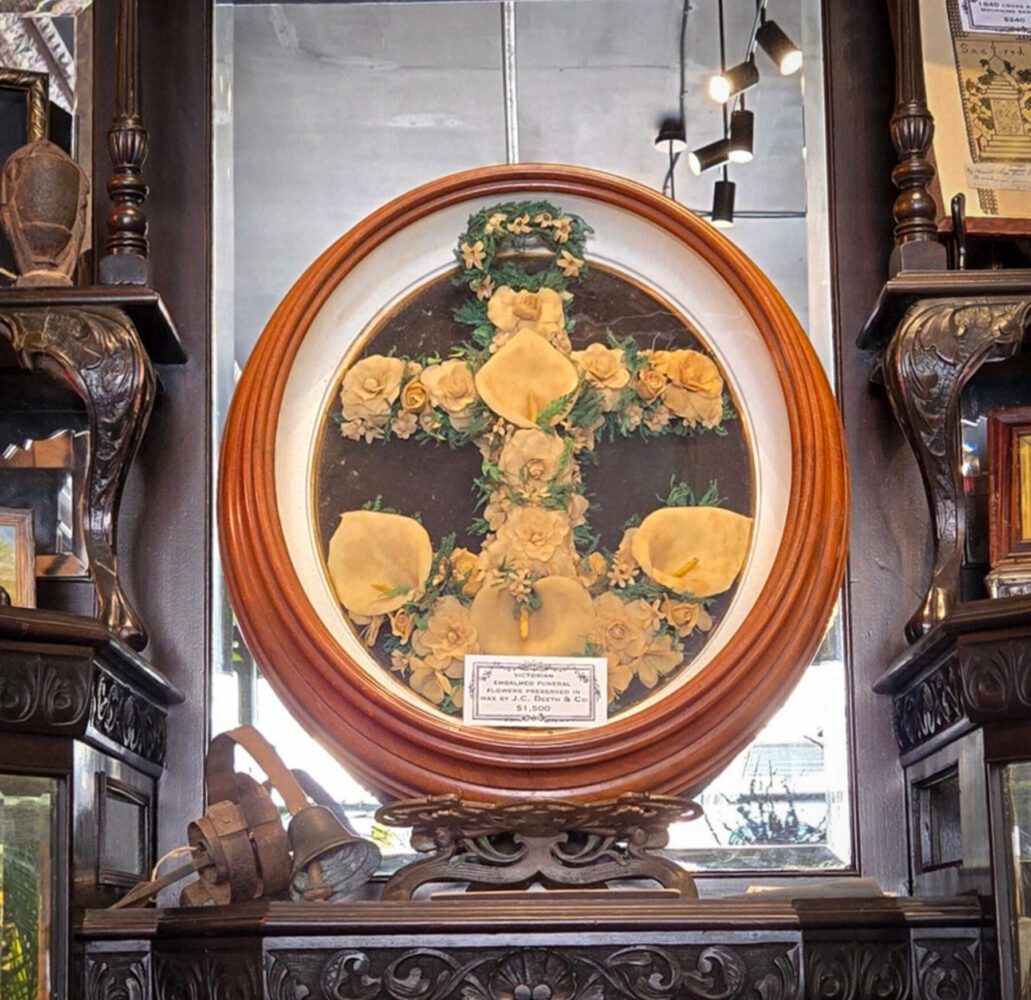
Based on the “lifetime guarantee” paperwork on the back, they were able to figure out that it was made by a woman in Georgetown in the 1870s.
“We haven’t been able to find literature as to how they embalm them, but we knew it was a craft that was done by multiple people because I found an old census where multiple people were listed as flower embalmers. We think they may have used a mixture of cornstarch and borax to preserve the flowers. You can see that they hand-painted the green edge, the foliage, so that it stays green. This would have been a wreath at a funeral that would have been preserved and then hung in the home as a memorial piece.” — Lloyd
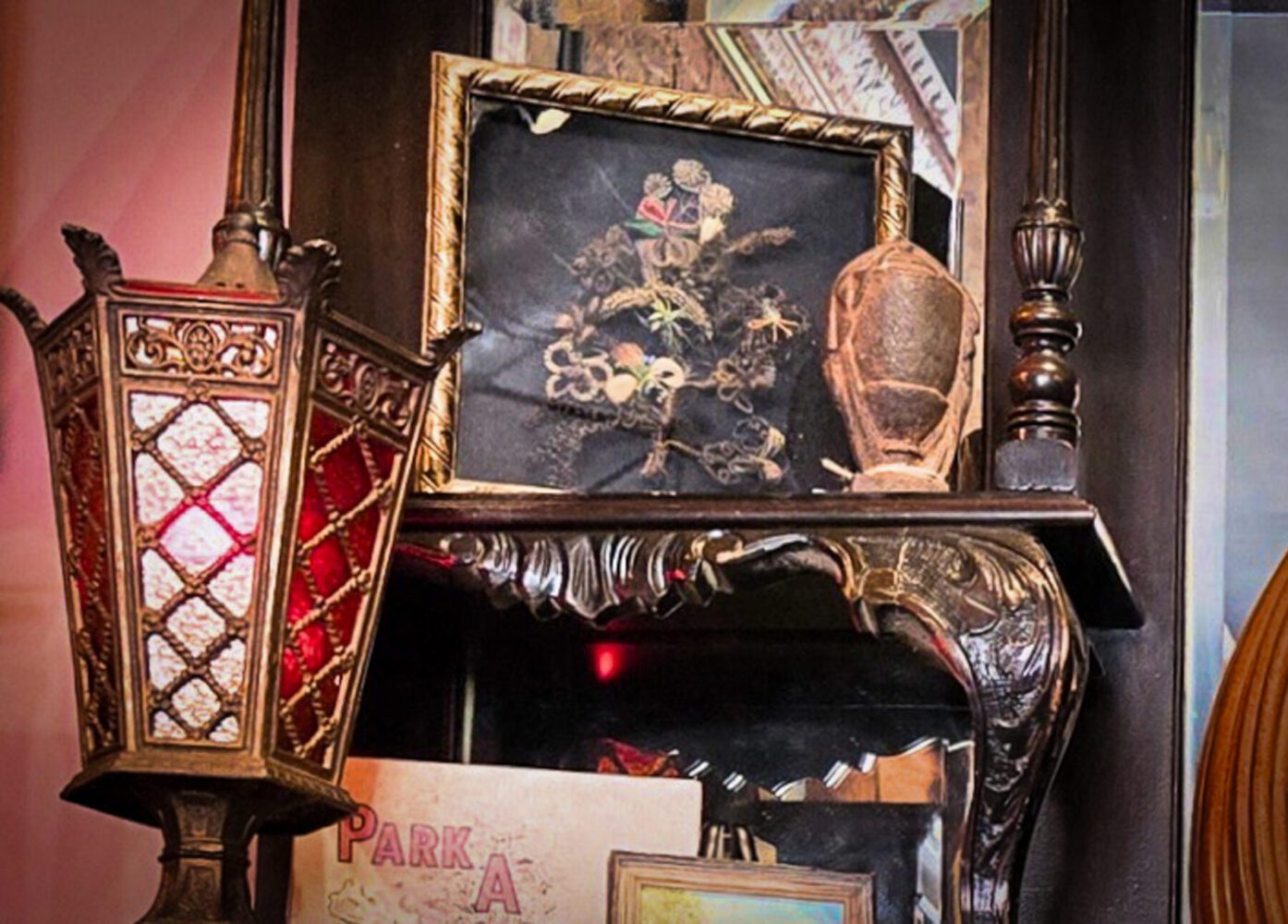
“It looks like there’s multiple people’s hair in there, and it’s a common misconception that hair is only for mourning. Hair was used a lot in mourning, but it’s also very sentimental. So families would collect hair and make wreaths out of it like a family tree. Also, lovers would gift hair to each other, and friends would as well. So we don’t think it is a mourning piece. We think that it was probably just a craft of her collecting her family, friends, and neighbors’ hair and then crafting it into this beautiful little bouquet.” — Parker
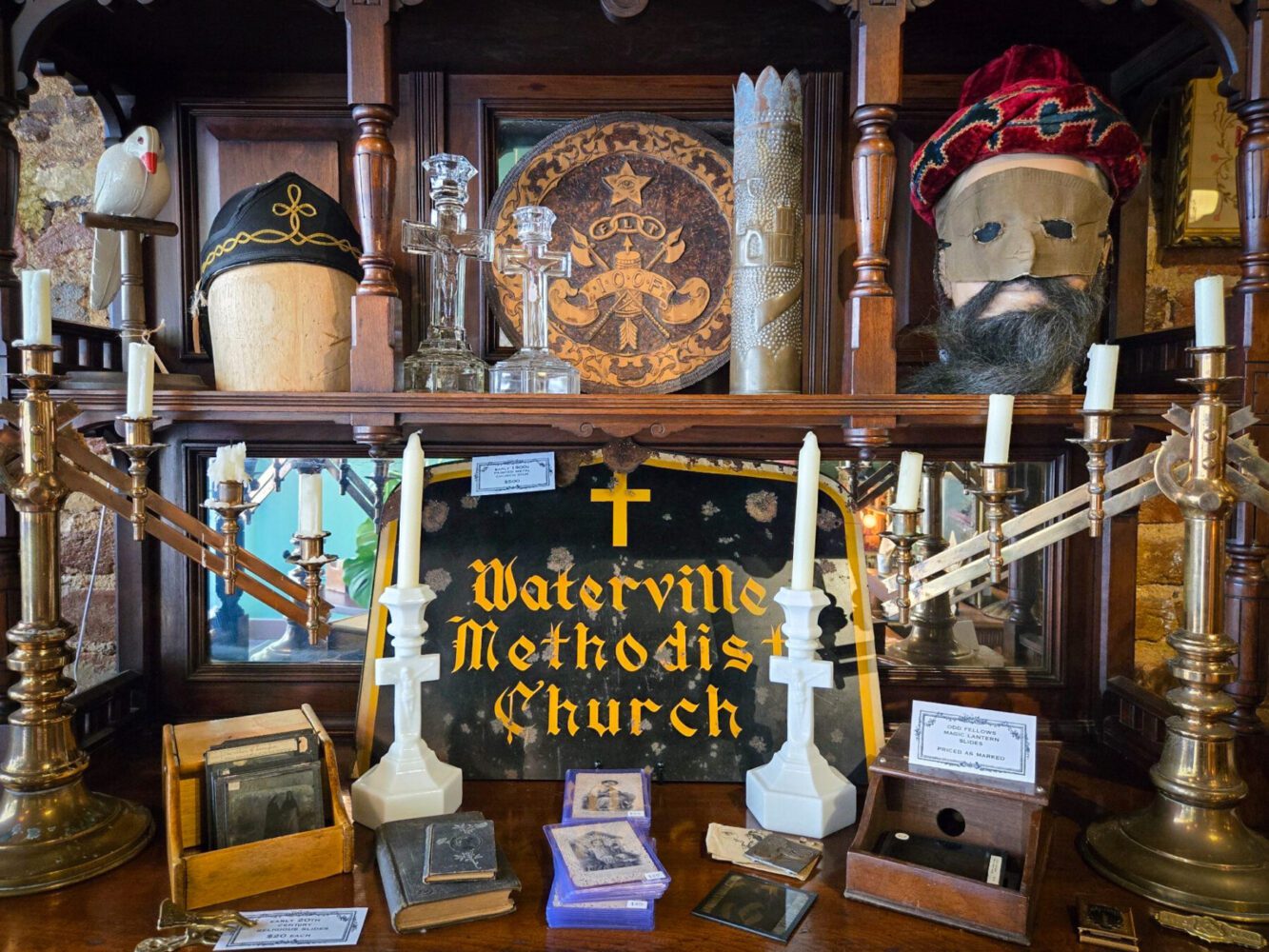
“They’re like a secret society, similar to the Freemasons, but they’re a lot more charitable and also a lot more weird. And they had initiations with things like kissing a human skeleton, spanking machines, and riding a weird wooden goat. They would do all sorts of weird things, and we love them for that. They’re still around today, and there are plenty of lodges here in Virginia.” — Lloyd
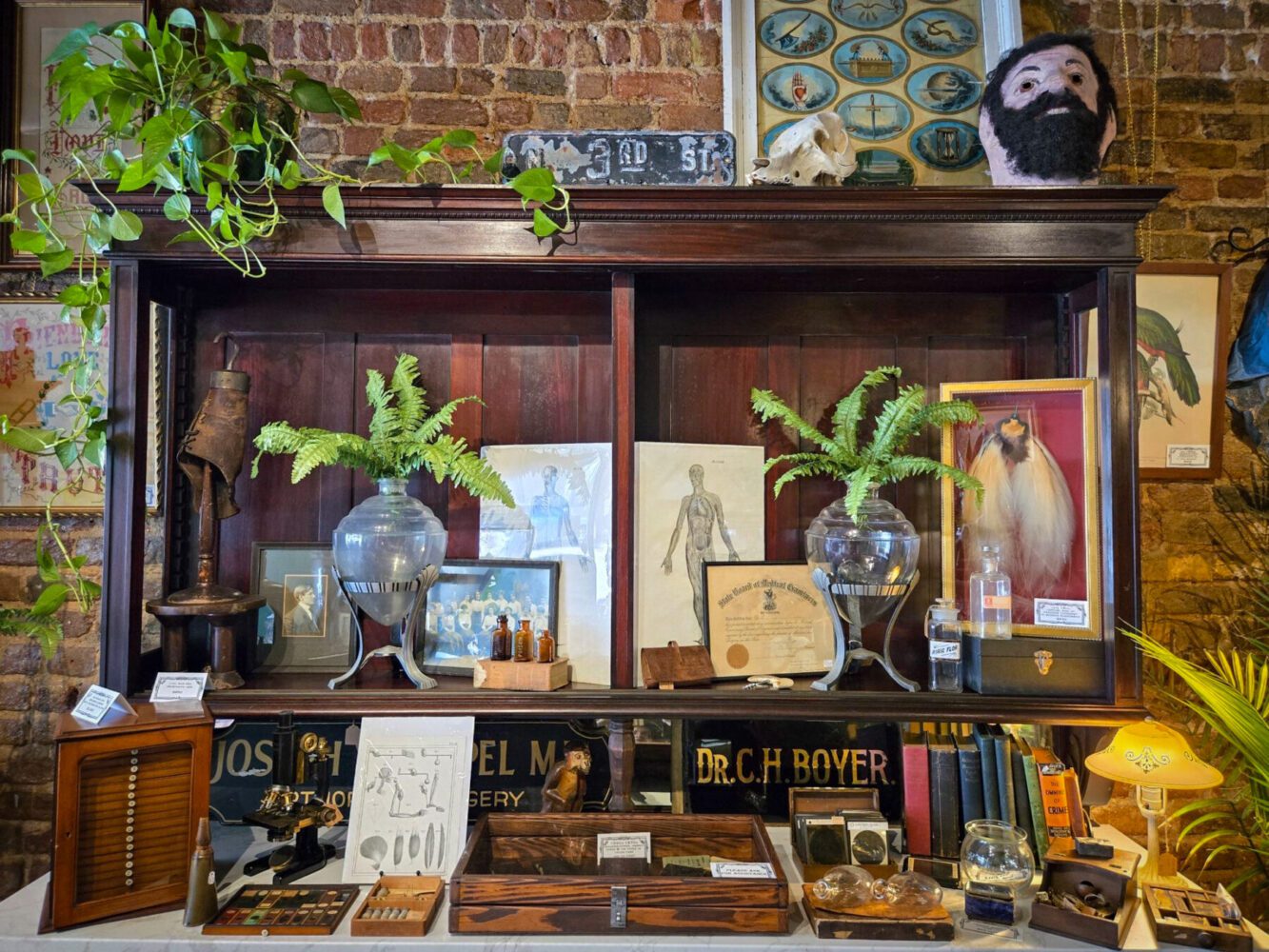
“The Odd Fellows had all sorts of crazy, wild symbolism and rituals, and we just love their iconography. Their motto is FLT, which stands for friendship, love, and truth. So, you know, it kind of resonates with us.” — Parker
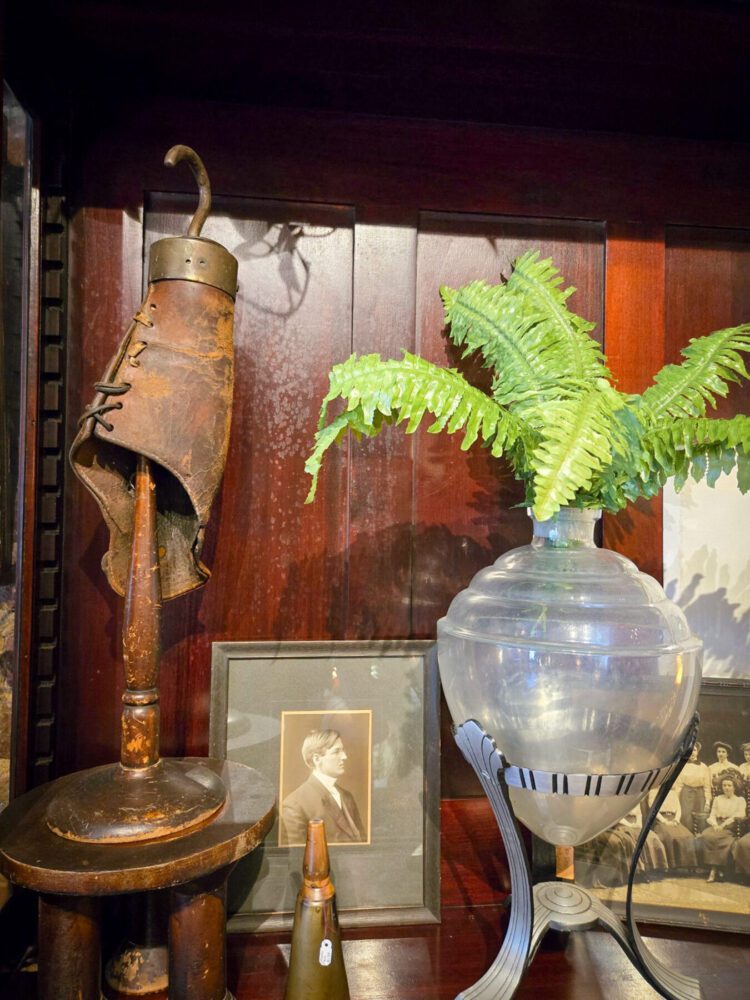
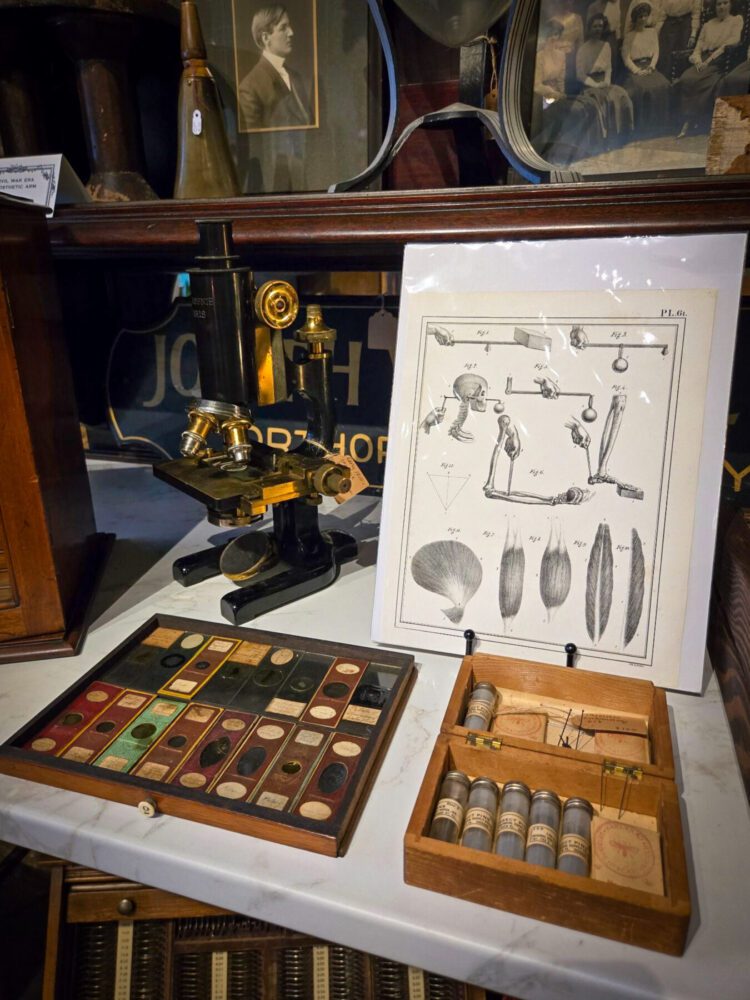
“This is a cool specimen case from the 1800s, and all of these are old slides of different bugs and weird things. So once we got this, we had to find a microscope. There’s a couple of human specimen slides in there too, but not too many. There are a few.” — Lloyd
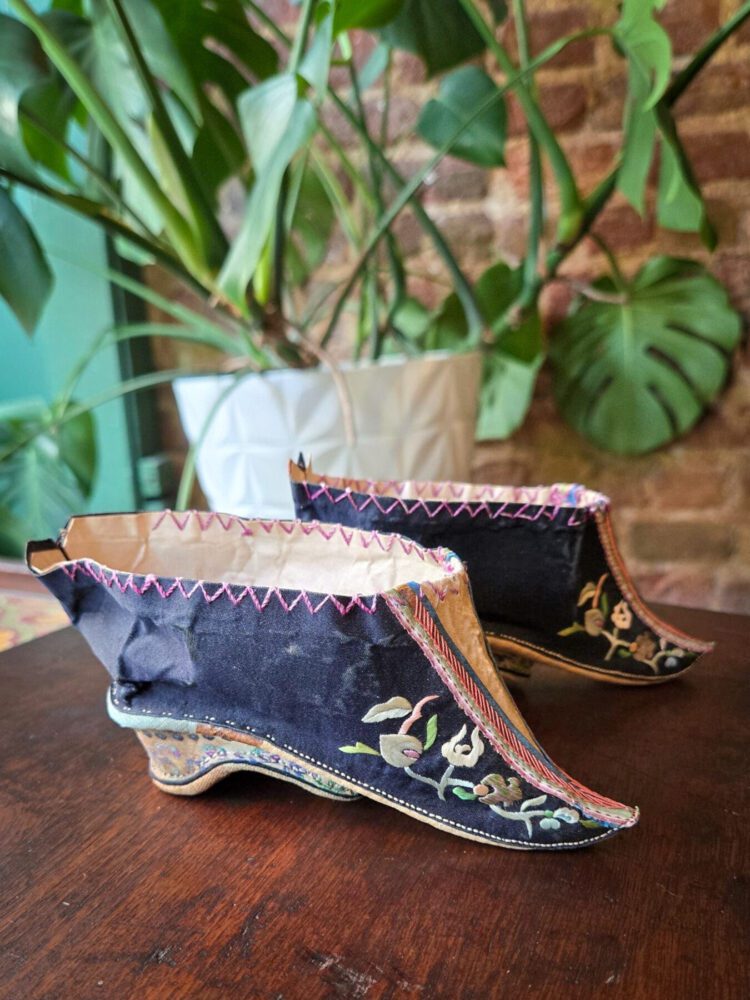
“These are called Chinese lotus shoes. Are you familiar with the practice of Chinese foot binding? These are the shoes that they would have worn after they bound their feet. Because of the coloring, since it’s like a dark blue, it does look black, but it’s a dark blue, we know that this was more likely an older woman, not a younger one. They wore different colors at different points in their life.
If you’re squeamish, don’t ever look up pictures of their feet, because it’s pretty bad. They would basically break your toes and bind them all together. This was a symbol of beauty. It was based on a dancer who was known for her tiny, demure feet that people said looked like lotus petals.
They got carried around. Some did walk, but it was very difficult. A reminder of, let’s not go back to that part of the past.” — Lloyd
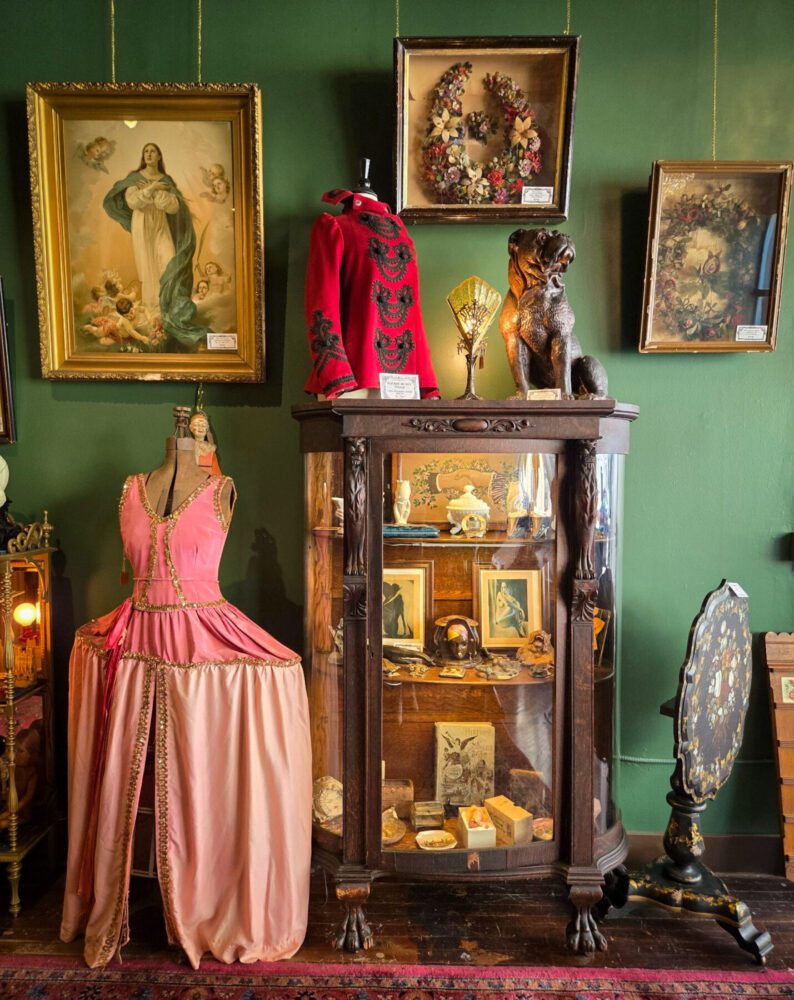
“This is probably a 1920s or ’30s theater costume. I think it’s supposed to look historical, maybe like a French Revolution costume or something like that. It’s just fun. It bounces cool when you wear it.” — Parker
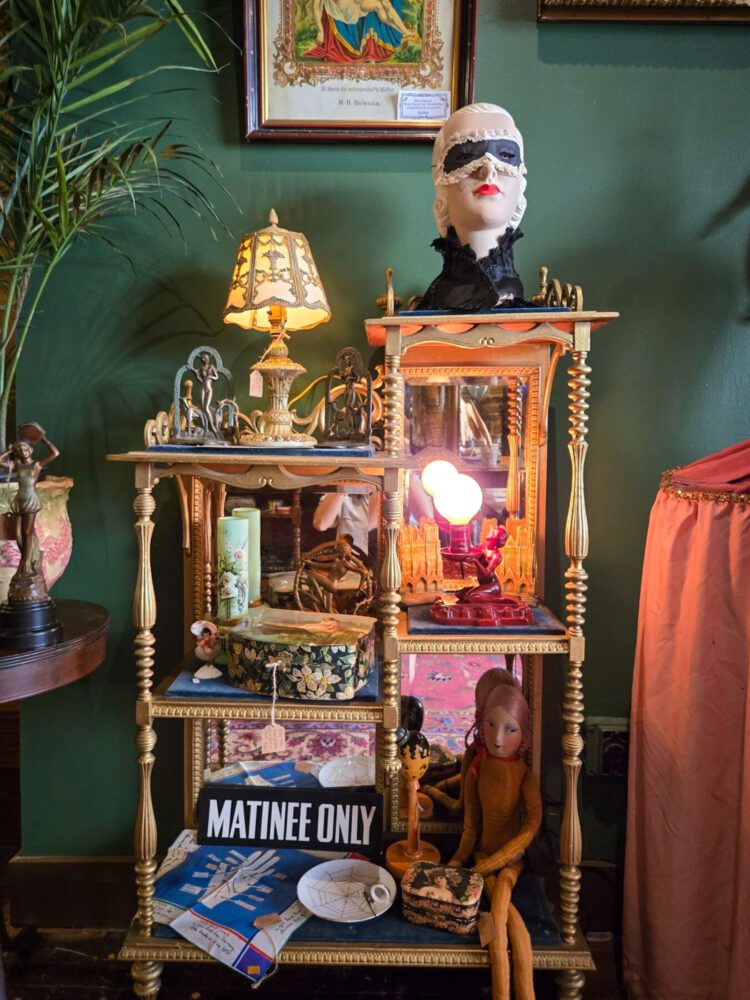
“This is our Art Nouveau, Art Deco nude woman area. Usually, it’s chock-full of naked ladies, but we sold quite a bit.” — Parker
Support RVA Magazine. Support Independent Media in Richmond.
At a time when media ownership is increasingly concentrated among corporations and the wealthy, RVA Magazine has remained one of Richmond’s few independent voices. Since 2005, the magazine has provided grassroots coverage of the city’s artists, musicians, and communities, documenting the culture that defines Richmond beyond the headlines.
But we can’t do this without you. A small donation, even as little as $2, one-time or recurring, helps us continue to produce honest, local coverage free from outside interference. Every dollar makes a difference. Your support keeps us going and keeps RVA’s creative spirit alive. Thank you for standing with independent media. DONATE HERE.
We’ve got merch HERE
Subscribe to the Substack HERE
And Reddit HERE
And YouTube HERE