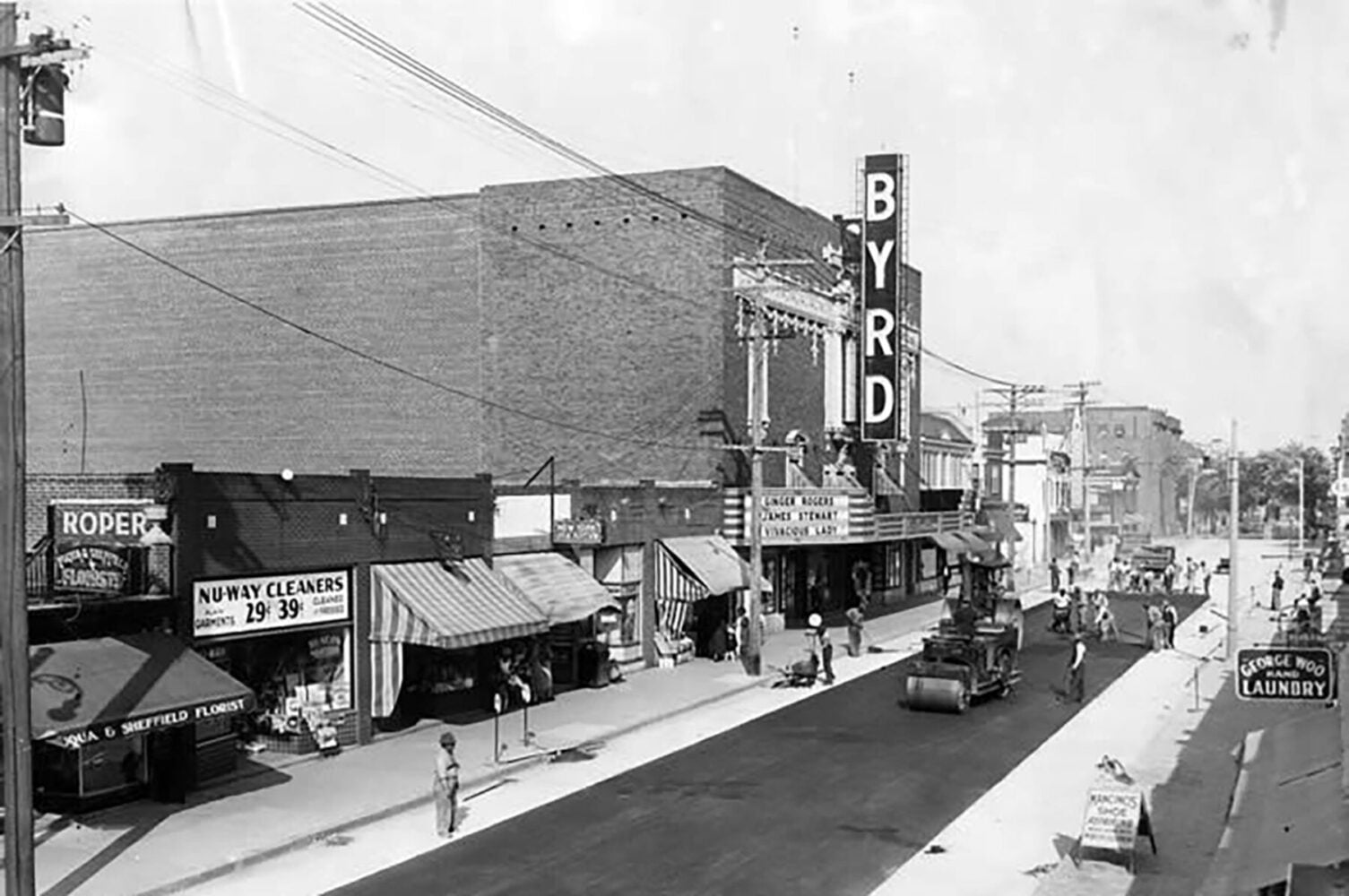
Christmas Eve, 1928. Richmond is cold and the city is dressed for the holiday. On West Cary Street, a crowd gathers outside a building that wasn’t there six months ago; a French Empire facade rising up in the middle of a neighborhood that had no idea it was about to become something. The first film that night was Waterfront, a First National picture starring Dorothy Mackaill and Jack Mulhall. An evening ticket cost fifty cents. A matinee was twenty-five. A child got in for a dime.
Nearly a hundred years later, The Byrd Theatre is still there. Still on the same block. Still showing movies. The ticket is nine dollars now, and the films are second-run, which means you’ve probably already seen them and you’re going back anyway because you’re not really going back for the movie, you’re going back for the room.
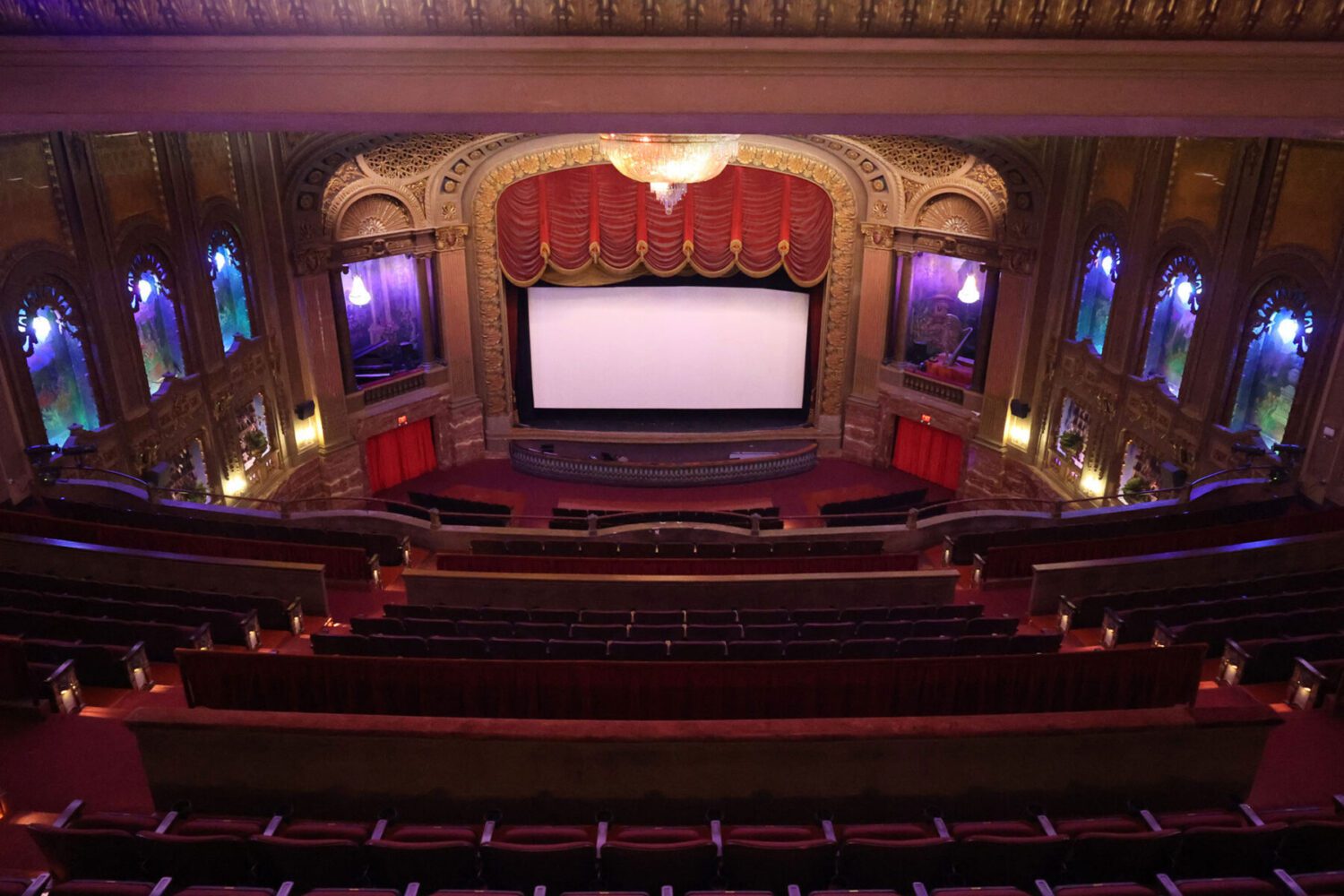
There is a version of this story that leads with architecture. With the eleven Czechoslovakian crystal chandeliers, the centerpiece of which is an eighteen-foot, two-and-a-half-ton monster suspended over the auditorium with over 5,000 crystals illuminated by 500 red, blue, green and amber lights. With the imported Italian and Turkish marble, the hand-sewn velvet drapes, the oil-on-canvas murals of Greek mythology painted by the Arthur Brunet Studios of New York.
That version of the story is true and it is impressive but it misses the point entirely. It’s what happens when the lights go down on a Saturday night.

The console; a four-keyboard instrument connected by an eight-inch cable of thousands of wires to pipes in four rooms above the stage, begins to rise from the orchestra pit. A spotlight opens. And Bob Gulledge, seventy-two years old and thirty years into this particular gig, comes up with it.
“It’s one of those instruments you can feel the vibrations up through the floor,” Gulledge has said, and if you’ve sat in the Byrd on a Saturday when he’s playing, you know exactly what he means. The bass notes don’t come from the speakers. They come from the seat. They come from the floor.
Gulledge’s relationship with The Byrd goes back to 1965, when he was twelve years old and a youth group from Bon Air Baptist Church brought him to see The Greatest Story Ever Told. He was fascinated by the theater’s baroque opulence, but the organ played by Eddie Weaver made a lasting impression.
“The first thing I heard was the roar of those big bass notes rolling across the floor,” he recalled. “And Eddie brought that console over the rail, and he had my attention. By the time it was over I was like, ‘I gotta do that.'”
What followed was a year of Gulledge pestering Weaver for lessons, Weaver finally relenting, and an eleven-year apprenticeship that eventually moved to the Byrd itself. Gulledge left Richmond in 1979, landed in Virginia Beach, and spent years commuting back to Cary Street for gigs. In 1996, he took the bench full time.
This March, Gulledge marked thirty years. When asked about it in an interview with WTVR on March 6, he was characteristically plain: “I kid and tell people it is the most fun you can have in a blue blazer. It is an opportunity most people don’t get. I’m very humbled and I’m very proud. I treasure every day here. I really do.”
The Byrd’s Wurlitzer is one of about forty surviving instruments in their original installation out of more than two thousand made by the Rudolph Wurlitzer Company between 1914 and 1942. The Byrd has one of them, and on Saturday nights, a seventy-two-year-old grandfather in a blue blazer plays it for strangers.
The building itself cost $900,000 to construct in 1928; the inflation-adjusted equivalent of more than twelve million dollars today. The place was built to make people feel something the moment they walked through the door, and it still does that.
It is also, and this deserves to be said clearly, a building with a history that isn’t entirely glorious. The Byrd was originally segregated. The balcony was intended to accommodate African-Americans, but the theater did not open its doors to Black patrons until the 1960s.
Richmond in 1928 built this room and decided who was allowed to feel elevated inside it.
What the Byrd Theatre Foundation has done since 2001 is genuinely hard to pull off. They’ve kept a nearly hundred-year-old structure not just standing but functioning, not just functioning but relevant.
From 2007 to 2014, the Foundation raised more than one million dollars for replacing the roof, renovating the heating and cooling units, and investing in digital projection. In 2017, the center section of seats were replaced with 236 new seats and an ADA platform. The work continues.
These are not glamorous projects. Roofs and pipes and seats don’t make for good press releases. But they are what keep old things from quietly becoming nothing. The Foundation’s stated goal is to restore the entire theater back to the way it looked in 1928, including bringing back the blade sign that once defined the Carytown skyline. The corridor Richmond now celebrates as one of its most walkable and commercially alive grew up around a movie theater. The Byrd helped produce Carytown’s evolution.
The cultural fingerprints on this building keep accumulating. Richmond-born musician Lucy Dacus filmed “Hot and Heavy” at the Byrd and shot the cover art for her album Home Video there. Ethan Hawke held events there while filming The Good Lord Bird. In March 2024, William Shatner held the world premiere of his documentary You Can Call Me Bill at the Byrd.
The Byrd collects these things naturally. It is still there. The theater operates 365 days a year. It shows second-run films, hosts events, and throws Saturday morning shows at five dollars a ticket. That offer is still on the table. It is nine dollars. The organ plays on Wednesdays, Fridays, and Saturdays.
The Byrd is still that place.
The Byrd Theatre is located at 2908 W. Cary Street in Carytown. Tickets are $9. Family showings on Saturdays at 10am are $5. The Mighty Wurlitzer plays Wednesday, Friday, and Saturday nights.
Main image: The Byrd Theatre with road being paved, possibly 1929
Support RVA Magazine. Support Independent Media in Richmond.
At a time when media ownership is increasingly concentrated among corporations and the wealthy, RVA Magazine has remained one of Richmond’s few independent voices. Since 2005, the magazine has provided grassroots coverage of the city’s artists, musicians, and communities, documenting the culture that defines Richmond beyond the headlines.
But we can’t do this without you. A small donation, even as little as $2, one-time or recurring, helps us continue to produce honest, local coverage free from outside interference. Every dollar makes a difference. Your support keeps us going and keeps RVA’s creative spirit alive. Thank you for standing with independent media. DONATE HERE.
We’ve got merch HERE
Subscribe to the Substack HERE
And Reddit HERE
And YouTube HERE