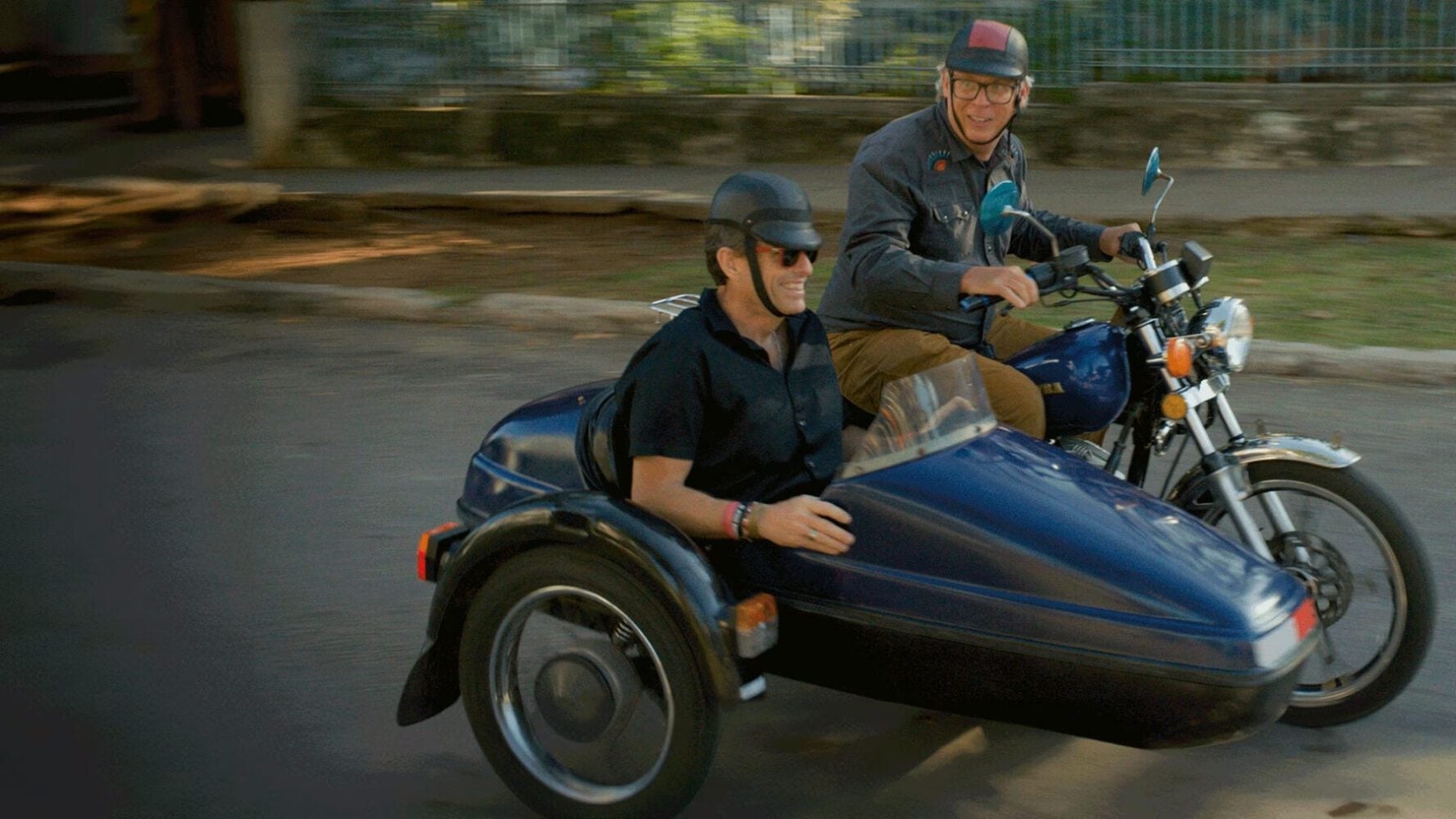
When Richmond producer Craig Martin talks about The Good Road, he does not start with ratings or distribution. He starts with a pitch he heard on a flight more than a decade ago.
“The first words out of his mouth,” Craig said of his business partner and co-host Earl Bridges, “‘I want to do a show that’s Bourdain meets philanthropy.’ And I was super excited from just that one little, tiny pitch.”
Today, The Good Road is five seasons deep with national distribution through American Public Television, after an early break with WETA in Washington, D.C. But the origin story is as personal as it is professional.
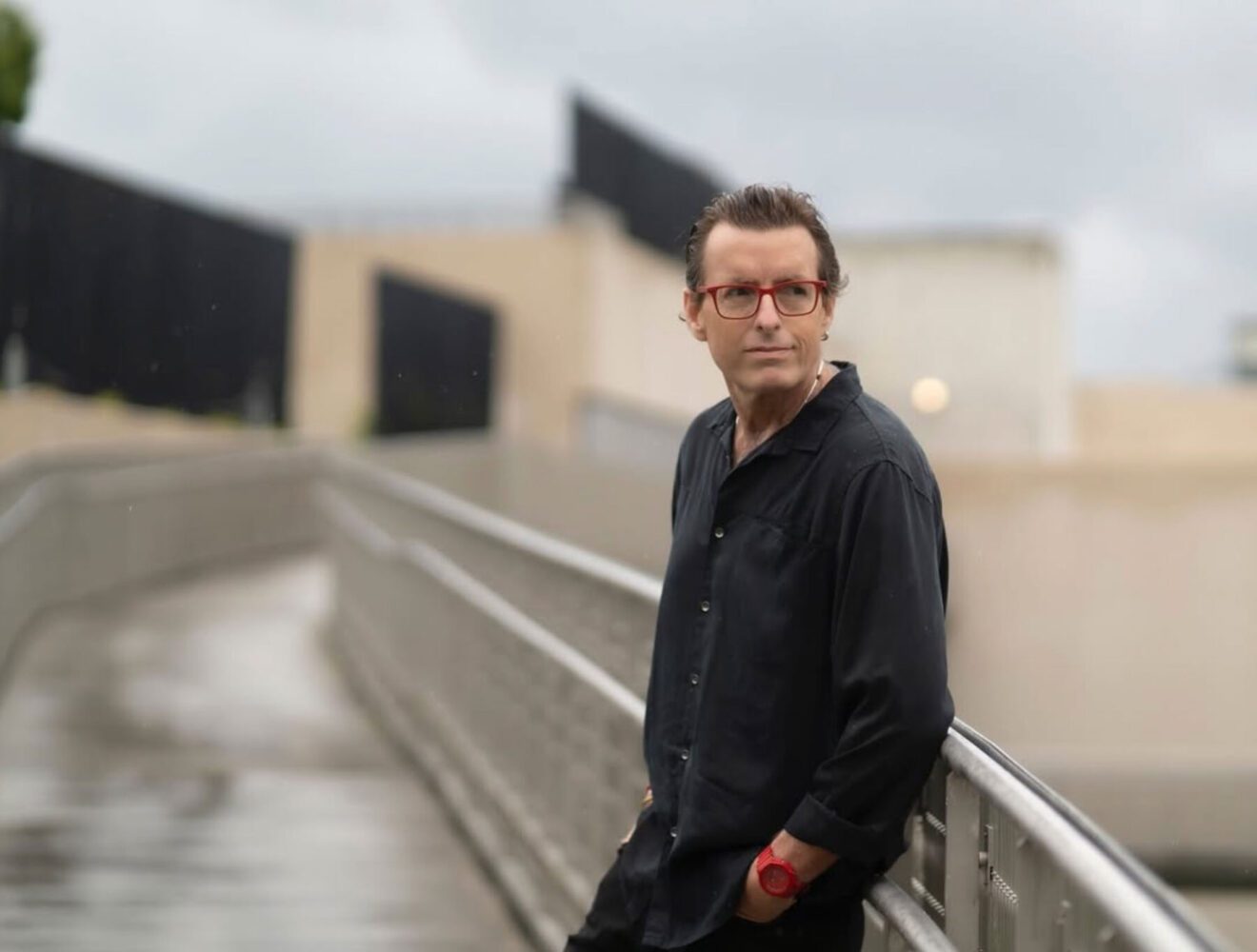
Craig was born and raised in Bangkok. His parents were Southern Baptist missionaries who started a prison ministry in Thailand.
“At the end of the day,” he said, “what my father specifically and mother did was care and concern for other people.”
As a kid, he packed food bags and “goodie bags” for prisoners his parents would visit. That early exposure shaped him, even as his relationship with organized religion evolved.
“I tell people this just outright,” he said. “I worked for 26 years doing propaganda, basically for the Baptists.”
He does not say it with anger. It is more like accounting. He has carried forward parts of that background and left other parts behind.
“As I’ve gotten older, I’ve more kind of parted ways to some degree with that religious heritage, specifically with the politics of that particular group. But I’ve carried on this idea that the two things at the core of what I do are love your neighbor as yourself and love your enemy.”
That tension and that ethic run straight through The Good Road.
Not Just Nonprofits
The show began scrappy. There was a Kickstarter, and one now for season 6, just to get started. Their first major trip followed the delivery of clean birth kits to Eastern Uganda, combined with a story about an architecture firm building a remote clinic.
Originally, Craig was supposed to host alone.
“Pretty quickly into development he was like, I don’t want to do it this way, man. We should do it where you’re with me, like us traveling together.”
That dynamic stuck.
The early concept name was Be Good All Over. When WETA picked them up as a presenting station, it was a major break. But being an independent producer in the PBS system comes with fees, and by season two, Craig and Earl were burning through personal savings.
“We were basically prepared to tell WETA we couldn’t have them as our presenting station anymore because we couldn’t afford it,” Craig said. “And they were the ones who suggested, ‘You don’t really need us anymore. Why don’t you just go directly to American Public Television?’”
They did. The relationship with APT has now spanned five seasons.
Despite the philanthropic framing, Craig pushes back on narrowing the show too tightly.
“The show itself isn’t just philanthropy,” he said. “We just have people who are change makers.”
They have filmed maternal health stories, LGBTQ rights work in Puerto Rico, artists in underserved communities, and even for-profit tech companies expanding connectivity in East Africa.
“When we first started with public television,” he recalled, “we told them we were going to film with a for-profit company in Kenya and Tanzania, and they were like, ‘I don’t think you can do that. It’s not a nonprofit.’ And we were like, we never said we were only going to do nonprofits.”
The through line is simple: “People who we consider making the world better.”
Are Most People Good?
Traveling as widely as Craig has forces a question.
“Do you feel most people are genuinely good people?” I asked him.
He laughed at the phrasing. “Pun intended.”
In Tanzania, on a remote island in the Zanzibar archipelago, an anthropologist told them that most research shows that, by and large, people are good. Not just to their families, but to the broader community.
“That was actually pretty inspiring to me,” Craig said. “Because you ask yourself that question all the time.”
For him, this is not abstract. After 9/11, watching anti-Muslim sentiment surge in the U.S. hit close to home. He had spent years in Muslim-majority countries including Syria, Jordan, Lebanon, and Indonesia.
“I knew Muslims were loving, good people who actually cared for each other, had families,” he said. “So this kind of bullshit about Muslims all being terrorists was just an American perspective.”
He wanted to challenge that narrative.
“What better way to do that than to have a travel show that focuses on cultures we would consider off the beaten path?”
They filmed three episodes in Mosul, Iraq.
“Knowing full well it’s not the kind of travel show where people are going to want to book a flight,” he said. “But just knowing that the interactions we were going to get were going to be rich. And they were. It was amazing.”
Culture Change Is the Goal
Craig boils his motivation down to three drivers.
“At my core there are three things that drive me. The first thing is culture change. I want to somehow impact culture. The second thing is, in order to impact culture, you have to have a big audience. And the third thing is you have to be able to measure that audience.”
It is a surprisingly strategic framing for someone who talks so often about love and empathy. But the two are not at odds for him. Impact requires reach.
He also believes exposure matters.
“One of the things I have so enjoyed is getting people out from their bubble,” he said, recalling trips where he brought rigid Southern Baptist pastors into radically different cultural spaces.
Sometimes the results were unintentionally comic. In Cairo, post-Arab Spring, a prominent Southern Baptist leader looked out the window at Arabic script and asked Craig if people could actually read “those squiggly lines.”
“I was inside cracking up,” Craig said. “How is it that he doesn’t know what Arabic looks like?”
Moments like that reaffirmed what he already suspected: isolation breeds myth.
From Global to Local
That same instinct shows up in his Richmond work.
Craig is also a partner in Shockoe Records, an outgrowth of the creative orbit around In Your Ear Studios. The label grew out of a practical need to help local musician Elizabeth Wise release and market an album.
But it developed a broader mission.
“One is to promote and help local musicians who were diverse,” Craig said. “Both in their ethnic or gender background, but also diverse in their music style.”
During Covid, they launched Shockoe Sessions Live to give artists a platform when live performance shut down.
“We’re always looking for a variety of different artists,” he said.
When the all-trans band Flora and the Fauna performed, an anti-trans comment popped up in the YouTube livestream chat and was removed immediately.
“It just was a reminder that to some degree we live in a very progressive city,” Craig said, “but we also live in a city that has pockets of hostility.”
He sees the work as small but meaningful.
“I’m hoping we’ve done a small job to kind of get people to see things a different way.”
Still on the Road
Craig does not claim to have it all figured out. He has parted ways with certain doctrines. He has wrestled with belief. He still carries the imprint of Bangkok, Cairo, Mosul, and Richmond.
But he comes back to the same core.
“Love your neighbor as yourself. Love your enemy.”
And maybe, if the anthropologist was right, most people are already closer to that than we think.
Craig Martin has built The Good Road on that possibility.
You can help by donating HERE.
Support RVA Magazine. Support Independent Media in Richmond.
At a time when media ownership is increasingly concentrated among corporations and the uber wealthy, RVA Magazine has remained one of Richmond’s few independent voices. Since 2005, the magazine has provided grassroots coverage of the city’s artists, musicians, and communities, documenting the culture that defines Richmond beyond the headlines.
But we can’t do this without you. A small donation, even as little as $2, one-time or recurring, helps us continue to produce honest, local coverage free from outside interference. Every dollar makes a difference. Your support keeps us going and keeps RVA’s creative spirit alive. Thank you for standing with independent media. DONATE HERE.
We’ve got merch HERE
Subscribe to the Substack HERE
And Reddit HERE
And YouTube HERE