
There is a spotlight still mounted in the rafters of 528 N. 2nd Street. It has been there since 1914. It has outlasted segregation, fire, the highway that cut Jackson Ward in two, and decades of silence. On the nights when the Hippodrome Theater fills up, that light falls on the stage the same way it fell on Billie Holiday, Ella Fitzgerald, and a young James Brown working the crowd like he owned the world, because in that room, for those hours, he did.
The story of the Hippodrome is a Richmond story, but it is also an American story about what communities build when the country refuses to build it for them.
A Stage Built from Exclusion
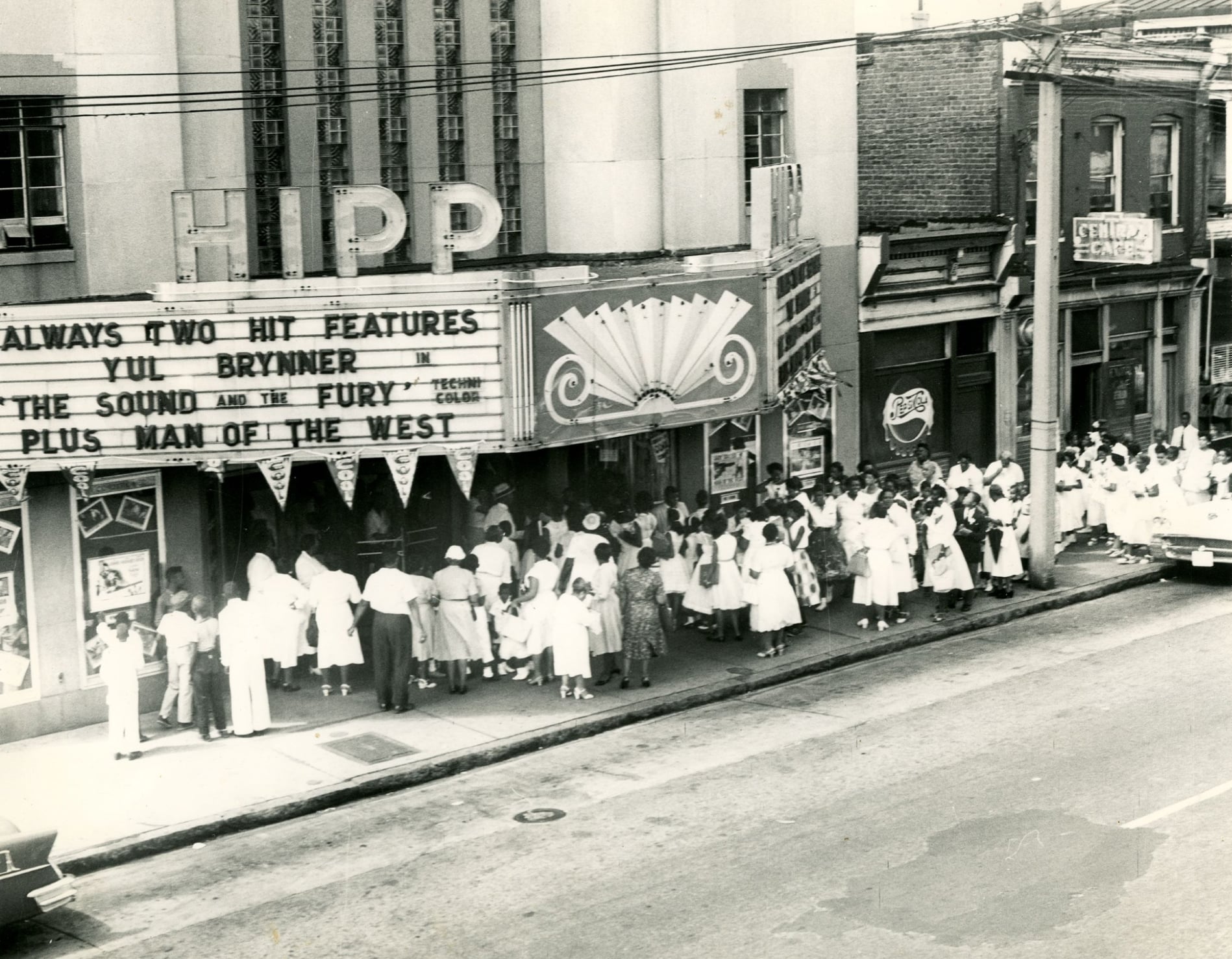
The Hippodrome opened its doors to the people the general public had decided didn’t deserve a seat.
In the early twentieth century, Jim Crow wasn’t just a set of laws in Richmond. It was an architecture. It determined which doors you could walk through, which seats you could occupy, which stages you could share. Black performers could not appear in white Richmond’s venues. Black audiences could not sit where they pleased, if they could sit at all.
So Jackson Ward built its own. When the Hippodrome opened in 1914 on North Second Street, it became the anchor of a neighborhood already becoming something extraordinary. Jackson Ward was called the “Harlem of the South,” a phrase that sounds like a compliment but was really a testament to necessity. Black-owned banks, insurance companies, newspapers, and restaurants had concentrated here because they were excluded elsewhere, and what emerged was one of the most economically and culturally vital Black communities in the American South. The Hippodrome sat at its center, a 45,000-square-foot declaration that Black Richmond had its own stage, its own lights, its own names on the marquee.

The Circuit
To understand what the Hippodrome meant, you have to understand the Chitlin’ Circuit.
The Circuit was the backbone of Black American entertainment during segregation: a network of venues stretching from Harlem to Houston where Black performers could work, eat, sleep, and be celebrated without humiliation. The name was borrowed from the chitterlings served at Southern soul food tables and was sometimes used as an insult. The people who played it chose to hear it differently.
For Black musicians, the Circuit was the industry. It was where careers were made, audiences were built, and performers learned to hold a room. The Apollo in New York, the Royal in Baltimore, the Regal in Chicago, and the Howard in Washington were among the real proving grounds of American popular music. In the South, the Hippodrome was one of the most vital stops on the map.
Duke Ellington, Louis Armstrong, Dizzy Gillespie, Ray Charles, Billie Holiday, and Ella Fitzgerald all came through, performing under that spotlight that is still there today.
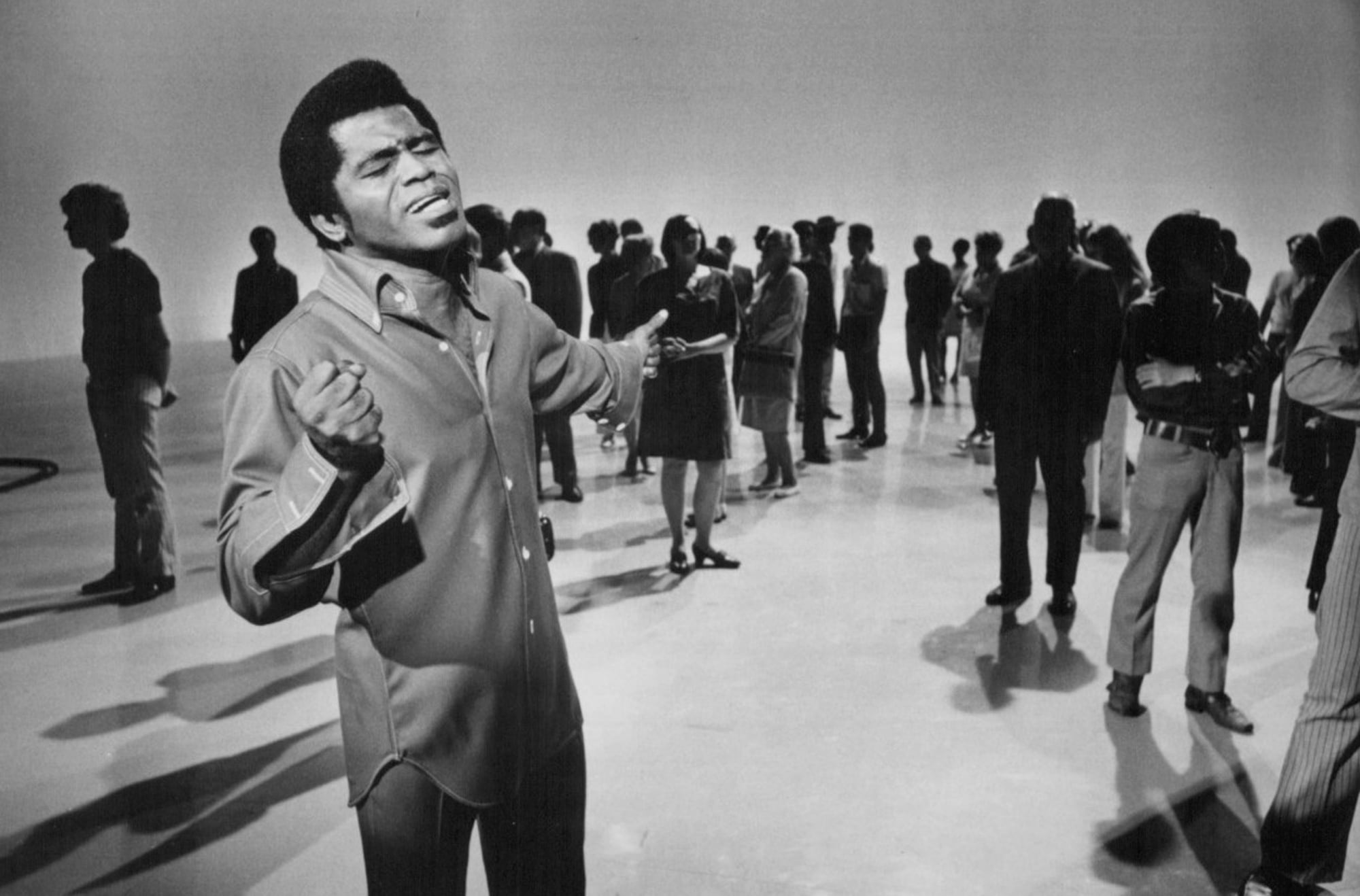
James Brown was among the performers who took the Hippodrome stage as part of the Chitlin’ Circuit. He worked the Hippodrome stage repeatedly for audiences who received him with reverence, recognition, and the kind of attention that only comes from a crowd watching the best in the world.
This is the paradox at the heart of the Chitlin’ Circuit and the Hippodrome’s story: the venues born from exclusion became the incubators of the music that would eventually be heard everywhere. The stages segregation created to contain Black artistic life became the rooms where that life flourished beyond anything its architects could have imagined.
Fire and Return
In 1945, the Hippodrome burned.
Nobody knows why. The fire took the theater and left a wound in the block. But Jackson Ward did not leave it there.
In 1947, the Hippodrome reopened. The ceremony drew 2,500 people into the street to celebrate a stage coming back to life. They understood what was being marked: a neighborhood announcing, plainly, that it was still here.
The theater kept going. It kept the lights on through the late 1940s and into the 1950s, drawing the Circuit’s best, filling its seats, doing what it had always done.
Then came the highway.
The Road Through the Heart
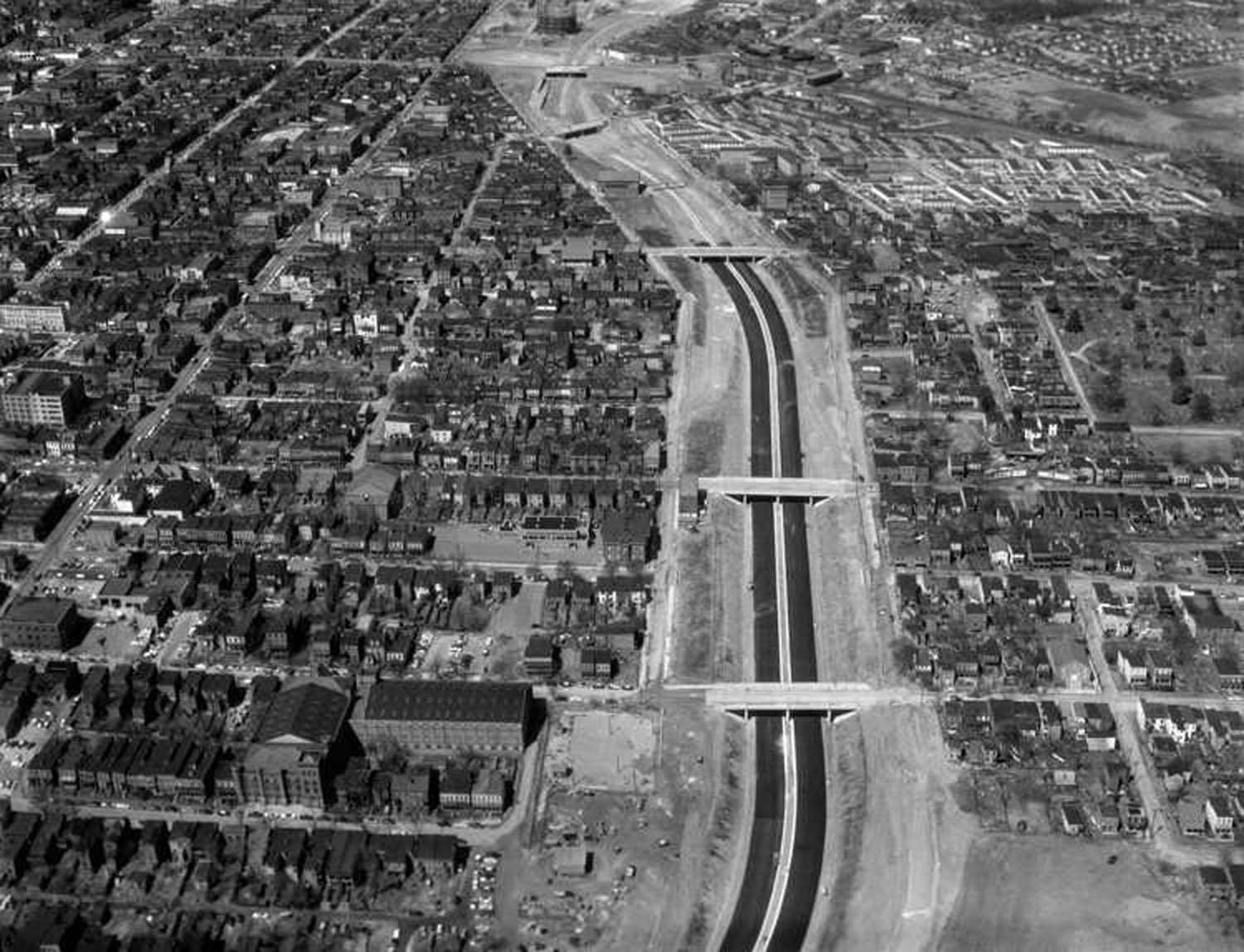
In 1954, the Virginia state legislature, all white, approved a highway project that would route Interstate 95 directly through Jackson Ward. The logic was the logic of mid-century urban renewal across America: identify a Black neighborhood, classify it as “blighted,” and run infrastructure through it that would have been unthinkable in a white neighborhood of comparable density.
The highway destroyed 1,000 homes. It displaced thousands of residents. It severed the neighborhood’s internal geography, cutting off blocks from each other and unraveling the commercial and social fabric that had made Jackson Ward what it was.
The Hippodrome drifted. It became a movie house for a while. Then a church. Then it closed. Then it reopened. Then it closed again.
What happened to Jackson Ward was not unique. The same highway logic gutted Greenwood in Tulsa, Tremé in New Orleans, and Sweet Auburn in Atlanta. But being part of a pattern does not diminish what was lost. A community that had built itself into something extraordinary, against every deliberate obstacle the American South could place in its path, watched a road plow through its center because nobody in power thought it was worth protecting.
The Promise
By the 1970s, James Russell Stallings, Sr. bought the Hippodrome.
Stallings was a Jackson Ward native. He knew what the building was and what it had been, and when he passed it to his son Ron, he gave him a single instruction: Never sell the Hippodrome. It’s the cultural heart of Jackson Ward.
Ron Stallings heard it as more than a directive. He heard it as a definition of his life’s work.
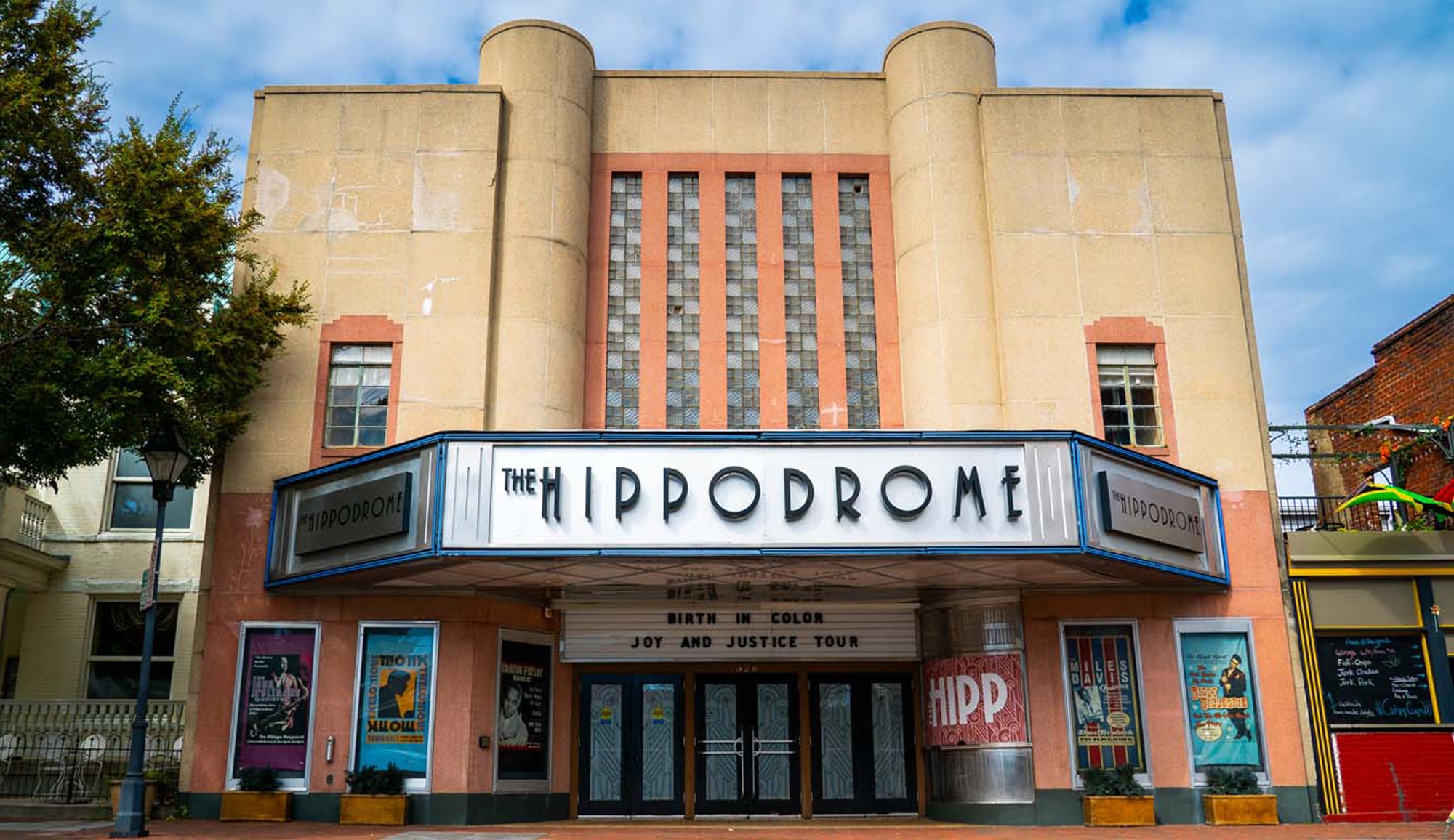
He put twelve million dollars into that promise. When the work was done, the Hippodrome that emerged was a fully restored 45,000-square-foot entertainment complex, equipped for the twenty-first century but rooted in what it had always been.
The original brick walls are still there. The 1930s projector is still there. The spotlight is still in the rafters. When Ron Stallings talks about the restoration, he talks as much about what they chose not to remove as what they added. There was a history in those walls that twelve million dollars couldn’t have built from scratch. All it could do was protect it.
The Neighborhood Returns
Walk Jackson Ward today and you will find something that resists easy summary.
The neighborhood is alive again: new restaurants, Black-owned businesses, a community reconstructing itself on the same blocks the highway tried to erase. It is not a simple story of triumph. Displacement and gentrification are complicated forces, and the people rebuilding Jackson Ward are navigating pressures that didn’t exist in 1914. But the rebuilding is happening with an awareness of what was here before, an insistence on continuity with the Jackson Ward the highway tried to bury.
The Hippodrome is at the center of it all. Geographically, yes, sitting on North Second Street where it has always stood, but also as a place that holds the neighborhood’s memory by continuing to make it. The stage that hosted Ella Fitzgerald and James Brown still hosts concerts, comedy, community events, and new generations of performers. It is not simply preserved. It is used. More than a century after it opened, it remains one of Richmond’s most vital cultural institutions because it continues to serve the city, not just commemorate it.
And in the rafters, that spotlight still works. It has been shining, in one form or another, for more than a century. It shone when the Circuit was the only stage in America where Black performers could be free. It shone when the neighborhood around it was the most vibrant Black community in the South. It kept its place through the fire, the highway, and the silence.
It is shining now.
Main image: Richmond’s Hippodrome Theater
Support RVA Magazine. Support Independent Media in Richmond.
At a time when media ownership is increasingly concentrated among corporations and the wealthy, RVA Magazine has remained one of Richmond’s few independent voices. Since 2005, the magazine has provided grassroots coverage of the city’s artists, musicians, and communities, documenting the culture that defines Richmond beyond the headlines.
But we can’t do this without you. A small donation, even as little as $2, one-time or recurring, helps us continue to produce honest, local coverage free from outside interference. Every dollar makes a difference. Your support keeps us going and keeps RVA’s creative spirit alive. Thank you for standing with independent media. SUPPORT HERE.
Subscribe to the RVA Mag Weekly Newsletter HERE
We’ve got merch HERE
Subscribe to the Substack HERE
And Reddit HERE
And YouTube HERE