

On stage and in the kitchen, some recipes are meant to be followed to the letter, while some are wide open for flair and interpretation. Big Broadway musicals thrive on delivering an experience as replicable as a chain restaurant’s marquee burger. This is not a dig. When you pay for a Broadway hit musical, you want a Broadway hit musical with all the trimmings, and that’s what Rick Hammerly’s production of Waitress delivers.
Many would cite the Disneyfication of musical theatre as the great homogenizer of the art form. Some would say Waitress fits in this pigeonhole. Many with a smile on their lips when discussing Disney’s effect on Broadway marvel at The Little Mermaid, Beauty and the Beast, Lion King, Frozen etc for raising the bar for what was becoming snobby, inscrutable, abstract, and boring in Manhattan. They’ll claim Disney’s influence modernized the Great White Way post-Cats, Phantom, and Les Mis (read: Andrew Lloyd Webber). Many who would approach this idea with a scowl harken back to West Side Story, Oklahoma, etc as the high points for substance, style, and artistry. They’re both right. And they’re both wrong.

The Broadway Musical, as a genre, is meant to instill a soaring effect. The songs need to pour it all on all at once. Pain, elation, wit, and overwhelming romance are delivered loudly with insistence on the moment of impact. The powerful dynamic ranges of octave-bashing divas take center stage in a test of excellence, sometimes more American Idol season finale than bespoke auteurism befitting a $400 ticket. Delivering an experience that matches the dent in your credit card is not easy. It’s not simply a test of talent alone, and it can not just be purchased in props, lights, and costumes. Broadway musicals thrive at the intersection of material excess and purity of songcraft. The best of them will leave you in awe of the production standards while clearing the lump out of your throat left by a pre-intermission aria.
They are meant to manipulate your emotions most satisfyingly. A great musical leaves you flightless and stratospheric all at once. It leaves you with a couple bars of chorus to belt out in the shower, a pop reference point to recall amongst friends, and quite frankly, a little culture badge to add to your metaphorical “I LIVED” sash. You all have those too, right?
All of the above-mentioned titles, from Sondheim’s to Bareilles’, climb that same hill of achievement, and for their times, crest the apex with honors (usually in the form of Tonys and long engagements.) That is what we remember most about them. Did it MOVE you? Are you singing those songs in your head right now? Did you feel the absolute most alive when that solo broke your heart, or when the ensemble cast shattered glass in the climactic third act?

Waitress, as a work of art, has all the ingredients to stand shoulder to shoulder with the best while restraining itself to muted roars. It is the product of the successful-film adaptation to stage pipeline, but is clearly in a different category from the Spidermans, Harry Potters (yes, I know it was a book first), and Disney animations. Instead of trying to recreate cinematic majesty, the work interprets the unending void of the soul where longing outpaces pyrotechnics. The setting is small and the topics are personal. Unplanned motherhood, loveless marriage, the call to lust, the chrysalis of fearsome change – all introspective concepts are packed into the potato gun of spectacle and shot with confetti onto an audience unprepared for big feelings within intimate concerns. It’s disarming and charming.
VA Rep picked the right Big League product for the November Theatre’s AAA stage. They spared no expense of creativity in set construction, culled the greatest cast for the task at hand, and trusted Richmond’s humanity to communicate all of the single-tear loveliness the work has to offer.
Emilie Fath Thomspon embodies Jenna, our titular Waitress and pie baker. She is not the downtrodden blue-collar with the heart of perpetual gold. She is the neighbor or sister with a heart of muscle and blood. Emilie makes Jenna a whole person that makes mistakes, gives a shit, takes for herself, and gives when she can. Her supporting cast, most notably William Vaughn as Cal, Joe Pabst as Joe (oh my God, his song is wrenching), and Bear Manescalchi as Ogie make the moments when we’re not focused on Jenna entertaining, but it is her coworkers, portrayed by Miya Bass and Kylee Marquez-Downie, that offer point and counterpoint to Jenna’s dilemma. They’re also entertaining but serve as examples of what Jenna’s life COULD be, they are the greener and faded grasses on the other side of the fence – whose quality of sod depends on what angle you see them from.
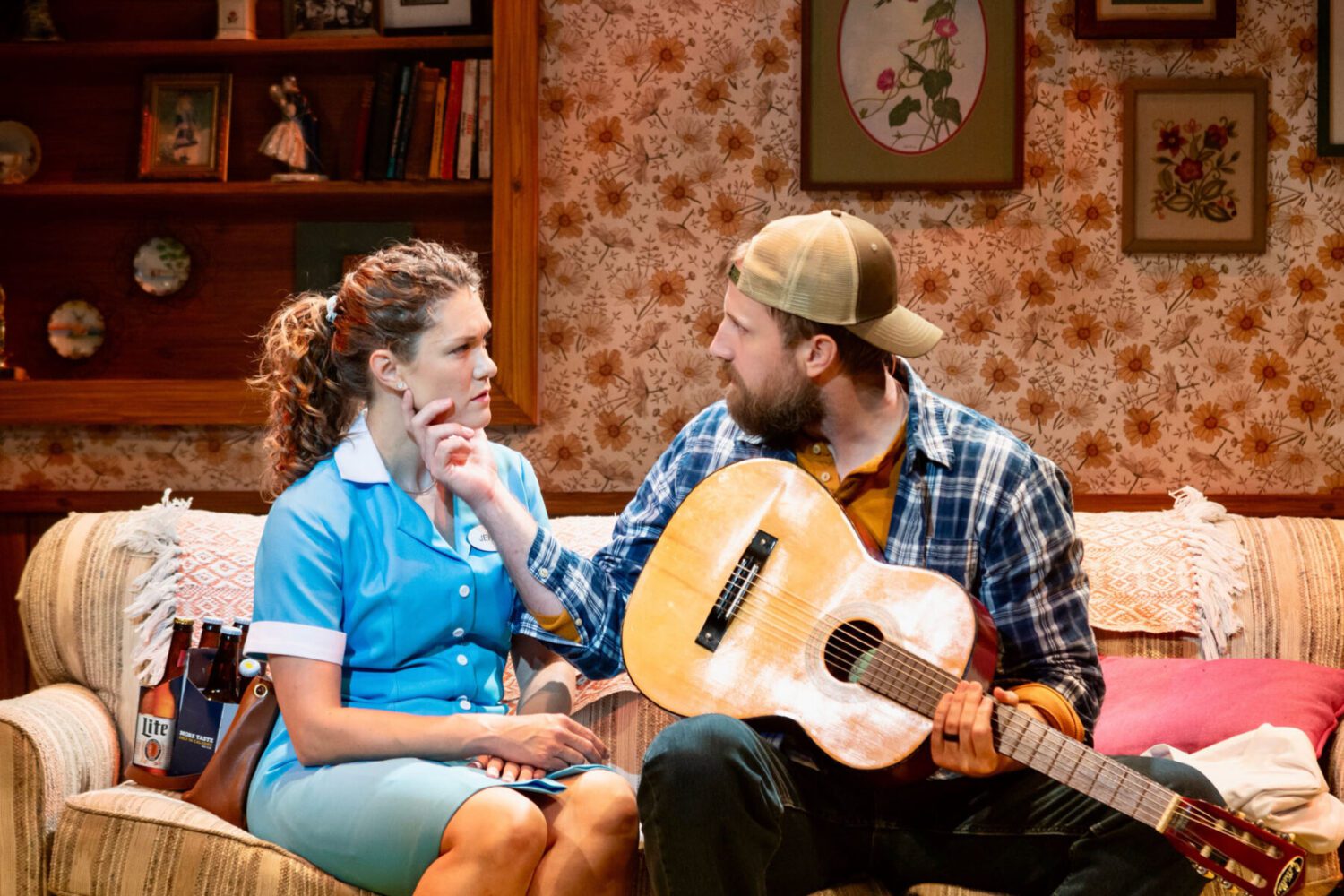
Waitress treads on moral ambiguity and compassion for others’ specific experiences in a way some audiences will not be prepared to process. It is 100% Broadway-at-its-finest because it comes at you like a kitten but runs you over like a truck. The songs are memorable as all hell. You will get your shower choruses. VA Rep serves the meal the way it was intended. Intact, unedited, with pickle on the side. On its own plate.
Go be swung around by the feels. Check out Waitress at the November Theatre before August 3rd.
You can find tickets HERE.
Support RVA Magazine. Support independent media in Richmond.
In a world where corporations and wealthy individuals now shape much of our media landscape, RVA Magazine remains fiercely independent, amplifying the voices of Richmond’s artists, musicians, and community. Since 2005, we’ve been dedicated to authentic, grassroots storytelling that highlights the people and culture shaping our city.
But we can’t do this without you. A small donation, even as little as $2 – one-time or recurring – helps us continue to produce honest, local coverage free from outside interference. Every dollar makes a difference. Your support keeps us going and keeps RVA’s creative spirit alive. Thank you for standing with independent media. DONATE HERE.
You can also show your support by purchasing our merch HERE.