
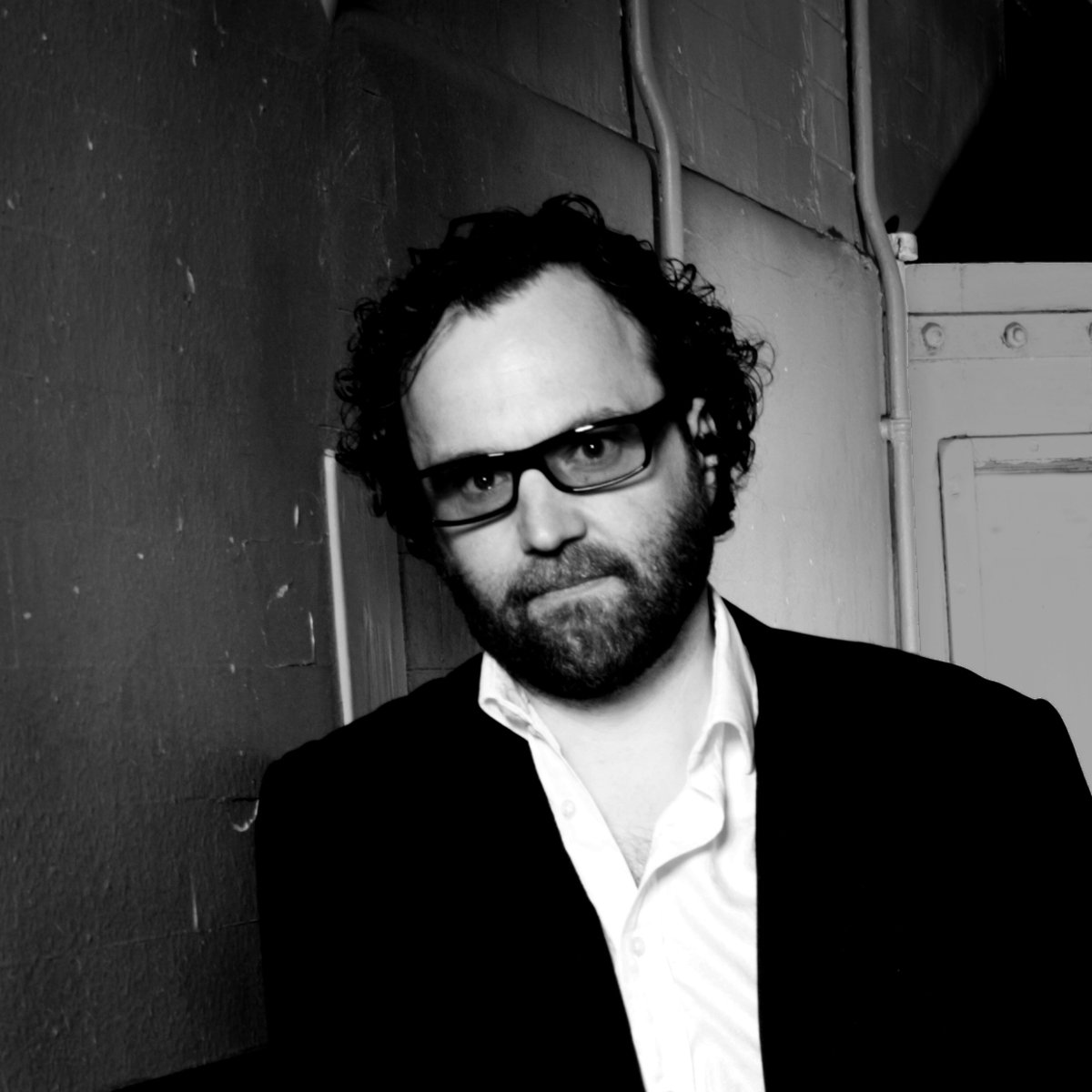
Context is a necessary thing in all forms of art, but recently, there has been a rise in philosophies that grapple with when one should become exposed to art’s background. Should we appreciate art in a vacuum at first, with no additional information offered other than what’s in front of you? Or should the circumstances that led to its creation be sought out before revealing the work? Like all things in art, there is no right answer. It all just comes down to a case-by-case basis. It’s only natural that some will be cut-and-dry while others will require more deliberation. When looking at singer-songwriter Mike Marlin though, that context is not only needed. It’s downright mandatory.
Marlin’s early life was much like everyone else in music today. He had an early interest in the field with a deep connection to specific bands and sounds. He joined countless short-lived bands while learning instruments and fleshing out his musical identity. But where other artists make the jump from that moment to their first substantial work, Marlin differs. Instead of pursing music, he dove head first into computer programming and spent the next three decades of his life fully immersed in that sector while his musical ambitions all but withered away.
At the sprightly age of 48 though, he realized he wasn’t done with music. Some might call it a mid-life crisis of sorts, but in reality, it was just a robust passion finally waking up inside of him after years of dormancy. He released his first record in 2009 entitled Nearly Man followed by records in 2012 and 2013, entitled Man On The Ground and Grand Reveal respectively. Outside of his first few singles released, the critical press largely gave him leeway with his work, judging it through the same lens they do a musician in his teens as opposed to the musically mature peers Marlin was close to in age. Leeway turned to favor quickly for Marlin however, and things were looking up for Marlin until another sudden decision happened that added more fire to the mid-life crisis theory.
“I basically told my fans to piss off,” Marlin laughed. “Not in those words mind you, but I decided I was going to give it a break and that I was resigning from releasing records. I stopped posting on social media and just disappeared basically.”
Bold move to say the least, but Marlin wasn’t being entirely honest with his fan base. Making new music hadn’t come to an end for the London native and he had actually already begun his next record, although it was now being made with the steadfast intention that no one outside of friends and those working on it would ever hear it. “I was making it for me and solely for me,” he remembered. “It wasn’t until much later that I actually thought about doing something with it and that was only because everyone hearing it was telling me I couldn’t just let this sit in the dark. I couldn’t keep ignoring them so I dusted it down and just changed my mind.”
That record would ultimately become known as The Secret Of My Success, a title Marlin admitted was very tongue-in-cheek. “Clearly this isn’t the right way to build a fanbase or career.” Self-deprecating titles aside, this new record would prove to be his most ambitious and most intimate work to date by a large margin. “It’s very personal,” Marlin said. “It was made only for me and I know a lot of people say this, but when I effectively had to have my arm twisted to release it, you can believe that’s the case here.”
Choosing to release this music meant pulling a 180 with his fans, something Marlin believe to be insurmountable at first. “I came into this all by accident,” he revealed. “I was clearly never going to be the next Bruce Springsteen. About 25 years too late for that one. So I thought me resigning from music would all but put my career to bed.” To his surprise, his career wasn’t bereft of life. The reception to his return turned out to be really warm and positive from across the board, leading to Marlin joking about his fans merits instead of acknowledging the genuine support. “The hordes of middle aged depressed fans must have missed me,” he teased.
That friendly banter was almost a requirement for Marlin though as he prepared to unleash a record that served as Rosetta stone to the most tumultuous time of his life. “My mother died in the middle of making the record after a long battle,” he somberly explained. “My dad nearly died as well. Also my kids were all leaving home around that so it was a big turning point in my life and all this stuff kept happening so I just put it all into the music.” Made with a small cast of musicians Marlin had become well-acquainted with over the years, that music turned out to be intense and overbearing at times, although equally honest and purgative.
“For the first time ever, I wrote songs without worrying about what other people would say,” he admitted. “I just said exactly what I felt at the time, but I also stopped trying to make songs that sounded like other people’s songs or what I thought people wanted to hear. It was just my music for me that now people are going to get to hear.”
It goes without saying that the lyrical risks taken on the record were amplified tenfold, but even the music and melodies had great risks taken to them as Marlin expanded on his Americana roots with a new influx of talent. “My bass player on this record actually spent 12 years with Jethro Tull,” he detailed, “so that prog rock background was infused with my love of Americana, which still confuses people. Although I grew up in the suburbs of London, in my mind, I was always somewhere in the Midwest travelling to California so America has just always been on my mind. It’s always been the most natural sound of me, and we just took it to the next level here.”
Marlin disclosed he made peace with releasing the record to the world long before it came out, but that hasn’t stopped the music from still impacting him in a personal way. Sometimes, it’s so impactful that it actually hinders his live performances. “There’s a song called ‘Caroline’ on the record,” he divulged, “where I’ve found that I just can’t speak on it before I play it. If I do, I just won’t be able to play it. I can’t tell people what it’s about at all until maybe afterwards and that’s a hard maybe. It’s very emotional for me and a lot of the other songs are as well.”
Taking his mind off that emotion though is the structure for his current tour, as he’s currently touring as a trio with the absence of drums and bass. For a record as sonically adventurous as The Secret Of My Success, it’s another bold move to circulate around with a stripped down, but it offers Marlin yet another chance to spread his musical wings much like he did on the record. “There’s just so much space to fill now,” Marlin excitedly said. “Take drums and bass out and suddenly you just have all this space where everything feels bigger and more textural and that just helps a lot with this new material. It comes off slightly hypnotic and almost cinematic in this way. It’s almost as exciting as making the record was.”
With this new record and subsequent tour, Marlin is reintroducing himself into a world he’s still learning at the age of 55. “Thinking I’m that age makes me want to lie down,” Marlin joked, “but it is true that I’m basically a child in the industry sense though I think the technology world gave me a good head start.” Marlin postulated that computer programmers and musicians are so similar, that it almost gave him an edge on people with twice the experience as him. “There’s a strong connection between the two,” he stated. “They’re both very creative, very analytical, and potentially very difficult to work with, but if you can find a way, incredibly rewarding to work with as well. Luckily, I had all those years of practice with programmers before trying my hand with musicians. I just didn’t find it as alien as I thought it would be given my past.”
While musicians are similar to programmers, Marlin admitted that the industries couldn’t be more different. “[The industry] is just so unbelievably dysfunctional,” he declared. “Honestly, most businesses are too, but it goes way beyond anything I’ve ever seen before.” His reasons for this belief stem from the pride and passion that starts at the bottom, but clearly loses steam as it gets to the top. “People at the heart of music make music because they absolutely love it,” he said. “That almost gives everyone else a free pass to not be very good at what they do and make careers out of it. I’m not downplaying anyone’s motivation for doing what they do though, but it’s just so badly run that it makes you wonder.”
Still, Marlin acknowledges that although it’s an industry, he has to treat it in a completely different sense than he did in his former line of work. At the end of the day, he admitted he would do it for free if it just meant he would get to do something he loves. “Anyone who does this because they want to be famous or rich is certainly making a huge error,” he expressed. “They are those who will get there, but for the most part, it’s the passionate ones who don’t care about the industry that make a lasting impression. You certainly have to love to do it and whether I’m 55 or 65, I certainly do love to do it and can’t wait to see what comes next.”
Mike Marlin plays The Tin Pan Friday night opening for Roosevelt Dime. Tickets are $20 with the doors opening at 6 PM. For more information on the show and where to buy tickets, click here.