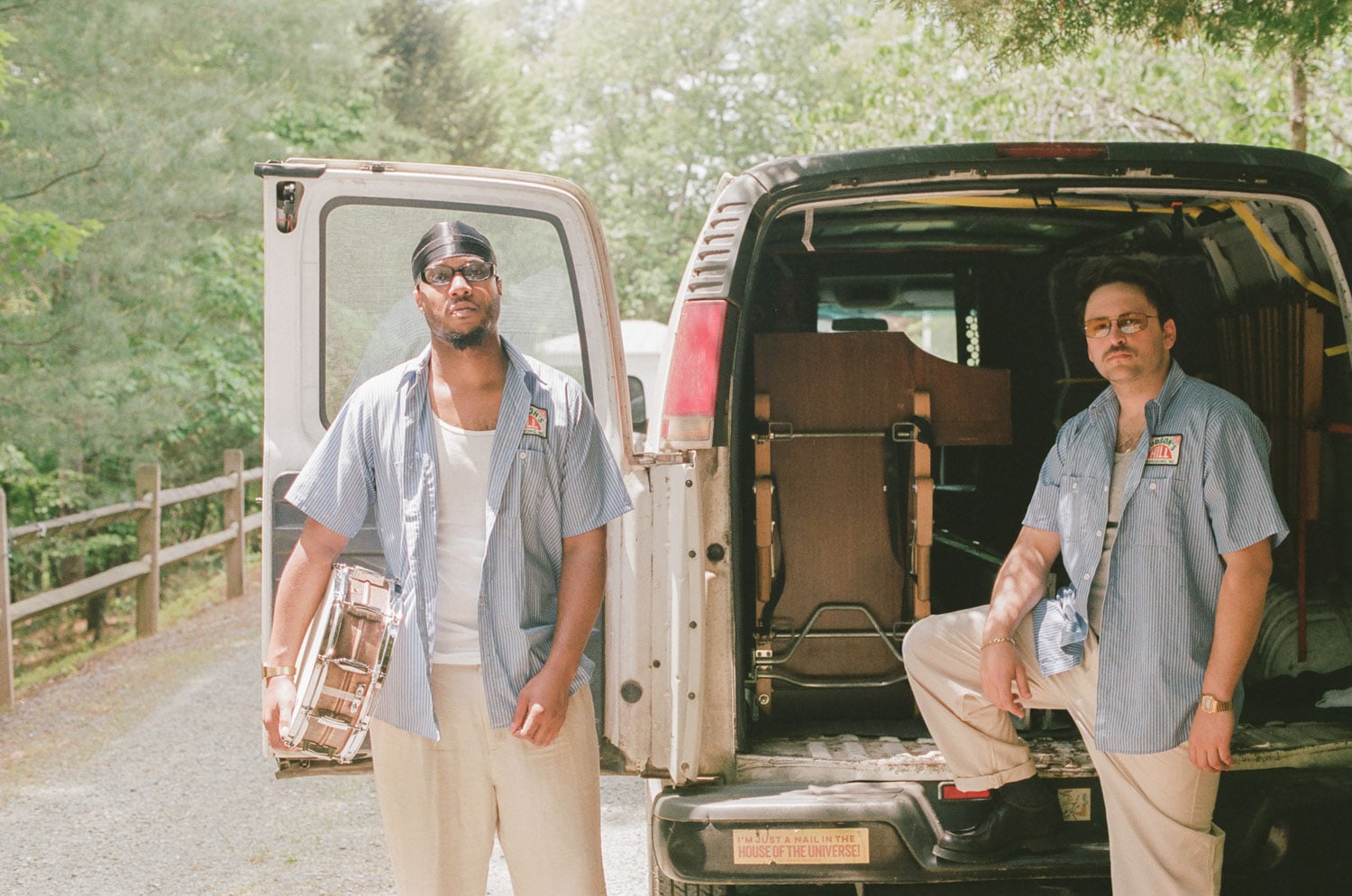
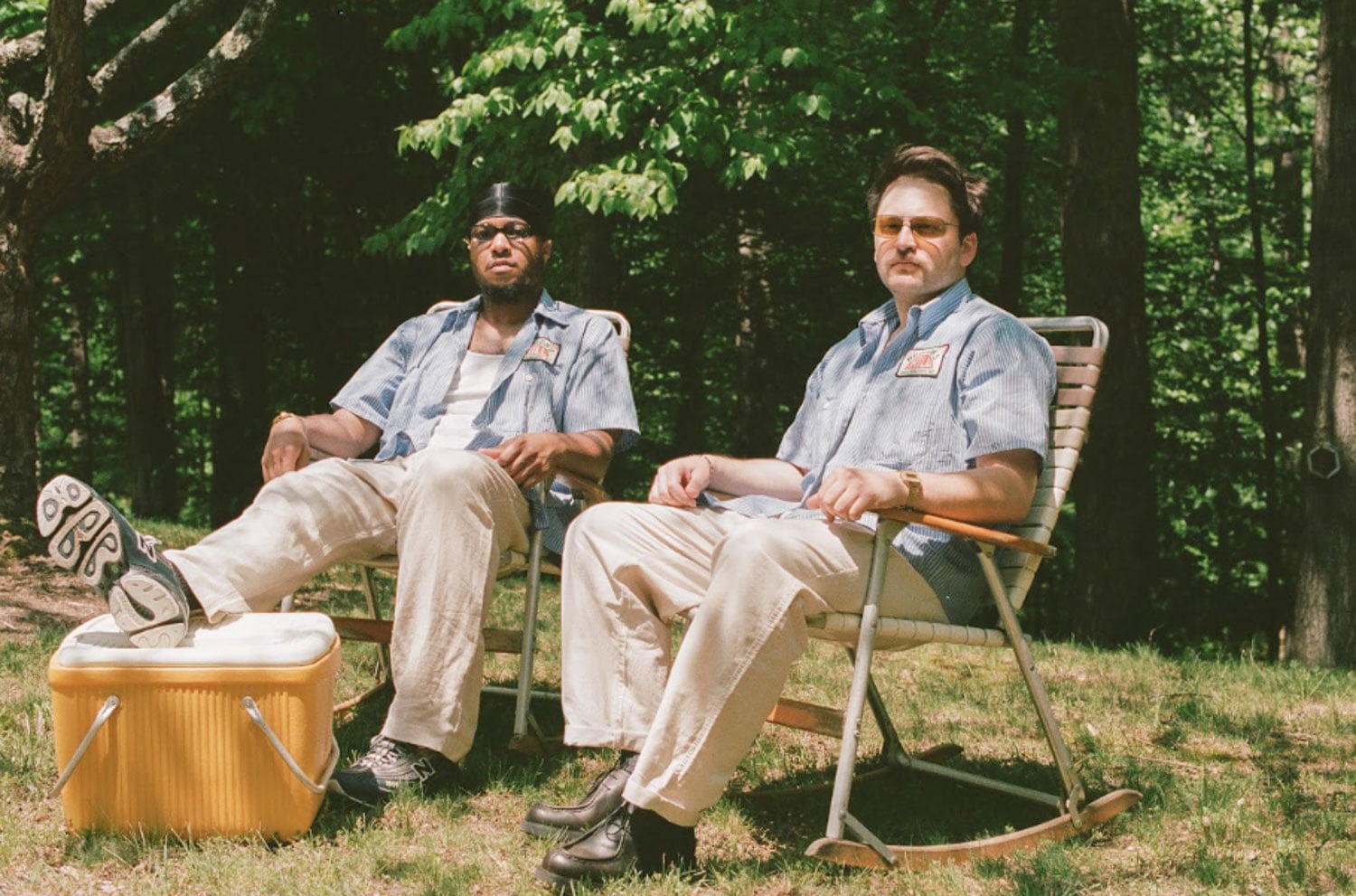
As the new and already acclaimed jazz record Blue Collar Jazz by Fonville x Fribush was debuting, I got on a call with Corey Fonville to hear the stories that made this project possible. The album pairs drummer Corey Fonville with organist Sam Fribush and featuring Richmond guitarist Alan Good Parker.
Griffin: Tell me the story behind how this trio has gotten together and what that whole process looks like.
Fonville: Summer of 2025, Charlie Hunter is the reason we are all here right now. He is Uncle Charlie. He’s been Sam’s mentor. I don’t know if Charlie would proclaim himself as that, but Charlie is very much . . . Charlie was coming up to Richmond quite a bit during COVID, and we were working on music. We did a Kurt Allen record, a couple Kurt Allen records, and then also he was a friend. He’s our homie, and Charlie would come hang out. He would drive up from Greensboro when he still lived there and we kick it. He would just get a room and we would just jam.
And so I think I was telling him, “I love organ trio,” just all that stuff, and I was expressing that interest. And I think at the time Charlie had started working on some music with Sam. They had made a couple albums during COVID, like 2021, and I always thought that stuff was really cool. Eventually, Charlie would just always come up and he would say, “Hey, man, you gotta meet Sam, and he’s around you guys’ age. I think he would benefit from hanging out with y’all.”
It was a couple years later we finally connected. The first time was in New Orleans at a jazz session. He would just reach out sometimes, and he reached out happy to be down there doing something else, and Sam was like, “Yo, do you wanna play a gig somewhere in the French Quarter or French Street, one of the venues?” And so I was like, “Yeah, let’s play.” Almost late night, too, like 1 a.m. That was the first time I heard Sam really play, and I heard the bass, his left-hand bass, and it blew my mind. I was like, “Oh, you’re really bad.”
Maybe half a year later, Sam started reaching out about working on an album, and he was like, “I wanna do this record,” and he wanted me to be a producer for it. So I was like, “Absolutely, let’s just figure it out.” And nothing again was leading to me actually collaborating and turning this into an actual organ trio.
The spark came in June 2025. I put this organ group together at the Révéler and in Virginia Beach, and the first gig was in Greensboro. From what I recall, it was just a backyard show for this concert series. It was June, so it wasn’t too hot yet, but it was perfect. And man, we got out there and started playing. From the first note, it just felt amazing, and I was like, “Yo, this is nuts.” We haven’t played together since recording [Sam’s record]. It was a whole year that had gone by and we hadn’t played no music. Instantly, I was like, “This is it. Damn.” It was that moment of truth. Instantly I knew, “Oh yeah, we gotta do this again. We gotta do this again.” And we had a chance to play.
Griffin: When you were going into that first weekend, were you expecting it to just be those three shows, or were you going in with an idea of a whole future project?
Fonville: It’s hard to remember now because things just escalated so quickly. There was always that potentially. Charlie was very supportive of it. There was no going backwards after that, ’cause it just seemed like it just made so much sense right away. I was very excited about it. I’ve been itching to do it but never had the opportunity, so I just knew it was low-hanging fruit, and Charlie was the connection there. We just decided that with Charlie on guitar, we have to do this.
Griffin: Tell me about the title for the record, Blue Collar Jazz.
Fonville: That was a spark that happened actually the summer of that first show. I realized that there hasn’t been much of a representation on the jazz front in this region, specifically Virginia, North Carolina. There are a lot of incredible musicians, but it’s not being featured the same way at all. There’s no one talking about it. You hear about Houston, you hear about New York, you hear about LA, New Orleans, Chicago, Detroit, all these places, but where is Virginia and North Carolina? There’s a lot of great musicians, and I always felt like the music that Sam and I made really identified the sound here.
With the organ and what it’s done with gospel music, the blues, and jazz here, a lot of soul music too, it’s a lot of those people that love funk, love R&B, love soul, love rock, blues, a lot of heavy blues. It just feels like music that was very familiar to me growing up.
I think about the jobs that people usually had growing up at home in Tidewater and saw that it was similar here. My dad, for example, is a fireman and has been there for a long time. He’s retiring soon, but he also drove trucks. There’s a connection there with this kind of music, I think: organ trio and that kind of lifestyle, just working folk music. The blues people, this is the music that they would hear or go listen to after work, go to a bar and get a whiskey and go listen to some organ trio.
I believe that Blue Collar Jazz stands for a multitude of things, but it’s really just trying to represent this regional sound that I think exists here. When you hear this music, this record, you can hear, to me at least, spring and summer, all the seasons. You hear all the seasons on this record, every season that you’re gonna get in Virginia, North Carolina, whether it’s in the Blue Ridge or more coastal or more middle of the state, central North Carolina, central Virginia, like here in Richmond.
I think it’s just something that is familiar to everyone. And all the musicians on this record are from either Virginia or North Carolina. Alan Parker is a Richmond native, incredible guitar player. Sam is from Greensboro, and I’m from Tidewater. So, man, that’s the short story of it. I hope that makes sense. It’s supposed to represent a sound that we do have, and I think the instruments help bring that to life.
Griffin: Were these themes planned out before recording, or did you find them in the finished album?
Fonville: We kinda knew once we started playing music together, to be honest. Sam and I, just sharing, making music, and those first couple of gigs, it was just like, “Oh yeah, we speak the same language. Okay, if you don’t have to say anything.” There’s nothing that needs to be said. It all felt familiar, which is nice. I didn’t know Sam very well at all at the time we recorded that first Blue Collar Jazz record. I knew of him, but really there wasn’t much that needed to be spoken because it just clicked instantly, and that’s just how it goes.
When you come from the same stage, you just know. You just understand. Charlie Hunter, even though he’s not on this record, speaks the same way, and he loves Alan’s playing too. He’s a fan of Alan. It’s like they kind of both come from that same guitar school in a way, even though Charlie’s from a different generation. Yeah, man, I think it was a very easy session for me. Every time we make music is very easy, and that’s how it should be.
Griffin: Tell me about the process of recording the record.
Fonville: Blue Collar Jazz was done in two days. We recorded two records’ worth of music, so we had put out an album earlier this year called What Day Is It? That’s the B-sides of Blue Collar Jazz. We just named it something else. We recorded a loooooot of music, so we didn’t want to waste anything. There’s no reason to leave anything behind, so we were just like, “You know what? Put that B-sides out at the top of the year.”
We had a lot. We got just so much of the music, and we’re kind of backed up. It’s a great problem to have, man. It’s like an addiction for us to wanna record music, ’cause we’re creatives, man, and we’re artists. You get inspiration constantly, so you’re just like, “I gotta record this.” It’s also that balance and saying, we have to tell each other, or tell ourselves, “Okay, we should probably chill. I think we’re good. We don’t have anything else we need to record right now.”
Griffin: What do you see as the next goal of this group? Is it more live shows, more recording?
Fonville: That’s a good question. Definitely more live shows, for sure. We just wrapped up the first half of this tour. We did Greensboro up to Detroit. We hit a bunch of cities, man, and we went to the Rust Belt, hit Cleveland, Columbus, Indianapolis, and then hit Detroit. All those were great.
We’re just looking forward to some more shows, man, and we have Chicago, Minneapolis, Denver, and then Pacific Northwest in a few weeks as well, pretty much towards the middle of this month. So anyway, we’re movin’ and groovin’ there. A lot going on: more shows. We’re just trying to get this music up.
Main photo by Jacky Flav
Support RVA Magazine. Support Independent Media in Richmond.
RVA Magazine has remained one of Richmond’s few independent voices. Since 2005, we have provided grassroots coverage of our artists, musicians, and communities, marginalized or otherwise, documenting the city’s culture that lies right under the surface.
But we can’t do this without you. A small amount, even as little as $2, one-time or recurring, helps us continue to produce honest, local coverage free from outside interference. Every dollar makes a difference. Your support helps keep us going and keeps the local creative spirit alive. Thank you for standing with independent media, and thank you for reading.
Show your SUPPORT HERE
Also, subscribe to the newsletter HERE
We’ve got merch HERE