
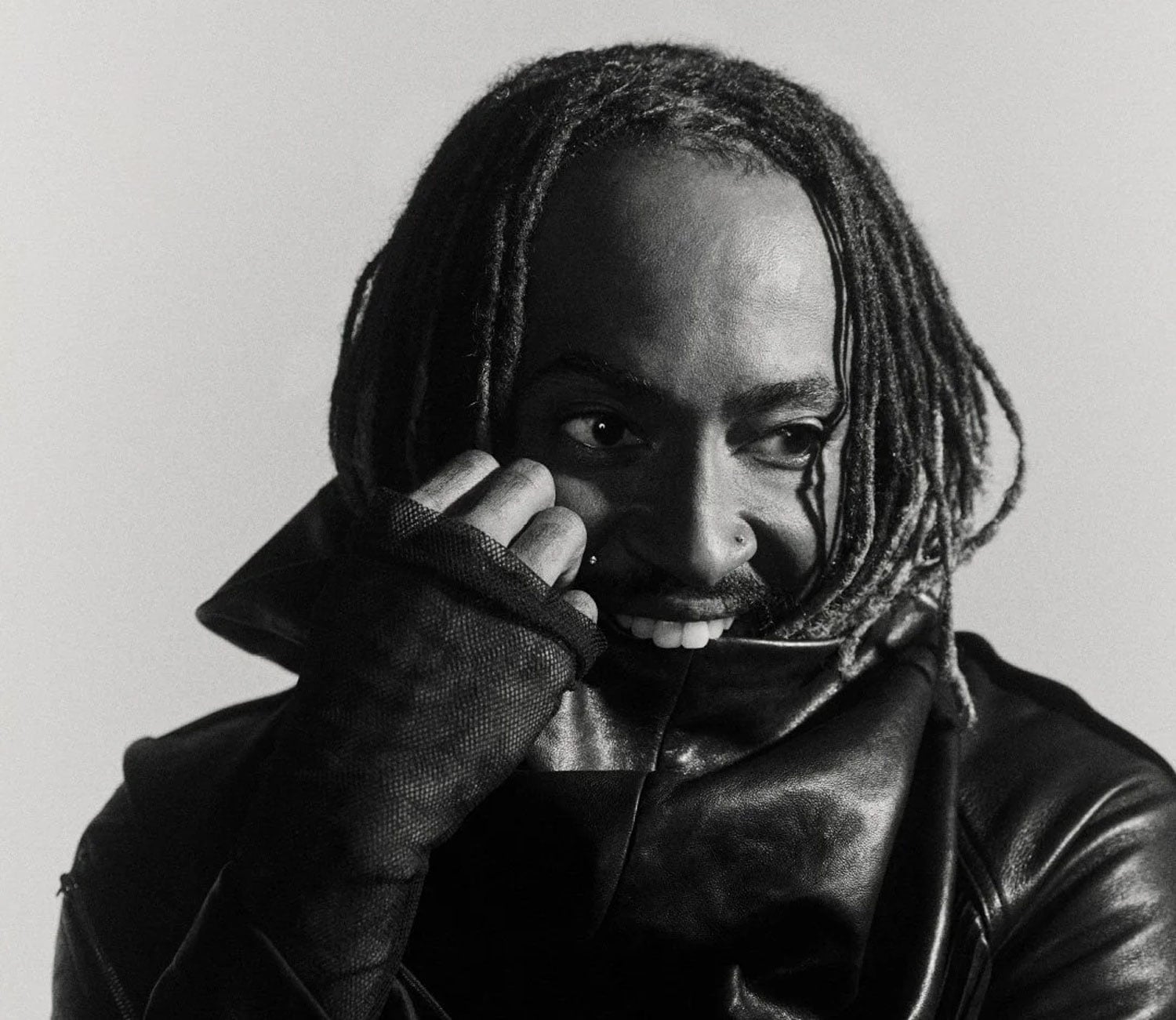
Next Saturday, October 17th, the weird, funky spaceship that carts Thundercat around will land in Richmond for his show at The National. As a massive fan, I will absolutely be there. His is the kind of unique sound that makes a concert a “happening.” A funk so deep it’ll even make Gen Z close TikTok and dance.
Thundercat represents a compendium of influences: flavors of jazz, funk, rock, disco, and electronic music truly his own. His lyrical humor and countercultural references update the “adult contemporary” categories listed above into futuristic-sounding songs equipped for a Mos Eisley cantina.
Funny enough, Thundercat has been to Tatooine (or at least the soundstage representing it) in Jon Favreau’s The Book of Boba Fett. He’s legendarily a comic book nerd and Dragon Ball fan. He’s an inspiration to musicians and listeners alike, and I get to talk to him.
Life doesn’t suck sometimes.
Christian Detres: Hey! What’s up? How are you? Sorry I hope I didn’t keep you waiting long.
Meow.: No worries. How’s it going?
Christian: I’m good, man. I’m doing well. It’s a good morning. Beautiful weather. Doing all right. You’re gonna be at the National here in Richmond on the 17th.
Meow: Oh, yes sir. Yeah, absolutely.
Christian: You’ve put together a lot of thoughts on attention economics and distraction in culture into your new album Distractions. Where is your mind on this topic?
Meow: I think we are living every day distracted. We really are.
Christian: Is that mainly just part of the human condition or a deliberate twisting of it?
Meow: Oh, it’s delivered at this point. We’re dealing with these big corporations creating a world that is dizzying to the normal person. It’s a lot, man.
Christian: If it is by design and we’re falling into the trap, what, if anything, do you feel can bring us back from the brink? How much does art and music play into that? Can it reclaim us?
Meow: Well, I think art is always a response. You know, it could be preemptive, it could be something that is not always informed by what’s going on, but I feel like art is a response to said societal things. Art will never stop being made, you know?
But I think that in the day and age of streaming, it feels like there’s a bunch of people that were not the cool kids making stuff that are very spiteful to the kids that were very creative growing up. And so this is being done out of spite a lot of the time. That’s what it feels like.
It feels like a bunch of really not-as-creative kids have taken a hold of the frontier of things. Or not creative in the same way, I don’t know, I don’t know.
Christian: They feed an algorithm with everything cool people made and then try to churn out some sausage that approximates what they thought were the cool parts. But when you hear it, it’s obvious they’ve once again missed the point and have shown no soul.
Take AI music. Who likes this? Is anyone latching on and being like, “Oh man, I heard this new AI artist, and they’re dope”? I mean, is that happening at all? Are they winning that battle, or do you think they’re just gonna get clowned for, you know, for being posers?
Meow: My honest opinion is that just like most things, it isn’t made from a sincere, genuine place. It’s a marketing, or a money scheme. It exists for not paying artists for what they are worth. No amount of AI in an algorithm can make up for Maurice Ravel. No amount of AI and algorithms can make up for Jocko Pastorius.
Christian: But that seems obvious though, right? I mean, you got to understand the people that make this stuff, they have to know that, right? Or do they truly just not understand the value of organic creation?
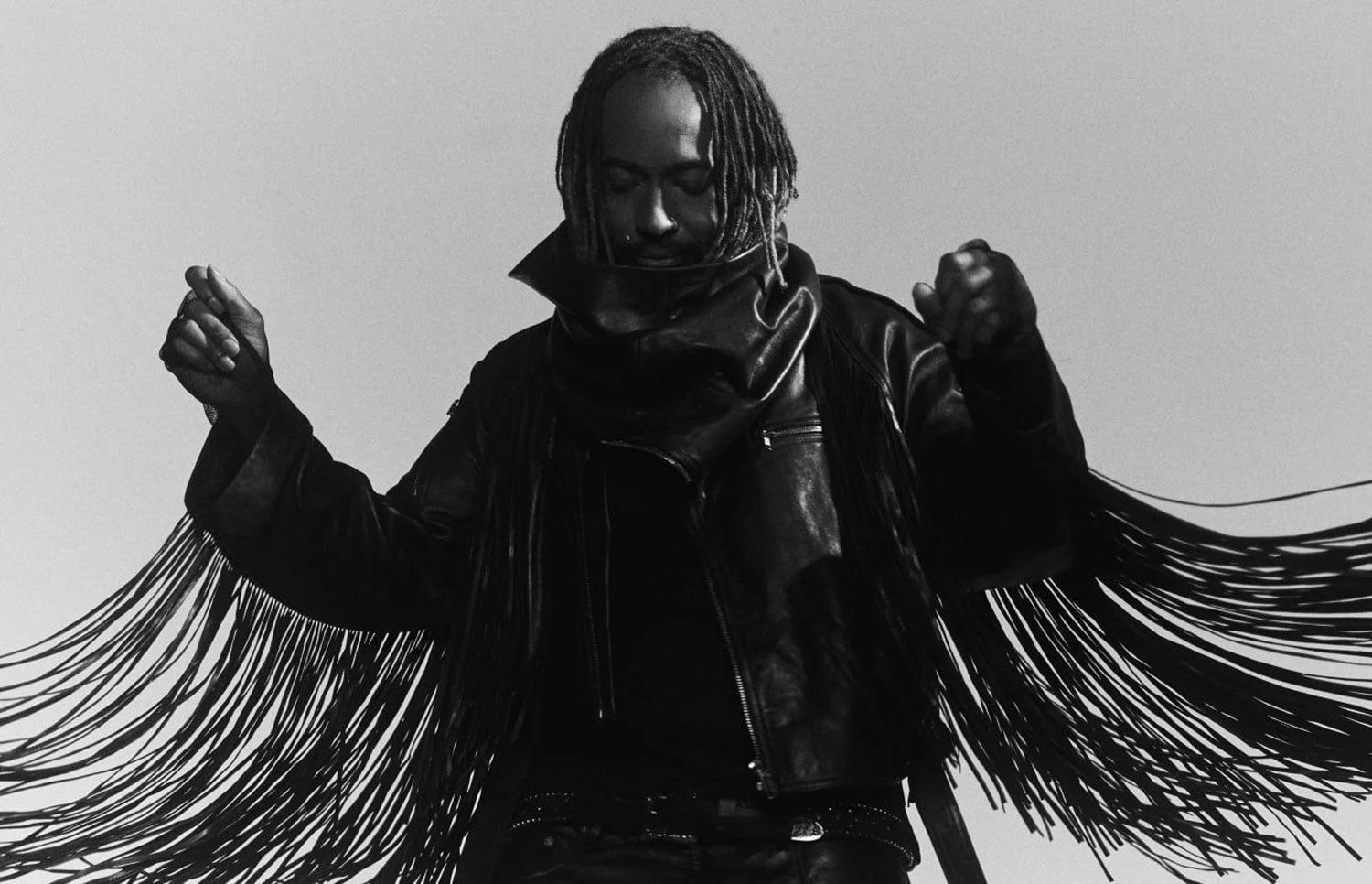
Meow: Well, like I said, it’s about the money. It’s about what you can pay less for, get more. It’s almost the same way that we look at sugar and salt. It’s basically like sugar being sold. Realizing how much, if you just put a lot of sugar in things, the less you have to focus on good ingredients to sell it. AI just represents the new sugar to me. So it’s like… it’s a high for the untrained ear, for the person that doesn’t know. For the people that do know and feel something about it, it will never satisfy.
I’ve always been a person that’s believed in the melding of the worlds of tech and music, so somewhere between is where the art lies. You know what I mean? People have made music on computers, like, for decades. There’s so many innovations that have been meant to make things better in this respect.
I think that we’re missing the point with AI because everybody’s just looking for a quick money grab and trying to take advantage of artists that spend their life’s work by hand.
I think of the days when people swore tape players and VHS and vinyl were obsolete. It turns out it’s more relevant now than it ever was. Those formats are becoming valuable in a market where paying for media doesn’t come with ownership of it. The option to return to the physical, and not gatekept streaming / borrowing arrangement, is being made available. I think that once people realize that this is an option, they’ll treat it with better respect and choose it.
Christian: I wrote an article a couple years ago for Afro Futures magazine that was talking about the emergence of AI music. One of the conclusions I made was that it’s gonna live or die by its own sword. People are either gonna somehow attach themselves to it as something more than a novelty, or they’re just going to reject it wholesale.
It’s just not going to be an issue if we don’t let it be. It’ll be kind of a flash in the pan, like an eight-track situation. This could have been something, but now it’s just used in offices for administrative-type shit and generating contracts and all that kind of stuff.
Meow: Yeah, exactly, exactly. Once we get past that weird sugar aspect of it, and realize that it’s something that can be used for good, maybe it’ll find a niche where it only represents positive growth.
Christian: That’s an interesting take on that. This is actually a kind of kismet situation I have to ask you about. You’re aware of Lonnie Liston Smith, right? The Cosmic Echoes?
Meow: Absolutely. Absolutely.
Christian: Right? Okay. So here’s the deal. He lives here in Richmond and we’ve invited him to your show. He is a fan of yours as well.
Meow: Oh my god. Oh, man. Oh, my gosh. That’s awesome. That’s amazing. I love Lonnie Liston’s music. I’ve been a fan since I was a kid.
Christian: My colleagues are producing a documentary about him, called, appropriately Cosmic Echoes. He’s coming with us to the show. If you want to set up an introduction, you want to shake his hand, whatever, we’re down to make that happen.
Meow: Yeah. I would love to meet him. I would love to meet him.
Christian: Great, well, consider it done. I got to interview him a couple months ago and it was just amazing to hear him name-check artists that just came out, like, two weeks ago. He’s surprisingly current on music for someone his age.
Meow: Yeah, no, he’s OG, man.
Christian: I was listening to The Cosmic Echoes Expansions earlier, and I was like, shit, this sounds so Thundercatty. I figured there had to be a throughline there.
Back to you though. [laughs] Coming from a big musical family like you did, I’m sure the idea of being a musician always had to have been an option. Was there ever a chance that we would have gotten Dr. Thundercat instead of Musician Thundercat?
Meow: No, there’s no world where that would’ve happened. [laughs] You would have gotten depressed illustrator Thundercat.
Christian: Oh snap, really? Are you proficient as an illustrator? Is that just a side interest? I’ve never seen any of your artwork, though now I really want to.
Meow: That is kind of what I wanted to pursue at a younger age. You know, I was a huge comic nerd…
Christian: Oh, me too.
Meow: That was kind of like a passion of mine, for sure. It still is, but it’s just one of those things where I just kind of like, I’m better at music. [laughs]
Christian: Who are your favorite artists, like in that realm, the comic art world?
Meow: Um, people like Bill Sienkiewicz, a lot of Marvel artists. Joe Jusco, Mike Turner, um, you know, the earlier Marvel artists, still to this day, are a lot of my favorites. I like Simone Bianchi…
Christian: You have good taste!
Meow: Yeah, the legends we grew up with, the Jim Lee’s, you know, like, of course, the early Rob Leifield stuff, it’s so many that come to mind naturally.
Christian: How did you wind up in Star Wars? I’m a massive Star Wars fan. I’m friends with Rosario Dawson, and I’ve been trying for years to subtly give her the idea that my life would be complete if she could just make me a dead stormtrooper in her show. I don’t care what, just get me on the set. It has not worked (yet).
Meow: [laughs] Right? Just shoot me with a plasma cannon immediately. It doesn’t matter.
Well, it starts with Jon Favreau. There was, like, a moment during COVID when that went down. They reached out to me. I was shocked. They came to me by way of my management, and I thought, not weird because my dad’s worked at Disney my whole life. So I’m thinking that it was, like, Disney reaching out to use a song or something, but then they asked me to perform.
It started freaking me out once I saw the request was actually from Industrial Light & Magic. I was like, what in the world is going on? And it was at that point that I got on the phone with Jon Favreau. It was a bit surreal for me because we all got on a call. It was a funny moment because they asked, “How much of a Star Wars fan are you?” And then I showed him the picture of me at the Grammys with a lightsaber.
He was like, “Okay, there’s no question here.”
It was a sweet moment because I had met Jon’s son a little while ago on his way to college, and we had a heart-to-heart moment that I think Jon took very personally. I guess he felt like there was a place for me in the Star Wars universe. He told me when I first got on the phone, he was like, “You know, in our household, we are huge Thundercat fans.”
I didn’t know what to do with that information.
Christian: Oh, man, that’s gotta feel great, though. It’s a rare thing to have that kind of validation. But yeah, all right, so getting back to some of the stuff that’s actually relevant to your music.
Richmond has a really deep history with punk and metal. I can’t ignore the Suicidal Tendencies part of your life. Like, how in the fuck? And what were you, 18 when you started with them?
Meow: I was a… yeah, maybe 17, 18.
Christian: Jesus Christ, man. But 17, 18 years old, and you’re playing bass for one of the most legendary thrash hardcore bands. How did that happen?
Meow: Yeah, that started with my older brother joining the band. The boys in the band, man, they were like brothers and family to me. We took to each other so quickly. My earlier years in life, shit, it’s still just crazy for me to think about. How my life growing up was very spent with these legends. You know, Mike Muir being like a brother to me the whole time, taking care of me on the road and showing me the ropes of life.
It was like such a crazy way to learn life.
Christian: Were you, were you into the hardcore scene at the time, or is that something that you just kind of, that you got into basically when that opportunity was swirling around?
Meow: Um, I want to say I had knowledge of things. I was definitely, like, one of those kids that grew up listening to a lot of that, you know? It was unexpected that that would be such a dominant factor, but I was definitely that kid.
Christian: So I’m looking at the unlikely path from that to what you’re known for as Thundercat: exploratory, jazzy, almost experimental in some places, funk that’s also irreverent and, you know, sometimes comedic. Do you feel that there’s a through-line mentality or philosophy that embodies or maybe infuses your specific brand of Thundercatness?
Meow: I don’t know, like, philosophy-wise. I’m not really… I just am kind of a big Lebowski fan, man. You know? It’s like the Dude abides. You know what I’m saying?
____
I do know what he’s saying. As I looked for the perfect ending to the published part of this conversation, I decided to abide too. It would have really tied the room together, but here we are. Go to the show. The National. The 17th. October. Do it.
Tickets HERE
Support RVA Magazine. Support Independent Media in Richmond.
RVA Magazine has remained one of Richmond’s few independent voices. Since 2005, we have provided grassroots coverage of our artists, musicians, and communities, marginalized or otherwise, documenting the city’s culture that lies right under the surface and beyond the headlines.
But we can’t do this without you. A small amount, even as little as $2, one-time or recurring, helps us continue to produce honest, local coverage free from outside interference. Every dollar makes a difference. Your support helps keep us going and keeps the local creative spirit alive. Thank you for standing with independent media, and thank you for reading.
Show your SUPPORT HERE
Also, subscribe to the newsletter HERE
We’ve got merch HERE
Subscribe to the Substack HERE
And Reddit HERE
And YouTube HERE