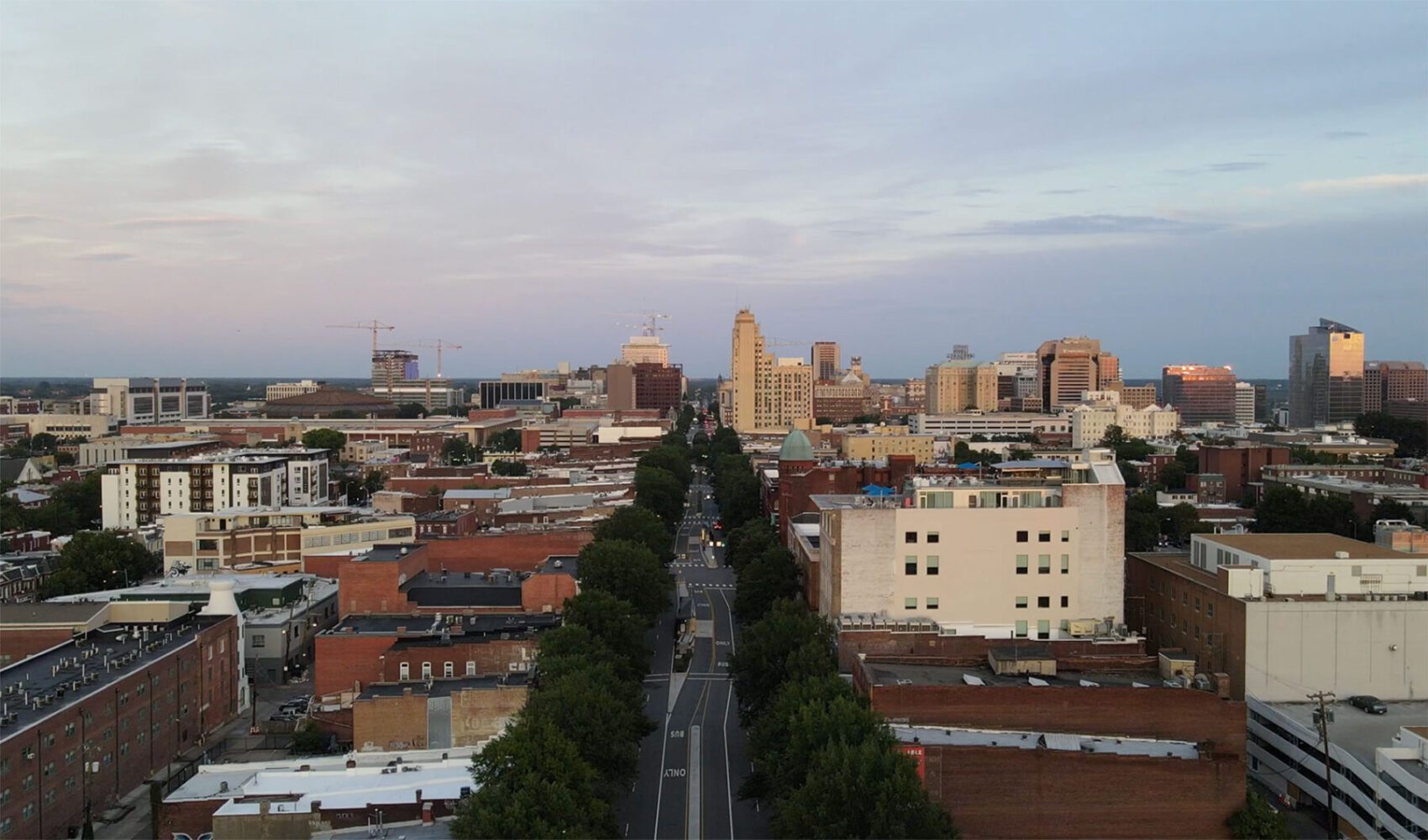
National rankings say Richmond is thriving. But talk to the people living and working here, and a more complicated picture emerges.
Richmond has been named one of the best cities to live in America. Again.
A global marketing firm ranked 100 U.S. cities, and Richmond landed at No. 43, ahead of plenty of places with bigger skylines and better PR. In their open-ended survey, no prompts, just a blank space, Americans wrote in the cities where they’d most like to live. Richmond showed up often enough to score No. 36 for desirability.
That’s not nothing. It says a lot about how people view this place, or at least the version they’ve glimpsed from afar.
Yet the same week that ranking hit inboxes, a man was shot in the chest outside Sidewalk Café in the Fan, a neighborhood most of us still think of as pretty safe. Just days earlier, Richmond’s chief of police described the gun activity in Shockoe Bottom as “off the charts” and personally witnessed a man walking through downtown with an AR-15 in hand. Not concealed. Not holstered. Just out in the open.

It wasn’t illegal but it wasn’t exactly neighborly either. And it probably won’t make the PR photo for the city’s new rankings.
Add the steady trickle of break-ins in the Arts District, shattered windows, and police responses that come late, or not at all, and the gap between Richmond’s reputation and its reality grows wide. And that’s only what makes the news.
If we’re suddenly one of the nation’s “most desirable” cities, it’s fair to ask: desirable to whom?
Cities evolve, and growing pains are inevitable. Still, there’s a quiet unease around Richmond that few officials seem eager to name. The changes aren’t all positive, and they’re not always managed well.
We’re building glass towers by the river. Millions are being spent to lure new industries and residents. CoStar’s headquarters is rising fast. The Diamond District is finally underway. The Pulse line is stretching farther west. We have a new amphitheater. Energy and investment are everywhere.
Growth, though, carries weight and the cracks are beginning to show.
Talk to a small-business owner downtown, someone locking up after midnight, anyone who’s dialed 911 and waited. They’ll tell you something feels like it’s slipping, that the center is holding but just barely. People are anxious. Some have left. Others stay because they don’t have the option to go.
A veteran Broad Street business owner says she’s now seriously considering downsizing. “At this point, it’s hard to see the value in owning a business in Richmond, Virginia,” she says. “We’re getting robbed almost daily—often by students.”
She describes a recent stretch where her staff had knives pulled on them, and calls to the police took hours—if they came at all. “There’s no protection, no safety on Broad Street.”
After nearly 20 years in business, the frustration has started to feel like something heavier. “It’s heartbreaking to realize that after nearly two decades of trying to build something here, it feels like this city doesn’t want people like me to own anything. Richmond would rather everyone work for Amazon.”
A nightclub operator who’s kept doors open in the Bottom since 2006 is equally blunt: “This is the worst I’ve ever seen it… Guns everywhere, and not just handguns—ARs, Dracos, people acting like that’s normal.”
These aren’t newcomers griping from the sidelines. They’re the folks who stuck around through protests, floods, tax hikes, and endless turnover, people who helped make Richmond interesting in the first place. And they’re tired.
City leaders say public safety is a priority, yet enforcement feels scattershot. One week, calls go unanswered; the next, a multi-agency squad rolls in with zoning, ABC, and fire marshals to blitz nightlife spots trying to shut them down. Business owners end up playing hall monitor while someone tags slurs on the wall or a pop-up fight club breaks out in a parking lot.
What makes it worse is how little we talk about it publicly. Rankings get front-page treatment; the hard parts stay in group chats and whispered bar-top conversations. Richmond, for all its creativity and promise, has a habit of skipping uncomfortable truths when we’re busy selling the polished ones.
Still, this city matters and that’s why the tension stings. We want to believe we’re becoming something better, that the struggle is moving us forward, not just repainting old problems.
Richmond is creative, sharp around the edges, stubbornly resilient. If we’re going to tout ourselves as one of America’s best places to live, we have to start by being honest about how we’re living in it right now and do better as a community.
The rankings are flattering. But they don’t walk these streets at night. We do.
Well, some of us still do.
Support RVA Magazine. Support independent media in Richmond.
In a world where corporations and wealthy individuals now shape much of our media landscape, RVA Magazine remains fiercely independent, amplifying the voices of Richmond’s artists, musicians, and community. Since 2005, we’ve been dedicated to authentic, grassroots storytelling that highlights the people and culture shaping our city.
But we can’t do this without you. A small donation, even as little as $2 – one-time or recurring – helps us continue to produce honest, local coverage free from outside interference. Every dollar makes a difference. Your support keeps us going and keeps RVA’s creative spirit alive. Thank you for standing with independent media. DONATE HERE.
You can also show your support by purchasing our merch HERE.