
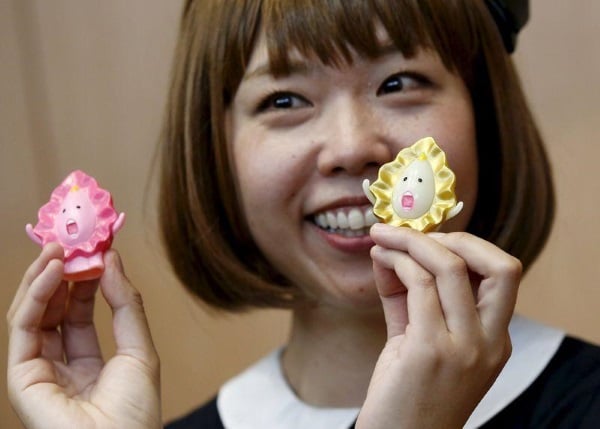
A Japanese artist once imprisoned for their art has now been fined 400,000 yen ($3,670) for the distribution of works 3D printed from a model of her vagina.
A Japanese artist once imprisoned for their art has now been fined 400,000 yen ($3,670) for the distribution of works 3D printed from a model of her vagina.
Megumi Igarashi was arrested and shortly jailed in 2014 for the creation of figurines and a crowd funded kayak that were modelled after 3D prints of her vagina. She has just received the ruling on her case which found her partly guilty of obscenity.

Her works were accepted as art and were deemed legal, but she was charged with distribution of lude material attached with a fine of thousands of dollars since she gave out information to her crowd funders on how they could make 3D models of their own genitalia.
Igarashi said in a press conference following the ruling that she is only “20% happy” with the court’s decision and was glad that it was at least recognized that her works were art. She claims that she is “completely innocent” and is not finished protecting for her work.
“I am of course indignant. I will appeal and continue to fight in court,” Igarashi said.
Though the artist is not completely satisfied with the outcome, one of her lawyers Takashi Yamaguchi said that the ruling was “extremely rare” and that it had “high historic value.”
Japan’s obscenity laws have not been altered since 1907, leaving the public forced to follow archaic ordinances that no longer correlate with modern society.
“I think [my art] is not ‘sexual stimulus’ like pornography that we see in many aspects in Japan,” Igarashi said in an interview with CNN.
The country has a prosperous pornography complex as well as a semi legal sex industry which combined have grossed over $100 Billion annually. But all images (video and photo) have the sexual organs blurred from view due to the ancient law.
Though it is illegal to distribute unfiltered images of intercourse in Japan, it is legal to pay for sex at an established business.
In a survey conducted by the Japanese government it was found that 15% of the male population has viewed child pornography, while over 10% of the male population owns child pornography.
It could be argued that the strictness of the obscenity laws have created a culture of repression that has contributed the flourishing pornography and sex industries of Japan.
In a country where an artist can be charged for making yonic works but someone can go to an established business and pay for sex legally it begs the question of what the obscenity laws are trying to prevent.
This seemingly double standard has sparked an internet debate on what should and shouldn’t be deemed as obscene.

More than 1,000 people have used Twitter to question the verdict that was given to Igarashi. “What? How about products resembling male or female genitalia displayed at adult sex shops? Are they permissible?” said one Twitter user.
They put up a good question: why is it legal to distribute products that look like sex organs that have sexual use but illegal to distribute information that has the intention of art rather than stimulus?
That question will have to wait to be answered by a higher court.