
Although Virginia is perhaps best known for its Colonial and Civil War history, like most of the country, an overwhelming majority of this state’s built environment dates to after World War II. Now, state’s Department of Historic Resource has created the New Dominion Virginia Initiative to educate the public about our post-WWII architectural resources.
Although Virginia is perhaps best known for its Colonial and Civil War history, like most of the country, an overwhelming majority of this state’s built environment dates to after World War II. Now, state’s Department of Historic Resource has created the New Dominion Virginia Initiative to educate the public about our post-WWII architectural resources.

A Miesian style building in Richmond
The New Dominion Virginia Initiative offers a variety of documents to assist with the research and identification of historic resources dating from 1946 through 1991, known as the New Dominion period. Key themes of the period explored by the initiative include the Civil Rights Movement and Modern architecture. The website offers finding-aids focused on: 20th Century African American architects; properties associated with African American history; notable Modern architecture; and notable Virginia architects of the New Dominion period. Other materials provided by the website to help deepen your understanding of Virginia history include an updated guide on how to research your historic property and an essay on the environmental movement in the state after WWII.

Built by Frederick “Bud” Hyland, a protege of Frank Lloyd Wright
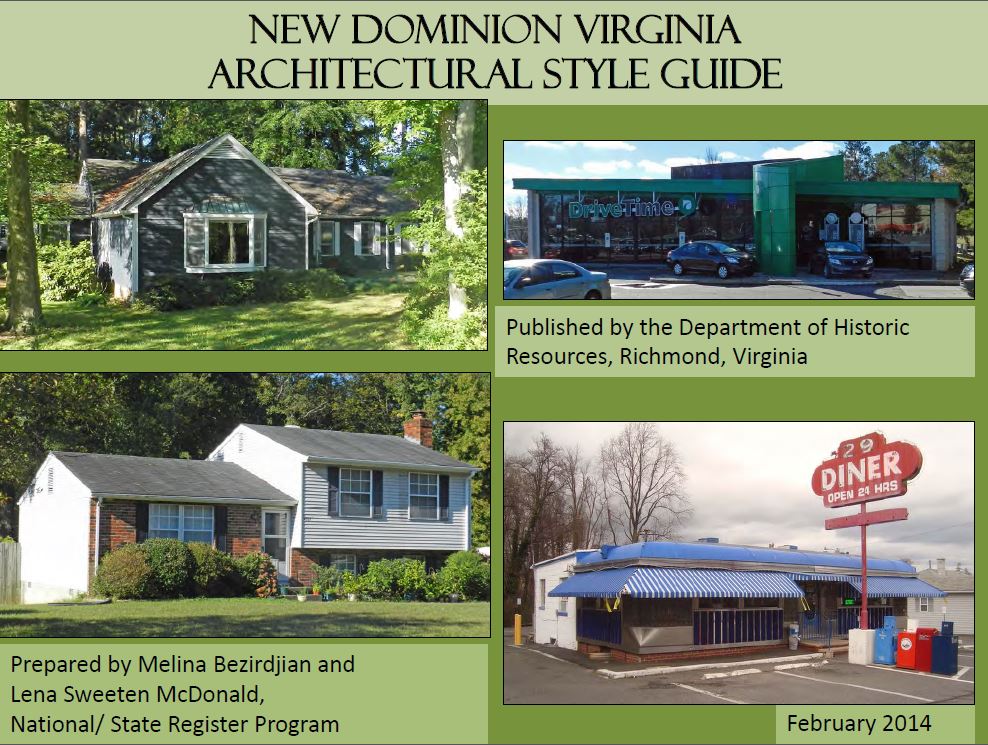
In addition to these and other helpful publications, the initiative also produced the New Dominion Virginia Architectural Style Guide. Available in large and compact formats, this style guide discusses the New Dominion’s historic themes and architectural styles. The bulk of the guide is comprised of entries dedicated to twenty different architectural styles defined and illustrated through written descriptions, lists of character defining features and abundant photographs. These styles range from 1940s Moderne bus stations to 1990s Neo-Eclectic mansions. Several of the styles described continue being used today.

This Taco Bell location is an example of Corporate Architecture
To learn more about the New Dominion Virginia Initiative and see the full array of educational documents available, visit their website at: dhr.virginia.gov/NewDominion