
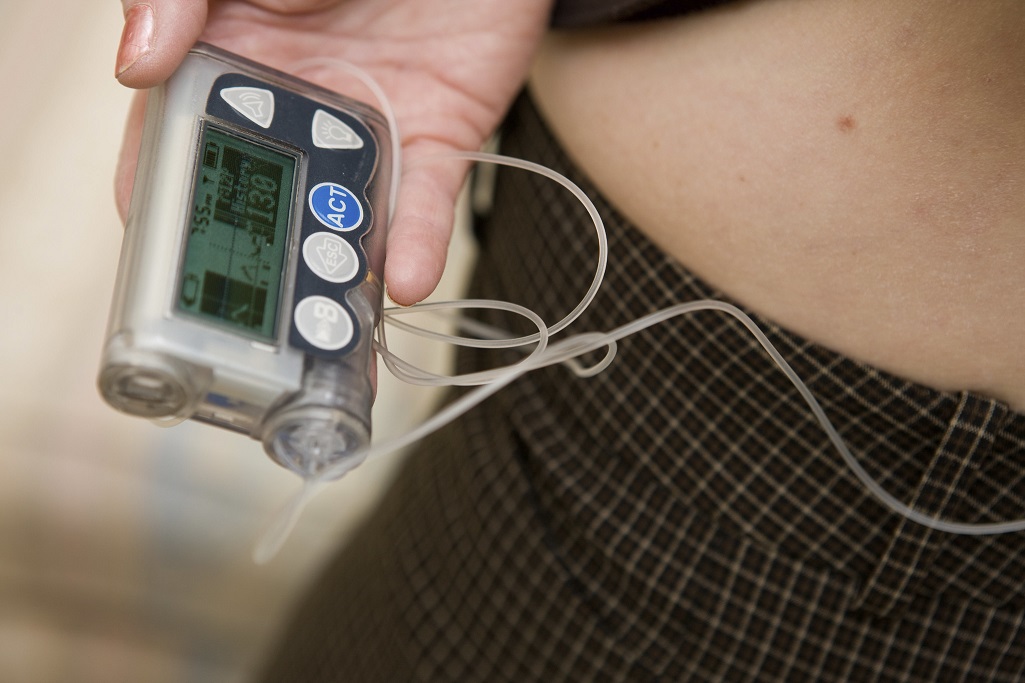
The passage of House Bill 66, sponsored by Delegate Lee Carter, gives Virginia the fourth-lowest insulin price cap in the country.
Gov. Ralph Northam recently signed a bill to cap the costs of prescription insulin copays at $50 per month, one of the lowest caps in the country.
House Bill 66, sponsored by Del. Lee Carter, D-Manassas, originally aimed to cap the costs of prescription insulin copays at $30 per month. By the time the bill passed the Senate, the cap was amended to $50 per month.
Cheers and applause roared through the chamber when the bill seemed poised to unanimously pass the House, until a lone delegate changed their vote and groans replaced the cheers. But they still had something to celebrate –- Virginia will have the country’s fourth lowest insulin cap.
“For people that have diabetes, they tend to be on anywhere from five to eight medications. So even if they have good health insurance, paying copays anywhere from $5 or $10 per prescription adds up very quickly,” said Evan Sisson, professor at the VCU School of Pharmacy and vice-chairperson of the Virginia Diabetes Council. “So to be able to cap [insulin] is a huge benefit for patients.”
The Virginia Department of Health estimated in 2017 that 631,194, or 9 percent of Virginians, have Type 1 or Type 2 diabetes.

The bill prohibits health insurance providers from charging a copay over $50 for a one-month supply, or from allowing or requiring a pharmacy to charge any more. The bill incorporates HB 1403, which was introduced by Del. James A. Leftwich, R-Chesapeake, and shares the same wording as Carter’s bill, but the copay amount was capped at $100.
“This bill is aimed at providing relief for those folks who have health insurance but can’t afford to use it; that is a vast swath of Virginia’s population,” Carter said during a Senate committee hearing.
Insulin prices have risen so much in recent years that some diabetics have resorted to rationing their insulin, or traveling to Canada where the drug is much cheaper. According to Sisson, for someone with diabetes, especially Type 2, a lack of insulin can lead to major complications, and even be a matter of life or death.
“What the body does is it kicks into looking for other sources of energy other than glucose, and it starts to produce more fat,” Sisson said. “If you have more fat floating in the bloodstream, then you end up with more hardening of the arteries, of atherosclerosis. What that means is you have higher blood pressure, and higher risk of heart attack or stroke.”
According to the U.S. House Committee on Energy and Commerce, approximately 30 million Americans suffer from diabetes, with that number increasing by about 1.5 million every year.
Prior to the advent of insulin in the 1920s, someone diagnosed with diabetes was expected to die in a matter of months, with restrictive dieting extending that to as long as a couple of years. When Canadian researchers completed the development of insulin in 1922, they sold the patent to the University of Toronto for $1, hoping that everyone who was affected by diabetes would be able to benefit from the life-saving drug.
Since then, the price has constantly increased, dramatically so over the past few decades. In 2009, a 10 milliliter vial of insulin cost between $90 and $100. Today, that same vial will cost between $250 and $300, even though little about the drug has changed.

When HB 66 was sent to the governor, only two other states in the U.S. had hard caps for insulin copays. The first to introduce one was Colorado in May 2019, and the second was Illinois in January. Both states have their caps at $100 per month.
In March, governors of six other states signed legislation capping the price of insulin. New Mexico, Utah and Maine set their caps lower than Virginia’s at $25, $30 and $35, respectively. West Virginia, Washington and New York will set caps at $100.
The new cost in Virginia will be reflected in insurance plans starting Jan. 1, 2021, coinciding with plans purchased during the next round of open enrollment, Carter wrote on Twitter. He added, “The fact that it had to be done this way is a reflection of how generally screwed up our healthcare system is.”
Written by Will Gonzalez, Capital News Service. Top Photo: A diabetic patient using an insulin pump. Courtesy of the Minnesota Department of Employment and Economic Development