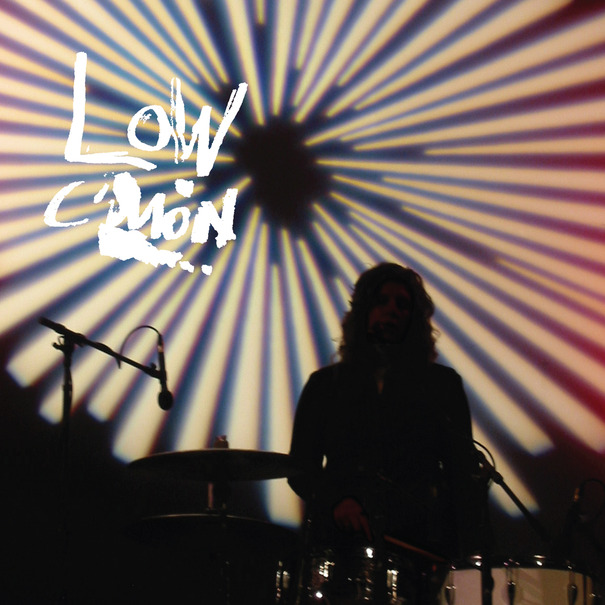
One of the more ridiculous criticisms of Low’s output in recent years is that it doesn’t sound like them, that their stylistic variations have diverged too far from their initial output. It’s an inaccurate criticism primarily because Low has always predicated their sound on a constant unpacking of new ideas and a never-ending re-evaluation of their roles as artists and as human beings. The two albums directly preceding their newest, 2005’s The Great Destroyer and 2007’s Drums And Guns, were the most noticeably different, eschewing the band’s whispery placidity for guitar-driven indie pop and fractured analog electronica, respectively. But even the band’s earlier output varied by release, utilizing varied sonic palettes, from their sparse early works to the subtle orchestration on albums like Trust and Things We Lost In The Fire.
One of the more ridiculous criticisms of Low’s output in recent years is that it doesn’t sound like them, that their stylistic variations have diverged too far from their initial output. It’s an inaccurate criticism primarily because Low has always predicated their sound on a constant unpacking of new ideas and a never-ending re-evaluation of their roles as artists and as human beings. The two albums directly preceding their newest, 2005’s The Great Destroyer and 2007’s Drums And Guns, were the most noticeably different, eschewing the band’s whispery placidity for guitar-driven indie pop and fractured analog electronica, respectively. But even the band’s earlier output varied by release, utilizing varied sonic palettes, from their sparse early works to the subtle orchestration on albums like Trust and Things We Lost In The Fire.
That said, C’mon is something of a divergence for Low, solely in terms of the quality–representing less of an aesthetic left turn as it does a lagging behind. The band’s previous recorded output, regardless of the approach taken on individual albums, was based in extremes–the glacial pace of the earliest albums, the emphasis on the open space around the notes as much as on the notes themselves, the emotional extremes of elation and despair, of creation and devastation, of finding and losing spiritual connections in a universe that can so often seem utterly bereft of compassion and understanding. But on their newest album, rather than pushing the sound into any sort of definitive direction, the band seems content to let the songs hover in a fairly bland middle ground, devoid of any of the gravity that has made Low such a consistently compelling band for nearly two decades. It’s slow, but not in the deliberate sense of the band’s earlier work, more like a collection of songs that could’ve possessed energy and emotional intensity but fell short, instead come off sluggish and half-hearted. Opener “Try To Sleep” is a good example–its vocal harmonies seem like a phoned-in, toned-down version of the interplay vocalists Alan Sparhawk and Mimi Parker have engaged in on previous releases. And while the addition of elements like the song’s use of glockenspiel could help to differentiate the material, the melody itself is so repetitive that it only reinforces the blandness of the song.

There are moments, however, that hint at the brilliance that Low is capable of, though they’re few and far between. “Witches” is kept from falling into the same disengagement plaguing most of the album’s other material by Alan Sparhawk’s combination of forceful, behind-the-beat delivery and lyrics that offer the sort of meditation on childhood terror not out of step with the band’s larger ouevre. On both “Majesty/Magic” and “Nothing But Heart,” the band employs a sort of song-length crescendo, building from plaintive open chords and harmonized vocals to dense clusters of sound, the former employing fluttering flutes, while the latter is a slow-burning Neil Young homage not far removed from Sparhawk’s work with Retribution Gospel Choir. While moments like these pepper the album, they can be as frustrating as they are rewarding, serving as a reminder of the varied strengths that Low tend to sell short.
Any listeners unfamiliar with Low would do well to check out their albums from the ’90s first, as the band laid the groundwork then for what, until the newest album, has been a consistently impressive back catalog. As a long-time fan, it’s really difficult to even give this less than a positive review, but C’mon offers few of the rewarding elements of Low’s larger body of work. And while the album is not terrible, it’s also not terribly interesting. The process of constant reinvention is a notable and respectable pursuit for any artist, but it implicitly guarantees that at least some portion of the intended audience will find fault with the end product. Respect is certainly due to Low for attempting another in a long line of subtle aesthetic shifts, but hopefully their next installment will pick up some of the slack left by their most recent.