“I love when movies are dangerous. Are they anymore? I don’t think so.”
We consume noise. We’ve lost the signal. The transmission is overwhelmed by “content,” not art. That’s the point. To wear you down. To accept mediocrity. The celebration of film and music has been sacrificed to the gods of marketing. Our search for meaning has been replaced by our sense of outrage. Engagement at all costs. The ability to connect was the first casualty. Instead of focusing on the act of creation, we fixate on its flaws.
Film and music used to be a dirty mirror—a pantomime of humanity—reflecting the beautiful contradiction of simply being alive. That mirror has been replaced by smooth plastic, a protective casing for the algorithm. Seven hours of screen time a day. Six seconds at a time.
In a world drowning in content, cultural preservation has never been more vital or necessary. That’s what makes Robert Milazzo—Assistant Professor at VCU’s Robertson School of Communications—such a critical voice in the space. As the founder of The Modern School of Film and the voice behind award-winning podcasts like ASSEMBLY and MURMUR, Milazzo has spent years probing the relationship between art and intention, searching for the creative spirt behind the films, music, and ideas that have shaped our lives —one conversation at a time.
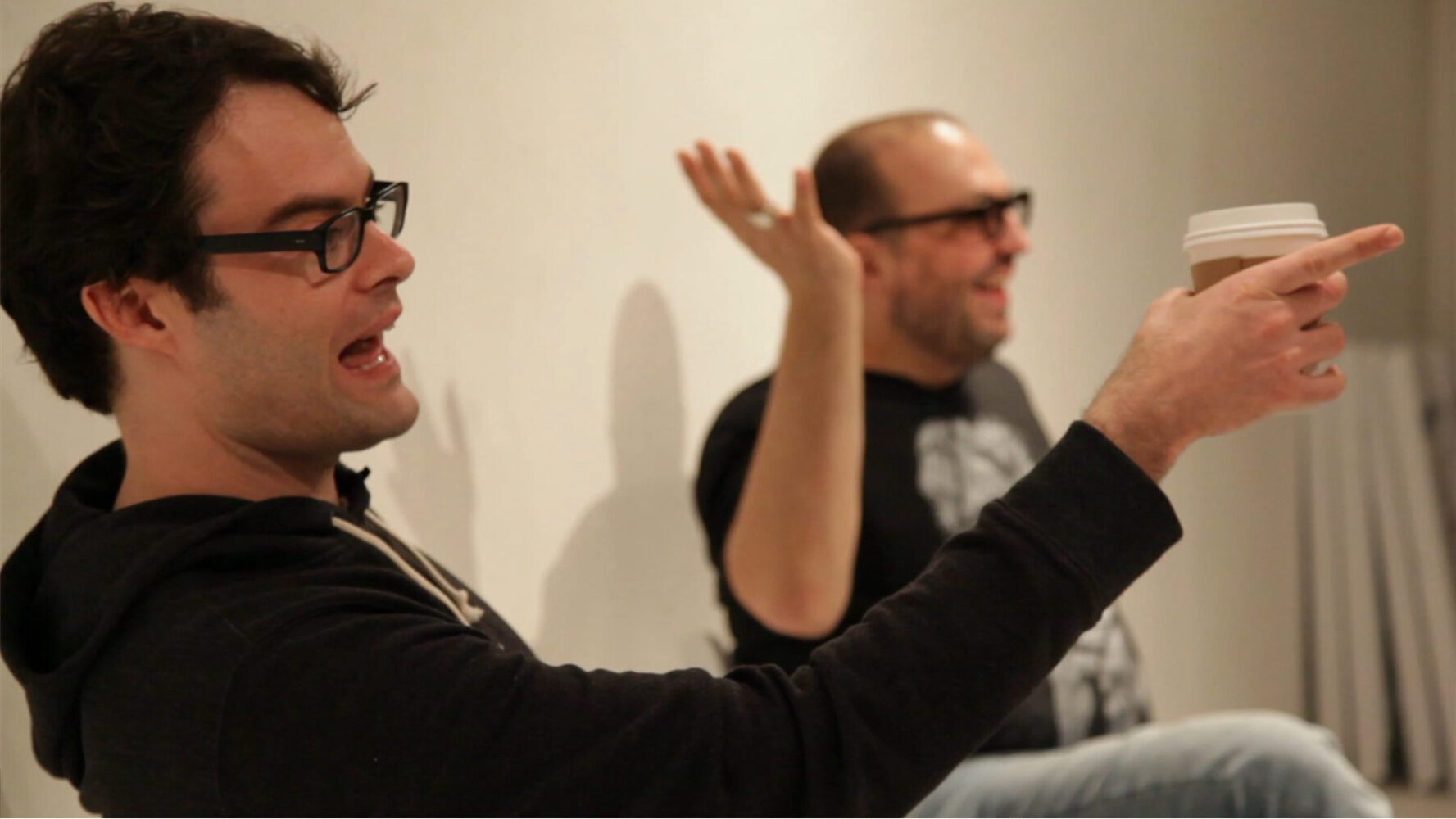
Anthony Bourdain, Chuck D, Willem Dafoe, Wes Craven, John Woo, Glen Close, Christopher Guest, Talib Kweli, Salman Rushdie, Henry Rollins, and Bill Hader are just a few names in Milazzo’s sizable rolodex of interviewees. Yet in this era defined by noise, he managed to slow things down—to regain focus. His interviews are anything but typical. Watching films with his guests, he asks them to reflect on how that shaped their imagination, passion, and world view—bringing the act of creation to life with rare intimacy. At a time when the arts and humanities are under assault, Milazzo’s archive feels less like a platform and more like an act of resistance.
We recently caught up with Milazzo at the Quirk Hotel to talk about this moment in American life through film and music. What followed was a two-and-a-half-hour conversation, which we’ve (reluctantly) shortened for clarity and length. Because when interviewers interview interviewers, this is what happens.
I want to talk about film.
What’s that, what’s a film?
That’s what I’m here to find out, so let’s start with The Modern School of Film. You started this interview series because of a specific belief. That useful discussion about cinema had plummeted. Why do you think it’s important to have conversations about film?
I’ll gladly take any conversation about cinema, because what’s lower than plummeting—absolute zero? When I was younger—say, in my twenties—there was something exciting about reading articles that told you, “This is what Stanley Kubrick smells like on a film set,” or “Here’s how this particular camera works.” It was like catnip for people passionate about film. But eventually, that kind of content became ubiquitous; conversations turned into mere rhetoric.
We’re living in an age saturated with talk, especially with social media. Everything feels rhetorical. I come from a background of two-way talk radio, where the listener calls in and it’s an actual dialogue—not just interviews, but genuine discussions. That’s something I try to preserve when talking to guests on my podcasts. I always tell them, “This isn’t an interview, we’re having a conversation.” It can be disarming at first, because people are so used to structured interviews. But my aim is always to make these interactions feel more humane.
To me, elevating the discussion means dissolving the bubbles we usually operate in. My rule is simple: never ask a question you don’t sincerely want the answer to—even a basic questions.
Today, filmmakers constantly have to talk about their films. Directors spend a year making a movie and then another year discussing it. There’s an expectation to be perpetually visible, which wasn’t always the case. Terrence Malick, for example—he was famously reclusive. He didn’t give interviews, he just made art. There was value in that silence, in that mystery. I think it’s important we regain some of that authenticity, that depth, in how we discuss film.
You just described a marketing conversation that filmmakers are required to have, but I still want to know what the real conversation they’re supposed to be having actually is.”
You’re going to hate me for this, but I might go back to the late ’50s—or even earlier. I’ve become one of those people who says, “Can I tell you something about the early ‘30s?”
If you look at early filmmakers like Georges Méliès or the Lumière brothers, we think of them as cinema magicians, but they were businesspeople first. Interestingly, their early films were essentially documentaries. So from the very start, one cornerstone of cinema—documentary filmmaking—was rooted in a commercial impulse.
I absolutely believe we need conversations about what’s being made and why—those systemic conversations about the purpose of film. But personally, I miss the radical thinking of the late ’50s New Wave filmmakers. They asked, “How can we change this medium? How can we reshape it?” Today, there’s a lot of discussion around AI—and I know that’s an important conversation—but it can’t be the only conversation we’re having.
I’m interested in broader questions about the future of film, inspired by those earlier movements. The French New Wave filmmakers rejected what they called “well-made films.” Similarly, Italian cinema had a derogatory term, “white telephone films,” referring to overly polished, predictable mainstream movies. Both were rebellions against established norms.
What I’m wondering now is: What’s our equivalent? What’s the new rebellion against today’s mainstream cinema?
You’ve interviewed well over a hundred actors, filmmakers, and musicians, most of them genre-defining. Names like Anthony Bourdain, Fred Armisen, John Woo, Wes Craven, Sarah Silverman, Paul Verhoeven, Alanis Morissette—the list goes on and on. Have you identified a through-line that connects these creators, one universal theme that might link each of their worldviews together?
Not trying to sound cute, but I’ve honestly never thought about that. And I’ll tell you why. I’ve always felt like the tightrope walker—the last thing you want to ask them is to look down and get too self-reflective about what they’re doing while they’re doing it.
So I’ve never thought of it that way. I’ve never really considered the overarching theme or connective tissue between those guests. I’ve just stayed in awe that they even said yes to having the conversation in the first place. The stun gun was talking to them [laughing]. That’s always been enough for me.
But when it comes to whether there’s a single through-line connecting all these guests… I don’t think there is. I don’t have a North Star in that world.
Let me look at this from a wider angle. I always say the best reason to do something is to have no reason to do it. In the public sphere, people usually have a strategy: “I’ll do this interview because I have a new record,” or “I’ve got a book coming out.” There’s always a calculated reason.
For me, as someone with no business connection to these people, it was a risk to reach out and ask for a conversation when they had no reason to say yes—off-cycle, no promo, just a real talk. Donald Fagen [Steeley Dan] is a perfect example of that.
Also, I tend not to read a lot of cultural pieces or profiles. Not because I don’t respect them, but because I prefer to come in with a blank slate. I don’t want to come into these conversations with someone else’s framing in my head. It’s not a critique of anyone’s process, it’s just how I approach it.
How do you approach or prepare for your interviews then, because interviewing celebrities at this level can be anxiety inducing at the best of times?
Honestly, it just kind of happens. It can be nerve-wracking—so I try to disarm people right away with a little tomfoolery. Get them talking about something they don’t usually get asked.
In the beginning, my format was pretty traditional: watch a two-hour movie, then have an hour-long discussion. But audiences didn’t want to sit that long—it’s a lot of sitting. So I pivoted to a “This Is Your Life” through movies concept. I’ve done this with Henry Rollins, Salman Rushdie, Ken Burns, Christopher Guest—big cultural figures. I’d ask each of them to pick three films: One they loved as a kid, one they connected with when their career became public, one recent favorite.
It gave the talks a natural three-act structure—90 minutes, very personal, very human.
I feel like this might be your cue for a professional anecdote.
One of my favorite moments was with Salman Rushdie. He picked Star Wars. He was good friends with Carrie Fisher, so I reached out to her—she was alive at the time—and asked if she’d do a surprise video for him. During the Q&A, I told Salman that a student who couldn’t be there had sent in a video question. Up on the screen comes Carrie Fisher, in full Princess Leia mode, delivering this hilarious, in-character message. The look on his face was priceless. It turned the whole conversation into something playful and personal.
We did something similar with Wes Anderson. Salman wanted to talk about The Grand Budapest Hotel, so I arranged for Wes to send a video from his hotel room, recorded on his iPhone. Casual, direct, no PR machine involved.
Over time, these talks have turned into this archive of personal “home movies” from people like Eugene Levy and others. They’re not interviews in the traditional sense—they’re conversations that catch people off-guard in the best way. With Henry Rollins, when we talked about films that meant something during his breakout years, he picked Caddyshack and The Great Santini. So, I tracked down Michael O’Keefe—the kid from Caddyshack—and brought him into the mix. Again, unexpected, personal, memorable.
That’s always been the goal, give them a conversation they didn’t see coming.

Henry Rollins would be a dream interview for me. He’s become an archivist of punk history in a way that feels essential for cultural posterity.
The first interview I did with Henry was amazing, but my computer crashed. I lost the file and felt so bad. I’ve done three interviews with him now—he doesn’t suffer fools. I’ve also had Ian MacKaye [Fugazi] on, and he can be a bit tough to crack. But when he and Henry talk about punk, they’re really talking about D.C.—about cultural evolution. It’s beautiful. They’re mental curators, and I love people like that.
Anthony Bourdain was also that way. I did a couple events with Tony. He was always self-deprecating, always saying how embarrassed he was by how little he knew, which wasn’t true. One of his favorite films was Goodfellas, but he also loved this lesser-known gem The Friends of Eddie Coyle with Robert Mitchum. If you haven’t seen it, you have to—it’s incredible. I’ve been deep in a Mitchum phase lately, and that one’s a masterpiece.
One of my other absolute favorites was the late Wes Craven. He wasn’t just making horror movies—he understood the history of horror. He got the grind of everything, he understood the totality of things. Those are the figures I love.
Arrested development is probably something that binds everyone, and I’m not just talking about David Cross.
There’s a deep sense of nostalgia right now, especially for music. Let’s use vinyl collecting as an example. Are you finding a similar nostalgia for the films of a different era? Take films from the 1970s, what most would say is the golden age of American cinema.
The answer is both yes and no. Yes, people want to watch older movies. Yes, they’re subscribing to things like the Criterion Channel. But the reason isn’t nostalgia—not really. It’s because they’re mentally exhausted by what they’re watching now.
To expand on that: There’s a kind of monochromatic delivery in modern cinema. A 90- to 100-minute film often feels like a closed loop—this is what you’re getting, take it or leave it. There’s no negotiation with the audience anymore.
Every once in a while, you’ll get flashes of inspiration. Not to timestamp this too much, but take The Brutalist—it had an interesting use of titles and graphics in the opening. That hit me. It was a little whoosh of oxygen. But those moments are rare.
So when people go back to watch films from the ’70s—or any earlier era—they’re not doing it out of some precious need to preserve the past. They’re just hoping to see something good. Something that might surprise them.
Music nostalgia can be more about purity—you listen to a great jazz record from the ’50s because you love that specific sound. But with movies, I actually try to push back against nostalgia. Nostalgia risks becoming passive. What I see is a real desire to find quality. They want to see good shit. Pardon my Italian.
For a lot of students I talk to, those older films are a gateway. When David Lynch passed, I brought up his work, and a student casually said, “Yeah, I’ve seen Blue Velvet. It was amazing.” That wasn’t prompted. That wasn’t a homework assignment. They sought it out because that creative mushroom cloud of the past still resonates. It’s not about nostalgia. It’s about chasing good work.
Since you brought up the 1950s: Film, literature, and culture broadly self-censored due to the Red Scare over communism. As a scholar of film, do you think we’re in a similar moment with our current politics?
Historically, American films have resisted engaging with what’s happening in the world in real time. That might be a generalization, but war films usually aren’t popular during times of war.
In the 1930s, gangster films took off because anti-heroes weren’t publicly acceptable. Movies have always thrived when dealing with things that are not publicly acknowledgeable. That’s where they’ve done their best work.
Today, though, content feels rushed. There’s a kind of ambulance-chasing quality to it. Sometimes that’s good—we do need stories about what’s happening right now. Why wouldn’t we? But at the same time, I’m not sure this is still a “movie” conversation. Films take too long to make—not just shooting, but raising money, convincing studios, getting the green light. By the time a movie comes out, the cultural moment it was trying to capture is often gone.
The history of cinema is relatively young. And yet, when we watch a movie, we’re pulling from the memory of every movie we’ve ever seen. That’s why I tell students to study films decade by decade. Look at the films made at the start of a decade—they’re fascinating Frankensteins. They mash up the anxieties of the previous decade with the emerging tone of the new one.
This is where films used to be politically sharp. They created these hybrid reflections of cultural and political shifts—what I half-jokingly call a “political art party.” And movies used to do this so fucking well.
I love when movies are dangerous. Are they anymore? I don’t think so. They’re not calls to action, anymore.
I do think we’re still influenced by the prevailing politics at the time, look at Alex Garland’s new movie Warfare. It’s an Iraq War film.
Have you seen it?
No, and I won’t. What’s the value of an Iraq War film without deconstructing the conditions that led us into the war in the first place? If you’re just showing soldiers in combat you’re making war porn. That’s a missed opportunity. It feels cheap.
Has there ever been a war film that you think got it right?
Maybe. Most films made during the War on Terror are blatant propaganda. Billy Flynn’s Long Halftime Walk got some things right.
That’s interesting. We flock to new stories, but we flock in a certain way—especially if we’re going to try to mainstream them. And Alex Garland has done some interesting films. I actually think Annihilation is a really interesting film, but that’s as close as we can get. Unfortunately, and I don’t want to say anesthetized, but there is a fast food version of these things.
Documentaries still come close. No Other Land, about Israel and Palestine, just won the Oscar and now it’s embroiled in controversy. There’s a theatre called the O Cinema in Miami—they decided to show the film and now they’re in danger of tanking as a cinema.
That goes back to the original question about the 1950s. Is everything under the microscope now—will anything dangerous get made or released until this moment passes? It does feel like we’re in a liminal space.
With films that have a certain aspiration of anthropological canvas, I think you’re right to bring up this political moment. But here’s a weird answer: We can still make films like A Woman Under the Influence by John Cassavetes. That film is, among other things, about a woman struggling with severe mental health issues. It’s a story of personal war. And that’s the key—we can still tell stories about personal wars.
When we talk about war writ large, political movements, systemic issues, that gets trickier. Especially with the way politics moves now. I’d double down on your point: We can’t do everything in a film. But there’s value in what we can do. I tell my students this all the time, when we talk about political films, the challenge is finding the right focus. I’ll ask them, “Could you make a movie about the president?” And that opens up a whole different conversation.
They tried that with Trump. The movie was called The Apprentice. Did that get any distribution?
Yes. And that actor took a beating for that role. Not just for his fashion choices—he caught flak just for doing the part. That’s exactly my point.
I tell my students all the time—you can still make those movies, but they’re always worried, “You can’t even make that movie anymore.” But the truth is, a lot of times political regimes don’t touch these films because acknowledging them would give them legitimacy. By going after a movie, they validate its critique.
Before we wrap, what’s good in your world right now? Films, music, books. I love asking this question because it gives readers something to go out and search for. Not that we didn’t just cover two hours worth of movies and music.
Right now, a lot of pre-code stuff—films made before the Hays Code kicked in. It sounds very film nerd, but I’ve been curious about what Hollywood did before the industry was told what it couldn’t do. When the guardrails were off—what were the stories being told? What did studio films look like when they could basically get away with anything?
You see this raw energy, this moral ambiguity, that just disappears once the code comes in. Even filmmakers like Preston Sturges—who worked slightly after that era—you can feel that same spirit. Honestly, I’ve come to believe the Coen Brothers are just modern-day Sturges. Well—except for The Big Lebowski, which is its own thing entirely. That film feels like a beautiful, LSD-fueled shaggy dog story—which, of course, I absolutely love.
Rob, thanks for this amazing conversation. I’d ask you if there’s anything else to leave our readers, but then we’d talk for another hour.
We’ve tied the room together. Thank you.
Support RVA Magazine. Support independent media in Richmond.
In a world where corporations and wealthy individuals now shape much of our media landscape, RVA Magazine remains fiercely independent, amplifying the voices of Richmond’s artists, musicians, and community. Since 2005, we’ve been dedicated to authentic, grassroots storytelling that highlights the people and culture shaping our city.
But we can’t do this without you. A small donation, even as little as $2 – one-time or recurring – helps us continue to produce honest, local coverage free from outside interference. Every dollar makes a difference. Your support keeps us going and keeps RVA’s creative spirit alive. Thank you for standing with independent media. DONATE HERE.
Also, you can show your support by purchasing our merch HERE.