

Every morning at 9 a.m. in Vinnytsia, Ukraine, the world stops. Cars freeze in the streets, trams halt mid-track, and pedestrians stand silent as the national anthem plays. It lasts a minute, a ritual pause to remember the dead and remind the living what they’re fighting for. Dr. Jeffrey Young stood too, still and listening. A trauma surgeon from Charlottesville, he had come thousands of miles to teach a different kind of survival.
Since Russia’s full-scale invasion of Ukraine on February 24, 2022, the country has been at war for just over three years and eight months. While exact numbers remain elusive and contested, independent estimates suggest military and civilian deaths combined may now number in the hundreds of thousands. According to one Ukrainian-government-linked tally, Russia’s total personnel losses (killed, wounded or missing) exceed 1.15 million as of mid-November 2025.
For many Virginians, that distant war has felt closer than ever. Volunteers and medical personnel from Virginia, including Dr. Young and others drawn by humanitarian impulse, have traveled to Ukraine to assist, train, or deliver aid. Their work underscores how the conflict, while thousands of miles away, has ripple effects and human links right here at home.
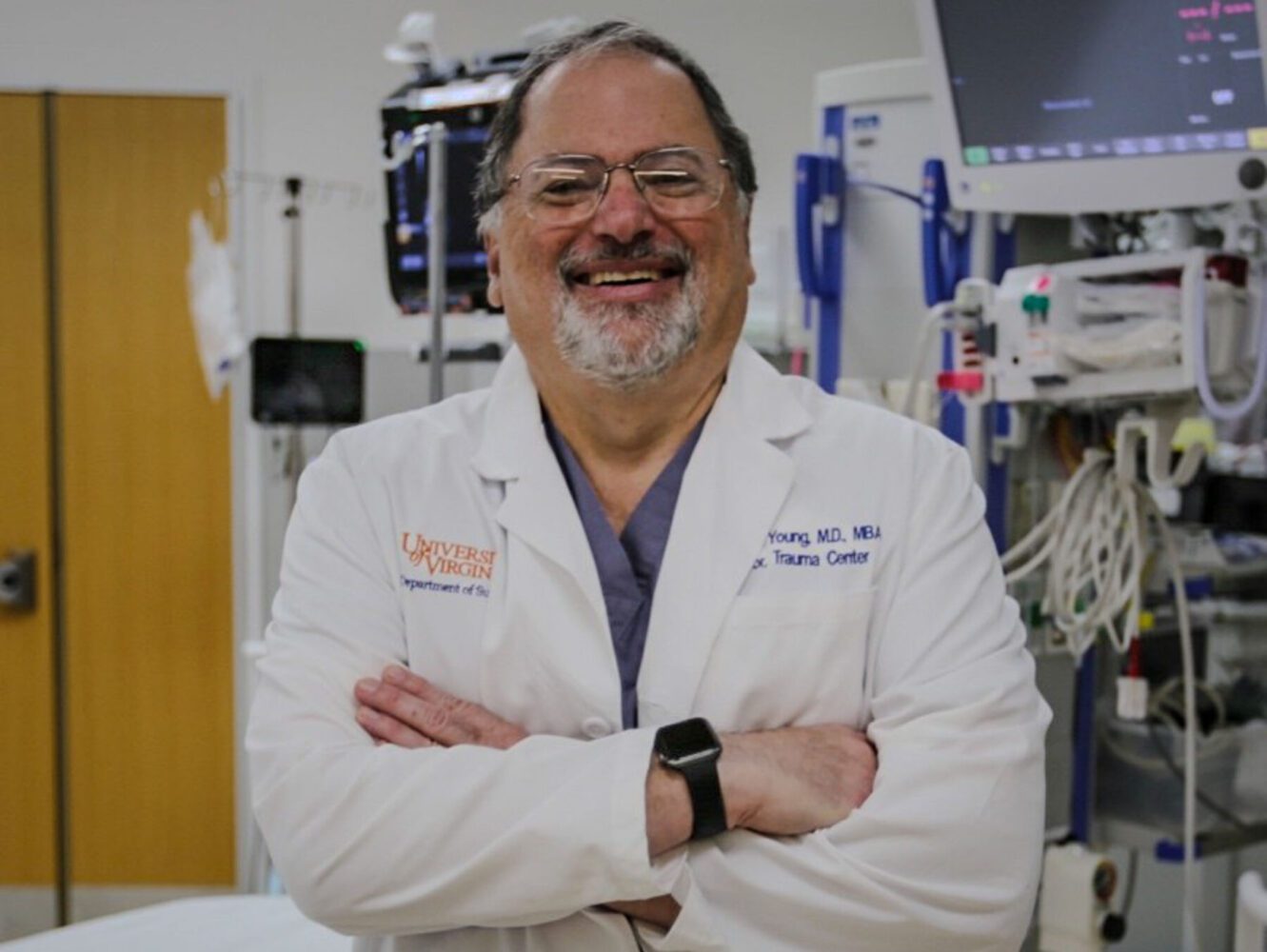
From UVA to Ukraine
Young’s career reads like a timeline of modern trauma medicine. Long Island to UVA undergrad, MCV for med school, surgery at Wake Forest then back to UVA in 1994 to build a trauma program that barely existed.
“UVA didn’t really have a trauma center back then,” he said. “So I built it, over thirty years.” Along the way he served as Chief Quality Officer and Chief Patient Safety Officer. He also spent fourteen years with the U.S. National Disaster Medical System, deploying during COVID. By the time he retired in December 2023, UVA named him Professor Emeritus but he wasn’t done. “I knew I wanted to do humanitarian work,” he said.
Breaking in wasn’t simple. “The humanitarian surgical world is kind of closed,” he said. A pivotal step was the Hostile Environment Surgical Training Course with the David Nott Foundation in London. There he met MedGlobal board member Mike Samotowka. A month later: “Do you want to go to Ukraine?” Young didn’t hesitate.
Vinnytsia sits hundreds of kilometers from the front. “It’s this strange mix of normal and surreal,” he said. Cafés and trains by day; vigilance by night.
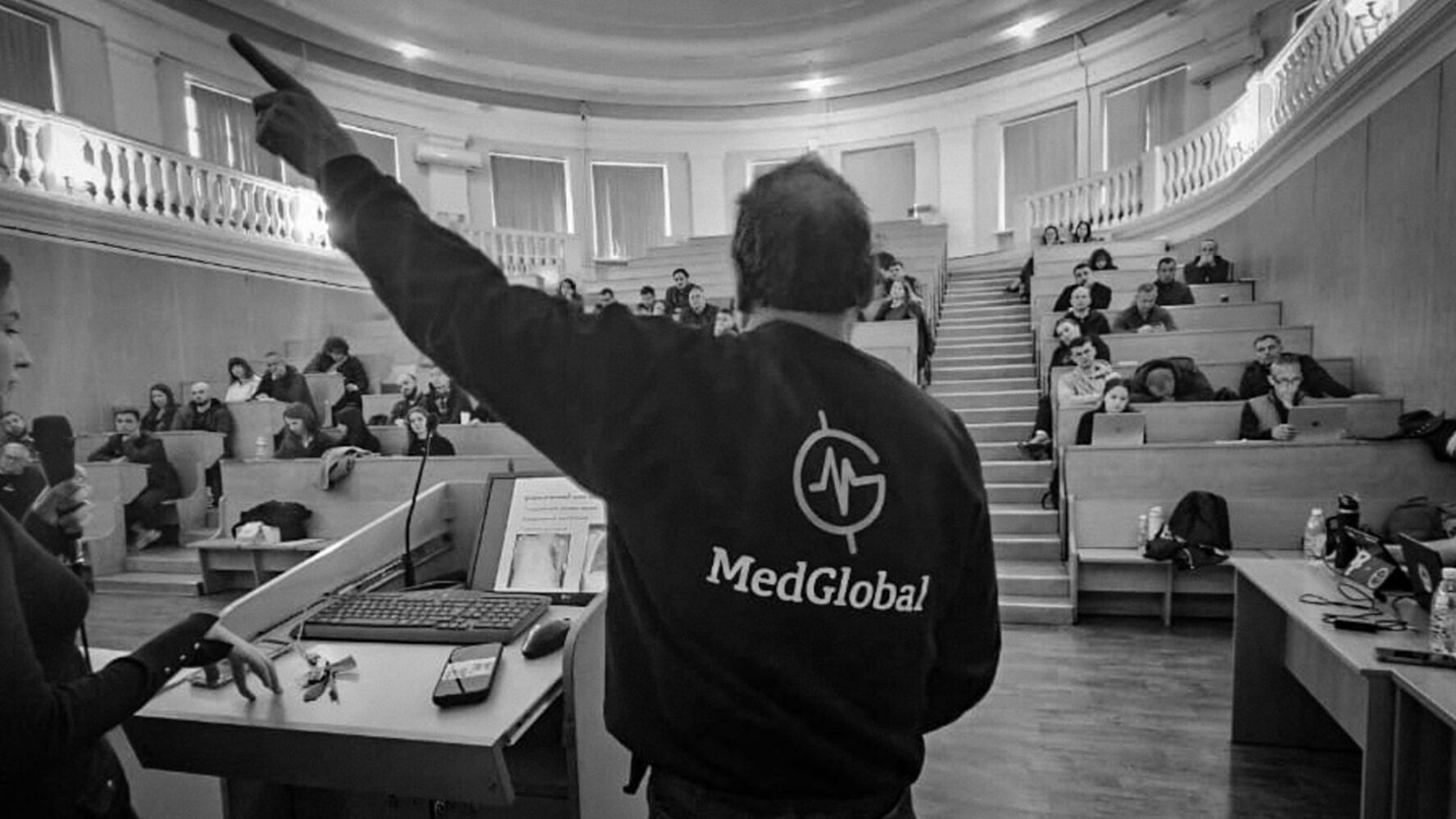
Inside the medical university, Young spent four days training about twenty military surgeons who hadn’t yet deployed. “This was a chance to prepare them, get them used to seeing things they’ll definitely see later on.”
They practiced emergency procedures on animal tissue, repairing lungs, controlling bleeding, removing spleens and kidneys. “We basically went through the major trauma scenarios like heart, lungs, big vessels, kidney, liver, spleen,” he said. “How to expose what’s bleeding, stop it, and work quickly when you don’t have help.”
He’d never done combat surgery, but three decades in trauma guided the mindset. “Trauma is trauma. You learn to stabilize, improvise, and act fast. You don’t have the luxury of waiting for everything to be perfect.” His mantra landed: “Perfect is the greatest enemy of good.”
There were limits. “We did everything on pigs because the anatomy is comparable,” he said. “But you can’t practice smaller limb and neck vessels that way; you’d need cadavers.” Supplies, too, were improvised. “We brought everything we used, sutures, instruments. I also brought twenty pounds of expired materials from UVA, useless on humans, perfect for training. We’re throwing this stuff out here, and over there it’s gold.”
By week’s end, five surgeons (including an orthopedist) had trained roughly eighty Ukrainian clinicians. “You can’t expect to be an expert after a day,” he told them. “But if you’ve seen it once, done it once, maybe you’ll remember what to do when it really matters.”
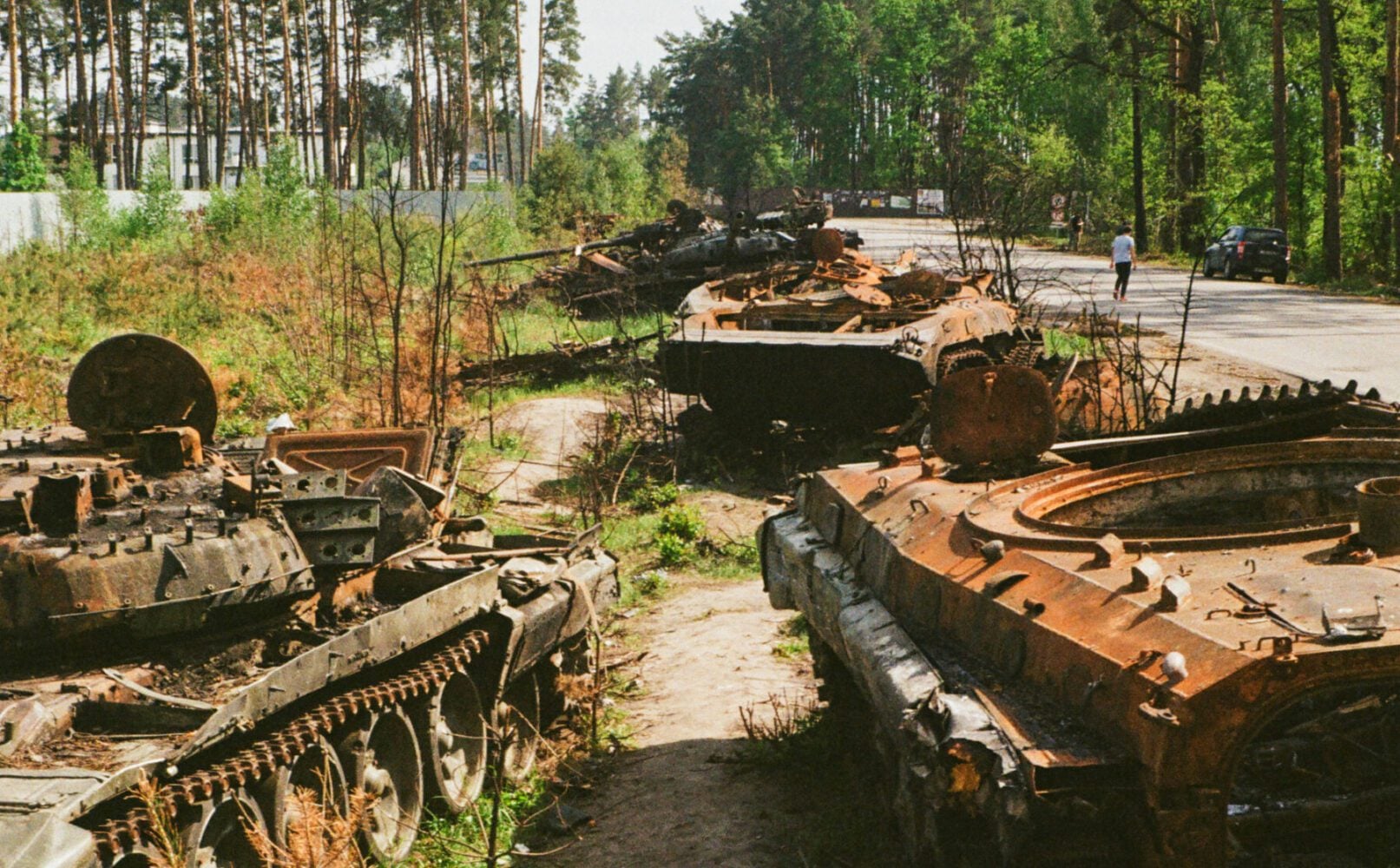
Innovation Born of Necessity
War accelerates technology. World War I: the modern ambulance. World War II: antibiotics and triage. Vietnam and Iraq: telemedicine and trauma systems. Ukraine is pushing the next leap: frontline logistics in real time.
“They’re dropping blood by drones into the trenches,” Young said. “Something I’d never even heard of six months ago.” Medical supplies, too. Ambulances proved too visible to drones, so crews converted SUVs, lower profile, faster, more nimble. With helicopters grounded, evacuation shifted to trains, reviving an old idea and making it work.
That change forced a rewrite of emergency care. U.S. systems assume rapid medevac; Ukraine built prolonged casualty care. “They teach frontline medical people to keep someone alive for one, two, even three days,” he said. “Not just stopping bleeding but fighting infections, giving blood, doing wound care, even limited surgery near the front. American paramedics couldn’t legally do that, but there, it’s what saves lives.”
For Young, this isn’t chaos; it’s human-centered innovation. “If something works, they use it. If it doesn’t, they change it tomorrow. That adaptability is keeping people alive.” He believes these lessons will shape civilian response from mass-casualty events to disasters. “What they’re developing under pressure won’t stay on the battlefield.”
The trip reset Young’s instincts. “It brought me back to what medicine used to feel like,” he said. “You trust your training and the people around you. You make the best call and move on.”
Each day brought a different cohort and a different plan. “One day anatomy. Next day airway. Then vascular control, how to stop bleeding when you can’t even see it,” he said. The format was elbow-to-elbow, not lecture hall. “I’ll say, ‘Okay, you take the scalpel. Here’s how you find the vessel. Here’s how to control it without tearing it.’ Once they do it once, you can see the confidence build.”
He added. “You plan a demo and the power goes out, or the materials don’t arrive, or the group’s experience is totally different than yesterday’s. You have to be flexible. It’s good for me.”
Humanitarian work has become an antidote to stasis. “I’m reading papers I never would’ve read, talking to surgeons across the world, seeing how different countries solve the same problems. You can’t fake this kind of learning, you have to live it.”
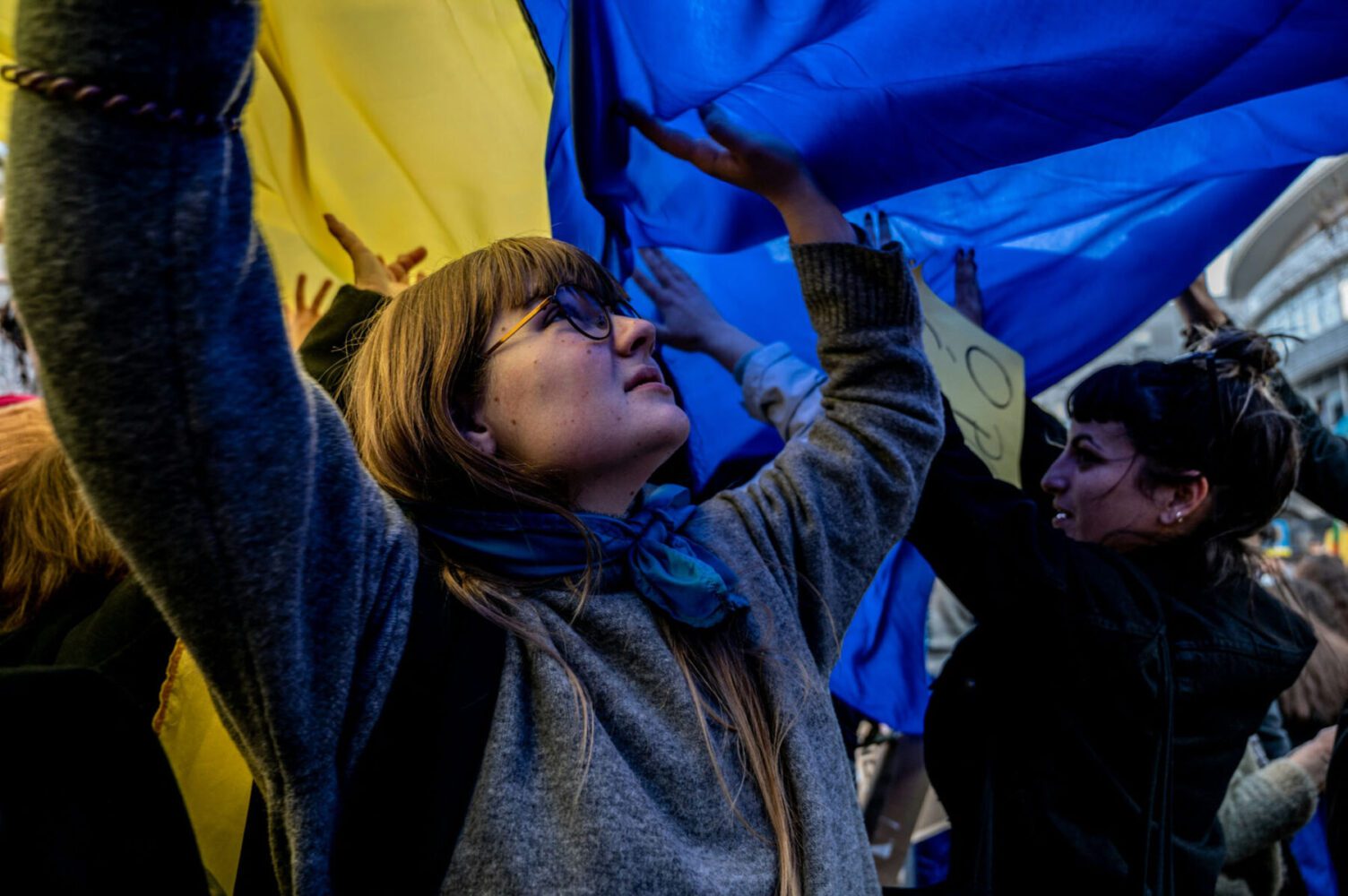
Innovation Meets Humanity
What moved him most were the people. “The drones and logistics are impressive,” he said, “but the discipline and morale, how deeply they care about their soldiers, I’ve never seen that kind of gratitude.”
He met frontline medics who had faced real danger and were “happy to be doing something that mattered.” He also felt a personal connection. “I’m Jewish. My family likely came from Ukraine or Belarus. I didn’t know that when I agreed to go, but once I found out, it meant even more.”
For him, the country’s quiet determination explains the speed of its innovation. “They’re not just fighting to win a war,” he said. “They’re fighting to live normal lives, to keep their humanity. They’ll innovate however they have to.”
What Comes Next
In January, Young heads to Sierra Leone with Mercy Ships for a three-week deployment, civilian surgeries on a floating hospital. “They have something like one surgeon for every fifty thousand people,” he said. “You’ll do hernias all day, every day, and that’s fine by me. Those surgeries change lives.”
Ukraine’s lessons go with him. “You don’t need a perfect setup to make a difference. Be organized, creative, willing to adapt.” At home, he keeps trips cost-neutral by doing short locum shifts in Virginia. “It’s a balance that works for us.”
He’s also thinking about broader impact. “I’d love to bring Ukraine’s adaptability into NATO training for smaller countries like Latvia, Lithuania, the Balkans. Teach medics to do more before the next crisis hits.”
“If I operate, I can help five or six people,” he said. “If I train twenty surgeons, they can help hundreds. That’s the multiplier.”
Photo of Dr. Jeffrey Young training students
Support RVA Magazine. Support Independent Media in Richmond.
At a time when media ownership is increasingly concentrated among corporations and the wealthy, RVA Magazine has remained one of Richmond’s few independent voices. Since 2005, the magazine has provided grassroots coverage of the city’s artists, musicians, and communities, documenting the culture that defines Richmond beyond the headlines.
But we can’t do this without you. A small donation, even as little as $2, one-time or recurring, helps us continue to produce honest, local coverage free from outside interference. Every dollar makes a difference. Your support keeps us going and keeps RVA’s creative spirit alive. Thank you for standing with independent media. DONATE HERE.
We’ve got merch HERE
Subscribe to the Substack HERE
And Reddit HERE
And YouTube HERE