
I recently bought my first bicycle in more than a decade. Like most people, I started my search online, comparing models, reading reviews, and trying to figure out what kind of rider I actually wanted to be. Eventually I visited several local bike shops before settling on a new Fairdale.
A few weeks later, I received an email from Joel Alford announcing the opening of his new venture, Field Trip Bikes in Church Hill. Joel and I had never met. He had no idea I had recently become a customer at Richmond ReCycles, the shop he has owned since 2017. But his email got me thinking about how Richmond’s bike culture evolved over the last twenty years, from Slaughterama and the city’s DIY scene to the 2015 UCI Road World Championships and beyond.
In the early 2000s, there were BMX riders building dirt jumps, bike messengers weaving through downtown traffic, mountain bikers disappearing into the woods along the James, and road cyclists logging miles through the surrounding counties. Shops like Agee’s, Bunnyhop, and ReCycles served as gathering places, but cycling still existed largely as a subculture sustained by riders, mechanics, advocates, and true believers.
What I remember most is Slaughterama.
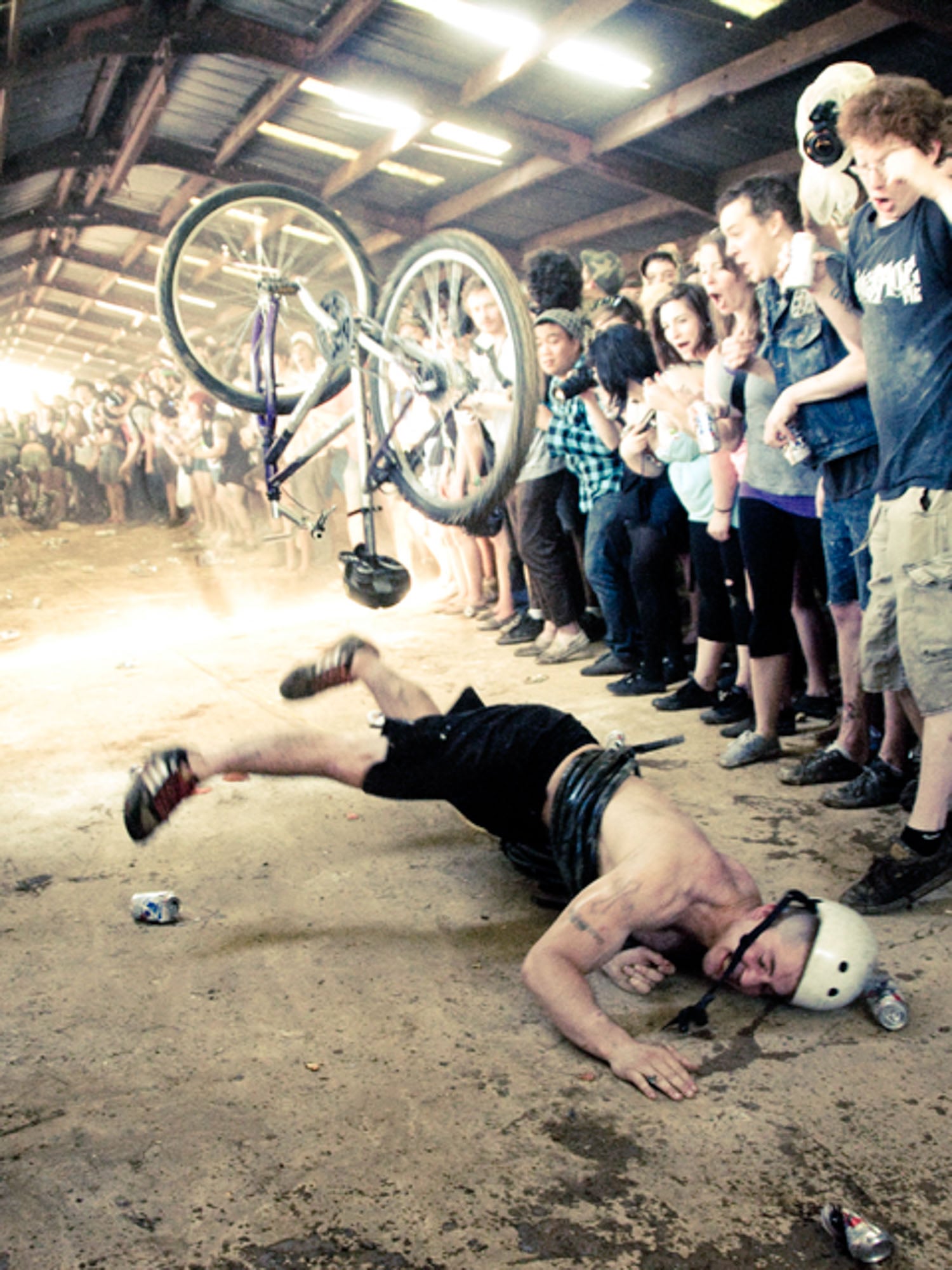
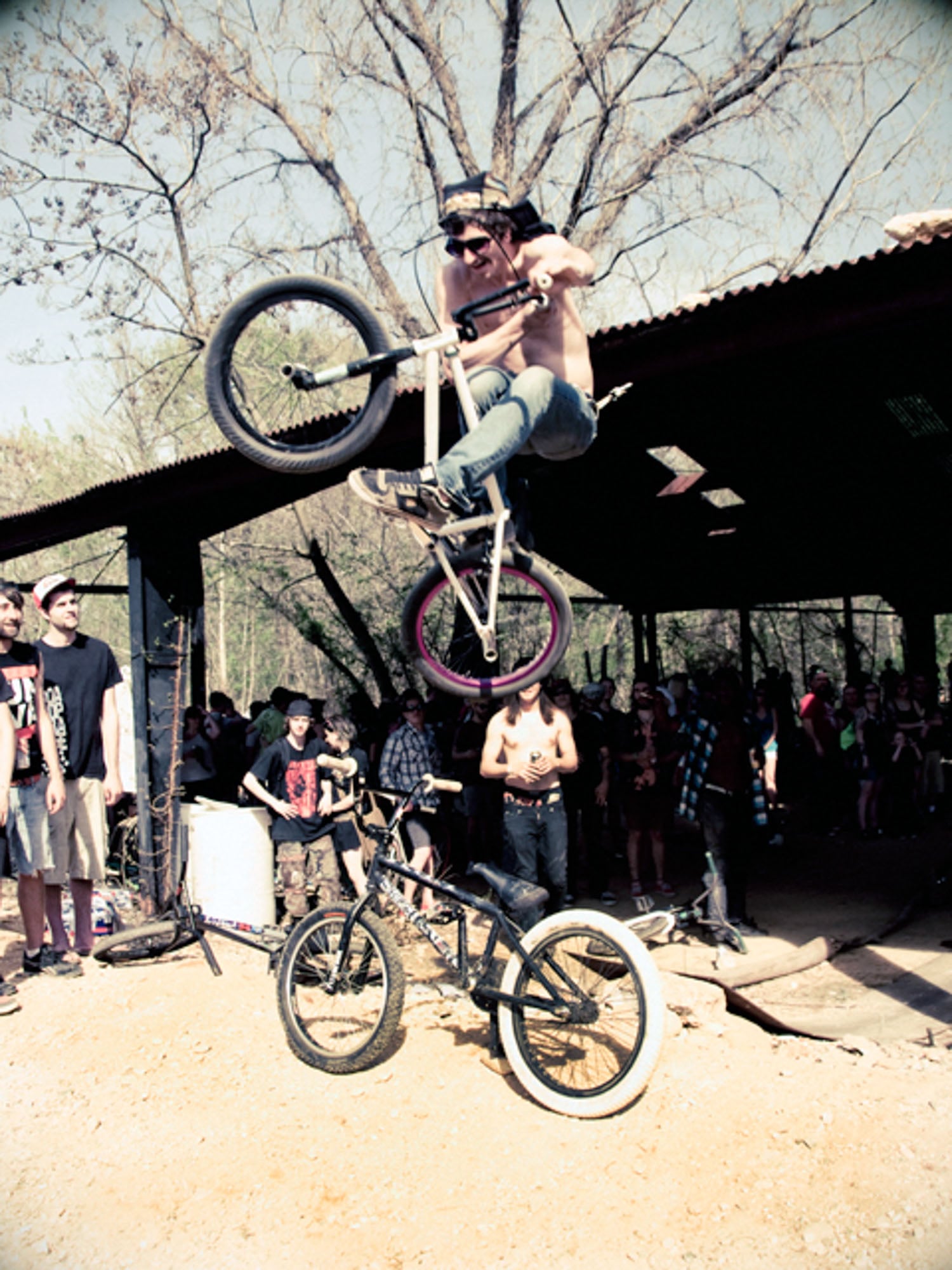
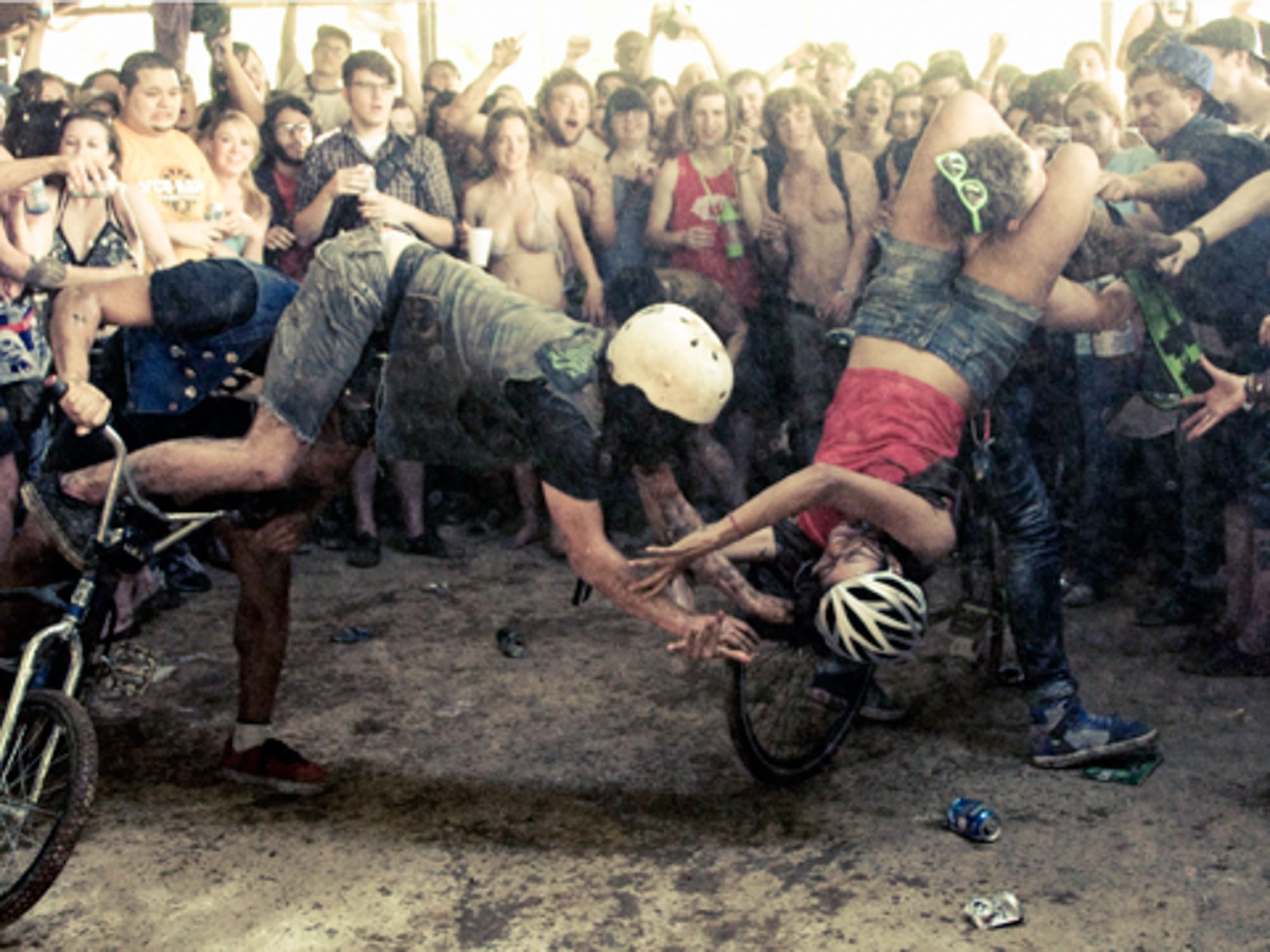
Slaughterama 2010, photos by Nick Ghobashi for RVA #1 2010
The annual gathering organized by the Cutthroats Bicycle Club brought riders from around the country to Richmond throughout much of the 2000s. Equal parts competition, festival, and organized chaos, it became one of the city’s defining underground traditions. If you spent time around Richmond’s DIY scenes, from Slaughterama to Best Friends Day, chances are you knew someone involved.
Richmond had a bike culture, and from where I stood it seemed connected to everything. The people starting bands, organizing shows, making art, building skate ramps, and documenting the city often moved through the same circles. The communities often overlapped.
Long before tourism officials began pitching Richmond as a cycling destination, people were already coming here because of bikes. The rest of the city just hadn’t fully realized it yet.
That began to change in September 2011 when Richmond was selected to host the 2015 UCI Road World Championships.
At the time, the announcement was met with a mixture of excitement, confusion, and skepticism. Plenty of Richmonders looked at the news and wondered why an international cycling championship was coming here in the first place. Others focused on the road closures and logistical headaches that would soon follow.
But a core group of cyclists, advocates, and business owners saw something different.
For the first time, bicycles were being discussed not simply as recreation or transportation, but as economic development. Organizers projected more than 500,000 visitors over the ten-day event and estimated more than $150 million in statewide economic impact. Suddenly cycling wasn’t just a niche interest. It was something the city could invest in, support, and build around.
The race itself lasted a week but the shift in perception lasted much longer.
Over the following decade Richmond expanded bike infrastructure, completed the Virginia Capital Trail, supported advocacy efforts, and gradually embraced cycling as part of the city’s identity. What had once felt like different pockets of subculture increasingly became part of everyday life.
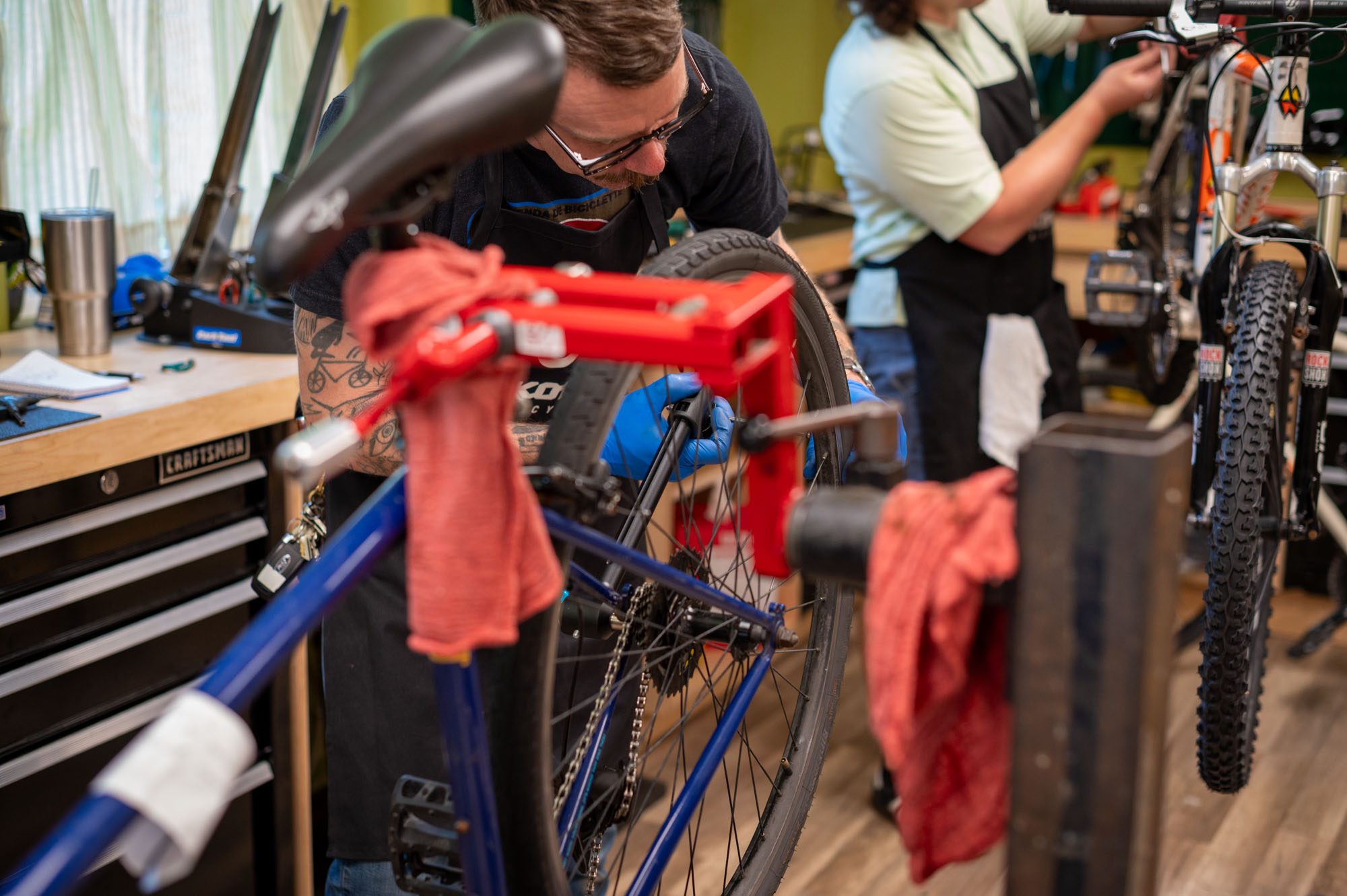
One of the people paying attention was Joel Alford.
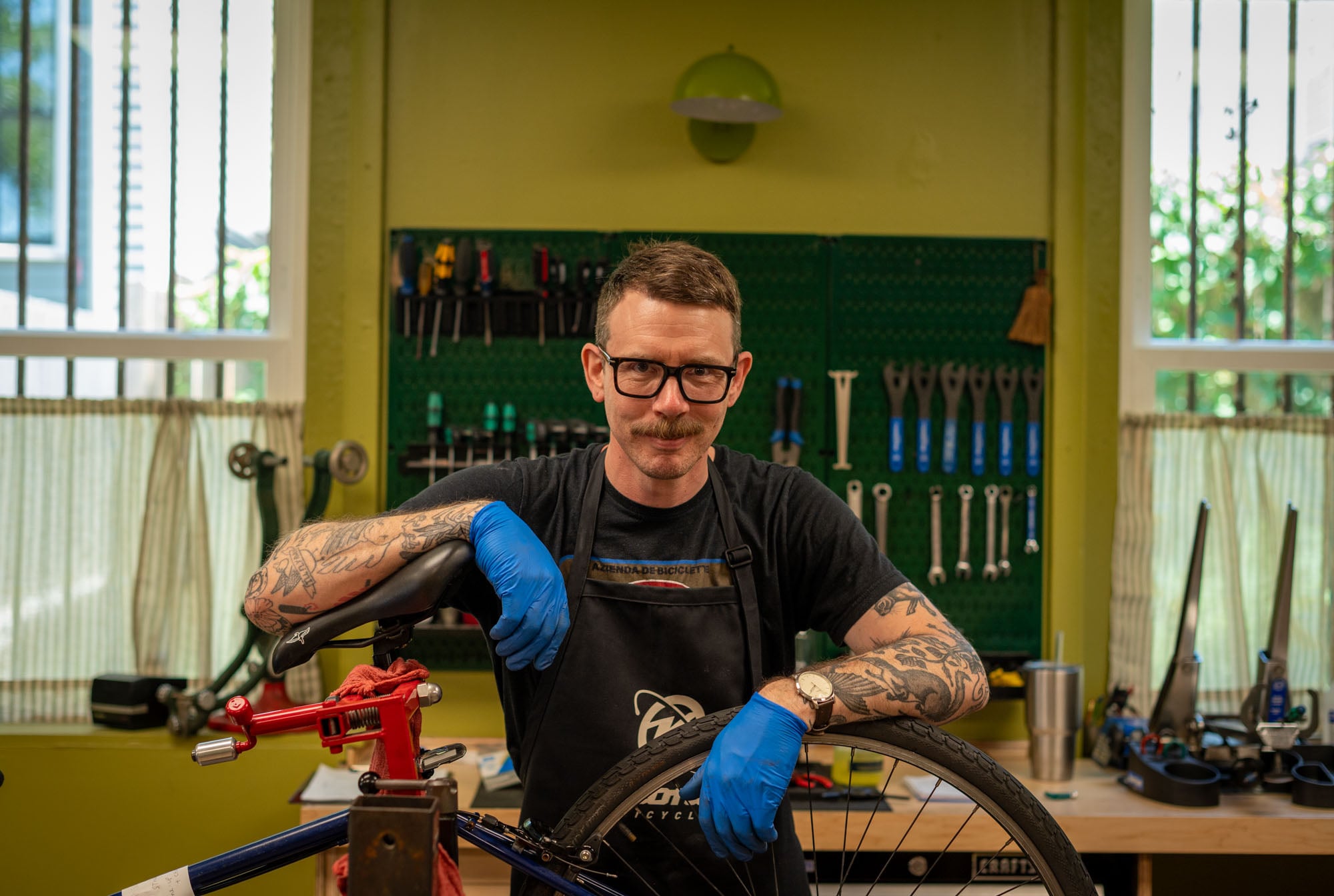
Alford joined ReCycles Bike Shop in 2008 and purchased the business in 2017. Over nearly two decades in Richmond’s bicycle industry, he has witnessed firsthand how the city’s relationship with cycling has changed.
“I think the bicycle as a legitimate form of transportation has gotten more accepted in Richmond,” Alford says. “There’s definitely a lot more positive momentum in terms of infrastructure and bike advocacy groups getting those bike lanes and getting that awareness out that people are riding bikes, using them to get to work, using them to get to school.”
For Alford, one of the biggest changes is how Richmonders think about bicycles themselves. “It’s not just seen as a toy anymore, or something somebody does because they can’t afford a car. There’s certainly a lot more people riding bikes for fun too, whether they’re commuting to work and enjoying that, going on weekend adventures on the Capital Trail, riding BMX bikes, or joining some of the group rides around town. There’s more people riding bikes with their kids, and more people from all walks of life using a bike as a primary choice.”
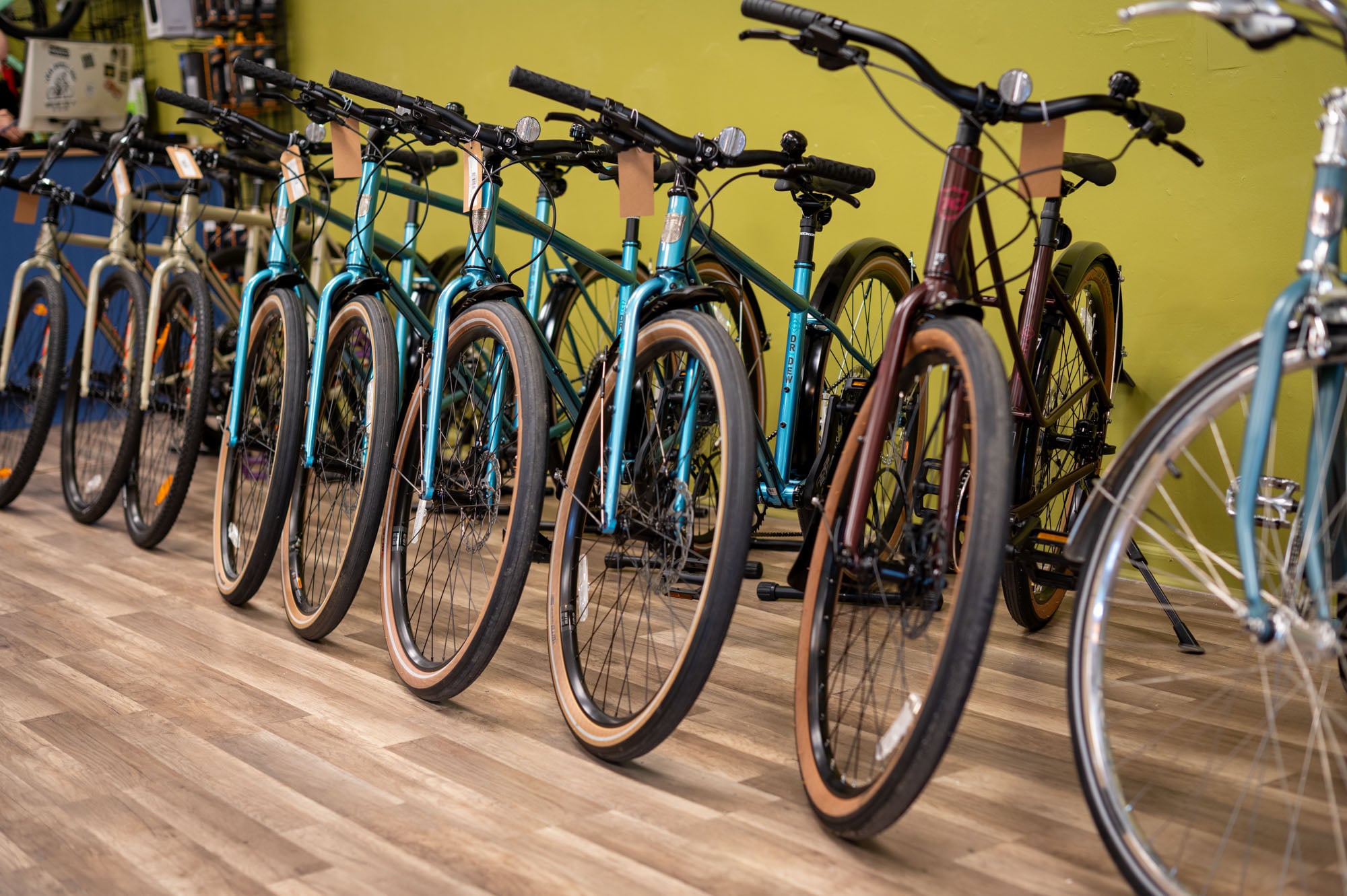
The pandemic accelerated many of those trends. “When COVID hit, the demand for bikes went crazy through the roof,” Alford says. “A lot of people wanted a bike as a way of getting out of their house.”
Like shops across the country, ReCycles quickly found itself struggling to keep inventory in stock. With people working from home, looking for ways to exercise, and searching for safe ways to spend time outdoors, bicycles suddenly became one of the hottest commodities around.
“If anybody in the bike industry could have predicted what was going to happen and stocked up accordingly, they’d be set for life,” Alford says with a laugh. “But nobody really did. We ran out of pretty much everything.”
As manufacturers rushed to increase production, shortages gave way to surpluses before eventually settling back into something closer to normal. But for Alford, the most memorable part of the pandemic wasn’t the sales boom. “What was cool about being at ReCycles is that we really felt like we played an important part in a lot of people’s lives,” he says. “Maybe we sold them a bike, maybe we helped repair a bike that had been sitting in a garage for years, but we were helping people get back out there.”
Alford worked through the entire pandemic without taking a day off. While he is quick to note that bike shops weren’t facing the same challenges as healthcare workers and other frontline professions, he remembers feeling that ReCycles was providing something people genuinely needed.
“It felt good to be helping people out in some way,” he says.
For many Richmonders, bicycles became more than transportation or recreation during those years. They became a way to maintain a sense of freedom, routine, and connection at a time when much of everyday life had come to a standstill.
Now he is bringing that experience to Church Hill.
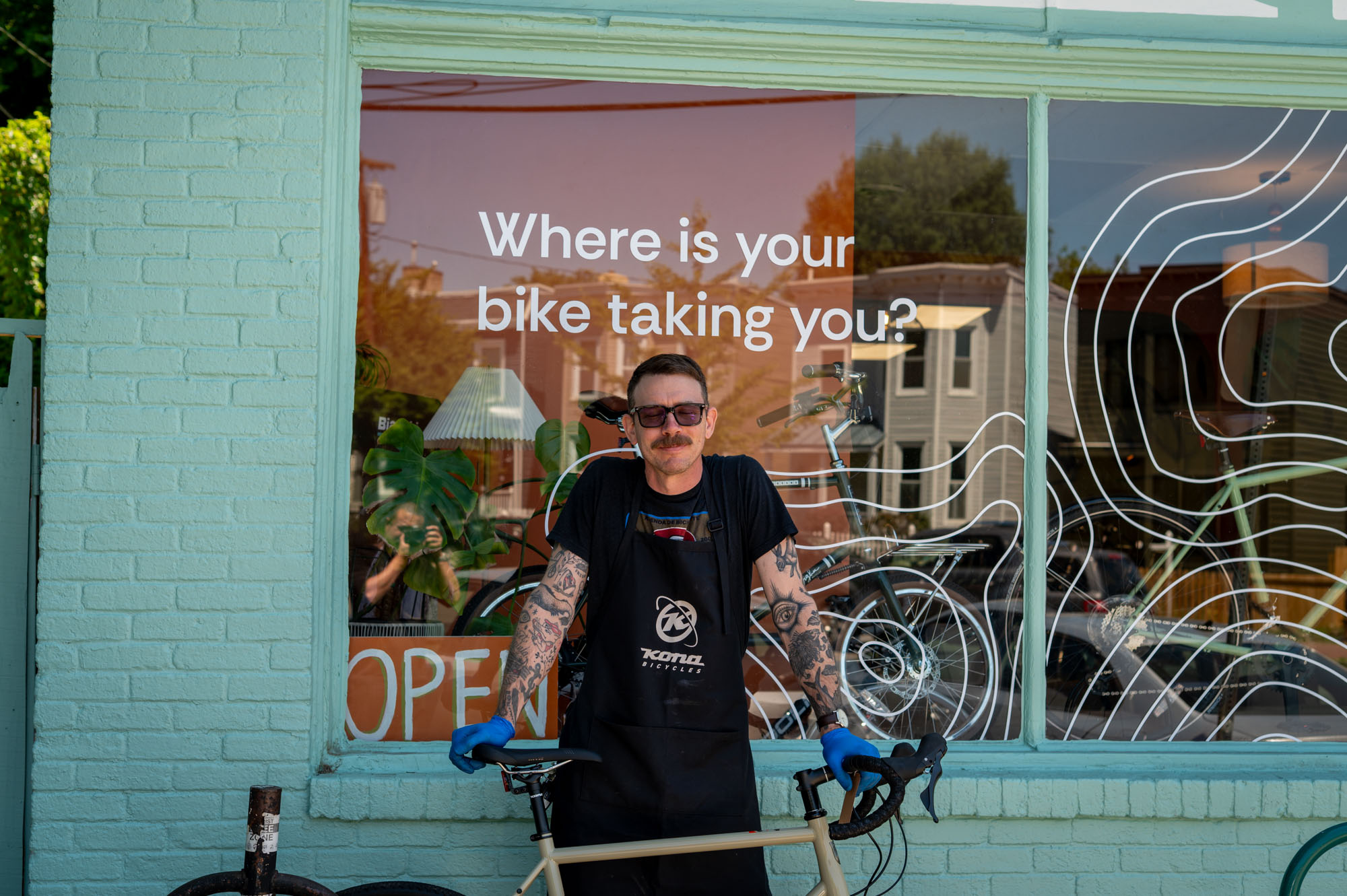
Field Trip Bikes, located in Church Hill, offers bicycle sales, repairs, accessories, apparel, and gear. More importantly, Alford hopes it becomes a neighborhood gathering place. The shop plans to host community rides and create an environment that welcomes both experienced cyclists and people who may not have ridden a bike since childhood.
“Sometimes a bike shop can have the same feeling as a tattoo shop or a record store,” Alford says. “You’re a little nervous to go in if you’re not an expert. My whole thing is that everybody who walks in, we’re stoked that you’re here. We want to meet people where they’re at and ask them questions rather than dump a bunch of information on them or tell them what they should be doing.”
For Alford, the goal is not to create a shop for cycling insiders. It’s to help people figure out what they enjoy about riding in the first place.
“It’s more about, what do you like?” he says. “What do you want to get out of it?”
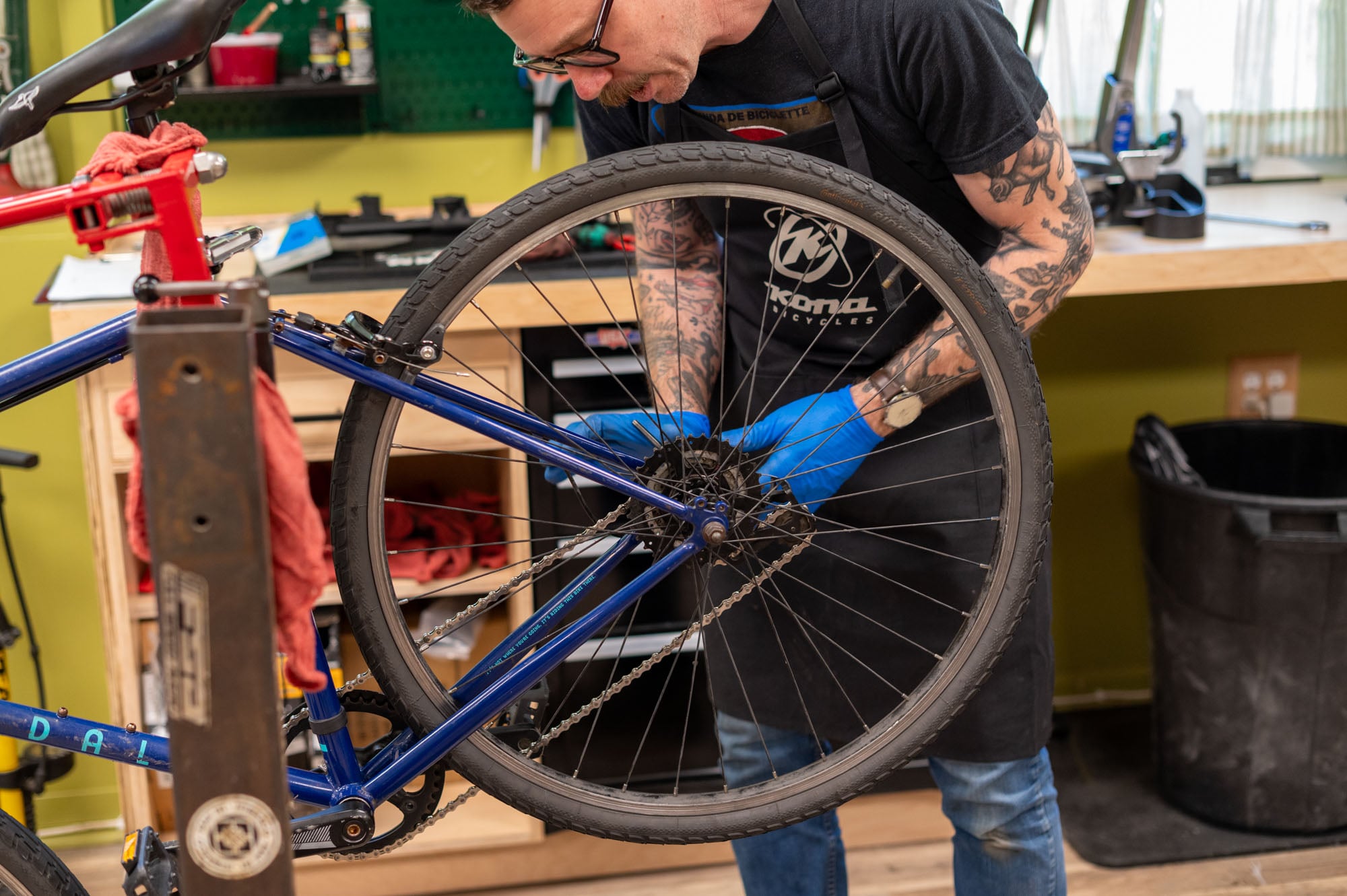
The story of Richmond’s cycling culture has been written by countless Richmonders who chose two wheels over four. Field Trip Bikes, along with the other great shops that serve Richmond riders, exists because that culture endured.
A generation ago, Richmond’s cycling community might have been fighting to be noticed. Today, it is strong enough to support yet another neighborhood bike shop For a city that once viewed cycling as something on the margins, that feels like progress.
Main photo by R. Anthony Harris
Support RVA Magazine. Support Independent Media in Richmond.
At a time when media ownership is increasingly concentrated among corporations and the wealthy, RVA Magazine has remained one of Richmond’s few independent voices. Since 2005, the magazine has provided grassroots coverage of the city’s artists, musicians, and communities, documenting the culture that defines Richmond beyond the headlines.
But we can’t do this without you. A small contribution, even as little as $2, one-time or recurring, helps us continue to produce honest, local coverage free from outside interference. Every dollar makes a difference. Your support keeps us going and keeps RVA’s creative spirit alive. Thank you for standing with independent media. SUPPORT HERE.
We’ve got merch HERE
Subscribe to the Substack HERE
And Reddit HERE
And YouTube HERE