The GIANTS! Exhibition Preview Party was last night at VMFA, and for the first time in my 20+ years moving within Richmond’s arts scene, I saw a mix of people I honestly didn’t expect to ever share the same room. High-end collectors, street artists, curators, younger creatives, and this new art-forward middle class moving into the city were all shoulder to shoulder. It felt like a shift.

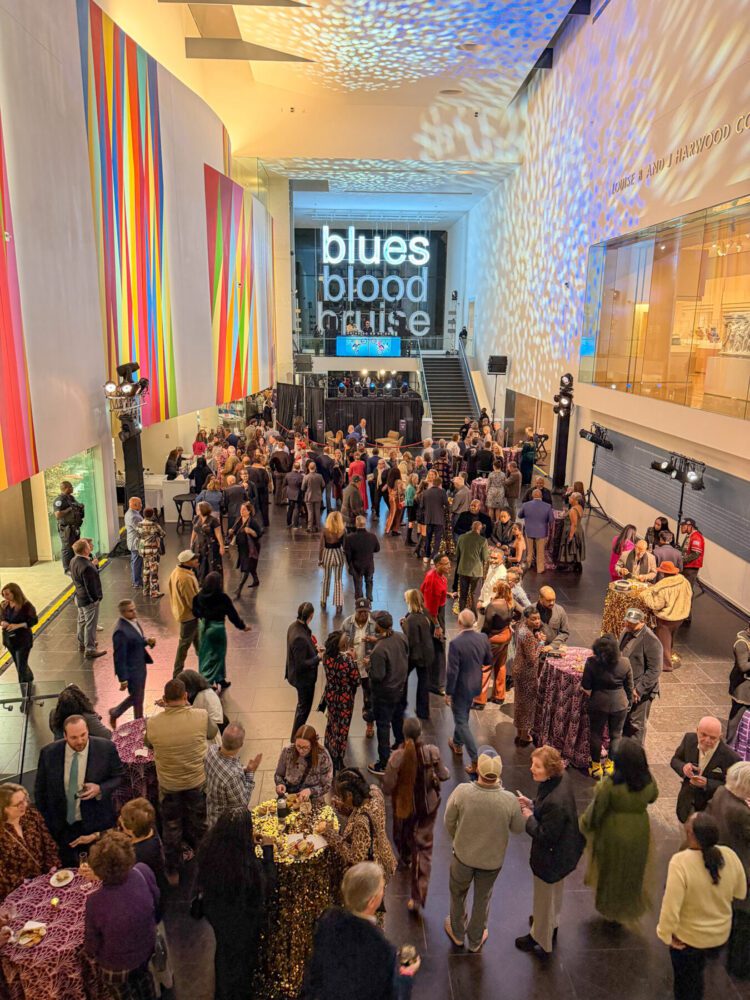
Are the old-guard arts folks finally seeing the impact of hip hop, street art, and Black culture? Maybe. But knowing Valerie Cassel Oliver (read our interview HERE), VMFA’s curator and one of the city’s sharpest cultural voices, I’m sure she pushed for this show. She knows how important it is for Richmond.
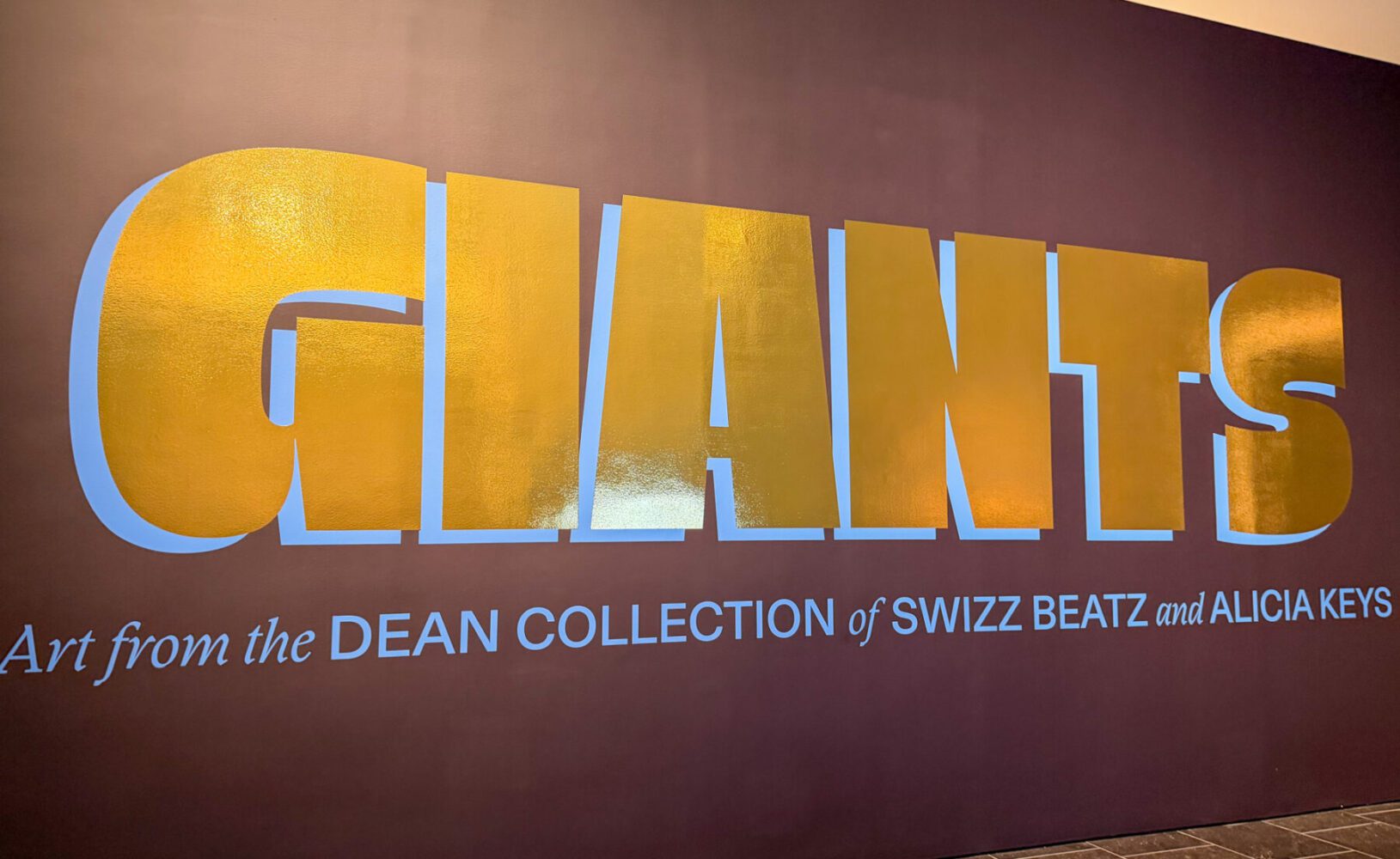
And that intention shows. What struck me immediately is how GIANTS! confidently uplifts Black artists and stories without lecturing anyone. This is the The Dean Collection, curated by Swizz Beatz and Alicia Keys, and it reflects who they are: successful Black creatives who see art as a way to elevate conversations about race, identity, and legacy in this country. It’s earnest, sharp, and rooted in lived experience, the kind of work I want to see more of from a museum considered by many to be the Commonwealth’s premier art institution.

On a personal level, the show hit a familiar nerve. So much of the collection speaks to the world I grew up in, early hip hop on the radio, riding a Mongoose BMX, breakdancing, skateboarding.
So when you walk in and immediately see Kool Herc’s actual DJ setup, the towering speakers, the Technics decks, the mixer sitting there like an altar, it stops you cold. The placard is almost comically understated: Kool Herc Speakers. Mixer. But these are the literal speakers that helped launch hip hop. Herc didn’t just play records; he pioneered the breakbeat, turning turntables into an instrument and making himself, for all intents and purposes, the first true turntablist. A global cultural shift started right there.
Seeing them preserved and treated with that level of seriousness isn’t just dope, it feels overdue.
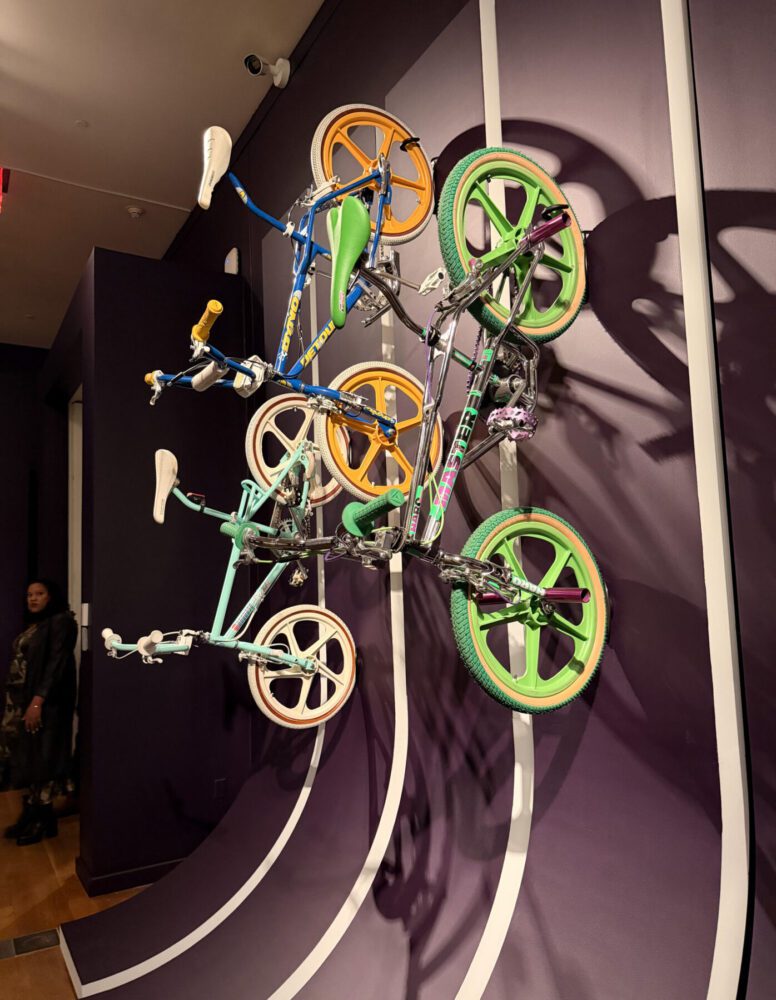
Right across from it is another blast from the same era: three BMX bikes, a Mongoose Decade, a Dyno Detour, a Haro Freestyle Master. The placard explains how Swizz grew up watching riders in the South Bronx, admiring the art before he could afford the bike. Now he collects them, honoring that culture and the people who built it. If you grew up cruising around your neighborhood on one of those, the connection is instant.
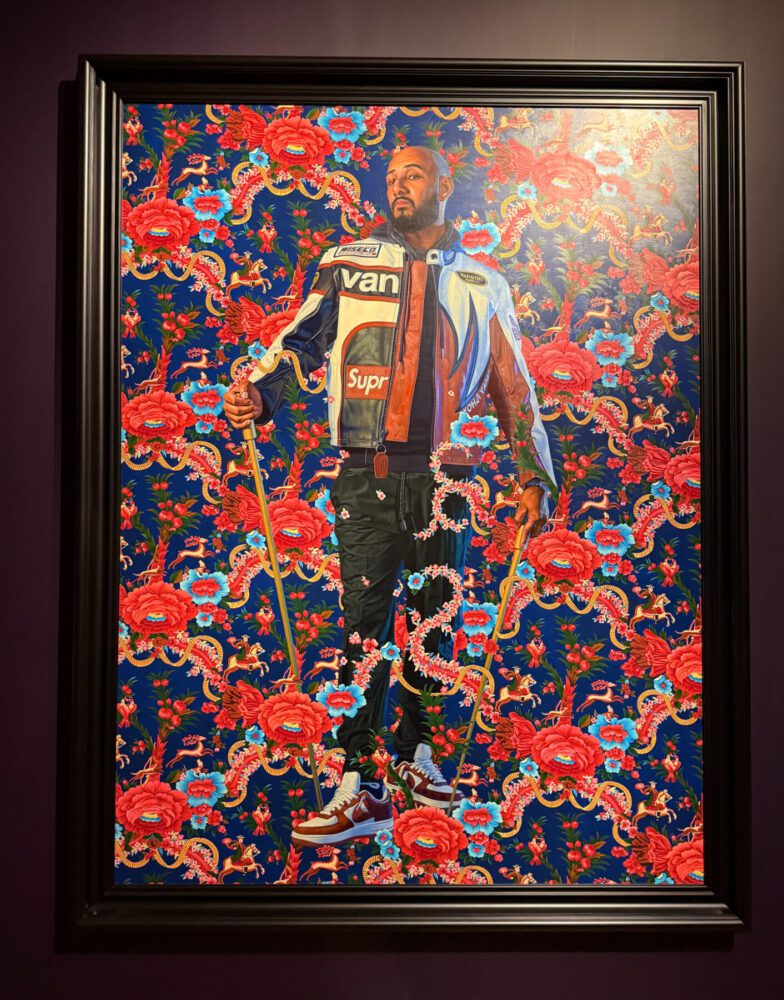
In that same big room is one of the show’s centerpieces, a pair of monumental Kehinde Wiley portraits of Swizz Beatz and Alicia Keys, regal, towering, and perfectly on theme. Wiley’s familiar remix of aristocratic portraiture is all over them, turning European tradition on its head and placing Black cultural giants within the conversation.
That idea, reclaiming and reframing, runs through the entire exhibition. It’s not just a celebration of modern Black culture; it’s a reminder that these contributions aren’t side stories. They’re central to American culture.

That celebration comes with sharp edges too. Ebony G. Patterson’s installation looks like an explosion of childhood color at first with glitter, beads, toys, patterns everywhere but the longer you look, the more you see. Bullet-like holes. Hidden faces. Disrupted innocence. Patterson asks why Black children, who deserve the same uncomplicated joy as anyone else, so often become viewed as threats the moment they’re old enough to be taken seriously.

And the Basquiat felt like it needed to be in a collection like this, almost like the show wouldn’t be complete without him. He’s the artist most closely tied to the early street-art scene, coming up through the New York boroughs at the exact moment hip hop, graffiti, and downtown art were colliding into something new.
His Langston Hughes piece hangs quietly compared to the flashier works around it, but it lands hard. It’s messy, raw, almost childlike in places, a tangle of repeated names, shifted faces, corrections layered over corrections. The placard makes the point that Basquiat was calling out mainstream America’s habit of consuming Black culture while ignoring Black people. He’s paying homage to Hughes, but he’s also underlining how someone as monumental as Hughes still wasn’t being discussed outside Black communities the way he deserved.
In the context of GIANTS!, it bridges eras: the Harlem Renaissance to the downtown 80s, from Hughes to hip hop, from poetry to paint to turntables. It’s the connective tissue in the first few rooms, the reminder that today’s cultural “giants” didn’t come out of nowhere. They’re part of a lineage that keeps evolving, reinterpreting, and pushing its way into spaces like this one.


The photography section deepens that lineage. Kwame Brathwaite’s portraits, radiant, elegant images of Black women with natural hair and African-inspired fashion, are the heartbeat of the “Black Is Beautiful” movement. He didn’t just document beauty; he helped define it.


Just around the corner, Gordon Parks brings a different kind of weight. His portraits of Malcolm X, his street scenes, his images of workers and activists, they’re not nostalgic artifacts. They’re reminders of the lived realities, politics, and humanity that shaped every generation represented in this show.

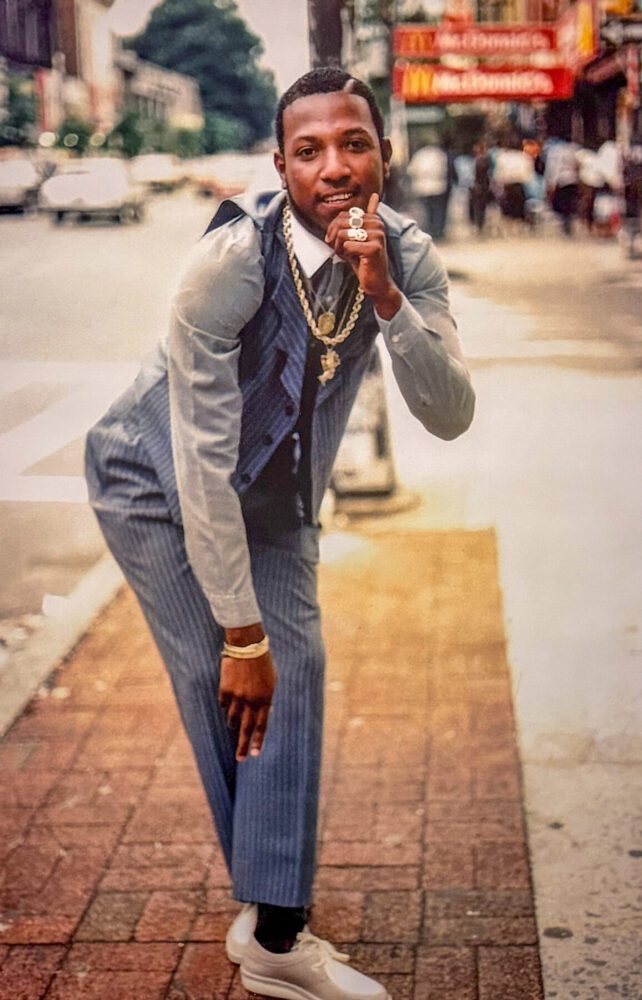

And then you hit Jamel Shabazz which for me, the moment everything clicked. Nobody captured the energy of early hip hop and late-disco New York like Shabazz. The packed subway car. The Italian American crew in matching green jackets. The b-boys turning a subway station into geometry. The kid dripping in jewelry on a Brooklyn sidewalk. His images don’t just document an era; they define its rhythm.
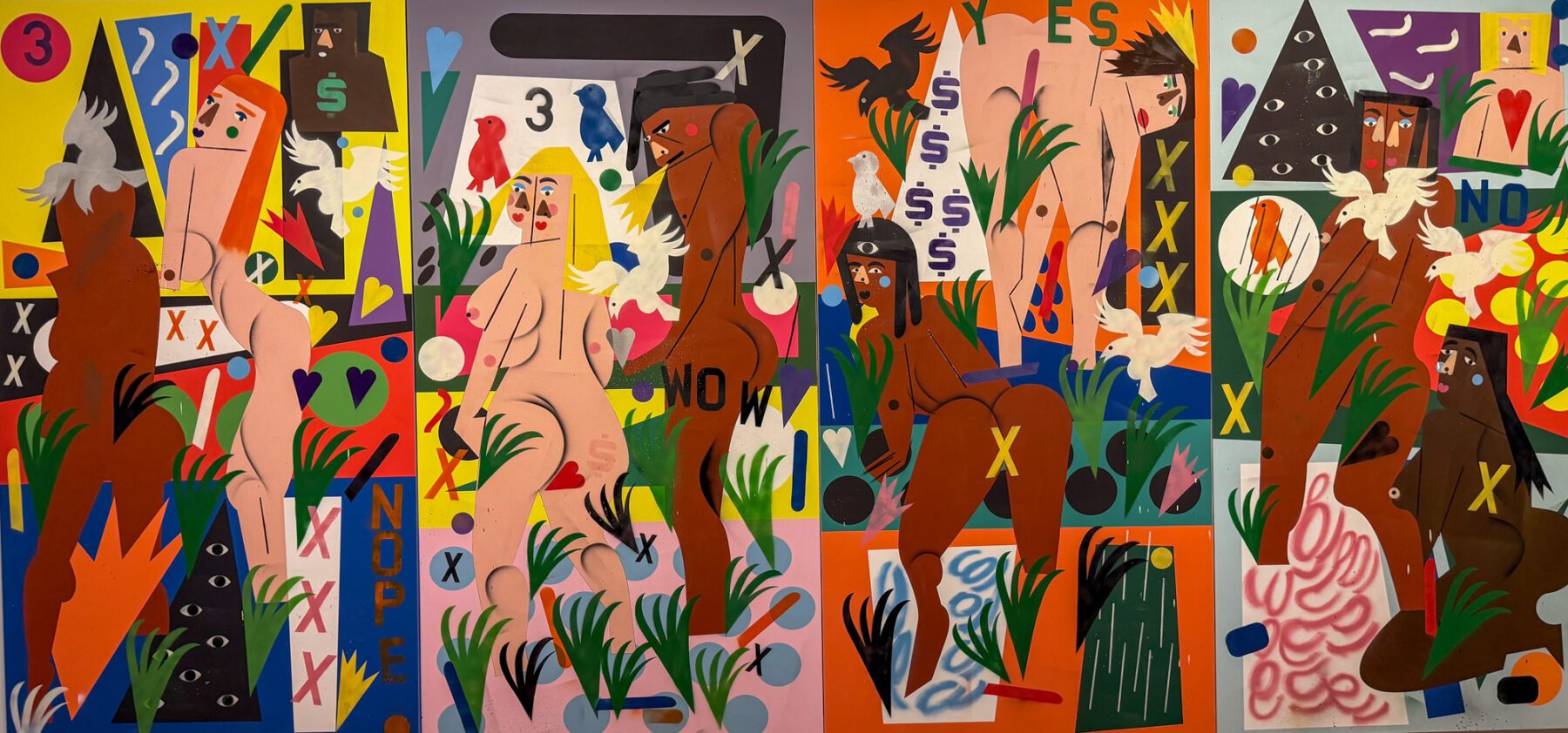
From there, Nina Chanel Abney grabs you by the collar. Catfish is loud, bright, chaotic, and razor-sharp. The flattened, cartoonish figures hide a dense web of symbols, coded numbers, desire, deception, and power. Abney’s whole approach “start the conversation and leave the room” is in full effect.
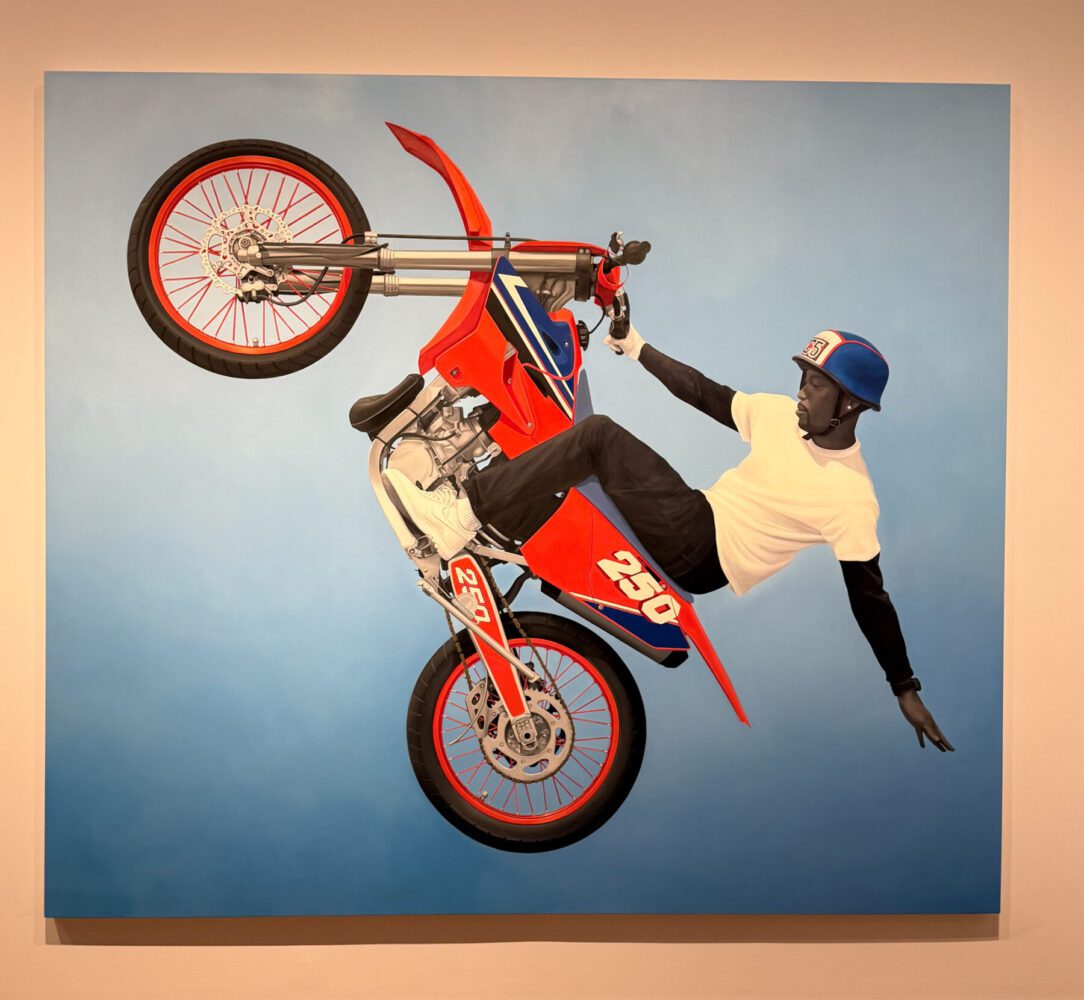

Turn another corner and Amy Sherald’s Deliverance paintings appear like modern icons: riders doing wheelies on bright dirt bikes, suspended in perfect balance. Sherald gives everyday Black life the quiet monumentality usually reserved for European royals, and it works. And for Richmond, it hits close to home. Our ride-out culture, Broad Street Bullies included, has been shaping the city’s visual language for years now. Seeing it elevated here feels right.

And then there’s the Hassan Hajjaj piece, possibly my favorite in the show. Henna Crew drops you into a Moroccan alleyway with a rider and a crew of veiled women radiating a level of confidence you can feel in your chest. And the frame, built entirely out of North African oil cans, is brilliant. It roots the image in place, pushes back against Western flattening of Moroccan culture, and turns the whole piece into a blend of fashion editorial and street documentary.
That’s what makes GIANTS! powerful. It’s not nostalgia for nostalgia’s sake. It’s memory as lineage. Influence as inheritance. A reminder that this culture, these creators, these histories, aren’t fringe. They’re foundational.
And walking through the show, it felt, just for a moment, like Richmond’s art elite might finally be ready to admit it.
Find out more: https://tr.ee/AxDMo2
Main photo by R. Anthony Harris of Kwame Brathwaite work
Support RVA Magazine. Support Independent Media in Richmond.
At a time when media ownership is increasingly concentrated among corporations and the wealthy, RVA Magazine has remained one of Richmond’s few independent voices. Since 2005, the magazine has provided grassroots coverage of the city’s artists, musicians, and communities, documenting the culture that defines Richmond beyond the headlines.
But we can’t do this without you. A small donation, even as little as $2, one-time or recurring, helps us continue to produce honest, local coverage free from outside interference. Every dollar makes a difference. Your support keeps us going and keeps RVA’s creative spirit alive. Thank you for standing with independent media. DONATE HERE.
We’ve got merch HERE
Subscribe to the Substack HERE
And Reddit HERE
And YouTube HERE