
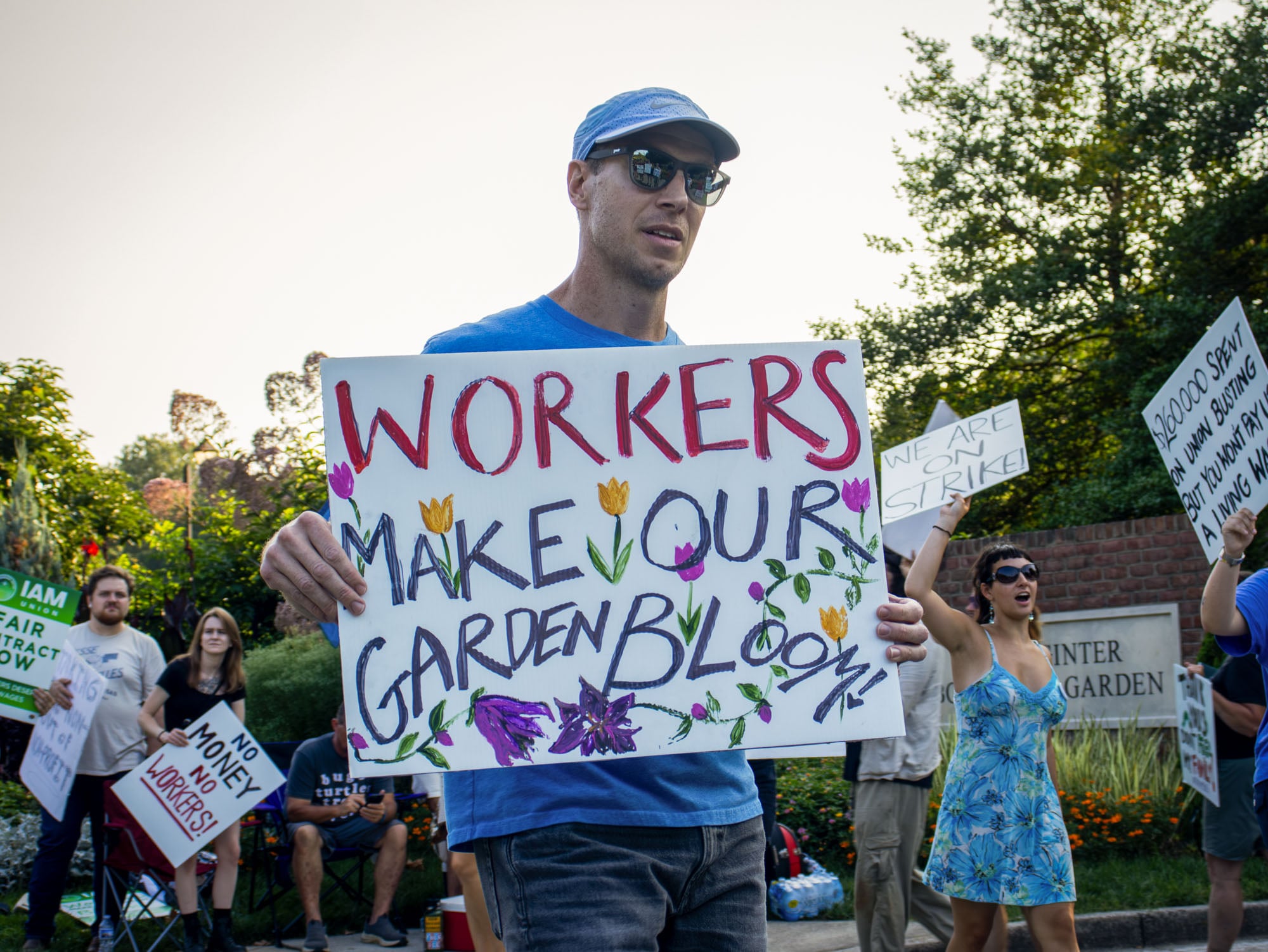
An on-the-ground account of the strike that prompted Jesse Welles and Graham Nash to cancel their Richmond performances.
Tensions escalated as Jesse Welles called off his performance at Lewis Ginter Botanical Garden yesterday amid an ongoing union fight for higher wages.
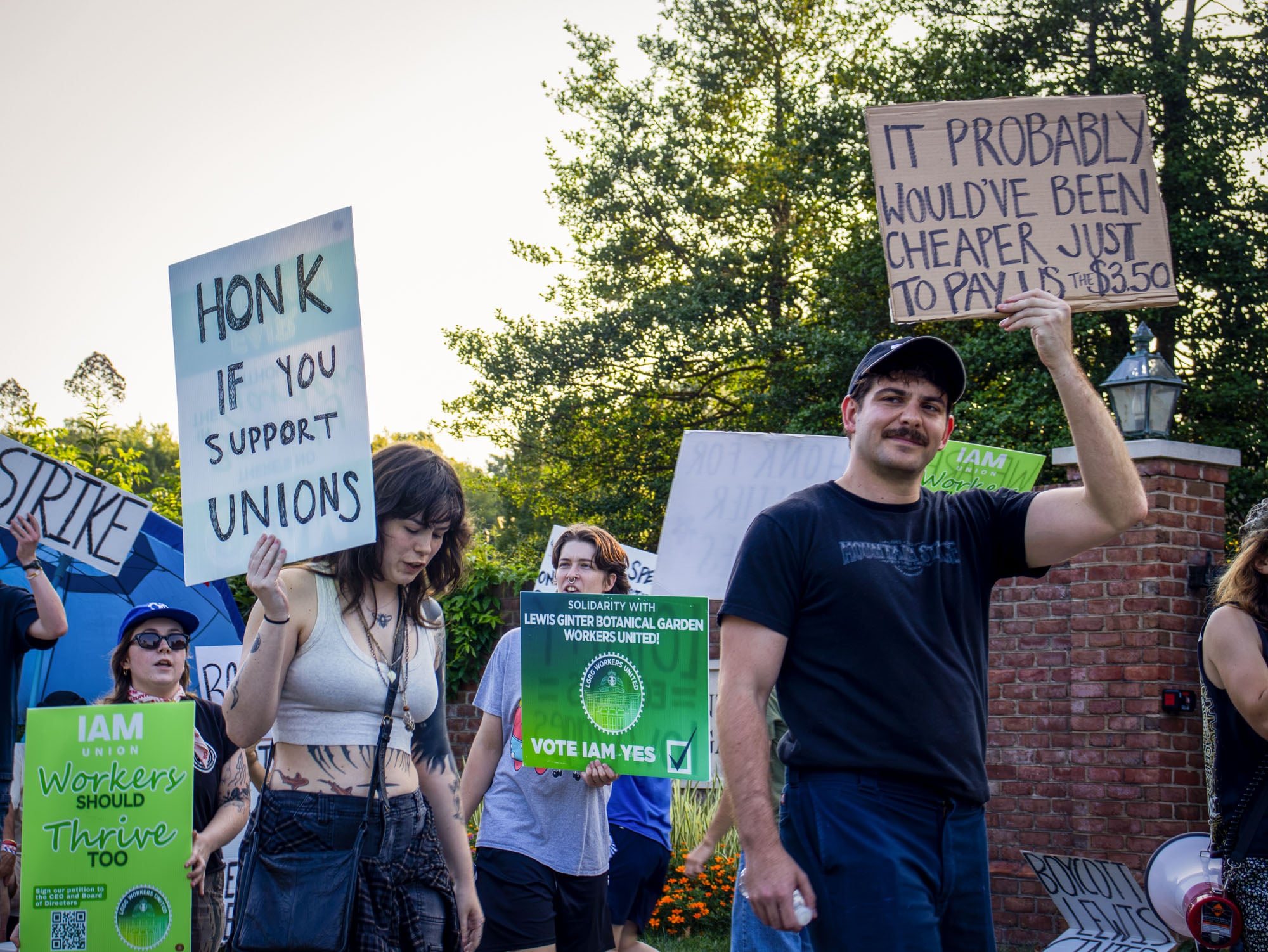
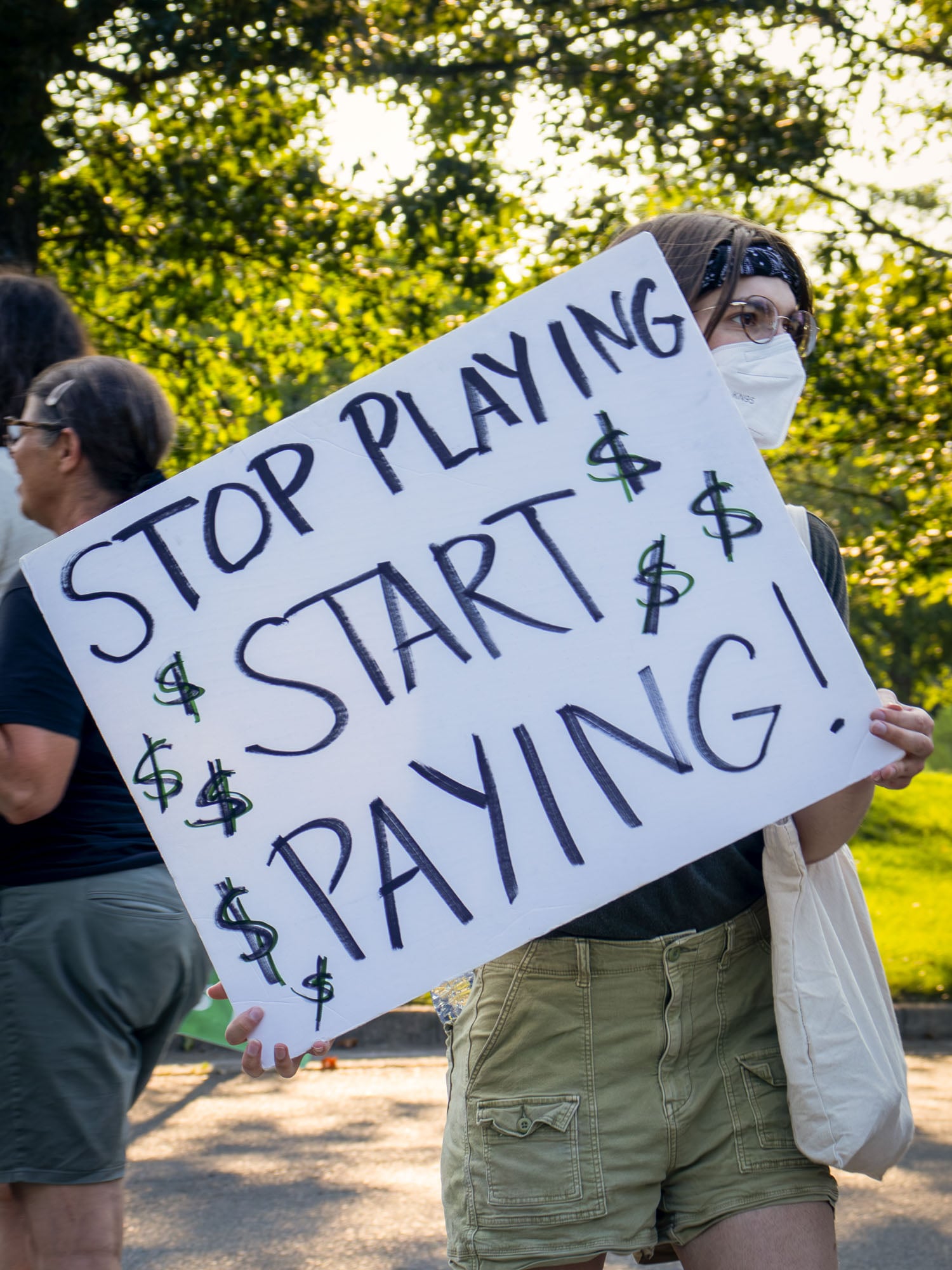
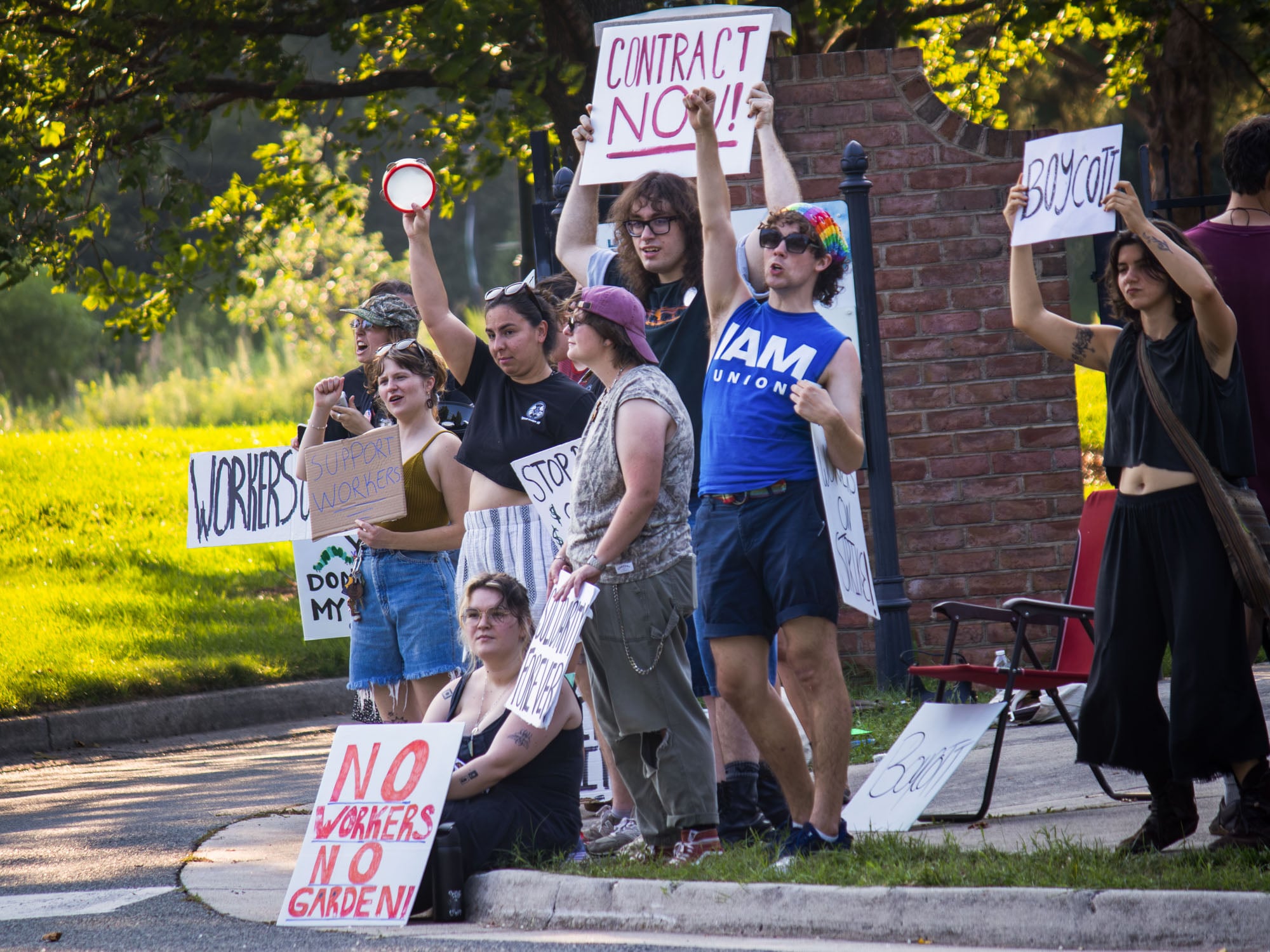
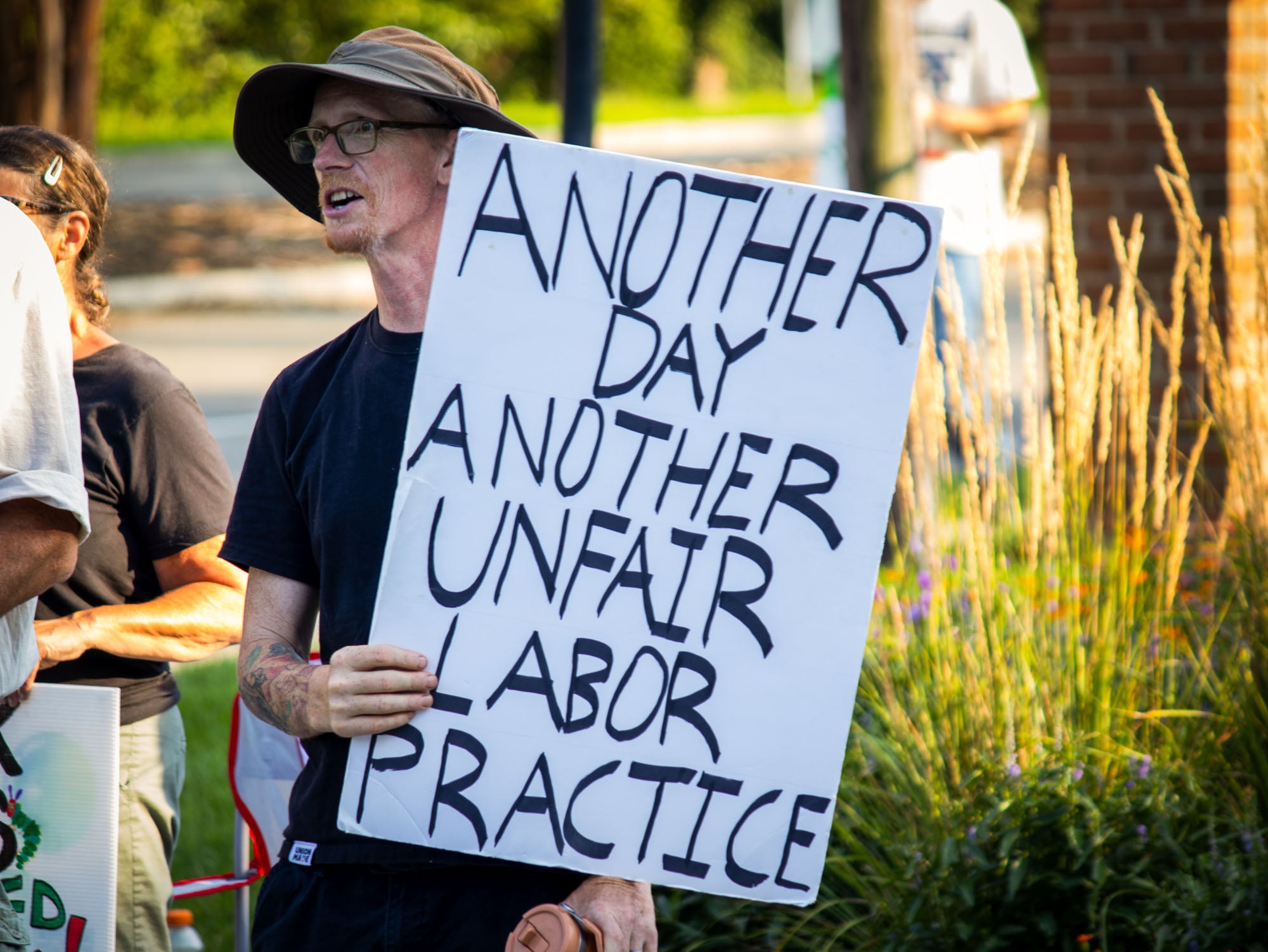
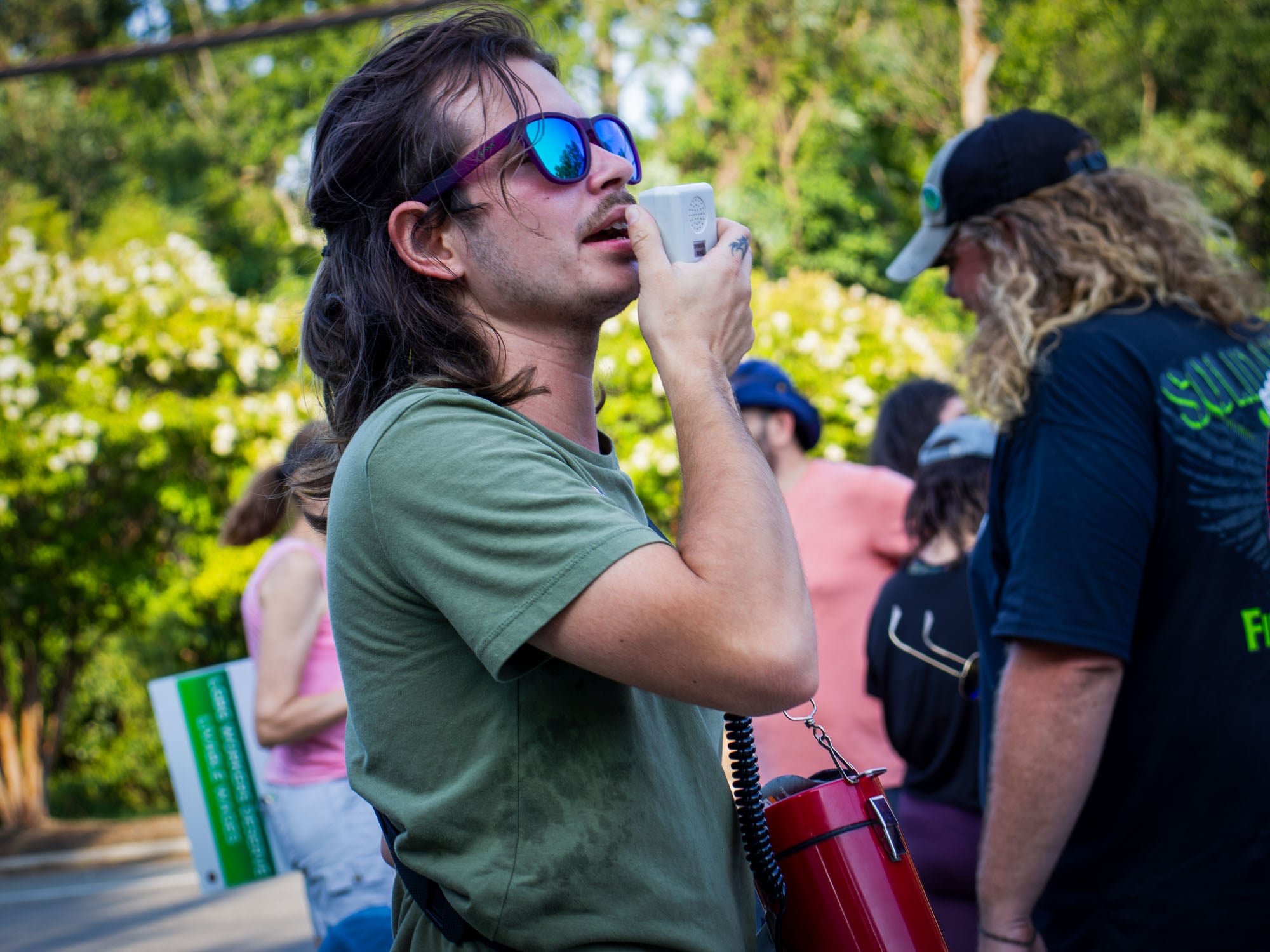
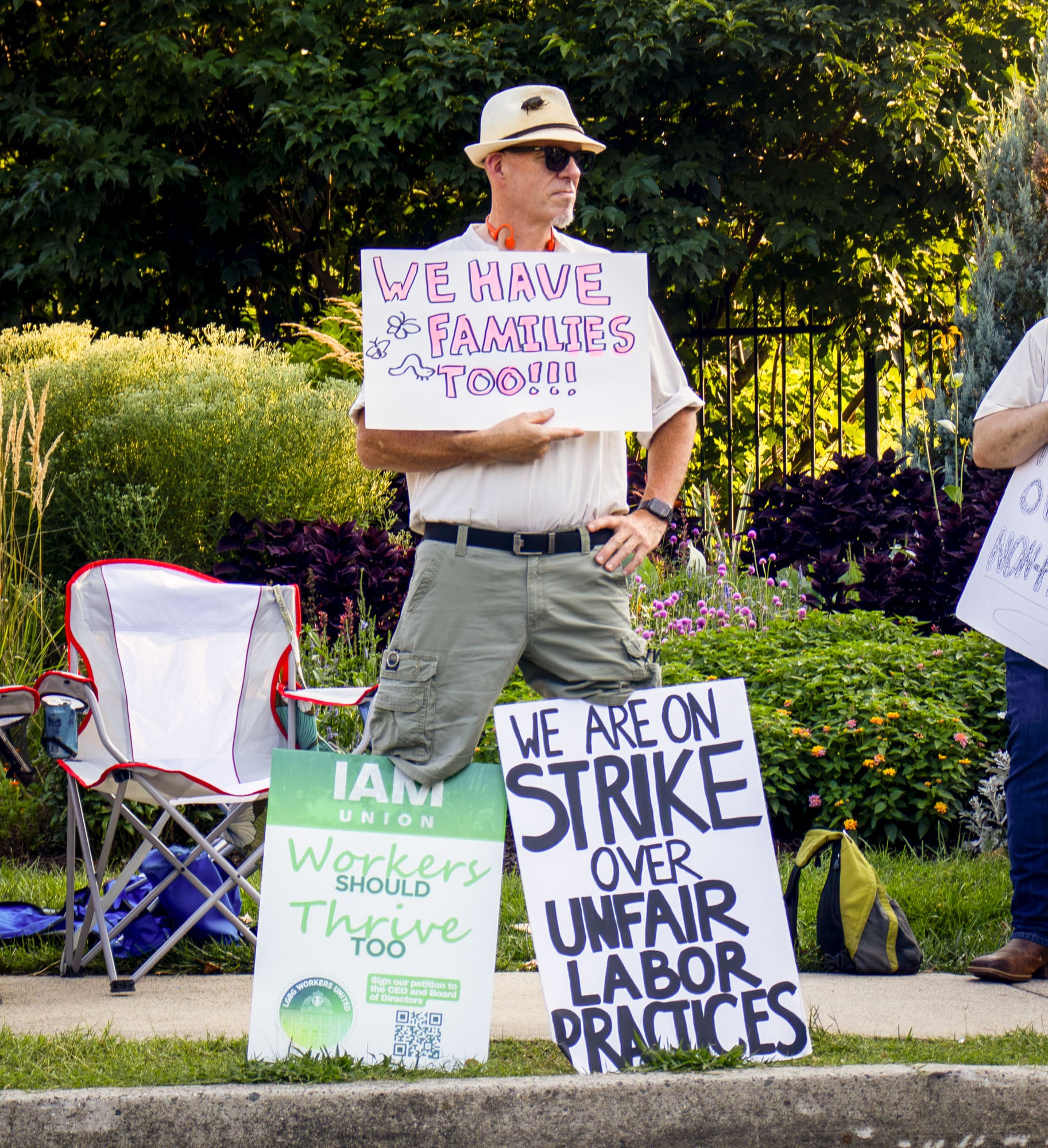
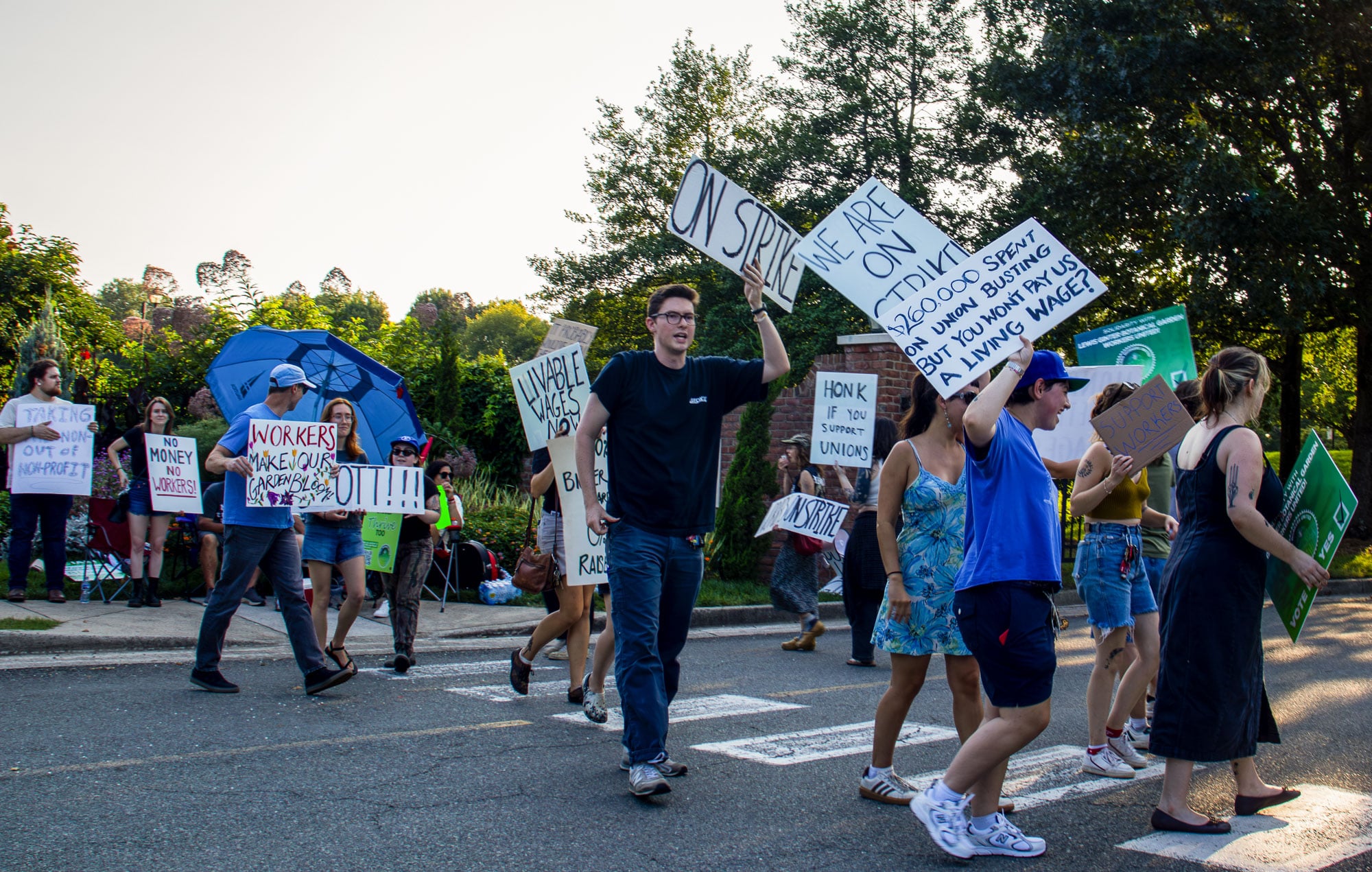
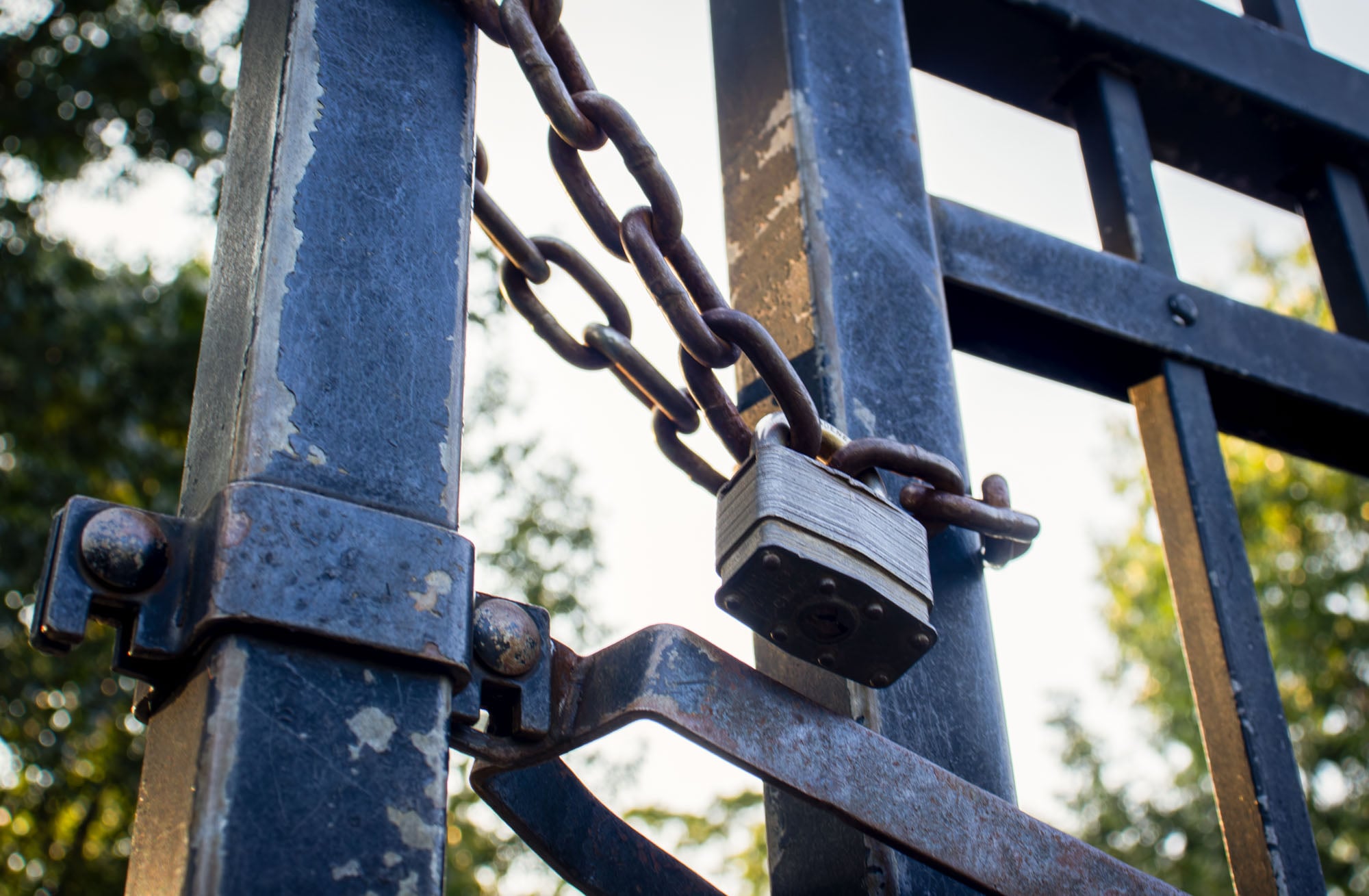
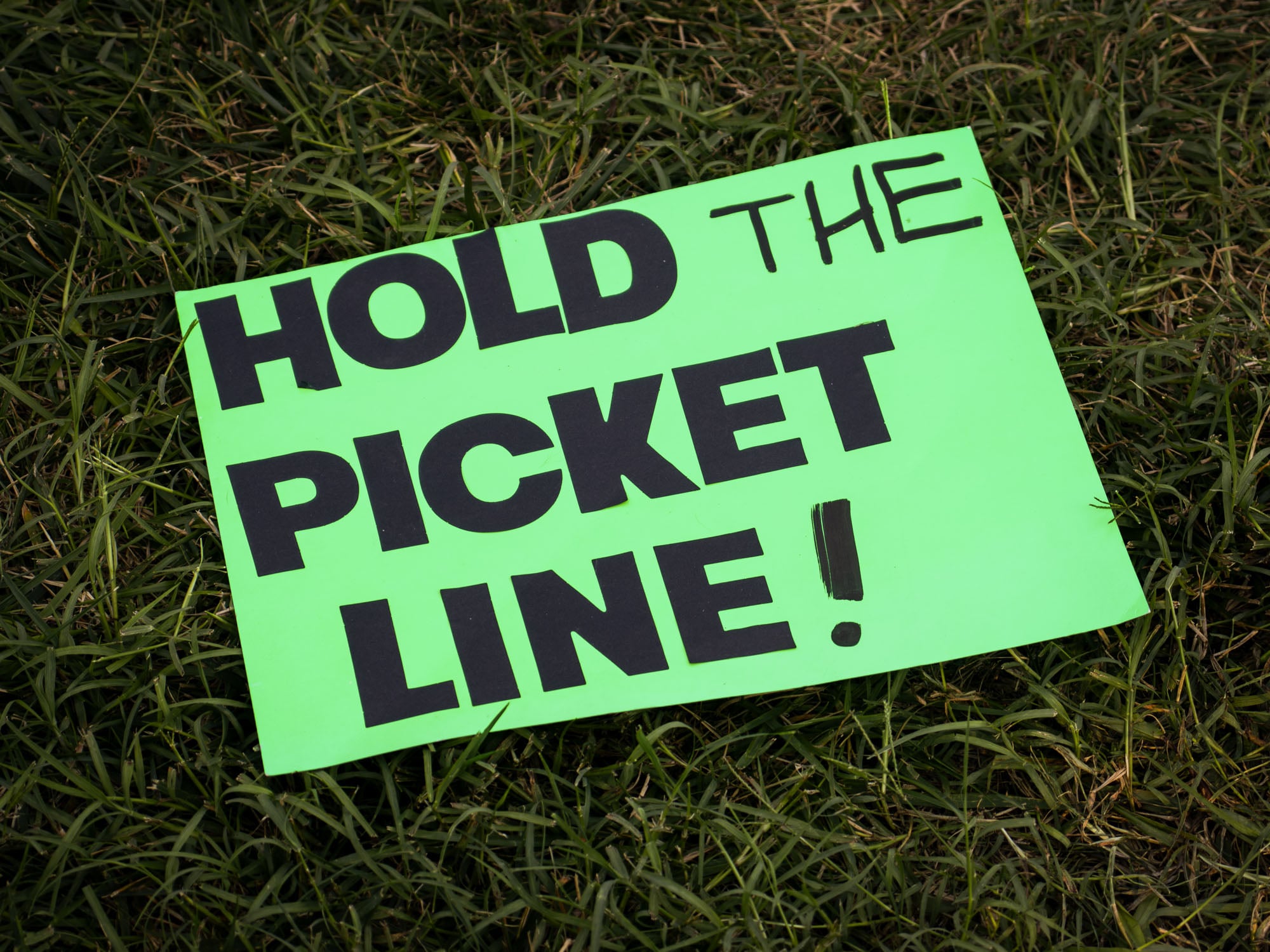
When I arrived, a healthy crowd had gathered outside the large iron gates. I was quickly offered signs and water by striking workers, community members showing their support, and Welles fans who had stayed to stand with them.
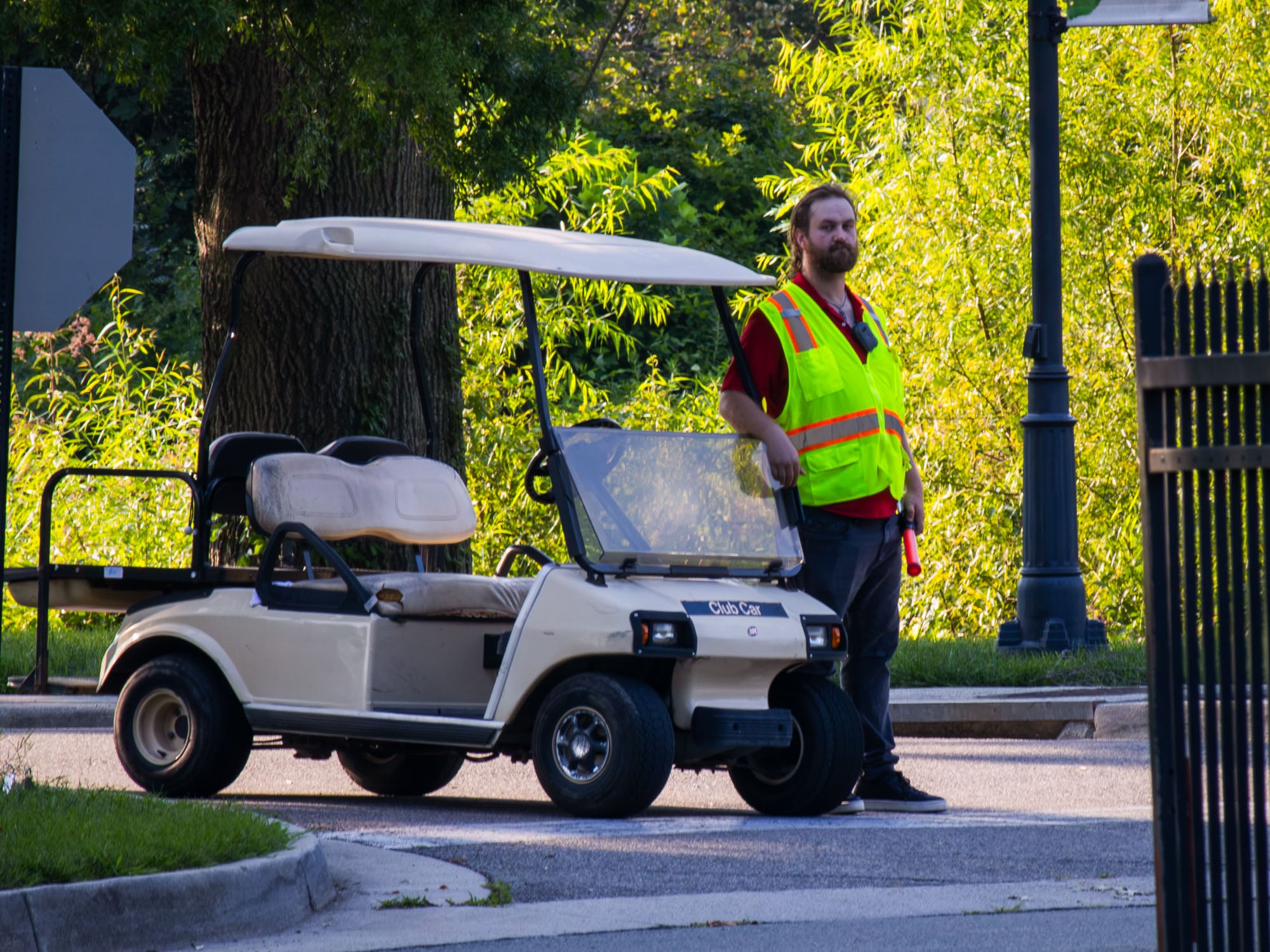
I tried to approach a member of the Lewis Ginter staff who was still working and introduced myself as a journalist, but I was immediately told to leave the property.
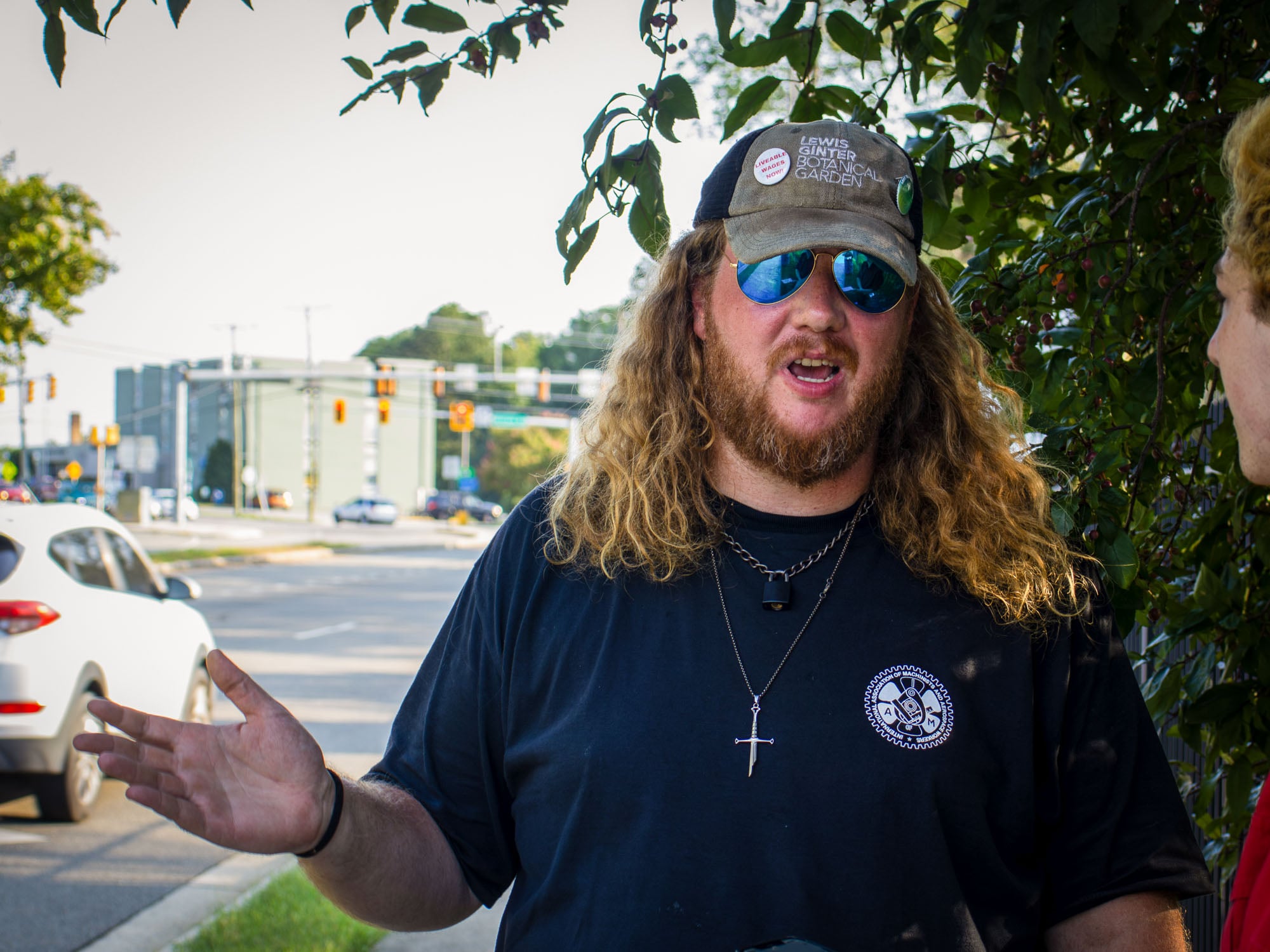
I did, however, have a chance to speak with Lucas Jacoby, a maintenance coordinator at Lewis Ginter and a negotiating committee member for LGBG Workers United. Jacoby has worked at the garden for more than three years and has been visiting the Henrico landmark since he was 8 years old.
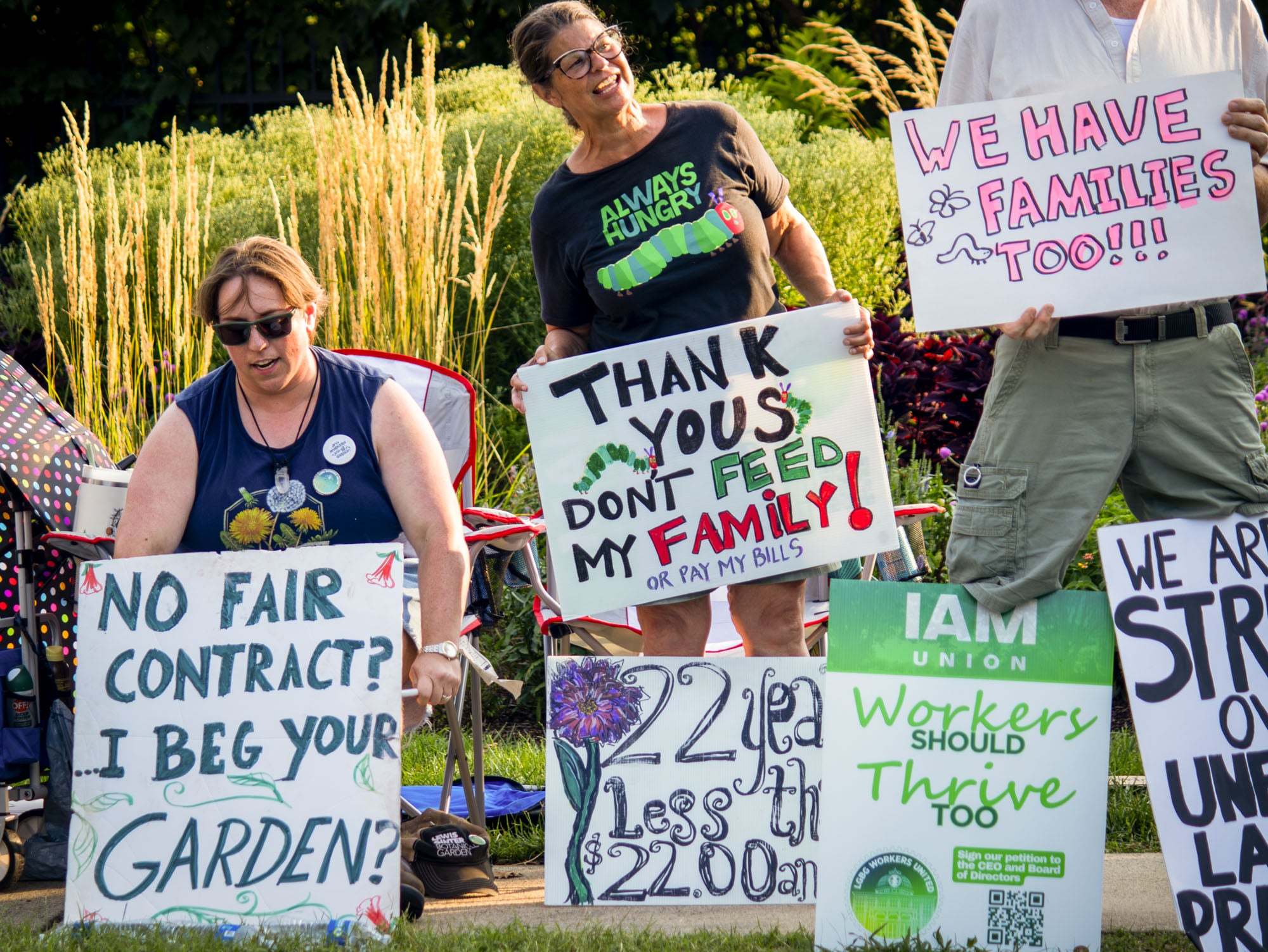
The main point of contention between the workers and management is wages. Right now, the average union member at Lewis Ginter makes roughly $17 an hour. That is well below the living wage for the Richmond area, which is generally estimated at about $23 to $24 an hour for a single adult.
“I do the plumbing, HVAC, and welding… if you look at other people that have my job title, I am underpaid for what I do for the garden,” Jacoby explained.
That attitude seems to be shared by much of the staff. Of roughly 120 employees, about half are members of LGBG, the union formed in late 2024.
According to union members, this was not the first attempt by workers to bargain for better wages. They say employees first circulated a petition that was met with threats of legal action, were told they could no longer meet as a group, and soon afterward one member was fired.
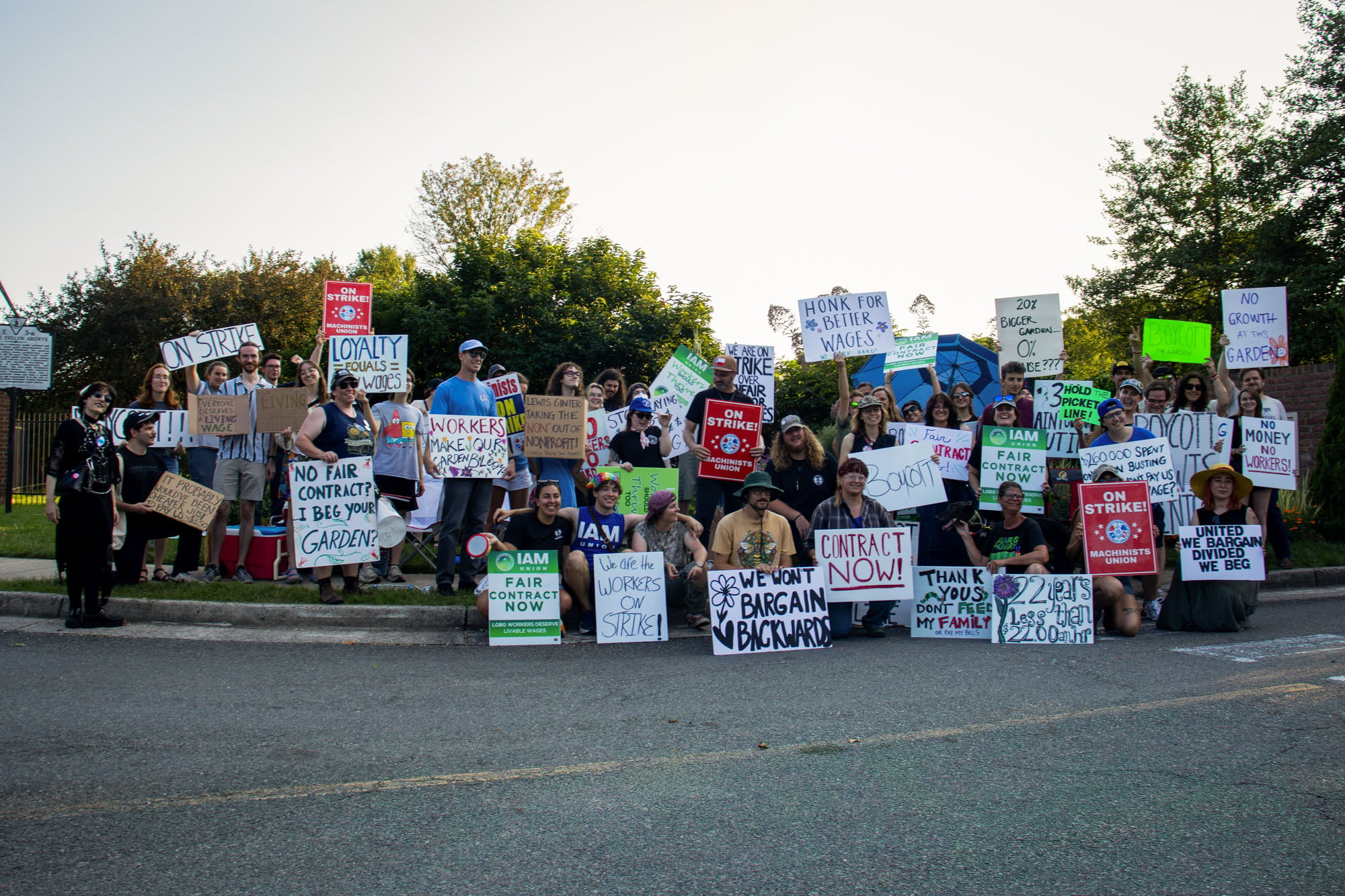
Since then, the LGBG union has met with management multiple times, with wages remaining the central point of debate.
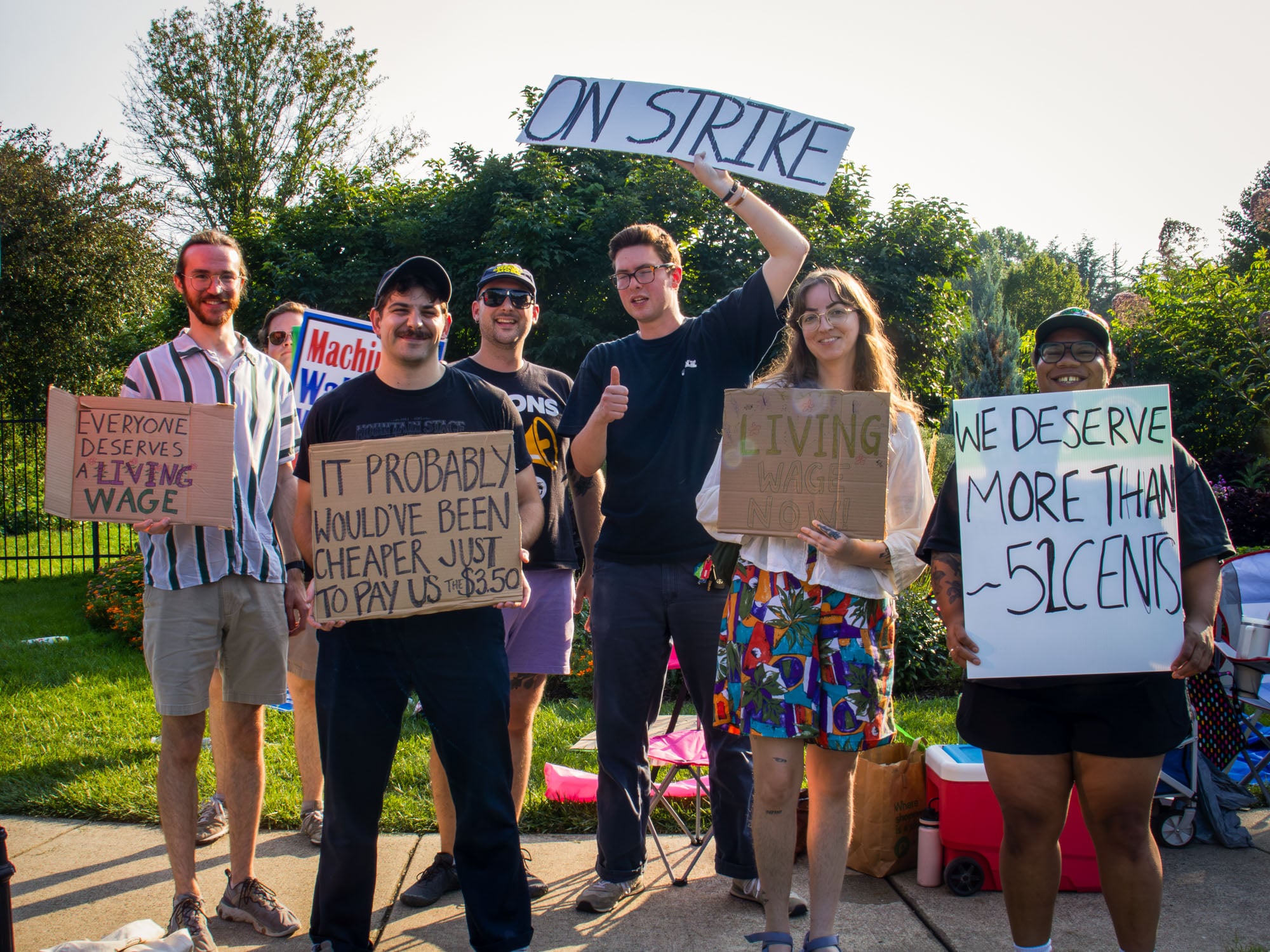
“We started with a $3.50 increase and have since lowered it to $2,” horticulturist and negotiating committee member Eryn Boyle told me.
According to Boyle, Lewis Ginter management initially countered with a 50-cent increase, followed by 75 cents, and has since proposed a 3% raise, which averages about 52 cents an hour for many union members.
The dispute escalated further when Jesse Welles canceled his performance in solidarity with the striking workers.
Welles, who first gained widespread attention with songs like “War Isn’t Murder” and “United Health,” shared the following message on social media:
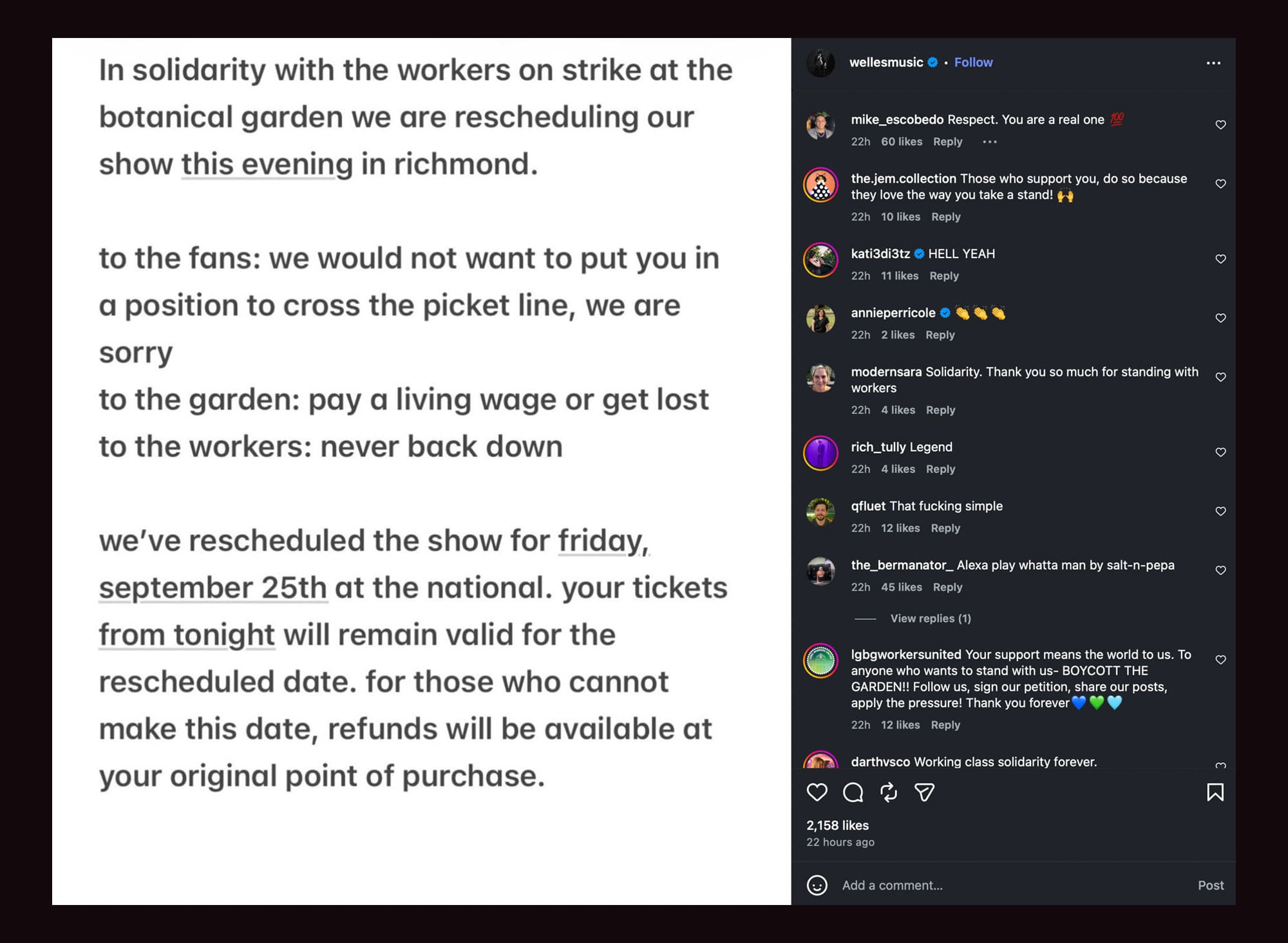
Shortly after Welles’ announcement, Graham Nash of Crosby, Stills & Nash also canceled his show, which had been scheduled for July 31.
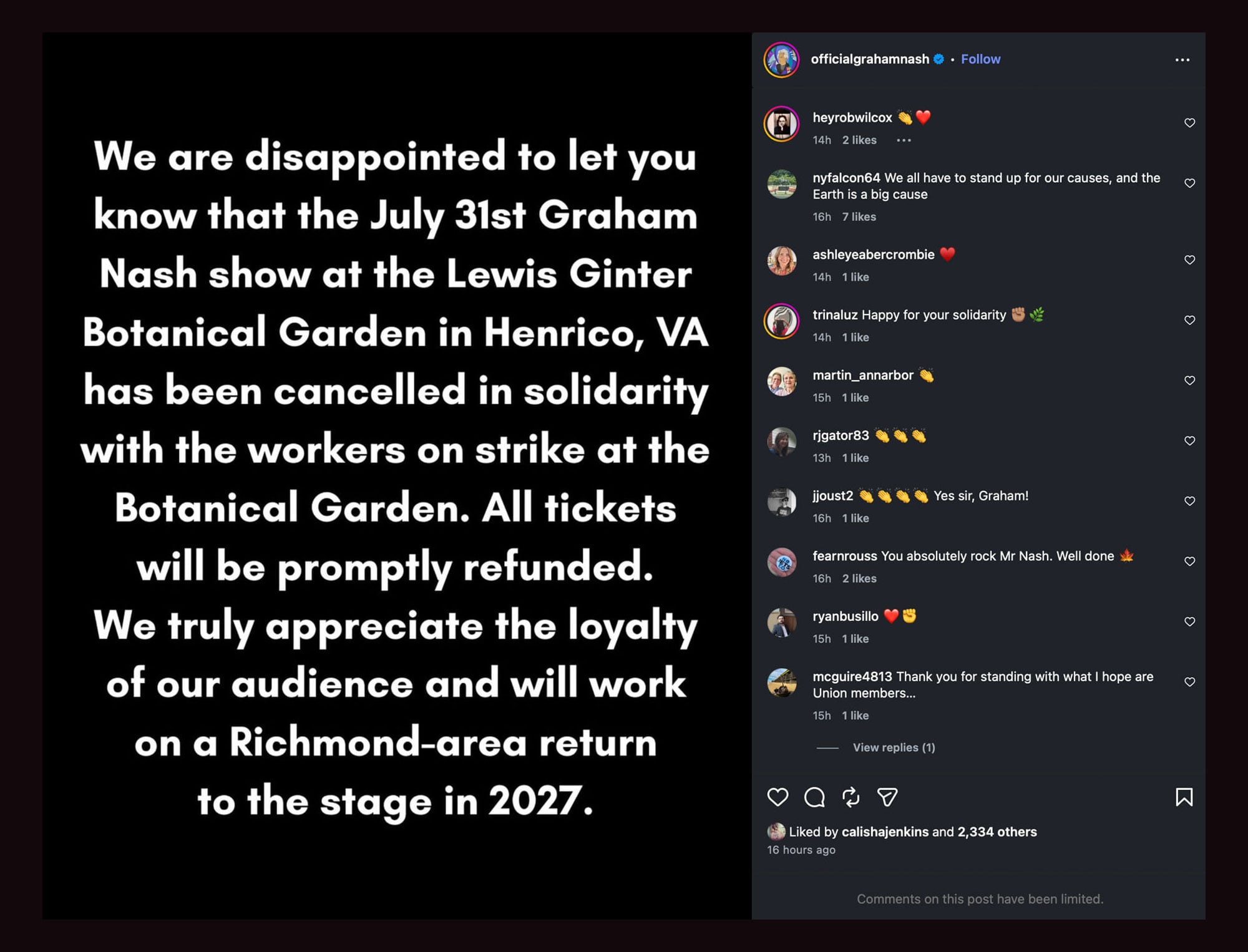
Welles has rescheduled his performance for Sept. 25 at The National and will honor or refund tickets purchased for the original show.
A small group of die-hard fans who had come for the concert stayed to show their support for the striking workers. One fan, proudly wearing Welles merchandise, shared his thoughts on the situation.
“It’s not about us being here. We are grateful to be invited. This is an awesome cause, and we really want there to be some change.”
Welles is known for his working-class lyrics and outspoken support for working people, and it seemed those values were shared by many of his fans.
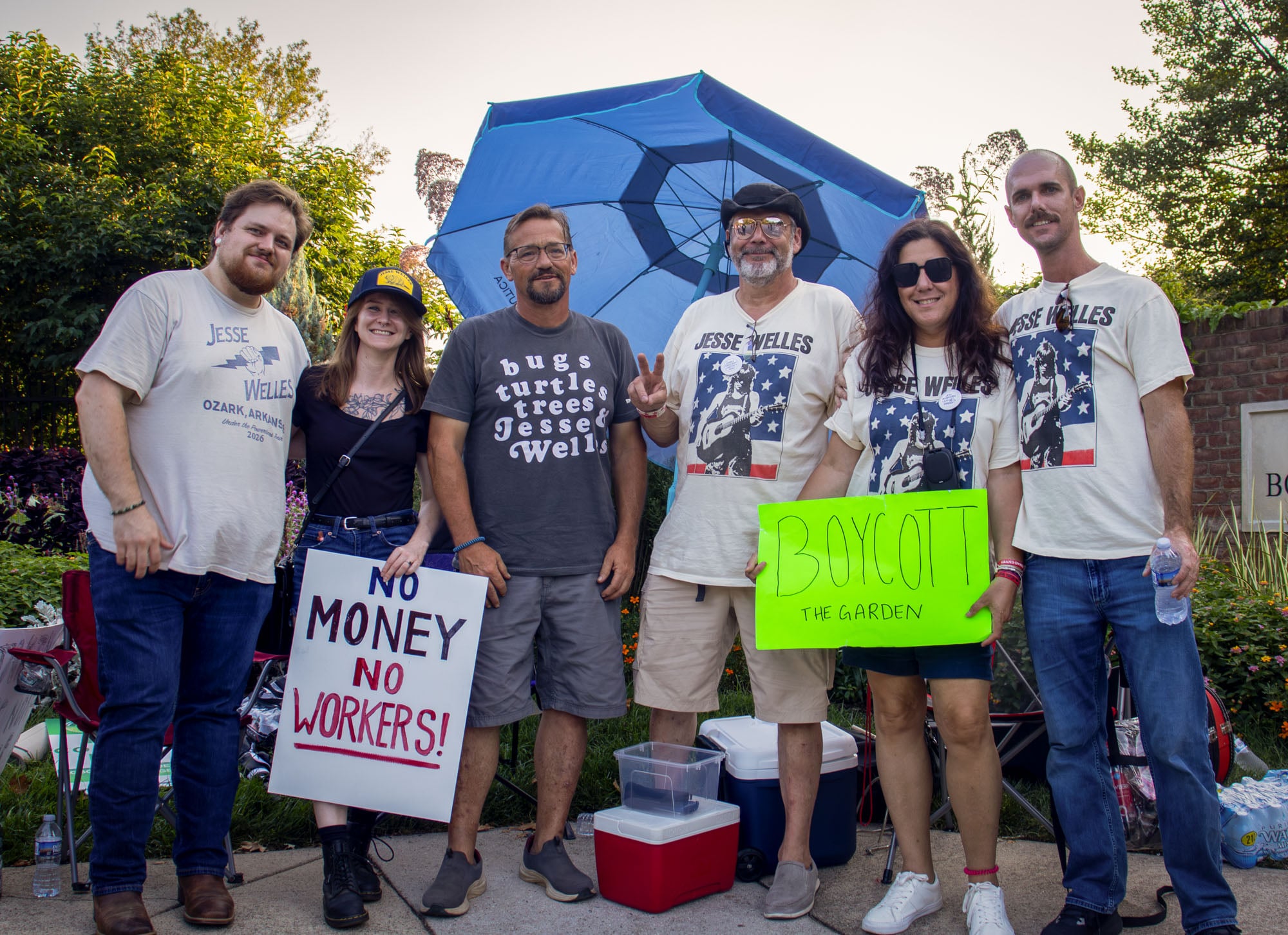
During my time at the picket line, a number of fans drove up, realized what was happening, expressed their support, and drove off honking their horns in solidarity.
“This is how things change,” another fan said. “Getting out there and understanding there is an inequality problem, even on a scale like this. It’s getting out on the corners demanding change.”
The union will continue talks with management, but it seems the pressure is mounting.
With the cost of living continuing to rise, rents showing little sign of slowing, and many workers feeling their wages have failed to keep pace, it’s easy to understand why so many people are frustrated. More and more people are finding themselves priced out of the city they call home.
It’s hard not to feel overwhelmed by the world around you, especially as a young person. But at that picket line, I saw people advocating for themselves and, more importantly, for their neighbors, their partners, their friends, and complete strangers. For a moment, that made me breathe just a little bit easier.
Photos by Elizabeth van Hilst

Support RVA Magazine. Support Independent Media in Richmond.
At a time when media ownership is increasingly concentrated among corporations and the wealthy, RVA Magazine has remained one of Richmond’s few independent voices. Since 2005, the magazine has provided grassroots coverage of the city’s artists, musicians, and communities, documenting the culture that defines Richmond beyond the headlines.
But we can’t do this without you. A small donation, even as little as $2, one-time or recurring, helps us continue to produce honest, local coverage free from outside interference. Every dollar makes a difference. Your support keeps us going and keeps RVA’s creative spirit alive. Thank you for standing with independent media. SUPPORT HERE.
Subscribe to the RVA Mag Weekly Newsletter HERE
We’ve got merch HERE
Subscribe to the Substack HERE
And Reddit HERE
And YouTube HERE

