Can a toy change the trajectory of a child’s life? Barbie, the good, the glamour, the ugly, and how she has shaped society.
As a grown-ass feminist, I did not think I would need to contemplate dolls. But then…there is Barbie. You can’t escape her. Everyone knows Barbie has had over 250 jobs and lets girls know they can grow up to be anything they want to be, but also, she is problematic simply because of the way she looks.
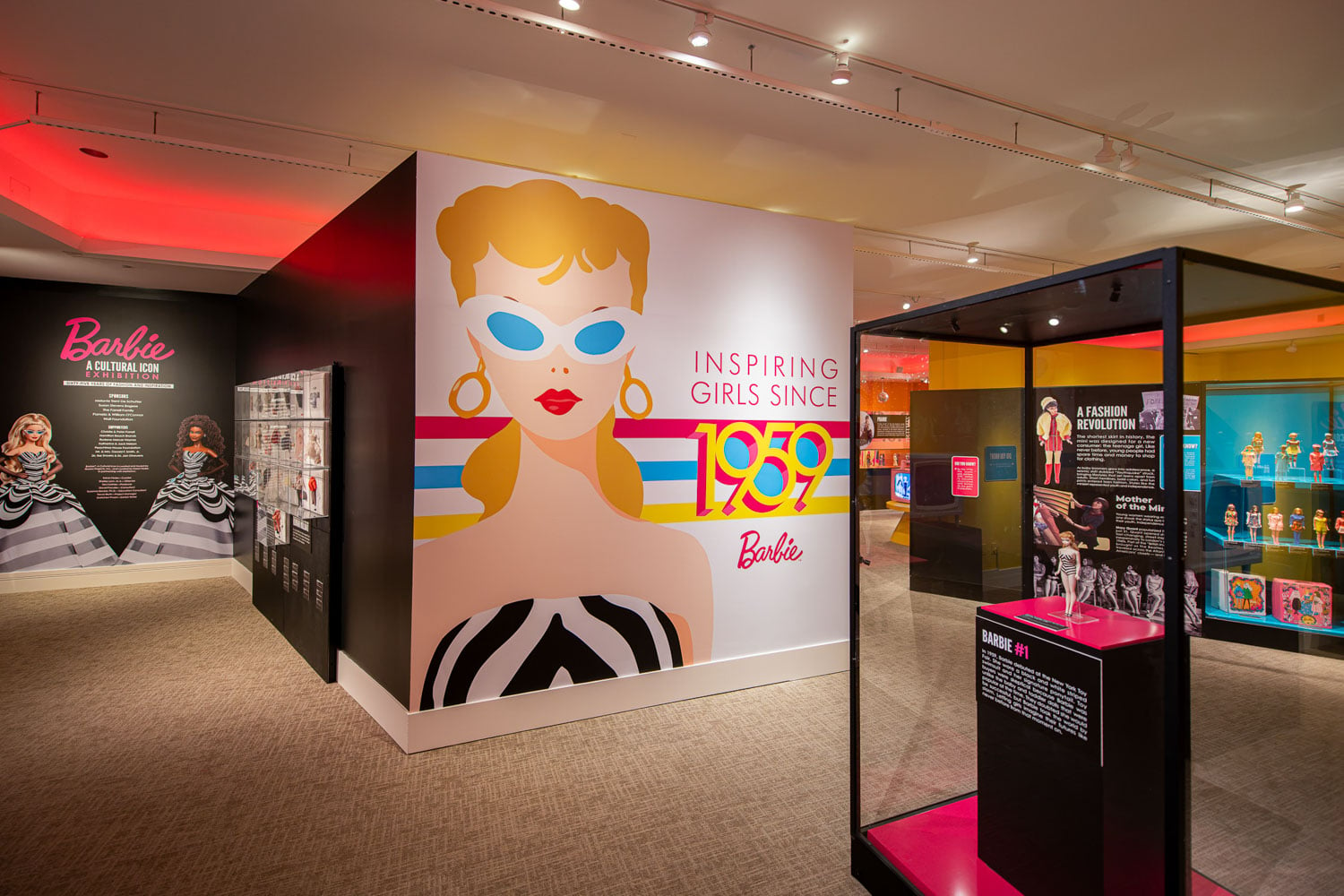
Barbie™: A Cultural Icon explores more than six decades of the doll’s fashion and history and opened this past weekend at the Virginia Museum of History & Culture (VMHC).
The exhibit itself was very moving. As someone following the fashion trends and how fashion reflects where women were in society, Barbie really shows us how women persevered, accepted, or challenged what was considered a woman’s role in society. She could be in space one day, and she was also making you a plate the next.
I talked to some friends, a friend’s kid, a friend’s mom, my old work wife, and the curator of the exhibit about Queen B. Let’s dig into some thoughts and feelings about the plastic icon.
Everybody Has a Barbie Story
Almost everyone is familiar with the Barbie name in some way. But how we got introduced to the Barbie World, how we experience it, and how it may or may not have affected us varies greatly.
Some people did not really have a choice. They were just thrown into the Barbie World. Take Marshé Wyche (42, co-owner of Rumors Boutique).
“So my mother is obsessed with Barbie. And when I say obsessed, I mean, like, maybe she should see a doctor. But I will say her obsession is nothing compared to one of her friends, one of my mom’s best friends. She was this big IBM and NASA computer scientist. And she had this beautiful house. It was as big as a fucking castle. It was so gorgeous. And every room was dedicated to Barbie. I think she had one daughter who had a regular pink Barbie room. But the whole house had gigantic glass cases like a museum for Barbie. It was so intense.
“All of the Black-themed Barbies would come out, and all of these women who were like Deltas who went to Hampton University or Norfolk State, they’re like the second generation of Black women going to college, they loved that they had these Barbies named after these great women. So it was exciting when certain ones would come out, but especially the Flo Jo one, because she had those cool tights. Then it’d be like this scientist one, and then it would be like that Black ice skater who would do the backflips, who always got banned.
“But my mom was obsessed, right? And so every single birthday party, she would make it Barbie-themed, and everyone would have to bring me a Barbie. We would go to Toys ‘R’ Us, and my mom would make a list of every Barbie that she wanted. And then we’d have this party to get all these stupid fucking Barbies.
“Because I was not into it. I never was into it. I was not into Barbie. My mom lied. She lied to everybody. I was very young and into weird punk rock and roll kind of stuff. I was not playing with motherfucking dolls. I always would just keep them in the box. I sold all the dolls to get money before I moved to Richmond, and they were all still in their boxes. I remember my mom was just so heartbroken.”
Unlike Wyche, Charlie liked dolls but just could never get into Barbie. Charlie, who is 80, came around before Barbie was born and has lived through Barbie’s entire lifespan and wasn’t even remotely impressed by the doll.
“I’m not sure when I got my first Barbie. I was not that enamored, you know, like kids today. Like with Beanie Babies or Cabbage Patch. There’s this hysteria. That wasn’t a thing back then. Maybe because we had limited TV. I was like 13 when Barbie came out. So I probably didn’t even have a Barbie. My mother probably bought some for the house just because I had two younger sisters. My mother was one of these weirdos; she couldn’t get anybody anything without getting everybody the same thing. So if she got one for one of my sisters, we probably all got one, but different.
“And my memories of Barbie might be more of me playing with Jesse (her daughter) and her Barbies. So basically, the only thing I can remember was, ‘Oh, my God, look, she’s got all this fashion.’ You know, there’s the Barbie swimsuit. Barbie goes to school. Barbie is a teacher. Barbie’s a nurse. So there were different costumes.
“I did have these other dolls, the Alexander Dolls. They were from England. When you opened up the box, they had this little house and a wardrobe. Now those I appreciated more. They’re just really cute and, you know, there’s like little English girls and there’s Eskimos. There was a Spanish one. They were kind of universal. They kind of just fit into everybody’s desire. They competed with Barbie, and they won.
“Barbie to me, just unimpressed. Unimpressed. I gravitated to things that were more humanoid. You know, they looked like people. Barbie to me, just, you could style her hair, which was ridiculous because it would just stretch and be nasty. Or you could put different costumes on her. But there was nothing warm and fuzzy about her at all. She was just there, you know?
“And I don’t know if it’s because I found Barbie kind of weird because she was so little and skinny. I don’t think Barbies affected me one little bit. I liked reading Archie and Jughead more than I cared about playing with Barbie.”
And then, opposite to Charlie, we have Starlette Archibald, a 21-year-old VCU student to whom Barbie has always been a large part of her lexicon.
“I don’t really ever remember a time in my life where I didn’t have Barbies in my bedroom. I just always knew about Barbies. I feel like I probably got some of them from older family members, stuff like that. And then as I was getting older, that was definitely something that I got for Christmas a lot. I think it was maybe my fifth or sixth birthday party. My birthday cake had a Barbie doll standing in the middle, and then the cake was her dress. I loved Barbies when I was a kid, and I definitely played with them probably a little longer than I would admit.
“The first Barbies that I really remember were the ones from the late ’90s, early 2000s, or the Barbie movies. I remember at my older cousin’s house they had, like, a bunch of the movies on DVD. I loved those growing up.
“One year for Christmas, I had a Dreamhouse, and I got a horse. I played with them all the time. I feel like that’s what I think of as ‘Barbie classic.’ And then when I was probably in elementary school, it was the Barbies from the movies.
“There was a movie called Barbie in a Mermaid Tale. That’s one of my favorite ones. She came with a surfboard, and you could stick her feet into it, and she had flat feet. You pull the string, and then it turns into a mermaid tail. And you put her underwater, and she gets a pink stripe in her hair and this pink tattoo on her stomach. And the one from Island Princess had a dress that sang the song, and the Rapunzel Barbies I liked a lot.
“There’s a show called Barbie: Life in the Dreamhouse. It’s a bunch of different shorts. It’s been on Netflix since Netflix went from DVD to a streaming service. And that show is genuinely so engraved in my memory. That was something all my friends and my little brothers watched all the time. We quote that show.
“And it’s really funny because they’re aware they’re dolls and plastic. And her friend Midge, who was one of the original Barbies, she was one of Barbie’s friends from Wisconsin or whatever. They had her come in the show, and at first she was gray. She was like, ‘I’m not fully articulated,’ because the old Barbies can’t bend their knees and stuff like that.”
Best quote from this video: “If a DJ played the Barbie: Life in the Dreamhouse theme song in the club, I would go absolutely feral on the dance floor.”
The Barbie You Weren’t Supposed to Have
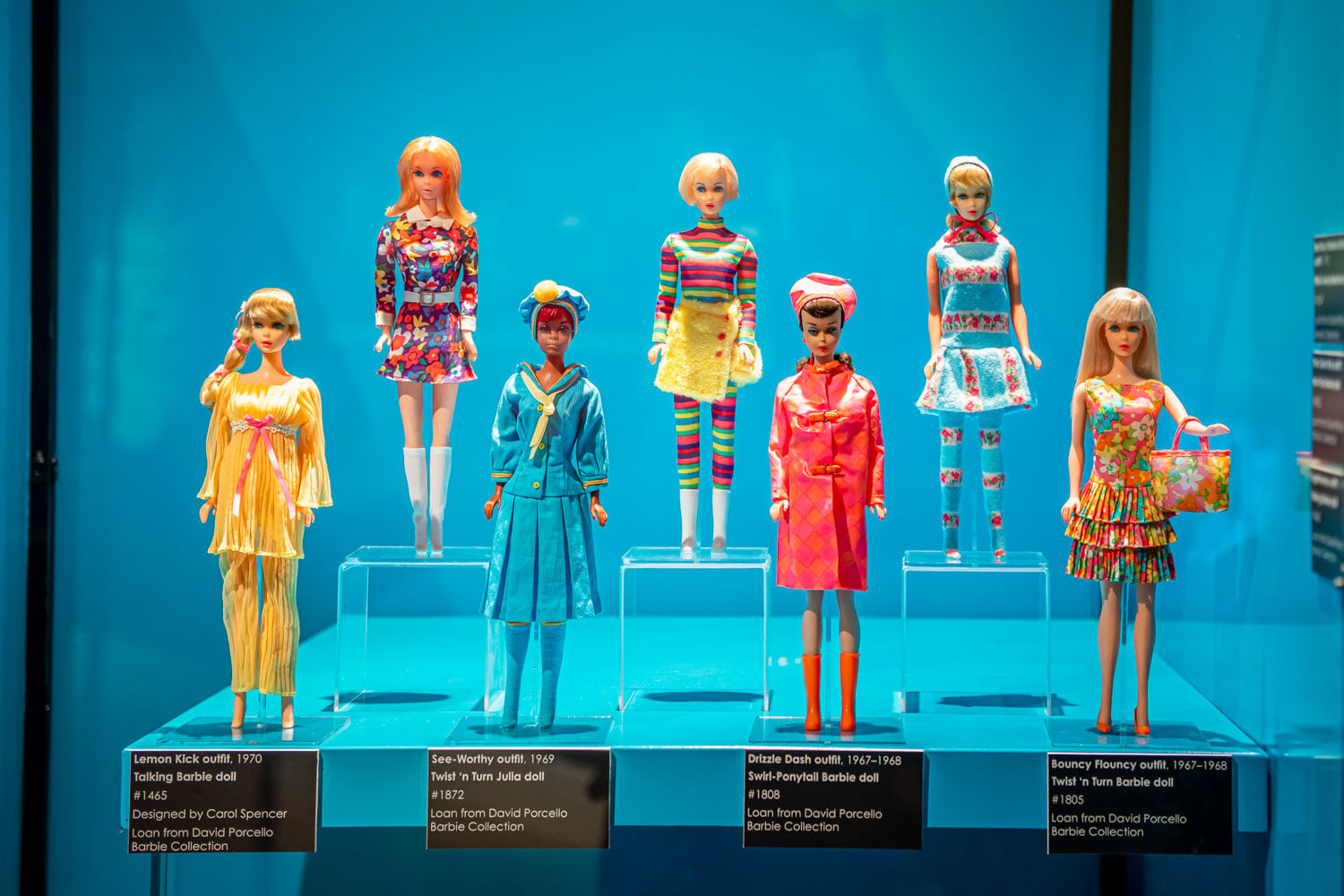
And then there are the people who got into Barbie because it was taboo. Emily Rems (my old work wifey at BUST Magazine) is 51 and is a freelance writer/editor who spent her high school years in Centreville. She grew up in a very feminist household.
“I think that Barbie affected me similarly to other people my age. I was born in 1975. In 1972, there were feminist groups mobilizing outside of toy fairs to protest Barbie because she perpetuated sexual stereotypes. Barbie was invented in 1959. And so then, by 1972, the feminists are feministing, and they saw this thing that was encouraging girls to see themselves as mannequins for outfits or sex objects or housekeepers.
“Barbie started having jobs. She was a nurse and flight attendant and a ballerina in ’61. And then she was an astronaut in 1965, before the moon landing. She was an astronaut. She did have careers, but she was still mainly a fashion doll. So I think that that impacted my mom as a second-wave feminist.
“My cousin had knockoff Barbies that I was allowed to play with at my aunt’s house, but I wasn’t allowed to take them home because my mom had a strict no-Barbie policy. And then, at some point in elementary school, someone gave me one at one of my birthday parties. And then, like, the cat was out of the bag, basically.
“But for a long time, I really only had that one, which was kind of a drag because it was Kissing Barbie. She had this lipstick that you put on her, and then she had a button on her back that you pressed that made her sort of, like, tilt her face up to kiss people. But the lipstick made the color of her lips wear off. So she was kind of notoriously the ugliest Barbie. She was kind of like a jacked-up-looking Barbie after a few kisses.”
“I think that it was, you know, part of the zeitgeist that my mom, being a 1970s feminist, would not let me have a Barbie. And therefore, to this day, I’m obsessed with Barbies. I have a giant rug in my living room right now that is the same print as the original Barbie’s bathing suit. My feet are on the rug right now.”
Barbie Girls, Barbie Worlds
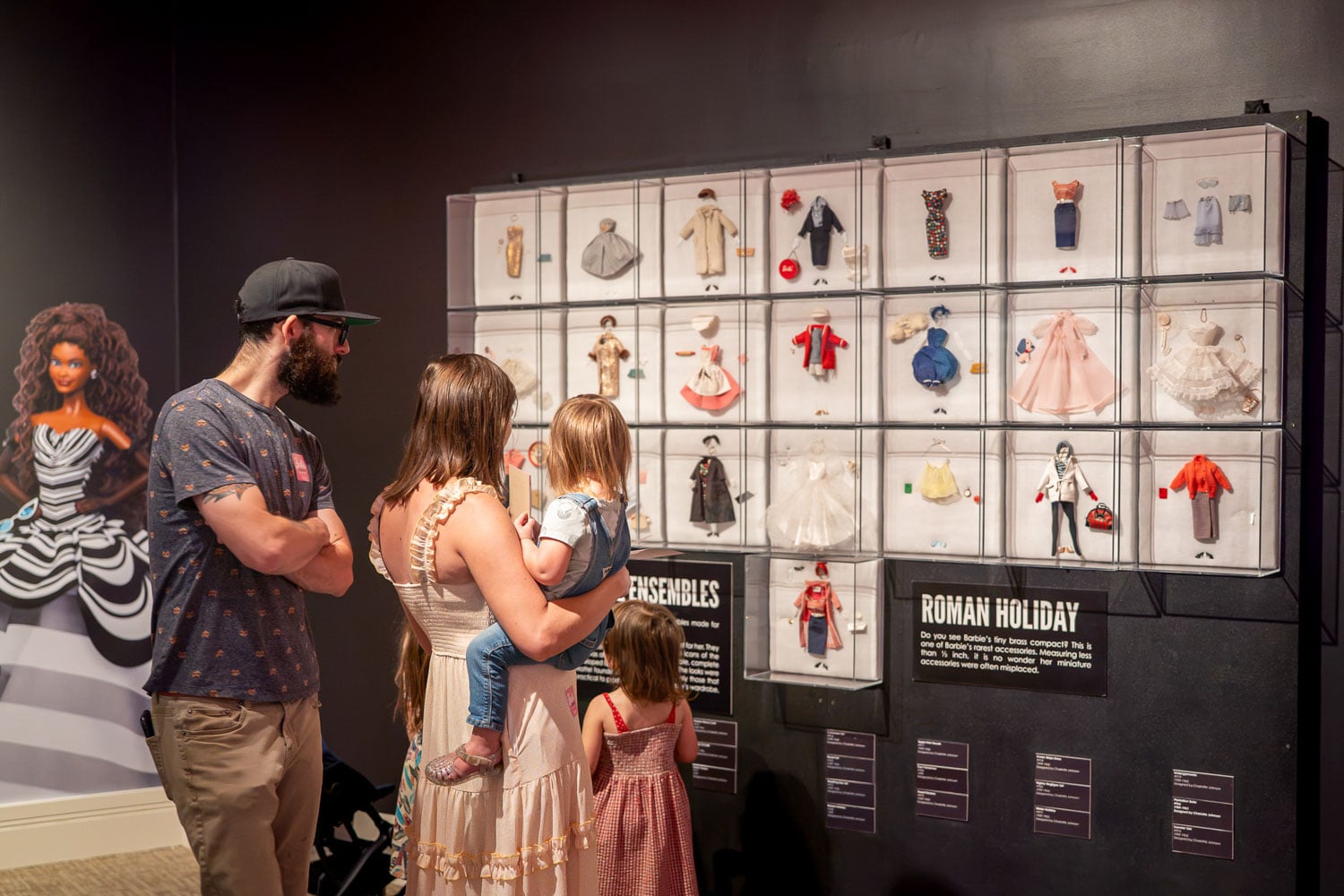
And then, of course, there is just the fashion of it all, as 31-year-old Ronald Abangan (a self-described visionary) explains.
“My girl cousins used to play Barbie, and I would join them. And for me, it was more about the clothes and how fun it was to mix and match and customize, to the point where I started dressing my cousins like Barbies.
“Growing up, I was embarrassed. It was a secret that I was playing with Barbies as a male. But then I was talking to a classmate back in elementary school, and I asked him about Barbies, and mind you, he was a basketball player, and he was like, ‘Yeah, I play Barbie. I don’t care.’ So I think it’s a universal thing. It’s just like a toy, just growing up and having fun.”
The way someone experiences a toy is uniquely their own. We can all have the same thing in front of us, but we will use it differently. That is very true when it comes to Barbie. For me, I was the one who would cut the hair crazy and take the legs off to use as drumsticks. We are not all the same.
Abangan used it as a vessel for his blooming love of fashion.
“I would do their hair. You know, the whole package. Sometimes I would do their makeup with Sharpies. I would dress up the Barbie with random things like handkerchiefs, and, like, I would make my own clothes for them. I love draping. And then I started doing it on my cousins.”
Elizabeth Klaczynski (41), the Associate Curator of Exhibitions at VMHC, used the dolls as a way to navigate her emotions.
“What I really remember about my Barbie experiences was the world-building aspect. I would make them have relationships. I remember distinctly if I had a spat with a friend, the Barbies would have a spat, and it would sort of be a way for me to work out what was happening around me before I necessarily had the language or emotional capacity to kind of really analyze it. So I think that, to me, is a really special thing about Barbie dolls. You really can create your own world with them.”
And then there were the box queens like Wyche.
“I like the Flo Jo Barbie and, of course, the classic Barbie, the black-and-white striped swimsuit. She was hot because that was like the woman who’s your stepmom, and she’s like two years older than you. She was that bitch. I had every Black and Spanish one. But play with dolls? Gross. I had people I could play with and have a good time and animals around me. I wasn’t allowed, or I was conditioned, never to open the boxes.”
“I also had the car. I had the van. There was a convertible. I had the exercise house. I just had them in the box. You just collect. I was an inside-the-box girl. Because I knew I was gonna sell them one day.”
Ken Is Just Ken
Of course, we can’t talk Barbie without talking about Ken. Ken did nothing. He had no actual job. His job was to be there for whatever Barbie needed. And that resonated with girls. They wanted to be whatever they wanted, dress however they wanted, and Ken was just there to help out and give support.
“I love Ken,” gushed Archibald. “You really gotta watch the show Barbie: Life in the Dreamhouse. It’s so good. My entire family and friends, we quote it regularly. I feel like Ken’s great because Ken is always just there in Barbie stories. He really is just Ken, and that’s whatever Barbie needs right now. Ken is doing that, and it’s great. You know, Ken’s like a stay-at-home boyfriend, right? He’s Barbie’s accessory.”
Wyche also loved the fact that Ken was there to support Barbie. It did not matter what he did for a living because what mattered was that he was there for her.
“Ken just looks like Carlton, like the safe guy. You should marry the safe guy, 100 percent. I’m the only chick that I know who doesn’t pay their man’s bills. Every other woman I know honestly pays their man’s bills. And they’re proud of it. They got the Ferrari. And it’s okay that Ken only has the SUV, you know, that’s okay. He deserves it. He builds her up. Ken will go to war for you. The rich dudes weren’t going to war back then. They were sending their servants. They were bowing out. I don’t want a guy who’s going to pay out of being a man.”
As a feminist, I personally love the entire vibe of Ken. Barbie didn’t need him for her to succeed. Barbie bought her first Dreamhouse at a time when women still faced significant barriers to opening their own bank accounts. She bought her own cars. She ran that shit. Ken was only as important in her life as you wanted him to be.
Klaczynski told me that even though Barbie had the gown, she and Ken never got married.
“He’s just Ken, which I kind of love. I love that Ken and Barbie have never gotten married. She just stands in the dress. Ken is there to support Barbie and not the other way around.”
Barbie, Beauty Standards, and the Generational Divide
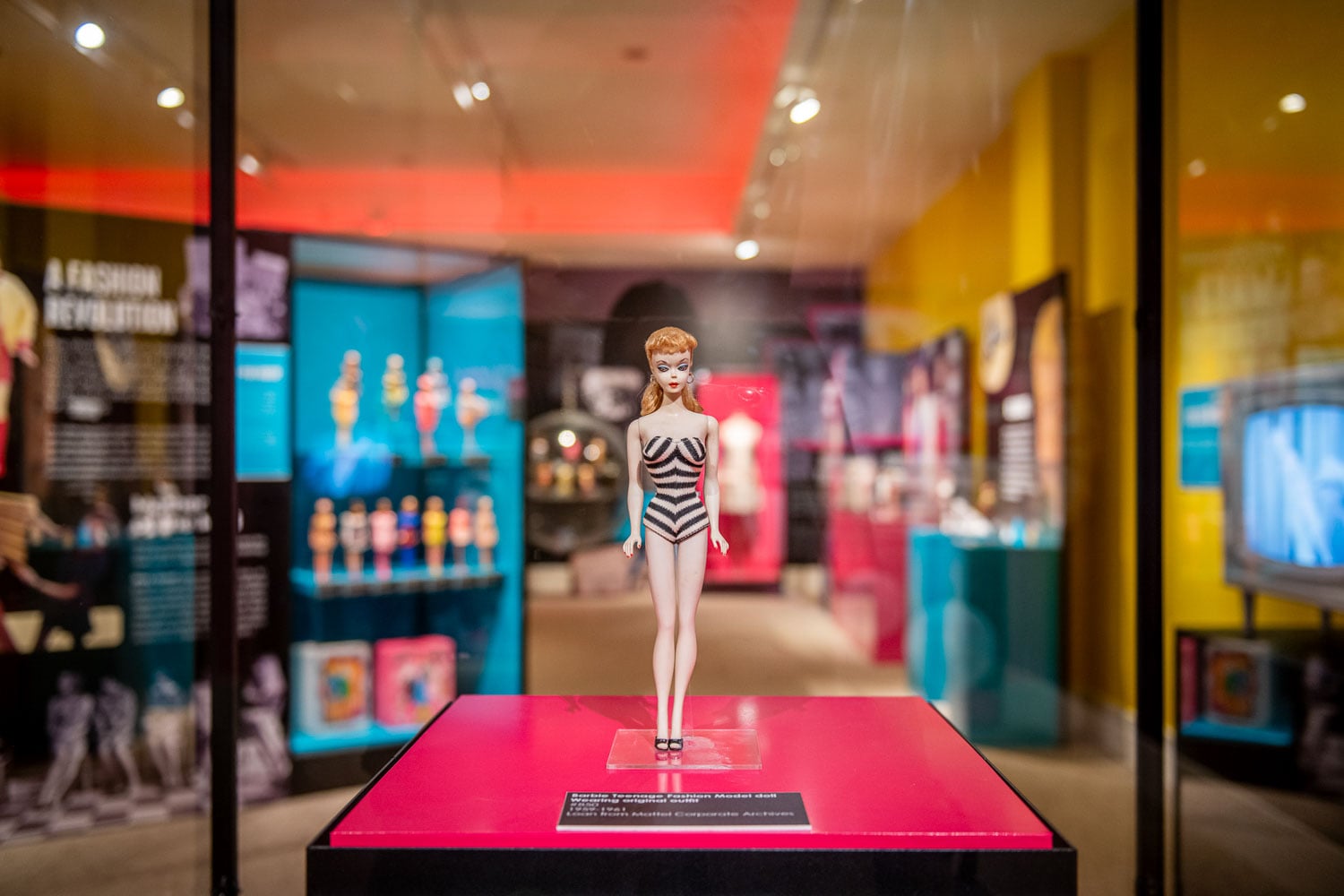
At some point, when talking about Barbie, you have to talk about the impact she had, both positively and negatively, on young children. To me, it seems like a generational gap. To older generations, she was seen as problematic. She gave an unattainable body image. Was she diverse enough? Was she doing damage to how girls perceived how they should look? But she also was a boss-ass bitch who could have any job imaginable.
To younger generations, they might see her as literally just a toy, a tool for imagination and creativity. They were raised knowing they do not need to look a certain way. They had insightful conversations with their parents about representation and beauty standards, and with the birth of the internet, they see more representation every day in their lives than just one doll.
“I would say if that’s the majority of the images you see [it could affect you], but we’re not living in a world where Barbie is the main image,” Wyche delves in. “I had such strong women in my family, and we did the whole thing when you’re young where they talk to you about things like white dolls and black dolls and the difference between them.
“What Black families expect of a woman is not the Barbie lifestyle. You can even see it in Mad Men, TV shows and stuff like that. That is the expectation. Like Don Draper‘s wife. The expectation of her to look the way that she has to look and to keep your mouth closed and tight and keep your hair perfect and always smile, you know, that’s more the expectation that was being projected by white media to white women.
“But I feel like in the Black community and in minority communities, it’s such an accomplishment to see people do well in our community that they become our Barbies. Real, actual people.”
And real people can be their own Barbie.
“It was so easy for people to see the Barbie movie and get in the box because they already see themselves as ‘I’m that Barbie.’ And then you also have Nicki Minaj, who made everybody Barbz already. You already have people about that pink life, you know. And then you got Madonna, Material Girl. That’s Barbie too.”
Archibald also talked about how she could be “that Barbie.”
“Last year, for one of my friends’ birthdays, we went to this EDM concert, and she’s like, ‘Oh, I’m Rave Barbie.’ When I’m studying, I’m like, ‘I’m Accounting Barbie.’ It’s like, oh, I’m this Barbie. Now I’m this Barbie. And just a cute, fun, fab girl. Like, I have all this studying, and it’s so much work. Now I’m ‘Academic Weapon Barbie.’”
Barbie being able to be all these different things was the most feminist thing she could do. Even though Charlie wasn’t really a fan of the doll, she still had some respect for her impact.
“I did like the idea that she had more choices than women my age growing up had. There was only one little pocket that you fit into. Unless your parents were highly educated, they were not motivated to steer you in the direction, as a female, as a young lady, into the academics.
“And I think my background, my stepfather was Italian, and they had come over after the war into Canada, down to Buffalo, and then down to Pittsburgh. And the girls in the family, we would be secretaries or nurses. We would get married, and we would be supported by our husband. The boys in the family were sent off to Carnegie Mellon and this college and that college.
“So, yes, if I could be motivated to be an airline pilot, an archaeologist, a whatever, I do agree that that motivational part of it was excellent. That woman had a wonderful idea. And my experience with that was that unless girls are being encouraged in more ways than just dressing up a doll…you know, my mother didn’t come in and say, ‘Oh, let’s dress her up as a policewoman today. Because you could be a policewoman too.’ It needs more.
“So girls whose mothers were…and I’m going to say it, more educated, more aware, which I don’t think I was raised in that way. My mother was more, you know, ‘It’s a man’s world,’ right?”
For the younger generations, like Archibald and Abangan, it really wasn’t that groundbreaking that Barbie had a million jobs, and it doesn’t seem to have an impact on their self-worth, good or bad.
“I think that it’s definitely something that is obviously a big discussion with Barbie. And I think that especially for us [Gen Z], it’s not thought of like that,” explains Archibald. “I think partially it’s like with all her careers, I think with our generation, I always knew I could do whatever job. But I did like that she’s always cute doing it. That sounds silly, but you know what I mean, like if I’m gonna be an accountant, I can have a cute little pink calculator.
“It’s not like in the past when it may have been introducing an idea of women in certain fields. Barbie’s been president. It still gets very girl power. And it’s always Barbie and her friends, and all her friends have different interests or jobs.”
Archibald agrees that Barbie has had an impact on culture but feels that these days, what she looks like isn’t that relevant to how girls view themselves.
“100% it has had an impact on the culture, but I don’t really think that it has that big of an effect on kids. I’ve never been like, ‘Oh, this is what my doll looks like, so this is what my body should look like.’ You know, I grew up hearing [all the talk about] Barbies and Disney princesses and people saying, ‘That’s not what should be promoted to kids.’ ‘This is bad, it’s not normal to look like that.’
“And the generation I grew up in, everybody was like, that’s not what bodies look like. So that is my perspective. I was always being told that, and I was always aware of it. And I think some of that also might have been because of my parents, but that’s just the way I thought about things.
“And I feel like as a kid, I would have never thought about Barbie’s body proportions if everybody didn’t talk about that. It wouldn’t have even been a thing.”
“My best friend’s cousin is not allowed to play with Barbies. I’m like, ‘That’s ridiculous,’ but it’s because she doesn’t want her to feel these societal pressures to be skinny. But limiting a toy for any body size, just because it’s a skinny person…by saying you can’t play with this Barbie because that’s not what a human body looks like, that’s putting the idea of worrying about what bodies look like in kids’ heads and sort of conditioning them about expected body types.
“It’s a toy, you know. I had American Girl dolls and I had Barbie dolls. My brother had action figures. Nobody’s ever like, ‘Little boys are gonna be really insecure about themselves because all their action figures are super jacked.’ It’s literally a kid’s toy. How are we body-shaming a kid’s toy?
“I never really thought about it that way. But it’s like, okay, what if she is skinny and blonde and can do all these jobs? I don’t know, again, it’s like I’ve never once compared myself to Barbie.”
Abangan feels the same way about the doll’s impact on self-worth.
“I was a kid. I didn’t know anything about beauty standards or if that’s what a girl was supposed to look like. I was playing with Barbies back home in the Philippines, where it was mostly just my race. There were no white women around. But I didn’t really see…I just saw the fashion. That was it. It was just clothes for me and hair and makeup.”
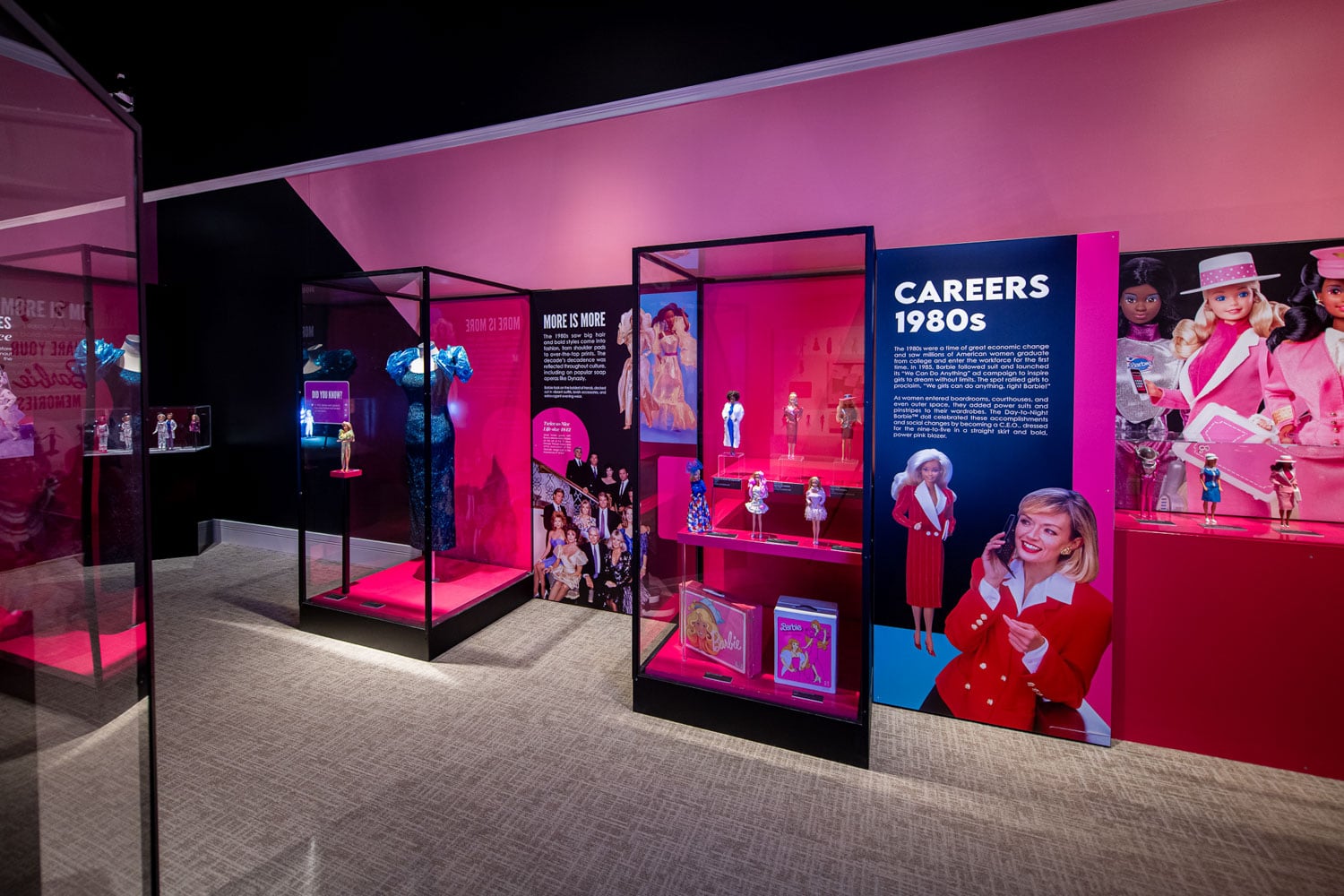
I asked Klaczynski what she thought about the dichotomy of Barbie as being dangerous to a young girl’s image vs. Barbie as an OG Girl Boss with over 200 jobs.
“I mean, I think that’s a tension worth exploring, you know. And I think that’s one of the questions that this exhibit brings up that people can sort of grapple with. I don’t think there’s an easy answer necessarily for that.
“You know, there’s been over 250 careers that Barbie’s represented. She’s an astronaut and went to the moon before Neil Armstrong actually landed on the moon, which is pretty incredible. She’s been president seven times. And yes, there are, you know, examples of her in these beautiful outfits, and she’s a fashion model. So there’s this idea that Barbie can kind of be anything. And I think this show does a really nice job of sort of mentioning that and having people think about that.
“And I think especially in the 2000s, Mattel responded to criticisms. You know, they introduced Barbies with different body types. They introduced Barbies with different skin tones, different hair textures, different sorts of levels of ability. So I think there has been a response to those critiques and a real genuine desire to be more genuinely representative of what Americans look like today and who we are.”
The Feminist Paradox of Barbie
I had to ask my OG feminist grrrl gang member Rems for thoughts on the OG Girl Boss and if she may have caused more harm than good.
“I think multiple things can be true. I think that the reasons that the feminists had in the ’70s for protesting her are still valid. Like, she has these outrageous proportions that no person would ever have. I believe it’s been documented that eating disorders and negative self-image are a result of these, like, long-legged, tiny-waisted, big-boobed dolls and all their many incarnations.
“At the same time, she had 200 jobs. She was, like, the center of the Barbie universe. And, like, the Kens were accessories, as was so eloquently portrayed in Greta Gerwig‘s Barbie movie. It was reverse patriarchy, like, very specifically. And so when they went into the real world, then Ken had a feminist awakening, but it was, like, man feminist awakening with that Mojo Dojo Casa House.”
“I think that it’s a thorny issue. It’s tricky. She is very image-based. It’s hard to separate Barbie’s image from her accomplishments. You know, it’s hard to say what impact it had on me as a little girl being obsessed with a doll that looked nothing like me.
“But at the same time, I also remember, and this is sort of like a subset that was just barely sort of touched upon with Weird Barbie, but when I was, like, prepubescent, when I was inching towards 12, there was, like, a lot more, like, going to girls’ houses and, like, banging our naked Barbies together as our way of talking about sex.
“And I think that that was really valuable and helpful to not feel totally alone with weird sex curiosity. I think that, like, banging naked Barbies together with your friends was, like, a really valuable psychological rite of passage. And I don’t know what girls did before they had naked Barbies because it certainly wasn’t fun banging other dolls together, I can tell you that.
“And as much as I allow myself to be obsessed with Barbie, I’m certainly not the only feminist who’s obsessed with Barbie. My favorite book of poetry of all time is called Kinky. And it was by a poet named Denise Duhamel.
“And this poetry book was really formative to me. It came out in 1997, and every single poem was about Barbie. And it was about identity and womanhood and feminism and gender. It was about so many things that I was thinking of. 1997 is the year that I graduated college, and there was just a lot of my personal politics that were set a-tingle by that book.
“When I moved to New York, the very first thing I did was turn that book into a play and produced it off-Broadway.”
“The dolls give us something to compare our real, multifaceted, multidimensional experience of gender to because it’s such a blank canvas. Before Barbie, it was a world of baby dolls. It gave us, like, these grown-woman archetypal figures to literally imagine upon and play with and put all of our weird gender on. So that’s true, for better or for worse.”
More Than a Doll: Barbie Comes to Virginia
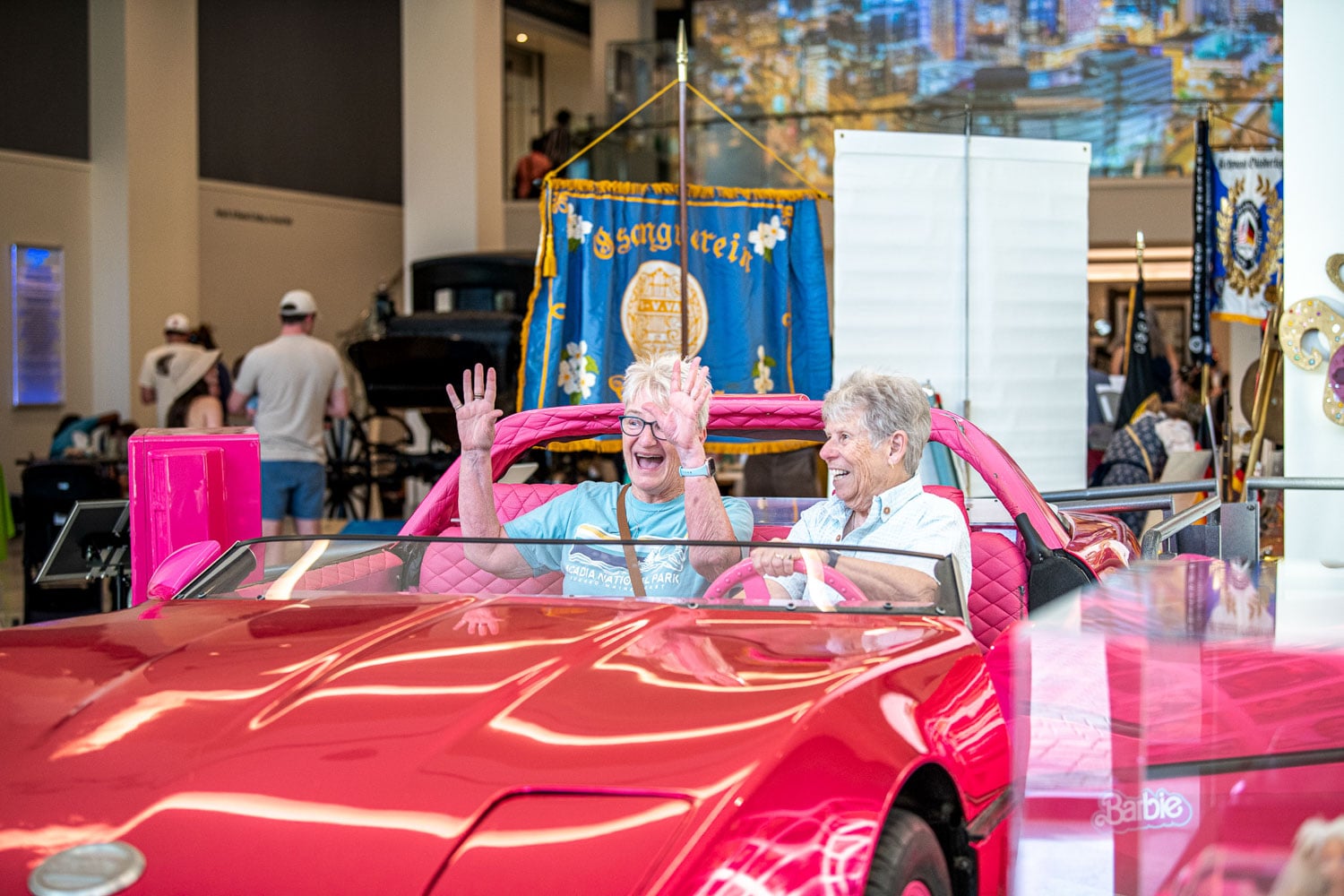
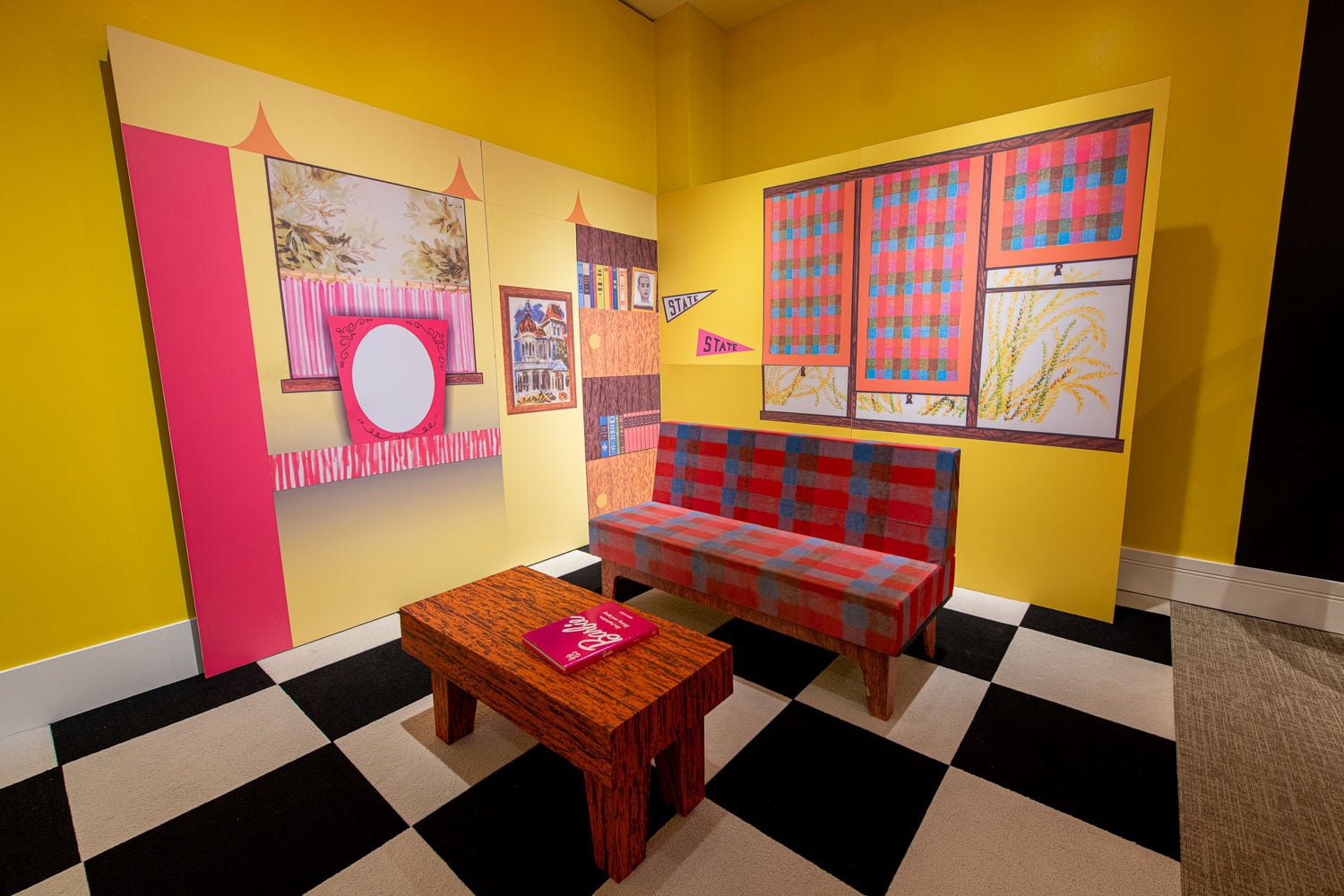
When I asked Klaczynski what her favorite Barbie was, she said, “I fell into the trap that a lot of people who I’m seeing come do. I totally forgot about my favorite Barbie until I saw her in the exhibit. Mine is one of the fitness Barbies with a, like, a teal leotard with a hot pink sash. I haven’t played with Barbie since I was eight or nine, you know, and she’s in a closet somewhere. I distinctly remember that outfit and how much I loved it. I think that’s going to happen a lot. People just hone in on a memory they haven’t really thought about in a really long time.”
As Klaczynski said, “She’s an icon of American pop culture. Most people have some sort of Barbie connection or memory, or even if you didn’t have Barbies or play with them, you know who Barbie is most likely. So we thought people would relate to it. They’d have the chance to sort of reflect on their own experiences and memories and sort of feel that sense of nostalgia and connection.
“I think it’ll bring people back to some childhood memories. We’re really hoping to and expect multigenerational families to enjoy this. So, like, a little girl and the mom and maybe the grandma. We’ve seen people come through already and say, ‘Oh my God, I had that Barbie.’ Or ‘I had that for Christmas,’ or something like that. Just sparking that sort of joy in those memories.
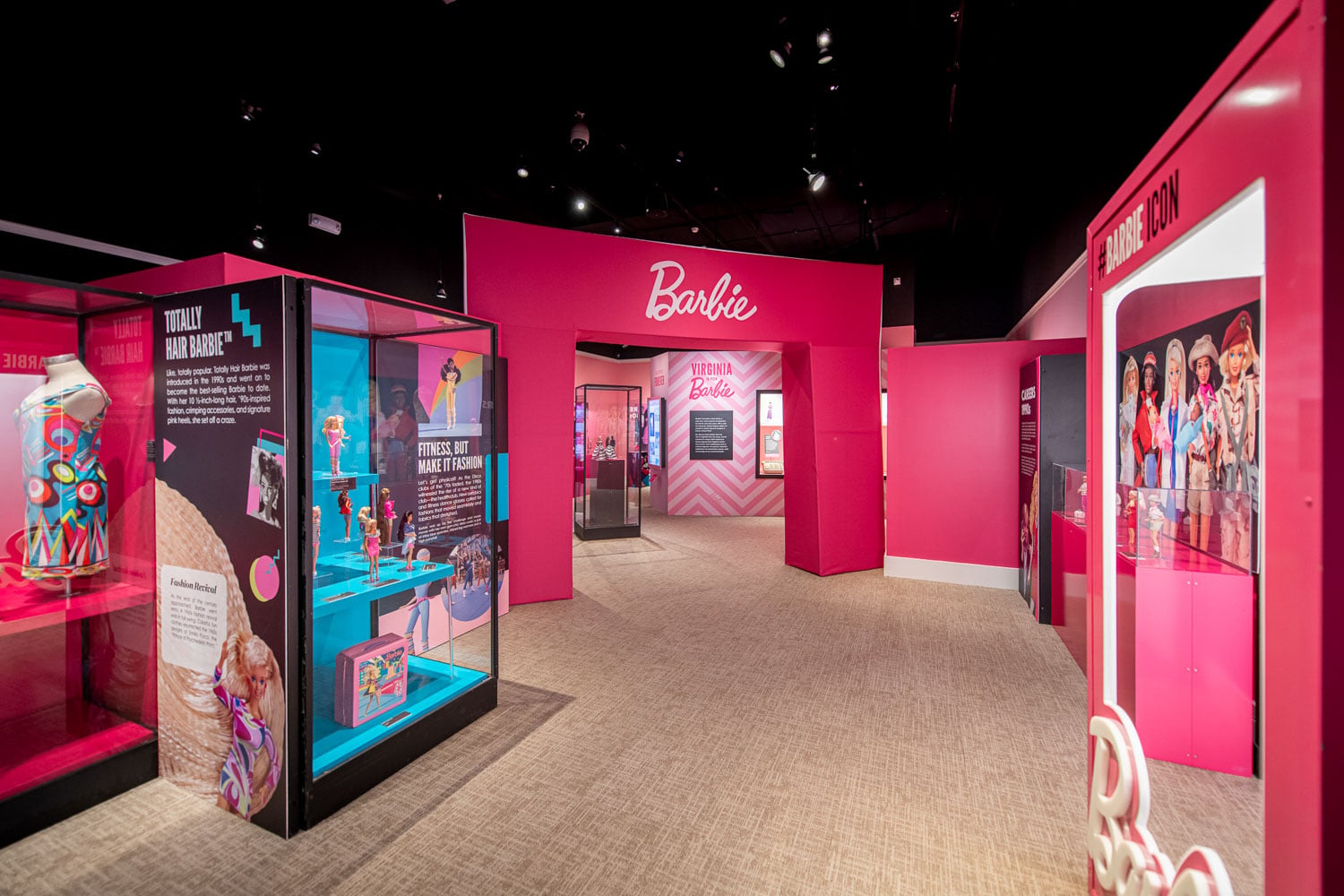
“There’s things to do. You can sit in the Dreamhouse, you can sit in the Corvette downstairs. But there’s a substance also to the exhibit. There’s a historical narrative that runs through. It’s largely chronological, kind of decade by decade, how Barbie evolved both as a fashion icon and also as a reflection of the changing role of women in American society. So that’s something people can learn about.”
The exhibit also has a special tie-in to Barbie’s connection to Richmond.
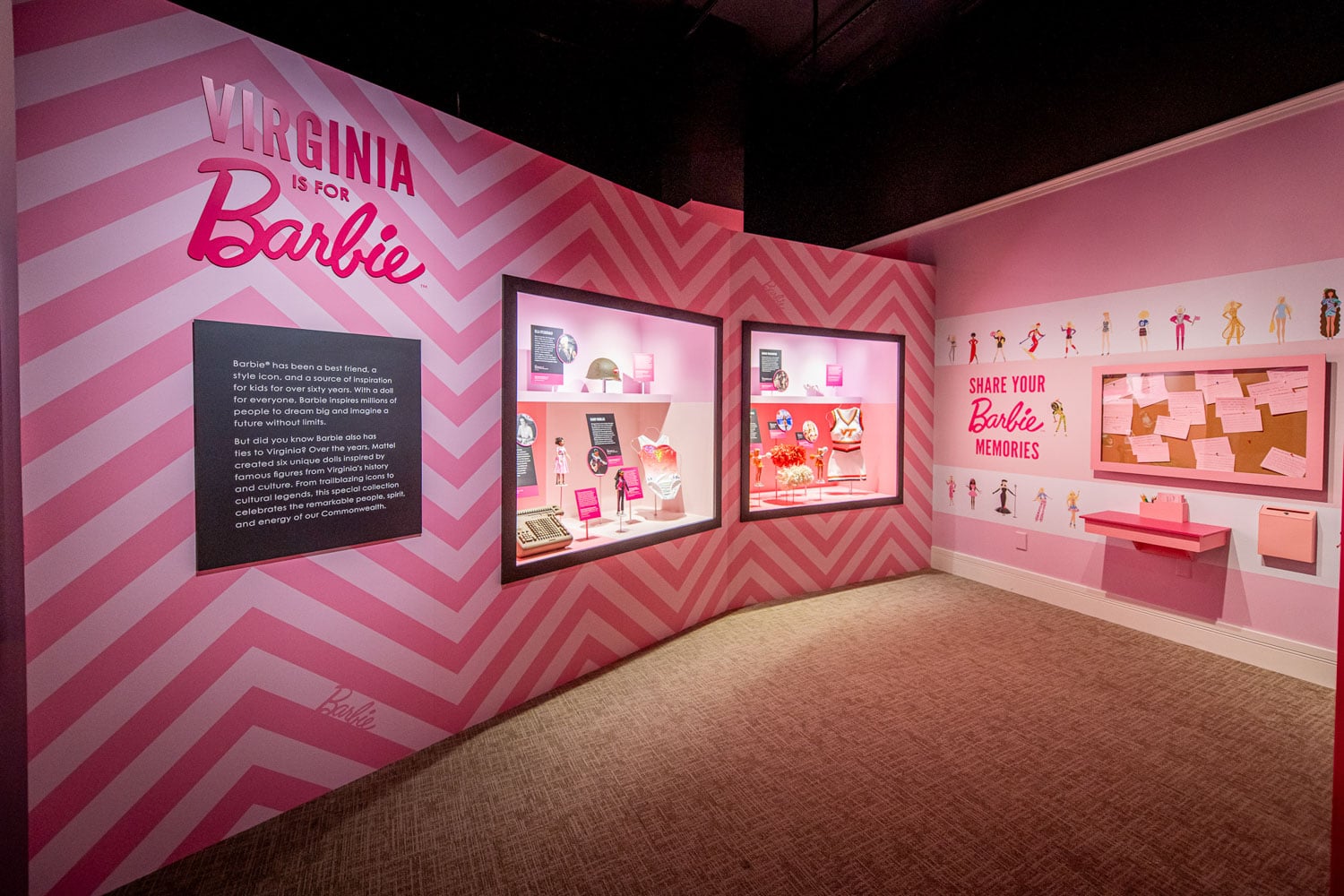
“Selfishly, my favorite part is the part I curated,” explains Elizabeth Klaczynski, Associate Curator of Exhibitions at VMHC. “It’s the ‘Virginia for Barbie’ section. This is a traveling exhibit that sort of goes nationwide. It’s kind of set. But we really wanted to make a specific Virginia connection.
“And there are six Virginia Barbie dolls. There’s a UVA cheerleader, a Virginia Tech cheerleader, Ella Fitzgerald, Katherine Johnson, Gabby Douglas, and yes, George Washington. [Editor’s Note: It is not Ken as Washington; it is Barbie as Washington in drag.]
“But we’ve also paired an object associated with the real-life person with Barbie. So we have shoe buckles that George Washington wore from Mount Vernon. We have a leotard that Gabby Douglas signed. We have a Virginia Tech cheerleader uniform. Just to make that, like, a real connection.
“We also added opportunities for people to add their personal Barbie experiences. So there’s a QR code you can scan, it’s also on our website, you can submit your Barbie photos, and they show up on a screen, and they scroll so people can actually see themselves in the exhibit.
“We also have a little writing station where people can leave a little note about their favorite Barbie memory, put it in a little mailbox, and we’ll pin it to a pinboard. And then [these jars are] another little opportunity for people to vote on their sort of favorite Barbie memory. So a real way to lean into that sense of people’s memories and the nostalgia and what people’s experiences were. I think it just makes it even more personal.”
Barbie is complicated, but who isn’t? As Rems put it, “Barbie can be an instrument of self-discovery and an instrument of patriarchy, depending on who is playing with it.”
Whether you are pro- or anti-Barbie, this exhibit really sheds light on how a toy can reflect history: what is going on at the time in fashion, which, truth be told, shows current politics, movements, and the vibes of the people at the time. The doll also showed what women’s day-to-day lives were like or what they wanted them to be like.
Somehow, Barbie isn’t just an icon. She is all of us. And even with our past mishaps, we can be whatever we want to be. The good, the bad, and the glamorous.
Barbie™: A Cultural IconOctober 17, 2026, to January 18, 2027 Virginia Museum of History & Culture (VMHC), Richmond, VirginiaAdmission: $15; discounts for seniors, children, and military members/veterans. Free for VMHC members, student groups, and EBT/SNAP cardholders.Upcoming Events October 30: “Think Pink” Costume Party November 7: “Beyond Ballet Pink,” a Breakfast with Bellen WoodardNovember 18: “Women Who Lead” Panel DiscussionDecember 17: “Dreaming of a Pink Christmas” Holiday PartyDecember 19: “Building the Dream,” a Breakfast Exploring Architecture & Design January 9: “Dolls, Dress-Up & Style,” a Breakfast Exploring Fashion & Self-Expression Ongoing: Toy donations accepted for the Children’s Hospital of Richmond at VCU.
Support RVA Magazine. Support Independent Media in Richmond.
RVA Magazine has remained one of Richmond’s few independent voices. Since 2005, we have provided grassroots coverage of our artists, musicians, and communities, marginalized or otherwise, documenting the city’s culture that lies right under the surface and beyond the headlines.
But we can’t do this without you. A small amount, even as little as $2, one-time or recurring, helps us continue to produce honest, local coverage free from outside interference. Every dollar makes a difference. Your support helps keep us going and keeps the local creative spirit alive. Thank you for standing with independent media, and thank you for reading.
Show your SUPPORT HERE
Also, subscribe to the newsletter HERE
We’ve got merch HERE
Subscribe to the Substack HERE
And Reddit HERE
And YouTube HERE