
Editor’s Note: Writer’s Block is a space for Virginia writers to share personal essays, fiction, memoir, and works that fall somewhere in between. In Stay Hungry, Richmond local Eric Kalata looks back on a cross-country tour and the restless optimism of being young, broke, and convinced the road might lead somewhere worth going.
We were tearing down the highway in her beat-up van, headed west through the desert from Phoenix to San Diego, the two of us up front sniffing little key bumps as she rode the speedometer at just about twenty over the speed limit, about twenty-four hundred miles from home.
Having left Richmond behind us some weeks ago now, we still had weeks to go before I would be back in my own bed. The van was our home now, not the old capital of the Confederacy, and all we had was each other. Our drummer was asleep in the back.
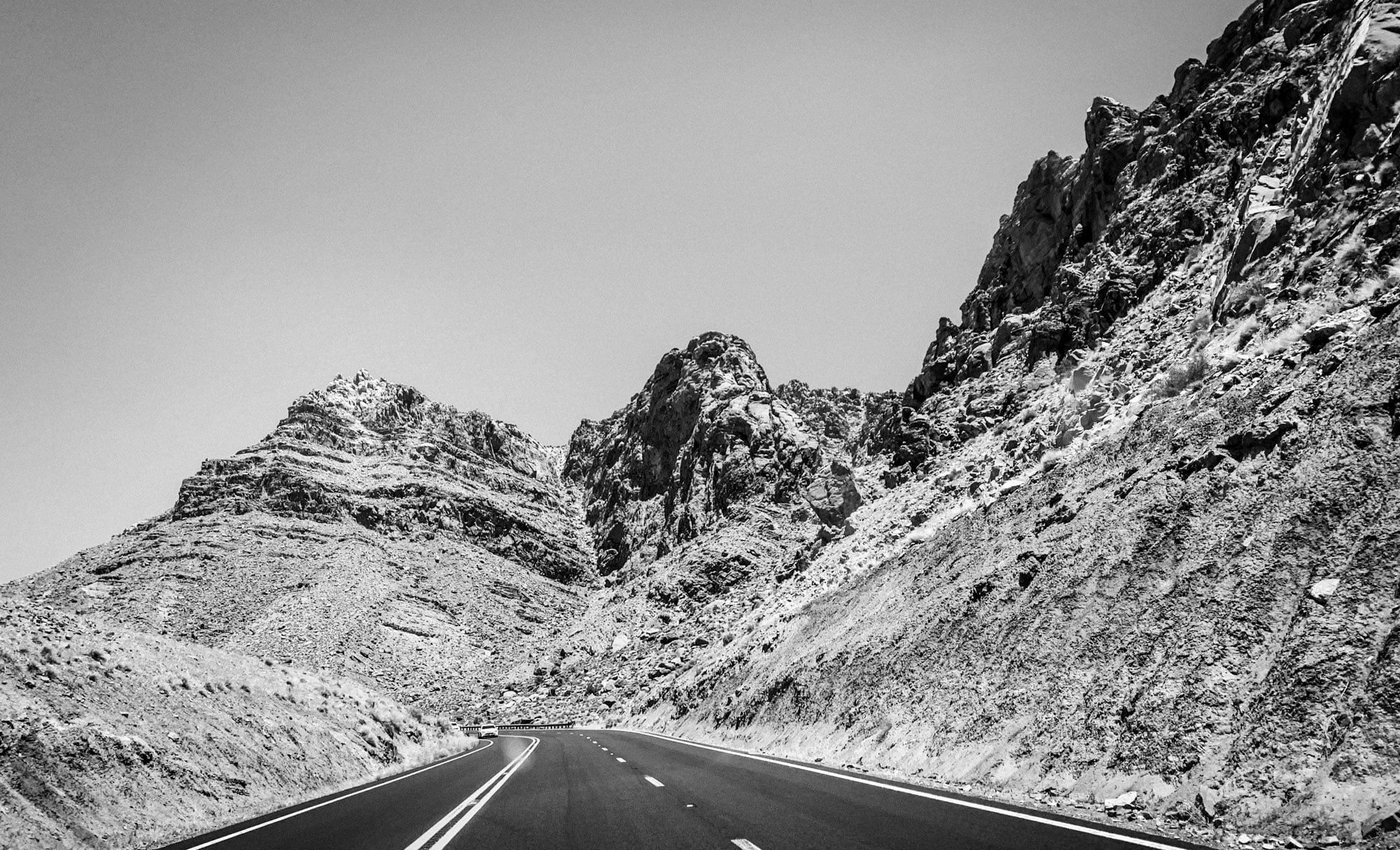
The sky looked bigger there, in the midst of the Mojave, surrounded by a flat expanse of sand broken up by brush and cacti, none of them tall enough to create a skyline to compete with the Sierra Nevada mountains rising up in the distance which dominated the horizon.
They were nothing like the tiny mountains back home. I missed the rolling hills of the Piedmont in the face of such staggering monoliths looming over us in the distance.
I took another bump and washed it down with Red Bull. The gasoline taste made me shiver and I thought about the possible dangers of the mixture, but we were young. Our hearts could take it.
The show the night before had been in a strip mall, technically in Tempe and not Phoenix proper. No one showed up and the opening band was absolute ass. I don’t know who the hell she booked it with. She always had us showing up to play at the most confounding places. There was a method to her madness, but not one that was apparent to either me or the drummer. That day, we were to play at a record store’s tenth anniversary party located just outside of downtown San Diego in the middle of the afternoon. We expected it to be chill, but there was still a lot of road to go.
The cocaine was a holdover from Denver.
We played in a dirty dive bar, a dingy little bungalow structure surrounded on all sides by towering, shining office buildings. One of the openers had hooked us up with a bag, and that Denver coke was better than any I had had back home, back east. We had bought a whole eight ball.
She hit a pothole. I was holding the bag, squeezing it open to dig out another bump for her. A good bit of the powder shot up and out of the bag, dusting my black jeans. I stared down at the substance now coating my legs and started to apologize profusely. “It’s okay. It’s just drugs,” she said with a shrug.
I nodded and looked straight ahead, still feeling guilty as I looked down the endless highway before us.
The GPS said it would be another two hours before we reached our destination. The sun beat down heavy. The heat shimmered off the pavement. The day had only just begun.
Earlier in the tour, we played in Atlanta, at a house show in the suburbs filled with college kids drinking 12% IPAs that they got God knows where and were more than happy to share with us. Everyone had their T-shirts tucked into their pants. Every shirt was artsy, for a band or an event or something thrifted that somehow fit their body perfectly. Kids with a little money, I suppose, and they chose to spend it on our show.
It went well. We played our set, the kids cheered. Not that we were much older, but at least old enough to buy our own drinks.
The other bands went hard. I was hit by a mosher during one of their sets and spilled my drink all over myself and someone else. I apologized, but I don’t think they heard me or even noticed. I shrugged it off and allowed myself to enjoy the music.
We stayed the night at one of the other band’s frontman’s house in a different suburb, further south, where he lived with his mom. I chatted with her as she burned old plywood in the fire pit out back, but the exact topic and words of the conversation escape me now. I had drank an inadvisable amount of those high-ABV IPAs and it’s been nearly a decade since that evening we spoke. But I remember that it was pleasant. That I felt welcomed in her home. That it was a warm environment because of her words and the raging fire.
When I retired indoors, the three of us got cozy together on the pull-out bed in the living room and watched Big Fish that night. I felt comforted in knowing I at least would have some true stories to tell my future children.
The next day we had off, so we went to a shopping district deeper in the city. She was in a mood, but I was determined to make the most of it. Once there, I could see the skyline over the trees that lined the streets. It felt not too dissimilar from a district back home, a stretch of commercial named Carytown where local institutions seemed to perpetually thrive, always teeming with crowds, and it was equally as lively in that Atlantan neighborhood. The streets were packed with people shopping and chatting and eating and living.
The three of us dipped into a thrift store. It was large and had a wide selection of both masc and femme clothing and everything in between. I split off from my bandmates and started to browse the button-up shirts and then the blouses, hoping to find something cheap in a pale shade of blue—something muted, something vintage, something that would compliment my eyes. But I was unlucky, finding nothing of the sort.
After awhile, I abandoned my search and looked about the store, finding our drummer on his own going through the jackets in a far corner of the store. He was eyeing a black leather one with an abundance of zippers all over the arms and front.
I crossed over to him.
“Where is ______?”
“What do you mean?”
“I mean, I don’t see her, and I thought she stuck with you.”
“Uh, no. She said awhile ago that she was going to find you.”
“When?”
“About ten, fifteen minutes ago.”
“Huh,” was all I could say back as I turned and surveyed the store again. I eyed the fitting rooms in the back. “Maybe she’s trying something on. Let’s go wait over there.”
“Sure. I don’t think I’m going to get anything anyways. Shit’s marked up to hell.”
And so we went to the back of the store and sat on one of the benches by the fitting rooms, waiting to see if she would emerge from one of the stalls.
Five minutes went by. Then ten. Fifteen. After twenty minutes, I took a look and found that all the stalls were vacant.
I stood up taller and scanned the store yet again. Our drummer did the same. She wasn’t there. She wasn’t anywhere in the store. We both pulled out our phones and tried calling her in succession, first him and then me. After several attempts from the both of us, we looked up from our screens and shared a look, translating a knowledge between us…
“I think she ran out, but…”
“Right, I don’t think she has any…”
“Do you think she’s trying to find some?”
“No way. Where would she even go? In this neighborhood? Besides, doesn’t she still have some Suboxone?”
“It’s not the same, and in a city like this…”
“Christ, man. I hope she doesn’t get into any trouble.”
“Anything could happen.”
A beat.
A moment for anxiety to swell.
“And shit, she has the van keys, we can’t even…”
“What if she took the van to…”
“We can’t worry about that. She has to be around somewhere.”
A tense silence settled between us. The music playing in the store twinkled softly, some basic indie pop song typical of that second decade of the twenty-first century. People’s conversation spilled over into our tension, into our silence. We couldn’t even look each other in the eye, both scanning the space as if we could have possibly missed her. I tried once again to call her. Still no answer.
Not knowing what else to do, we exited the store and sat down on a bench opposite the entrance, on the edge of the sidewalk, just in case she was in there and we had somehow missed her, not off looking for… Well, we figured we couldn’t miss her if and when she made her egress, at least.
We sat there for about forty-five minutes. Then she burst out the door and onto the concrete of the sidewalk, smile on her face and bags dangling from her arms.
“Where have you guys been? I’ve been looking all over for you,” she said without a lick of irony.
“We called you. Where have you been?” I was struggling not to be biting.
“Oh, my phone died, but I was… I mean, look at this cool shirt I got!”
The drummer and I shared another look. We knew that was a lie, and we weren’t interested in looking at the clothing she bought to cover said lie.
The phone had rang through. If it had truly been dead, it would have gone straight to voicemail. But she was back now and seemed to be in better spirits, so we said nothing and just followed her down the sidewalk.
We didn’t drink that night.
I shared a cigarette with our drummer on the front stoop of the house and he told me about how he himself had dabbled in smack until his first and only overdose. He said when he woke up on the floor, surrounded by EMTs, he swore he would never touch that shit again, that it wasn’t worth it. To myself, I pledged I’d never even try a taste, as if that would keep me better, more pure somehow.
But with all the other drugs, in retrospect, it was an arbitrary line. It didn’t really matter.
Up in Philadelphia, we stayed with some of my bandmate’s friends who had moved there from Richmond, guys I had met a few times at parties and shows but didn’t know very well on a personal level. They were in a band, too, the three of them, having only moved up there that previous summer. They had gotten a fat paycheck from getting one of their songs in an AMC show and were recording their sophomore album in their basement, but the night we showed up, the night before our show in the city, they weren’t making any music at all and instead were playing a dungeon crawler together on their PlayStation.
After a few rounds of dungeons and death, I went out for a smoke with their lead singer and guitarist, a tall and strongly built man with a patchwork of scratchy tattoos, and he asked me bluntly: “So what’s your story, man?”
I looked down the street, down the row houses that lined the block, dingy houses with trash in the yards. I loved it. I felt at home. And there was something liminal about the repeated stretch of porches down to the corner store at the T-intersection where the street ended. My gaze held steady down the street as I thought about how to answer. Only twenty-one, I felt I already had an exorbitant amount of lore. Where to start?
I chose to go into detail about my love for the album Hospice by The Antlers because, at the time, I thought my whole personality and being could be best summed up by the music and art and movies and all the media I adored. He seemed satiated at least.
The next night, we played with them and another Philly act in a coffeehouse about ten blocks south from the city’s center, right off Broad Street. Us and my new friends were pretty heavy rock and roll, bordering on punk, but for some reason the promoter had gotten a folk act to open up the night. I fucked with it, but I couldn’t say it was appropriate, or that we even fit the venue. We didn’t fit the vibe of the space and he didn’t fit our vibe. No one showed up anyways, except for my childhood friend who was living up there to go to Temple.
After our set, that friend asked me if I wouldn’t want to go swing by a bar with him and grab a beer since they weren’t selling any at the venue, and take the subway up to his neighborhood for the night. I agreed and left without a thought about telling either her or our drummer of my plans, with my phone only at five percent. It died by the time we got to the bar.
We got shots. We got beers. We reminisced. I inquired about his classes. He asked about the tour. It was early on, so I didn’t have much to say yet. He said it was the same for his classes, that there really wasn’t much to say. The semester had just ended but, “It was all bullshit,” he confessed. I got another beer. He paid our tab. I knew it was on his parents’ dime so I didn’t give a shit. Free booze is free booze.
We went to another bar.
Someone else joined us. His roommate? I can’t recall. I blacked out shortly after that point.
The next morning, I woke up to my miraculously charged phone blowing up with calls and texts from my bandmates. It was just about time to hit the road to play in Manhattan that night. I answered the buzzing phone groggy yet casual.
“Hey, what’s up?”
“Where the hell are you?! We haven’t seen you since—”
I pulled the phone away from my ear and asked my childhood friend for his address, then cut off her ranting to repeat it to her. She paused a moment, presumably putting it into her GPS.
“Alright, that’s… that’s fine. We can be there in fifteen. Be ready.”
Fifteen minutes later, I was out on the stoop smoking a cigarette as they pulled up in that beat-up van. I flicked the butt of my smoke carelessly into the street and crawled into the back of the vehicle.
Off to New York.
We got to the venue in Portland at about three in the afternoon. No one was there save for a sole bartender and our sound tech for the night. Not a single patron, and we had even beaten the local bands with our early arrival. The place felt desolate. It was dirty and dark and the floors were all sticky.
We loaded in our gear. We had for some reason agreed to backline our drum kit for the night, and got set up on stage to sound check, as we were the first ones there and the last to play and had all of our gear we needed. I didn’t have an amp, but I was rocking with a pedal for my bass that allowed me to go straight into FOH and so didn’t need one to check or play.
Sound check went well, uneventful, without a single problem, and we went out to the patio after asking the solitary bartender for a bucket of beer on ice.
Without having time to swing by our housing in the city, we had gone straight to the venue for the show and already it felt like it’d be a wash. Our optimism had run dry. But we had fresh packs of cigarettes and our bucket of icy beer and each other to distract ourselves from the sinking feeling that the whole show would go to hell and yet again be playing to an empty room. Like usual, we didn’t really know the promoter or the other bands. It was just another bill she’d hopped on to fill out the tour. We had no read of Portland or any of Oregon yet and we assumed the worst when we walked into an empty bar on a Saturday afternoon.
Even though it was earlier in the day, we expected to find some patrons milling about. At that time, at a good bar or brewery back home, you could expect the establishment to be at least half-full. Something to do with the expected day off of the average worker. There was nothing and no one at this venue. Not even any darts or pool tables. And so we sat out on the patio by ourselves, pounding back our drinks and chain smoking.
After about an hour and a half, the promoter came out and talked to us. We had already gotten a second bucket of beer. None of the other bands had come out to talk to us, or even arrived as far as we were aware. He was the first person we had spoken to other than the sound guy and the bartender.
He assured us that the presales were promising, talking it up, the usual platitudes of how it’s all looking good on his end, the typical things a promoter has to say to put a band at ease. I looked around the empty patio and nodded along to his words vacantly. None of it mattered anyways, right? It was about the music and free booze, wasn’t it?
The promoter sat with us for awhile. We talked about our friends back home. I assumed he stuck around because he had nothing better to do that evening. Eventually, he did rise from the table, excused himself, and slipped back inside. I finished my beer and cracked open another. If I was going to be playing to nobody except the other bands and the sound tech, I was going to be drunk while I did it.
Since we had checked first and were going last, we stayed out on the patio for quite a long time, not bothering to go inside to see the other bands play to an empty room. None had given us any gesture of hospitality so why give them attention.
Time trickled on by. The cigarettes smoldered.
The promoter eventually came back out and told us we were on in fifteen. We begrudgingly rose from our table and went inside.
Nothing could have prepared me for the size of the crowd that had grown inside the venue, not in my belligerent state. Apparently, the show had actually sold out, but no one had come out to the patio the whole while we were out there. No one smokes in Portland? Or maybe they all smoked out front. It didn’t matter. The bar was packed now, wall to wall, no wiggle room. We had a real audience to entertain.
We grabbed our instruments and muscled through the crowd and onto the stage. There was a bass amp up there now, yet the XLR was plugged into my pedal and I didn’t feel like pulling out a quarter inch to line into the amp so I said fuck it and just rocked with my pedal and the monitor.
She had us open the set with a song she wrote about her favorite cigarettes, Parliaments. We were all drunk and the two of us were swaying in a nonexistent breeze, envious of our drummer hidden behind his kit, but I’ll be damned if we didn’t play our hearts out.
One song started with my bass line, only the one, and I turned and offered her my back when I started to play it and she met me there with a turn to present her own back, both of us simultaneously leaning the whole of our bodies into each other as I played the riff and she let noise swell from her distorted guitar tone. The two of us, spine against spine, sank down to the floor and then back up again slowly, inch by inch, as she began to play the chords, rising with the intensity of the drums. Then, as soon as we were standing again, she had to hop over quickly to the mic to begin singing. She hit it exactly. We were beyond tight this late in the tour.
When the song ended, the last notes lingered over a silent audience, standing there in awe, before erupting into applause and whoops and hollers and all sorts of exclamations. But the rest of the set blurred together. I can only remember waking up the next morning and walking down the street to a dispensary to buy an eighth of weed for only eight dollars. In the wake of the show, I was hardly hungover, and knew that I was where I was meant to be. In a foreign city, making music with friends I had only known for a scant time. It felt like everything was changing for me, and hopefully for the better.
The record store in San Diego was teeming with people when we pulled up in the back alley, where we had been instructed to park. People stood all around the minuscule parking lot, talking to each other and smoking cigs and drinking beers out in the open.
As we pulled up, she was playing one of her favorite songs: “Dancing in the Dark” by Bruce Springsteen. At the bridge he sang, “You gotta stay hungry / Well, baby, I’m just about starving tonight,” and I looked over at her knee, at the tattoo across it that repeated the phrase, screaming at me: “STAY HUNGRY” In bold black letters in a sans serif font. It was her de facto motto for life, and so, by extension, became the band motto for the tour. Hungry in our bellies in the literal sense, to be sure, always looking for food and drink, but hungry for action too. Hungry to make music, to live life, to make moments last longer. Hungry to see the great gradient of the American countryside, to live on the road and see all that the nation had to offer us in our youth. And I hadn’t even read Kerouac yet.
She parked the van, we got out of the vehicle, and grabbed our instruments, our drummer just bringing in his breakables. They had told us that everything else we would need would be there already set up for us.
We stepped in through the back door into a packed store with a drum kit, PA, and a few amps tucked away in a corner. There was also about a dozen pizzas laid out on folding tables set up against one of the giant windows at the front of the store. As soon as I saw them, I went straight over to grab a slice, not even putting down my bass. It was from some local pizzeria. It was kind of garbage. But I hadn’t eaten all day and it was free. The best kind of food is free.
I crossed the room over to our “stage” for the afternoon and put down my bass and pedals that I’d been carrying in one hand to hold the slice in the other. My frontwoman and drummer were already setting up.
“We’ve gotta start in fifteen minutes,” she said curtly.
“I can be ready in five.”
“Then do it.”
I shook my head, shoved the rest of the mediocre slice in my mouth, and set up my pedalboard, plugging into the bass amp provided, making noise before she was. I played “Twist and Shout” to check my level, the drummer hit a quick fill, and she strummed a few chords before stepping up to the vocal mic.
“Check, check…” she said quietly into the busted SM58. It came through the speakers behind us. She turned away from the microphone, cleared her throat, and gave us a look before she turned back around to face the mediocre crowd and shouted into the mic the old cliché: “What the fuck is up, San Diego! We’ve come all the way from Richmond, Virginia to play for you today. Let’s get wild!”
And she started that first song. It was always the same song. About the cigarettes. Playing in a different city every night allowed us to have virtually the same set night to night, show to show. It was easy to remember by this point in the tour. Not that I could recall it now, but it was once so burnt into my brain that I’d be humming the whole thing straight through to myself while showering or scrubbing dishes. It was catchy shit. She was a good songwriter. Still is. As memories fade, it’s all the more reason to connect again, to listen back to the songs we played, to keep it from drifting apart.
I feel like a child pondering these things, then and now, asking questions… I couldn’t think them through then and I can’t think about them now. Have to always move forward.
The set was over in a tight thirty minutes. The stoned crowd cheered. Another successful show. We packed up our things and went back out to the alley, to the van. A guy cornered me after a few steps out of the store and started talking my ear off about local bands, in a fervent manner that I couldn’t fully follow. I wasn’t terribly interested, either, but he had a big bag of weed on his person and was offering me hits off his joints so I didn’t mind too much. There was a lot I would put up with back then if it came with the promise of intoxication.
“You guys were really good by the way,” he eventually said. “It’d be sick if you could come back here again.”
“I mean, ______ will probably want to, but I don’t know when that would be. She lives in Chicago now, moved there about a month ago, and me and the drummer still live in Richmond so it might be hard to get back out here…”
“Ah, yeah, that’s certainly a trek,” he said with a sagely nod. Then some idea popped into his head with such force that I swore I could hear its arrival. He pulled out his big bag of weed. He opened it up, scrounged around, and pulled out a giant nug on the end of a clean stem that was about three quarters the length of my forearm.
With a flourish, he presented it to me and said:
“A rose, for you.”
I took it and laughed. He frowned. I called over my frontwoman, shouting her name across the alley. She crossed over from the van, looking vaguely annoyed. I hid the weed-rose behind my back. She stopped just a few feet short of us and looked at me and the stranger, who was still holding his wide-open weed bag.
“What is it?” She seemed a bit peeved but was probably just tired.
I got down on one knee and pulled out the weed-rose and offered it to her.
“For everything you’ve done for us, a beautiful rose. We love you.”
She burst into laughter. I joined in. The stranger walked away.
I stood back up, gave her an affectionate pat on the back, and we walked over to the van.
Our drummer was talking to a guy with curly black hair and a short beard, dressed up in punk attire but with a slight stoner slant, and I was informed we were to be staying at his place that night, just a few blocks down the street. We could head there anytime. But first, it was time to get some drinks.
The next morning, I woke up on the floor of the living room of a spacious two-bedroom flat without a hangover. A welcome surprise. A miracle, honestly. I guess sometimes I’m blessed. But the sun cut through the window shades in a sheer beam that landed square on my face, burning my eyes.
We drank some coffee around the coffee table and our host put on a King Krule video of him performing “On the Moon” live with a full band. It was good. We watched it in a daze as we sipped our drinks. After it finished, we thanked him for his hospitality and hit the road early, now on to Los Angeles, where we would be staying for the next four days.
As the van peeled out of the city and back onto the highway, I looked across the dusty landscape that led up to the mountains. The entirety of our futures were laid out in front of us on that road. Everything was ours. We were in the dawn of our lives. I packed a bowl of the weed-rose and sparked up in the back as the two up front passed the key back and forth, doing bumps again, scraping the last of the blow out of the baggie. We were screaming down the road, pushing the van to its limit. The cars we passed were so slow compared to us that it was as if they were still.
Or maybe I was just stoned. But I could have sworn that, for a second, regardless of the speed on the speedometer, that everything was completely, utterly still.
Photo by R. Anthony Harris
Support RVA Magazine. Support Independent Media in Richmond.
At a time when media ownership is increasingly concentrated among corporations and the wealthy, RVA Magazine has remained one of Richmond’s few independent voices. Since 2005, the magazine has provided grassroots coverage of the city’s artists, musicians, and communities, documenting the culture that defines Richmond beyond the headlines.
But we can’t do this without you. A small donation, even as little as $2, one-time or recurring, helps us continue to produce honest, local coverage free from outside interference. Every dollar makes a difference. Your support keeps us going and keeps RVA’s creative spirit alive. Thank you for standing with independent media. DONATE HERE.
We’ve got merch HERE
Subscribe to the Substack HERE
And Reddit HERE
And YouTube HERE