
There’s something about the dead center of winter that brings out the best in humanity. It might be the desire to stay huddled around the fire, TV, or kitchen table, when your people begin to look more like fellow travelers in life rather than the people constantly not cleaning up after themselves. It could be seasonal depression settling in that makes us nostalgic and sentimental. Restlessness and proximity rarely mix well, however. Every culture around the world came up with the same idea to celebrate something, anything, to break up the doldrums. Whatever it is, it has affected us all, from nearly every culture across every continent. Someone always has something sappy to say or do around the Winter Solstice.
It’s kinda nuts how ubiquitous the urge to break out the dancing, singing, gifts, storytelling, meat, and liquor is. There’s renewal in the hearts of men when the dawn breaks a little earlier and dusk lingers a minute more. There’s too much to be thankful for (e.g. surviving). From the Hopi to the Vikings, the Angles to the Saxons, and back to the Chinese festival of Dongzhi, Iran’s Shab-e Yalda, the list goes on and on. Not all involve the same rituals of course, but everywhere and everywhen, we (as humans) find a reason to get together and do something fun on or around December 21-25. It usually involves recognizing the sun not dying completely (again). It’s when we see the light at the end of the tunnel, damn near literally.
One of the most enduring stories in Western culture, and a major force in perpetuating the Christian iteration of Solstice merriment in general, is Charles Dickens’ 1843 novella, A Christmas Carol. A Christmas Carol has been embedded into pop culture, which is a great understatement of fact. It has been adapted so many times in so many ways, from Disney to Hallmark, and everywhere in between, that avoiding the narrative structure of the cheap geezer turned philanthropist (under the threat of impending death and eternal derision) this time of year is impossible. It is damn near scripture. A gospel and a warning. A morality play for the coal-faced masses and their shitty landlords.
You know what, though? We absolutely love it that way. Because some assholes out there need to hear it. Some assholes need to fear the ends of a miserly life. Charles Dickens didn’t write this story to be cute. He wrote it as a former child laborer, broke, in dire need of a paycheck. It was easy money for an underworked author in an industrialized society pitching class warfare. While he still got screwed over by a competing publisher, this was his meal ticket that ensured we would get his later brilliant novels. Before Coca-Cola invented what we consider the modern tradition of Christmas, Dickens made a case for charity and redemption when being visited by cranky ghosts, which, in 1843, seemed a reasonable thing to have happen to you.
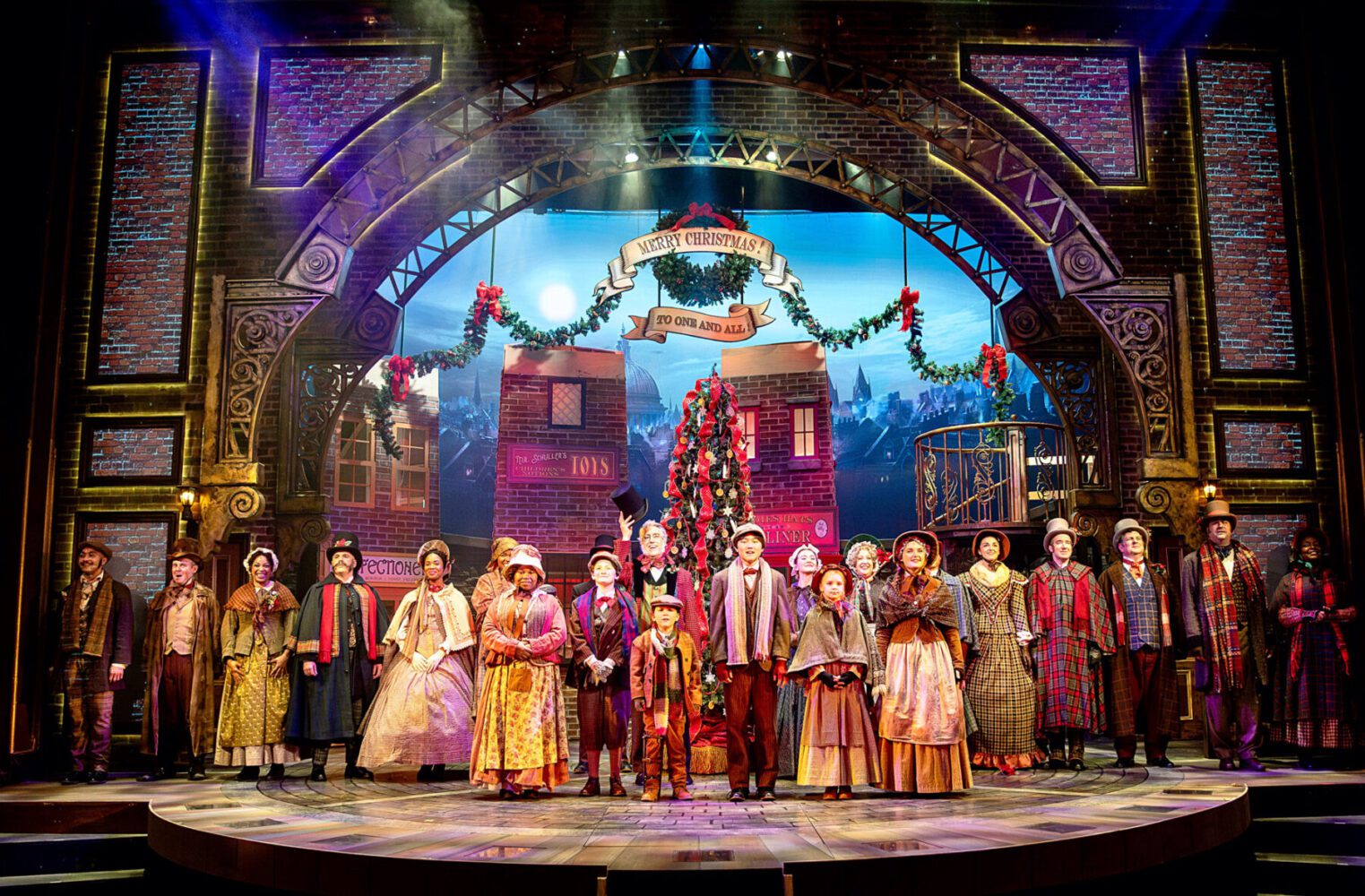
Which brings us to Virginia Rep’s rendition of the theatrical version of the story. There are productions so popular they’re done to death, and there are ones that find new life with every attempt. The only way to do A Christmas Carol wrong is to change it. Virginia Rep honors everything that makes the story cozy. Rick Hammerly’s version dresses the pageantry of the season with every golden ball, tinsel sparkle, Charlie Brown-quality carol, and familiar line we demand from this tried and true recipe. Everything is in its right place. Nothing is subversive. Every person ever to have consumed A Christmas Carol can settle into this production like warm eggnog under a shared blanket. There’s love for tradition here. An absolute celebration of cultural continuity.
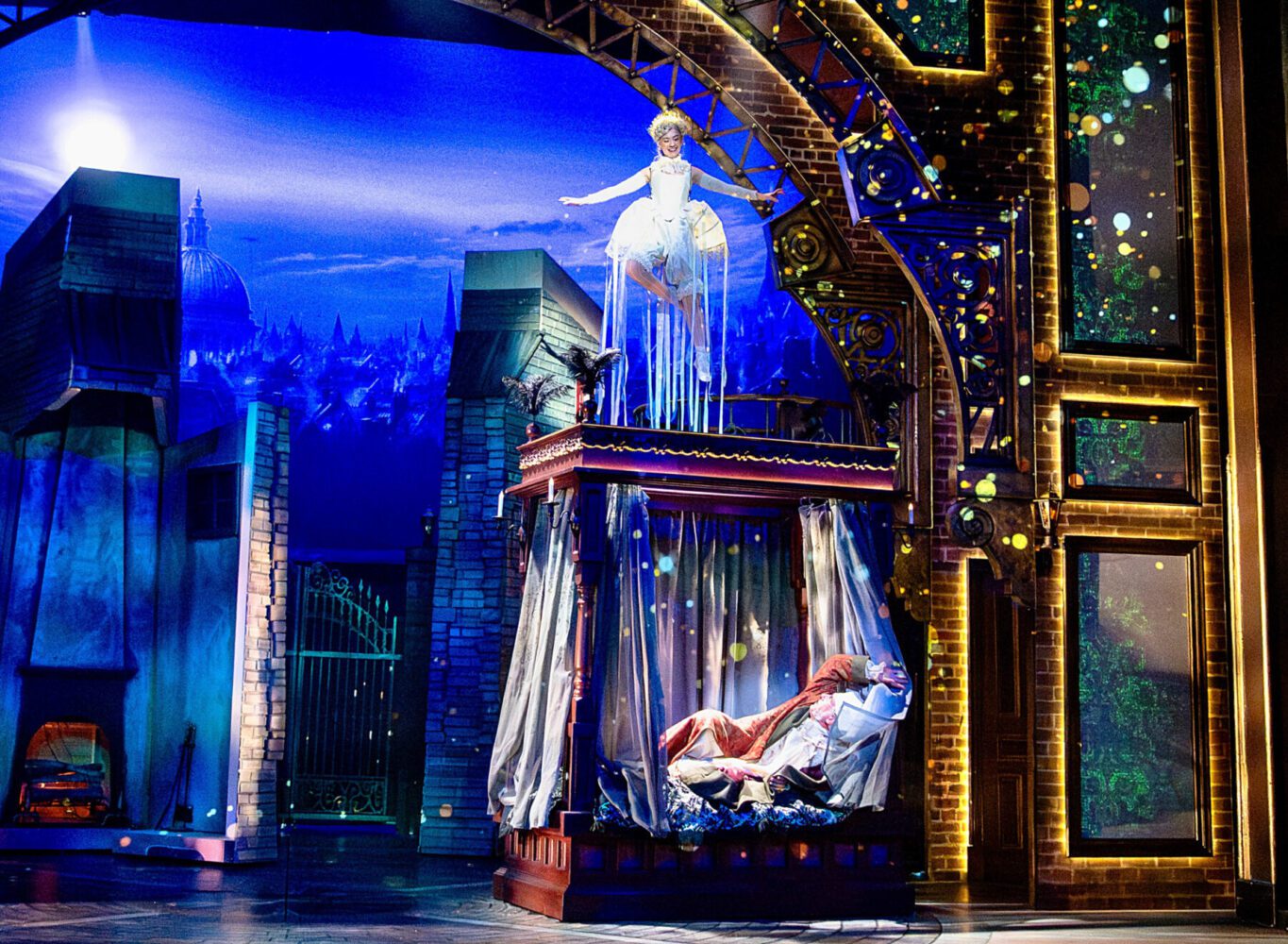
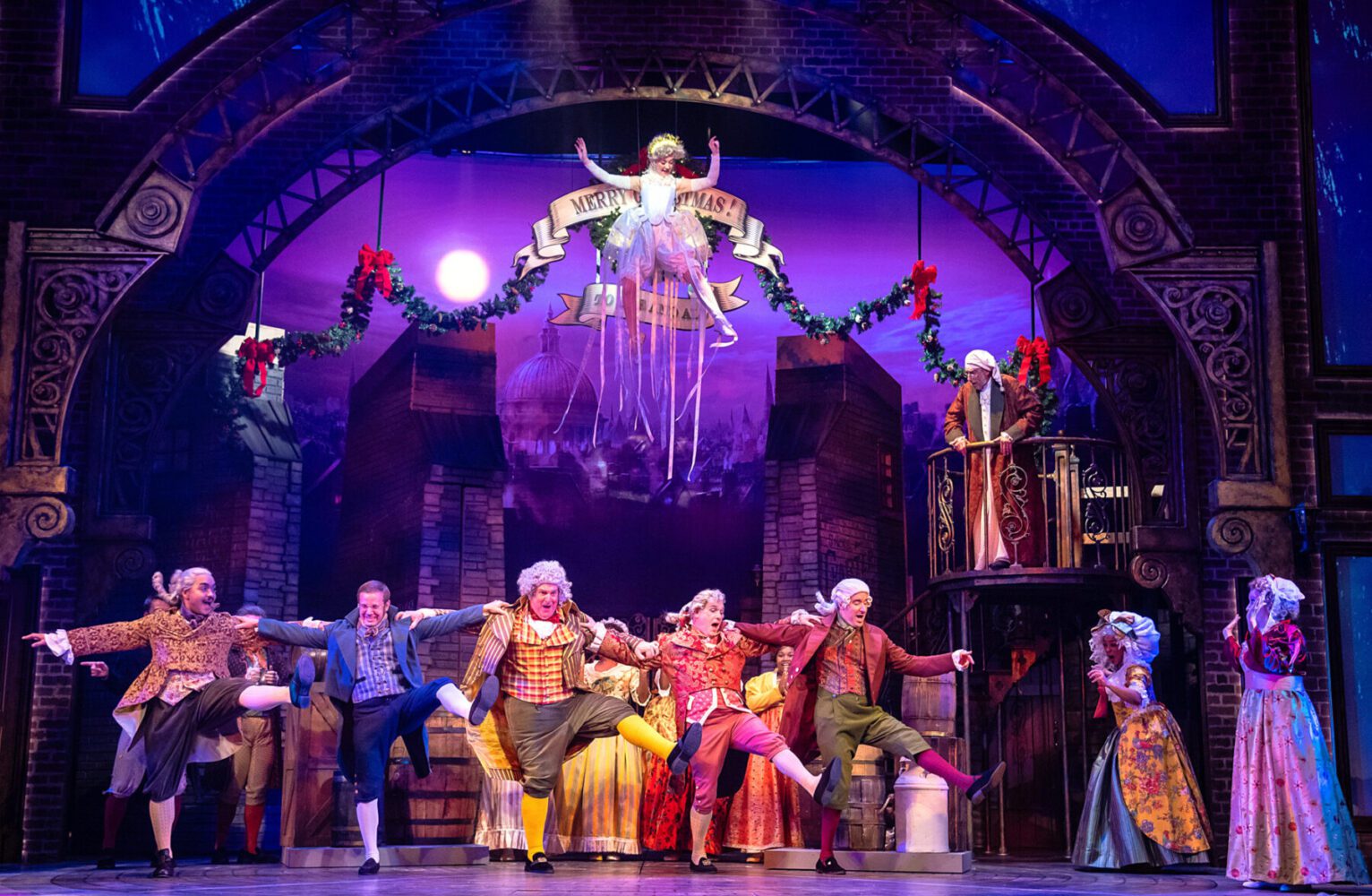
There’s not much to say about the play itself that you don’t already know. Thomas Adrian Simpson’s Ebenezer Scrooge is delightfully cruel, frightened, changed, and redeemed. The ghosts of Bill Murray and Scrooge McDuck can smile down from the heavens at his turn as the jerk. I know Bill Murray’s not dead, not the point. Benjamin Reed sells his good-natured and openhearted nephew well enough that I remembered that was actually a character in the story. Emmett Alley’s Tiny Tim says the catchphrase adorably. Marley’s ghost totally ransacked Beetlejuice’s rizz, but wears it well. Dorothy Dee-D.Miller slays as the giant ghost of the present, and Kylee Marquez-Downie sails on stunningly well done wire work as the ghost of the past. These are not challenging roles, so I’ll forego the simping for craft. I will applaud the loving dedication to hitting every note written, as written, by every single soul on that stage.
It is fairly comforting as a writer to be able to enjoy a production this way with a cast capable of so much. This seemed more a gift from these local talents than a job. It reminded me of one of those broadcast TV guest-star-a-minute “Very Special Christmas Episodes” from the 80’s. My time at the theatre was pure smiles. I guarantee you, if you go, yours will be too.
I become redundant on this issue, but before I go, can I once again point out that the sets, lights, projection mapping, and costuming are just excelsior at VA Rep? It’s just top-notch stuff worthy of any well-funded theatre anywhere. Having grown up on the Rockettes at Radio City Music Hall and whichever Broadway theatre was hosting school field trips in Manhattan that year, I can confidently say this is as good as it gets. This is the type of spectacle that brings sparkles to the eyes of children, warmth in remembrance to the hearts of grandparents, and that little squeeze your partner gives your hand while we are bid “a merry Christmas to all, God bless us, every one!”
Happy Holidays from me and RVA magazine. Go feel like this play made me feel. Take the family to the November Theatre and remember why we do literally anything at all. The sun is only visiting the horizon. It’ll be back. See you all in the new year!
Photos by Aaron Sutten
Buy your tickets HERE
Support RVA Magazine. Support Independent Media in Richmond.
At a time when media ownership is increasingly concentrated among corporations and the wealthy, RVA Magazine has remained one of Richmond’s few independent voices. Since 2005, the magazine has provided grassroots coverage of the city’s artists, musicians, and communities, documenting the culture that defines Richmond beyond the headlines.
But we can’t do this without you. A small donation, even as little as $2, one-time or recurring, helps us continue to produce honest, local coverage free from outside interference. Every dollar makes a difference. Your support keeps us going and keeps RVA’s creative spirit alive. Thank you for standing with independent media. DONATE HERE.
We’ve got merch HERE
Subscribe to the Substack HERE
And Reddit HERE
And YouTube HERE

