
The Lone Bellow may be late to the folk rock explosion of the past five years, but they’ve quickly set themselves apart from a lot of bands that might randomly add a banjo and breakdown to their songs.
The Lone Bellow may be late to the folk rock explosion of the past five years, but they’ve quickly set themselves apart from a lot of bands that might randomly add a banjo and breakdown to their songs. Their self-titled debut last year was very well-received by the musical press who’ve started to shy away from the genre’s oversaturation. After you hear their music, it’s easy to pinpoint why, as the band’s sincerity and genuine flair for blending Americana and pop music shines through unlike anything we’ve heard on the radio lately.
Richmond itself is no stranger to this earnest take on folk rock, as they’ve entertained the city in droves at Friday Cheers as well as in a more intimate setting at Strange Matter. The Lone Bellow’s new album, Then Came The Morning, comes out this January on Descendant Records, and while folk rock has been traded for moody 80s synthpop as the “in” sound, the Brooklyn by way of Virginia trio is showing that they have more than enough to captivate an audience for years to come with a sound that’s as down-to-earth as the members themselves.
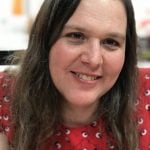
This Saturday, The Lone Bellow comes to the Modlin Center at University Of Richmond–a little bit of a homecoming for a band that has such strong ties to Virginia and Richmond itself. Before the show, I got a chance to speak with Kanene Donehey Pipkin about her musical upbringing, as well as some thoughts on how the band is and isn’t marketed.
You grew up in Fredericksburg, so about an hour north of Richmond, give or take. Did you spend a lot of time coming down to the city when you were growing up?
Yeah, I used to go to shows there a lot and my sister went to the law school at University Of Richmond so I’d go down and visit her. Sometimes when I would feel fancy, I’d go to the Short Pump Mall to kill time like anyone would then. Music wise, I used to go to Alleykatz a lot, which might surprise some people. I like little rough venues and stuff. I remember seeing a Mutemath show in Richmond, among other things, so I have fond memories of the city. I know it has a great music community, even though I’m not as well-versed in it as I’d like to be. I do know it’s a great scene though and I know there’s been this great insurgence of RVA pride this last seven or eight years. We did a Friday Cheers a little over a year ago and it was really cool to see how many people were excited about living in Richmond and contributing to the city. I love to see that anywhere, especially in Richmond.
So what about Fredericksburg’s music scene?
It’s definitely changed since I grew up. My husband Jason, who also grew up in Fredericksburg and plays bass in the band with us, used to work at Apple Music, which was a little independent music store. He used to teach guitar lessons there and I bought one of my first guitars there. In terms of bands, I don’t know – I grew up going to a cross-cultural that sang gospel music and we met in the attic of this amazing bluegrass and acoustic instrument shop. I think that’s a good way of describing my musical upbringing in Fredericksburg. I had a mix of gospel, bluegrass, and everything really. I remember going to singer-songwriter nights at a Borders, to give you an idea of the scope. For me, I left after high school so I never got too entrenched into what shows where happening and where, but I was always surrounded by a lot of players and musicians.

Did you pick up on music a lot more when you got to William & Mary?
Yes and no. I grew up singing in church and school choirs, but I really got actively into music when my brother left for college before I started high school, and he left me his guitar so I got into playing. I really got into singing seriously when I was in college at William & Mary. I did a bunch of a cappella groups and a bunch of band projects. One of the ways my husband convinced me to date him was asking me to play bass in what we call a homebrew in William & Mary, which was a student showcase you had to audition for. Clearly that worked out for him.
You guys have played all over the place in Richmond. Friday Cheers at the vast Brown’s Island, the intimate Strange Matter, and now The Modlin Center. What kind of venue do you feel most comfortable in?
For me, comfort doesn’t have a lot to do with the size of the venue. I prefer anything really that everyone who’s there can be involved and have a great time, so that’s where I end up being most comfortable. I love the type of space that might be large like for a thousand people, but just has a wonderful sound system and is set up in a way that everyone can see and everyone can feel part of the experience. That’s the best because that goes from the loudest, most raucous singalongs to the most intimate pin-drop moments. We like to have scale, but also want to make sure everyone wants go with us that way and not that we’re forcing it in a space that’s not conducive. I like intimate rooms – I think people generally feel more invested, and when I go to shows, I feel more invested there. It’s more of a conversation rather than shouting, “how’s everybody doing!”
Your new album Then Came The Morning comes out on January 27th and you’ve released two songs already from it. What else should we expect from the record?
You can expect to hear from Brian [Elmquist] a lot more. He takes the lead on a couple of songs, which I’m super excited about. He just has this beautiful, velvet voice that needs to be heard more and wasn’t as prominent on the first record as it is here. We worked a lot on having as many as new sounds and textures as we could without being overkill. To me, I love listening to this record. It’s a great sounding record. We had Aaron Dessner from The National producing, and he just knows so much about moods and textures and different sounds obviously. I feel like he was able to partner with us in making something that was really beautiful. I love how strong it is while also being so delicate.

How much of the new mood and textures you ventured into was from your direction, or from Aaron as the producer?
We wanted to make a very intentional record. The first record, we were very proud of it, but we made it very quickly. We had to take time off from our day jobs and put everything together quickly because we just didn’t have the time otherwise. Essentially, the first album was just our set list at this time, which I know some bands don’t want to do even though I’m still proud of it. This record, we probably had forty songs that we got to talk about and pare down, so we could have a clear vision. On top of that, we just had all this time in a beautiful studio with all this equipment and all these different instruments and microphones. We really had this wonderful experience with Aaron, just picking out different sounds and making it a beautiful piece of art that we can really stand by and enjoy. He was just so fun to collaborate with because he’s so creative and thoughtful, but he’s also very kind and he’s not interested in pushing his producer agenda on you. It was definitely much more of a conversation and we really saw eye-to-eye. We love The National so we wanted to work with him and we love the direction its taken us. We don’t sing like Matt [Berninger] so it’s not going to sound like them off the bat, but you know what I mean when I say we’ve borrowed some of their aesthetics.
Now, I wanted to talk to you about Christian music because you guys have strong ties to that scene and are pretty open about your faith, but you would not classify The Lone Bellow as a Christian band, right?
Yeah, we would not. For a lot of reasons really, but no, we’re not a Christian band.
But you do have pretty strong ties to that scene like your brother Mike, who’s in a Christian band called Tenth Avenue North.
Well, when I look at Mike, he is absolutely called to that type of music and that format, and he thrives there. I think Mike is the type of person who should push their music towards CCM and that format. Our desire has always been to open our music to all fans and not really alienate people who don’t share the same beliefs or the same vernacular or who may have even had traumatic experiences at church. We want to let our faith and views get into our music in a way that’s not smoke and mirrors, but is honest. We’re genuine people and I think we’ve had a really wonderful response to that. I don’t think there’s anyone who thinks we’re too ambiguous about it or vice versa. We have a really varied following. We got some huge support from NPR and then I think Relevant Magazine did a big feature so we get the whole gamut of people which I love. It’s what you want your music to do, really.

You said at first you wouldn’t classify yourself as a Christian band for a lot of reasons – do you think it would hold you back as an artist being classified as that?
I have a very realistic view of what it means to be marketed as a Christian band, because that’s what my brother’s done for a decade. A lot of it is business decisions which I don’t necessarily agree with. It’s a different radio format, but on top of that, you deal with completely different venues and completely different promoters that only deal in Christian music. The music that gets played in Christian markets is a very specific style and I’ve had a lot of friends start out as CCM [Contemporary Christian Music] and end up going independent because the music that they’re writing may specifically be worship songs or songs that say Jesus, but they think the format in particular is too creatively constrictive. So they end up going indie or whatever. Does that make sense?
Yeah, definitely. I can see what you’re talking about with artists like Derek Webb and Lecrae.
I don’t think I’ve ever heard Derek Webb on Christian radio, but a lot of artists that I really respect and love are on that format like Audrey Assad, John Mark McMillan, and Young Oceans who I’ve done some singing with. There’s a lot of people that are doing that well, but our desire was just strongly to write a different type of music. We wanted to be a band for everybody.
To end up on a weird tangent, what’s a crazy idea you, Brian, or Zach Williams has brought to the table that was instantly shot down without a second thought?
Wow. Well, we do talk about things ad nauseam so I don’t know if anything’s been shot down that quickly though there have been some off the wall things like with any group of people, band or not. As for something that was shot down quickly, I can say that Brian has proposed for himself to play shirtless sometimes and understandably, I’ve drawn a hard line at no shirts on stage… at least for now. Who knows in the future?
———-
The Lone Bellow comes to The Modlin Center this Saturday night at 7:30pm with special guest Robert Ellis. Find tickets and more information by clicking here.