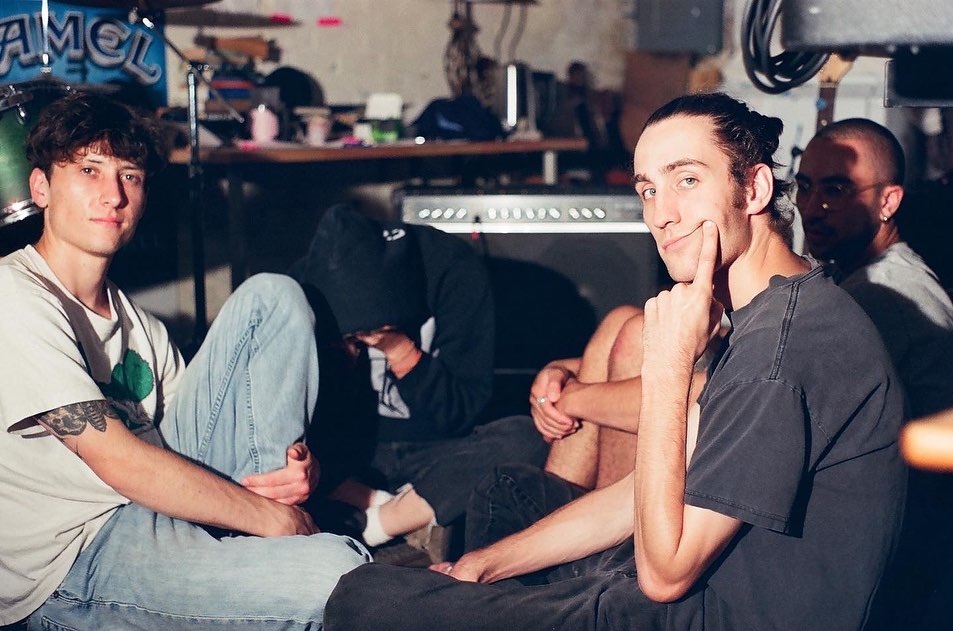
There is a band in Richmond named Drook. They used to be named She. They recorded an e.p. called Life In Estates that’s out now.
They make me feel old. They make me ask myself too many questions. Is the fact they are chasing their dream and sacrificing stability what makes me like them so much, or is it the fact that I did something similar when I was the same age? Is the infectious listenability of their new recording what makes them great, or is it the dirty sink that I saw at their house during my interview, which speaks to their busy and creative minds? Why am I still so bad at washing dishes?
Do they think I’m relatable? Am I out of touch? Do we become out of touch as we get older or does time change the texture of reality until everything feels different?
Anyway, I went over to their house to get a feel for the band and learn what tomfoolery these whippersnappers had conjured this time. I even picked up on some keen modern lingo. You’re never too old to learn.
I was met at their door promptly at four. I was graciously welcomed by Tyler Smith, their drummer, who invited me to bring my bike into their living room and rest it against their upright piano. The rest of them trickled in one by one in Tolkienesque fashion. Kalean Brown, the bass player, offered me a coffee — Café Bustelo with Coldstone Creamery’s sweetened creamer. It filled the body of the simple coffee and brought the otherwise clouded note of hazelnut to a warm and rich resolve.
As that cup of coffee joined the two I had previously imbibed, my chest tightened, and the mechanisms of my social anxiety began to whir with well-oiled efficiency. I made an attempt at being current by referencing the new Jeffrey Dahmer show. It did not land (Social skills on 100, let’s GO!). I silently thanked the me of the past for preparing questions beforehand.
GW: Do you all live together?
Tyler: I mean, the two of us [Tyler and vocalist Liza (pronounced LEEZA) Grishaeva] have lived together for four years. This will be the fourth year. We’re still working on the rest. Maybe if we had a cooler landlord. [laughs]
GW: Why the name change?
Tyler: Well, it’s pretty difficult to find SHE where it matters. Ultimately, we have to be able to be accessible in the streaming world. If you can’t find someone by just typing in their artist name, and there is a shit-ton of people you have to scroll through to find it, then it’s a problem. Basically, it was a decision we had to make to be accessible. Not the music itself, but no one could find us.
Liza: A pretty not-poetic answer. We knew we had to change our name; it was really hard for anyone to find us. And there were other things with the name that weren’t perfect. We just had to change it. Now I look back on our old name and I don’t know why I really was so attached to it. I don’t know why I was so convinced it was so awesome.
GW: It’s just simple and strong.
Liza: Simple and strong, yeah, but it is also just very weird, because it is so simple, because it is such a used word. It’s weird to read back on my diary and see “Oh I love SHE, blah blah blah.” Drook feels a lot better to us. It took us two years to actually pull the trigger.
Tyler: It took a long time from realizing it had to change to us actually changing it.
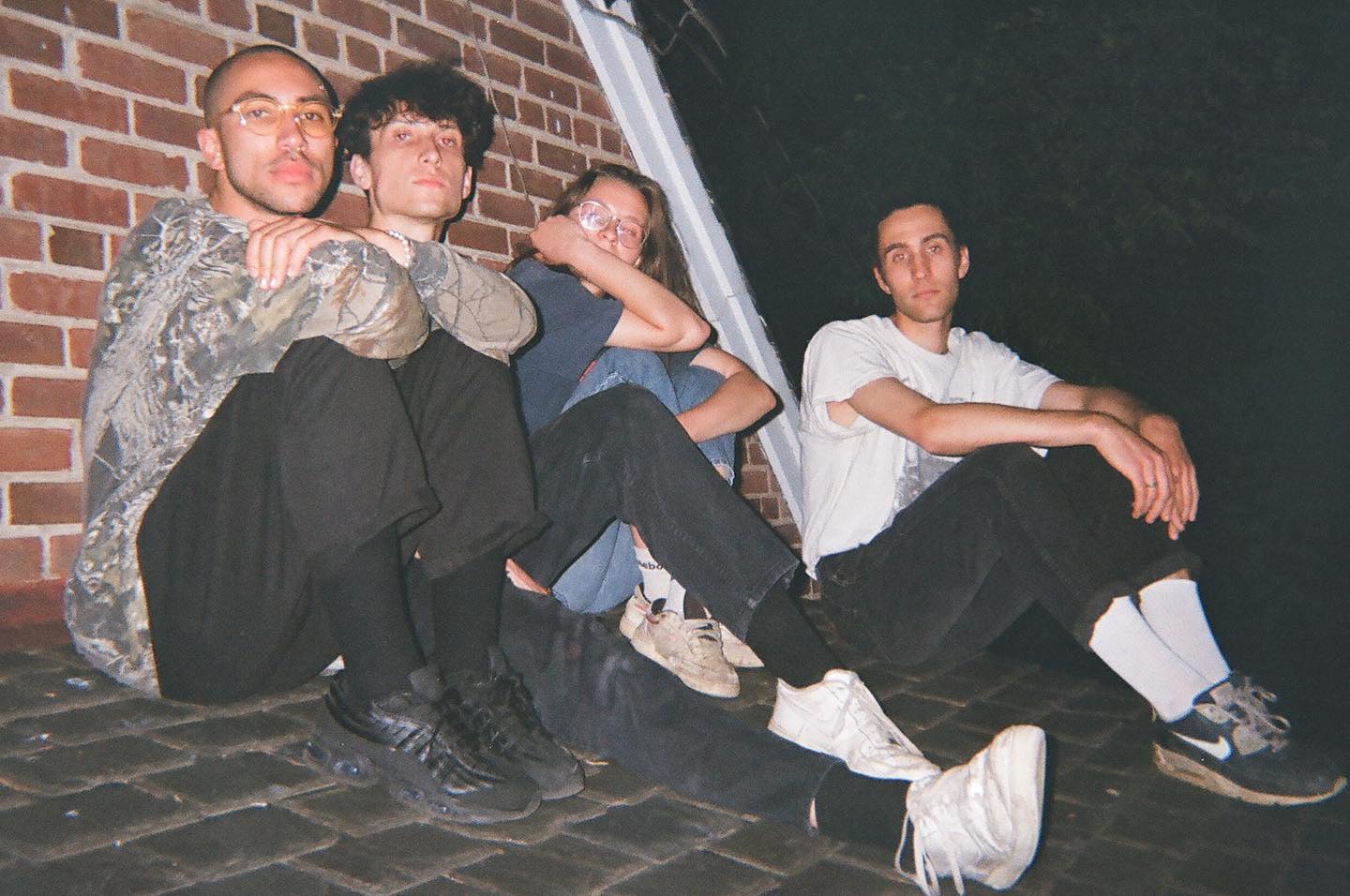
Drook: Kaelan Brown, Matthew Shultz, Liza Grishaeva, Tyler Smith. (Photo via Drook/Facebook)
GW: Who is the primary songwriter, or is it a collaboration from jump?
Liza: I would say now it’s definitely more of a collaboration between us. It started out with me being the primary songwriter, but as we’re moving on to more electronic genres, it switches. Because I hate writing behind a computer, so I won’t do that, but I will be around people that are doing that. I would say now it’s way more of a collaboration than ever before.
GW: What is the emotional kindling for the EP?
Liza: I had a really, really, horrible breakup that also was happening with COVID and us becoming extremely existential and isolated within our group. It was just a really existential time to be a young person, especially in live music. All we ever envisioned ourselves doing was live music, and then a pandemic happens. It was so easy to believe that our future was over. So, I think we thought that, and we gravitated to music to make us feel better and distract us from this existential dread that we were experiencing. And for me specifically, I went through a horrible breakup that triggered a bunch of other emotions that were really chaotic, and the record was my sole outlet, honestly.
GW: So, it’s like the one thing that would become your undoing is the only thing getting you through it.
Liza: Yeah, absolutely. That’s why we called it Life in Estates. To be in a band at that time was fucking crazy. You were getting no validation. Playing live honestly is validating. You see how other people like you. And to not get that, and to think that your career is over and the world to be shut down and to not be seeing anyone… We would still have a lot of fun, just being in the basement and playing music. It was almost like we would forget that we were in the middle of COVID. It was kind of making the best out of a really horrible situation globally.
Making this record was really hard and really stressful, but at the same time it was the only thing that really got us through COVID. We were so productive during COVID, and we became such better musicians. Through that, our live show completely changed. We had all this time to think about how we want to present ourselves live. We had all of this time to craft this record, and this show, and to craft ourselves. that it was really fun. And ultimately, really distracting, which is something that we all needed.
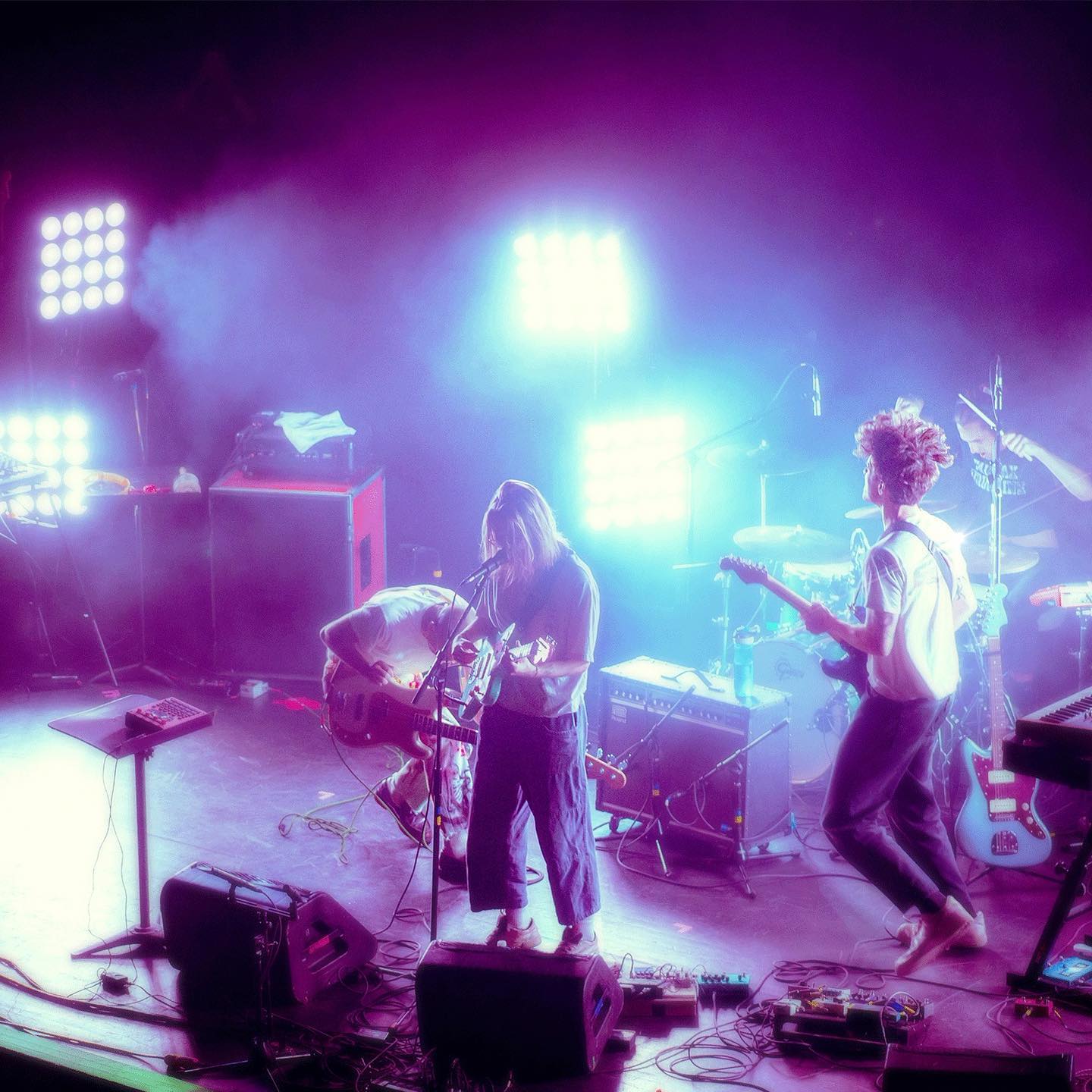
Drook live. Photo by Lucienne Nghiem, via Drook/Facebook.
GW: I totally feel you on that one. Do you feel like putting all your energy into music is a risk?
Liza: Definitely. I mean, we’re really scared about it daily. Maybe not a daily dread, but it definitely comes up in insecure moments.
GW: What makes it worthwhile?
Liza: Our relationships. We love working with each other, and we really love the music. And it’s really, really fun. I would say for me it’s the relationships. That’s what it’s really about.
GW: You can feel it in the room right now. And on stage too. I lived with some of my bandmates, too — there is a certain mesh that you get from hearts beating in the same radius. There’s an effortlessness that comes through on your new EP that speaks to it, that is really cool. I can definitely see that y’all had time to figure out where to step. Everyone had room to breathe. I think it came across really great, and I’m excited to hear what y’all have next.
Liza: Very different.
Life in Estates is an earnest collection of anthems about youth and Drook’s presentation of indie pop. It was recorded at Ivakota Studios in DC, and at their houses. It was mastered by Chris Gehringer of Sterling Sound and came into the world on September 30.
Like all pop, it’s catchy. It’s uplifting. It’s ear candy. The bass is thick, present, and rich like a mocha milkshake. The guitar is modest, but bright and firm, and wraps around the mix like a Smarties necklace. The lush caramel of Liza’s honest lyrics pushes through the stretched taffy of their wall of sound like gum bubbles. The drums make it all pop.
I don’t know. What do you want me to tell you? Life in Estates is fuckin sweet. Listen to it.
Life In Estates is out now for streaming or digital download.
Top Photo via Drook/Facebook.