Senator Mark Warner went to the pages of The New York Times this week to warn that the biggest threat to American elections may no longer be foreign interference, but the federal government itself.
That sounds dramatic until you realize we’ve been heading in this direction for a while now.
Warner lays out a scenario in which a president declares a national emergency based on shaky or outright false claims of election interference, then uses that declaration to justify taking control over how elections are run. Not small adjustments around the edges, but something more fundamental. A declaration that could unlock sweeping presidential powers over how Americans vote, including limiting mail-in ballots, forcing voters to re-register, inserting federal agencies into the process, and potentially even deploying federal agents to polling places or seizing voting machines.
If that reads like a worst-case scenario, well it’s supposed to.
But none of this feels completely out of bounds anymore. Not after 2020. Not after years of lawsuits, audits, “stop the steal” rallies and January 6 United States Capitol attack, all contributing to a steady erosion of trust in the system itself.
We’ve already seen the groundwork for this. Claims of widespread election fraud have been made repeatedly without credible evidence, yet some officials, including those within the administration, have been willing to entertain or amplify them. At the same time, local election workers have faced sustained pressure and scrutiny. None of that emerged in a vacuum, and it hasn’t gone away.
So when Warner says the concern isn’t foreign interference but a manufactured domestic “emergency,” he’s not inventing a new problem. He’s describing the next logical step in an authoritarian push if no one pushes back.
The real question is what, if anything, stops it.
Warner’s prescription is familiar. Congress should assert itself, states should hold the line, courts should be ready to step in, Republican colleagues should speak up, former intelligence officials should call out any misuse, and the public should remain vigilant. All of that is true, but it also depends entirely on people deciding to actually follow through.
A Republican-controlled Congress, for its part, has not exactly been a model of decisive oversight lately, and the courts tend to move at their own pace, usually only after someone has taken the time and resources to bring a case forward. The Supreme Court of the United States, which has leaned conservative in recent years, has often been receptive to expansive views of executive power, including recognizing broad immunity for presidents acting in their official capacity.
As for “public vigilance,” it often ends up looking more like people arguing online until something real happens, which, more often than not, amounts to hurt feelings and not much else.
The one point that does carry some real weight is the structure of elections themselves, which are intentionally decentralized, with states and localities responsible for administering them. That fragmentation can be messy and uneven, but it also creates a system where no single entity can easily take control all at once.
That said, harder does not mean impossible, especially in a moment like this. We’re in a different kind of landscape now, with global tensions rising and the situation in Iran adding another layer of uncertainty.
Which brings this back to Virginia, where Warner represents a state that has seen its own share of election-related disputes, lawsuits, and political tension, including ongoing debates around redistricting and election rules. We’ve also seen how messaging around elections, particularly from national political groups and well-funded advocacy organizations, can shape public perception in real time.
Virginia isn’t insulated from any of this. It’s part of the same system Warner is describing, where national narratives, legal challenges, and political pressure all intersect at the state and local level.
What matters is whether it stays theoretical or becomes something people have to respond to in real time. We’ve been warned. The question now is what anyone is going to do about it, because by the time federal agents are standing at polling places “just in case,” it’s probably a little late to start the conversation.
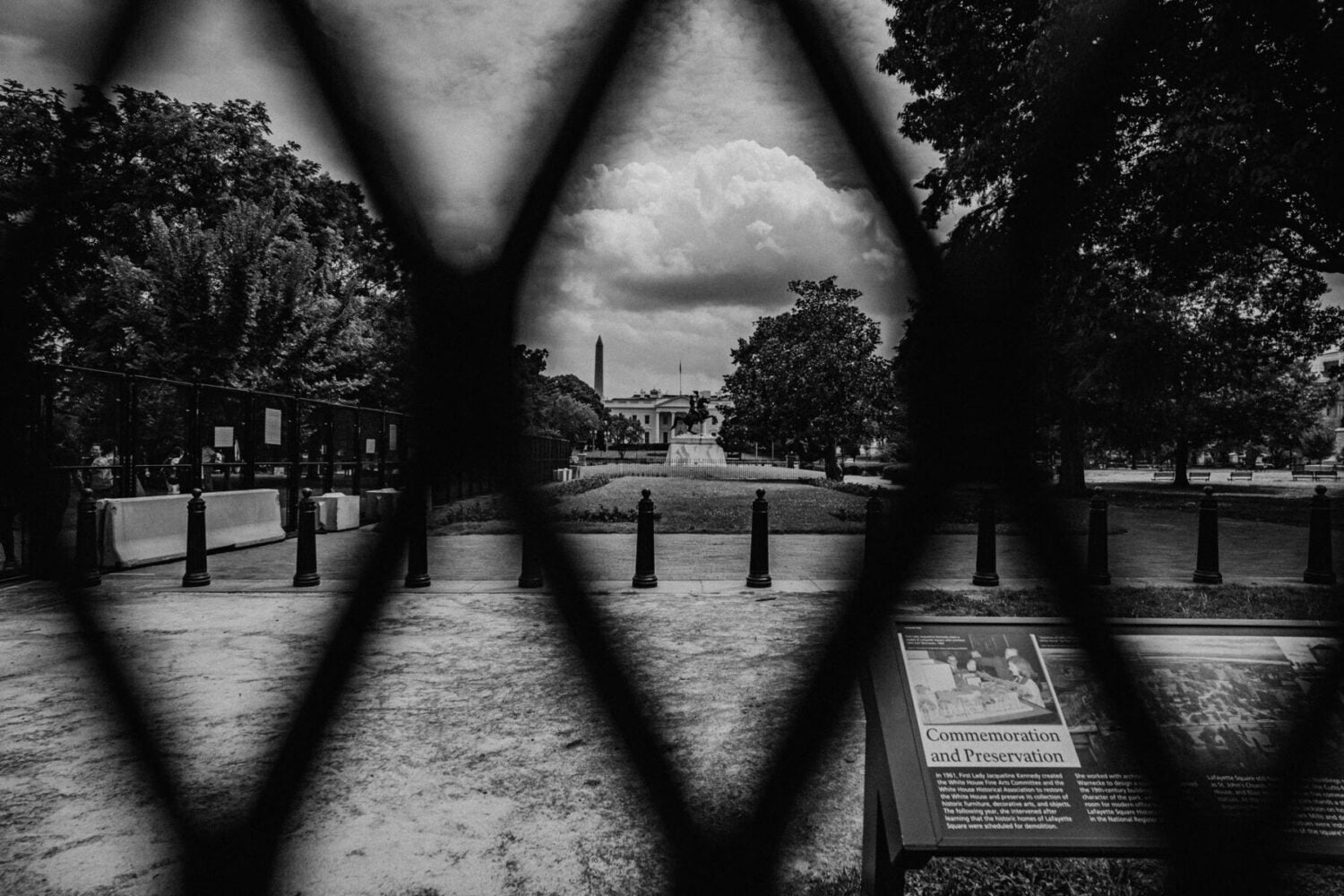
Phot by Vinny Candela
Support RVA Magazine. Support Independent Media in Richmond.
At a time when media ownership is increasingly concentrated among corporations and the wealthy, RVA Magazine has remained one of Richmond’s few independent voices. Since 2005, the magazine has provided grassroots coverage of the city’s artists, musicians, and communities, documenting the culture that defines Richmond beyond the headlines.
But we can’t do this without you. A small donation, even as little as $2, one-time or recurring, helps us continue to produce honest, local coverage free from outside interference. Every dollar makes a difference. Your support keeps us going and keeps RVA’s creative spirit alive. Thank you for standing with independent media. DONATE HERE.
We’ve got merch HERE
Subscribe to the Substack HERE
And Reddit HERE
And YouTube HERE